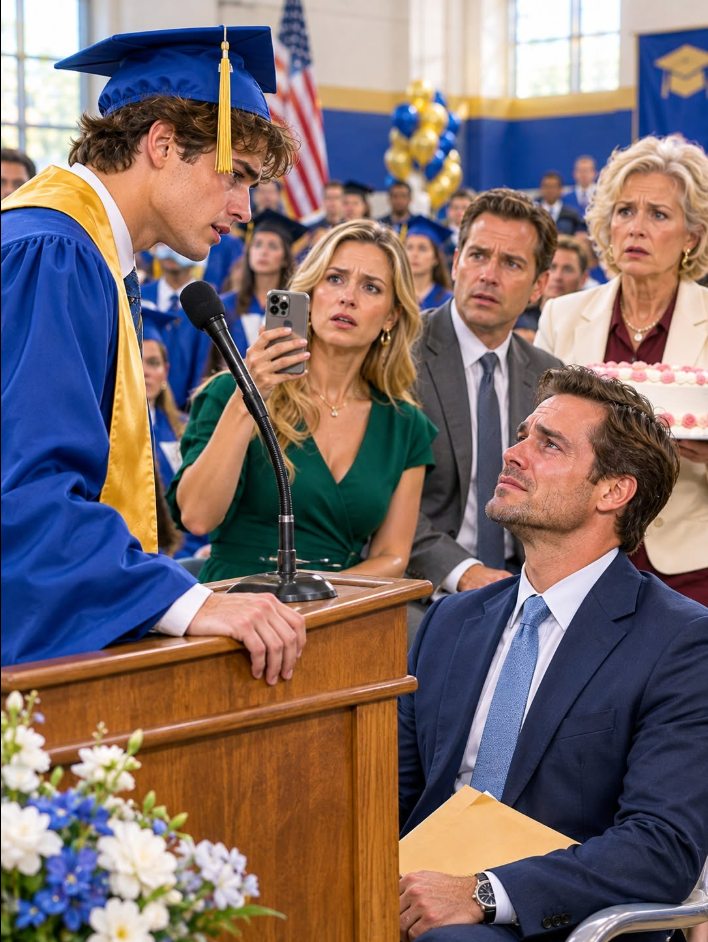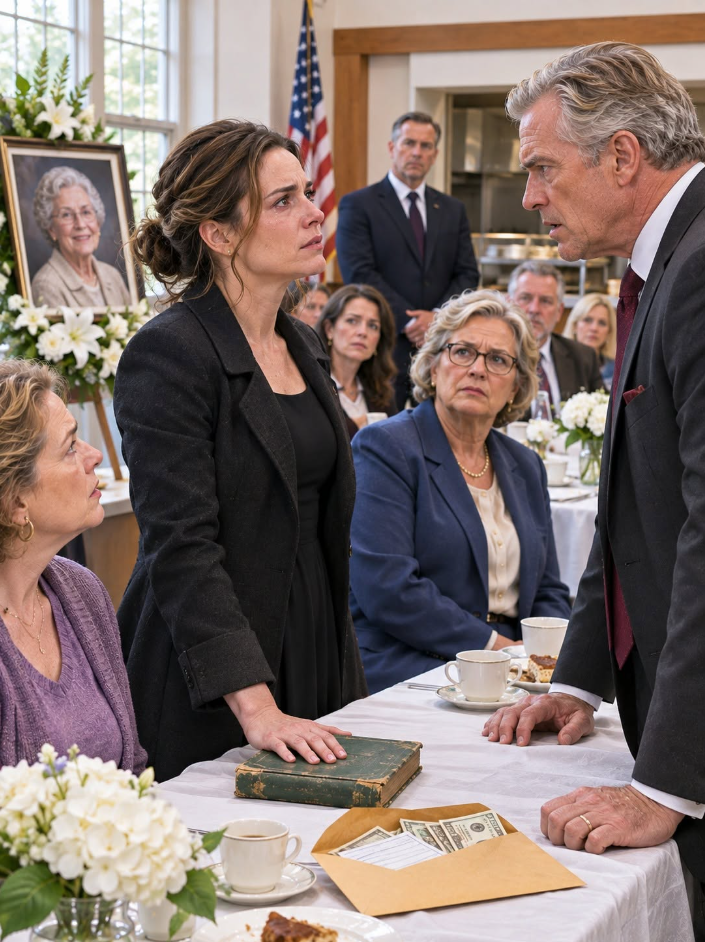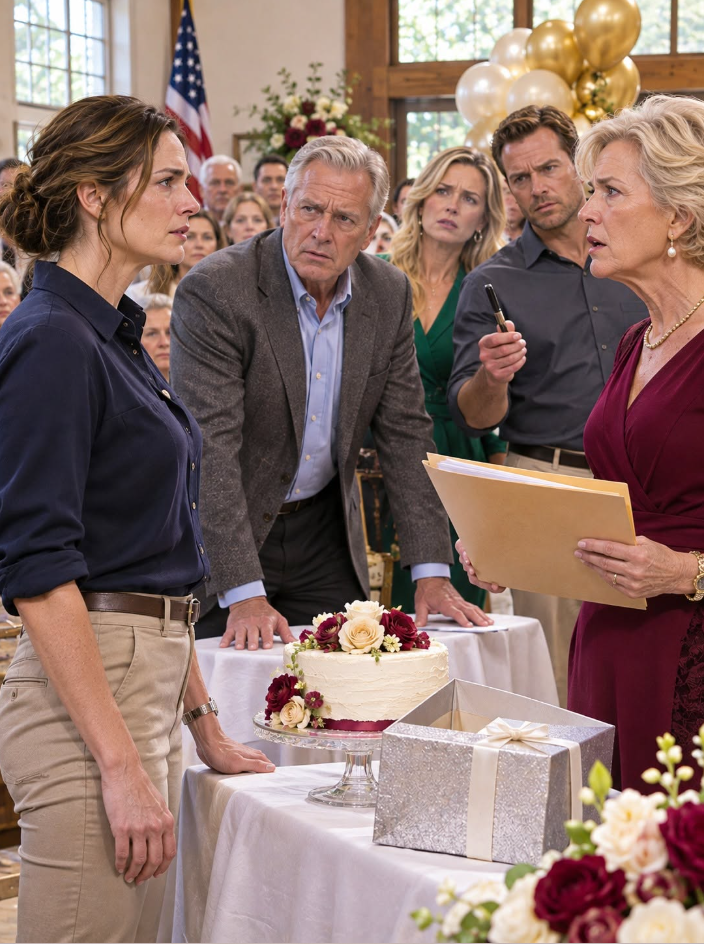
PART 1 — The Woman in My Mother’s Chair
The woman carrying my husband’s child was sitting in my dead mother’s armchair. It was not a piece chosen from a catalog, nor part of a matching showroom collection that could be replaced with a few clicks. It was an antique ivory wingchair with a tall back, upholstered by Elena Delos Reyes herself over three separate decades. A faded coffee ring still marked its left armrest, the trace of a cup set down on the damp Tuesday morning my mother died. For four years, I had refused to clean it away. That faint circle was the last tangible mark of her living presence, and I had protected it accordingly.
My name is Maria Concepcion Delos Reyes. Five years earlier, the civil registry had added Villanueva to that name, but looking around my living room, I understood that marriage had not erased the name that mattered here. I was thirty-one, a licensed Certified Public Accountant working as a senior financial analyst for a large metropolitan property firm. Deeds, liabilities, amortization schedules, and ownership records were not distant technicalities in my life. They were the framework through which I understood consequences. More importantly, I was the daughter of a woman who had spent eleven punishing years working double shifts as an intensive care nurse in Saudi Arabia to buy this land and build this house.
“He possesses a soft face, Maria,” she warned, her attention as precise and unsettling as a surgical instrument. “Always maintain a cautious vigil around men with soft faces.” Then came the instruction she considered beyond discussion: “This house remains exclusively in your maiden name. Always.” At the time, I regarded her suspicion as the hardened outlook of another generation. Still, disputing property arrangements with Elena Delos Reyes was as useless as arguing with the concrete beneath the house. I signed the premarital property agreements she had prepared, and she paid the private notary herself. Whatever reservations I had about her judgment of Adrien, I obeyed her instructions about the deed.
Breast cancer took her fourteen months after my wedding. At 4:17 in the morning, in a sterile hospital ward, I held her hand and felt the last uneven movement of her pulse beneath my fingers. Even then, she used what remained of her strength to issue an instruction rather than offer a comforting illusion. “The deed, Maria. Never turn soft.” I did not yet understand how completely those words would govern the life she was leaving behind. Adrien, by contrast, seemed made of softness. Earlier in our relationship, I had confused his inability to stand firm with gentleness, and I had called his dependence devotion because that interpretation was easier to love.
I excused his avoidance of difficult discussions, the resentful silences that followed any mention of money, and his endless attraction to businesses promising success without the patient work that success required. During five years of marriage, I became the financial structure supporting his vanity. When his bistro collapsed after eight months, I paid what remained outstanding. When his small logistics venture lost money for two years before failing, I covered the gaps. His next undertaking was a “consulting practice” whose most consistent activity appeared to be buying acquaintances expensive steak lunches with our joint credit card. I called myself supportive. In reality, I was continuing to invest in a loss because admitting the loss frightened me.
Months before that evening in my living room, the signs had become difficult to ignore. Adrien slept along the far edge of our king-sized bed, holding his body away from mine with an almost calculated precision. His phone stayed facedown on glass surfaces. Business trips to regional offices appeared on his schedule, only for his colleagues to reveal that no such visits had occurred. Then, on an unusually hot Wednesday in September, a business-district brownout sent us home at 3:30. I entered our quiet kitchen, where amber sunlight lay across the marble island, and found a hotel receipt left in plain sight. It was careless enough to feel insulting before I had finished reading it.
The receipt came from a luxury boutique hotel in Bonifacio Global City. A deluxe suite for two nights. Room service for two. A signature breakfast buffet for two. That same weekend, Adrien had told me he would be sleeping on a camp cot during a corporate retreat in the mountains. My hands did not shake. My heartbeat kept its steady pace while I took three clear photographs of the thermal paper. Then I returned it to precisely the position where I had found it. I went into our bedroom and sat on the mattress for two silent hours, thinking about my mother, the deed in my safety deposit box, and the difference between suspicion and proof.
Eventually, I opened my contacts and found the number saved under “Insurance.” My mother had insisted that I store it two weeks before the wedding. It belonged to Atty. Rosario Bernardo-Tan, a family law litigator with more than twenty years of courtroom experience. The following morning, I sat across from her in a fourteenth-floor office in Ortigas. She adjusted her silver spectacles and began with the question that established the foundation of everything that followed. “The primary residence. Is the title deed clean and paraphernal?” I answered without hesitation. “Solely in my maiden name,” I replied. “Acquired prior to marriage. Zero commingling of funds.”
Satisfaction flashed behind her glasses. “Good. Your mother understood the world. Now, we proceed to collect the armaments.” During the next month and a half, we built our approach as carefully as a structure intended to withstand pressure. She introduced me to Dennis Aguilar, a seasoned investigator who had formerly served with the National Bureau of Investigation. I paid him eighty-five thousand pesos from a separate bank account Adrien had never known existed. I had opened it years earlier, guided by an uneasiness I had never fully admitted to myself. Now that old, quiet precaution became the means of replacing uncertainty with documentation.
Three weeks later, Dennis met me in an ordinary coffee shop and pushed a thick manila folder across the table. “Six documented weekend stays across four months,” Dennis said, his tone as impersonal as a financial audit. “Two hundred and fourteen authenticated text messages. High-definition photographic surveillance.” Then he paused, and something in his weathered face tightened. “And there is a biological complication you must prepare yourself for.” I kept my voice level. “Tell me,” I commanded evenly. He leaned back before delivering the final fact. “She is seven months pregnant,” Dennis said, leaning back. “And the paternity timeline points straight at your husband.”
I would not allow myself to fall apart in front of a retired investigator. I put the envelope into my briefcase, left the coffee shop, and walked to my sedan in the underground parking structure. Only after I had closed the doors did I begin to cry. The dashboard clock measured exactly nine minutes. Nine minutes for five years of loyalty squandered on a man I had not truly known. Nine minutes for the debts I had paid, the dreams I had financed, and the nights spent beside someone who had been living another life. When the ninth minute ended, I wiped my face, adjusted the rear-view mirror, and directed my attention toward survival.
The next professional I consulted was Dr. Patricia Morales, a senior obstetrician-gynecologist at St. Luke’s Medical Center. I was not there simply because my husband’s betrayal had become undeniable. For almost two weeks, I had been noticing and privately tracking a change in my own body. I needed confirmation before I allowed that possibility to become part of any decision. The clinic was quiet, carrying the faint smell of lavender sanitizer and examination paper. Dr. Morales performed the ultrasound with an experienced gentleness. When the gray monitor revealed a tiny, recurring flicker, her expression warmed, and the room became entirely different to me.
“You are approximately five weeks along, Maria,” Dr. Morales confirmed, printing the diagnostic images. “Early, but the gestational sac is well-implanted. The cardiac activity is distinct.” Later, in the recovery alcove, I stared at the narrow thermal strip in my hands. There was a pulse inside me that had nothing to do with Adrien’s excuses or the woman in those surveillance photographs. I rested my palm against my linen trousers. This child was mine. This child belonged to my mother’s line and to the sanctuary she had built. Whatever disorder Adrien had created beyond its walls, I could still draw a boundary around what would be protected within them.
From the parking lot, I called Rosario while traffic inched along the avenue below. “Rosario,” I said, watching the city traffic crawl along the avenue below. “There is a development. I am five weeks pregnant.” The silence that followed was long and weighted. “Maria,” the litigator finally spoke, her voice carrying deliberate seriousness. “This alters the legal equilibrium significantly. It does not weaken our posture; it converts our defensive shield into an offensive battering ram. Have you breathed a word to Adrien?” My answer was immediate. “Not a syllable.” Her instruction was equally clear. “Keep it locked in a vault,” she instructed. “Let them walk into the snare completely blind.”
Their planned confrontation revealed itself two days later, on a humid Sunday afternoon. I was rinsing porcelain bowls at the kitchen sink, with the casement window open above the counter toward the brick patio. Outside, Adrien paced with his phone pressed to his ear. He spoke freely, trusting either the distance or my supposed ignorance. “Yes, Ma,” he was saying, his voice caught between agitation and pleading. “Tuesday evening. Exactly seven o’clock. She’ll be home from the firm. No, I don’t want an explosion, Ma. We need an organized front… Yes, bring Tito Roberto. Bring Gina. Ariana has to be there physically. Maria has to see the belly so she understands this isn’t negotiable. I’m not running away. We just need her to vacate quietly… Yes. Tuesday.”
Water continued running over my fingers while I stood above the drain. They were arranging a family tribunal in my house, and their intended verdict had already been agreed upon. Lilibeth Villanueva, my husband’s sixty-one-year-old mother, had apparently decided that her son’s scandal could be solved by removing his lawful wife and settling his pregnant mistress into an established home. In five years, I had never heard Lilibeth offer an apology. Self-righteousness accompanied her everywhere, as persistent as an overpowering perfume. Now she was bringing that certainty to a property she had not purchased, furnished, or maintained, expecting her authority to replace all three.
I had approximately forty-eight hours, and I used them. On Monday, Rosario reviewed the relevant provisions of the Revised Penal Code with me, moving carefully through the framework she intended me to understand. “Under our legal system, Maria, what they are orchestrating borders on civil extortion and criminal exposure,” she explained. “Adultery and concubinage under Articles 333 and 334. If they attempt to forcibly displace you from a registered paraphernal property, it is unlawful detainer, coercion, and psychological violence under Republic Act 9262. You do not merely hold leverage. You hold an absolute monopoly on the board.” I listened as I would have listened to the findings of an audit: closely, without allowing outrage to obscure the facts.
By Tuesday evening, the sky above Quezon City had turned a dark, bruised purple. An unseasonal October downpour seemed to be gathering beyond the house. At 6:55, I set fine bone-china cups on the coffee table beside a small plate of almond biscuits and a pitcher of iced water. The arrangement was not an expression of welcome. I wanted them comfortable enough to believe their own assumptions. I wanted no hurried confrontation in the entrance hall, no opportunity for them to confuse disorder with authority. Let them come inside, sit down, and explain what they believed they were entitled to take.
My mother had left me more than walls and a roof. She had left the signed agreements, the unambiguous title, the lawyer’s number, and a final instruction that had become clearer with every discovery. Adrien had spent years relying on me to absorb the consequences of his decisions. His family had mistaken my willingness to do so for a permanent obligation. That misunderstanding was about to end in the room where my mother’s chair stood. At exactly seven o’clock, the brass mechanism inside the front deadbolt turned with a heavy click. The door swung inward, and the six of them began to enter.
PART 2 — The Family Tribunal
Lilibeth came through the doorway first. She was a small woman, but she carried herself with the authority of an inspector arriving to assess someone else’s shortcomings. Her sharp eyes moved across the room beneath silver hair sprayed into an unyielding shape. Roberto followed, thick-necked and heavy with the self-importance of a retired bureaucrat. Over the five years I had known him, most of his contributions to conversation had consisted of dismissive grunts. Behind him came Gina, Adrien’s younger sister, wearing the smug expression of someone convinced that agreement with her mother constituted moral wisdom. Her husband, Tomas, at least kept his gaze lowered to the parquet floor.
Lilibeth kept her handbag with her. She lifted a teacup, took a pointed sip, and returned it to the saucer with a sharp clatter intended to gather everyone’s attention. “Maria,” she began, arranging her ringed hands across her lap. “What is done is done. We are all rational, educated adults here. Ariana is carrying Adrien’s son. Our first grandchild. It is a biological reality, Maria. Whatever moral judgments you might hold, life must take precedence. You need to accept reality with dignity and step aside so that this family can move forward without scandal.” I looked directly at her, offering neither the tears nor the protest she seemed prepared to dismiss. “Go on, Lilibeth.”
“No ugliness,” I repeated, allowing the phrase to remain between us. “You bring my husband’s pregnant mistress across my threshold, seat her in my deceased mother’s furniture, instruct me to vacate my home, and you lecture me on avoiding ugliness?” Roberto cleared his throat with the rough, deliberate force of a man accustomed to using noise where an argument should have been. “We must secure the environment for the child, Maria. Adrien needs a proper, respectable foundation to raise an heir. It is unreasonable for you to occupy a five-bedroom residence by yourself. It would be most practical if your belongings were packed and relocated by the final day of the month.”
“By the end of the month,” I murmured. “You are not requesting a marital separation. You are staging an illegal eviction.” Ariana shifted against the ivory upholstery and lowered her head. A single tear traveled down her powdered cheek, placed almost perfectly within the performance. “I never wished for any of this pain, Maria,” she whispered. “I truly didn’t. But Adrien and I… our love is real. Every innocent baby deserves a legitimate father and a safe, stable roof over their head.” Her eyes flicked toward the broad hardwood staircase. Even while asking me to recognize her innocence, she could not resist looking at the house she expected me to surrender.
I turned to Adrien. He would not look back. His attention remained fixed on the decorative ceiling molding, as though the answer to his predicament might have been hidden there. I rose slowly. The absence of shouting seemed to unsettle them more than anger would have done; the room grew abruptly still. At the side table, I poured iced water from the crystal carafe, took two measured mouthfuls, and set the glass down without a sound. Then I faced them again. “If you have exhausted your prepared speeches,” I said, lowering my voice, “then you will sit in silence while I correct your foundational delusions.”
Adrien’s jaw tightened. “Maria, please, don’t make a scene—” I stopped him before he could finish. “Quiet,” I commanded, without increasing my volume. “You are currently trespassing on private property, Adrien. You do not speak.” His mouth closed at once. The reaction was almost automatic, shaped by five years in which my competence had repeatedly rescued him from consequences. I stepped into the center of the Persian rug. “Point number one,” I said. “This residence, the land it occupies, and every permanent fixture within its boundaries is registered exclusively under my maiden name: Maria Concepcion Delos Reyes . It is an absolute paraphernal asset, funded, titled, and registered by my late mother before I ever laid eyes on your son.”
I let my gaze settle on Lilibeth. Her posture had become unusually rigid, but I gave her no interval in which to interrupt. “Adrien’s name appears nowhere on the deed. It does not appear on the land registry, the property tax declarations, or the utility easements. In the eyes of Philippine property law, he possesses zero equity, zero claim, and zero administrative authority over this soil. Which means, as of seven o’clock this evening, every single one of you is participating in an unlawful detainer and unauthorized trespass.” Roberto’s neck darkened to a blotched red. “Now hold on just a damn minute—”
“Point number two,” I interrupted, my voice retaining the same controlled rhythm. “You spoke so casually about a ‘clean slate’ and avoiding ugliness. Allow me to elucidate the statutory costs of your proposition. Article 333 and Article 334 of the Revised Penal Code . Adultery and concubinage.” I turned toward Ariana. The innocent composure she had brought into my house was beginning to strain. The distinction between arriving as an expectant mother and being named as a knowing participant in a documented affair was finally reaching her. Her pregnancy had been presented as the reason no one could oppose her. It did not erase the evidence in Rosario’s possession.
“It is a criminal indictment, Ariana. Not a civil dispute. Both the philandering spouse and the knowing partner face statutory imprisonment. Through the services of Mr. Dennis Aguilar —a decorated nineteen-year veteran of the National Bureau of Investigation—I possess six discrete hotel logs, verified room service statements, photographic surveillance of your assignations, and two hundred and fourteen archived digital messages.” Her breath caught sharply. Until then, they had treated my knowledge as a vague inconvenience, something that could be managed by presenting their preferred outcome as inevitable. Now they were hearing quantities, records, and a professional investigator’s name. These were not suspicions I could be persuaded to forget.
“My litigator, Atty. Rosario Bernardo-Tan , has already assembled the certified evidence into Exhibits A through D,” I continued. “Furthermore, Adrien, I took the liberty of reviewing your corporate employment contract last week. Your firm maintains a strict, non-negotiable executive morality clause. A formal criminal filing at the Prosecutor’s Office—even prior to an ultimate verdict—results in immediate administrative suspension without compensation.” Adrien lurched to his feet, striking his teacup against its wooden coaster. “Maria! Maria, listen to me, we can resolve this privately! You don’t have to destroy my entire career!” The career whose income he had never considered sufficient to curb his dependence on mine had suddenly become something he expected me to protect.
“Sit down,” I said. He fell back onto the sofa, the urgency draining out of his movement as quickly as it had appeared. A moment earlier, his family had been assigning a date by which my belongings should disappear. Now he wanted privacy and restraint, as if those were courtesies he had extended to me. I clasped my hands behind my back. “I present these facts not as emotional threats, but as operational realities,” I stated. “This is the legal terrain you marched into tonight with your petty demands. Ariana, you are seven months along. I suggest you carefully calculate what spending your child’s infancy defending criminal indictments and legal fees will do to your family’s resources.”
Gina’s hands shook against the leather of her purse. The certainty with which she had instructed me to think of the larger picture had vanished. “Think of the innocent child, Maria,” she stammered. “Have you no basic human decency? Think of the baby!” It was remarkable how quickly they returned to innocence whenever accountability approached the adults responsible. The baby had become their argument for taking my home, and now the same baby was supposed to prevent me from resisting. I did not raise my voice or glance away. “I am thinking of a baby,” I replied calmly. Then I let the silence lengthen until even the refrigerator’s hum seemed impossibly loud.
“Mine.” The single word altered every face in front of me. Adrien blinked as though he had failed to understand the language I was speaking. “What did you say?” I reached into the inside pocket of my tailored cardigan and removed the folded sonogram from St. Luke’s Medical Center. Holding it between two fingers, I showed them the hospital heading, the diagnostic markings, and the small, unmistakable outline of the gestational sac. This was not a plea for sympathy, nor an attempt to compete with the woman in the chair. It was a fact I had chosen to disclose at the moment when their own reasoning could no longer survive it.
“Yesterday morning. Dr. Patricia Morales, Department of Obstetrics,” I announced, putting the image safely back into my pocket. “I am five weeks pregnant.” Ariana’s hands closed over the arms of my mother’s chair. Her face lost its color, and for the first time she looked genuinely frightened rather than carefully helpless. Adrien bent forward with his hands in his hair. “You’re… you’re carrying my child? Maria, my God… why didn’t you say anything? Why did you hide this?” His voice broke as if the information had injured him. He seemed unable to connect my silence with the elaborate deception he had been maintaining while we lived beneath the same roof.
Lilibeth rose before he had finished. The change in her was so immediate that it was revolting to watch. Her cool authority dissolved into fluttering hands, wet-eyed excitement, and an eager rush toward me. Only moments earlier, she had explained that dignity required my removal. Now she opened her arms as though affection had always been the purpose of her visit. “Oh, Maria! My darling girl! Why would you keep such a glorious miracle a secret? This… this changes everything! We are family, Maria! You know deep down how much we revere you, how much we adore you—” The distance between us closed by three quick steps, and I refused to let it close further.
I stepped back, keeping her hands from reaching me. “Eleven minutes ago, Lilibeth,” I said, unable and unwilling to disguise my disgust, “you were demanding I surrender my home and vacate by the end of the month.” She stopped with her arms hanging awkwardly in the space I had left empty. “I… I was speaking out of confusion, darling! We didn’t know! You have to understand a mother’s heart—” There it was again: a demand that I excuse deliberate cruelty because someone wished to rename it devotion. Her heart had not changed during those eleven minutes. Only her calculation had changed, and I would not help her conceal the difference.
“You understood precisely what you were executing,” I said. “Your arithmetic has simply shifted. You now realize there is a legitimate, legally protected heir carrying the Villanueva name, and your position looks utterly grotesque. But do not celebrate yet.” Their eyes remained fixed on me. The revelation had not repaired anything, despite the sudden willingness to behave as though family affection could be summoned into existence on command. It had merely exposed how little their supposed principles had meant. Ariana’s vulnerability had mattered when it suited their plan. Mine had been irrelevant until they believed it might carry a claim they wished to recognize.
I looked directly at Adrien. His face had hollowed with desperation, but I would not offer the reassurance he was waiting to receive. For years, I had been the person who softened a difficult outcome, supplied the missing money, or found the sensible explanation that allowed him to continue avoiding responsibility. He was still looking for that person. He had not understood that she was no longer available to him. I tilted my head and let the next sentence arrive with all the deliberate clarity I had withheld from his family’s rehearsed demands. “Because the child,” I said with chilling, deliberate clarity, “may not even be yours.”
PART 3 — The Door That Closed
If the sonogram had struck the room with explosive force, my last statement left it frozen. Adrien’s expression did not simply collapse into disappointment. It seemed to empty altogether. Whatever hope had appeared when I revealed the pregnancy disappeared as he stared across the coffee table. His face held the blank incomprehension of someone watching the last familiar landmark vanish from sight. He had arrived prepared to replace me and had briefly imagined that my pregnancy might somehow restore his position. Now even that possibility had become uncertain to him. “What?” he breathed. Then, scarcely louder: “Maria… what did you just say?”
But a guilty conscience supplies its own evidence. Adrien had spent months hiding meetings, inventing business trips, and moving between a marital bed and hotel rooms while expecting every explanation to be believed. Deception had become ordinary to him. Faced with the possibility that he might have been deceived in return, he did not draw comfort from what he knew of my character. His understanding of his own conduct overwhelmed it. Because he had been capable of betrayal, he found it instantly plausible that I had been capable of the same. I did not need to invent a lover or manufacture a photograph. His conscience completed the accusation without assistance.
I left them where they sat and walked to the main entrance. The brass handle turned beneath my hand, and I opened the heavy door wide. Cool evening air moved into the foyer, carrying the smell of damp earth and the distant sound of thunder rolling over the hills of Quezon City. Beyond the doorway lay the world in which they would have to resolve the lives they had made. Inside were the floors my mother had paid for, the furniture she had selected, and the legal protections she had insisted I retain. They had come to move that boundary. I was simply showing them where it had always stood.
I checked the round-faced mechanical watch on my wrist. Its gold case had accompanied my mother through countless exhausting night shifts in Riyadh. She had worn it while earning the money that became this land, these walls, and my freedom to refuse the arrangement now being forced upon me. The timepiece had outlasted her working years, her illness, and the promises I had made at my wedding. Looking at it, I did not need to search for the appropriate next step. My mother had already taught me the importance of knowing what belonged to me and acting before another person’s confidence could be mistaken for a right.
“It is currently 7:22 PM,” I stated, making certain my voice carried throughout the room. “A formal petition for marital dissolution, accompanied by protective injunctions, was lodged with the court clerk via Atty. Bernardo-Tan’s office this afternoon. You have precisely four minutes to clear your persons from this property. If any individual remains past 7:26 PM, I will immediately contact the desk sergeant at the precinct to report an ongoing home invasion.” There was nothing left in my tone that invited negotiation. The deadline Roberto had assigned to my removal had been replaced with one of my own, measured in minutes rather than the remaining days of the month.
Then I looked at Ariana. “And if you, Ariana, or any proxy acting on your behalf, ever contacts me, my employer, or attempts to set foot on this property again, my counsel will immediately initiate civil proceedings for severe psychological damages under the Civil Code, alongside the criminal concubinage filing. Am I perfectly understood?” No one answered. The same people who had filled the room with instructions now seemed unable to produce a single useful sentence. They watched me as though the house itself had rejected them. In barely twenty minutes, their confident plan had become a collection of liabilities, and the woman they had expected to displace was holding the door.
“Three minutes,” I said. Lilibeth moved first. She gathered her handbag and headed toward the foyer with her chin lifted in a last attempt to preserve the appearance of dignity. She did not meet my eyes as she passed. Roberto followed, his boots shuffling faster than his earlier authority would have suggested. Gina pulled Tomas along by his sleeve. Neither offered a farewell. Their departure lacked every trace of the ceremony with which they had entered. There were no more speeches about reason, family duty, or the respectable foundations required for an heir. Faced with a boundary that would be enforced, they suddenly understood how quickly they could cross a threshold.
Ariana had difficulty raising herself from the wingchair. The youthful polish she had brought with her seemed obscured by the weight of what had happened. When she passed me, our eyes met briefly. I saw the realization I had watched gathering since I named the evidence: she would leave with Adrien, but not with the life she had imagined he could provide. Behind her remained the ivory chair, the hardwood staircase, and the house that had never been his to promise. Adrien stayed until the others were outside. He stood in the doorway with bloodshot eyes, his hands shaking at his sides, no longer able to hide behind his mother’s certainty.
“Maria,” he whispered, his voice broken. “Please… just tell me. The baby… is it really mine?” I held his pleading gaze. This was the man whose debts I had settled, whose failures I had softened, and whose invented journeys I had finally stopped believing. Even at the threshold, after everything his family had said, he wanted me to give him one final certainty before he went. I would not do it. “Goodbye, Adrien.” His mouth opened, but no words followed. At last, he turned away, taking with him the question he had brought into existence through his own betrayal.
I closed the hardwood door. The brass deadbolt slid firmly into place, and the sound carried through the high foyer with a finality no argument could improve. For a moment, I stood in the deep silence that followed. Then I lowered both hands to my abdomen. Five weeks. Small beyond anything I could yet feel, but real, alive, and entirely worth protecting. The room no longer contained six people deciding what I ought to surrender. It contained the future I had chosen to preserve. I did not need their approval to remain in my home, and I did not need their recognition to understand who belonged there.
In the living room, I stopped before my mother’s armchair. My fingers moved over the embroidered armrest until they found the faint coffee ring I had refused to erase. I traced it slowly, then straightened the cushions and smoothed the upholstery. The act was simple, but it returned the chair to itself. Ariana had occupied it for a short time; she had not acquired its history or the right to decide what it meant. When I finished, the room belonged again to the women whose labor and resolve had made it possible. My mother’s presence remained in the things she had built, not in any permission the Villanuevas might have offered.
Six months later, on a bright Tuesday morning, the legal end of our marriage was completed. Rosario called my office at 10:22. Her voice carried the untroubled satisfaction of someone checking finished work and finding that it held exactly as intended. Adrien’s later legal representation had briefly raised possible challenges to the property arrangements. Those suggestions disappeared within two weeks of Rosario presenting our evidence folders. The house remained exclusively and indisputably in my name. All the confidence his family had carried through my front door had failed to create even a lasting dispute over the asset they had treated as ready for redistribution.
I chose not to pursue the criminal adultery charges to their fullest conclusion. That decision was not tenderness toward Adrien, nor a retreat from what had happened. I evaluated the cost. Years of my attention and energy would have been a substantial price to pay for the prospect of seeing a foolish man spend a limited period in a cell. I had already secured the outcomes that mattered: the marriage was over, the property was safe, and my child’s inheritance had not been compromised. I did not need to turn the rest of my life into an extension of his misconduct merely to prove that I had been wronged.
Adrien lost his corporate job regardless. An associate had seen him checking into the boutique hotel in Bonifacio Global City months earlier. Once news of our separation circulated through the industry, Human Resources opened an inquiry, and the morality clause was enforced. He moved into a small, cramped walk-up apartment in Marikina and began drifting between contract sales assignments. The grand foundation his father had insisted he needed did not materialize elsewhere. I had spent years preventing his choices from reaching their natural conclusions. Once I stopped providing that protection, the difference between what he possessed and what he had borrowed from my stability became impossible to conceal.
Ariana gave birth to a boy. I did not make a habit of following their lives, but I sent an anonymous congratulatory bouquet to the hospital nursery. The child had played no part in the wreckage the adults around him had created. Whatever I thought of his parents, I would not assign their responsibility to a newborn. My mother had believed that victory should never become an excuse for abandoning elegance, and I saw no reason to discard that lesson. Keeping my boundaries intact did not require confusing an innocent child with the people who had used his impending birth as a claim against my home.
My daughter arrived at St. Luke’s on a clear dawn in mid-April, after rain had washed the morning clean. Dr. Morales delivered her at exactly 6:43. When the nurses placed her against my chest, she did not dissolve into frantic crying. She opened her dark, bright eyes and looked around with an extraordinary quietness, as though taking account of the room before deciding what to make of it. I knew that expression. I had seen its steadiness in the woman who had worked eleven years abroad to ensure that I would never have to plead for a roof. I named my daughter Elena.
Now she sleeps in the sunlit second-floor bedroom my mother painted pale yellow decades earlier. Above her hangs the capiz shell chandelier whose soft light has remained part of this house through every storm. The room is not a concession negotiated from an unwilling husband, nor a temporary arrangement dependent on his affection. It is part of the sanctuary my mother built and placed beyond anyone else’s authority to give away. When I look at my daughter there, I do not see the aftermath of a marriage. I see the continuation of something older, stronger, and more deliberately constructed than the promises that failed.
Sometimes, before dawn, I walk the polished corridors and look at the porcelain cups in their cabinet, the broad Philippine hardwood floorboards, and the ivory wingchair beside the window. I do not feel haunted. I do not carry the sharp remains of an argument I still need to win. What remains is the clean strength of stone after the loose earth has been washed from it. My mother believed women could either wait among the wreckage to discover what a husband intended to leave them or establish the boundary beforehand and decide what they would keep. With eleven years of sacrifice, she had made sure I could choose the second.
She put the deed in my name. She put Rosario’s number in my phone. When she no longer had the strength to protect me herself, she commanded me not to become soft. I kept that promise. I closed the door, and Elena and I kept everything that mattered. Yet the final exchange at that threshold remained unfinished, one question left outside a house that would never again open to his demands. My answer had been goodbye. The question I had refused to answer was still there in the memory of his broken voice: “Please… just tell me. The baby… is it really mine?”