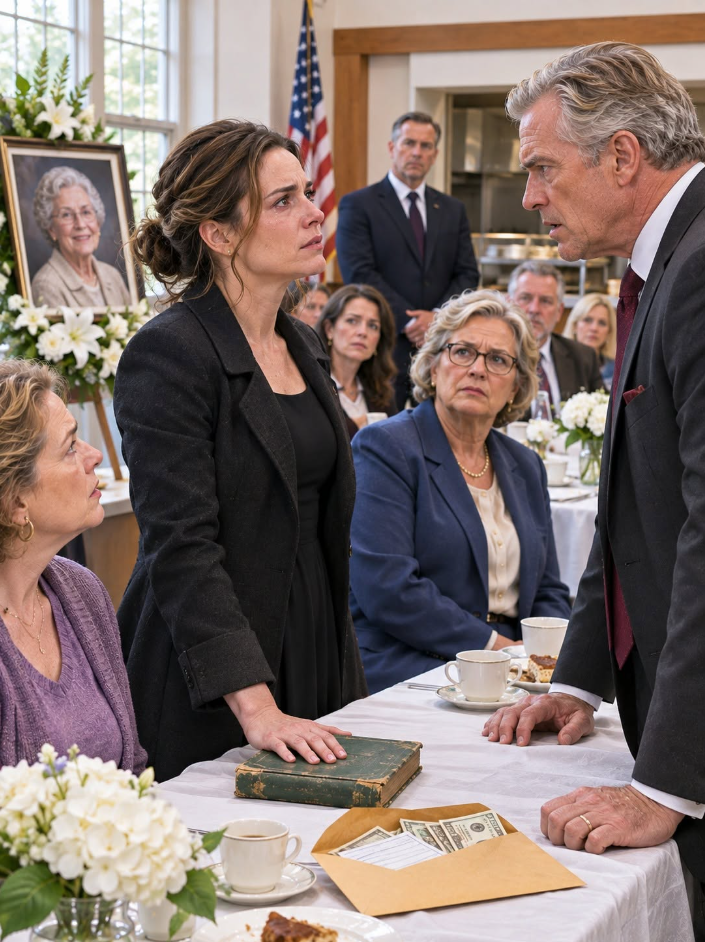
PART 1 — The Stranger at the Computer
“If you can’t even fix one computer, then tell me who hired you!” Tessa Morgan shouted across the office, unaware that the man she had just insulted held more power there than anyone else. It was her first morning at Whitmore Properties, one of Chicago’s largest real estate companies, and already she feared she would leave without a job. At 9:12, the computer system had failed. Contracts were inaccessible, phones kept ringing, and an important investor meeting was approaching. After six months of searching for work, this was precisely the disaster she could not afford.
“What do you mean, what’s going on? The whole system is down! We need you to fix it right now.” His attention moved toward the unresponsive monitors. “And you’re sure I’m the right person for this?” Tessa sighed, her anxiety sharpening every word. “Look, I don’t have time for jokes. It’s my first day and I need to keep this job. If you can’t fix it, call someone who can.” A faint smile appeared on his face. “You’re rather direct.” “And you’re rather slow.” Around them, several employees glanced up without offering an explanation.
The color vanished from Tessa’s face. Mr. Whitmore? The stranger turned toward her. “By the way, I don’t think we’ve been introduced. I’m Grant Whitmore, CEO of the company.” Silence settled over the office. Suddenly she remembered the photograph from her interview: the billionaire recently returned from London to run his family’s business. She had just treated its owner as an incompetent employee. Grant crossed his arms. “Ms. Morgan, any other instructions before I go to my meeting?” “Sir… I… I’m so sorry…” “Don’t worry about it. It’s been an interesting morning.”
Grant sat at the head of the table. “Before we begin,” he announced, “our new employee has something to tell you.” Tessa swallowed. “This morning I mistook Mr. Whitmore for an IT technician and demanded that he fix the computers.” Several directors laughed, but Grant’s expression remained serious. “And why did you act that way?” “Because forty people couldn’t work, and nobody seemed willing to take responsibility for the problem.” The laughter faded. “Even if it meant confronting a stranger?” Grant asked. Tessa raised her chin. “I was wrong in how I did it, sir. But not in trying to find a solution.”
He considered her for several seconds. Her answer had surprised him more than her earlier commands. Once the meeting was finished, he summoned her to his office. Thoughts of Dolores, the mortgage, and the bills accumulating on the kitchen table followed her inside. Before taking a seat, she spoke. “You can fire me if you think you have to,” she said. “But I need you to know that this job means everything to my family.” Grant closed the folder before him. “I’m not going to fire you.” Her eyes widened. “Excuse me?”
“I’ve reviewed your file. You studied business administration, you spent five years coordinating projects, and you cut your previous department’s expenses by eighteen percent.” Confused, she asked, “Then why did you call me in?” “Because I need an executive assistant who doesn’t just tell me what I want to hear.” He pushed a document toward her. “I’d like to offer you the position of direct assistant to the CEO. Better pay, more responsibility.” Tessa sat motionless, struggling to reconcile the offer with the dismissal she had expected only moments earlier.
“You’re promoting me after what happened?” she asked. “I’m selecting you for your experience. This morning only confirmed that you can act under pressure. Although you do need to learn to control your temper.” At last, Tessa smiled. “And you should introduce yourself before walking into an unfamiliar office.” Grant laughed aloud. “You’re definitely going to give me a lot of headaches.” She accepted. What had seemed certain to become the shortest employment of her life had instead placed her directly beside the man she had ordered around in front of everyone.
Before she left, however, he handed her a red folder. “Your first responsibility will be coordinating a charity dinner for two hundred fifty guests. We have three days.” Tessa examined the paperwork. Confirmations were missing, contracts were incomplete, and vendors had not been settled. “This can’t be organized properly in three days.” Grant did not dismiss her objection. “Then you’ll have to tell me what we need to change.” The assignment demanded more than rushing through a checklist, and she began by studying the agreements already attached to the event.
That night, one set of payments caught her attention. A decorating business had collected advances even though its services had not been formally contracted. The total was $86,000. More troubling still was the name on the authorization: Grant’s own brother. Tessa checked the numbers again rather than trusting her first impression. The company was Lakeshore Events LLC, registered at a Chicago business address. Three invoices made up the total, yet nothing in the file established that the promised services had actually been confirmed.
The approvals belonged to Preston Whitmore, Grant’s younger brother and the group’s chief operating officer. Tessa understood how sensitive that made the discovery, but an uncomfortable signature did not make incomplete paperwork acceptable. The following morning, she carried the folder into Grant’s office. “I need to talk to you about something delicate.” He looked up. “You’re starting to worry me when you use that tone.” She placed the records before him. “There are payments connected to the charity dinner that don’t match the services contracted.”
Grant studied the invoices, and his expression shifted when he reached the signature. “Preston has handled these contracts for years.” Tessa answered without retreating. “That doesn’t mean the paperwork is correct.” He remained silent. Since their father’s death, his relationship with Preston had been difficult. Both brothers owned substantial shares in the business, but Preston had always resented Grant’s appointment to the leading role. Grant could not ignore either the family history or the documents now lying on his desk.
Finally, he made his decision. “I’m going to request an internal review,” he said. “But until we verify the facts, I want absolute discretion.” Tessa nodded. “Of course.” Neither of them anticipated what would happen later that same afternoon. While she was examining vendor proposals in the administrative department, Preston arrived. “So you’re the famous new hire who mistook my brother for an IT guy.” She raised her eyes from her work. “Good afternoon, Mr. Whitmore.”
His smile held open contempt. “My brother has a peculiar habit of collecting people who need to be rescued.” Tessa closed the folder calmly. “I got this job on my professional qualifications.” Preston continued, “Of course. And now you plan dinners for millionaires.” She refused to follow him into the insult. “I’m organizing a charity event that has to go well.” Then he leaned across her desk. “A piece of advice, Ms. Morgan. Around here, it pays to know who’s in charge and which matters shouldn’t be looked into.”
Tessa met his gaze. “That’s exactly why I verify documents before I approve anything.” His smile disappeared. After he left, she understood that the questionable payments might be only one piece of something larger. Nevertheless, the approaching dinner still required her attention. She continued working with the planning team, changed the decorating supplier, and renegotiated agreements. Over the following three days, she brought the event together without exceeding its approved budget. Suspicion had complicated her assignment, but it had not displaced her responsibilities.
Grant’s admiration increased as he watched her work. She could solve problems without pretending to know everything, ask for assistance when necessary, and recognize when another department needed to authorize a decision. On the evening of the fundraiser, at an elegant Michigan Avenue hotel, Tessa arrived in a dark green dress with her hair pinned up. Grant found her checking the reception arrangements. “Do you always work as if the future of the country depends on you?” “Only when my boss hands me three months of work to finish in three days.”
He smiled. “You’ve done an excellent job.” Tessa lifted an eyebrow. “Was that a compliment?” “Don’t get used to it.” They laughed together. For a moment, he seemed less like the remote executive in business magazines and more like someone who had gone far too long without an honest conversation. Throughout dinner, she resolved dietary concerns, managed a last-minute program adjustment, and kept the evening running successfully. The event raised $420,000 for programs assisting families in difficulty.
Afterward, Grant discovered her seated in a corner of the ballroom, her shoes in her hands. “I think you deserve a rest.” “I think I deserve a vacation.” “We could look into that.” She stared at him. “Who are you, and what have you done with my boss?” He laughed, and Tessa glimpsed something unexpected: a man capable of buying buildings with a signature could still struggle to express a feeling. Their work together was changing how she saw him. Yet behind the evening’s success remained the invoices, his brother’s vanished smile, and the warning about matters she should leave alone.
PART 2 — What the Whitmore Name Concealed
During the weeks that followed, Grant increasingly relied on Tessa to examine important documents, organize meetings, and identify administrative mistakes. Their relationship developed through the work itself, one conversation and one decision at a time. She also began to understand the history beneath his exacting manner. His father had made the family company the center of everything, withholding praise while continually measuring one son against the other. In that household, weakness had been treated as failure rather than as something human.
The brothers had responded differently to the same upbringing. Preston had learned to compete, while Grant had learned to disappear into work. His need for control no longer seemed to Tessa merely a powerful man’s preference. It was something he had practiced for years, a defense that had become difficult to set aside. One night, as they reviewed contracts together, she finally challenged it. “Don’t you ever get tired of trying to control everything?” Grant lowered his pen.
“When you stop controlling things, someone ends up taking advantage.” Tessa did not accept that as the end of the discussion. “That’s not living. That’s being on the defensive all the time.” He regarded her without speaking. Few people, if anyone, had ever addressed him so directly. Then he asked, “And what do you know about living without fear?” She dropped her gaze. This was no longer simply a disagreement about how he managed a company.
“Quite a bit. My father died when I was twenty-six. My mother was left with a mortgage she could barely pay. For months I was afraid to open the mailbox, because there was always another bill.” Any trace of a smile left Grant’s face. “I didn’t know.” “There was no reason you should. But I learned that being afraid doesn’t mean you have to stop doing things.” Her experience had not made her fearless. It had taught her that fear could not be allowed to make every decision.
Something shifted after that exchange. Grant began listening in a way that went beyond considering her recommendations, and Tessa continued discovering the person concealed behind his surname. Neither transformation arrived as a grand announcement. It grew from the conversations that accompanied their work and from the willingness to hear something uncomfortable without shutting it down. The same directness that had embarrassed her on her first morning was now allowing them to speak about things neither usually shared at the office.
Following a particularly difficult negotiation, Grant suggested dinner so they could review the final agreements. They went to a quiet restaurant in the Gold Coast neighborhood. At first, the evening had the practical purpose he had given it: food, documents, and unfinished business. Gradually, however, their attention moved away from the paperwork. They spoke about their families, the isolation each had experienced, and the lives they once expected to lead. The conversation became more personal than either had planned.
For Tessa, hearing him discuss those things made the distance between the executive and the man seem smaller. For Grant, there was relief in being asked about a life rather than a result. Their surroundings and the agreements between them did not change, but the evening no longer felt like an extension of a meeting. Loneliness, family, and disappointed expectations had taken the place of negotiations. Neither was trying to impress the other with what could be accomplished.
Grant told her that his mother had died when he was seventeen. The loss belonged to a part of his life she had not known, and speaking of it brought forward a different understanding of the household he had described. His father’s relentless expectations had not been the whole story. There had also been someone whose attention had rested on Grant himself, not on the company or on a comparison with his brother. Remembering her made the absence of that attention unmistakable.
Tessa listened as he explained what had distinguished his mother from the demands surrounding him. This was not the Grant who could resolve a business question with a few precise instructions. He was speaking about someone he missed, and about a kind of care that success had never replaced. Tessa felt an unexpected tenderness toward him. The man across from her could command a boardroom, yet remained uncertain about whether the person whose opinion mattered so deeply would approve of him.
“She was the only person who asked me if I was happy, instead of asking how much I had accomplished.” Tessa answered gently. “I’m sure she’d be proud of you.” “I’m not so sure.” “Then you should start being sure yourself.” Grant looked at her differently. For the first time, he recognized that he did not want their conversation to end. What had begun as dinner over final agreements had become something neither a contract nor a professional explanation could fully contain.
Elsewhere, people began supplying explanations of their own. Rumors circulated through the company: Tessa’s advancement supposedly reflected Grant’s interest in her, and their dinner was described as a romantic outing. The whispers threatened to replace her qualifications with assumptions. Preston made the situation worse by encouraging them. In front of several executives, he observed, “How curious,” then added, “A newcomer achieves in weeks what other employees take years to reach.” Standing at the doorway, Tessa heard him.
That evening, she went directly to Grant. “I need to ask you for something.” “Anything.” Her request was specific. “I want my work to be evaluated by Human Resources using clear criteria. And I want any change in my responsibilities to be documented.” He immediately understood what had brought her there. “Because of the rumors?” “Because I’ve worked too hard for anyone to be able to say my achievements were a personal favor.” Grant nodded. “You’re right.”
Over the next several days, they arranged a formal assessment of her role and restricted decisions that might create conflicts of interest. His response mattered to her. He had not asked her to dismiss the rumors, accept his protection, or trust that his position would make everything harmless. Instead, they established professional safeguards. Yet clear procedures could not make their changing feelings disappear. Both understood that their connection was no longer confined to the work they completed together.
The tension became harder to ignore when Grant invited her to a business gala at the Chicago Cultural Center. There was a genuine professional reason for her attendance: she had helped examine several agreements scheduled for announcement that evening. Still, she understood what arriving with him might encourage people to say. The invitation placed her expertise and their growing closeness in the same public setting, where people already inclined to gossip would be ready to draw their own conclusions.
“I don’t want anyone thinking I’m there as decoration,” she warned. Grant smiled. “I want you there precisely because you know the documents better than anyone.” She was not finished establishing the terms. “Then don’t interrupt me when I have something important to say.” “I’ll try to survive.” It was familiar territory between them: her directness, his humor, and the understanding that she expected to participate as a capable professional rather than simply stand beside him.
For the gala, Tessa chose a midnight-blue dress and earrings that had belonged to her mother. Grant stopped when he saw her. “You look beautiful.” She smiled at his unguarded reaction. “Careful. You’re starting to give compliments without sarcasm.” “It seems you’re a bad influence on me.” The exchange was light, but his admiration was not hidden behind a business remark. Neither could pretend that the evening would feel exactly like every other professional obligation they had shared.
At the reception, Grant introduced Tessa to business leaders as a professional essential to the development of the new projects. She took part in the discussions confidently, bringing the knowledge that had justified her invitation. For her, being recognized for that work mattered more than merely being included. Grant’s introductions acknowledged her contribution without speaking for her. She knew the documents, understood the agreements, and had something worthwhile to add to the conversations around her.
Later, she stepped onto a terrace for some air and found Preston beside a column. “Enjoying your new life, aren’t you?” Tessa answered, “I don’t know what you mean.” He made the accusation plain. “My brother. His connections. His dinners. Everything a girl like you could never have gotten on her own.” Humiliation rose in her, but she kept her composure. The contempt was familiar now, though familiarity did not make it hurt less.
“I don’t need your approval for my life.” Preston gave her a cold smile. “Be careful. Grant always tires of people once they stop being useful to him.” Before she could reply, Grant appeared. “Preston, enough.” His brother lifted his hands in false innocence. “We were just talking.” Grant’s answer ended any pretense that this was an ordinary conversation. “Then the conversation is over.” Preston left, although the look he gave them made clear that his resentment had not gone with him.
Grant turned back to Tessa. “Are you all right?” “Yes. But I’m tired of everyone thinking they get to decide what I’m worth.” He fell silent. Her answer left no room for a reassuring remark about his brother or the party. For weeks, he had avoided putting words to the change between them, conscious of the position he held and the damage careless attention could cause. Now, standing with her after Preston’s attack, he was about to say the very thing he had been holding back.
PART 3 — A Life Beyond the Office
“I have never thought you were worth less than anyone. In fact, since you arrived, I care about your opinion more than I should.” Tessa’s heart raced. “Grant…” He continued before she could mistake his meaning. “I know I’m your boss. And that’s exactly why I don’t want to put you in an uncomfortable position.” She held his gaze. “Then don’t. I need my career to stay my own, whatever happens.” Grant nodded. There were no kisses or promises that night, only an honest exchange that permanently altered the way they saw each other.
Two weeks afterward, the Lakeshore Events investigation concluded. Auditors uncovered inflated invoices and payments unsupported by actual services. Preston had approved transactions involving a company connected to a former business partner. Grant presented the findings to the board and ordered an independent legal review. While the facts were addressed, Preston was relieved of his duties. Before departing headquarters, he confronted Tessa. “This is all your fault.” She put down the documents she was holding. “No. I found some invoices that didn’t add up. The decisions you made are your own responsibility.” He had no response.
For Grant, the betrayal was deeply painful. He had spent years shielding his brother from the consequences of his mistakes, believing family unity justified the sacrifice. Now he understood that love did not require concealment. Tessa remained beside him without trying to make his decisions. When he admitted feeling alone, she told him, “You can love your brother and still demand that he answer for his decisions. The two things go together.” He carried those words with him long afterward. They offered no easy escape from the hurt, but neither did they ask him to excuse what had happened.
Not long later, another Chicago company offered Tessa a position in its strategy department. It brought a substantial salary increase and the opportunity to lead a team of her own. When she told Grant, he went quiet. “It’s a wonderful opportunity,” he said eventually. “I thought you’d try to convince me to stay.” “I’d like to. But it wouldn’t be fair to use my position to keep you.” A lump formed in her throat. “And if I told you that part of me wants to stay because of you?” He moved closer slowly. “I’d tell you I don’t want to be the reason you give up your dreams.”
Tessa accepted. On her final day, Grant accompanied her to the entrance. “Remember that first morning?” she asked. “The woman who threatened to call security because I couldn’t fix a computer.” “Still my greatest professional embarrassment.” “For me, it was the day someone stopped treating me as if my last name made me superior.” She smiled, and he took her hand. “Now that there’s no working relationship between us, I’d like to take you to dinner. No contracts, no meetings, no professional excuses.” After regarding him for several seconds, she answered, “I accept. But this time I pick the restaurant.” He laughed. “Whatever you say, Ms. Morgan.”
Their first date took place in a small Pilsen restaurant, without a chauffeur, cameras, or prominent executives. Grant brought flowers, and Tessa laughed when she realized he was nervous. “A man who negotiates multimillion-dollar deals is scared of a dinner?” “Multimillion-dollar deals are a lot simpler.” They chose to let their relationship develop without rushing it. With professional excuses finally set aside, they could begin learning how to be together beyond the responsibilities that had first brought them into each other’s lives.
Grant met Dolores over a family lunch. She welcomed him with homemade pot roast and a warning that left no uncertainty about her priorities. “In this house it doesn’t matter how much money you have. What matters is how you treat my daughter.” He answered at once. “I hope to measure up.” In time, she discovered that the apparently distant businessman could listen to her stories for hours and help clear the table without prompting. Tessa learned that he was attentive, funny, and unexpectedly awkward in the kitchen. They disagreed, reconciled, and continued challenging one another, but understanding had replaced competition.
A year later, Grant arranged a surprise. He chose neither a helicopter nor a private-island escape. Instead, he brought Tessa to the little garden of a family property outside Galena, where his mother had once spent afternoons caring for rosebushes. Beneath an old oak stood a table, family photographs, and white flowers. The setting belonged to the part of his life he had gradually allowed Tessa to know, far removed from the business achievements that had once seemed to define him.
He held her hands. “For many years I believed success meant not needing anyone. Then a woman showed up, gave me orders without knowing who I was, and taught me that life isn’t about always winning.” Tears filled Tessa’s eyes. Grant produced a small box. “I don’t want you to stop being yourself. I want to share my life with you, hear your opinions even when I don’t like them, and keep learning at your side.” There was no request for her to become quieter, less independent, or easier to manage.
Grant knelt beneath the old oak. “Tessa Morgan, will you marry me?” She covered her mouth with both hands. “Yes, Grant. Of course I will.” He stood and gathered her into his arms, and they laughed together through their emotion. The man who had once hidden behind control had asked to share a life he could not direct alone. Tessa had answered without surrendering the independence he had learned to respect. Around them were his mother’s garden, the family photographs, and the white flowers he had chosen for that moment.
Four months later, they married at an estate near Lake Geneva, Wisconsin, with family and friends around them. The celebration was elegant, but Tessa wanted simple details that remembered how they had reached this day. Their history mattered more to her than a ceremony shaped only by Grant’s wealth. The occasion held room for happiness and for the people whose absence could not be filled, however complete the joy of the day might be.
Dolores escorted her daughter down the aisle. Inside Tessa’s bouquet, a small photograph of her father had been pinned discreetly in place. When Grant saw her coming toward him, he could not keep back his tears. This was not a moment he could improve by controlling it or hide inside a professional task. He watched the woman who had challenged him from their first meeting approach, accompanied by the mother whose home and security had once made that first job feel so desperately important.
During her vows, Tessa said, “The first day, I thought you were an incompetent technician. Then I discovered you were an unbearable boss. But over time I got to know a man who learned to listen, to respect, and to love without trying to control.” Their guests laughed through tears. She had not erased the difficult parts of their beginning to make the story prettier. The awkwardness, the clashes, and the changes were all part of the man she had chosen.
Grant tightened his hold on her hands. “And I discovered that the most important person in my life could show up when I least expected it, yell at me in front of an entire office, and change me forever.” The disastrous introduction that had once made Tessa wish she could disappear had become something they could acknowledge with tenderness. Neither had known, amid the ringing phones and failed computers, how completely that morning would alter the course of their lives.
Later, beneath the garden lights, they danced together. Tessa rested her head against his shoulder. “You know what’s the funniest part?” “What?” “If that computer system hadn’t crashed, we might never have spoken.” Grant smiled. “Then it was the luckiest breakdown of my life.” She lifted her face toward his. “Although it took you a long time to fix it.” He laughed and drew her closer, no longer the guarded stranger who had silently accepted orders from a frightened new employee.
In the end, the man able to purchase almost anything had found something his fortune could never have supplied. Tessa did not admire him because he was wealthy, fear him because he was a Whitmore, or wait for his permission to shine. Those qualities had unsettled him before they had become essential to him. Loving her had required him to recognize that another person’s independence was not a threat to what they could share.
Tessa, too, had found something she had not expected when she entered Whitmore Properties desperate to keep a job. She had a partner who knew her temper, understood her wounds, and respected the dreams she would not set aside. Their relationship had not required either of them to become flawless. They had continued disagreeing and learning, but beneath those differences was the choice to understand each other rather than compete for control.
Years afterward, Grant kept a small framed photograph of the computer from that first morning in his office. Beneath it was an engraved sentence whose full meaning belonged to the two of them: “The day I stopped giving orders and started listening.” It remembered more than an amusing mistake. For him, it marked the beginning of a change that no appointment, inheritance, or successful negotiation had accomplished.
Whenever Tessa entered that office, Grant would look up with a smile and ask, “Mrs. Whitmore, any instructions for today?” Her answer never changed. “Yes. Don’t forget that the most important thing in your life was never in this office.” The familiar exchange carried the humor of their first encounter, but its meaning was different now. She was not directing a stranger toward another broken computer. She was reminding the man she loved of the life waiting beyond his work.
Then Grant would turn off his computer and go home with her. The office that had once offered him somewhere to hide no longer contained everything he believed he needed. What mattered most was not another document, another meeting, or another result. It was the woman beside him—the woman who had first demanded a solution without knowing his name, and whose familiar question could still make him stop, listen, and choose what came next.