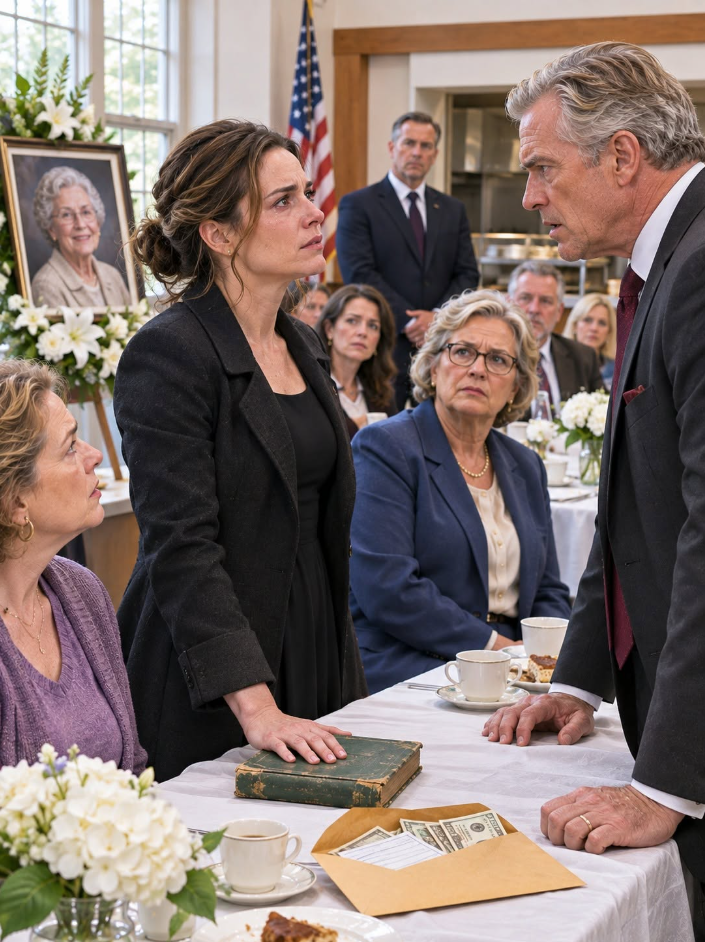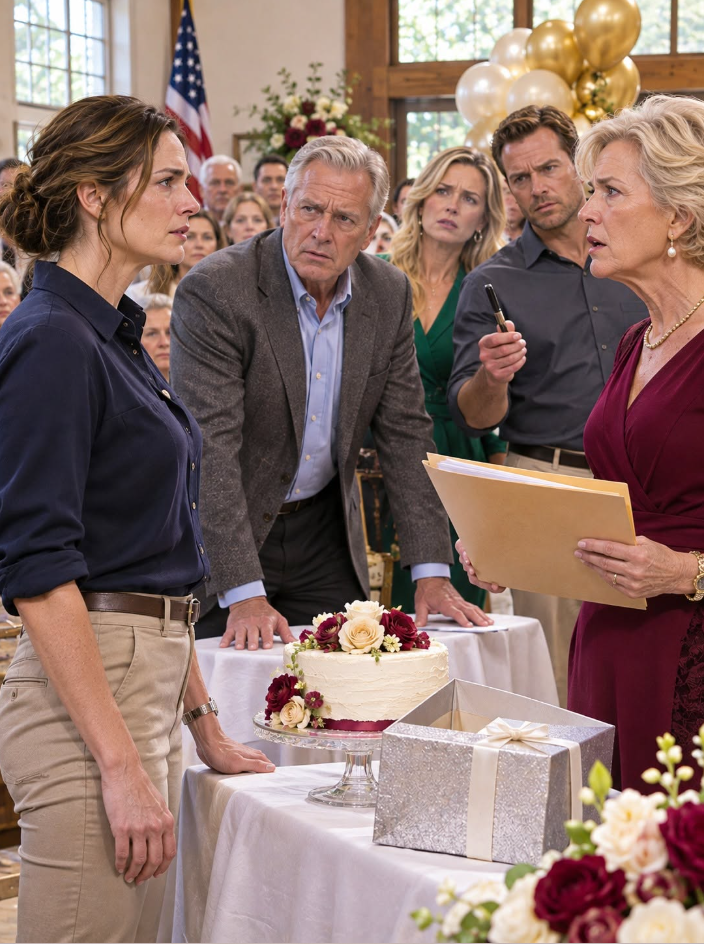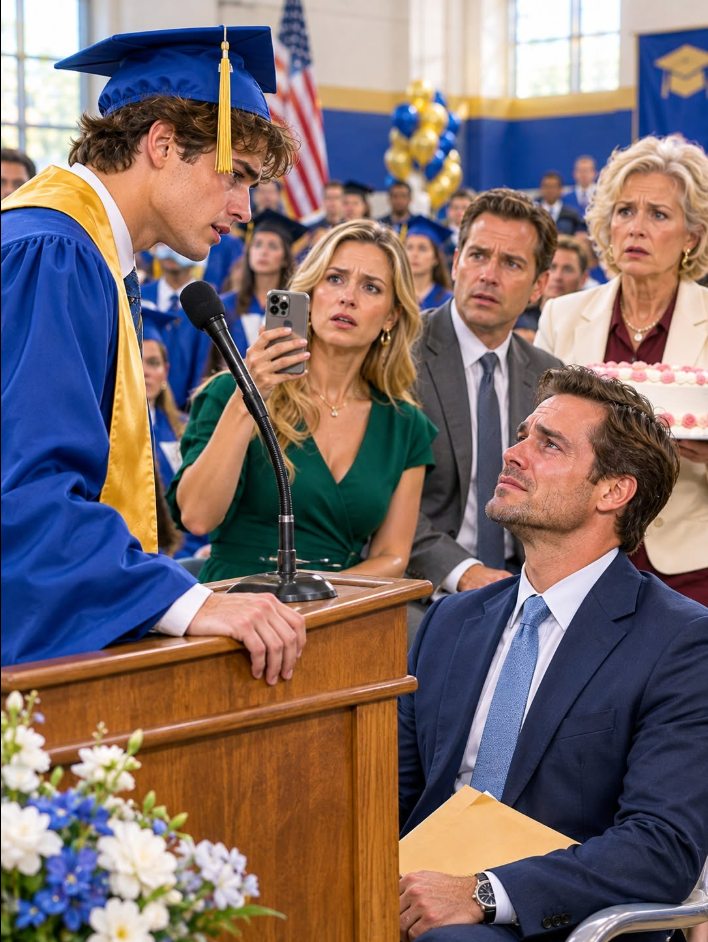
For 19 years, I raised my sister’s son as my own. She got pregnant at 16—parents said it would “ruin the family name.” I was 22. Single guy. I took him. Last month, she crashed his graduation with a cake reading “Congratulations from your real mom.” What my son did next broke her.
For 19 years, I raised my sister’s son as my own. She got pregnant at 16—parents said it would “ruin the family name.” I was 22. Single guy. I took him. Last month, she crashed his graduation with a cake reading “Congratulations from your real mom.” What my son did next broke her.
Congratulations from your real mom
My name is Grant Mercer, a 41-year-old high school teacher. 19 years ago, my teenage sister got pregnant, and my parents forced me to raise her baby to protect our family name. I was 22, single, and gave up my graduate scholarship to become his dad.
Tiffany moved away, never called once, and married twice. Last month, she crashed my son’s graduation with her wealthy fiancé and a cake reading, “Congratulations from your real mom.”
What my son did next made my mother weep and broke Tiffany before 200 people.
Thank you for watching video. Before I take you back there, do me one small favor. Take a second to like and subscribe, and tell me in the comments where you’re watching from and what time it is where you are. It helps more than you know.
To understand how a single guy barely out of college ended up raising a newborn alone, you have to understand Milbrook, Indiana. It is a quiet town of 12,000 people where everybody knows your business before you finish living it, and reputation is treated like currency.
My mother, Brenda, guarded our family name like a fortress. Growing up, the rules in the Mercer house were unwritten yet absolute.
My sister, Tiffany, was six years younger than me. She was the golden child, the pretty one who made people smile just by walking into a room. I was the steady older brother who mowed the lawn, shoveled the snow, drove Tiffany to cheerleading practice twice a week, and never asked for anything inconvenient.
My mother believed Tiffany was fragile and needed shielding, while I was dependable and would always manage on my own. My father, Kenneth, was a quiet accountant who sat at the dinner table, read his evening paper, and agreed with whatever Brenda decided without ever questioning her judgment.
That spring, I was 22, fresh out of Purdue University with honors in history, and accepted into a master’s program with a full-ride scholarship. I had a tiny studio apartment 40 minutes away with a window facing a gravel lot, and I loved it because I paid every dollar of the rent myself.
Then came a Tuesday night in March.
My phone rang at 2:00 in the morning. I drove the 40 minutes back to Milbrook in the dark and found Brenda sitting at the kitchen table beside an untouched mug of tea.
Kenneth stood by the refrigerator, staring at the linoleum floor, while Tiffany sobbed uncontrollably upstairs.
Brenda slid an ultrasound printout across the table.
“16 weeks along. Four months.”
Tiffany’s teenage boyfriend, Troy, had already packed his bags and fled to Kentucky the week before. My mother glanced at the clock ticking past 2:11 in the morning and spoke the words that changed my life.
“The neighbors cannot know,” she said. “It would ruin everything we have built.”
I sat at that kitchen table until the sky outside turned a pale shade of gray, listening to my mother lay out the future like a business merger.
In Brenda’s mind, there were only two acceptable outcomes, and neither allowed Tiffany to be seen pushing a stroller down Main Street in Milbrook.
The first option was formal adoption through a state agency, which Brenda dismissed within 30 seconds because paperwork and home visits meant people at church or the grocery store might find out.
The second option was keeping the baby inside the family, quietly, far away from town.
She looked directly at me across the table.
“You have your own place,” she said evenly. “Nobody here knows your neighbors. You are 22. You have a steady head on your shoulders, and you are her brother. Family steps up.”
I looked toward my father for help, hoping he might remind her that I was supposed to start graduate school in August, that I had worked three summers roofing houses to afford my textbooks, that I barely owned a decent couch, let alone knew how to care for an infant.
Kenneth simply cleared his throat, stared harder at the floor, and gave one slow, silent nod.
That single nod told me the decision had been made long before I ever walked through the front door.
Brenda walked down the hall to the linen closet and returned holding a folded square of cream-colored yarn. It was a knitted baby blanket, faded at the edges and thin from 22 years in storage.
She placed it on the table in front of me.
“This was yours,” she said softly, using the gentle voice she saved for Sunday mornings. “The day we brought you home from the hospital.”
“If you do not take this baby, Kenneth and I are calling an adoption agency on Friday morning. The child will go to strangers. Tiffany will finish high school, and we will never speak of this again.”
The faint scent of cedar and old detergent rose from that cream blanket.
Just then, footsteps padded down the stairs. Tiffany appeared in the doorway wearing an oversized hoodie, her face blotchy and her eyes swollen from crying.
She looked exactly like what she was—a terrified 16-year-old kid whose whole world had collapsed.
I asked the only question nobody else had bothered to ask.
“Tiffany,” I said gently. “What do you actually want?”
She glanced nervously at our mother, then down at her socks.
“I just want it to go away,” she whispered. “I have school.”
19 years later, in a packed high school gymnasium, those four words would echo back to me in a way none of us could have ever imagined.
I drove home that morning with the cream blanket resting on my passenger seat. And by 9:00, I had called Purdue and withdrawn from my graduate scholarship.
The rest of that spring blurred into preparation I had no business making.
While Tiffany finished her sophomore year wearing loose hoodies and telling everyone at school she had gained weight from a thyroid issue, I spent my weekends haunting yard sales and thrift shops two counties over.
I bought a secondhand wooden crib that wobbled until I reinforced the corners with steel brackets from the hardware store. I bought plastic bottles, burp cloths, and a stack of parenting books from the library discount bin, highlighting chapters on fevers and feeding schedules like I was cramming for a final exam.
On July 14th, at 3:17 in the afternoon, Wesley entered the world.
Tiffany had been in labor for 11 hours at the county hospital 40 miles outside Milbrook, where nobody knew our last name.
To her credit, she did not scream or complain. She gripped the metal bed rails, breathed the way the delivery nurse instructed, and pushed when they told her to push.
Watching her pale, exhausted face through every contraction, all I could think was how terribly young she was to be going through this.
Brenda stood near the door the entire time with her arms folded tightly across her chest, checking her wristwatch every 20 minutes as if the birth were an appointment running behind schedule.
Kenneth stayed out in the waiting room, probably staring at a spot on the carpet.
When the doctor finally lifted the baby up, Wesley let out a cry loud enough to rattle the glass cabinets. He weighed 6 lb, 9 oz, had a full tuft of dark hair, and his face was red and scrunched with indignation.
The nurse wiped him clean, swaddled him tightly in a striped hospital blanket, and turned toward the three of us in the room.
“All right,” she said cheerfully. “Who wants to hold him first?”
Nobody moved.
Tiffany turned her head sharply toward the blank wall beside her bed, squeezing her eyes shut. Brenda stared straight ahead at the door, her jaw locked tight.
The silence stretched out so long I could hear the fluorescent light buzzing overhead.
Finally, the nurse looked at me.
I stepped forward, held out my stiff, trembling arms, and took him.
He felt impossibly light and warm against my chest. The moment I settled him into the crook of my elbow, his eyes fluttered shut.
One tiny fist uncurled and wrapped tightly around my thumb, and his crying stopped completely.
Just like that, it was as if he had been waiting for the right set of arms to catch him.
The nurse smiled softly, though her eyes flicked uneasily toward my mother and sister.
“And who is taking him home?” she asked.
Another heavy silence fell over the room.
I looked down at the tiny boy holding onto my thumb, felt something permanent lock into place inside my chest, and spoke clearly.
“I am,” I said. “I’m taking him home.”
Three days later, I carried Wesley up the narrow stairs into my one-bedroom apartment on East Elm Street.
Aside from the secondhand crib, I had a single box of diapers from the dollar store, a can of powdered formula, and the faded cream-colored knitted blanket from my mother’s linen closet.
That first night, I wrapped him in that cream blanket. It barely covered his shoulders, frayed along the border. Yet, it was soft and warm, and for the first time, it belonged to both of us.
That first year nearly broke me in half.
Wesley suffered from severe colic, and every single evening, like clockwork, from 8:00 until midnight, he screamed until his little face turned purple.
Nothing soothed him.
I walked hundreds of miles across that living room rug in my socks, bouncing him against my shoulder, humming old folk songs my grandfather used to sing, watching the red numbers on my microwave clock crawl forward minute by minute.
During the day, I worked as a classroom teaching assistant at an elementary school two towns over, earning just enough to keep the lights on and the refrigerator stocked with milk and eggs.
At night, after Wesley finally fell asleep around 1:00 in the morning, I sat at my card table doing remote data entry for an insurance firm until 3.
I learned to function on four hours of broken sleep. I learned to eat cold sandwiches standing over the kitchen sink. I learned to take a shower in under three minutes flat because three minutes was the exact limit of Wesley’s patience in his plastic bouncy seat before he started wailing again.
One rainy night in November, when Wesley was four months old and running a low fever, I hit a wall.
He had been crying nonstop for four hours straight without taking a breath. My shirt was soaked with spit-up and sweat.
My knees were aching from pacing, and my hands were shaking from sheer exhaustion.
At 11:00 at night, I picked up the phone and called my mother.
“Mom,” I said, trying hard not to let my voice crack. “I really need help just for tonight. Can you come sit with him for a few hours so I can get some sleep?”
On the other end of the line, Brenda’s voice was cool, steady, and completely detached.
“You chose this, Grant,” she said. “You are a grown man. Figure it out.”
Click.
She hung up.
I stood there in the dim kitchen holding the dead receiver to my ear while Wesley sobbed in my other arm.
Something inside me went quiet that night.
I never asked my mother for help again.
From that moment on, I understood that Wesley and I were a unit of two, and whatever happened down the road, I was going to be strong enough for the both of us.
While I was learning how to stretch $20 at the grocery store and soothing a colicky infant at 2:00 in the morning, Tiffany was starting a brand-new life four states away.
That August, just five weeks after giving birth, she packed her matching suitcases and moved to Boston to attend a private liberal arts college.
Her tuition, dorm fees, and meal plan were paid in full by a combination of partial scholarships and my parents’ savings account.
The very same savings account Brenda told me was completely tapped out when I asked for help paying Wesley’s pediatrician copays during his winter ear infections.
In October, when Wesley was three months old, I took a morning off work and went down to the county courthouse to make everything legal.
The paperwork was straightforward, though reading every single line made my throat tighten.
Because Tiffany was still a minor under Indiana law, both Brenda and Kenneth had to co-sign the consent documents alongside her so the transfer of custody would be permanent, irrevocable, and completely binding.
The clerk at the courthouse told me the final voluntary relinquishment forms had come through their fax machine the afternoon before.
Tiffany had signed away every shred of maternal and custodial rights from the administrative office of her sorority house in Boston, right in the middle of rush week so she would not miss an evening social mixer.
Her signature was neat, slanted, and brisk, followed by the stamped seal of a Massachusetts notary public.
When the family court judge signed the final order, naming Grant Daniel Mercer as Wesley’s sole legal guardian, I walked out onto the courthouse steps into the crisp autumn air, feeling like a massive weight had lifted off my chest.
Nobody could walk into my apartment on a whim and take him away.
Nobody could ever treat him like a temporary arrangement.
That afternoon, I stopped at a hardware store on my way home and bought a small, heavy-duty fireproof safe with a combination lock.
I carried it up the narrow stairs and slid it underneath my bed frame.
Inside that heavy steel box, I placed the certified court guardianship decree, Tiffany’s notarized relinquishment papers, Wesley’s tiny plastic hospital ankle bracelet, and a Polaroid photograph Colleen Miller, a kind coworker at the elementary school, had taken of Wesley sleeping flat on my chest at four days old, his mouth open and his tiny hand curled tightly into my T-shirt.
Later, once Wesley outgrew the cream-colored knitted blanket, I washed it gently by hand in the bathroom sink, folded it neatly into a square, and locked it inside that safe right on top of the legal papers.
He was mine legally, finally, and completely, and no one in my family could ever take that away from us or rewrite the truth of who actually raised him.
Those early years passed in small, bright snapshots that I still carry around in my head like photographs in a wallet.
Wesley at 14 months, taking his first real steps, wobbling three feet from the coffee table to my knees with his arms thrown wide and a grin like he had just conquered Mount Everest.
Wesley at two years old, saying his very first word. It was not mama or mommy. It was just a clear, decisive “duh.” Short and practical, as if he had already figured out who showed up every day and did not need extra syllables.
When Wesley turned three, I landed a part-time teaching position and hired an elderly neighbor down the hall named Peggy Brooks to watch him in the mornings for $40 a week.
Peggy had raised five kids of her own and possessed the calm, unshakable patience of an oak tree. Wesley adored her, and she slipped homemade banana bread into my coat pocket every Friday afternoon.
By age four, Wesley was reading full sentences off the back of his cereal box at breakfast, asking me what riboflavin meant while I scrambled his eggs.
At five, he marched through the elementary school gates on his first day of kindergarten, wearing a bright red Spider-Man backpack without even looking back, leaving me sitting in my old sedan, crying from equal parts pride and heartbreak.
During all five of those years, not a single member of the Mercer family drove the 40 minutes to visit. No birthday cards arrived in July.
Kenneth mailed a plain white envelope containing a $50 check on Wesley’s third birthday with no note inside.
That Christmas, money was tighter than usual after my car needed a new alternator. So, I wrapped Wesley’s secondhand wooden train set in the colorful Sunday newspaper comics.
He was thrilled.
He thought the comic strip was part of the present.
Then came a Tuesday evening when Wesley was six.
I was boiling spaghetti while Wesley sat at the kitchen table drawing a green dinosaur eating a spaceship.
The phone rang, and the caller ID flashed a Boston area code. My heart skipped before I picked up.
“Grant, it’s Tiffany,” she said.
Her voice sounded polished, brisk, and entirely adult.
She did not ask if Wesley was healthy, what grade he was in, or what he looked like.
She asked if the old 2003 Toyota Camry she had left in our parents’ garage six years ago was still running because she was graduating college in the spring and wanted to sell it for an apartment security deposit.
That was it.
42 seconds from hello to goodbye.
That May, Brenda and Kenneth drove all the way to Boston to watch Tiffany graduate magna cum laude.
They had her graduation portrait professionally matted in an 18-by-24-inch frame and hung it right over the living room fireplace.
Wesley’s kindergarten school photo stayed on my refrigerator, held up by a plastic ladybug magnet.
When Wesley turned eight, two milestones reshaped our daily life for the better.
First, Milbrook High School hired me full-time to teach sophomore history and assist the special education department.
The annual salary was $46,500 with full medical benefits.
For a single father who had spent eight years stretching teaching assistant wages and clipping grocery coupons, that paycheck felt like a lifeline.
For the first time, I did not have to add up milk, eggs, and apples in my head before reaching the checkout lane.
The second milestone happened on a rainy Tuesday evening while I stood at the sink washing dinner dishes.
Wesley was sitting behind me at our oak kitchen table, homework spread out, a yellow pencil gripped tightly in his fingers.
Suddenly, the scratching of his pencil stopped.
“Uncle Grant,” he said softly. “How come I don’t have a mom and dad like the other kids in my class?”
My hands froze in the warm, soapy water.
A ceramic plate slipped from my fingers and clattered against the stainless steel sink.
I turned off the faucet, dried my hands slowly on a dish towel, and pulled out a chair across from him.
He was watching me with dark, serious eyes that already looked far too perceptive for an eight-year-old boy.
“Wesley,” I said carefully. “I love you more than anything in this entire world. The woman who gave birth to you cares about you in her own way, too. She simply was not ready to raise a child. But I am the one who is here. I am your family, and I am never going anywhere.”
He studied my face in quiet concentration for several seconds.
Eight years old and already reading adults like open books.
“I know,” he said quietly. “I just wanted to call you Dad instead of Uncle Grant. Is that okay?”
I had not shed a tear in eight years.
Not when Brenda hung up on me at 11:00 at night. Not when Tiffany called to ask about an old Toyota Camry instead of her own son. Not when birthdays passed without a single card in our mailbox.
Yet, when that little boy asked permission to call me Dad, something inside my chest broke wide open.
I lifted him out of his chair and held him tight.
He smelled like pencil shavings and grape juice.
“It’s okay, Dad,” he whispered into my shoulder.
Later that night, after Wesley went to bed, I opened the fireproof safe under my bed and held the cream-colored knitted blanket under my bedside lamp.
A soft knock sounded at my doorway.
Wesley stood there in his dinosaur pajamas, saw the blanket, and walked over. He traced the frayed yarn gently, folded it into a neat square, and placed it back inside the safe.
“We should keep it safe, Dad,” he said. “It’s important.”
I told Wesley the complete truth about his beginnings when he turned 13.
We were sitting side by side on our front porch steps on a warm Sunday afternoon in late May.
For several months, he had been asking careful, indirect questions.
He wanted to know why Grandma Brenda always introduced him to neighbors around town as Tiffany’s boy, why there were zero baby photographs of him in the Mercer family living room, and who his biological father was.
I decided he was mature enough for the unvarnished truth without any bitterness.
I told him about the phone call at two in the morning, about Brenda’s ultimatum at the kitchen table, and about driving home in the dark with the cream-colored knitted blanket resting on my passenger seat.
I explained that Tiffany had been 16, terrified, and unequipped for motherhood.
I told him about the county court guardianship decree and the plain reality that Tiffany had never called, written, or visited in 13 years.
I did not call Tiffany a villain, and I did not attack my parents.
I simply laid out the facts in chronological order.
Wesley listened without interrupting a single time.
When I finished speaking, he stood up, walked through the screen door, and quietly closed his bedroom door.
He stayed inside that room for two full days, emerging only to use the bathroom or refill his water glass.
I respected his privacy, though my stomach stayed tied in knots the entire weekend.
On the third morning, he walked into the kitchen already dressed for middle school.
I set a plate of scrambled eggs and buttered toast in front of him.
He picked up his fork, took three deliberate bites, and looked across the table at me.
“I’m not angry at them, Dad,” he said evenly. “I’m just sad for her. She missed everything.”
He slung his backpack over one shoulder and walked out to catch the morning bus.
I sat at that kitchen table for another 20 minutes holding a spatula, blinking back tears.
Wesley never stopped calling me Dad, and he never once asked to reach out to Tiffany.
While Wesley blossomed into a thoughtful teenager, I spent four grueling years taking evening university classes to earn my master’s degree in special education, eventually becoming the department coordinator at Milbrook High.
Nobody from the Mercer family came to my graduation ceremony either.
My colleague, Colleen Miller, sat in the third row and cheered loud enough for an entire section.
Meanwhile, Tiffany was collecting corporate titles and short-lived marriages.
She earned an MBA, became a brand strategy director in Chicago, and married and divorced twice.
Both times, Brenda phoned me not to ask about Wesley’s honor roll grades, but to warn me not to cause Tiffany any stress.
“Your sister is going through a difficult time,” Brenda said after divorce number two. “Let her heal in peace.”
The Thanksgiving when Wesley was 15 was the final time I ever brought him through my parents’ front door.
Looking back, I am still not certain why I agreed to attend.
Perhaps a quiet part of me hoped that 15 years had softened my mother’s stubborn pride. Or perhaps I simply wanted Wesley to experience one traditional big-table holiday gathering before he grew up and left for college.
We drove the 40 minutes to Milbrook on a brisk Thursday morning in November.
Wesley wore a crisp navy button-down shirt he had ironed himself, though I noticed him nervously adjusting his collar in the passenger visor mirror as we pulled into my parents’ driveway.
Inside, the house smelled of roasted turkey, sage stuffing, and baked cinnamon apples.
Brenda had invited extended relatives, including my aunt Denise and Uncle Barry, setting the formal dining table for 14 guests.
Brenda greeted us in the front foyer with a stiff, theatrical hug designed for the relatives watching from the living room.
Then she placed one hand on Wesley’s shoulder, steered him toward Aunt Denise, and spoke in a bright, carrying voice.
“Denise, look how tall Tiffany’s son has gotten,” she announced.
Not Grant’s son. Not even our grandson whom Grant has raised single-handedly for 15 years.
Just Tiffany’s son.
As though I were merely the hired driver who had delivered him to the front steps.
Underneath the white lace tablecloth, Wesley’s hand found mine and squeezed firmly.
15 years old, and he understood the unspoken cruelty in that dining room better than any adult seated around the table.
Throughout dinner, Kenneth carved the turkey in total silence while Brenda poured wine and boasted endlessly about Tiffany’s executive salary in Chicago and her new downtown condominium.
Not a single relative asked Wesley about his high school courses, his varsity track meets, or the chemistry project that had just won him second place at the Indiana State Science Fair.
After pumpkin pie and coffee were served, Brenda cornered me beside the kitchen sink while loading plates into the dishwasher.
“It was thoughtful of you to bring him today,” she said briskly, avoiding my eyes. “Tiffany will be pleased to hear he is doing so well.”
I dried my hands on a dish towel, set it neatly on the counter, and looked directly at her.
“Then maybe Tiffany should pick up the telephone and ask him herself.”
Brenda shot me that familiar ice-cold stare that meant I was being difficult again.
Wesley and I gathered our coats and left 20 minutes later.
As we merged onto the highway, heading home, Wesley stared out the windshield and spoke calmly.
“We don’t ever have to go back there, Dad.”
He leaned his head back against the headrest as the highway lights blurred past our windows, and I reached across the console to pat his shoulder.
From that afternoon forward, we never stepped foot inside that house again.
By the time Wesley entered his senior year at Milbrook High School, everyone in town knew he was not merely a strong student.
He was truly exceptional.
He had earned straight A’s since freshman year, packed his schedule with advanced placement seminars, captained the varsity debate squad, and volunteered every Saturday morning tutoring struggling readers at the county library.
In October, his college guidance counselor invited me into her office during my morning planning period.
“Grant,” she said with a warm smile. “Wesley is officially ranked first in a graduating class of 312 students. He is locked in as valedictorian, and his college admissions essay is the finest piece of student writing I have read in 20 years.”
She slid a printed copy across her desk.
Centered at the top in 12-point type was the title, The Man Who Chose Me.
I carried it out to my sedan in the faculty parking lot because I knew I could not read it in front of another human being.
Sitting behind the steering wheel with the engine off, I read every single paragraph.
He wrote about the night I carried him home from the county hospital, the faded cream-colored knitted blanket, the Christmas mornings with Sunday comic strip wrapping paper, and the rainy evening he asked permission to call me Dad.
Near the conclusion, he had written two sentences that caught in my throat.
“Biology is an accident. Fatherhood is a decision. My dad made that decision every single day for 19 years without ever asking for credit.”
Two months before graduation, on a quiet Wednesday afternoon, Wesley walked into our kitchen and placed his cell phone face up on the counter.
“Dad,” he said quietly. “You need to read this.”
It was a Mercer family group text thread, including Brenda, Kenneth, Tiffany, Aunt Denise, and Uncle Barry.
Brenda, who barely knew how to navigate her smartphone contacts, had accidentally added Wesley’s phone number to the thread earlier that afternoon, exposing two full years of archived messages.
I scrolled upward slowly while Wesley stood beside the window with his arms folded across his chest.
14 months earlier, Brenda had typed:
“When Tiffany is finally settled, she will take Wesley back. Grant is just keeping him for now.”
Tiffany had replied three days later:
“Give me a couple more years to get my life together.”
Kenneth had chimed in with a thumbs-up emoji.
Uncle Barry had written:
“Grant should be grateful he got to raise a kid at all.”
I set the phone down and looked at my son.
“Why didn’t you show me this the second you saw it?” I asked.
“Because I didn’t want you to confront Grandma and lose your mom completely,” Wesley said softly, his voice steady despite the hurt in his eyes. “Even though she treats you unfairly every single year, I know you still care about her, and I refuse to be the reason she cut you off.”
That evening, after our dinner plates were rinsed and stacked in the drying rack, I did not pick up the telephone to scream at my mother.
I did not call Tiffany’s corporate office in Chicago. I did not forward screenshots to Aunt Denise, and I did not post a single word about my family’s two-faced scheme on social media.
Loud arguments and angry phone calls had never solved anything in my life, and I was certainly not about to start making theatrical scenes at 41 years old.
Instead, I walked quietly into my bedroom, closed the door behind me, and knelt beside my bed frame.
I pulled out the heavy fireproof steel safe, dialed the combination lock, and lifted the heavy lid.
Resting right on top was the cream-colored knitted blanket, thin as tissue paper and frayed along every border after 19 years.
I lifted it gently with both hands and set it on my bedspread.
Beneath that blanket lay the complete legal archive of Wesley’s entire life.
I inspected every single document page by page in the quiet glow of my bedside lamp.
First was the certified county court order naming Grant Daniel Mercer as Wesley’s sole permanent legal guardian.
Second was Tiffany’s voluntary relinquishment of all maternal and custodial rights, signed, notarized, and faxed from her sorority house in Boston 19 years earlier, bearing the required co-signatures of both Brenda and Kenneth.
Beneath those were 19 years of elementary and high school enrollment forms, immunization records, emergency contact cards, and surgical consent forms.
Every single one signed on the line marked parent or guardian in my own handwriting.
The following morning, during my school planning period, I drove down to the county clerk’s office and paid for two fresh certified copies of the court guardianship decree and the notarized relinquishment.
After the final dismissal bell rang, I walked down to the faculty workroom and printed out the entire two-year family group text thread showing their arrogant, callous plan to treat Wesley like a borrowed piece of furniture.
I slipped the certified court papers and the printed messages into a crisp brown manila envelope, sealed the flap tightly, and locked it inside the glove compartment of my sedan.
When I returned home that afternoon, I placed the cream knitted blanket gently back inside the heavy steel safe, closed the door, and spun the dial twice.
Standing in my quiet bedroom, I felt a steady, unshakable calm settle over my shoulders.
For 19 years, my family had mistaken my quiet patience for weakness.
If my mother and sister intended to stage a performance at Wesley’s graduation, the official documentation was ready.
I had zero intention of starting a fight on the happiest day of my son’s young life.
But if they pushed me in public, I was completely prepared to finish it on the spot.
Six weeks before graduation, my landline rang on a Sunday evening.
It was Brenda.
She did not ask about Wesley’s college acceptance letters, and she did not ask about his valedictorian speech.
She launched straight into news about Tiffany with the breathless excitement of someone announcing a winning lottery ticket.
“Your sister has met someone extraordinary, Grant,” Brenda said brightly. “His name is Russell Caldwell. He is the chairman of a major real estate investment fund in Chicago. Very wealthy, very traditional, and he wants to build a real family.”
I leaned back against my oak kitchen counter, crossed my arms, and waited quietly for the catch.
It took less than 10 seconds to surface.
“Tiffany told Russell all about Wesley,” Brenda continued smoothly. “She explained how complicated things were back then and how our family situation forced her to make the painful sacrifice of letting you help raise him. Russell was deeply moved. He thinks Tiffany is remarkably brave, and he wants to meet Wesley at graduation. This is Tiffany’s chance, Grant. Her chance to finally have everything she deserves.”
I stared at the kitchen wall, listening to my mother repackage 19 years of solo fatherhood, four-hour sleep nights, and newspaper-wrapped Christmas gifts into “letting me help.”
Not once did Brenda mention Wesley’s feelings, his academic achievements, or the plain fact that Tiffany was a complete stranger to him.
“Russell doesn’t know the real story, does he?” I asked evenly. “He doesn’t know she faxed away her parental rights during sorority rush week so she wouldn’t miss a party.”
Dead silence crackled across the telephone line for three full seconds.
Then Brenda’s voice turned sharp as broken glass.
“He knows everything he needs to know. Do not ruin this for your sister, Grant. Keep your mouth shut and smile.”
She hung up abruptly before I could say another word, leaving the dial tone humming in my ear.
I walked outside onto the front porch and sat on the wooden steps as fireflies began blinking across the twilight yard.
Lawnmowers hummed softly two streets over in the warm evening air.
A few minutes later, the screen door creaked open.
Wesley walked out carrying two tall glasses of iced lemonade, handed one to me, and sat down on the wooden step beside me.
“Grandma called?” he asked, reading my expression effortlessly.
“Yeah,” I said, taking a slow sip of the cold lemonade.
As the evening breeze rustled the maple trees, she called to brag about Tiffany and her wealthy new fiancé from Chicago.
Wesley rested his glass on his knee and looked out across our quiet street with dark, steady eyes.
“She can bring a cake, a banner, and a marching band to graduation, Dad,” he said with a small, confident smile. “It won’t change a single thing between us, and it won’t erase 19 years of who actually showed up.”
Three weeks after that Sunday phone call from my mother, Wesley walked into our kitchen after school, holding his cell phone with a strange, unreadable expression on his face.
I was sitting at the oak table grading a stack of sophomore history essays with a red pen, a cold mug of coffee beside my elbow.
He set his backpack down by the doorway, walked over, and turned his screen toward me without saying a word.
It was a direct message on Instagram from a verified-looking account featuring a glossy studio headshot and 4,000 followers.
The message read:
“Hey handsome, I know this is completely out of the blue, but I am your biological mom. I have thought about you every single day for 19 years, and I would love to meet you. I am flying into town soon.”
At the end of the paragraph sat three red heart emojis and a bright smiling face.
I set my red pen down on the stack of essays and looked up at my son.
He was watching me the way he always did when something delicate was unfolding, quietly, steadily, gauging my reaction before deciding how to respond.
“What do you want to do, Wes?” I asked calmly.
“I don’t know,” he admitted, leaning against the counter. “What do you think I should do?”
“That is entirely your call, buddy. Not mine. Whatever you decide, I will back you up.”
He pulled out a wooden chair, sat down, and stared at the glowing screen for two full minutes without blinking.
Then his thumbs began moving.
He typed a short, polite, and unmistakably distant reply.
“Hi, thank you for reaching out. I appreciate you thinking of me.”
There was no mention of mom, no exclamation points, and no invitation to get together.
Tiffany’s reply popped up in less than 90 seconds.
“Can’t wait to see you at graduation. I am bringing someone very special whom I want you to meet.”
Wesley read the line once, locked his phone, and placed it face down on the kitchen table.
Watching him stare at that phone screen, I could not help thinking about Tiffany at 16 signing away her parental rights from a sorority house in Boston during rush week, and Tiffany at 35 typing that she had thought about him every single day.
It was the exact same self-serving avoidance, just packaged in a smoother font with digital heart emojis.
Two days later, Principal Diane Novak called me into the main office between third and fourth period to make the valedictorian announcement official.
Wesley had earned the highest grade point average in a graduating class of 312 students, securing the six-minute keynote speech at the ceremony.
For the next six weeks, I listened through his closed bedroom door every evening as he rehearsed his speech aloud, pausing for long stretches to rewrite lines.
Then, nine days before the ceremony, Brenda called to announce that Tiffany and Russell were flying in from Chicago with a custom-ordered bakery cake and warned me not to embarrass the family.
Graduation morning arrived with clear blue skies and the sweet scent of cut grass drifting through the open kitchen windows.
I woke up at 5:30, unable to sleep another minute, brewed a fresh pot of coffee, and sat at the table, listening to the quiet house wake up.
Hanging from the back of a dining chair was Wesley’s navy blue graduation gown with its gold valedictorian tassel, freshly steamed and pressed the way my own grandmother had taught me decades earlier.
Wesley came downstairs at 7:00, showered and freshly shaved, wearing a crisp white dress shirt and dark tailored slacks.
When I asked how he was feeling, he grinned and said he was starving.
So, I cooked scrambled eggs, buttered toast, and poured two tall glasses of orange juice.
We ate in easy, comfortable silence while the morning sunlight streamed across our oak table and through a tiny prism of light from the salt shaker.
When I asked one last time if I could read his valedictorian speech ahead of time, he smiled quietly and told me I would hear every word from the third row.
Right before we walked out to my sedan, I paused in the hallway while Wesley adjusted his cap in the mirror.
Out of the corner of my eye, I caught a glimpse of something small, faded, and cream-colored in his hand.
It was the knitted baby blanket from 19 years ago, frayed along the border, missing a quarter of its original stitching, thin as tissue paper.
He was folding it neatly and tucking it into the inside breast pocket of his suit vest.
Catching my reflection in the glass, he smiled softly.
“For good luck, Dad,” he said.
I did not ask another question.
I simply picked up my keys and opened the front door.
The gymnasium at Milbrook High School held 400 people.
And by 9:45, every single folding chair on the hardwood floor was occupied.
My colleague, Colleen Miller, met me at the entrance, and we claimed two seats in the third row on the left side, giving us a clear view of the podium.
At exactly five minutes before 10:00, the heavy double doors at the rear of the gymnasium swung wide open.
Tiffany swept down the center aisle as though she were walking a red carpet in downtown Chicago.
She wore an emerald green wrap dress, designer heels that clicked loudly against the polished floor, and a dazzling practiced smile aimed at everyone watching.
Beside her walked Russell Caldwell, tall, silver-haired at the temples, wearing a tailored charcoal suit and a platinum watch, carrying himself with the quiet authority of a man accustomed to running boardrooms.
Trailing two steps behind them came Kenneth in a stiff suit and Brenda wearing her best floral blouse.
Balanced carefully in Brenda’s hands on a white bakery tray was a large sheet cake covered in thick white frosting and bright pink script.
Even from three rows away, the lettering was impossible to miss.
“Congratulations from your real mom.”
A low murmur rippled through the nearby rows of parents as Brenda marched down the aisle, displaying that cake like a championship trophy.
I sat completely still in my metal folding chair, my hands resting quietly on my knees.
Beside me, Colleen let out a sharp breath and reached over to squeeze my wrist, her eyes flashing with anger on my behalf.
I gave her a small nod to let her know I was steady, though my pulse was hammering against my ribs.
Before the school orchestra finished tuning their violins, Tiffany made her opening move, ignoring the ushers directing guests to their seats.
She walked briskly toward the side corridor where the graduating seniors were lined up in alphabetical order.
A parent volunteer standing by the door started to raise a hand, but Tiffany flashed a radiant smile and announced clearly:
“I’m Wesley Mercer’s mother.”
Technically, biologically, she was not lying on paper.
So, the confused volunteer nodded politely and stepped aside to let her pass through the double doors.
From my seat in the third row, I watched Tiffany spot Wesley near the front of the line.
She threw both arms around his neck in a sweeping theatrical embrace, angling her body toward the bleachers so Russell could see the touching reunion.
Wesley stood completely rigid inside her hug.
His arms remained straight down at his sides, his hands clenched lightly against his gown, his face entirely blank.
Russell stood 10 feet back with his hands clasped in front of him, watching with an expression of warm, earnest admiration.
Brenda beamed proudly from the row behind me, cradling that pink-lettered bakery cake on her lap like a priceless heirloom.
Then Tiffany released Wesley, smoothed her emerald dress, and walked directly toward my row.
Her heels clicked sharply on the gym floor until she stopped right at the end of the aisle beside my chair.
She leaned down close enough that at least a dozen neighboring parents could hear every syllable.
“Grant,” she said in a bright, syrupy voice, placing a manicured hand patronizingly on my shoulder. “Thank you so much for taking care of my son all these years. You have been an incredible babysitter, truly. But I am here now, so I will take it from here.”
Babysitter.
19 years of waking up at 3:00 in the morning with a thermometer and children’s fever medicine.
4,000 packed school lunches.
300 parent-teacher conferences where I was the only single father in the room.
11,000 bedtime stories read until my voice went hoarse.
19 homemade birthday cakes baked from scratch because a $40 bakery cake equaled an entire week of groceries.
All of it dismissed in front of our neighbors with a pat on the shoulder and a single condescending word.
I opened my mouth to speak, 19 years of truth rising in my throat, when my eyes met Wesley’s across the gym floor.
He was standing motionless by the corridor entrance, his jaw set firm, his dark eyes locked directly onto mine.
Without moving his lips, his gaze delivered an unmistakable message.
Wait for me, Dad.
Slowly, I closed my mouth, folded my hands back in my lap, and waited.
The ceremony began promptly at 10:00.
Principal Diane Novak welcomed the families.
The school band played a slightly out-of-tune rendition of Pomp and Circumstance, and the district superintendent delivered a 12-minute speech packed with predictable metaphors about open doors and bright horizons.
Then the calling of names began.
263 seniors crossed that wooden stage one by one, shaking hands, accepting their leather diploma covers, and posing for the school photographer.
Tiffany had taken a seat in the second row directly in front of me, holding up her smartphone to record video.
Every time another student walked across the stage, she lowered the phone and leaned in to whisper softly to Russell, who nodded attentively like a man thoroughly convinced by every word his fiancée had told him about her tragic, noble past.
At the end of their row, Brenda sat rigid as a statue, guarding the white bakery cake on her lap with both hands so nobody would smudge the pink icing.
Kenneth sat beside her, staring straight ahead at the gymnasium wall, never once glancing in my direction.
Finally, Principal Novak stepped back to the microphone.
“Mercer, Wesley,” she announced warmly.
Everything else in that crowded room vanished.
Wesley walked across the stage, tall, composed, and unhurried, his mortarboard cap sitting perfectly level.
He shook the superintendent’s hand, accepted his diploma with his left hand, and looked straight down at me in the third row.
He gave me one quick, unmistakable wink.
Then, instead of walking down the side steps to return to his folding chair with the rest of his class, he turned smoothly and walked directly to the center wooden podium to deliver the valedictorian address.
Wesley adjusted the microphone, cleared his throat, and unfolded two sheets of notebook paper.
“Good morning, graduates, families, and faculty,” he began, his voice clear, resonant, and steady.
The exact projection I had taught him when he was 12 years old, practicing his first middle school speech in our living room.
He started with light, relatable humor about freshman hallway confusion, cafeteria mystery meat, and the beloved school custodian who knew every student’s birthday.
The gymnasium filled with warm laughter.
Nobody laughed louder than Tiffany, who beamed proudly and rested a possessive hand on Russell’s forearm, soaking up the applause as though she had personally coached Wesley through every late-night study session.
Then Wesley stopped speaking.
He looked down at the folded pages in his hands for three long seconds.
Five seconds.
Slowly and deliberately, he folded the speech in half, then in quarters, using the exact careful motion he had used at eight years old when folding the cream baby blanket.
He laid the paper flat on the podium and rested both hands on the wooden edges.
“I have been working on this speech for six weeks,” Wesley said quietly into the microphone.
A sudden electric hush fell over the entire gymnasium.
“I wrote nine different drafts. Yet, standing up here this morning, I realized that the single most important truth I want to share isn’t written on any of these pages.”
In the second row, directly ahead of me, Tiffany straightened her spine and smiled brilliantly, raising her smartphone higher to capture every second.
She genuinely believed Wesley was about to introduce her to the crowd as his long-lost biological mother.
I could see it in the triumphant tilt of her chin and the way she squeezed Russell’s hand.
She was bracing for her spotlight moment, completely blind to what was actually coming.
“The person I want to thank most today,” Wesley continued, his voice carrying effortlessly to the back bleachers, “is not a teacher, not a coach, and not a classmate. It is a man who was just 22 years old when he was handed a newborn baby boy and told, ‘This is your responsibility now.’”
The gymnasium went dead silent.
You could hear the hum of the overhead ventilation fans.
“He had never changed a diaper in his life,” Wesley said, his voice steady and clear. “He had never warmed a bottle at 3:00 in the morning. He had just graduated from college and earned a full-ride scholarship to graduate school, and he gave it up the very next morning without a second of hesitation.”
“He moved into a tiny one-bedroom apartment and figured out how to be a father from scratch. He survived on four hours of sleep a night during my first year. Worked two jobs to buy dollar-store diapers and wrapped my Christmas presents in Sunday newspaper comics because he could not afford real wrapping paper.”
Somewhere near the back of the bleachers, a woman sniffled loudly.
A parent who instantly recognized the bone-deep exhaustion behind those simple details.
“When I was five, he went back to night school for four years to earn his master’s degree while working full-time,” Wesley said, his eyes shining under the gym lights.
“Nobody from his family showed up to his graduation ceremony. One loyal friend sat in the third row and cheered loud enough for 10 people.”
Beside me, Colleen pressed a hand over her mouth, tears spilling freely down her cheeks as she gripped my arm.
“He helped me with homework every single night for 13 years,” Wesley continued. “He taught me how to cook a meal, iron a dress shirt, change a flat tire, look people in the eye, and keep my word. He never missed a single parent-teacher conference, a single track meet, or a single awards assembly.”
Two rows ahead, Tiffany’s smile had vanished completely.
Her phone dropped onto her lap, still recording the ceiling tiles.
Her face had gone pale beneath her makeup, shifting from confusion to dawning horror.
Wesley looked directly down at me in the third row.
“He is not the man who gave me life,” Wesley said, his voice ringing with pride. “He is the man who chose to be my father every single day for 19 years without ever asking for credit.”
“His name is Grant Mercer. He is my dad.”
The gymnasium erupted.
200 parents, teachers, and neighbors rose to their feet in a wave of thunderous applause.
Principal Novak wiped her eyes by the stage steps.
I sat frozen in my folding chair, tears streaming unashamedly down my face, while Brenda sat two rows ahead, clutching a cake reading “Congratulations from your real mom” that had just become the biggest joke in town.
High on the stage under the bright gymnasium lights, Wesley caught my eye across the sea of standing parents and silently mouthed two simple words that nobody else could see.
“Thank you.”
When the final recessional music ended, families spilled out onto the sunny front lawn of the high school.
Graduates tossed their caps, cameras clicked, and the warm May air smelled of fresh-cut grass and blooming lilacs.
I was standing beside the large oak tree near the faculty parking lot with Colleen when Tiffany came charging across the grass toward me, her heels sinking into the turf and dark streaks of mascara already smearing beneath her eyes.
Russell trailed 10 paces behind her, his hands tucked into his trouser pockets and his mouth pressed into a grim, analytical line.
“What on earth was that?” Tiffany demanded, her voice sharp enough to make several nearby families turn and stare. “What did you tell him to say up there?”
“I didn’t tell him a single word, Tiffany,” I replied calmly.
“You coached him,” she snapped, pointing a trembling finger at my chest. “You poisoned my own son against me just to humiliate me.”
“Nobody coached me,” a calm voice said behind her.
Wesley stepped up beside me, still wearing his navy gown and holding his diploma cover.
His voice was level and quiet, carrying the weight of 19 years.
“I wrote every word of that speech myself.”
Tiffany spun around toward him, reaching out with both hands.
“Wesley, sweetheart, I am your mother. I carried you for nine months. I gave birth to you.”
“And then you signed a legal paper and faxed it from a sorority house in Boston during rush week so you wouldn’t miss a party,” Wesley replied evenly.
Tiffany’s mouth opened and closed without a sound.
“Grandma told me once that you had to leave because you had school,” Wesley continued. “And you went to school for 19 years. You went to school, built a career, had two marriages, and lived in Chicago. That is your choice.”
“But you do not get to crash my graduation with a bakery cake saying ‘real mom’ and pretend those 19 years never happened.”
He turned his gaze toward Brenda, who stood 10 feet away, still holding the white cake box.
“And Grandma, you told Dad today was Tiffany’s big chance. This is my graduation, not her audition.”
Russell Caldwell stepped forward slowly.
He had remained silent throughout the entire exchange, observing with the sharp precision of a man who built multimillion-dollar deals for a living and instantly recognized when numbers failed to add up.
“Tiffany,” Russell said, his voice dangerously quiet. “You told me your family situation was tragic. You told me your parents forced you to give up your baby against your will. Forced was the exact word you used.”
“Russell, please. It was complicated,” Tiffany stammered, tears spilling down her cheeks. “Grant, tell him. Tell him how hard it was.”
I looked at Russell, then walked five steps to my sedan parked right behind the oak tree.
I opened the passenger door, reached into the glove compartment, and pulled out the sealed brown manila envelope.
Walking back, I handed the certified documents directly to Russell.
“She wasn’t forced, Russell,” I said clearly. “Here is the certified court decree and Tiffany’s notarized voluntary relinquishment, along with two years of family group texts showing she planned to treat my son like a borrowed piece of furniture until she was ready to look good for a wealthy husband.”
Russell scanned the official court seal, read the highlighted text messages, and looked up at Tiffany.
The warmth in his eyes had turned to solid ice.
Without saying a word, he took Tiffany’s left hand, slid the diamond engagement ring cleanly off her finger, and placed it into her palm.
He turned to me, offered a respectful nod, and walked across the grass to his luxury rental car, driving out of the lot without looking back.
Silence hung over our little circle under the oak tree as the hum of Russell’s car faded down the highway.
Tiffany stood frozen in the grass in her emerald dress, staring down at the diamond ring resting in her open palm while nearby parents quietly whispered among themselves.
Beside her, something flickered across Brenda’s face.
For three brief seconds, looking at Wesley standing tall in his graduation gown, my mother’s lower lip trembled and her eyes glistened with what looked like genuine, unfiltered regret.
She opened her mouth, and for a heartbeat, I wondered if 19 years of stubborn pride were finally going to crack open into an apology.
“Grant,” Brenda said, her voice tight. “If you hadn’t turned him against his own mother, none of this humiliation would have happened.”
Just like that, the moment evaporated.
The fortress of self-righteousness snapped right back into place.
Before I could answer, Wesley stepped forward, his expression completely patient.
The way you look at someone who refuses to hear the truth, no matter how plainly it is spoken.
“Grandma, nobody turned me against anyone,” Wesley said gently. “I am 19 years old. I have eyes, I have ears, and I have 19 years of memories. Do you know how many of those memories include you?”
“Seven Thanksgivings, three Christmases, and one birthday card. That is all. Now, do you know how many include Dad? Every single one. He is in every memory I own because he was there.”
Brenda opened her mouth, closed it, and had no answer.
For the first time in 19 years, my father Kenneth stepped forward, placed a firm hand on Brenda’s elbow, and spoke quietly.
“Enough, Brenda. Let’s go. We brought this on ourselves.”
Wesley turned finally to Tiffany, who stood clutching her arms across her chest.
“I am not angry at you, Tiffany, and I am not trying to punish you,” he said calmly. “If you ever want to get to know me, you can. Maybe someday we can grab coffee. But you have to start from zero.”
“Not with a bakery cake, and not with a fake social media post when you don’t even know my middle name, my college major, or what I am allergic to.”
Tiffany blinked through smeared mascara.
“What are you allergic to?”
“Tree nuts,” Wesley said softly. “Since I was four years old. Dad figured it out when I broke out in hives at a birthday party. Drove me to the emergency room at 70 miles an hour and sat beside my bed for four hours holding an apple juice box and praying.”
Wesley reached inside his suit vest pocket and pulled out the small, frayed square of cream-colored yarn.
He unfolded it gently, walked over to me, took my hand, and placed the baby blanket squarely in my palm.
“This is yours, Dad,” he said, his voice thick with emotion. “It was always yours.”
I held that tissue-thin blanket, smelling faintly of cedar and 19 years of being someone’s whole world, unable to speak through the lump in my throat.
Behind us, Brenda set the untouched bakery cake down in the grass beneath the oak tree and hurried toward the parking lot with Kenneth, leaving Tiffany standing completely alone in the sunlight.
I draped my arm around my son’s shoulders, and together we walked toward the cars as dozens of neighbors smiled and applauded.
Thank you so much for staying with me until the end of the story. If you have ever stepped up for someone when nobody else would, or if Wesley’s graduation speech moved you today, let me know your favorite moment in the comments below.
Don’t forget to hit that like button and subscribe so you never miss our next true-to-life story.