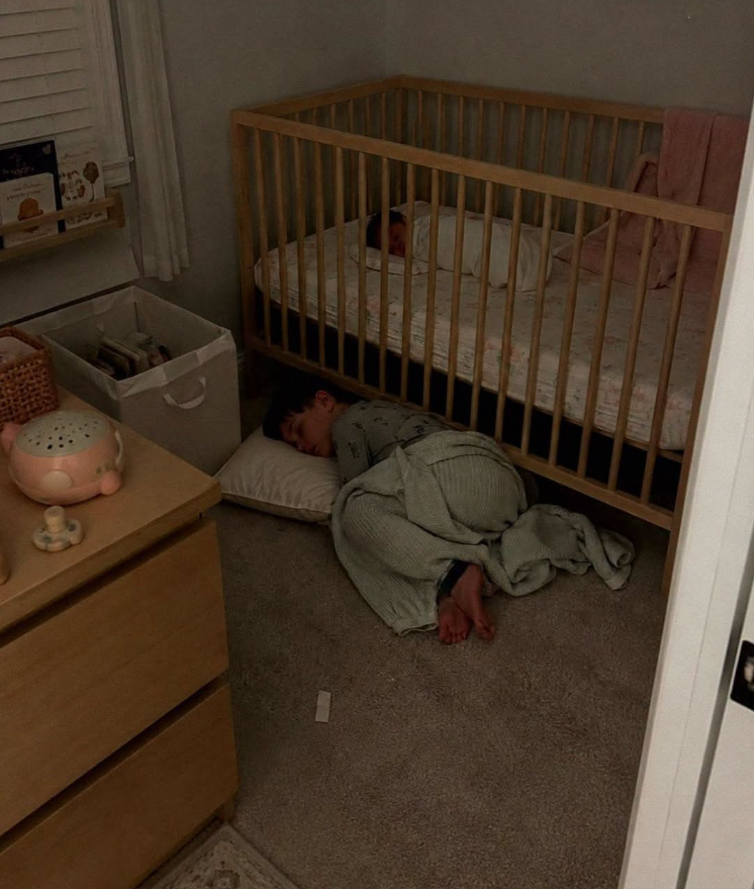
For almost three years, my seven-year-old son had asked us for the same thing.
A baby.
Every birthday.
Every Christmas.
Every random Tuesday when he thought persistence might finally wear us down.
“When am I getting a baby?”
He never seemed to get tired of asking.
So when my husband, Daniel, and I finally told him I was pregnant, Ben screamed so loudly that our neighbor actually knocked on the door to make sure nobody had been hurt.
He was overjoyed.
He talked about becoming a big brother constantly. He wanted to know whether the baby would be a boy or a girl. He wanted to help choose clothes. He even started making lists of things he thought the baby would need.
Then Brenda was born.
And suddenly, everything became more complicated than any of us had expected.
The doctors explained that Brenda had Down syndrome. They began walking us through tests, specialists, therapies, appointments, and all the things we might need to prepare for.
Daniel and I were overwhelmed.
That first week, every appointment seemed to bring another question.
I barely knew which question I should ask first.
Ben wasn’t overwhelmed.
The first time he held his baby sister, he stared at her tiny face for nearly ten seconds without saying a word.
Then he looked at me.
“She’s perfect.”
That was it.
From that moment on, Brenda became “his baby.”
He picked out her clothes.
He sang badly whenever she cried.
He showed her pictures to cashiers, teachers, neighbors, and even one very confused delivery driver.
At night, he would stand beside her bassinet and whisper goodnight as if Brenda could already understand every word he said.
For the first couple of weeks, I thought Ben was handling becoming a big brother better than any seven-year-old possibly could.
Then he stopped sleeping in his bedroom.
The first morning I found him under Brenda’s crib, I almost laughed.
He had his pillow.
His blanket.
His stuffed dinosaur.
And he was lying on the floor beneath the crib as comfortably as if it were his new bedroom.
“Ben?”
He blinked up at me.
“What are you doing?”
“Sleeping.”
“You have a bed.”
“I know.”
“An actual bed.”
He shrugged.
“I like it here.”
I smiled.
At the time, I honestly thought it was sweet.
Our little boy had waited years for a sister, and now he apparently wanted to protect her.
I didn’t realize there was another reason.
My mother-in-law, Diane, didn’t find it sweet at all.
Diane had been staying with us since Brenda came home. At first, I was grateful for the help.
She cooked.
She cleaned.
She folded laundry.
She constantly reminded me to rest.
But when she saw Ben sleeping underneath Brenda’s crib, her expression changed.
“You shouldn’t encourage this.”
“I’m not encouraging anything.”
“Then send him back to his room.”
“I do.”
“Clearly not firmly enough.”
I rolled my eyes.
“He’s excited.”
Diane glanced toward the crib.
“Or jealous.”
That annoyed me.
“Ben loves her.”
“Children can love someone and still resent the attention they receive.”
“He’s seven, Diane. He waited years for a sister.”
She lowered her voice.
“He needs to understand that the baby isn’t the center of the universe.”
“She’s two weeks old.”
“I’m talking about Ben.”
I dismissed the conversation.
But Ben slept under the crib again that night.
And the night after that.
And the night after that.
Every morning, I carried his pillow and blanket back to his bedroom.
Every night, somehow, he returned.
By the fourth morning, the joke had completely disappeared.
Daniel and I started comparing notes.
“What are we missing?” I asked him.
“I don’t know.”
Daniel tried bribery first.
“If you sleep in your own bed all week, we’ll get pizza on Friday.”
Ben shook his head.
“I don’t want pizza.”
Daniel stared at him.
“You always want pizza.”
“Not that much.”
That was when I started realizing something wasn’t right.
If I went upstairs to shower, I’d come back and find Ben sitting beside Brenda’s crib.
If Daniel and I stepped outside for ten minutes, Ben refused to come with us.
If someone offered to watch Brenda, Ben suddenly appeared.
Especially when that someone was Diane.
One afternoon, Diane reached into the bassinet to pick Brenda up.
Ben immediately stepped between them.
“Move, sweetheart,” Diane said.
“No.”
I froze.
“Ben.”
He didn’t move.
“Move.”
He looked at me.
Then, slowly, he stepped aside.
Later, I asked him what that had been about.
“Why did you do that?”
“Nothing.”
“Did Grandma upset you?”
“No.”
“Then why are you acting weird around her?”
“I’m not.”
That became his answer to everything.
I’m not.
Nothing happened.
I’m fine.
I knew my son well enough to know when he was hiding something.
But I didn’t know what.
Meanwhile, Diane kept making comments about Brenda.
Not cruel comments.
At least, they didn’t sound cruel at first.
One morning, she found me drinking coffee while Brenda slept against my chest.
“You look exhausted.”
“I have a newborn.”
“I know, but this is different.”
“What do you mean?”
Diane hesitated.
“Brenda might require more from you than other children.”
I hated hearing that.
“She’s two weeks old.”
“I’m trying to be realistic.”
She came from a generation where people sometimes talked about disability differently.
Sometimes badly.
I told myself she was simply worried.
A few days later, after another sleepless night, she sighed.
“I’m just saying love isn’t always enough.”
I didn’t like the words.
But I thought she needed time.
Looking back, I can see how often Diane disguised fear as practicality.
At the time, I heard concern.
Then last Thursday happened.
I woke shortly after two in the morning because I heard something through the baby monitor.
At first, I thought Brenda was fussing.
Then I realized someone was whispering.
Daniel was asleep beside me.
I sat up.
The whisper came again.
“Don’t worry.”
I knew the voice immediately.
Ben.
I got out of bed.
The hallway was completely dark.
The nursery door was partly open.
I walked toward it quietly.
Then I saw him.
Ben was lying underneath Brenda’s crib, gripping one of the bars.
His eyes were open.
He wasn’t sleeping.
He was watching his sister.
I took another step.
Then he whispered something that made my entire body go cold.
“I won’t fall asleep this time.”
I stopped.
Ben continued whispering.
“I won’t let Grandma do it again.”
“Ben?”
He jumped so hard that his shoulder hit the crib.
I rushed into the nursery.
“Hey. It’s okay.”
His face had gone pale.
“What did you mean?”
He looked toward the hallway.
“Nothing.”
“You said Grandma.”
Silence.
“Ben, what does Grandma do?”
His eyes filled with tears.
My hands started shaking.
“I promised.”
“Promised what?”
“Not to tell you.”
“Who asked you to promise?”
“Grandma.”
“Why?”
He started crying.
I sat down on the floor beside him.
“Baby, you’re not in trouble.”
He wiped his eyes with his sleeve.
Then, in a tiny voice, he said:
“She wakes Brenda up.”
I stared at him.
“What?”
“Grandma wakes her up at night.”
I didn’t understand.
“Maybe Brenda cries and Grandma checks on her?”
Ben shook his head hard.
“No. Brenda is sleeping.”
My stomach tightened.
He told me Diane sometimes came into the nursery after Daniel and I were asleep.
She would stand over Brenda while the baby was sleeping.
And if Brenda started settling again, Diane would disturb her until she cried.
She would pick her up.
Unwrap her.
Turn on the bright lamp.
Touch her feet and cheeks.
Anything that would make her wake up.
Three nights earlier, Diane had carried Brenda into our bedroom around three in the morning.
“She’s unsettled again,” she had told us.
At the time, I hadn’t questioned it.
Now I remembered.
Another night.
Another interruption.
Another time I had assumed my newborn daughter simply wasn’t sleeping well.
I looked at Ben.
“How many times?”
“I don’t know.”
“Why didn’t you tell me?”
His chin trembled.
“I asked her why she kept waking Brenda.”
My heart sank.
“What did Grandma say?”
He stared down at the floor.
“She said you and Dad need to understand what your life is going to be like.”
I felt sick.
“Anything else?”
He nodded.
“She said I was too little to understand.”
He rubbed one thumb over the dinosaur on his pajama sleeve.
“Then she told me not to upset you because you were already tired.”
Suddenly, I understood what he had meant when he said he wouldn’t fall asleep again.
The first night Ben had tried to guard Brenda, Diane had seen him awake beneath the crib and left.
So he kept returning.
Night after night.
He tried to stay awake.
But one night, he had fallen asleep.
When he woke up, Diane was already carrying Brenda toward our bedroom.
My seven-year-old son had been losing sleep because he believed he was the only person protecting his baby sister.
I woke Daniel.
He sat beside me while Ben stayed upstairs.
Then I woke Diane.
I didn’t scream.
Not at first.
I told her to come downstairs.
When she entered the room, I asked one question.
“Have you been deliberately waking Brenda?”
Diane froze.
Daniel looked at her.
“Mom?”
She opened her mouth.
Nothing came out.
That silence told me more than any explanation could have.
“I can explain,” she finally said.
“Then explain.”
She couldn’t.
I called the police.
Brenda was examined that morning.
Thankfully, she was fine.
The police documented what we told them and explained that they would determine what, if anything, could be pursued further.
Diane went to stay with her sister.
For the first time in days, I thought the nightmare might finally be over.
Then, a few days later, I reread the messages Diane had been sending me.
For weeks, she had been mentioning a distant relative named Carol.
She had described Carol and her husband as people with experience raising children with additional needs.
At the time, I assumed Diane was simply trying to connect me with someone who could offer advice.
But one message suddenly looked very different.
“I really think you should at least talk to Carol before things become too much.”
I called Carol.
She sounded happy to hear from me.
Then I said:
“Diane said you wanted to talk to us.”
There was a pause.
“What?”
“She said you wanted to talk about Brenda.”
Carol went quiet.
“Did she tell you why?”
“For advice,” I said. “She said you had experience.”
Another pause.
Then Carol said something that made my chest tighten.
“That’s not what Diane asked me.”
I sat down.
“What did she ask?”
Carol lowered her voice.
“She asked whether my husband and I would ever consider raising another child.”
I couldn’t speak.
Carol continued.
“I didn’t think she meant Brenda at first. I thought she was asking hypothetically.”
“What changed?”
“She said you and Daniel might eventually realize you couldn’t handle everything Brenda needed.”
I felt my hands go cold.
“What else?”
“She asked what we’d do if that happened.”
I hung up shaking.
Diane hadn’t arranged anything.
Not yet.
But she had already started thinking about a future in which we gave up.
That evening, Daniel called his mother.
“Come over.”
Diane arrived looking exhausted.
The moment she walked into the house, she seemed to know something was wrong.
I placed my phone on the table.
“I spoke to Carol.”
Diane’s expression changed.
Daniel saw it.
“Mom, what did you do?”
Diane sat down.
“You were trying to give away our daughter?”
“I was trying to prepare options.”
“Options for what?”
“For when this became too much.”
I stared at her.
“And then you started waking Brenda every night.”
“No.”
“You asked another family whether they’d raise her.”
“I asked a question.”
“And then you started waking Brenda every night.”
Diane’s voice rose.
“Because neither of you was being realistic!”
Daniel slammed his hand on the table.
“Realistic about what?”
“Your life!”
She pointed toward the stairs.
“You already have Ben. He had seven years with you. Now everything revolves around appointments, specialists, therapy—”
“By deliberately making her cry?”
“Enough,” I said.
Diane’s face tightened.
“I’m thinking about everyone.”
“No,” I said. “You’re deciding for everyone.”
“I’m thinking about Brenda too.”
“By deliberately making her cry?”
Diane looked at me.
“I needed you to see how difficult this could become.”
I stared at her.
“You manufactured the difficulty.”
“Because you weren’t listening!”
Then a voice came from the doorway.
“But we wanted Brenda.”
Everyone turned.
Ben was standing there.
He was still wearing his dinosaur pajamas.
Diane went silent.
Ben looked directly at her.
“You keep saying everything changed.”
Nobody answered.
He frowned.
“But we wanted her.”
Daniel walked toward the door.
“Mom, you need to leave.”
She started crying.
“Daniel.”
“Leave.”
“I was protecting you.”
“No,” Daniel said. “Ben was protecting Brenda from you.”
Diane stood there for a moment.
Then she left.
Afterward, I sat with Ben on the stairs.
I looked at my little boy and felt an ache in my chest.
“I’m sorry.”
He looked confused.
“For what?”
“I kept sending you back to bed. I thought you were being silly.”
He looked down.
“I didn’t know how to tell you.”
“You should’ve told me anyway.”
He hesitated.
“Grandma’s an adult.”
“I know.”
“I thought adults know what’s right.”
I pulled him close.
“Adults can be wrong too.”
He leaned against me.
Then I said something I wanted him to remember for the rest of his life.
“If an adult ever tells you to keep something secret because telling me would upset me, you tell me anyway.”
“Even if you’ll get mad?”
“Especially then.”
That night, for the first time in weeks, Ben slept in his own bed.
Diane was no longer part of our daily lives.
Any contact happened under boundaries Daniel and I controlled.
And slowly, our home became quiet again.
Almost a year later, Brenda turned one.
By then, Ben had stopped hovering every time someone picked his sister up.
He was finally able to be her brother instead of her guard.
At her birthday party, he helped put one candle on her cake.
My sister smiled at him.
“What did you wish for when your mom was pregnant?”
Ben grinned.
“I already got it.”
Then he dipped one finger into the cake and dabbed frosting onto Brenda’s nose.
Brenda stared at him for one second.
Then she grabbed a fistful of frosting and smeared it across his shirt.
Ben looked down at himself.
He looked at his sister.
Then he sighed dramatically.
“Okay,” he said.
“Maybe I should’ve been more specific.”
And for the first time in a long time, I laughed without fear sitting somewhere behind it.
My son had spent months believing he had to protect his little sister from the adults around him.
But now he could finally do what a seven-year-old brother should be doing.
He could tease her.
He could make her laugh.
He could get frosting thrown at him.
And most importantly, he could sleep in his own bed knowing that Brenda was safe.