Marco did not frighten easily.
I had seen him stand in the middle of a Manhattan intersection while two men twice his size screamed in his face. I had watched him receive terrible news about people we both cared about and absorb it with the stillness of a stone wall.
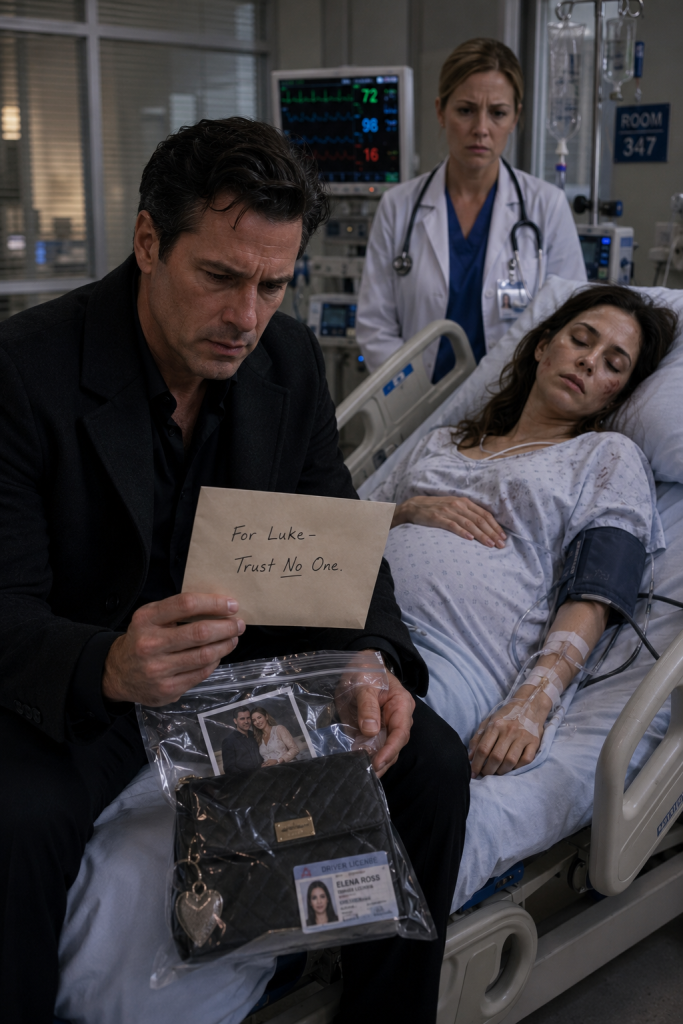
But the expression he wore in Elena’s hospital room was different.
It was uncertainty.
And Marco Reyes hated uncertainty.
“What did you find?” I asked.
He glanced at Dr. Bennett.
The doctor seemed to understand immediately.
“I need to check on another patient,” she said. “Ms. Ross needs rest. Keep your voices down, and if she wakes, press the call button.”
The door clicked shut behind her.
Marco waited another few seconds before turning his phone toward me.
On the screen was a photograph of a gray sedan parked outside an aging brick apartment building in Queens.
“I asked Caleb to retrace Elena’s movements,” he said.
Caleb was one of the few people Marco trusted without reservation. Former police. Quiet. Patient. The kind of man who remembered license plates after seeing them once in heavy rain.
“And?”
“Elena has been staying in a furnished apartment under a month-to-month lease. Cheap place. Third floor. No doorman.”
I looked at the woman in the hospital bed.
Elena hated elevators that smelled like cigarettes.
She complained about thin walls.
She once rejected a hotel suite in Milan because the air-conditioning made a faint clicking noise.
The idea of her living alone in a cheap furnished apartment seemed impossible.
“Why there?”
“We don’t know yet.”
Marco swiped the screen.
A second photograph appeared.
A man stood beside the gray sedan.
He was turned slightly away from the camera, but I knew the shape of those shoulders. The silver at the temples. The expensive coat worn without any awareness of its price.
My stomach tightened.
“Daniel.”
My older brother.
Marco nodded.
“He visited Elena’s building three times this month that we can confirm.”
I stared at the photograph.
Daniel Mercer had spent most of our lives being everything I wasn’t.
Patient where I was impatient.
Diplomatic where I was direct.
He remembered birthdays.
He sent handwritten thank-you notes.
At family dinners, when our father and I inevitably disagreed about something, Daniel was the one who refilled the wine glasses and changed the subject before anyone said something that could not be taken back.
He had also been the best man at my wedding.
“No,” I said.
It was not a conclusion.
It was instinct.
Marco’s face remained carefully neutral.
“Luke.”
“No.”
“His car was there.”
“That doesn’t mean he hurt her.”
“I didn’t say it did.”
“You were about to.”
Marco lowered his phone.
“I was about to say we need facts.”
I looked again at Elena.
Purple bruises marked her wrist.
Malnourished.
Dehydrated.
No prenatal care.
Someone close to her had been making sure she never received the support she needed.
Trust no one.
“Call Daniel,” I said.
Marco did not move.
“Now.”
“Maybe you should read the letter first.”
My gaze shifted to the envelope inside the evidence bag.
For Luke—Trust No One.
Five words in Elena’s handwriting.
Five words capable of turning every familiar face into a question.
I pulled a chair beside the bed.
The envelope was unsealed.
That bothered me immediately.
Elena always sealed letters.
Even birthday cards.
She had a strange ritual of pressing the adhesive down with the handle of a spoon because she claimed fingers left uneven pressure.
I turned the envelope over.
No tear.
No moisture mark.
No sign it had ever been closed.
“Marco.”
He saw it too.
“Could have been interrupted.”
“Or she never finished.”
I removed the folded pages.
There were three.
The first line nearly ended me.
Luke,
I don’t know whether you will ever read this, because I don’t know whether I have the courage to give it to you.
I stopped.
Marco quietly moved toward the window, granting me privacy without leaving.
I continued.
I found out about the baby seven weeks after I left.
For ten minutes I sat on the bathroom floor laughing and crying because I could hear you complaining about how dramatic I was being.
Then I remembered you were gone.
Not dead.
Sometimes I think that would have been easier to explain to myself.
I closed my eyes.
Three months earlier, I had sat across from Elena at our dining room table while rain crawled down the windows.
I had told her I wanted a divorce.
She had stared at me as if I had suddenly begun speaking another language.
“You’re tired,” she had said.
“No.”
“You’re angry.”
“No.”
“Then what is this?”
I remembered forcing myself to hold her gaze.
“I don’t love you anymore.”
The sentence had tasted like blood.
She stood so quickly her chair fell backward.
For one terrible second I thought she was going to slap me.
Instead, she whispered, “Say it again.”
So I did.
Because I believed cruelty was the cleanest knife.
Because I thought one decisive wound would heal faster than the slow fear I had been living with.
I don’t love you.
I had said it twice.
Elena left our home that night.
I returned to the letter.
I tried to call you when I found out.
I tried three times.
The first time, someone from your office told me you were traveling.
The second time, I was transferred to legal.
The third time, a woman told me very gently that you had requested no personal contact.
Luke, I need you to believe me when I say I never wanted to trap you with a baby.
I almost laughed.
The sound came out broken.
Elena had once spent fifteen minutes debating whether accepting a free dessert from a restaurant counted as taking advantage of my name.
The idea that she would use a child to trap anyone was absurd.
I kept reading.
I decided I would tell you in person.
Then Daniel came.
My hands stopped moving.
Across the room, Marco turned.
“What?”
I did not answer.
I read the next paragraph twice.
Your brother said you already knew.
He said that was the reason you filed so quickly.
He told me you had no interest in being a father and that you were afraid I would use the pregnancy to challenge the divorce.
He had documents.
Messages.
A statement from your lawyer.
I believed him because everything sounded exactly like the man you had become during those final weeks.
I lowered the pages.
The room seemed to tilt.
“Luke?”
“She says Daniel told her I knew.”
Marco was silent.
“He told her I knew about the baby.”
“Did you?”
I looked at him.
“You know I didn’t.”
“I know what you told me.”
“Careful.”
Marco’s jaw tightened.
Then he walked closer.
“No. You be careful.”
His voice remained low, but something sharpened beneath it.
“Three months ago, you told me to move Elena out of the penthouse. You told me to transfer her calls to legal. You told me not to ask questions. I did exactly what you ordered.”
“Because I was trying to protect her.”
“From something you still haven’t explained.”
The words remained between us.
For years, Marco had been loyal enough not to demand explanations.
Maybe that had been my first mistake.
I looked down at Elena’s hand resting over our child.
“I received a message.”
“When?”
“Four months ago.”
Marco waited.
I had never told anyone.
Not Daniel.
Not my father.
Not my attorney.
Not even Marco.
Especially not Elena.
“It came to my private email,” I said. “Photos of Elena leaving restaurants. Walking through Central Park. Going into her mother’s building. Someone had been following her.”
Marco’s expression changed.
“Why didn’t you tell me?”
“Because the message said they’d know.”
“Know what?”
“If I involved security.”
Marco stared at me.
I hated the disappointment in his face because I had no defense against it.
“What else did the message say?” he asked.
I turned back toward the bed.
“That I’d made enemies. That Elena would pay for them.”
“And you believed it.”
“I recognized one of the photographs.”
“From where?”
“A case fifteen years ago.”
Marco’s eyes narrowed.
Before the Mercer name had become synonymous with real estate, transportation contracts, and private investment, it had meant something rougher.
Our grandfather built warehouses.
Our father expanded into shipping.
By the time Daniel and I inherited our shares, most of the old disputes were supposed to be buried beneath attorneys, acquisitions, and polished conference rooms.
Supposed to be.
“There was a union dispute at the Hudson depot,” I said. “One of the photos was taken from the same loading platform where a foreman disappeared for two days during the strike.”
Marco’s face became very still.
“I remember.”
“He came back alive.”
“With three broken ribs.”
“I didn’t do that.”
“I know.”
But the past did not care what I had personally done.
Names collect history.
Sometimes children inherit more than property.
“The email said Elena was innocent,” I continued. “It said I had thirty days to remove her from my life.”
Marco looked at me as though seeing the past three months from an entirely different angle.
“So you divorced her.”
“I gave her the apartment on Fifty-Seventh. Half the joint accounts. The cottage in Connecticut. I increased her personal security allowance.”
Marco said nothing.
“She refused most of it,” I added.
“I know.”
“You knew?”
“I handled the transfers.”
I felt an irrational surge of anger.
“Then where was she getting money?”
Marco stared at me.
“That’s what I’m trying to figure out.”
My attention returned to the letter.
There was more.
Daniel said I should leave New York for a while.
He said seeing me would make things harder for you.
At first, he was kind.
I need you to know that.
He brought groceries. He called doctors. He said he was ashamed of the way you had treated me.
Then things became confusing.
The clinics he arranged canceled my appointments.
A credit card I didn’t recognize appeared in my mail, already active, with my name on it.
Money vanished from my account.
When I asked Daniel, he said divorce settlements often took time to process.
Luke, I know how foolish this sounds.
I should have called someone.
I should have asked for help.
But I was so ashamed.
Everyone thought I had married you for your money.
After the divorce, I could feel people waiting for me to prove them right.
So I said nothing.
I pressed the page flat against my knee.
Elena’s mother had disliked me for the first two years of our marriage because she believed men with private drivers did not understand ordinary sadness.
Her friends had watched me carefully.
The newspapers had called Elena a former gallery assistant who married into one of New York’s most private business families.
I had always told her not to read the comments.
I had never understood that she remembered every one.
“What did Daniel gain?” Marco asked.
“I don’t know.”
“Money?”
“He has more than he could spend.”
“Control?”
“Daniel hates conflict.”
Marco gave me a dry look.
“People don’t always show us what they hate.”
I continued reading.
Two weeks ago, I found a file on Daniel’s tablet.
He left it in my apartment.
I know I shouldn’t have looked.
The folder had your name on it.
Inside were copies of the messages you supposedly sent about me.
They weren’t screenshots, Luke.
They were documents.
Editable documents.
I realized I had never seen the original emails.
Only printed pages Daniel brought me.
I confronted him.
He said I was tired.
He said pregnancy was making me suspicious.
The next morning, the tablet was gone.
So was the card he had given me.
I tried to call your office again.
The number was disconnected.
I stopped reading.
“My office number isn’t disconnected.”
Marco shook his head.
“No.”
“Then she wasn’t calling my office.”
“Probably not.”
A quiet electronic beep came from the monitor beside Elena’s bed.
The screen showed lines and numbers I did not understand.
I suddenly hated every number in the room.
Her blood pressure.
Her heart rate.
The weeks of our child’s life I had missed.
Sixteen weeks.
I had already missed sixteen weeks.
I picked up the third page.
The handwriting changed halfway down.
The letters were less steady.
There is something else.
I think someone has access to my phone.
I bought a new one yesterday with cash.
I am writing this before I try to contact Marco.
I don’t trust Daniel anymore.
But I don’t know whether Daniel is the person behind this.
That is what frightens me.
Because tonight he said something strange.
He said, “Luke has no idea what his father protected him from.”
Your father has been dead for six years.
Why is Daniel talking about him now?
I folded the letter slowly.
My father.
Samuel Mercer had been dead for six years and still managed to dominate every room in which his name was spoken.
He was brilliant.
Demanding.
Generous in ways he tried to hide.
Cold in ways he made no effort to hide at all.
Daniel adored him.
I spent most of my youth trying to escape him.
Our last conversation had been an argument in a private hospital room.
He died the next morning.
I never told Elena what we fought about.
“Marco.”
“Yes.”
“Find Daniel.”
He reached for his phone.
I caught his wrist.
“Quietly.”
His eyes dropped to my hand.
I released him.
“No confrontations,” I said. “No assumptions. I want to hear him explain this.”
Marco studied me for a long moment.
“That’s the first sensible thing you’ve said tonight.”
Normally, I would have answered.
I didn’t have the energy.
Marco stepped into the hall to make his calls.
I sat alone with Elena.
The anger disappeared faster than I expected.
In its place came something worse.
Guilt.
It settled into every empty space.
I leaned forward, resting my forearms on my knees.
“I’m sorry.”
Elena did not move.
“I thought I was protecting you.”
The sentence sounded pathetic when spoken aloud.
I looked at the bruises on her wrist.
“I made you believe I stopped loving you.”
My throat tightened.
“I thought you’d be angry enough to leave. I thought anger would keep you from looking back.”
Her fingers shifted.
I froze.
“Elena?”
Nothing.
I reached toward her hand, then stopped.
For four years, touching Elena had been instinct.
A hand at the small of her back in crowded rooms.
My fingers brushing her shoulder when I passed behind her chair.
Her bare foot against my ankle while we read in bed.
Now I did not know whether I had the right.
I lowered my hand.
A memory arrived without permission.
Our second anniversary.
Elena barefoot in the kitchen at two in the morning, wearing one of my shirts and attempting to bake a cake because our flight home from London had been delayed.
The cake collapsed in the middle.
She stared into the oven.
“Don’t say anything.”
“I didn’t.”
“Your face is speaking.”
“What is it saying?”
“That you married an incompetent woman.”
I had wrapped my arms around her from behind.
“My face is saying we should order pancakes.”
She turned in my arms.
“Happy anniversary, Mr. Mercer.”
“Happy anniversary, Mrs. Mercer.”
I closed my eyes.
I had been so certain she would be safer without me.
Certainty was a dangerous luxury.
“Luke?”
The voice was barely a sound.
My eyes opened.
Elena’s eyelids fluttered.
I stood so quickly the chair scraped backward.
“Elena.”
Her eyes opened slowly.
Confusion passed through them first.
Then recognition.
Then pain.
Not physical pain.
Me.
She looked at me and remembered.
Her lips parted.
“No.”
I reached for the call button.
“I’m getting the doctor.”
“No.”
Her hand caught my sleeve.
She was weak.
So weak I barely felt the pressure.
But I stopped.
“You’re in St. Catherine’s,” I said. “You collapsed.”
Her gaze moved toward Marco’s empty place by the window.
Then to the envelope.
Fear entered her face.
“You read it.”
“Yes.”
She closed her eyes.
“Elena.”
“Please leave.”
The words were quiet.
I sat beside her instead.
“You can hate me.”
Her eyes opened.
“I don’t hate you.”
For some reason, that hurt more.
“I wish I did,” she whispered.
I had faced hostile boards of directors with more composure than I had in that chair.
“I didn’t know about the baby.”
She looked away.
“I know that now.”
“Daniel lied.”
“I know.”
“Why didn’t you come to me?”
A humorless breath escaped her.
“Come to you?”
The question was gentle.
That made it brutal.
“You told me you didn’t love me. You had your lawyer send my things to a storage company. I called your office and people treated me like I was trying to sell them something.”
“I was trying to keep you away from me.”
“You succeeded.”
“Elena—”
“No.”
Her voice cracked.
She closed her eyes for several seconds, gathering strength.
“When someone tells you they don’t love you, Luke, you’re supposed to believe them. Isn’t that what you wanted?”
“Yes.”
“Then don’t punish me because I did.”
I lowered my head.
She was right.
There was nothing I could say that would make her less right.
“I received threats,” I said.
Her expression changed.
I told her everything.
The photographs.
The email.
The Hudson depot.
The warning.
I expected questions.
Anger.
Maybe disbelief.
Instead, she stared at me for almost a minute.
Then she asked, “Why didn’t you trust me?”
The question landed exactly where it was meant to.
“I wanted to protect you.”
“That isn’t what I asked.”
“I thought if you knew, you’d stay.”
“I would have.”
“I know.”
“And you decided for me.”
“Yes.”
A tear slipped from the corner of her eye into her hair.
She wiped it away angrily.
“I spent ninety-three days trying to understand how four years could disappear in one conversation.”
“They didn’t.”
“For me, they did.”
I could not defend myself.
So I didn’t.
“I’m sorry.”
Elena looked at me.
Maybe she had expected another explanation.
Another excuse disguised as protection.
When none came, some of the tension left her face.
Not forgiveness.
Just exhaustion.
“The baby,” she whispered.
“The heartbeat is strong.”
Her hand moved over her stomach.
I watched it.
Something shifted inside me.
A feeling too large to name.
“Do you know—”
“No.”
Her voice softened.
“I wanted to wait.”
I nodded.
Then, despite everything, Elena almost smiled.
“You hate waiting.”
“I’ve improved.”
“You sent a helicopter for a replacement passport because you didn’t want to wait until Monday.”
“It was our honeymoon.”
“It was a four-hour delay.”
“Unacceptable.”
Her mouth curved for half a second.
Then the smile vanished.
The monitor continued its quiet rhythm.
“Luke.”
“Yes?”
“Daniel didn’t hurt me.”
I studied her.
“The bruises.”
“From the clinic yesterday.”
“What clinic?”
She frowned.
“I don’t know.”
“You went to a clinic and don’t know the name?”
“Daniel arranged it.”
The door opened.
Dr. Bennett entered with a nurse.
“You’re awake.”
Elena’s face changed immediately.
She became careful.
Dr. Bennett checked the monitor and asked several questions.
Did Elena feel dizzy?
Nauseated?
Was there pain?
Elena answered quietly.
I watched her.
When the doctor asked whether she felt safe at home, Elena hesitated.
Dr. Bennett noticed.
So did I.
“Ms. Ross,” the doctor said, “anything you tell me can remain private.”
Elena looked toward me.
I stood.
“I’ll leave.”
“Luke.”
I stopped.
She seemed surprised by her own voice.
After a moment, she said, “Stay.”
One word.
It should not have meant as much as it did.
I sat again.
Elena looked at the doctor.
“I went to a clinic yesterday.”
Dr. Bennett pulled a stool closer.
“What clinic?”
“I don’t remember the name. It was on the Upper East Side. In a brownstone.”
“Do you remember the doctor?”
“A man. Older. Gray hair.”
“What kind of examination did he perform?”
Elena’s fingers tightened around the blanket.
“He drew blood. Asked questions. He said my iron was low.”
Dr. Bennett remained calm.
“Did he perform an ultrasound?”
“No.”
“Check the baby’s heartbeat?”
“No.”
The doctor’s concern was subtle.
A narrowing of the eyes.
A pause before the next question.
“Did he give you medication?”
Elena looked at me.
Then back at Dr. Bennett.
“Vitamins.”
“Do you have them?”
“In my apartment.”
Dr. Bennett nodded to the nurse.
“Please make a note.”
“What are you thinking?” I asked.
“I’m thinking I would like to know exactly what she was taking.”
“They were prenatal vitamins,” Elena said.
“Perhaps.”
The doctor smiled reassuringly.
“But I’d still like to confirm.”
Elena’s face had gone pale.
I stood.
Dr. Bennett looked at me.
“This is not the time to assume anything, Mr. Mercer.”
I understood the correction.
Barely.
“Of course.”
The doctor finished her examination.
Elena would remain in the hospital overnight at minimum.
Maybe longer.
The baby appeared stable.
Elena needed fluids, nutrition, and observation.
When Dr. Bennett left, I sent Marco a message.
Find the vitamins.
He replied within seconds.
Already on it.
Elena watched me put away my phone.
“You still type like you’re angry at the screen.”
“I am usually angry at the screen.”
She turned toward the window.
Below us, Manhattan glowed.
Thousands of windows.
Thousands of lives.
Our marriage had once existed among them.
Breakfast conversations.
Laundry.
Arguments over paint colors.
Elena singing badly in the shower.
Me pretending I hated it.
“I don’t know what happens now,” she said.
I leaned back.
“Neither do I.”
She looked at me, surprised.
“What?”
“You always know what happens next.”
“No.”
“You act like you do.”
“That’s different.”
Her expression softened.
I took a breath.
“I want to be part of the baby’s life.”
The softness disappeared.
I continued before fear stopped me.
“But I know wanting something doesn’t give me the right to demand it.”
Elena stared at me.
“I’m not going to take the baby away from you.”
“I didn’t say—”
“You thought it.”
I had.
She knew me too well.
“I don’t know what I feel about you,” she said. “I need you to understand that.”
“I do.”
“I loved you when I signed the papers.”
My chest tightened.
“I loved you when I moved into that awful apartment.”
“Why didn’t you take the Fifty-Seventh Street place?”
“Because it smelled like you.”
I looked down.
“The apartment smelled like me?”
“Your cedar candles.”
“I don’t buy candles.”
“I know. I bought them. You stole them.”
Despite myself, I smiled.
Elena looked away quickly.
“I hated that apartment,” she said. “I hated every room because I could imagine you walking through it.”
“I never went there.”
“That didn’t matter.”
Silence returned.
Then she said, “I can’t simply forget what happened.”
“I’m not asking you to.”
“I may never trust you again.”
“I know.”
“I may never want to be married to you again.”
My hands tightened.
“I know.”
This time, the words hurt.
Elena saw it.
For four years, she had been able to read every emotion I tried to hide.
Her face shifted.
Not pity.
Something more complicated.
“Why did you really fight with your father before he died?”
I looked at her.
The question seemed unrelated.
It wasn’t.
“My letter,” she said. “Daniel mentioned your father.”
“I saw.”
“Luke.”
I walked toward the window.
Six years earlier, I had stood at another hospital window.
My father had been connected to machines.
Daniel had been downstairs getting coffee.
I had been furious.
My father had been dying.
Neither fact had improved our conversation.
“He wanted me to leave Mercer Group,” I said.
Elena frowned.
“Why?”
“He believed I was becoming too visible.”
“Visible to whom?”
“He didn’t say.”
“That doesn’t sound like your father.”
“No.”
Samuel Mercer never spoke in vague terms.
He liked exact numbers.
Exact names.
Exact consequences.
But that night he had been terrified.
It was the only time I ever saw fear in his eyes.
“He told me there were things Daniel and I didn’t understand about the company,” I continued. “He wanted us to sell certain divisions.”
“Did you?”
“No.”
“Why?”
“Because I thought he was sick, medicated, and trying to control the business from a hospital bed.”
Elena watched me.
“And Daniel?”
“I never told Daniel.”
“Why not?”
“Our father died the next morning.”
“That’s not an answer.”
I turned.
“Because the last thing my father said to me was that Daniel could never know.”
Elena sat very still.
“What exactly did he say?”
I remembered every word.
Some memories fade.
Others grow sharper with time.
Samuel Mercer had reached for my wrist.
His hand was cold.
He had said, Luke, listen to me. Daniel can never know what I did.
“What did he do?” Elena asked.
“I don’t know.”
“But Daniel mentioned your father.”
“Yes.”
“And someone sent you photographs connected to an old Mercer dispute.”
“Yes.”
Elena leaned back against the pillow.
“This started before the divorce.”
I nodded.
“Then maybe Daniel didn’t create the threat.”
I looked at her.
“He lied to you.”
“Yes.”
“He isolated you.”
“Yes.”
“But?”
She swallowed.
“But sometimes I thought he was scared.”
The words unsettled me.
“Of me?”
“No.”
“Then who?”
“I don’t know.”
She looked toward the closed door.
“The last time Daniel came to the apartment, I asked him why he was doing this.”
“What did he say?”
“He said, ‘Because Luke will open the wrong door.’”
I stared at her.
“That means nothing.”
“It meant something to him.”
My phone rang.
Marco.
I answered.
“Tell me.”
“We have a problem.”
“Daniel?”
“No.”
His voice was different.
Controlled.
Too controlled.
“I’m at Elena’s apartment.”
“Did you find the vitamins?”
“Yes.”
“And?”
“They’re standard prenatal vitamins.”
I exhaled.
“Then what’s the problem?”
“There’s someone here.”
My body went cold.
“Who?”
A pause.
Then Marco said a name I had not heard in years.
“Your mother.”
I gripped the phone.
My mother lived in Paris.
Or Rome.
Or occasionally Geneva, depending on which version of her life she happened to be presenting.
Vivienne Mercer had left New York eleven months after my father’s death.
She returned only for Christmas.
Sometimes.
“Put her on.”
“She’s asking for you.”
“Then put her on.”
There was movement on the other end.
A door closed.
Then my mother’s voice reached me.
“Luke.”
She sounded exactly the same.
Elegant.
Detached.
As if we were speaking about dinner reservations.
“What are you doing in Elena’s apartment?”
“Looking for something.”
“What?”
“I would rather not discuss it over the telephone.”
I looked at Elena.
She was watching me.
“Did you know Elena was pregnant?”
My mother’s silence answered first.
“Yes,” she said.
A strange pressure formed behind my eyes.
“How long?”
“Several weeks.”
“And you didn’t tell me.”
“No.”
“Why?”
“Because Daniel asked me not to.”
Elena closed her eyes.
I lowered my voice.
“Mother, listen carefully. Elena is in the hospital.”
Another silence.
This one was different.
“Is the baby all right?”
“Why is that your first question?”
“Luke.”
“Why is that your first question?”
My mother’s breathing became audible.
“The baby is a Mercer.”
“So is Elena.”
“No,” my mother said softly. “That is exactly the problem.”
I stopped breathing.
Across the room, Elena opened her eyes.
“What does that mean?”
“Not on the telephone.”
“I’m not interested in your rules tonight.”
“You should be.”
“Mother—”
“Did Samuel ever tell you why he chose Elena?”
I frowned.
“My father didn’t choose my wife.”
“Didn’t he?”
I looked at Elena.
She was shaking her head.
“What are you talking about?”
My mother’s voice dropped.
“Come to the apartment.”
“I’m not leaving Elena.”
“Then bring Marco to you and put him on speaker. But there is something you need to see.”
“What?”
“I found what Daniel was looking for.”
The line went quiet.
“Mother?”
“A photograph.”
I almost laughed from frustration.
“A photograph of what?”
“Not what.”
Her next words seemed to arrive from very far away.
“Who.”
Before I could answer, the hospital door opened.
Marco stepped inside.
I stared at him.
Then at the phone still pressed to my ear.
“How did you get here?”
Marco stopped.
“Luke?”
My mother’s voice remained on the phone.
“Marco is with you?”
“Yes.”
The fear in her voice was immediate.
“Then who is in Elena’s apartment with me?”
My blood turned cold.
Marco moved toward me.
“Give me the phone.”
Before I could, my mother whispered something.
I barely heard it.
“Luke… the man here said his name was Marco Reyes.”
The call disconnected.
For one second, nobody moved.
Then Marco took out his own phone and dialed.
No answer.
He tried again.
Elena pushed herself higher in the bed.
“What is it?”
I did not answer.
Marco walked toward the window.
“Caleb,” he said when someone finally picked up. “I need eyes on Ross’s apartment immediately.”
He listened.
His face changed.
“What do you mean no one is there?”
I crossed the room.
“Give me that.”
Marco raised a hand.
“Caleb, when?”
Another pause.
“You’re sure?”
The call ended.
“What?” I demanded.
Marco looked at me.
“Caleb checked the building ten minutes ago.”
“And?”
“Elena’s apartment is empty.”
I stared at my phone.
I called my mother.
Straight to voicemail.
Again.
Voicemail.
“Track her number,” I said.
Marco did not argue.
Elena’s face had gone white.
I returned to her bedside.
“It’s all right.”
She almost smiled.
“You’re a terrible liar.”
“I know.”
“Who was in my apartment?”
“I don’t know.”
“And your mother?”
“I don’t know.”
“You seem to be saying that a lot tonight.”
“I’ve noticed.”
She reached for my hand.
The movement surprised both of us.
For a moment, her fingers rested against mine.
Then she held on.
Not as a wife.
Not even as someone who trusted me.
As someone afraid of being alone.
I closed my hand around hers.
Marco’s phone vibrated.
He read the message.
“Caleb found something.”
“What?”
“A camera across the street caught the building entrance.”
He turned his screen toward us.
The video was grainy.
Black and white.
A timestamp glowed in the corner.
9:41 p.m.
My mother’s black sedan stopped beside the curb.
A woman stepped out.
Even from the distant angle, I recognized Vivienne’s posture.
She entered the building.
At 9:48, another car arrived.
A man emerged.
Dark jacket.
Broad shoulders.
He walked with a slight stiffness in his left leg.
Marco watched the screen.
I watched Marco.
The resemblance was unsettling.
But not perfect.
“That’s not you,” I said.
“No.”
The man reached the building entrance.
For half a second, he turned toward the camera.
The image blurred.
Then froze.
Marco enlarged the frame.
The man’s face became a collection of gray pixels.
Still, one detail was visible.
A thin white scar beneath the right eye.
Marco sat down.
Actually sat down.
I had never seen him react that way to anything.
“Who is he?” I asked.
Marco did not answer.
“Marco.”
He looked at me.
“My brother.”
I stared at him.
“You don’t have a brother.”
“That’s what I was told.”
Elena’s fingers tightened around mine.
Marco looked back at the frozen image.
“My mother said he died when we were children.”
I felt the night expand around us.
Every answer had become another question.
Daniel.
My father.
My mother.
A false Marco.
Elena’s letter.
The threat that destroyed my marriage.
“What was his name?” I asked.
Marco’s eyes remained on the screen.
“Gabriel.”
A knock sounded at the hospital door.
All three of us turned.
Dr. Bennett entered.
She held a file in her hands.
The expression on her face was serious but composed.
“Mr. Mercer, Ms. Ross, I’m sorry to interrupt.”
“What happened?” I asked.
“Nothing has happened.”
She walked closer to Elena.
“The lab repeated one of your tests because the first result didn’t make sense.”
Elena looked at me.
“What test?”
Dr. Bennett opened the file.
“Your blood typing.”
Elena frowned.
“I know my blood type.”
“Yes. That’s why we repeated it.”
The doctor placed the file on the table.
“There is another issue.”
My heart started pounding.
“The baby?”
“The baby appears stable.”
I exhaled.
Dr. Bennett looked from Elena to me.
“When you arrived, Ms. Ross, you said Luke Mercer was the father.”
Elena’s face hardened.
“He is.”
“I am not questioning you.”
“Then what are you saying?”
The doctor hesitated.
“I reviewed an older medical record transferred from the clinic listed in your insurance history.”
“What clinic?”
“Mercer Family Medical.”
I had never heard of it.
Neither had Elena.
Dr. Bennett saw our confusion.
“According to the record, Ms. Ross underwent genetic screening there eight months ago.”
Elena’s hand went cold in mine.
“No, I didn’t.”
“That’s what I suspected.”
Dr. Bennett removed a printed page.
“The file includes your name, date of birth, and previous address. But there are inconsistencies.”
“What kind?” I asked.
“Someone created a medical record using Ms. Ross’s identity.”
Marco stood.
“Why?”
The doctor looked at him, then at us.
“I don’t know.”
She turned the page around.
At the bottom was a handwritten notation.
I leaned closer.
Two names.
Two dates.
And a series of numbers.
My name appeared first.
LUKE SAMUEL MERCER.
Below it was a second name.
ELENA MARIE ROSS.
Between them was a typed heading.
GENETIC COMPATIBILITY MATCH.
The room became painfully quiet.
Elena stared at the paper.
“What does that mean?”
Dr. Bennett’s voice was careful.
“Medically, without context, very little. It could relate to almost anything from inherited disease screening to fertility planning.”
“We never did fertility planning,” Elena said.
“I understand.”
I took the paper.
In the upper right corner was a date.
Eight months earlier.
Four months before the threats began.
Five months before I asked Elena for a divorce.
Then I noticed the physician’s signature.
Dr. Nathaniel Vale.
I knew that name.
Not from a hospital.
Not from business.
From my father’s private study.
Six years ago.
The night before he died.
There had been a blue folder on the desk beside his bed.
VALE printed across the tab.
I had ignored it.
I had been too angry.
Too certain there would be time to understand later.
“Luke?” Elena whispered.
I barely heard her.
A final handwritten note appeared beneath the genetic results.
Three words.
The handwriting was unmistakable.
My father’s.
I had seen it on birthday cards.
Contracts.
Letters from boarding school.
The message read:
THE CHILD MATTERS.
I stared at it until the letters blurred.
My father had been dead for six years.
Elena and I had not met until five years ago.
And somehow, eight months before tonight, someone had created a secret medical file connecting our names beneath a warning written in the hand of a dead man.
My phone vibrated.
A text.
Unknown number.
There was no message.
Only a photograph.
My mother sat in a dimly lit room, apparently unharmed, staring directly at the camera.
Beside her stood Daniel.
Alive.
Calm.
Holding the same blue folder I remembered from my father’s hospital room.
But it was the person on Daniel’s other side who made Marco step backward.
The scar beneath the man’s right eye was clearly visible now.
Gabriel Reyes.
Beneath the photograph were six words.
ASK DANIEL WHO INTRODUCED YOU TO ELENA.
I slowly raised my eyes.
Elena was watching me.
“What is it?”
I thought of the gallery opening five years earlier.
The crowded room in Chelsea.
The champagne I had not wanted.
The painting Elena had called pretentious.
The first time she laughed at me.
I had always believed meeting her was the only beautiful accident of my life.
Now, for the first time, I wondered if it had been an accident at all.
PART 3
For several seconds, I said nothing.
I simply stared at the photograph on my phone.
My mother.
Daniel.
Gabriel Reyes.
Three people who, until that night, had existed in entirely separate corners of my life.
Now they stood side by side beneath a dim yellow light, connected by a blue folder my dead father had hidden six years ago.
And beneath them, six words.
ASK DANIEL WHO INTRODUCED YOU TO ELENA.
“Luke.”
Elena’s voice pulled me back.
She was still holding my hand.
Her fingers were cold.
“What is it?”
I looked at her.
For five years, I had believed I remembered the moment we met perfectly.
A Thursday evening in Chelsea.
Rain on the windows.
Too much white wine being served to people pretending to understand paintings.
Elena standing alone in front of a large red canvas, her head tilted slightly to one side.
I had stopped beside her.
“You’re frowning at it,” I had said.
She hadn’t looked at me.
“I’m deciding whether it’s profound or whether the artist ran out of blue paint.”
I laughed.
Then she looked at me.
That was it.
That was the beginning.
At least, I had always thought it was.
“Luke?”
I turned the phone toward her.
Elena read the message.
Her expression changed.
“What does that mean?”
“I don’t know.”
“You keep saying that.”
“I know.”
“Who introduced us?”
“No one.”
She studied me.
“We met at the gallery.”
“I remember.”
“You spilled wine on my shoe.”
“You stepped backward.”
“You were standing too close.”
“I was trying to see the painting.”
“You were looking at me.”
Despite everything, a tiny smile touched her face.
“I was,” I admitted.
The smile faded.
“But no one introduced us.”
“That’s what I thought.”
The door opened.
Dr. Bennett stepped back into the room.
“I need Ms. Ross to rest.”
Normally, I would have resisted.
Normally, I would have turned every concern into an argument about efficiency, timing, and the urgency of the problem.
But Elena looked exhausted.
Not simply tired.
Hollowed out.
Her body had carried months of fear in silence.
And our child.
I rose.
“We’ll continue later.”
Elena looked at our hands.
I had not realized we were still holding each other.
Slowly, I released her.
Something passed across her face.
Disappointment?
Relief?
I couldn’t tell.
“I’ll be outside,” I said.
“Luke.”
I stopped at the door.
She watched me.
“Don’t disappear again.”
The words were quiet.
My throat tightened.
“I won’t.”
“Promise?”
Three months earlier, I would have avoided that word.
Promises had always seemed too sentimental to me.
A promise was a poor substitute for a contract.
Contracts had clauses.
Terms.
Remedies.
Promises only had trust.
And I had already learned what happened when trust broke.
“I promise.”
Elena nodded.
It was not forgiveness.
But it was something.
Outside the room, Marco was standing near the nurses’ station.
He looked older.
Only by a few years.
But enough for me to notice.
“Gabriel,” I said.
Marco stared at the floor.
“I haven’t said that name in thirty-two years.”
I leaned against the wall.
People moved around us.
A nurse pushed a cart.
Somewhere down the corridor, a child laughed.
Life continued with its usual indifference.
“Tell me.”
Marco looked toward Elena’s room.
“This isn’t about me.”
“It is now.”
He rubbed one hand over his jaw.
“My father died when I was six.”
“I knew that.”
“My mother raised Gabriel and me alone.”
“You told me you were an only child.”
“Because that’s what I learned to say.”
His voice held no anger.
That made the sadness in it sharper.
“Gabriel was three years older. We shared a room. Same clothes. Same school. Same everything.”
Marco paused.
“He was better at almost everything.”
I raised an eyebrow.
“Hard to imagine.”
That earned the faintest breath of laughter.
“He could fix a radio at ten. Could memorize a whole page after reading it once. My mother thought he was going to become a doctor.”
“What happened?”
Marco’s expression closed.
“When I was eleven, my mother told me Gabriel died.”
“How?”
“She said there had been an accident.”
“Did you see him?”
“No.”
“Funeral?”
“No.”
“Body?”
“No.”
I stared at him.
“And you believed her?”
“I was eleven.”
The answer silenced me.
Of course he believed her.
At eleven, parents were still part of the architecture of the world.
You did not question the walls.
“What did she say?”
“That he was gone. That she couldn’t talk about it. A week later, we moved.”
“Where?”
“New Jersey.”
“You never asked again?”
“At first, all the time.”
His eyes moved to the dark window at the end of the corridor.
“Then my mother started crying whenever I mentioned him.”
“So you stopped.”
“Yes.”
I understood.
Children learn quickly which questions hurt the people they love.
Sometimes those questions stay buried so long they begin to feel forbidden.
“Your mother is still alive?”
Marco nodded.
“Florida.”
“Call her.”
His head turned toward me.
“Luke.”
“Call her.”
“This is not a business problem.”
“I know.”
“You sound like you’re giving an order.”
I took a breath.
He was right.
“I’m sorry.”
The apology came more easily than it would have a month ago.
Maybe guilt had cracked something open.
“Would you call her?” I asked.
Marco looked at me for a moment.
Then he took out his phone.
He walked several steps away.
I stayed where I was.
This was his conversation.
Not mine.
The call connected.
“Ma.”
His voice changed instantly.
Softer.
Younger.
I looked away.
“Yeah, I’m all right.”
A pause.
“No, nothing happened.”
Another pause.
His eyes closed.
“Ma, I need to ask you something about Gabriel.”
Even from several feet away, I could hear silence on the other end.
Marco’s shoulders tightened.
“Ma?”
His face slowly lost color.
“No.”
He turned toward me.
“What do you mean, you knew this day would come?”
I straightened.
Marco listened.
His hand dropped to his side.
“How long?”
Another silence.
Then he whispered, “All this time?”
His mother began speaking rapidly.
Marco said nothing for nearly a minute.
Finally, he asked, “Was Samuel Mercer involved?”
My chest tightened.
Marco’s gaze found mine.
The answer came.
I knew it before he spoke.
“Yes.”
He ended the call several minutes later.
For once, I didn’t ask immediately.
Marco stood alone in the corridor, staring at nothing.
I waited.
Finally, he walked toward me.
“Gabriel didn’t die.”
“I gathered.”
“My mother sent him away.”
“Why?”
“She says she was told he was in danger.”
“By my father?”
“Yes.”
The hospital seemed to grow colder.
“Why would my father know anything about your brother?”
“Because Gabriel worked for him.”
I frowned.
“He was fourteen.”
“Not officially.”
“What does that mean?”
Marco leaned against the wall.
“My mother cleaned offices at Mercer Shipping.”
I knew that.
It was how my father met Marco.
Years later, when Marco left the military, my father had hired him into security.
I’d always assumed it was loyalty to an old employee’s son.
“Gabriel used to wait for her after school,” Marco continued. “He fixed computers.”
“In the eighties?”
“Basic systems. Terminals. Early databases. Apparently, your father noticed.”
I pictured Samuel Mercer.
He noticed everything.
“Gabriel started helping with inventory records,” Marco said. “At first, little things. Then more.”
“Why?”
“Because he was talented.”
“No. Why was my father using a child?”
Marco looked at me.
“Maybe because adults asked questions.”
I didn’t like that answer.
“Your mother said he was in danger.”
“She said someone discovered Gabriel had been copying records.”
“What records?”
“She doesn’t know.”
“Where did he go?”
“She doesn’t know that either.”
“Marco.”
“I’m telling you what she said.”
His frustration flashed.
Not at me.
At thirty-two years of silence.
“One day, Samuel came to our apartment,” he continued. “He told my mother Gabriel had seen something he wasn’t supposed to see.”
“What?”
“She says my father would never tell her.”
I flinched at the phrase.
My father.
Marco did not appear to notice.
“Samuel gave her money. Papers. An address.”
“Where?”
“Montreal.”
“Gabriel went to Canada?”
“Maybe.”
“What do you mean, maybe?”
“My mother says she put him on a bus.”
“Alone?”
“He was fourteen.”
The disbelief in my voice made Marco look at me sharply.
Then I remembered the era.
The fear.
The people involved.
And I stopped judging a frightened woman who had believed Samuel Mercer could protect her son.
“She received one letter,” Marco said. “About six months later.”
“From Gabriel?”
“Yes.”
“What did it say?”
“That he was safe.”
“And after that?”
“Nothing.”
“Thirty-two years?”
Marco nodded.
I looked toward Elena’s room.
“Until tonight.”
“Until tonight.”
My phone rang.
Daniel.
For half a second, neither of us moved.
Then I answered.
“Where is Mother?”
No greeting.
No accusation.
My brother gave a tired sigh.
“Hello to you too, Luke.”
“Where is she?”
“Safe.”
“Put her on.”
“I can’t.”
“Why?”
“Because she’s angry with me.”
I stared at Marco.
“Daniel, you have ten seconds to explain what is happening.”
“No.”
The answer stopped me.
My brother had spent his entire life smoothing my rough edges.
He did not say no.
Not like that.
“No?” I repeated.
“I’m done reacting to your deadlines.”
His voice sounded exhausted.
“You want answers? Then listen.”
I said nothing.
“Mother went to Elena’s apartment because I told her the file might be there.”
“Why would it be?”
“Because I left it.”
Elena’s letter returned to me.
Daniel’s tablet.
The editable messages.
The mysterious clinic.
“You were in Elena’s apartment.”
“Yes.”
“You lied to her.”
“Yes.”
“You told her I knew about the baby.”
Daniel’s silence hardened something inside me.
“Answer me.”
“Yes.”
My grip tightened around the phone.
Marco stepped closer.
I turned slightly away.
“Why?”
“Because I needed her away from you.”
I almost laughed.
“Interesting. I had the same idea.”
“That’s the problem, Luke. You didn’t know why you were doing it.”
The words landed strangely.
“What does that mean?”
“You received a threat.”
I froze.
Daniel continued.
“Photographs. A deadline. A warning about the Hudson depot.”
“How do you know that?”
“Because I received the same message.”
The corridor narrowed around me.
“When?”
“Three days before you did.”
“Why didn’t you tell me?”
“I tried.”
“No, you didn’t.”
“I came to your office.”
I remembered.
A Tuesday afternoon.
Daniel had arrived without an appointment.
I was preparing for a board meeting.
He said he needed to speak privately.
I told him we would have dinner that weekend.
We never did.
“You gave me four minutes,” he said.
I closed my eyes.
“What were you trying to tell me?”
“That someone had contacted me about Elena.”
Marco was watching my face.
I put the call on speaker.
Daniel heard the change.
“Who is with you?”
“Marco.”
A long pause.
“Of course.”
Marco’s voice became cold.
“Where is Gabriel?”
Daniel didn’t answer.
“Daniel.”
“He’s not with me now.”
“Was he with you earlier?”
“Yes.”
“Who is he?”
“You know who he is.”
“No. I know his name.”
Daniel exhaled.
“Marco, your brother is the reason Elena is alive.”
The words stunned us both.
I looked toward her room.
“What are you talking about?”
Daniel continued.
“Gabriel found the clinic.”
“What clinic?”
“Mercer Family Medical.”
I pictured the document Dr. Bennett showed us.
A false record.
Elena’s name.
My name.
Genetic compatibility match.
“Who created it?” I asked.
“I don’t know.”
“Then what do you know?”
“The clinic doesn’t exist.”
Marco spoke.
“Dr. Bennett said there were records.”
“Digital records,” Daniel replied. “Insurance records. Laboratory entries. A rented medical office. Everything was constructed to look legitimate.”
“By whom?”
“I don’t know.”
“You expect me to believe that?”
“No.”
There was sadness in my brother’s voice.
“I stopped expecting you to believe me years ago.”
The sentence hurt more than it should have.
I almost answered defensively.
Then I remembered Elena asking why I hadn’t trusted her.
I forced myself to pause.
“When did you learn about the clinic?” I asked.
“Two months ago.”
“After Elena was pregnant.”
“Yes.”
“You were already lying to her.”
“Yes.”
“Why?”
“Because I thought the pregnancy was the target.”
Silence.
Marco looked at me.
I stared at the closed hospital door.
“Target how?”
“I don’t know.”
“Daniel.”
“I don’t know, Luke.”
For the first time that night, my brother sounded afraid.
Not guilty.
Afraid.
“The message I received mentioned Father’s files,” he continued. “It said Elena had become important.”
“Important to whom?”
“I’ve spent three months trying to answer that.”
“By isolating her?”
“I was trying to make her disappear.”
“You took her money.”
“No.”
“Her account was emptied.”
“I know.”
“You gave her a card.”
“Yes.”
“Then it vanished.”
“Because someone was tracking the transactions.”
I thought of Elena buying a new phone with cash.
Daniel had known.
Or believed.
“What about her doctor appointments?”
“I arranged three.”
“They were canceled.”
“I didn’t cancel them.”
“And the clinic?”
“I never sent her there.”
I looked at Marco.
“Elena said Daniel arranged it.”
Daniel went quiet.
“She said that?”
“Yes.”
“I didn’t.”
There it was again.
Another contradiction.
Another invisible hand moving through all of us.
“Daniel,” I said carefully, “someone has been pretending to be Marco.”
“I know.”
“Have they been pretending to be you?”
My brother didn’t answer.
“Daniel?”
“I think so.”
A cold weight settled in my stomach.
Elena had trusted Daniel’s visits.
But had every visit actually been Daniel?
“What did Gabriel find?”
Daniel’s voice lowered.
“He found surveillance footage from the building.”
My pulse quickened.
“And?”
“There were seven visits credited to me.”
“How many were you?”
“Four.”
Marco’s face changed.
I thought of Elena’s bruised wrist.
The clinic.
The false medical record.
“Did Elena ever notice?”
“I don’t know.”
“Where are you?”
“That doesn’t matter.”
“It matters to me.”
“I can’t meet you yet.”
“Why?”
“Because Gabriel believes one of the people watching Elena is connected to the hospital.”
Every instinct in me sharpened.
Marco was already moving.
He scanned the corridor.
The nurses’ station.
Visitors.
Staff.
“Daniel,” I said, “that is a serious accusation.”
“I know.”
“Based on what?”
“The lab record.”
“Dr. Bennett?”
“No.”
The relief was immediate.
“Then who?”
“The blood typing entry.”
I frowned.
“What about it?”
“It appeared in Elena’s hospital chart eleven minutes before she arrived.”
I stopped breathing.
“That’s impossible.”
“Yes.”
“How would Gabriel know?”
“Because he has spent thirty years studying how people hide inside systems.”
Marco stared at the phone.
“Put him on.”
“He’s gone.”
“Where?”
“I don’t know.”
“You’re lying.”
“No, Marco. I’m not.”
Marco stepped away.
His anger was not loud.
It was too personal for that.
“Tell him I want to speak to him.”
“I already did.”
“And?”
Daniel hesitated.
“He said not yet.”
Marco looked wounded.
It was brief.
Then the familiar control returned.
“Tell him he doesn’t get to choose.”
Daniel gave a tired laugh.
“You two really are alike.”
I almost objected.
Marco did first.
“No, we’re not.”
“Yes,” Daniel said. “You both confuse protecting people with controlling them.”
The words silenced us.
Because they were true.
I looked through the small window in Elena’s door.
She was awake.
Watching me.
“Daniel.”
“Yes?”
“Did Father introduce me to Elena?”
My brother stopped breathing.
I heard it.
The slight catch.
The pause.
“You saw the message.”
“Answer me.”
“I can’t.”
“Can’t or won’t?”
“I don’t know the full answer.”
“Tell me what you know.”
Daniel sighed.
“Do you remember why you went to the gallery that night?”
“Yes.”
“Why?”
“I was supposed to meet Arthur Bell.”
“No.”
I frowned.
“What?”
“You weren’t.”
“I had it on my calendar.”
“I know.”
“Then what are you talking about?”
“Arthur was in London.”
I felt the floor shift beneath me.
“He canceled.”
“No. He never scheduled the meeting.”
I said nothing.
Daniel continued.
“I checked his travel records.”
“Why?”
“Because Father’s blue file included a copy of your calendar.”
My pulse hammered.
“From five years ago?”
“Yes.”
“Why would Father have my calendar after he was dead?”
“He didn’t.”
The answer came quietly.
“Someone added it to the file later.”
I looked at Marco.
“Who?”
“We don’t know.”
“And Elena?”
“Her calendar was there too.”
The corridor went silent.
“That’s impossible.”
“She was scheduled to leave work at six.”
I remembered.
She told me she had stayed late because a co-worker asked her to help close.
Daniel continued.
“The co-worker didn’t ask.”
I pressed one hand against the wall.
“Who did?”
“Her supervisor.”
“What was his name?”
“Peter Vale.”
The surname hit me instantly.
Dr. Nathaniel Vale.
The signature on the medical record.
“Related?”
“I don’t know.”
“Where is Peter now?”
“Dead.”
I closed my eyes.
“Of course.”
“He died two years ago.”
“How?”
“Heart condition.”
No violence.
No dramatic secret.
Just another person who could no longer answer questions.
“Luke,” Daniel said, “someone changed both your schedules that night.”
I looked at Elena through the glass.
She was watching me.
Five years.
Every morning.
Every holiday.
Every fight.
Every quiet Sunday.
Our child.
Could a manipulated meeting make any of it less real?
The thought frightened me more than I wanted to admit.
“I need to go,” Daniel said.
“No.”
“I’ll contact you.”
“Daniel.”
“Tell Elena I’m sorry.”
I almost laughed.
“You can tell her yourself.”
“Maybe someday.”
The line disconnected.
I called back.
Nothing.
Marco and I stood in silence.
Finally, he said, “We need to move Elena.”
“No.”
He turned.
“Luke.”
“Dr. Bennett said she needs observation.”
“We don’t know who has access to her chart.”
“Then we protect her here.”
“How?”
I looked toward the nurses’ station.
“Carefully.”
For the first time in my life, I understood something my father never had.
Power was not always the answer.
Sometimes visibility was safer than secrecy.
A hospital was full of records.
Cameras.
Staff.
Witnesses.
Moving Elena into some private hidden location might feel protective.
But that was exactly how we had arrived here.
Men deciding.
Women disappearing from their own lives.
Secrets multiplying.
“No private ambulance,” I said. “No unregistered room. No changing her name.”
Marco studied me.
“That doesn’t sound like you.”
“I know.”
“What does Elena say?”
The question stopped me.
I looked at him.
Then I smiled faintly.
“I suppose I should ask her.”
Marco nodded.
“That’s new.”
“Don’t enjoy it.”
“I’ll try.”
I entered Elena’s room.
She was sitting upright.
“You look terrible,” she said.
“So do you.”
Her eyebrows rose.
“That was almost honest.”
“I’m practicing.”
I sat beside her.
“We have a problem.”
“Only one?”
“Several.”
“That’s more familiar.”
I told her everything.
Daniel’s call.
The threat.
The false visits.
The clinic.
The hospital chart entry.
Gabriel.
Peter Vale.
Our schedules.
I did not protect her from the truth.
It was harder than I expected.
Not because she was fragile.
Because I was afraid of how she would react.
When I finished, Elena stared at her blanket.
“Someone arranged for us to meet.”
“Maybe.”
“Luke.”
“Yes.”
“You don’t have to soften it.”
I nodded.
“Someone probably arranged for us to meet.”
She was quiet for a long time.
Then she asked, “Do you regret it?”
The question startled me.
“What?”
“Meeting me.”
“Elena.”
“Answer.”
“No.”
The word came so quickly it almost overlapped her question.
Her eyes lifted.
“I regret the last three months,” I said. “I regret the divorce. I regret every phone call you made that I didn’t know about.”
My voice tightened.
“But I do not regret meeting you.”
She watched me.
“I don’t care if someone moved my name on a calendar,” I continued. “They didn’t make me go back to the gallery the next week.”
Her lips parted.
“They didn’t make me wait outside your work with coffee.”
“You got my order wrong.”
“For three weeks.”
“You kept buying cappuccino.”
“It sounded elegant.”
“I drink black coffee.”
“I know that now.”
A tear appeared in her eye.
This time, she didn’t wipe it away.
“They didn’t make me love you,” I said.
The room became very still.
For ninety-three days, I had carried the lie.
I don’t love you anymore.
I had built an entire catastrophe around those words.
Now the truth felt almost frightening in its simplicity.
“I never stopped.”
Elena looked down.
I waited.
No defense.
No explanation.
No strategy.
Just truth.
“I don’t know what to do with that,” she whispered.
“You don’t have to do anything.”
“Luke.”
“I mean it.”
She gave me a skeptical look.
“You are physically incapable of saying something without a desired outcome.”
“Apparently not.”
“What do you want?”
“You safe.”
“That’s an outcome.”
I sighed.
“The baby safe.”
“Another.”
“Fine.”
I leaned closer.
“I want you to forgive me.”
Her face softened.
“But I know you may not.”
I forced myself to continue.
“And I want to come home with you someday.”
Her breathing changed.
“But only if you ask me.”
For a long moment, she simply stared.
Then Elena reached for my hand.
This time, I did not hesitate.
“I can’t forgive you tonight,” she said.
“I know.”
“I may still be angry tomorrow.”
“You probably will be.”
“I am definitely going to be.”
“Fair.”
“But I don’t want you to disappear.”
“I won’t.”
“And I want you at the appointments.”
Something inside my chest broke open.
“The baby’s appointments?”
She rolled her eyes, but she was crying.
“No, Luke. My dental appointments.”
I laughed.
Actually laughed.
The sound surprised both of us.
“Yes,” I said. “I want to be there.”
“You’ll complain about the waiting room.”
“I will not.”
“You hate magazines from last year.”
“They’re insulting.”
“Luke.”
“I’ll behave.”
She looked at me.
“That might be harder to believe than the secret medical clinic.”
I squeezed her hand.
For the first time since the phone rang at 10:03, the fear inside me loosened.
Not disappeared.
Loosened.
A nurse entered with a tray.
Elena made a face.
“What is that?”
“Broth.”
“It looks tired.”
The nurse smiled.
“It has had a long evening.”
I liked her immediately.
Elena managed half the broth.
Three crackers.
Two spoonfuls of applesauce.
I watched every bite.
She eventually glared at me.
“Stop counting.”
“I’m not.”
“You looked offended when I stopped at the second cracker.”
“I was thinking about taxes.”
“Luke.”
“Fine.”
I looked away.
She ate the third cracker.
I pretended not to notice.
Later, after Marco had arranged for Caleb to monitor the floor and Dr. Bennett confirmed Elena was stable, the room grew quiet.
Elena fell asleep.
I stayed.
Not beside the window.
Not in the hall.
In the chair next to her bed.
Around four in the morning, Marco came in.
He placed a coffee beside me.
“Black.”
“You remembered.”
“I’ve known you nineteen years.”
“Elena says I don’t trust people.”
Marco sat by the window.
“She’s smart.”
“I trust you.”
“Sometimes.”
The word made me look up.
Marco stared into his coffee.
“I’m sorry.”
He frowned.
“For what?”
“Your brother.”
“You didn’t hide him.”
“My father did.”
“Maybe.”
“Your mother said—”
“My mother was scared.”
I fell silent.
Marco looked at me.
“We don’t know what happened, Luke.”
He was repeating my own lesson back to me.
Facts.
Not assumptions.
I nodded.
“You’re right.”
A quiet passed.
Then Marco asked, “Do you think Daniel is telling the truth?”
“Some of it.”
“Which part?”
“I don’t know.”
“You are saying that a lot tonight.”
“Elena already mentioned it.”
He smiled.
Then his phone vibrated.
The smile vanished.
“What?”
He read the screen.
“Gabriel.”
I stood.
The message was an address.
Nothing else.
“Where?”
Marco entered it into the map.
His eyebrows drew together.
“Brooklyn.”
“What is there?”
He searched.
Then slowly turned his screen toward me.
Mercer Children’s Library.
I stared.
My mother had funded it after my father died.
A small public reading center in Brooklyn.
I had attended the opening.
Cut the ribbon.
Smiled for photographs.
Never returned.
“Why there?” Marco asked.
“I don’t know.”
He looked at me.
“Should we go?”
My first instinct was yes.
Immediately.
Move.
Solve.
Control.
Then I looked at Elena.
She was sleeping.
Her hand rested over our child.
“I promised I wouldn’t disappear.”
Marco nodded.
“I’ll go.”
“No.”
“Luke.”
“No more people walking into this alone.”
“So what do you suggest?”
I thought.
Then I walked to Elena’s bed.
I touched her shoulder gently.
Her eyes opened.
“What happened?”
“Marco received a message.”
“From Gabriel?”
“Probably.”
“Where?”
I told her.
She blinked several times.
“Why are you telling me?”
The question hurt.
Because three months earlier, I would not have.
“I need to decide whether to go.”
“Then go.”
“I promised—”
“You promised not to disappear.”
She pushed herself up.
“That means you tell me where you’re going. You call. You come back.”
I watched her.
Trust was not blind.
It was not silence.
It was information.
Choice.
“Do you want me to stay?” I asked.
Elena considered the question.
Then shook her head.
“I want answers.”
“So do I.”
“Then go find some.”
I bent forward.
For a second, instinct almost carried me toward her lips.
I stopped.
Elena noticed.
Her eyes softened.
She lifted my hand.
Then pressed a kiss against my knuckles.
“Come back,” she said.
“I will.”
Marco and I left just before dawn.
The city was gray.
Wet.
Half awake.
The Mercer Children’s Library sat between a church and a laundromat.
A small brick building with blue doors.
My mother’s name appeared on a bronze plaque.
IN MEMORY OF SAMUEL MERCER.
I stared at it.
“What?” Marco asked.
“Nothing.”
But it wasn’t nothing.
My father hated public memorials.
He once called naming buildings after dead men an expensive form of guilt.
“Do you have a key?” Marco asked.
“No.”
The blue door opened.
A woman in her seventies stepped outside.
She wore a purple sweater and thick glasses.
“Mr. Mercer?”
“Yes.”
“I’ve been waiting.”
Marco stepped closer.
“Who are you?”
“Ruth Vale.”
The surname stopped us both.
She smiled sadly.
“Peter was my son.”
We followed her inside.
The library smelled of paper, old wood, and lemon polish.
Children’s drawings covered one wall.
Stars.
Dinosaurs.
A crooked purple dog.
Ruth led us downstairs.
“My son worked with Elena,” she said.
“We know.”
“No. You know he supervised her.”
I looked at her.
“What’s the difference?”
“He was supposed to watch her.”
Marco and I exchanged a glance.
“Why?”
Ruth opened a storage room.
“Because Samuel asked him to.”
“My father was dead.”
“Yes.”
She did not appear confused.
That frightened me more.
“Mrs. Vale.”
“Ruth.”
“Ruth, my father died six years ago.”
“I attended his funeral.”
“Then how did he ask your son to watch Elena five years ago?”
She looked at me.
“Samuel left instructions.”
The blue folder.
“The instructions were opened after his death?”
“Some.”
“Some?”
Ruth pulled a box from a shelf.
“Your father planned for many possibilities.”
Inside were envelopes.
Dozens.
Each marked with a date.
Some had been opened.
Others had not.
“What is this?” I asked.
“Samuel’s contingency file.”
Marco stepped closer.
“Who maintained it?”
“My husband. Nathaniel.”
Dr. Vale.
“Why?” I asked.
Ruth looked toward the stairs.
Then lowered her voice.
“Because your father was afraid his children would find out how they were born.”
I stared at her.
“Excuse me?”
She removed one envelope.
My name was written across it.
LUKE.
A second envelope.
DANIEL.
A third.
VIVIENNE.
Then a fourth.
ELENA.
My hands went cold.
“Why does Elena have an envelope?”
Ruth’s face filled with sadness.
“Because Samuel knew who she was before you did.”
I took the envelope.
It was sealed.
The adhesive was old.
Untouched.
“Open it,” Marco said.
I hesitated.
Then tore the paper.
Inside was a single photograph.
Two women stood beside a hospital crib.
One was my mother.
Young.
Beautiful.
Exhausted.
The other woman had dark hair and familiar eyes.
Elena’s eyes.
I turned the photograph over.
A date was written on the back.
Thirty-four years ago.
Beneath it, my father’s handwriting.
VIVIENNE AND SOFIA.
I looked at Ruth.
“Sofia who?”
She answered quietly.
“Sofia Ross.”
Elena’s mother.
The room tilted.
“That’s impossible.”
“No.”
“Elena’s mother knew mine?”
“Yes.”
“Why has no one ever said this?”
“Because they promised Samuel they wouldn’t.”
“Why?”
Ruth looked at Marco.
Then at me.
“Because both women were part of the same fertility study.”
I stared at the photograph.
My mother’s hand rested on the hospital crib.
Sofia Ross stood beside her.
The two women were smiling.
“What study?”
Ruth shook her head.
“That is what Samuel spent the rest of his life trying to hide.”
I thought of the genetic compatibility record.
THE CHILD MATTERS.
My mouth went dry.
“Are Elena and I related?”
The question barely came out.
Ruth’s eyes widened.
“No.”
The relief was so immediate my knees nearly weakened.
“No,” she repeated. “Nothing like that.”
“Then what?”
She looked at the envelope in my hand.
“Samuel learned the study had been dishonest.”
“How?”
“Records were changed.”
“What records?”
“Embryo records.”
I stopped breathing.
Marco moved closer.
Ruth continued.
“Your father believed the clinic had switched samples. Altered donor identities. Hidden hereditary information.”
My mind struggled to follow.
“Why?”
“Money. Research. Reputation. I don’t know all of it.”
“And my father?”
“He found out too late.”
“How late?”
Ruth looked at me.
“After you were born.”
The room became silent.
I thought of Samuel.
His fear.
His final words.
Daniel can never know what I did.
“What did he do?”
Ruth’s answer came slowly.
“He paid to bury the study.”
My father’s entire life rearranged itself in my memory.
The private files.
The fear.
The strange final warning.
“That still doesn’t explain Elena.”
“No.”
Ruth walked to the box again.
She searched beneath several envelopes.
Then stopped.
Her expression changed.
“What?”
She did not answer.
“Ruth.”
“There should be another file.”
“What file?”
She looked genuinely frightened.
“One Samuel told Nathaniel never to open unless Luke Mercer and Elena Ross had a child.”
My heart slammed against my ribs.
“Where is it?”
“It was here.”
Marco immediately scanned the room.
“When did you last see it?”
“Two weeks ago.”
“Who has access?”
“Only me.”
“Anyone else?”
Ruth shook her head.
Then stopped.
“My grandson.”
“Peter’s son?”
“Yes.”
“Name?”
Ruth looked at me.
“Arthur.”
Something inside me froze.
Arthur Bell.
The man I believed I was supposed to meet at the gallery the night I met Elena.
Marco saw my face.
“What?”
I showed him the old calendar entry Daniel had forwarded.
ARTHUR BELL — CHELSEA GALLERY — 7 P.M.
Ruth took one look at the screen.
Her hand rose to her mouth.
“That’s not his surname.”
I looked at her.
“What?”
“My grandson’s name is Arthur Vale.”
The library suddenly felt too quiet.
“Why would I know him as Arthur Bell?”
Ruth shook her head.
“I don’t know.”
Marco stepped closer.
“Where is he now?”
“I thought he was in London.”
Daniel’s words returned.
Arthur was in London.
My calendar.
Elena’s supervisor.
Two schedules altered on the same night.
I took out my phone.
There was a new message.
Unknown number.
A photograph.
Elena asleep in her hospital bed.
Taken from inside the room.
My heart stopped.
Beneath it was one sentence.
YOU WERE NEVER THE ONE WE WERE WATCHING.
Then a second message appeared.
A photograph of Dr. Bennett standing at the nurses’ station.
A third.
Marco and me entering the library.
They knew where we were.
They knew where Elena was.
But the fourth message was different.
It was an old photograph.
A little boy, perhaps six years old, stood beside my father.
Samuel Mercer had one hand on the boy’s shoulder.
On the back of the photograph, someone had written a name.
ARTHUR.
I looked at Ruth.
“How old is your grandson?”
“Thirty-nine.”
The answer did not make sense.
Not at first.
Then I looked more closely at the child beside my father.
The eyes.
The shape of the mouth.
A face I had seen in old photographs all my life.
Not mine.
Daniel’s.
I turned the phone toward Marco.
He stared.
“No.”
Ruth whispered behind us.
“Oh, Samuel.”
I looked at her.
“What?”
She sank into a chair.
Her face had gone completely pale.
“I thought he changed his mind.”
“About what?”
Ruth looked up at me.
“Luke, Arthur Vale is not my biological grandson.”
I felt the room narrow around us.
“Then who is he?”
Her voice shook.
“I don’t know.”
My phone vibrated one final time.
This time, there was no photograph.
Just a message.
ASK YOUR MOTHER WHY DANIEL HAD A TWIN.