The telephone on the vanity didn’t just ring; it shattered the fragile quiet of the bedroom like glass.
I was reaching behind my back, my fingers straining against the cold silk of my wedding gown to catch the final, stubborn button near the nape of my neck. There was no one in the room to help me. I had spent weeks telling everyone who offered that I had everything under control. In my family, claiming you had things handled was the only currency that bought you a moment of peace, even if the lie left you bruised.
I glanced at the illuminated screen of my phone. Chloe Harrison’s name pulsed in black and white. I slid the bar to answer, my hand still pinned awkwardly behind my shoulder blade, the button still loose.
The line went dead. I stood there in the silence of my bedroom, the half-fastened dress heavy on my shoulders, realizing that the sister I had spent my entire life protecting had just pulled the rug from under my feet on the morning of my wedding. I almost believed her. I almost believed I would walk into that ceremony alone, a laughingstock to the small town that had watched us grow up.
But Chloe was wrong about who would be standing in that room. And so was I.
My name is Sierra Harrison. I am thirty-three years old, and for fourteen long months, I had quietly held the splintering pieces of my family together with both hands. I am a home health nurse in a quiet corner of Ohio—the kind of place where the winters are grey and long, and where people call my number when something, or someone, breaks. This is the story of the wedding they were certain would reduce me to nothing.
Fourteen months before that phone call, I sat on the hardwood floor of my mother’s bedroom at three o’clock in the morning, listening to the shallow, rattling rhythm of her breath. The pancreatic cancer had torn through her with a terrifying efficiency. By the final weeks, the spacious family home on Route 9 had grown quiet, but I was the only one who stayed through the dark hours.
Chloe had claimed she couldn’t manage the nights because of her children, Caleb and Lily. My father, Arthur Harrison, couldn’t do it either, though he slept just down the hall. Watching my mother fade was a tragedy he lacked the emotional stamina to witness.
So, the burden fell to me. I became an expert in the timing of her morphine doses. I knew exactly how to angle her pillows to ease the pressure on her lungs, and I kept a constant supply of the lavender sachets she favored tucked near her wrist. The cheap hospital linen frightened her; the lavender made her feel human. Soon, that scent became my shadow. It settled into my hair, my scrubs, the lining of my winter coat.
When she passed at dawn on a rainy Tuesday, I was the one who closed her eyes. I was the one who dialed the funeral home while my father sat paralyzed in his armchair. I picked the hymns because no one else could form a coherent sentence.
Without anyone voting on the matter, I became the family’s designated anchor. I managed the bills, filed the estate paperwork, and answered the awkward phone calls from well-meaning neighbors. At the time, being needed that desperately felt indistinguishable from being loved.
It took me a year to realize those two things have nothing to do with each other. You can be the most indispensable person in a household and still be the one for whom no one saves a seat at the dinner table. But back then, I believed that if I just kept the ceiling from collapsing, someone would eventually look up and notice the hands holding it up. I kept my hands so full of everyone else’s troubles that I never had to stretch them out and ask for help.
That was my first great mistake.
It took Daniel Vance to show me what a real partnership looked like. We met on a rainy Tuesday at the local medical supply counter. We were both reaching for the same box of nitrile gloves, and he apologized with such earnest, clumsy politeness that it felt as though he’d knocked over a priceless heirloom. Daniel was a local contractor—a quiet man with calloused hands and a steady gaze. When I eventually told him about the exhausting dynamics of my family, he didn’t offer a single piece of unsolicited advice. He didn’t tell me to fix them. He simply held the door open and waited to see what I chose to do.
Three weeks before our wedding, I sat at my kitchen table, going through my Sunday night routine. I opened my banking application on my phone and watched the numbers deplete. I authorized the automatic payment for the homeowner’s insurance on the family homestead—the place where my father still lived, though his pension had stopped covering the bills after my mother’s medical treatments drained his savings. I transferred funds to cover the escrow shortfall for the property taxes, just as I had every quarter since the funeral. Then I logged into my father’s Medicare portal, corrected the supplemental paperwork he’d filled out incorrectly, and called in his blood pressure prescription before the pharmacy cancelled the refill.
None of this was grand or heroic. It was invisible. The labor that keeps an old man housed and healthy is rarely the kind that people take pictures of.
As I closed the laptop, my phone buzzed with a text message from my father. It was brief and hesitant—the exact tone he used whenever Chloe had been whispering in his ear.
Honey, about walking you down the aisle, let’s talk later.
“Later,” I murmured to the empty room. He had been pushing that conversation into the future for a week.
Daniel looked up from his sketchpad on the couch, his brow furrowing. “He’ll come around, Sierra.”
I wanted to believe him. But I had spent my life watching Arthur Harrison avoid difficult conversations. A wedding aisle is a narrow, public space, and for a man who preferred the shadows, it was the most difficult room in the world.
The next afternoon, Chloe arrived at my house without knocking. She carried a diaper bag, her two children trailing behind her, and that sharp, frantic energy she had radiated ever since her divorce. Eleven-year-old Caleb stared resolutely at his muddy sneakers, while seven-year-old Lily immediately wrapped her arms around my leg.
My sister had been sinking for two years. Her marriage was a wreckage of bad decisions, her rent was always a week overdue, and her part-time job at the florist shop never quite covered the utilities. I had co-signed the lease on her apartment so her children wouldn’t end up in a shelter. I never mentioned it to her, but she brought it up constantly—in that defensive, resentful way people do when a debt sits in their chest like a splinter.
“I hate to ask,” she began, the preface to every demand she’d ever made. She needed four hundred dollars for Caleb’s orthodontic consultation.
Without a word, I opened my purse and wrote the check.
She snatched it off the counter, folding it quickly into her pocket. Then, while pouring herself a cup of my coffee, she looked at me over the rim of the mug. “You know, Sierra, you have a habit of making everything about you. First it was Mom’s illness, and now it’s this wedding.”
I froze, my hand hovering over the kitchen sink. “I took care of Mom because no one else would, Chloe. That’s not the same thing.”
She offered a small, cold smile. “Dad needs his grandchildren right now. You’d understand that if you had a family of your own.”
There it was. The lever.
She controlled the access to Caleb and Lily. She had realized that they were the only things keeping our father anchored to the world after my mother’s death, and she had her hand firmly on the valve. She kissed my cheek, rounded up the children, and left me standing in the quiet kitchen with a four-hundred-dollar hole in my checking account and a sudden, freezing realization of what was coming.
She had found the one thread our father couldn’t bear to see cut, and she was already pulling it.
Chapter 2: The Price of Peace
I didn’t let the resentment fester. That’s the detail people find hard to believe.
That same evening, I drove the twenty minutes out to the old homestead on Route 9. I have never been the kind of woman who waits for a storm to break when I can see the clouds forming on the horizon. The gravel of the long driveway crunched beneath my tires in the autumn dark—a sound deeply woven into the fabric of my childhood. My father’s porch light was the only beacon for a mile in any direction.
I found him sitting at the worn kitchen table. The television was murmuring in the corner, broadcasting a news segment he wasn’t watching, and his dinner plate sat untouched beside his elbow.
“Dad,” I said, pulling out the chair opposite him. “We need to talk about the wedding.”
He wouldn’t look up from his placemat, his thumbs tracing the faded laminate pattern. “It’s getting complicated, honey.”
“It isn’t complicated,” I said, keeping my voice as steady as I did when explaining a medical procedure to a panicked patient. “You are my father. You are supposed to walk me down the aisle.”
He began turning his coffee mug in slow, deliberate circles. “Your sister feels like she’s being pushed out of the family. She says… well, she says if I make a big production of things, she might need to take the kids away for a while. To get some space.”
The threat was out in the open now, stripped of Chloe’s sweet phrasing.
“Then let’s sit down together,” I urged. “You, me, and Chloe. We can resolve this without using the children as hostages.”
He shook his head before I could even finish. “I can’t push her, Sierra. I can’t risk losing those kids. I don’t have anything else.”
I sat back, the cold truth settling into my chest. It was a perfect trap. If I forced him to stand beside me at my wedding, I would be cast as the selfish daughter who tore a grieving grandfather away from his grandchildren. Chloe had engineered the situation so that my fight for my father’s presence would look exactly like an act of cruelty toward him.
I drove back to town in silence, the sound of the gravel staying with me long after I reached the asphalt. Chloe’s parting words from the afternoon echoed in the cab of the truck: You should have known your place.
For fourteen months, my place had been the foundation. But foundations are meant to be walked on, not seen.
The next morning, the telephone rang before I had finished my first cup of coffee. It was Aunt Beatrice, my mother’s older sister. At seventy, Beatrice was the self-appointed custodian of our family’s reputation in a town where the church potluck functioned as a local court.
“Sierra, dear,” she began, her tone dripping with artificial concern. “I’m going to speak plainly.”
Beatrice never spoke plainly; she preferred to circle her targets until they died of exhaustion.
“People in town are talking,” she said. “Chloe is devastated. She says you’ve cut the family out of the wedding entirely.”
“I haven’t cut anyone out, Aunt Beatrice. I am simply getting married to Daniel.”
A long, theatrical sigh came down the line. “Your mother, God rest her soul, would be heartbroken to see this bickering. Can’t you just be the bigger person for once?”
I closed my eyes. I had been the “bigger person” at my mother’s bedside. I had been the bigger person when the bills arrived, when Chloe needed rent money, and when my father couldn’t bear to look at his own life. There is a point where being the bigger person simply means allowing yourself to be the shield that absorbs every blow so no one else has to feel the sting of their own choices.
“What exactly is Chloe telling people?” I asked.
Beatrice, unable to resist the opportunity to gossip, laid it out. My sister had spent the week on the phone with half the county. The narrative she was spinning was thorough: I had grown cold and arrogant since earning my nursing degree; I was running the family like an accountant, withholding affection and support; and now, I was planning a wedding designed to exclude the very people who had raised me.
None of it was true, but to Chloe, it was highly useful.
“I see,” I said quietly, and for the first time, I truly did see the entire board.
If you have ever been the reliable one—the person everyone leans on until their weight breaks you, only to call you selfish the moment you ask them to stand on their own—then you know the cold clarity that comes with that realization.
What made the situation ache was the location we had chosen. We were supposed to be married in the old apple orchard behind the homestead. My great-grandfather had planted those trees. As a girl, I had climbed their branches and buried my childhood pets beneath their roots. Daniel and I had spent months planning the details: stringing warm lights between the low boughs, arranging hay bales for seating, and preparing my mother’s spiced cider recipe to keep the guests warm in the autumn chill.
For the first time in my life, I was going to be the person at the center of that family land. I wouldn’t be the nurse, the organizer, or the clean-up crew. I would just be the bride. I had allowed myself to want that day with an intensity that frightened me.
And Chloe knew it. She had grown up in the same house; she knew exactly which dreams carried the highest price tag.
She had begun whispering to Beatrice and the cousins, dropping doubts like salt into fertile soil. It’s funny how Sierra just assumed she could use the orchard. It’s family land, isn’t it? It belongs to all of us, not just her.
My father had promised me the orchard months ago, back when he still had the courage to make promises. But a promise from a man who cannot survive a conflict is merely a hope waiting for a reason to disappear.
That night, I did something I am not entirely proud of, followed by something I will never regret.
I opened my laptop, logged into my bank portal, and began to scroll through the past fourteen months of transactions. I compiled every payment: the homeowner’s insurance, the tax shortfalls, the pharmacy charges, the utility bills, and the co-sign agreement for Chloe’s apartment.
When I added up the total, the figure was large enough to make me catch my breath.
I printed every single statement. I organized them chronologically, placing them into a neat, professional manila folder. I sat at my kitchen table and imagined the upcoming family dinner—the one Beatrice was organizing to “make peace.” I pictured myself sliding that folder across the table, watching the color drain from Chloe’s face as the raw numbers forced them to realize exactly who had been paying for their comfortable, chaotic lives while they painted me as the villain.
The fantasy was incredibly warm. It felt like justice.
My friend Dana, a nurse who had worked night shifts with me for nearly a decade, came over the following afternoon. I showed her the folder.
She let out a low whistle. “Expose them, Sierra. Lay it all out on the table and let the rest of the family see the receipts. They need to know what you’ve been carrying.”
I wanted to. More than anything, I wanted to satisfy that deep, starved hunger to be seen. I held that folder in my lap like a loaded weapon, convinced that this was the path to my vindication.
But I was holding the wrong weapon, and it would take my mother’s ghost to show me the right one.
The phone rang on Saturday, ten days before the ceremony. It was my father’s number, but I could hear Chloe’s voice murmuring in the background, coaching him.
“Sierra, honey,” my father said, his voice thin. “About the orchard…”
I closed my eyes and leaned against the counter. “I’m listening, Dad.”
“I think… we think it’s best if we don’t hold the wedding here. To keep things quiet. It’s family land, and your sister thinks—”
“Chloe thinks,” I repeated softly.
“Now, don’t start,” he pleaded. “We just want peace, honey.”
I was standing in my own kitchen, ten days from my wedding, listening to my father hand over the only piece of my childhood I had left because doing so was easier than standing up to his other daughter. I heard the screen door on his end creak open, and the distant crunch of gravel. Chloe’s car had just pulled into the driveway; she had come to ensure he finished the job. He couldn’t even look me in the eye to take my dream away; he did it over the phone with his manager parked in the yard.
“Okay, Dad,” I said. “Okay.”
I hung up before the tears could thick my voice.
Chapter 3: The Paper Weapon
The orchard was gone. The century-old trees, the warm cider, the spot under the oldest bough—all of it swept away in a single phone call to preserve a peace that had never belonged to me.
I expected to feel rage, but instead, I felt a strange, dizzying lightness. It was the sensation of a heavy load finally slipping from your shoulders after your arms have grown too numb to feel the weight. I had been cast out of my family’s land, yet that very evening, my bank account was still scheduled to pay the insurance that kept the roof over my father’s head. The sheer absurdity of it was almost comical.
Daniel found me sitting on the kitchen floor, my back pressed against the lower cabinets. He didn’t ask for an explanation. He simply sat down beside me, his long legs bent, shoulder-to-shoulder, the way a partner sits when they have no intention of leaving you to figure things out alone.
“We’ll get married in our backyard,” he said quietly. “I’ve got some beautiful cedar in the shop. I’ll build us an arch this weekend.”
It was a generous, solid offer from a generous, solid man. But I couldn’t say yes. Not yet.
The truth was, a part of me was still waiting for Arthur Harrison to wake up and choose his daughter. To accept a backyard wedding felt like a final admission that he never would.
“Let me think about it,” I whispered.
Then, out of sheer habit, I picked up my phone and authorized the refill for his blood pressure medication because the pharmacy alert had flashed on my screen. Fourteen months of reflex do not vanish just because your heart has been broken. I was still watering the roots of a house that had locked its doors against me.
Daniel watched me do it. He didn’t criticize, but I saw the sorrow in his eyes.
“Sierra,” he said softly. “Who is holding you up?”
I had no answer.
For the next three days, I rehearsed my revenge. I practiced the speech in the shower, on my drives between hospice patients, and in the quiet moments before sleep. I would walk into Aunt Beatrice’s peace-making dinner, place the manila folder beside her casserole dish, and read the numbers aloud. I scripted the pale shock on Beatrice’s face, the stuttering anger in Chloe’s voice, and the realization in my father’s eyes.
I wanted them to look at me—really look at me—and understand the cost of their comfort. I had the receipts, the moral high ground, and a folder sitting on my passenger seat like a loaded pistol.
On Thursday afternoon, I drove out to the Route 9 homestead while my father was at his cardiology appointment—an appointment I had scheduled for him. The empty house sat quiet in the autumn sun. I let myself in through the back door to retrieve my mother’s wedding veil and the lace she had saved for me since I was a little girl.
The small sewing room still smelled faintly of her—a mixture of lavender, old thread, and cedar. On the shelf sat her old metal biscuit tin, its lid painted with faded pink roses. I opened it slowly, bracing for the wave of grief that always accompanied her things.
Inside, resting on top of the colorful wooden spools of thread, was her favorite embroidered handkerchief. Beneath the soft linen lay a small scrap of paper. The handwriting was unmistakably hers, written in the shaky, uneven script of her final weeks. It wasn’t addressed to anyone, but as I read the words, I knew she had left it for me.
Place isn’t where they seat you, Sierra. It’s where you decide to stand. Stand.
I stood there in the quiet room, pressing my thumb against the frayed edge of her handkerchief, and felt something tight and angry in my chest finally let go. The manila folder in my car suddenly felt incredibly small—a sad, bitter weapon that would only bind me tighter to the very people who were draining me. My mother had handed me something far stronger.
Before I could leave, I heard the sound of tires on the gravel outside. My father was back early.
I didn’t want a confrontation, so I remained quiet in the sewing room, expecting him to call out. Instead, I heard his slow, heavy footsteps move toward the hallway closet.
The door creaked open, followed by a long, heavy silence. Then, a sound broke the quiet—a low, muffled sob.
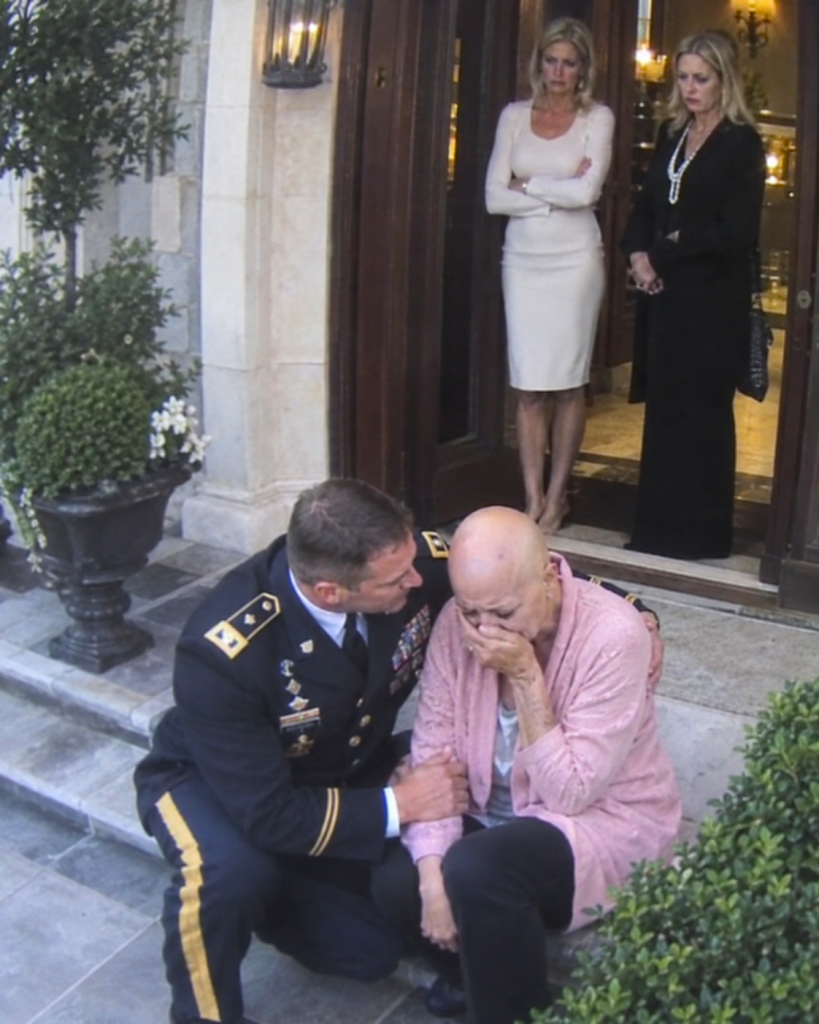
Through the crack in the door, I saw my father holding my mother’s winter coat—the heavy grey wool one she had worn for thirty years. He pressed his face into the fabric, his shoulders shaking.
“I don’t have it in me, Maggie,” he whispered to the empty sleeve. “I can’t fight them both. Chloe will take the kids… and Sierra… Sierra is strong. She’s the strong one. She’ll be all right.”
The words felt like a physical blow.
It wasn’t malice that had made him abandon me; it was a cold, tragic calculation. Because I was capable of surviving the loss, he had decided I was the one who had to bear it. My strength had become the justification for his neglect.
I stood in the shadow of the sewing room and understood my father completely. I saw his fear, his frailty, and his deep, paralyzing grief. And in that same moment, I decided I would not forgive him. Both of those realities could exist at the same time. He was a broken old man, but he was also a father who had chosen to let his daughter walk alone because it was the easiest path available to him.
I waited until he shuffled into the kitchen, and then I slipped out the front door, the screen latch clicking softly behind me.
Chapter 4: The Harvest
That evening, I visited the one person in town who had never asked me to be anything other than myself.
Mrs. Miriam Vance had taught my fifth-grade class thirty years ago, and she had never quite stopped being my teacher. At seventy-one, she lived in a small, neat house on the edge of town that always smelled of yeast and warm butter. She was the first person who had ever told me I had value on a day I felt completely useless.
I sat at her kitchen table and laid out the entire mess: the lost orchard, the manila folder, my father’s tears over the winter coat, and the note I’d found in the sewing tin.
Mrs. Vance listened without interrupting, her old hands wrapped around a mug of tea. When I finally ran out of words, she reached across the table and covered my hand with hers.
“Sierra, this folder you made,” she said gently. “Who is it really for?”
“For them,” I said, though the words felt hollow even to me. “To make them see.”
“No,” she replied, her voice soft but firm. “It’s for you. You want them to hand you your worth, dear. But they don’t have it. They never did.”
I opened my mouth to argue, but the truth of her words stopped me.
“So what do I do?” I asked.
Mrs. Vance offered the same patient smile she had given me three decades ago when I had cried over a failed spelling test. “You stop standing at a door that won’t open, and you look at who is already in the room with you. You don’t walk down that aisle alone, Sierra. You walk down it with the people who actually showed up.”
The words stayed with me on the drive home. The people who showed up. Not the ones I had to bribe, beg, or protect, but the ones who had been standing there all along while I was too busy staring at the empty seats.
The next morning, my phone rang. It was Thomas Brandt.
His mother, Eunice, had been one of my hospice patients the previous winter. I had spent three months visiting their farmhouse, managing her pain, and sitting beside her bed during the long night shifts. I was holding her hand when she passed, while Thomas was still driving in from two counties away.
“Sierra,” Thomas said, his voice hesitant. “I heard from one of the girls at the clinic that you had to change your wedding plans. That you lost the orchard.”
“We’re making other arrangements, Thomas,” I said, trying to sound cheerful. “Daniel is going to build an arch in our yard.”
“Our old timber barn,” Thomas said quickly. “The one we restored after Mom passed. It’s just sitting there, clean and empty. We’ve got the string lights still up from the harvest festival.”
“Thomas, I couldn’t possibly—”
“You carried my mother gently out of this world, Sierra,” he interrupted, his voice cracking slightly. “Please let us carry this day for you. It would mean the world to our family.”
I sat down on my front steps, looking out at the autumn leaves, and felt a warm tear slip down my cheek.
This wasn’t a random stroke of luck. This was a harvest. For nine years, I had been planting quiet acts of care and comfort in this town without ever expecting the soil to give anything back. Now, the field was feeding me.
The peace-making dinner took place that Sunday at Aunt Beatrice’s house.
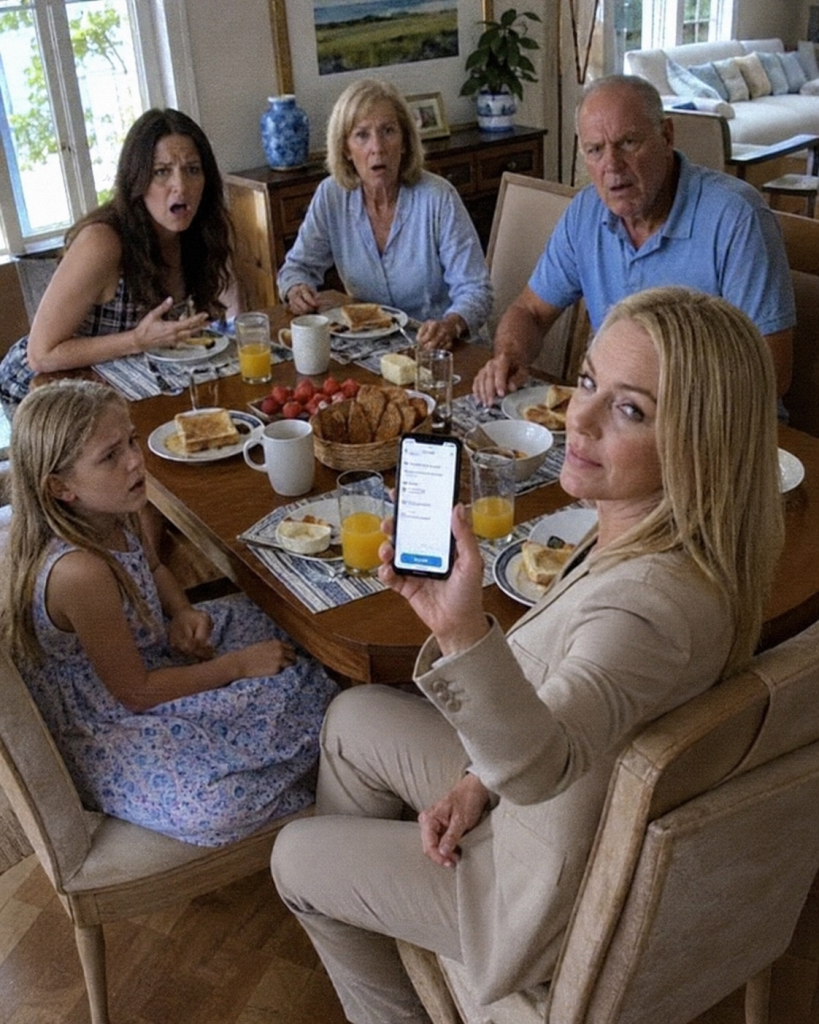
The table was loaded with heavy dishes and heavier silences. My father sat at the far end, his eyes fixed on his plate, while Chloe occupied the seat next to him, her posture tense and defensive.
Beatrice waited until the main course was served before initiating her strike. “Now, we are all family here, and family means forgiveness. Sierra, I think you owe your father and your sister some grace.”
The opportunity was perfect. The manila folder was sitting in my car, ready to be brought inside. I could have laid fourteen months of financial exploitation out on the table and watched the room collapse.
But I looked at my father. He looked so small in his oversized shirt—a man who spent his evenings weeping into his deceased wife’s clothing. If I destroyed him here, I would be no better than Chloe, using pain as a currency to buy control.
I took my hand off my car keys in my pocket.
“You’re right, Aunt Beatrice,” I said, my voice calm and clear. “Family is important. And I forgive all of you.”
Chloe’s eyes narrowed. She had prepared herself for a battle of recriminations, and my offer of simple, unvarnished grace left her with nothing to fight against.
I drove home that night and dropped the unopened manila folder into the recycling bin. I had a different plan now—one that didn’t involve weapons.
Over the next three evenings, I sat at my kitchen table and prepared a different kind of document. It was a handover packet.
I compiled every login, every account number, the draft dates for the homeowner’s insurance and the property taxes, the contact information for his cardiologist, and the automatic refill schedule for his prescriptions. I wrote the instructions out clearly and simply, the way I would write discharge papers for a patient leaving the hospital to manage on their own.
I was discharging myself from their lives.
I wasn’t doing it to punish them. I was doing it because a father cannot depend on hands he refuses to hold in the light, and I could no longer be the invisible support for a family that insisted on calling me cold.
When the packet was complete, I placed it in a clean envelope, left it on my counter, and called Thomas Brandt to tell him yes.
Chapter 5: The Full Room
Moving a wedding to a new venue in nine days should have been impossible.
But a town is a remarkable thing when you’ve spent nearly a decade helping it heal. The moment word got out, the machinery of our community began to move. Dana rallied our nursing colleagues to string extra lights through the high rafters of the Brandt Barn. A family whose grandfather I had cared for brought over fifty folding chairs. The local diner, where Chloe had once tried to interrogate me, donated five gallons of fresh apple cider made from my mother’s original recipe.
Daniel spent his evenings finishing the cedar arch, his hands working the wood until it was smooth and fragrant.
I had spent my life trying to force my way into a family that kept pushing me to the margins. Now, without any effort on my part, a room was building itself around me.
The night before the ceremony, I took my final step.
I logged into my banking application, cancelled the automatic drafts for the homestead’s insurance and taxes, and formally removed my name as the co-signer on Chloe’s lease. The lease was up for renewal, meaning she would have thirty days to find a new guarantor or pay her own deposit. I wasn’t being cruel; I was simply returning the steering wheel to the people who had insisted I had no business driving.
Then, I emailed the handover packet to my father with a short, quiet note:
Dad, here is everything I’ve been handling for the house and your care. It is all yours now. You have everything you need to stand on your own. So do I. I love you. Sierra.
The morning of the wedding was crisp and bright.
At nine o’clock, the phone rang—the call from Chloe telling me not to expect our father, the call where she told me I should have known my place. I let the words wash over me without letting them take root.
By four in the afternoon, the Brandt Barn was glowing.
The old timber walls were bathed in warm, amber light, and the scent of sweet hay and hot spiced cider filled the air. In the small side room, I stood before the mirror, reached behind my back, and fastened the final button of my gown myself. My hand didn’t shake.
I wrapped my mother’s initials-embroidered handkerchief around the stems of my wildflower bouquet, my thumb tracing the worn satin edge she had touched so many times.
Stand, Sierra.
“Are you ready?” Dana asked, leaning her head into the room, her eyes shining. “It’s packed out there. There isn’t an empty seat in the house.”
“Who came, Dana?” I asked, my voice barely a whisper.
“Everyone,” she said simply. “Everyone you ever showed up for, Sierra. They’re all here.”
When the heavy timber doors of the barn swung open, the warmth of the room hit me like a physical wave. It was the fullest room I had ever seen. There were over a hundred faces—hospice families, former patients, neighbors, colleagues—all turning toward me with genuine joy. The lie that I was isolated and unloved died in that single, brilliant instant.
Mrs. Vance was waiting for me just inside the entrance, wearing her best blue dress. She held out her arm, and as I took it, she leaned close. “You don’t walk in alone, honey. You never did.”
We began our walk down the aisle, the sound of the acoustic guitar soft against the wooden rafters.
But as we reached the halfway point, the heavy double doors at the back of the barn creaked open once more.
Chloe stood framed in the autumn light. She had come to witness my humiliation—to see her “cold” sister walk into an empty room. Instead, she found herself staring at a sanctuary of light, music, and a community of people who loved me. Her eyes went wide, her lips parting in silent shock.
And standing just behind her, his head lowered, was our father.
He had received the handover packet. For forty-eight hours, he had been forced to look at the raw, undeniable proof of everything I had done for him while he was busy hiding from his own life. The scale of my silent devotion had finally broken through his fear.
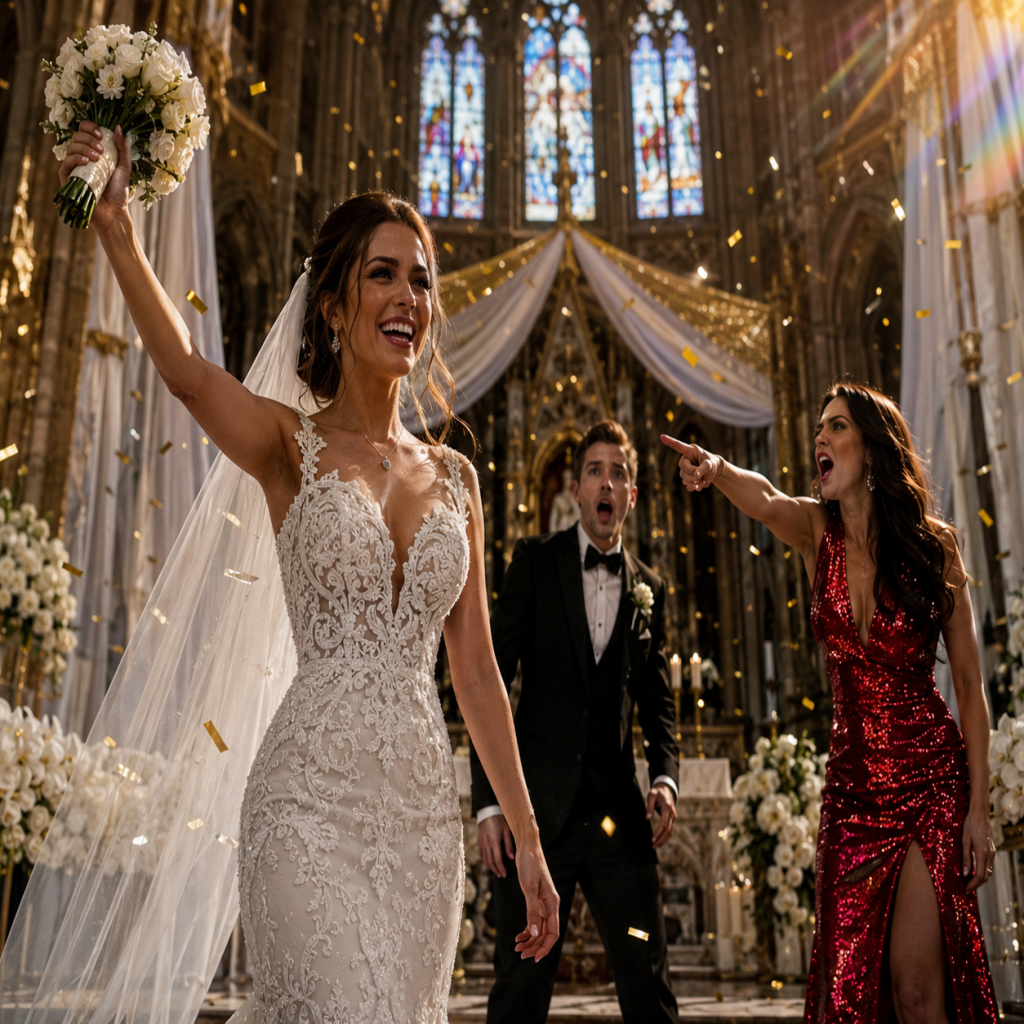
Chloe, realizing she was losing her audience, took a step forward, her voice rising above the music. “Sierra, this is ridiculous. You should have known your place!”
The music stopped. The entire barn fell into a profound, heavy silence.
I stopped walking. I turned to face my sister across the quiet space, my hand resting on Mrs. Vance’s arm. I didn’t raise my voice. I didn’t need to.
“I finally do, Chloe,” I said, the words falling clear and steady into the silence. “My place was holding all of you up. I’ve just decided to set you down.”
There was no shouting, no anger, and no reading of receipts. The truth of the room spoke louder than any argument ever could.
My father lifted his eyes, wet with tears, and looked at me across the barn. “I read what you sent, Sierra,” he whispered, his voice trembling. “I didn’t know. I’m so sorry… I didn’t know.”
He stood there, truly alone for the first time in fourteen months, finally feeling the weight of his own life because I was no longer carrying it for him. Chloe stood beside him, her face pale as she realized she had spent months fighting for control of a man whose stability had been paid for entirely by the sister she had cast out.
I felt no triumph in their defeat—only a quiet, clean sorrow.
Mrs. Vance patted my hand. “Shall we?” she whispered.
“Yes,” I said.
We turned our backs on the open doorway and walked the remaining steps toward Daniel, who was waiting beneath his cedar arch, his eyes fixed entirely on me. When Mrs. Vance placed my hand in his, the barn erupted into a applause that shook the old timbers.
We said our vows in a room that smelled of cider, wood, and lavender.
In the weeks that followed, the family reshaped itself. My father began the slow, difficult process of learning to manage his own household. He paid his insurance, he renewed his prescriptions, and he began to stand on his own feet. He calls me now, and the conversations are no longer transactions of need; we talk about the weather, the autumn trees, and the mother we both miss.
Chloe grew quiet. The rumors stopped, and she eventually found a co-signer elsewhere, though we rarely speak. I keep the boundary my mother’s note taught me to find: I help where I am respected; I do not where I am merely used.
I am still a nurse. I still drive the dark country roads at four in the morning to sit with the dying. But I no longer carry the weight of a family that refuses to carry themselves.
Every now and then, I take my mother’s handkerchief out of my drawer and trace the frayed edge.
Your place was never the chair they pointed you to. It is the ground you choose to stand on, and the people who are already standing there beside you when the doors finally swing open.