At the funeral, my grandma left me her savings book. My father threw it onto the grave: “It’s useless. Let it stay buried.” I took it back and went to the bank. The clerk turned white: “Call the police. Do not leave.”
At the funeral, my grandma left me her savings book. My father threw it onto the grave: “It’s useless. Let it stay buried.” I took it back and went to the bank. The clerk turned white:
“Call the police. Do not leave.”
My name is Leona Heield. I’m 34. And at my grandmother’s funeral, my dad threw the only thing she left me into her grave.
It was a bank book, a green savings passbook from 1962, 63 years of balances in purple ink. She’d pressed it into my hand the week she died and told me where to take it.
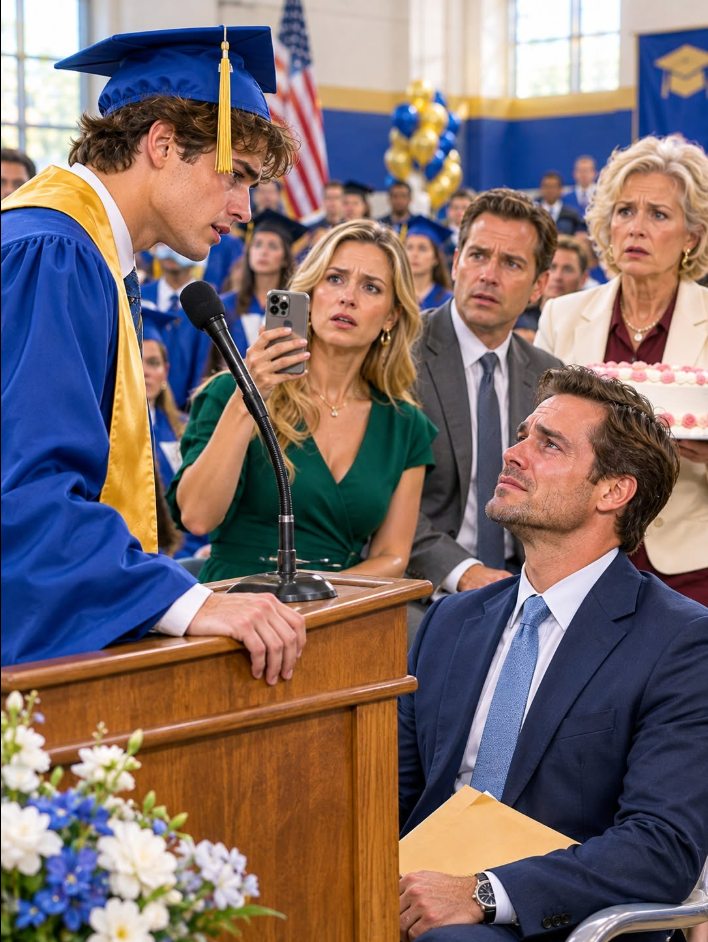
My dad took it out of my hand at the graveside, looked at the last line, and dropped it onto her casket in front of 60 people.
“It’s useless,” he said. “Let it stay buried.”
I climbed down the gravediggers’ ladder and picked it up out of the dirt. The next morning, I carried it six blocks to the bank.
The woman behind the counter opened it, typed something, and read her screen. Then her face went white.
She told the teller beside her to call the police, and she looked at me and said, “Please don’t leave.”
What that screen said about my father, and what happened when 60 relatives heard it two weeks later at a lunch he was hosting, is the story I’m telling you today.
Welcome back to Clara’s Drama Stories. This is where quiet women tell how they kept what was theirs and did it by the book, calmly, all the way to the last page.
If you’ve ever been the one who stayed when everyone else drove off, this one’s for you. Drop a comment and be sure to subscribe.
My grandmother was Geneva Healed, and everybody in Paris, Kentucky, called her Miss Geneva, including the mailman and the pastor.
She was 86. She lived in a white frame house at 412 Vine Street, with a porch swing and a pear tree that dropped fruit on the sidewalk every September.
Two years ago, her heart started to fail in the slow way that doctors call managed, and I moved into her back bedroom.
I’m a bookkeeper. I keep the books at Stoner Creek Farm Supply out on the bypass, and I’d done it for 12 years when I asked my boss to cut me to 20 hours. He did.
Hospice sent a nurse named Leavonne three days a week. The other four days and every night were mine.
The nights were where the money went.
A night aide cost $2,100 a month. The hospital bed was rented. Half her medicines weren’t covered.
By the end of two years, I had spent $28,400 of my own savings, and I never told anyone, because who would I tell?
Every morning before her pills, Mama asked for her bank book.
It lived in the top drawer of her nightstand, green cloth cover gone soft as a glove, and the balances inside were written in purple ink by 63 years of tellers.
I’d read her the last line like a weather report.
“146,900,” I’d say.
And she’d nod like the number was a neighbor she was glad to see.
“A book that’s been to the bank is worth more than one that stays home,” she told me once.
I thought she was talking about interest.
I didn’t understand what she meant until the morning a bank clerk told me not to leave.
My dad is Benton Healed. Everybody calls him Ben.
He sells used trucks off a gravel lot in Georgetown, 20 minutes up the road, and the lot had been losing money for three years, though he’d never say so.
In 2014, when Mama had her hip replaced, she signed a power of attorney naming him because he was her only child, and the lawyer said it was sensible.
She never thought about it again. Neither did I.
He married Shondaanda in 2016. Shondaanda sells insurance and has a grown son named Tristan who lives in their basement and drives a $48,000 pickup that my father co-signed for.
In the two years I lived with Mama, my dad visited four times.
Christmas for an hour. Easter for an hour. Once to look at a gutter he never fixed. Once because Shondaanda wanted a slice of Mama’s pie for a church thing.
Each time, on his way out the door, he’d put a hand on my shoulder and say the same thing.
“Family handles family, Leona. You call me if it’s money.”
So I called him once.
The night aide had gone up to $2,100 a month, and I was tired of watching my savings fall like a thermometer in January.
“Mom’s got savings,” he said. “I’ll look into it.”
I waited. Nothing came.
I paid the aide myself, the way I’d been paying her.
I told myself he was busy. I told myself the lot was hard.
I’m good at telling myself things when I’m running on four hours of sleep.
What I didn’t do was ask where he’d looked.
And that is the one thing in this story I’d do differently. Everything else I’d do again.
August in the Bluegrass is a wet towel you can’t take off.
Mama’s window unit ran all night, and she slept less and less.
One night around two, I was sitting up with her, and she took my wrist in her thin fingers.
“Ben’s been to the bank,” she said.
I thought she was dreaming.
“When, Mama?”
“Spring,” she said. “And again.”
She was clear as a bell. Her eyes were the same eyes that had caught me stealing cookies at six.
“Did he bring you anything to sign?”
“No,” she said. “He doesn’t need me to sign. He’s got that paper.”
The paper from 2014.
I got up and opened her nightstand drawer. The green book was where it always was.
I turned to the last line.
January interest posted. $146,900.
Nothing after that, because a passbook only tells you what it’s been shown, and nobody had carried it to the counter since the new year.
I stood there in the hum of the air conditioner and did what a bookkeeper does when the numbers stop matching the story.
I made a plan.
In the morning, I’d take the book to the bank and have the interest posted, and the printout would show whatever my father had done.
“I’ll take it in tomorrow,” I told her.
She shook her head on the pillow.
“Leave the book here,” she said. “He’ll want it.”
I didn’t understand that either.
I put the book back in the drawer and sat down and held her hand until the window went gray.
And all the while, a question sat in my chest like a swallowed stone.
What had he been to the bank for?
I went to the bank anyway, the first Tuesday in September, without the book.
Farmers and Citizens Bank of Bourbon County sits on Main Street in a limestone building with brass rails, and the branch manager is a woman named Doris Yates, who has known my grandmother for 30 years.
I asked Doris if I could see the activity on Mama’s savings account.
She looked at me kindly and said, “No, honey, you’re not on the account.”
She said, “I can’t show you a thing. Not a balance, not a date.”
I told her my father had a power of attorney.
“Then he can see it,” she said. “You can’t. It’s the law, and it’s a good law most days.”
It just wasn’t a good law that morning.
I asked what Mama could do if she wanted to change things.
Doris chose her words like a woman stepping on river rocks.
“If your grandmother wants to revoke a power of attorney, she signs a revocation in person, or we send a notary to the house.”
Mama hadn’t left her bed since June.
I asked about the notary.
The bank’s traveling notary came to the county twice a month, and the earliest open date was October 14th.
I wrote it on the back of my hand.
“I’ll put her down,” Doris said.
And then she said one more thing, looking at her screen and not at me.
“Leona, if your grandmother wants to come in before then, we can always make room.”
I didn’t hear what she was telling me.
I was a bookkeeper standing at a counter being told no, and all I could think about was the one line I couldn’t see.
I didn’t ask why a branch manager who’d known my grandmother 30 years was suddenly talking about making room.
I heard six weeks.
Six weeks, I thought, walking back down Main Street in the heat.
We have six weeks.
We had five.
In the middle of September, Doris Yates drove out to Vine Street on her lunch hour with a transparent pie she’d baked herself.
I let her in and went to the kitchen, because when two women who have known each other 30 years want to talk, you give them the room.
They talked for 20 minutes with the door pulled to.
I washed the same three cups twice.
When Doris came out, she stopped at the kitchen doorway and said, “Your grandmother’s got a good head. Better than most.”
Then she left.
I went back to the bedroom, and Mama was sitting up higher than she had in a week, with color in her face like she’d won something at bingo.
“Take the book to Doris the day after they put me down,” she said. “Not before. Doris knows.”
I told her she wasn’t being put down anywhere.
She waved that off the way she waved off the weather.
“The day after. Not before. You hear me?”
I said I heard her.
“And don’t let your daddy near it.”
I thought she meant the interest, or closing the account, or some old woman’s superstition about handing a bank book across a grave.
I didn’t ask.
Leavonne came in to change the oxygen line, and the moment passed, and I folded the instruction up and put it away with all the other things I was carrying.
I’ve gone back over that afternoon a hundred times since.
She’d done something in that bedroom with Doris, and she decided not to tell me, and I’ve come to think she was right.
If she told me, I’d have argued with her.
She knew that. She knew me.
Mama died on Thursday, October 9th, at 4:20 in the morning.
Leavonne was there because she’d started staying nights that last week without putting it on the sheet.
It was quiet.
Her hand was in mine, and then it was just a hand.
I called my father at six.
He got there at eleven with Shondaanda and stayed 40 minutes.
He hugged me with one arm.
Then he went to the hall closet and took down the shoebox where Mama kept her papers, and he stood in the hall going through it.
Her will was in there, the one from 2009.
She left the house to him.
I knew that. He was her only child, and it was her house. And I’d never thought it should be otherwise.
“Where’s Mom’s bank book?” he said.
“In her drawer,” I said.
He went into the bedroom and opened the nightstand, and the drawer was empty because the morning before, Mama had told me to put it in my pocket, and I had.
He stood there looking at the empty drawer longer than he’d looked at his mother.
“Doesn’t matter,” he said. “Those things are decorations now. The bank’s got the real record.”
Shondaanda was in the kitchen eating a piece of the transparent pie.
On the way out, she said the funeral should be Monday so people could drive in and that Ben would handle the arrangements.
He didn’t. I did.
On Friday, while I was at Hinton’s Funeral Home picking a casket from a catalog, my father was, as he put it, up in Georgetown taking care of some paperwork.
I didn’t ask what paperwork.
I was choosing between oak and poplar for the woman who’d raised me.
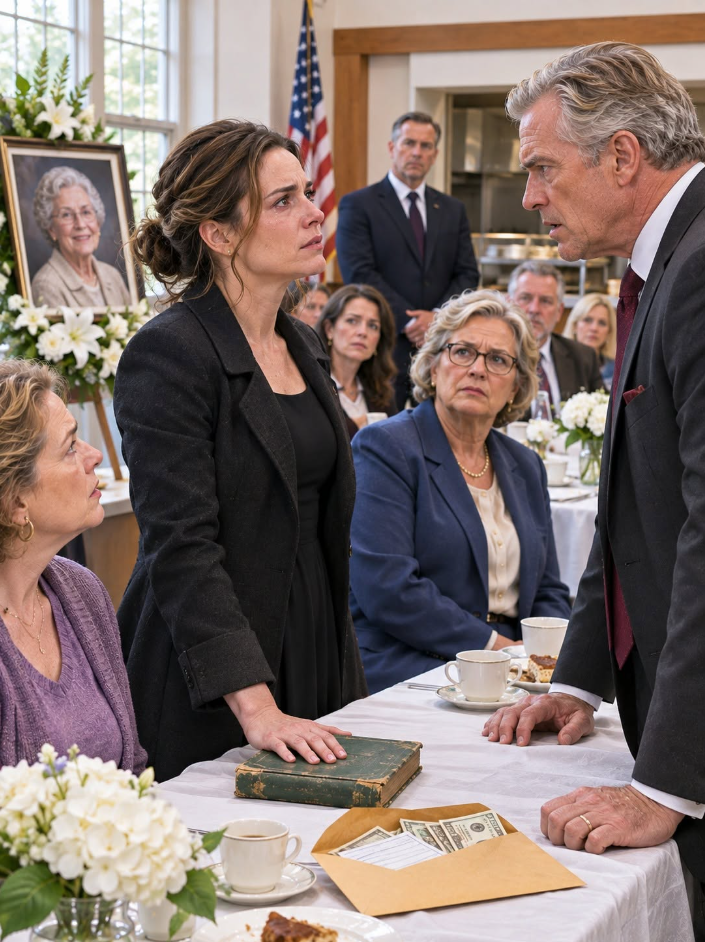
Monday was clear and cold, the first real cold of the fall, and 60 people came out to the Paris cemetery in good coats.
Pastor Sherwood read the 23rd Psalm.
Aunt Bobby, my dad’s sister, held my elbow.
When the prayer ended and people started to drift toward their cars, I took the green book out of my coat pocket to hold it.
The way you hold something that belongs to a person you’re not ready to let go of.
Tomorrow was the day after.
I was going to do exactly what she’d said.
My father saw it.
He crossed the grass in three steps and took it out of my hand.
“Give me that.”
Thirty people stopped walking.
He opened the cover and turned to the last line, the January line, and I watched his face do something I’d never seen it do.
It emptied out, then filled back up with something hard.
He closed the book.
He held it out over the open grave, over the poplar casket with a spray of white mums on it, and he dropped it.
It landed on the lid with a soft slap.
“It’s useless,” he said, loud enough for the back row.
“Let it stay buried.”
Shondaanda put a hand on his arm.
“Ben, let her have her little keepsake.”
Tristan laughed through his nose.
Nobody else made a sound.
The gravediggers’ wooden ladder was still leaning against the vault.
I walked to it, and I climbed down four rungs into the cold, and I picked my grandmother’s book up off her casket and wiped the dirt off the cover with my sleeve.
Then I climbed back out and put it in my pocket and buttoned the pocket.
I didn’t say anything to my father.
I didn’t look at him.
Tomorrow was Tuesday.
Doors opened at nine.
Before I tell you what the bank saw, I want to ask you something.
Have you ever been the one who stayed while the one who left got to make the speeches?
If so, tell me in the comments and stay with me, because the next ten minutes in that bank changed what my whole family thought they knew about my father.
On Tuesday morning, I put on the same black dress from the funeral and the blue-gray scarf Mama had knitted me the winter before her heart went bad.
And I walked the six blocks to Main Street.
I didn’t drive. I wanted the walk.
The brass rail on the bank door was cold enough to feel through my glove.
Doris Yates was behind the counter herself, which she does on Tuesdays because Tuesdays are slow.
I set the green book down on the wood, and next to it, I set the folded program from Monday’s service with Mama’s picture on the front.
“Mama passed Thursday,” I said. “She told me to bring this to you today.”
Doris looked at the program for a long moment.
Then she opened the book, and she saw the dirt still ground into the spine and the smear across the January line where my sleeve hadn’t gotten it all.
“Who did this?” she said.
“My dad,” I said. “At the cemetery.”
She didn’t say anything to that.
She turned to her screen and started typing the way she’d typed ten thousand times for my grandmother.
And I stood there with my hands in my coat pockets, looking at the calendar on the wall behind her, a feed store calendar with a picture of a foal.
October 14th. The day the notary was supposed to come to the house.
Doris stopped typing.
She didn’t move for a second.
Then she scrolled slowly, and she looked at the book, and she looked at the calendar, and she looked at the book again.
And I watched the color leave her face the way water leaves a sink.
“Kelsey,” Doris said, not loud.
The young teller at the next window looked up.
“Call the police department. The non-emergency line. Ask for Detective Bartlett.”
Kelsey’s hand went to the phone without a question, which told me Doris Yates had never said that sentence before.
Then Doris looked at me, and her voice came down soft.
“Please don’t leave. I need you to stay.”
My mouth went dry.
“Am I in trouble?”
“No, honey,” she said. “Your father is.”
She came around the end of the counter, which I’d never seen her do, and she put a hand under my elbow.
“There’s activity on this account dated after Thursday,” she said. “That’s all I can tell you right now. I’m required to report it. I’m required to put a hold on the account, and I’d rather the detective hear it from you than from me.”
She walked me to the chair by the window, a green vinyl chair with a chrome frame, the chair where my grandmother used to sit and wait for her interest to be posted because she liked to watch the teller write it.
I sat down in it.
My knees weren’t working right.
Doris went back behind the counter, and I heard her pick up her own phone and say, “This is Doris Yates at Farmers and Citizens. I need to make a report.”
Outside, a man was loading feed sacks into a truck at the hardware store across the street.
I watched him do it.
Twelve sacks.
I counted them because counting is what I do when I can’t do anything else.
Activity after Thursday.
Mama had been dead since 4:20 in the morning on Thursday.
Somebody had been to the bank since.
Detective Francancy Bartlett got there in 20 minutes.
She was about 50, in a gray blazer with reading glasses pushed up into short hair, and she looked less like television and more like a woman who runs the concession stand at the ballpark.
Doris took us into her office and shut the door.
Bartlett asked me plain questions, and I gave her plain answers because numbers are the only language I’m fluent in when I’m scared.
When did my grandmother die?
Thursday, October 9th, 4:20 in the morning.
Who was there?
Me and the hospice nurse, Leavonne.
When did I notify my father?
Six that morning, by phone.
Who had kept the passbook? And since when?
Me, since the eighth, when Mama asked me to put it in my pocket.
Before that, her nightstand drawer.
Had my father been in the house since Thursday?
Thursday. For 40 minutes.
He’d asked where the book was.
Bartlett wrote in a small notebook with a pen that clicked.
“Was your father aware she’d passed before he came to the house?”
“I told him at six,” I said. “He came at eleven.”
She wrote that down and underlined something.
Then she asked a question that didn’t fit with the others.
“At any point, did you or your grandmother report the passbook lost?”
I looked at the green book on Doris’s desk with the cemetery dirt in its spine.
“It was never lost,” I said. “It’s been in her nightstand for 63 years or in my pocket.”
Bartlett nodded like I’d said the thing she needed, and she clicked the pen closed.
And for the first time, I understood that the trouble my father was in had a shape, and the shape had dates on it.
Bartlett went out to her car to make calls.
Doris sat down across from me and folded her hands on the desk, and I could see she was choosing again what she could say.
“The account is on a hold,” she said. “State law lets us do that when we suspect exploitation. We’ve reported it to the cabinet. That part isn’t up to me.”
I nodded.
“To do anything else with this account, you’ll need a certified death certificate. The funeral home will have it in a week or two.”
I nodded again.
Then I asked the question that had been sitting in my chest since the foal calendar.
“Doris, what’s on that screen?”
She was quiet.
“I can show you what you’d be entitled to see as the beneficiary,” she said. “Once the certificate comes.”
The word went past me and then came back.
“I’m not on the account,” I said. “You told me that in September. I’m not on it.”
“You’re not on it,” Doris said. “You’re named on it. Since September.”
I sat there in the green chair with the chrome arms, and the man at the hardware store finished his feed sacks across the street, and the whole afternoon in September rearranged itself in my head.
The transparent pie.
The door pulled to.
Twenty minutes.
“Your grandmother’s got a good head.”
“She never told me,” I said.
“No,” Doris said. “She told me not to. She said the girl would argue with her.”
I laughed, and it came out wrong.
And Doris handed me a tissue from the box on her desk without looking, the way she’d probably handed a thousand of them across that desk to people who had just found out something about a person they’d buried.
Doris told me what she could, and what she could was enough.
On that September afternoon, with the bedroom door pulled to, my grandmother had asked her about a payable-on-death designation.
Doris had explained it.
Mama had said, “Put Leona,” and signed the form on a clipboard on her lap.
Doris had witnessed it and carried it back to Main Street in her purse.
“She said you’d spent your own money on her,” Doris said. “She said she’d been keeping count.”
I’d never told Mama a dollar figure.
I’d never told anyone.
But she’d been lying in that bed for two years, watching me write checks at the kitchen table, and she could still do arithmetic.
And she’d been keeping count.
“Take the book to Doris the day after they put me down. Not before.”
Because before, she’d still have been alive to argue with.
Doris turned the green book toward her and fed it into the little printer under the counter, the one that writes the purple lines.
It chattered and stopped.
She slid it back across.
There was a new line under January now. September interest.
But the balance beside it wasn’t the January number.
126,000 and change.
20,000 less than the last time I’d read it aloud.
And above it, a gap where three lines should have been, and she’d stopped the printer before October.
“There are lines I can’t print for you yet,” Doris said. “The detective has them.”
I closed the book.
The cover was still gritty under my thumb.
“Doris,” I said. “Did she know what he’d done?”
Doris looked at the foal on the calendar.
“She knew he’d been to the bank,” she said. “She never knew how many times.”
Bartlett came back in with a folder and sat on the edge of Doris’s desk.
“You’re the named beneficiary, and you’re my witness,” she said. “So I’m going to read you what I have. You tell me if anything surprises you.”
She read it like a grocery list.
“March 11th. Withdrawal, $4,000, by power of attorney. B. Healed. Same day, an affidavit of lost passbook signed B. Healed, stating the book could not be located.
“June 20th. $6,500. Power of attorney.
“August 22nd. $9,800. Power of attorney.”
She stopped and looked at me over her glasses.
“That’s the spring and the again,” I said. “That’s what she meant.”
Bartlett nodded and read the last one.
“October 10th. Withdrawal, $12,000. Power of attorney. B. Healed. Second lost passbook affidavit. Same date.”
October 10th.
Friday.
The day I’d been at Hinton’s choosing between oak and poplar while my father was up in Georgetown taking care of some paperwork.
“A power of attorney ends the moment the person dies,” Bartlett said. “He had no authority on the tenth, and he didn’t tell the bank she died on the ninth. They’d have stopped him at the window.”
She closed the folder.
“The book he swore was lost was in your pocket.”
I did the math because I couldn’t not.
$4,000. $6,500. $9,800. $12,000.
$32,300.
$114,600 left.
Mama’s medicines hadn’t been covered.
Her night aide had been $2,100 a month.
He’d told me, “Mom’s got savings. I’ll look into it.”
He’d looked into it.
My phone buzzed against my hip in my coat pocket.
I didn’t have to look.
The bank had just notified every authorized person on that account that a hold had been placed.
My father was calling.
I let it ring out in Doris’s office and called him back from the sidewalk, where the cold could keep my voice flat.
“What did you do?” he said.
No hello.
“I took Mama’s book to Doris,” I said. “The way she told me to.”
“I told you that thing was useless.”
“It wasn’t,” I said.
There was a pause, and I could hear the gravel lot behind him. A truck door. Tristan’s voice somewhere asking what was wrong.
When my father came back, his voice had changed gears.
It was the voice he used on a customer who’d found rust under the bedliner.
“Leona, there’s a mix-up. I was handling Mom’s bills. That’s all that is. The bank’s got their wires crossed.”
“Which bills, Dad?” I said. “I paid her bills. Her medicines. I paid her medicines. The aide, then? $2,100 a month. Out of my account. I have the checks.”
The gravel lot went quiet.
He breathed into the phone for a while.
“We’ll talk about this at the house,” he said, and hung up.
Detective Bartlett had told me before I walked out not to discuss the details with him.
Not the dates, not the amounts, not the affidavit.
“Let him tell you what he thinks you know,” she’d said. “People fill in the blanks themselves.”
I’d done that.
I hadn’t said October 10th.
I hadn’t said $12,000.
I’d said the one thing that was mine to say, which was that I had paid.
And I stood on Main Street in my funeral dress with the phone warm in my hand and thought about how fast a man can go from “What did you do?” to “There’s a mix-up.”
About four seconds. I’d counted.
He came to the house that night.
It was his house now by the 2009 will, and he had a key, and he let himself in without knocking, which he’d never done while she was alive.
Shondaanda stayed in the car with the engine running.
He sat down at Mama’s kitchen table, in Mama’s chair, and put his hands flat on the oilcloth.
“Family,” he said. “So let’s handle it.”
I stood at the counter.
“You call that detective tomorrow. You tell her it was a misunderstanding. Mom told me to take care of things. You were upset at the cemetery. You said some things.”
He spread his hands.
“And I give you half of what’s left. We split it. You keep the house till spring. No rent.”
He said it like a man offering a fair trade on a truck.
“The money’s not mine to split,” I said. “And it’s not yours to offer. It’s my mother’s money.”
“Then why did you tell the bank you’d lost her book?” I said.
He went still.
His eyes went to my coat on the hook by the door, to the pocket where the book was.
“Who told you that?”
“You just did,” I said.
He stood up fast enough to rock the chair.
For a second, I thought he’d come across the kitchen.
He didn’t.
He pointed at me from where he stood.
“You’ve got till Sunday to think about it. After that, I can’t help you.”
He left the door open behind him.
I heard Shondaanda’s window go down, and her voice, and his answer, and then the car.
I shut the door.
I put the chain on.
I had never once put the chain on in that house.
By Wednesday, Shondaanda had gone to work.
Not at the insurance office. On the phone.
She called Aunt Bobby in Winchester. She called my cousin Gentry. She called two women from the church.
The version she told was the same every time, because Shondaanda sells policies for a living and knows a script sticks better than a story.
“Leona lived in that house two years. Nobody checked on her. Who knows what she took? Somebody had to protect that woman’s money. Ben did. Now she’s turned him in to cover herself.”
Then my father called me at the farm supply, at my desk with the month’s invoices in front of me.
“Let it stay buried, Leona,” he said. “For the family. For Mom’s sake.”
I looked at the invoice I was holding.
Sixty bags of layer feed delivered Monday.
“Mama told me to take the book to the bank,” I said. “I did what she said.”
I hung up and went back to the feed.
That afternoon, Leavonne came by the store with a casserole, because that’s what Leavonne does.
And while I rang up a man’s fence staples, she said, quiet, “Your grandmother told me in August your daddy came by with papers. I wrote it in the visit log. Hospice logs every visitor.”
I stopped with the staples in my hand.
“Don’t tell me,” I said. “Tell Detective Bartlett. Francancy Bartlett. Paris Police.”
Leavonne looked at me a second and then nodded, the way nurses do when they understand there’s a procedure and you’re following it.
“She’ll have it by five,” she said.
I’d learned that much in two days.
Everybody who wanted to help me could help by telling the right person instead of me.
Aunt Bobby called Thursday night.
She’s my father’s younger sister, a school secretary in Winchester, and she has never once raised her voice in my hearing.
“Shondaanda called me,” she said.
And then I sat down, and I remembered August.
In August, my grandmother had called Bobby on a Sunday.
She said, “Ben’s been to the bank, and I didn’t send him.”
Her words.
“I called Ben about it. He said Mom was confused.”
Bobby’s voice got thin.
“I let it go, Leona. I’m so sorry. I let it go.”
“Tell the detective,” I said. “Not me. Francancy Bartlett.”
“I will. First thing.”
Then she said the thing she’d really called to say.
“Ben’s putting on a lunch at the church a week from Sunday. A memorial lunch for Mom. He’s telling everybody her affairs left some bills. He’s asking the family to chip in for the funeral. Gentry is collecting.”
I sat down on the edge of the hospital bed, which was still in the front room because the rental company hadn’t come.
“The funeral isn’t paid?” I said.
“That’s what he says. $9,400.”
I looked across the room at the refrigerator, where I’d stuck the Hinton’s paperwork under a magnet on Friday without reading past the first page because on Friday I couldn’t read anything.
I’d paid Hinton’s $500 that day for flowers and the luncheon deposit.
I hadn’t looked at the rest of the bill.
I’d just signed where Mr. Hinton pointed.
But I remembered something my grandmother had said years ago, dry as a cracker, when I’d asked her about her plans.
“I’ve seen to my own burying, Leona. I don’t trust that boy to pick a box.”
If you’re wondering why I didn’t just show up at my father’s door with that printout, here’s why.
A detective had it, and a room full of relatives was about to hear my father ask them for money.
I wanted them to hear the truth in the same room.
Hit subscribe if you’ve ever had to let a liar finish his sentence first.
Hinton’s Funeral Home is a brick house on Pleasant Street with a porch the width of the building.
And Mr. Hinton has buried half of Bourbon County and remembers everyone.
I went on Friday morning to ask about the death certificate, and he told me it would be another week.
And then I asked him the question I’d come to ask.
“Mr. Hinton, what’s the balance on my grandmother’s account?”
He pulled a folder from a cabinet without looking for it.
“Zero,” he said. “Your grandmother bought a prearranged plan with us in 2019. Casket, service, vault, opening and closing. $8,900. Paid in full. March of that year.”
He turned the folder so I could see the top sheet.
“Last Friday, you paid the $500 for the flowers and the luncheon deposit. That’s everything.”
I stood there in his front room with its ferns and its clock.
“She picked the poplar,” I said.
“She picked the poplar,” he said. “She said oak was for people with something to prove.”
I laughed, and it hurt.
Then he said the rest carefully, because he’s a careful man.
“Your father called me that same Friday afternoon after you’d left. He asked what the balance was. I told him what I’ve told you. Zero.”
“What did he say?”
Mr. Hinton closed the folder.
“He asked me not to mention the prepaid plan to the family. He said it would embarrass them that she’d done it herself.”
He let that sit.
“I don’t discuss arrangements with anyone but the family, Miss Healed. But you’re the family. And I don’t lie for anybody.”
I thanked him.
I walked out onto Pleasant Street knowing a thing I hadn’t known on the way in.
My father was asking 60 people for $9,400 toward a bill that had been paid in full six years ago.
Detective Bartlett called that afternoon while I was reconciling the feed store deposit and told me what she was allowed to tell me, which was more than I’d expected and less than I wanted.
She’d driven to Georgetown.
She’d sat with my father at his kitchen table with Shondaanda in the doorway.
He’d admitted signing the lost passbook affidavit in March.
“He says your grandmother told him it was lost,” Bartlett said.
He admitted the October 10th withdrawal.
“He says he hadn’t processed that she’d passed.”
I thought of him standing over the empty nightstand drawer on Thursday, looking at it longer than he’d looked at his mother.
“He’d processed it,” I said.
“I know,” Bartlett said. “I’ve got Leavonne’s visit log and your aunt’s statement. I’ve got the bank’s timestamps. He told the bank nothing on Friday. It’s going to the county attorney next week.”
I asked her the only thing I needed to know.
“Will he be arrested at the church? I mean, at the lunch?”
“That’s not my plan,” she said. “I don’t do funerals. He’ll get a summons like anybody else.”
She paused.
“Are you going to that lunch, Ms. Healed?”
“My aunt invited me,” I said.
“Then go as her guest and let him talk,” Bartlett said. “You don’t have to say anything, but in my experience, quiet people do better when they finally say it in front of the people who were lied to.”
She hung up.
I sat with the phone in my hand and thought about the word summons.
I’d pictured something louder, I suppose.
Flashing lights in a church parking lot. Shondaanda screaming on the steps.
That isn’t how it works.
And I was glad.
I’d spent two years learning that the right way is usually the quiet way, and that quiet doesn’t mean nothing happens.
I finished the deposit.
It balanced to the penny, the way it had every Friday for 12 years.
And I sat and looked at the matching numbers for a while because they were the only thing in my life that week that did.
Shondaanda came into Stoner Creek Farm Supply on Saturday morning in a white coat that had never seen a barn.
There were four customers at the counter and two more in the aisle with a cart of fence posts, and she waited until all of them could hear.
“You turned your own father in,” she said. “Over a bank mix-up. Geneva would be ashamed of you.”
I was behind the register with a spool of baling twine in my hand.
I set it down.
“Mama told me to take the book to the bank,” I said. “I did what she said.”
“She was 86,” Shondaanda said. “She was on morphine. She had no idea what she was saying.”
“She was on morphine for nine days,” I said. “At the end. She named me in September. Sitting up. Doris Yates witnessed it.”
Shondaanda’s mouth opened and shut.
The man with the fence posts looked at the floor.
One of the women at the counter, a horse farm manager I’ve known for years, turned around and looked at Shondaanda the way you look at a loose dog.
Shondaanda picked her purse up higher on her shoulder.
“Sunday,” she said. “Everybody is going to hear what you did.”
“I’ll be there,” I said. “Aunt Bobby is bringing me.”
She hadn’t expected that.
She left without buying anything, and the bell on the door rang after her.
The horse farm manager put a bag of mineral blocks on the counter and said, “Leona, honey, ring me up and don’t you say another word to that woman.”
I rang her up.
I didn’t shake.
I noticed that.
I’d thought I would.
The invitation went out through the family group text, the one I’d been removed from the morning after the cemetery.
Aunt Bobby forwarded it to me.
“Memorial lunch for Mom. Sunday the 26th, noon, Fellowship Hall at Main Street Baptist. Mom’s affairs left some bills. Anything you can give toward the funeral, Gentry will collect at the door. Thank you for honoring her.”
Sixty people answered yes.
Cousins from Winchester, from Mount Sterling, from down in Richmond, the Tillies, the church women who’d brought casseroles.
“Come as my guest,” Bobby said. “He can’t stop me bringing somebody.”
That night, Pastor Sherwood called.
He’s a tall, slow man who’d baptized my father and buried my grandfather, and he doesn’t make phone calls he doesn’t mean.
“Leona, your grandmother asked me something in August,” he said. “She asked me to make sure you spoke at her service. You didn’t Monday.”
“Dad spoke,” I said.
“I know who spoke,” the pastor said. “I’d like you to speak Sunday at the lunch. A few minutes about her.”
I looked at the green book on the kitchen table, where I’d been letting it sit in the lamplight the way she used to.
“He didn’t invite me,” I said.
“It’s my hall,” Pastor Sherwood said. “I’m inviting you.”
After he hung up, I sat a long while with that.
My grandmother had arranged her own casket, her own vault, her own beneficiary, and apparently her own speaker from a hospital bed in a front room without telling me a single one of them.
She’d seen to her own burying.
She’d seen to the day after, too.
The only thing she’d left to me was the walking.
I picked up the book and turned to the first page, the 1962 page.
$40, in a hand I didn’t recognize.
And I thought about a 23-year-old farm wife walking into a limestone building on Main Street with four $10 bills and a plan.
She’d never once asked anybody’s permission to keep what was hers.
I wasn’t going to start the family tradition of asking now.
The death certificates came on Friday the 24th, five of them certified with the state seal raised under my thumb.
I took one to Doris.
She made a copy, and she put a form in front of me, and I signed as the payable-on-death beneficiary of a savings account opened in 1962 by a tobacco farmer’s wife with $40.
“The hold stays on while the county attorney has the file,” Doris said. “When it lifts, the balance comes to you. The $12,000 from the tenth, the county will go after as restitution. The earlier ones too, I’d expect.”
She said the number.
$114,600.
I heard it.
I didn’t feel it. Not then.
“I’m not here for the money today,” I said.
“I know,” Doris said. “You’re here because she told you to be.”
She slid the green book back across the counter to me.
The detective had photographed every page.
It was mine to keep.
“Ben came in yesterday,” Doris said then, quietly, looking at the foal on the calendar.
“With the will. He wanted to settle his mother’s account as her heir.”
She let out a breath.
“I had to tell him a payable-on-death account isn’t part of an estate. It was never going to be his. Not the day he signed that affidavit. Not on the tenth.”
“What did he say?”
“He said he’d see me at the lunch,” Doris said. “I told him I’d be there. I’ve been to every one of Geneva’s family things for 30 years. I’m not stopping for him.”
I buttoned the book into my pocket and walked home down Main Street.
And it was the first time all month the walk felt short.
Saturday night, I sat at Mama’s kitchen table with the green book and a soft toothbrush.
And I cleaned the cemetery dirt out of the spine, one stitch at a time, until the cloth was green again.
The hospital bed was gone.
The rental company had come Thursday, and the front room had a bare rectangle on the rug where two years had happened.
My father called at nine.
“Last chance,” he said. “Tomorrow you sit down, you eat, you keep your mouth shut, or you don’t come.”
“Aunt Bobby invited me,” I said. “Pastor Sherwood invited me.”
“It’s my mother’s lunch.”
“It’s her funeral money you’re collecting,” I said. “She paid Hinton’s in 2019.”
The line went so quiet I checked the screen.
“Who told you that?”
“Mr. Hinton,” I said. “He told you, too.”
He hung up.
I finished the spine.
I ironed the black dress and hung it on the bedroom door.
I folded the blue-gray scarf and set it on top of the book on the table so I’d see them both in the morning.
I didn’t practice anything.
There was nothing to practice.
I’d read a number out loud every morning for two years, and I knew how to do that.
And the rest was just more numbers.
Sunday came up cold and bright like the day we’d buried her.
At 11:30, Aunt Bobby pulled up in her Buick, and I got in with my coat buttoned over my pocket.
“You all right?” she said.
“I’m all right.”
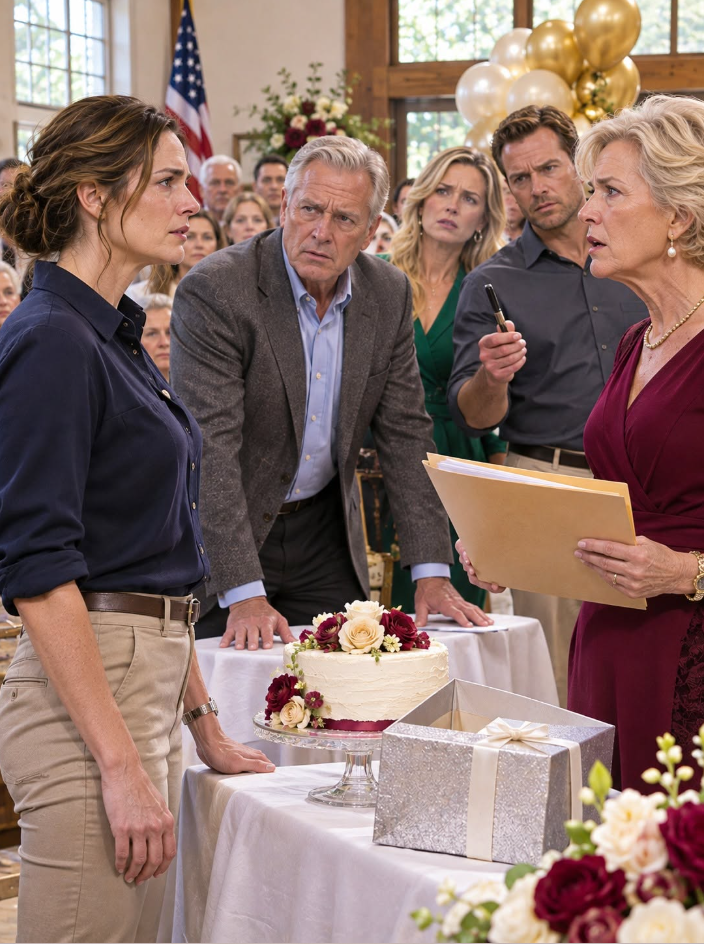
At noon, 60 people sat down in a church fellowship hall to a lunch my grandmother had already paid for.
The fellowship hall at Main Street Baptist is a long room with a linoleum floor and folding tables set end to end.
And the church women had done what church women do.
Fried chicken in foil pans, green beans with bacon, three kinds of pumpkin bread, sweet tea, and plastic pitchers sweating onto the paper tablecloths.
Sixty people found seats.
I sat halfway down the left side between Aunt Bobby and Gentry, with Doris Yates two chairs down in her good navy coat.
Mr. Hinton sat at the very last table by the kitchen door, the way funeral directors do, present and not present.
My father stood at the head of the room with Shondaanda at his shoulder and Tristan slouched against the wall behind them.
Pastor Sherwood said grace.
Then my father cleared his throat, and the room went quiet for him the way it had at the cemetery.
“Mom was a proud woman,” he said. “She didn’t leave much. That little bank book of hers was about empty by the end. Her bills took it. We all know how that goes.”
Heads nodded.
“The funeral ran $9,400. Hinton has been patient, but patience runs out.”
He looked down the room, not at me.
“Anything you can give. Gentry’s got the envelope. Nobody’s keeping score.”
A white envelope started down the right side of the room.
I watched it go.
$20. $40. A check folded twice.
My cousin from Mount Sterling, who drives a school bus, put in a hundred.
It came around the end of the table and up our side, and Gentry handed it to his mother.
Aunt Bobby looked at it for a second, and then she set it down on the paper tablecloth in front of me, and she took her hand off it.
I stood up.
I didn’t push my chair back, so it scraped, and 60 heads turned.
My voice came out the way it comes out when I read a balance.
“I need to say something, and I’ll only say it once.”
My father’s jaw set.
“Mama paid for her own funeral. She bought a plan at Hinton’s in 2019. Casket, service, vault. $8,900. Paid in full that March.”
I put my hand flat on the envelope.
“I paid the other $500 on the Friday after she died. Flowers and this lunch. The balance is zero.”
Nobody moved.
“Mr. Hinton told Dad that two weeks ago.”
Down at the last table by the kitchen door, Mr. Hinton set his fork down.
He didn’t stand.
He just said, in the voice he uses to tell a widow where to sign, “Zero balance. I told him.”
The envelope sat under my hand like something alive.
“Leona, sit down,” my father said.
“She’s grieving,” Shondaanda said, loud to the room. “She’s confused. She’s been alone in that house for two years.”
One of the church women said, “She wasn’t alone. Geneva was there.”
A small laugh went around, nervous, and died.
My father put both hands on the table in front of him.
“This is not the time.”
“It’s the only time,” I said. “You put 60 people in a room and asked them for money. I’m going to tell them where the money went.”
I looked at Gentry.
“Hold on to that envelope, honey. Nobody’s giving anything today.”
Gentry picked it up and held it against his chest like a hymnal.
And then I turned back to the head of the room, where my father stood with his hands on the table, and I said the next thing.
“And her bank book wasn’t empty,” I said. “I read her the balance every morning for two years. She liked to hear it. It was the first thing she asked for before her pills.”
I didn’t say the number.
It wasn’t the room’s number to have.
“It was never empty, Dad. You know that because you opened it at the cemetery and looked.”
His face did the thing it had done at the grave, emptying and filling.
“So I have one question, and then I’ll sit down.”
I let the room wait a breath.
“Where’s the $12,000, Dad?”
He blinked.
“What?”
“The $12,000 you took out of her account on Friday the tenth, the day after she died. The day I was at Hinton’s picking her casket.”
Sixty people did not breathe.
“You signed a paper at the bank that said her book was lost.”
I unbuttoned my coat pocket and took out the green book and set it on the paper tablecloth beside the untouched chicken.
Cover all clean.
“It was in my pocket. It had been in my pocket since the eighth. She put it there.”
Shondaanda’s hand went to her throat.
Tristan came off the wall.
Down the table, Doris Yates sat with her hands folded in her lap and her eyes on my father.
And she did not say a word because she didn’t have to.
Because everyone in that room had known Doris Yates for 30 years and could read her face like a weather map.
“I’m not asking you where the other three went,” I said. “Spring and again and August. The detective has those. I’m asking about the one you took the day after her funeral, after you hugged me with one arm.”
I sat down.
I folded my hands on top of the book, and I waited for my father to answer his daughter in front of his mother’s church.
He didn’t answer.
He hit the table.
His palm came down on the paper tablecloth so hard that the pitcher of sweet tea in front of him jumped and tipped, and a brown flood ran down the table and off the edge onto the linoleum.
And nobody moved to stop it.
“You went to the bank behind my back!” he shouted. “You turned your own father in! Family handles family, Leona! That’s what we do! We don’t call the police on each other!”
He was pointing now down the room, his fingers shaking.
“She lived in that house two years. Nobody checked. Who knows what she took, what she spent, what she—”
“Ben,” Pastor Sherwood said.
He didn’t hear it.
“It’s my mother’s money! I’m her son! I’m her only son! Whatever I took, I was owed!”
There it was, in front of 60 people and the pastor who’d baptized him.
Whatever I took.
Shondaanda started to cry, the kind with volume.
“Somebody had to protect Geneva’s money,” she said to the room. “Somebody had to. That girl had the run of the place.”
“Unbelievable,” Tristan said to nobody.
I didn’t stand up again.
I didn’t raise my voice.
I decided a long time ago, somewhere around the second year of reading balances aloud, that he would never get to hear it shake.
“I spent $28,400 of my own savings,” I said, “to keep her in her house. The night aide, the bed, the medicines that weren’t covered. I have every check. Leavonne has the hospice log with every visitor in it for two years. You’re in it four times, Dad. An hour each.”
The tea dripped off the table edge onto the floor, slow like a faucet.
“You came four times,” I said. “And then you came to the bank.”
Aunt Bobby stood up beside me.
She’s a school secretary.
She has never raised her voice in her life, and she didn’t raise it now, but the room heard every word.
“Mom called me in August,” she said. “A Sunday afternoon. She said, ‘Ben’s been to the bank, and I didn’t send him.’ Her words.”
She looked at her brother.
“I called you about it. You told me she was confused. I let it go.”
Her chin shook once and steadied.
“I’m not letting it go today. I’ve already told the detective. I’m telling you all now, so nobody in this family can say they weren’t told.”
My father’s face had gone the color of the paper tablecloth.
“That’s a lie,” he said.
But it came out with no air in it.
“Ben,” Pastor Sherwood said again.
And this time, the whole room heard it.
“Sit down.”
“It’s my inheritance,” my father said. “It was coming to me anyway.”
“Then you should have waited for it,” I said, quiet from my chair.
“You told me at her grave to let it stay buried. Nothing stays buried, Dad. Not a book, not a withdrawal. The bank keeps every line. That’s what a bank is.”
He sat down.
I don’t think he chose to.
I think his knees made the choice.
Shondaanda stood over him with her hand on his shoulder, crying at the room.
Down at my end of the table, Gentry opened the white envelope, and he stood up, and he started walking the length of the hall.
And at each chair, he stopped and handed a person back what they had put in.
The bus driver from Mount Sterling, the church women, the $20 bills, and the folded check.
Nobody said thank you.
Nobody needed to.
It was the quietest thing I ever saw a man do in a room, and the loudest.
My father got up before Gentry reached the head of the room.
He took Shondaanda by the elbow and jerked his head at Tristan, and the three of them went out the side door into the parking lot without a coat among them.
“We’re done here,” he said to the door.
Nobody got up to follow.
Sixty people sat at the long tables with the sweet tea still dripping off the end and the chicken going cold.
And after a moment, somebody passed the green beans because that’s what you do.
I picked up the book and buttoned it back into my pocket.
I folded the scarf.
I meant to go out the back through the kitchen past Mr. Hinton because I’d said what I’d come to say, and I didn’t want to sit at the center of a room that was looking at me.
Pastor Sherwood crossed the hall and put his hand on the back of my chair.
“Please don’t leave,” he said.
The same words.
Doris looked up at him from down the table and smiled a little with her mouth closed.
“Your grandmother asked me to make sure you spoke,” the pastor said. “You’ve told them about the money. You haven’t told them about her.”
So I sat back down, and I told them about the purple ink, about the $40 in 1962 and the tobacco check in 1998, and how she’d never once in 63 years let a teller skip a line.
About how she asked for the book before her pills, and how I read it to her like the weather, and how the number was a neighbor she was glad to see.
People laughed.
The bus driver cried.
Doris Yates cried, which I had never seen.
And the lunch my grandmother paid for went on without the man who’d asked them to pay for it twice.
The county attorney filed in December.
Theft by unlawful taking for the $12,000 on the tenth, and exploitation of an adult for the three withdrawals before it.
My father’s lawyer called Bartlett before Christmas.
In February, at the courthouse in Paris, he pleaded guilty under an agreement.
Full restitution of $32,300.
Five years’ probation.
Two hundred hours of community service.
The restitution went back into the account where it came from.
The bank’s hold lifted the week after, and $146,900, the January number, the number I’d read aloud every morning, came to me under my grandmother’s signature on a clipboard in September.
Tristan’s truck went back to the dealer in March.
My father sold the house on Vine Street that same month to pay his lawyer and his cards, which was his right.
And I’d moved out on the 30th of November, the way I told him I would, with the porch swing and the quilt from Mama’s bed and nothing else.
I bought a small brick house on Fourth Street, four blocks from the bank, with less than half of what she left me.
The rest I put back into Farmers and Citizens in a passbook.
Doris wrote the first line herself in purple ink, and she pressed hard.
Shondaanda caught me in the courthouse parking lot the day of the plea, in the white coat.
“He told me it was his inheritance early,” she said. “He said she wanted him to have it. I believed him.”
For one second, she was just a woman whose husband had lied to her.
Then she said, “You still could have kept it in the family.”
“I did,” I said. “She was family.”
I got in Bobby’s Buick.
That Sunday at two, we drove to the cemetery the way we do.
My father texted me in January before the plea, the only time he’s reached out since the lunch.
“We need to talk.”
I wrote back the same thing I’d tell him today.
“Mama’s grave. Sundays at two. That’s where you can find me.”
He hasn’t come.
Bobby comes.
Doris comes some weeks with her coat buttoned to the neck and stands there with us and doesn’t say much because she already said it on a Tuesday morning with her face gone white.
Family handled family.
That’s what I did for two years at a bedside, at $2,100 a month.
One purple line at a time.
And the thing my father wanted buried was never the book.
It was the proof that staying is a kind of love you can count line by line, and that the bank keeps every line, even the ones you swear were lost.
That’s my story.
One savings book, 63 years of purple ink, and one bank clerk who read the dates.
If somebody in your family is handling an elder’s money and nobody’s checking, take this as your sign to ask.
Share this with someone who needs to hear it.