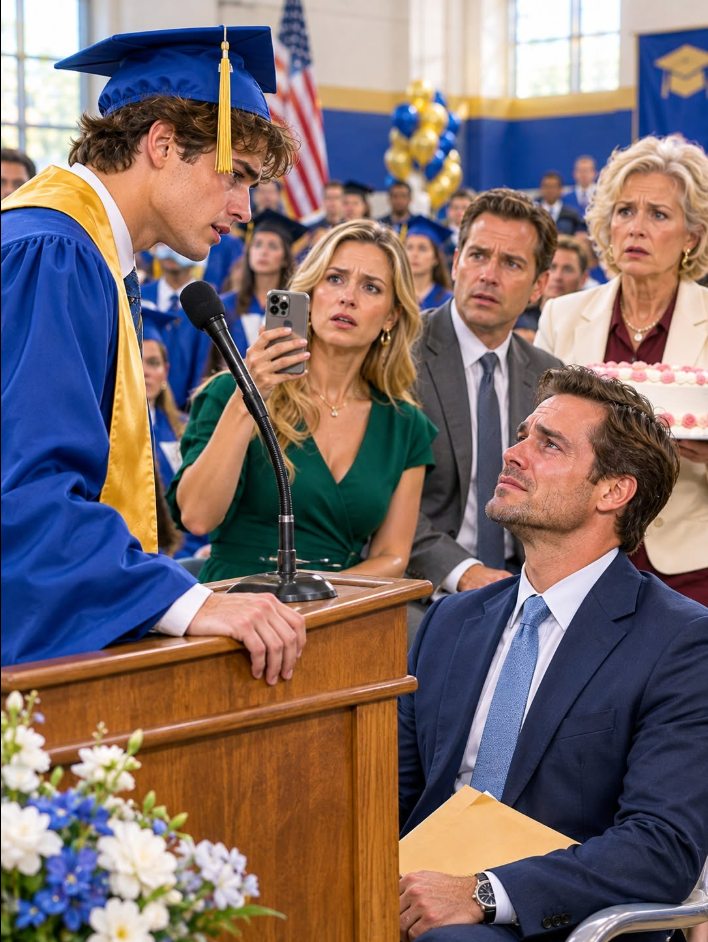
At 11:58 p.m. on my 18th birthday, I locked my $4 million inheritance in a trust. At breakfast, my brother clapped my back. “Thanks for my house!” I froze. Mom smiled. “We wanted it to be a surprise.” Dad had signed a purchase agreement using my trust as payment. I sipped my coffee. “You should call the realtor.”
At 11:58 p.m. on my 18th birthday, I locked my $4 million inheritance in a trust. At breakfast, my brother clapped my back.
“Thanks for my house!”
I froze. Mom smiled.
“We wanted it to be a surprise.”
Dad had signed a purchase agreement using my trust as payment. I sipped my coffee.
“You should call the realtor.”
My name is Wesley Mercer, and I am 18 years old.
This morning, my older brother clapped me on the back so hard my coffee spilled.
“Thanks for my house, little bro!”
He grinned. Mom smiled sweetly.
“We wanted it to be a surprise.”
Dad slid a signed purchase agreement beside my plate. $1.8 million, closing in 3 hours, using my $4 million inheritance as payment.
Nobody ever asked me. They assumed I would sign anything.
I set my mug down.
“You should call the realtor,” I said, “before this goes any further.”
Thank you for watching the video. Before I take you back there, do me one small favor. Take a second to like and subscribe, and tell me in the comments where you are watching from and what time it is where you are. It helps more than you know.
Now, let me take you back into that kitchen in Fort Wayne, Indiana. Because a morning like that does not happen out of thin air.
It gets built slowly, one quiet assumption at a time, until the people living under your roof forget they ever needed your permission at all.
The kitchen smelled like cinnamon waffles from the freezer aisle, the kind my mother, Cynthia, only toasted on birthdays. A gold foil banner reading “18” hung crookedly above the breakfast nook.
My older brother, Bryce, had driven 5 hours down from Chicago the night before, and he was practically vibrating with excitement beside the island.
He was 26, dressed in a crisp button-down shirt he probably charged to a credit card, beaming like a man who had just won the lottery.
My mother stood by the coffee maker, wearing the polished, reassuring smile she used when she staged luxury homes for real estate clients.
My father, Douglas, sat at the head of the table in his pressed slacks, looking pleased with himself as he nudged a thick manila folder right next to my plate of scrambled eggs.
Inside was a cash purchase agreement for $1.8 million, scheduled to close at 11:00 that very morning.
My grandfather’s $4 million trust was typed cleanly onto the funding line.
Nobody had asked me if I wanted to buy a house. Nobody had asked me if I wanted to give away nearly half of everything my grandfather worked his entire life to build.
They simply scheduled my signature like it was another household chore.
I stared at the coffee puddle beside my plate, gripped the handle of my grandfather’s old chipped ceramic mug, and looked straight across the table at my father.
“You should call Brenda Kowalsski,” I said calmly, naming the listing agent printed at the top of the contract. “Call her right now, Dad. There is something you need to tell her before this goes any further.”
What happened over the next 20 minutes is the exact reason I stopped being the easy son forever.
To understand why my parents believed I would simply pick up a pen and sign away $1.8 million without blinking, you have to understand the house I grew up in.
We lived in a neat beige two-story colonial in a quiet subdivision north of Fort Wayne, Indiana, with a manicured lawn my father edged every Sunday afternoon and a two-car garage that always looked tidy from the street.
From the outside, we looked like the textbook American family: two working parents, two sons, regular attendance at Sunday service, and bills paid on time.
My parents were not monsters in the way people usually picture when they hear a story like this.
They never raised a hand to us. They rarely even yelled.
What they did was much quieter and far harder to name because it hid behind a single word they repeated like a compliment.
Sensible.
That was me. Wesley, the sensible one. Wesley, who never needed a fuss.
From the time I was old enough to reach the kitchen sink, my parents divided our family into two distinct categories, though they never admitted it out loud.
There were the people you had to worry about, and there were the people you could count on.
Bryce was the one you worried about. I was the one you counted on.
When you say that fast, it sounds like praise. It took me almost 18 years to realize it was a life sentence.
Bryce was 8 years older than me, and for as long as I could remember, he had been the family’s ongoing rescue mission.
Bryce had big ideas. Bryce had vision. Bryce felt disappointment more deeply than ordinary people, which was the exact excuse my mother used every single time he quit something.
And Bryce quit a lot of things.
He dropped out of college twice before finishing a single degree. He moved to Chicago to launch a mobile dining app that folded in 6 months, then pivoted to a boutique marketing agency that never landed a paying client.
Then he leased a trendy studio space he swore would turn into a tech incubator before abandoning the furniture when the rent came due.
Every single time the floor gave out beneath Bryce, my parents rushed in with a safety net.
That was simply the law of gravity in our house.
Family love meant catching Bryce.
I want to be fair here because it would be easy to paint my brother as the villain of this story, and the truth is, he was not.
Bryce had been raised from childhood to believe the world would always tilt in his favor.
When you grow up inside warm water, you never stop to ask who is paying the gas bill to heat it.
He genuinely believed everyone got caught the way he got caught. It never once crossed his mind that his younger brother was the one holding up the net.
There is a memory from the autumn I turned 16 that still sits sharp in my mind.
That September, I landed a weekend job at a locally owned hardware store off Coldwater Road.
I spent my Saturdays and Sundays stocking heavy boxes of carriage bolts, mixing paint cans, cutting spare house keys, and learning the difference between a standard flat washer and a split lock washer.
I loved that place. I loved the smell of pine lumber and machine oil. And I loved knowing that if you measure twice and cut once, the pieces fit together.
Honestly, when I brought home my very first paycheck, I felt a quiet surge of pride.
I walked into the kitchen and set the paper check right in the middle of the granite island, hoping my parents might look at it for a second.
My mother was leaning against the counter with her phone pressed to her ear, arguing politely with a property manager in Chicago about the security deposit on Bryce’s latest apartment.
She glanced down at my paycheck, gave my shoulder a quick pat, and said, “Good for you, honey. See, you do not need us to make a fuss.”
Then she turned right back to her phone call about my brother’s rent.
That single moment summed up my entire childhood.
Bryce’s emergencies got urgent phone calls and open checkbooks.
My hard work got a two-second glance and a sentence that sounded sweet on the surface but landed like a door clicking shut.
I did not argue or slam my bedroom door. Complaining never accomplished anything in our house.
Instead, I walked down to the corner drugstore, bought a plain black hardcover composition notebook, and started keeping a ledger.
It was not a journal. I have never been the type to write down my feelings on paper.
It was a simple record book.
Every Sunday night, I wrote down the exact hours I worked, the hourly rate, the taxes withheld, and every dollar I saved.
My parents thought it was a boring habit, and I let them think that because that black notebook was the only thing under that roof that belonged completely to me.
Numbers do not lie to you, and numbers never tell you to just be sensible.
One year earlier, when I was 15, my high school had nominated me for a summer mechanical engineering workshop at a state university campus.
It cost $700.
I left the brochure on the kitchen counter with a pen beside it.
Two days later, my mother handed it back to me with her gentlest expression and said, “Honey, I do not think this is the year for extras. You understand?”
I threw the brochure in the trash myself so she would not have to see it.
What I never mentioned out loud, though I filed it straight into my memory, was that three weeks earlier, my parents had co-signed a 12-month lease on a high-rise condo in Chicago for Bryce, a place he abandoned four months later.
That was the year I stopped asking for anything.
And once you stop asking, people stop asking you to. They simply decide for you, as if you are a piece of furniture that always agrees with the room.
To understand where the $4 million came from, you have to understand my grandfather, because he was the only person in our family who ever handed me something instead of taking it.
His name was Raymond Mercer, my father’s father, and he built things that lasted.
Forty years ago, he started Mercer Industrial out of the back of a rusted pickup truck with one steel toolbox and a handshake people in Northern Indiana trusted.
He installed commercial heating, cooling, and heavy piping systems for factories, schools, and hospitals across the state.
By the time he retired, Mercer Industrial had three warehouses, 40 service vans, and a reputation that meant something.
My grandfather kept grease permanently stained beneath his fingernails until the day he sold the company, and even afterward, out of sheer habit.
Whenever school let out for the summer, I spent my days in his detached workshop behind his house.
Not the main company headquarters, just his personal shop where he kept the lathes, drill presses, and hand tools he loved too much to leave behind.
Bryce hated setting foot in that shop. He complained it was too dusty, too loud, and smelled like diesel fuel.
I felt the exact opposite.
I loved standing beside my grandfather’s workbench, handing him box wrenches, learning how to read a caliper, and watching a seized-up motor hum back to life under his steady hands.
While we worked, he talked to me.
He never talked down to me like a kid, and he never brushed me off. He asked my opinion on how to brace a frame or route a pipe.
And then he actually listened to my answer.
In a house where my parents talked right over the top of my head at the dinner table, being listened to felt like oxygen.
On my 8th birthday, my grandfather called me into the workshop after everyone else had gone inside for cake.
He reached into his flannel shirt pocket, pulled out a worn brass key on a plain steel ring, and pressed it firmly into my palm.
Then he closed my small fingers around it.
It was the key to the workshop door.
“A key means somebody trusts you to lock up after yourself, Wesley,” he told me, his eyes steady and serious. “You are the one I trust with mine.”
I kept that brass key in a small metal box on my dresser for 10 years.
At the time, I thought it was just a birthday gift from an old man to his grandson.
I did not realize then that my grandfather had already spent years watching the way my father handled money and the way my parents treated their two sons.
My grandfather sold Mercer Industrial the year I turned nine.
It was a clean, substantial sale, the kind that changes the financial math of a family for generations.
Most people assumed he would divide the proceeds evenly between his only son, Douglas, and his wife, Evelyn, or dump it into some shared family account.
Instead, my grandfather quietly carved out $4 million and placed it into an irrevocable trust with only one beneficiary listed on the paperwork.
Me.
I did not understand the legal structure of it until years later. And even then, I only learned the parts one needed to survive.
What mattered was simple.
My grandfather locked $4 million into a trust bearing my name, and he wrote the terms so that full, absolute ownership transferred directly to me on the exact day I turned 18.
Not 25. Not 30. Eighteen.
While he was alive, my grandfather managed the investments himself alongside a veteran wealth adviser named Miriam Callahan, who had handled his accounts for over 20 years.
Everybody called her Miriam.
Four years later, when I was 13, my grandfather got sick, and the illness moved fast.
During one of our final afternoons alone in his hospital room, with nothing between us but the steady beep of the heart monitor, he reached across the bedsheet and gripped my wrist.
His hand was thin, but his eyes were completely clear.
“When you turn 18,” he whispered, “the first thing you do is call Miriam. Before anything else, before you let anybody talk you into signing a single piece of paper, promise me you will call Miriam first.”
“I promise, Grandpa,” I said, blinking back tears.
I was 13 years old, and I would have promised him the moon.
He passed away three weeks later in the autumn of 2021.
Because I was still a minor, the legal duty of acting as temporary trustee fell to the next name listed on the paperwork.
My father, Douglas Mercer.
Let me make the distinction clear because everything that happened later rests on two words.
My father was appointed as the guardian of that $4 million, not the owner.
His sole legal job was to keep the principal safe and untouched until my 18th birthday.
Instead, my father invented a phrase that echoed through our house for the next four years until it sounded completely normal.
“It is all one family pot, Wes,” he would say while writing a check or explaining why we could not afford a new tire for my bike or wiring another bailout to Bryce in Chicago.
One family pot.
To my father, my grandfather’s legacy was not mine at all.
It was simply a convenient reserve tank sitting there with my name printed on the label by accident.
By the time the summer of my 18th birthday rolled around, I had already been quietly tracking the household atmosphere the same way I tracked my hardware store hours.
That June, my parents suddenly started spending their weekends touring high-end homes on the north side of Fort Wayne.
Looking at houses was not unusual by itself since my mother worked part-time staging properties for local realtors.
What caught my attention was the cover story they repeated at dinner.
They claimed they were house hunting for Bryce.
According to my mother, Bryce was finally ready to leave Chicago behind, settle down in Indiana, and build his next company from home.
My parents were going to help him find a place of his own.
On the surface, my parents bending over backward to buy Bryce a fresh start was the least surprising news in the world.
Except the details on the kitchen counter did not match the story.
One Tuesday afternoon, I walked in from mowing the lawn to grab a glass of water and noticed a glossy real estate brochure lying beside the toaster.
Someone had gone down the bullet points with a sharpened pencil, underlining specific features.
Right near the middle of the page, circled twice with two neat stars drawn beside it, was a line reading, “Main-floor primary suite with private entrance and zero-step bath.”
I stood there with my glass of water and stared at those two little stars for a long moment.
Why on earth would a 26-year-old bachelor who spent his nights at downtown bars need a ground-floor in-law suite built for aging retirees?
I did not ask.
Years of being the sensible son had trained me to keep my mouth shut, observe everything, and file the facts away until the whole picture came into focus.
So I filed it away.
In-law suite. Two pencil stars.
And kept watching.
The whispered phone calls started the following week.
Normally, my parents never bothered hiding their conversations around me because they assumed I was too wrapped up in my part-time job and high school graduation to notice.
Suddenly, whenever I walked into the kitchen, my father would lower his voice or end the call a beat too fast.
One evening, coming in through the side door from the garage, I caught the tail end of my father speaking into his cell phone before he heard my boots on the linoleum.
“As long as it clears right after his birthday,” my father said smoothly, “we are golden.”
Right after his birthday.
I walked upstairs, sat on the edge of my bed, and turned that single word over in my mind.
Clears.
That was a banking word. That was the word people use when a wire transfer settles into escrow.
And my father had tied it directly to my 18th birthday, the exact moment my grandfather’s trust left his control and became legally mine.
Then Bryce’s text messages started flooding my phone.
My brother rarely texted me unless he needed a ride from the airport.
Yet suddenly, he was sending me photos of imported kitchen tile, leather sectionals, and modern light fixtures every other day.
Beneath a photo of a sprawling stone patio, he wrote, “Wes, I still cannot believe you are doing this for me. You are the best brother in the world.”
I read that text four times while sitting in my truck outside the hardware store.
My brother was thanking me for a gift I had never offered, funded by money I had never agreed to spend.
Somewhere behind closed doors, my parents had spun a story where I was eagerly handing over my inheritance to buy him a mansion.
They had spent my permission before I ever knew a purchase existed.
I locked my phone, stared out through the windshield, and felt something cold and steady settle into my chest.
I was done guessing.
It was time to find out what my father had actually signed.
The turning point arrived three evenings later in the form of a thick white envelope sitting innocently beside the salt and pepper shakers on our dining table.
It had come in the afternoon mail, and it stayed on the table for less than an hour before my father carried it into his home office.
During that single hour, while clearing plates after supper, I caught a clear look at the return address printed in the upper left corner.
It was a prominent real estate title company in downtown Fort Wayne.
That is not the kind of firm you call when you’re casually browsing listings on a Sunday afternoon.
That is the company that handles wire transfers, records deeds, and closes million-dollar property sales.
Even worse, printed clearly through the clear plastic address window was a scheduled closing date.
It was set for the morning immediately following my 18th birthday.
That was the night I stopped telling myself I was overthinking things.
Nothing was merely being discussed anymore.
A legal transaction had already been locked onto a calendar, and the calendar had been built around my birthday without a single word spoken to me.
I lay awake staring at the ceiling fan until 2:00 in the morning and made a simple decision.
I was going to find out the exact truth before I said a word to anyone.
My opportunity came the following afternoon.
My parents drove across town to help set up tables for a church fellowship dinner, leaving the house empty for at least two hours.
I waited until my father’s sedan turned out of the subdivision before walking quietly down the hall to his study.
My father was a meticulous man when it came to mowing straight lines in the yard, yet surprisingly careless about paperwork.
His oak filing cabinet was locked with a basic wafer tumbler, the exact kind my grandfather had taught me how to open with a tension wrench and a small pick back when I was 12 years old.
It took less than 15 seconds to hear the cylinder click.
Inside the top drawer sat a thick blue folder labeled with the street address of the luxury home from the brochure.
I pulled it out, sat down in my father’s leather desk chair, and read every page twice.
My father had signed a binding cash purchase agreement for $1.8 million.
His name sat on the buyer line, and the closing was scheduled for 11:00 in the morning on my birthday.
Because he could not legally touch my trust principal while I was still 17 without triggering an immediate bank freeze, he had built the entire deal on one massive gamble.
He assumed that at 9:00 on my birthday morning, compliant, sensible Wesley would gladly sign whatever transfer authorization he slid across the breakfast table.
Then I turned to the back of the folder, and my stomach dropped.
Clipped behind the contract was a wire receipt for $90,000 in non-refundable earnest money, paired with a loan statement from a home equity line of credit drawn directly against our own house.
My father had mortgaged the roof over our heads to put down a deposit on a mansion he planned to buy with my money.
For a full minute, I just sat in that leather office chair with the blue folder resting across my knees, listening to the grandfather clock ticking down the hallway.
My father had used my grandfather’s $4 million trust statement as proof of funds to convince a wealthy seller and a top listing agent that he was a cash buyer.
On paper, the account was real, and the money was real.
The only fiction in the entire transaction was my father’s right to spend a single dime of it.
And he had been so certain of my obedience that he had bet our family home on it.
I slipped the blue folder back into the cabinet, locked the drawer, and walked upstairs to my bedroom.
My hands were steady, though my chest felt tight enough to ache.
I closed my bedroom door, knelt beside my bed, and pulled out the dented steel toolbox my grandfather had given me years ago.
Inside, buried beneath spare wrenches and rolls of electrical tape, was a thick stack of manila envelopes.
For the past four years, every quarterly statement for the trust had arrived in the mail addressed to Douglas Mercer, trustee for the benefit of Wesley Mercer.
Because my name was printed right there on the front, I had quietly opened every envelope before putting it on my father’s desk, photographed every page with my phone, and printed copies at the public library to keep in my toolbox.
Nobody in my house knew those copies existed because nobody in my house had ever wondered what I did with my spare time.
I spread four years of statements across my bedroom carpet and pulled out my black composition notebook.
The trust was supposed to sit untouched, earning modest interest while waiting for my 18th birthday.
That is what a guardian does. He guards.
As I began adding up the numbers column by column, a cold clarity washed over me.
The principal was no longer $4 million.
Over the previous 48 months, in scattered withdrawals of $15,000, $20,000, and $25,000 at a time, my father had siphoned out $220,000.
I lined the withdrawal dates up against the entries in my black notebook, and the pattern assembled itself with sickening precision.
A $25,000 withdrawal in the spring of my freshman year matched the exact week my parents bailed Bryce out of his failed dining app lease in Chicago.
Another withdrawal that autumn lined up with the sleek black sport utility vehicle Bryce suddenly drove home for Thanksgiving.
Three smaller withdrawals the following summer matched the frantic phone calls my mother made to pay off Bryce’s maxed-out credit cards.
Roughly $145,000 of my inheritance had already been spent propping up my brother’s lifestyle while my mother told me we could not afford $700 for a summer engineering camp.
I sat on the floor for a long time, staring at those numbers.
A hot flash of anger rose in my throat, followed quickly by something sharper and far more useful.
Four years of keeping a ledger had taught me one ironclad rule.
When the truth is finally undeniable, you do not throw a tantrum.
You build a record.
I gathered the statements back into the toolbox, slipped my grandfather’s worn brass workshop key into my front pocket, and walked outside to my pickup truck.
I drove two miles down the road and parked behind a closed garden center where nobody from our neighborhood would spot my truck.
Sitting behind the steering wheel with the engine idling, I opened the back cover of my black notebook and looked at the phone number I had copied down in neat teenage handwriting five years earlier.
Miriam Callahan.
I took a slow breath, gripped my grandfather’s brass key in my left hand, and dialed the number.
The line rang twice before a woman’s composed, steady voice answered.
“Miriam Callahan speaking.”
“Hello, ma’am,” I said, keeping my voice even. “My name is Wesley Mercer. Raymond Mercer was my grandfather.”
On the other end of the line, there was a brief pause, followed by a quiet exhale that sounded almost like relief.
“Wesley,” she said, her tone softening immediately. “Your grandfather told me you would call. Before he passed, he made me promise that no matter what meeting I was in, I would pick up the phone the second your name came across my desk.”
Something tight inside my chest loosened for the first time in weeks.
Even four years after his death, my grandfather was still the only adult in my life who had planned for me instead of around me.
I laid everything out for Miriam in strict chronological order, just the way I had arranged the papers on my bedroom floor.
I told her about the $1.8 million cash contract, the closing scheduled for my birthday morning, the ground-floor retirement suite my mother had starred on the brochure, the $90,000 home equity deposit, and the $220,000 missing from the quarterly statements in my toolbox.
Miriam listened without interrupting once until I finished speaking.
When she finally replied, her voice carried the crisp authority of a woman who had spent decades protecting family fortunes.
“Wesley, I want to be completely clear with you,” she said. “On the morning of your 18th birthday, that trust becomes solely and legally yours. Not your father’s, not your mother’s, and not a shared family pool. Nobody can force your signature onto a wire transfer, and nobody can spend a penny of it without your authorization.”
She paused for a beat.
“As for the $220,000 your father withdrew over the past four years, I have the complete audit sitting in my digital vault. Every transfer date, every check number. Taking money from a minor’s trust for personal family expenses is a direct breach of fiduciary duty. If you want to pursue legal restitution, you have every right.”
I stared out at the empty parking lot and thought about it.
It would have been so easy to take that audit and destroy my father’s career and insurance.
“I do not want to ruin him, Miriam,” I said quietly. “I just want it to stop. I want my grandfather’s money locked somewhere they can never reach it again.”
“Then we make their entire plan irrelevant,” Miriam replied briskly.
“The very minute you turn 18, we transfer the remaining $3.78 million into a newly chartered irrevocable trust with you as sole beneficiary and me serving as independent co-trustee. No large disbursement can ever happen without formal review and a waiting period. We will call it the Raymond Mercer Legacy Trust.”
“When can it execute?” I asked.
“The paperwork will be queued and ready,” she said. “At 11:58 on the night of your birthday, two minutes before midnight, the funds move automatically. When your father walks into that breakfast room the next morning, the account he showed the seller will be empty.”
The final three days leading up to my birthday were the longest 72 hours of my life because all I had to do was keep acting like the exact person my parents believed I was.
It turned out to be an effortless performance, mostly because they never looked closely enough to notice the difference.
I cleared my plates after dinner.
I worked my Saturday shift at the hardware store, cutting keys and loading bags of mulch for weekend gardeners.
I nodded politely whenever my mother talked about how smooth and uncomplicated everything was going.
“See, Douglas,” my mother remarked one evening while watching me wipe down the kitchen counters without being asked. “Nothing ever rattles Wesley. He is steady as a rock.”
She meant it as a compliment, the exact same way she had meant it my entire life.
For the first time, the words did not sting at all because I finally understood what she had never grasped.
They mistook my quietness for obedience.
They had never realized I was simply taking notes.
Bryce drove down from Chicago two days before my birthday, pulling into the driveway in his leased sport utility vehicle with a grin that stretched across his face.
He met me on the front porch and held up a rolled-up charcoal gray welcome mat with a neat white house stitched into the corner.
“Tell me I am crazy, Wes,” he laughed, clapping my shoulder. “I already bought a welcome mat for a house we have not even closed on yet. Still, I wanted to be ready the second we get the keys.”
“It looks nice, Bryce,” I managed to say, forcing a small smile.
That was genuinely the hardest moment of the entire week.
Looking at my brother beaming over a welcome mat for a house I was about to make vanish made my chest ache.
Twice that night, I sat on the edge of my bed with his contact pulled up on my phone, debating whether to tell him the truth.
Both times, I locked the screen.
Bryce had never been able to keep a secret across a dinner table in his life.
One look at my mother’s face, and he would have blurted everything out before my money was safe.
The night before my birthday, my father stood up at the dinner table with a glass of iced tea raised high.
He was rarely a sentimental man, so his sudden toast caught everyone slightly off guard.
“To new keys,” my father declared warmly, looking around the table. “To new beginnings and all of us living under one roof.”
My mother beamed. Bryce raised his glass with pride.
I lifted mine quietly and thought about the words my father had just spoken.
All of us under one roof.
He had accidentally told the whole truth out loud.
Before I went upstairs, my mother squeezed my arm in the hallway.
“Wear your nice blue button-down tomorrow morning, sweetheart,” she smiled. “It is going to be a very big day.”
I went up to my bedroom, locked the door, and set my grandfather’s brass key on the nightstand right beside my cell phone.
At 11:45 that night, sitting alone in the dark while my family slept soundly down the hall, my heart hammered against my ribs.
At exactly 11:58, my phone screen lit up with a silent notification from Miriam Callahan’s office.
Transfer complete. $3,780,000.
Moved safely into the Raymond Mercer Legacy Trust.
I picked up the worn brass key, closed my fingers around it just like my grandfather had taught me 10 years ago, and finally went to sleep.
Which brings us right back to that sunlit kitchen on the morning after my birthday.
With coffee puddled beside my plate and my father’s signed purchase agreement resting inches from my elbow, the cheerful warmth my mother had staged with cinnamon waffles and gold birthday banners vanished the instant I told my father to call Brenda Kowalsski.
For three full seconds, nobody moved.
Bryce stood behind my chair with his hands still resting on my shoulders, his grin faltering into confusion.
My mother’s polished company smile froze at the corners of her mouth.
My father blinked, clearly caught off guard by a question that did not fit his script.
He cleared his throat and forced a chuckle.
“Now hold on, Wes. Why on earth would I call the realtor? Everything is lined up. All we need is your signature on the bank wire authorization so the title company can release the funds before 11.”
I did not raise my voice.
I simply reached out, opened the manila folder beside my plate, and turned slowly to the first page of the contract.
“Whose name is listed on this agreement as the buyer, Dad?” I asked calmly.
My father shifted in his chair.
“Mine, obviously, for the time being. That is standard procedure when a parent helps structure a major acquisition. Once you sign the transfer this morning, we wire the $1.8 million, and everything is settled by lunchtime.”
“And when did you sign this?” I asked, keeping my eyes on the dates stamped above his signature.
“About three weeks ago,” he said smoothly. “Good properties in that school district do not stay on the market for long. You have to move fast.”
I looked up from the page and met his gaze directly.
“Three weeks ago. So you committed to a $1.8 million cash purchase in your own name nearly a month before I turned 18. Before that money was even legally mine to give. What if I had said no?”
My father let out a short, hollow laugh.
“Why would you say no, Wesley? This is a wonderful thing for the family. Nobody is saying no.”
“Nobody asked me anything I could say no to,” I replied evenly. “There is a big difference.”
I turned another page in the contract and tapped my finger against the property description.
“This house features a ground-floor primary suite with a private entrance and a zero-step bath. Who is that room for, Mom?”
Silence dropped over the table like a heavy curtain.
My mother, who had spent months orchestrating this entire surprise and was far too proud of how cleverly she had arranged it, rushed to fill the quiet before she realized the trap.
“Well, that is the beauty of the layout, sweetheart,” she said brightly. “It is spacious enough for all of us to be together. The downstairs suite is ideal for your father and me, so we do not have to climb stairs as we get older, and Bryce gets the entire upper level, too.”
She stopped mid-sentence, her mouth snapping shut a half second too late.
I let the silence hang in the air, then looked up at my older brother.
“So it is not Bryce’s house after all,” I said quietly. “It is everyone’s house. Did you know that, Bryce? Did you know Mom and Dad were moving in downstairs?”
Bryce took a slow step back from my chair, the happy color draining completely from his face.
He stared at our mother with a sharp crease forming between his eyebrows.
“Mom, what is he talking about? You told me this place was for me.”
“It is for you, honey,” my mother stammered quickly, her composure cracking. “We just thought it made sense for all of us to share it.”
The balance of power in that kitchen had shifted entirely, and everyone sitting around the table could feel it.
Three minutes earlier, my parents held every card while I was expected to sit quietly and hold a pen.
Now, the floor was tilting beneath their feet, and they had no idea why.
My father slapped his palm lightly against the tabletop, trying to steer the conversation back under his control.
His voice dropped into his stern, authoritative trustee tone.
“Enough of this cross-examination, Wesley. This is your grandfather’s money doing something meaningful for the people who raised you. It is what he would have wanted. Now pick up the pen and sign the transfer paperwork. It is all one family pot.”
I looked at my father, then at my mother, and finally at my brother.
“The money moved last night,” I said.
I did not stand up. I did not shout.
I simply laid the truth down in the center of the table like a stone.
My father stared at me as if I had spoken in a foreign language.
“Moved? What do you mean moved? Moved where?”
“Somewhere your family pot can never reach,” I answered calmly. “It is sitting in a newly chartered, irrevocable trust with only my name on it. The transfer cleared at 11:58 last night, two minutes before midnight. It is done.”
The kitchen went dead silent.
In the toaster oven behind my mother, a fresh batch of cinnamon waffles began to smoke faintly, and nobody moved to turn the dial off.
“That is impossible,” my father snapped, though a tremor of panic cracked through his voice. “You are 18 years old. You do not know the first thing about setting up a trust, and you cannot move $3.7 million without my authorization as trustee.”
“I did not do it alone, Dad,” I said steadily. “I called Miriam Callahan, Grandpa’s wealth adviser. I called her weeks ago.”
I watched the blood drain out of my father’s face the instant her name left my lips.
In that single second, he realized this was not an impulsive teenage rebellion.
This had been carefully built underneath him while he toasted new beginnings at dinner, and my mother bragged about how nothing ever rattled me.
“And Miriam sent me the full four-year audit,” I continued, reaching into my back pocket and unfolding the summary sheet I had printed from her email.
I set it squarely on top of his purchase agreement.
“I know about the $220,000 you quietly pulled out of my trust over the last four years, Dad. And I know exactly where $145,000 of it went.”
I turned my head toward my brother, keeping my voice gentle because, for the first time, I saw genuine shock in his eyes.
“I kept every quarterly statement in my toolbox for four years, Bryce. Every single one.”
Bryce let out a small, choked breath.
“What? $220,000?”
Nobody answered him.
My mother gripped the edge of the granite counter as if her knees were giving out.
My father planted both palms flat on the table like a man trying to steady himself on a sinking boat.
“What money is he talking about, Mom?” Bryce demanded, his voice rising sharply as the pieces slammed together in his head.
“My app lease in Chicago, my sport utility vehicle. When you paid off my credit cards last summer, you told me that came out of Dad’s year-end bonus. Whose money was that?”
The silence in the room answered him louder than any confession ever could.
I watched the exact moment the truth hit my brother.
Every rescue he had ever celebrated, every bailout he had thanked my parents for, had been stolen straight out of his younger brother’s inheritance.
Bryce raised a trembling hand to his mouth, stared at our parents as if seeing strangers for the first time, and whispered, “You lied to me.”
Into that suffocating silence, my father’s cell phone began to ring on the kitchen table.
The screen lit up faceup beside his untouched coffee cup, displaying a name we all recognized from the top of the contract.
Brenda Kowalsski, the listing agent.
My father stared at the vibrating phone as if it were a live grenade, his hand hovering an inch above the glass without touching it.
Some instinct deep in his gut already knew why she was calling at 10 minutes before 10:00.
The phone rang out to voicemail, making the quiet kitchen feel even smaller.
Three seconds later, it started ringing again, insistent and sharp.
“You should answer that, Dad,” I said quietly.
My father swallowed hard, picked up the phone, and pressed it to his ear.
“Brenda,” he said, straining to make his voice sound brisk and normal.
He did not have the speaker turned on.
Yet Brenda Kowalsski was the kind of high-powered realtor whose voice carried right across a room.
“Douglas, I have been trying to reach you all morning,” she said briskly. “The title company still has not received the incoming wire. We are scheduled to close at 11:00 sharp, and there is zero money sitting in escrow. My sellers are asking questions. Are we clear to close or not?”
My father looked across the table at me, a silent plea flickering in his eyes.
I looked straight back at him and spoke the words I had rehearsed in my head for days.
“Tell her the truth, Dad,” I said evenly. “There is no money coming. There was never going to be unless I authorized it. And I am not going to. You need to cancel the closing right now before the sellers keep your deposit.”
My mother’s head snapped toward my father, the color draining from her cheeks as a terrible realization dawned on her.
“Douglas,” she whispered, “the earnest money. Where did the $9,000 come from?”
My father could not bring himself to answer her, so I answered for him.
“He opened a home equity line of credit against this house, Mom. He mortgaged the roof over our heads to put $90,000 down on a mansion he planned to pay for with my inheritance. And because he wrote it as an all-cash offer with no financing contingency, the sellers get to keep every single penny of that deposit when the deal falls through.”
Brenda’s voice echoed faintly from the phone resting in his slack fingers.
“Douglas, are you still there?”
My father set the phone down on the table without hanging up.
For the first time in my life, I saw him completely defeated, a man who had built his entire future on the assumption that the ground beneath him would never move.
“Why would you do this?” he asked hoarsely, his voice trembling. “To your own family?”
That single sentence revealed everything about how he saw the world.
To him, I was the thief for locking my own doors.
I stood up slowly from my chair and picked up my grandfather’s chipped ceramic coffee mug.
“You never asked me, Dad,” I said calmly. “Not once. You spent $220,000 of my inheritance behind my back, and you scheduled my signature like a chore. You did not do anything for my family. You just did it to me. I am simply the only one who finally noticed I was never part of the family you meant.”
I turned and walked out of the kitchen, stepping past Bryce’s rolled-up welcome mat, still sitting by the front door, and drove away into the crisp morning air.
I did not plan where I was going when I pulled out of our driveway.
Yet 20 minutes later, my pickup truck turned naturally onto the quiet tree-lined street where my grandmother lived.
Evelyn Mercer had lived in that modest brick ranch house on the south side of Fort Wayne for nearly 50 years, with my grandfather’s detached workshop still standing solidly out back behind the garden.
When I walked up the front steps and knocked, she opened the door within seconds.
She took one look at my pale face, stepped back without asking a single question, and held the door wide open.
“Your grandfather told me you would come to me one day,” she said gently. “Sit down at the kitchen table, Wesley. I will put a fresh pot of coffee on.”
I sat at her worn oak table with my grandfather’s brass key resting heavily in my pocket, and I told her everything from start to finish.
I told her about the $1.8 million house, the ground-floor retirement suite, the $90,000 home equity deposit, the $220,000 missing from the trust, and the transfer I had executed at 11:58 the night before.
Grandmother Evelyn listened the exact way Miriam Callahan had listened, with her hands folded calmly around her mug and her eyes steady on mine.
When I finally ran out of words, she sat quietly for a long moment before speaking.
“People in this family are going to talk once word gets around,” she said softly. “Some of them will claim Raymond cut his own son out of the fortune. That is not what happened at all.”
She turned her coffee cup slowly between her palms.
“Your grandfather gave Douglas plenty of chances over the years, Wesley. Money to start ventures, help with debts, more second chances than most fathers ever give. And Raymond watched what Douglas did with every single dollar.”
“Near the end, right before he went into the hospital, your grandfather looked at me and said, ‘Evelyn, Douglas does not hold money. Money holds him. If I leave that trust inside his house, it will be gone in five years, and Wesley will never see a dime.’”
I stared down at the table, feeling a sudden lump rise in my throat.
“That is why he made it yours,” my grandmother continued, her voice warm and firm. “And that is why he set the age at 18. So it would leave your father’s hands the very first second the law allowed. He did not do it because he loved your father less. He did it because he knew the truth.”
I realized then that the whole time I thought I was the only person paying attention in our family, my grandfather had been watching over me from years away.
My grandmother reached across the table and covered my hand with hers.
“There is one more thing you ought to know, Wesley. Your father has called me twice this week, pressuring me to sell your grandfather’s workshop out back because he claims he needs emergency cash. Now I understand why.”
The consequences of that morning did not crash down on my parents like a sudden thunderstorm.
Instead, they arrived the way water slowly finds every hidden crack in an old foundation.
The purchase of the luxury house collapsed at 11:00 sharp that very morning.
My father did call Brenda Kowalsski back eventually, not to apologize or tell the truth, but to beg for a 48-hour extension.
He had no way to fund it.
The sellers refused without hesitation, and the title company legally released the entire $90,000 earnest money deposit straight to the seller’s account.
That $90,000 borrowed against our family home was gone in a single afternoon, leaving nothing behind except a hefty monthly payment on a home equity line of credit my parents were already stretched thin to afford.
As the weeks passed, I learned through my grandmother that my parents had been living dangerously close to financial ruin for years.
The mansion had never been just about giving Bryce a fresh start or securing a comfortable retirement.
My father had secretly taken out a second mortgage and racked up massive credit card balances, trying to maintain the image of a prosperous executive, fully counting on my $4 million inheritance to wipe his slate clean on my 18th birthday.
When you build your entire life on money you do not actually own, you never realize you are standing on thin air until the money disappears.
The arguments that echoed through that beige colonial house over the autumn had nothing to do with me.
They were about hidden debts, overdue notices, and years of financial lies my mother had chosen not to see until the bills landed on her counter.
I had not created that hole in their lives.
I had simply removed the $4 million plug they were planning to use to cover it up.
By the first week of January, a real estate sign stood planted in the front lawn of the house I grew up in.
My parents were forced to sell the property just to pay off the home equity loan and second mortgage before foreclosure proceedings began, relocating to a cramped two-bedroom apartment across town.
I will not pretend the entire neighborhood rallied behind me because real life rarely works that neatly.
A few distant relatives decided I was a cold-hearted young man who had punished his own parents over money, and they made sure to share their opinions at holiday gatherings.
I never bothered calling any of them to defend myself.
Explaining the truth to people determined to misunderstand you is labor I no longer volunteer for.
Watching a house of cards collapse is not the same thing as pushing it over.
I had never pushed.
I simply stopped being the wall they leaned on.
Three days after that unforgettable birthday breakfast, my phone rang while I was sitting on the back porch of my grandmother’s house.
The caller ID read Bryce.
I hesitated for two rings before answering.
When I put the phone to my ear, I could hear my brother crying.
Not the loud, dramatic tears of a man looking for sympathy, but the quiet, ragged breathing of someone whose entire worldview had just shattered.
“Is it really true, Wes?” he asked, his voice cracking. “Every bit of it? The $145,000? That Mom and Dad told me you wanted to buy me that house when they never even asked you?”
“Yes, Bryce,” I said gently, because I knew this was breaking something inside him that desperately needed to break. “They told you a story, and you believed them. I never blamed you for not knowing.”
There was a long stretch of silence on the line before my brother spoke again.
“I do not want it, Wes. The house, the furniture, any of it. I would never take a roof that cost me my little brother. I drove down to Brenda Kowalsski’s office an hour ago and handed back the sample key she gave me before closing. I left it right on her desk and walked out.”
Sitting there on the porch steps, I felt something shift inside my chest that I had not felt toward Bryce in years.
Not the old, tired resentment of carrying his weight, but something steady and close to hope.
For the first time in our lives, my brother and I were standing on the same side of the truth.
My mother took a very different path.
Two weeks later, she drove over to my grandmother’s house and stood on the front porch with tears brimming in her eyes, insisting that every decision she made had been driven by a mother’s love.
“I was only trying to keep our family together, Wesley,” she pleaded softly. “I wanted to give everyone a home.”
I stood calmly in the doorway and met her gaze without flinching.
“You gave everyone a home except me, Mom,” I replied evenly. “You gave away my home and my future to build one for everyone else. And you were so certain I would hand it over that you never even asked. That is not protecting the family. That is deciding I do not count as one of the people who deserves to be protected.”
My mother opened her mouth, closed it again, and had no answer left to give.
She turned around, walked down the porch steps to her car, and I let her go without chasing after her to make her feel better.
Making things easier for everyone else was a job I had officially quit.
One week after my mother’s visit, my father showed up at my grandmother’s house.
His approach was entirely different because Douglas Mercer was a businessman at heart.
Even when his business was falling apart, he did not cry or apologize.
He sat down at my grandmother’s kitchen table looking tired around the eyes, folded his hands, and laid out a proposal as if we were negotiating an insurance claim.
“If you would simply authorize a partial distribution from your trust,” my father said smoothly, “say $300,000, we could pay off the home equity line, absorb the lost earnest money, and keep our house off the market. We are family, Wesley. Family finds a way forward, and I am willing to put the embarrassment you caused me at the closing completely behind us.”
I let him finish every word.
Then I reached into my backpack, pulled out a crisp manila folder, and placed Miriam Callahan’s four-year forensic audit directly in front of him.
“You stole $220,000 from a trust you swore a legal oath to guard, Dad,” I said calmly. “And you were sitting at my grandmother’s table offering to forgive me for embarrassing you.”
My father’s jaw tightened, a flash of anger breaking through his composed mask.
“I am not going to report you to the police,” I continued, keeping my voice flat and unmistakable. “I want you to hear that clearly because it is the last ounce of generosity I have left.”
“However, I am not giving you a single dollar, and I am not letting you walk away without accountability. At 3:00 this afternoon, you are going to meet me at Miriam Callahan’s office and sign a binding promissory note and legal waiver.”
My father stared at the audit pages.
“A waiver for what?”
“A formal legal record acknowledging the $220,000 you misappropriated,” I explained clearly. “It deducts that exact amount from any future estate claims you might ever make. And it legally bars you from ever contacting me or pressuring Grandmother Evelyn to sell my grandfather’s workshop.”
“If you sign it today, this audit stays locked in Miriam’s vault. If you refuse, I hand the entire file to the Allen County District Attorney tomorrow morning.”
My father looked from the audit to my face, finally realizing that the compliant boy he had planned his retirement around had never truly existed.
He knew full well that a felony breach of fiduciary duty charge would cost him his executive job and his reputation overnight.
That afternoon, with trembling hands, my father signed every page in Miriam’s conference room.
As he gathered his coat to leave, he muttered bitterly, “Your grandfather turned you against us.”
“No, Dad,” I replied. “He just left me a way out before I knew I would need one. What you chose to do with a door like that is entirely on you.”
By the time autumn arrived, I had made three deliberate decisions with the inheritance my grandfather left me, and not a single one resembled the plans my parents had drawn up.
The first decision was the smallest on paper, yet it meant the most to my spirit.
I enrolled in the accounting and industrial management program at the State University campus in Fort Wayne.
Instead of scrambling for extra shifts to pay my balance, I authorized a tuition payment directly from the Raymond Mercer Legacy Trust.
Seeing my own name printed cleanly on a paid tuition receipt, bought with money I had protected myself, undid years of feeling invisible inside my own house.
The second decision was my grandfather’s workshop.
Using funds approved transparently through Miriam Callahan, I invested in restoring the detached shop behind my grandmother’s house.
Over crisp October weekends, Grandmother Evelyn and I cleared out old scrap metal, patched the tin roof, upgraded the electrical wiring, and rebuilt the heavy industrial furnace my grandfather had assembled with his own hands decades earlier.
On the afternoon the restoration was finished, I stood outside the workshop door holding the worn brass key I had carried in my pocket through that entire storm.
For 10 years, that key had been a gift someone else handed me.
Now I slid it into the deadbolt of a shop I had fought to preserve.
The tumbler turned smoothly, and the heavy door swung open.
“He always told me you would be the one to keep the lights burning in here,” my grandmother said softly behind me, her voice catching with pride. “Raymond was right.”
The third decision was about who earned a seat at my table moving forward.
My parents were not invited.
I did not scream or stage a dramatic scene.
I simply stopped making room for them.
When my mother mailed a store-bought Christmas card that winter saying she missed me without a single word of apology inside, I set it quietly in a drawer and never wrote back.
Bryce, however, took the long, unglamorous road toward earning his place.
He moved into a modest studio apartment in Fort Wayne, took a steady entry-level job as a commercial building maintenance technician, and stopped asking anyone for bailouts.
On Saturday afternoons, he would sometimes stop by the workshop, sit on an overturned five-gallon bucket, and talk while I worked at the bench.
In its quiet, clumsy way, it became the closest we had ever been.
Spring returned to northern Indiana, bringing warm sunshine and the fresh green smell of cut grass back to my grandmother’s backyard.
I was halfway through my second semester of college, thriving in classes filled with financial ledgers and cost audits.
When a professor complimented my sharp eye for spotting hidden discrepancies in a balance sheet, I simply smiled and thanked her.
Some lessons you do not need to explain.
You just put them to good use.
Every Saturday morning, I rolled open the big doors of Mercer Industrial and invited a few kids from the neighborhood inside to learn how to fix things with their hands.
We repaired wobbly kitchen chairs, patched bicycle tires, and rewired old desk lamps.
Just the way my grandfather had taught me.
One boy in the group, a quiet nine-year-old named Toby, who watched everything carefully and rarely spoke, reminded me so much of myself at that age that it made my chest ache.
Last Saturday afternoon, Toby finally managed to break loose a stubborn, rusted bolt on a lawn mower deck I had set aside for him.
The sudden look of pride on his face, like he had discovered a hidden door inside a solid brick wall, was worth more to me than any figure in a bank account.
At 4:00, when it was time to close up for the day, I reached into my pocket, pulled out my grandfather’s worn brass key, and pressed it into Toby’s palm.
“Lock up the front door for me before you head home, Toby,” I told him. “A key means somebody trusts you.”
Watching him turn that lock with steady, careful hands, I knew my grandfather would have smiled.
Later that evening, Bryce walked up the driveway carrying two cups of hot coffee and the rolled-up charcoal gray welcome mat with the little white house stitched in the corner.
The exact mat he had bought back when he thought he was getting a mansion.
“I could not bring myself to throw it away, Wes,” Bryce said, looking slightly embarrassed as he set it down. “Then I realized you were the one who actually has a real door worth putting it in front of.”
We unrolled that mat right across the threshold of my grandfather’s workshop, and it looked like it had belonged there all along.
Standing in my own doorway in the clean spring air, holding my grandfather’s chipped coffee mug and a key that answered only to me, I finally understood the truth behind his words.
In the end, the person who has to trust you most is yourself.
Thank you so much for staying with me until the very end of this story.
If you had been sitting at that breakfast table in my shoes, would you have spoken up right there or let them walk into that closing completely blind?
Drop your thoughts in the comments below because I read every single one.
Do not forget to hit that like button and subscribe for more real-life stories where truth and justice finally win out.