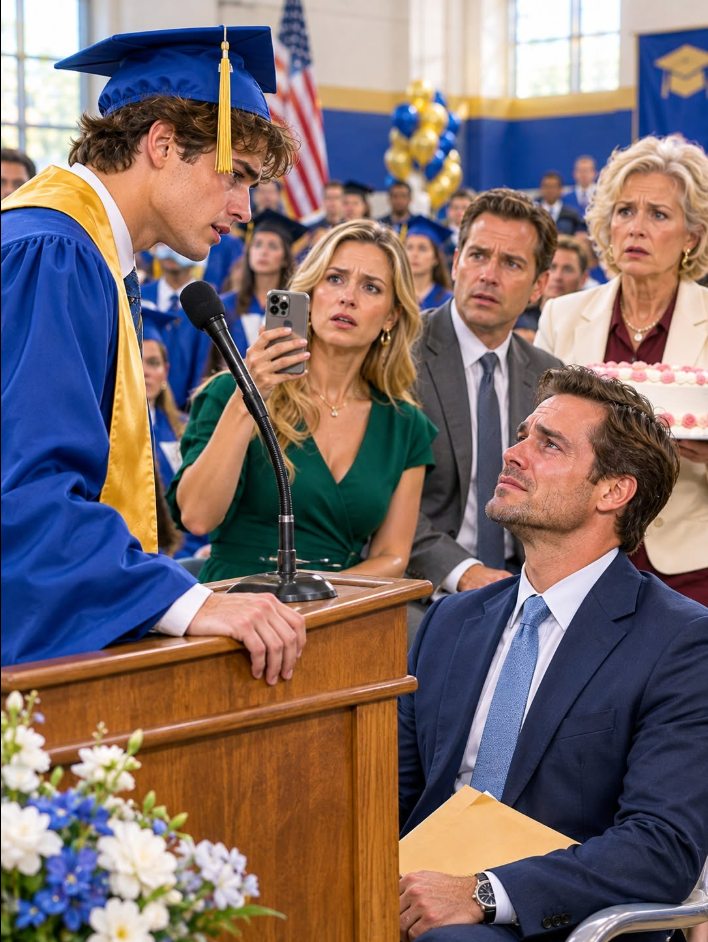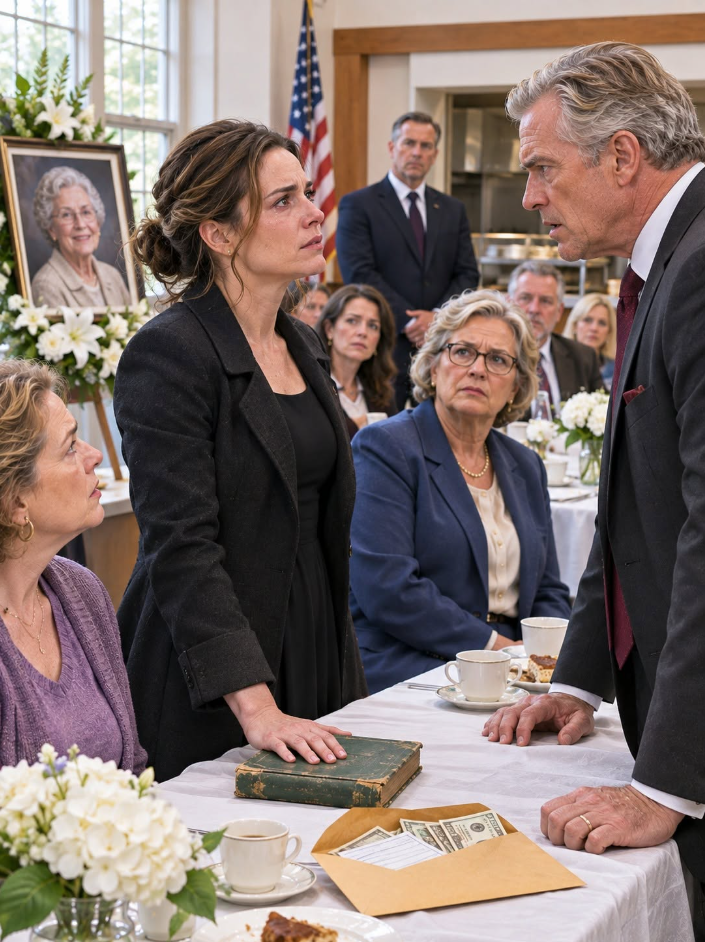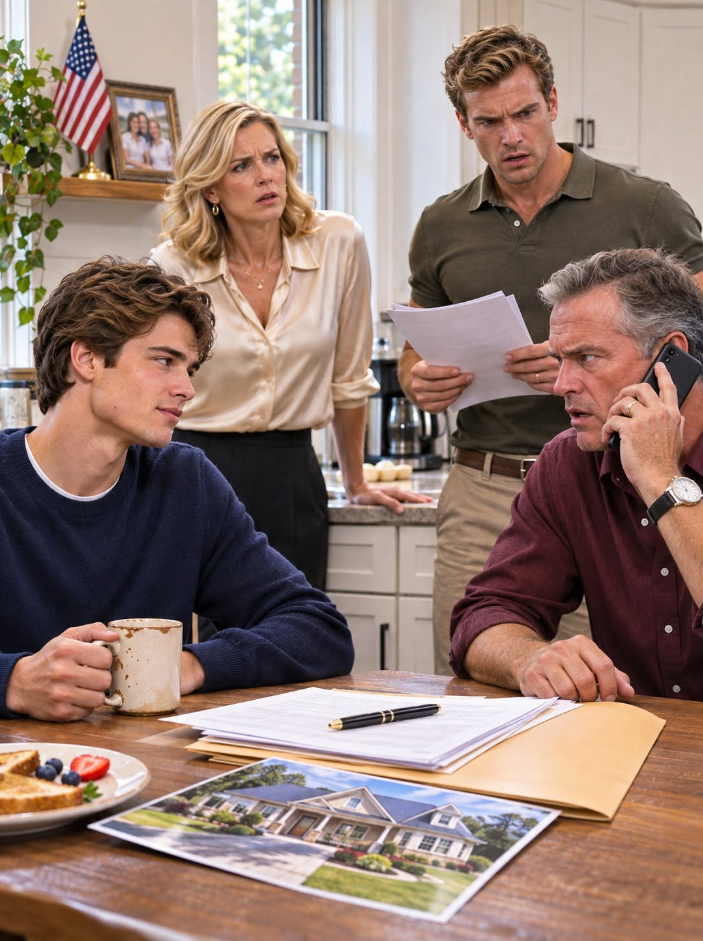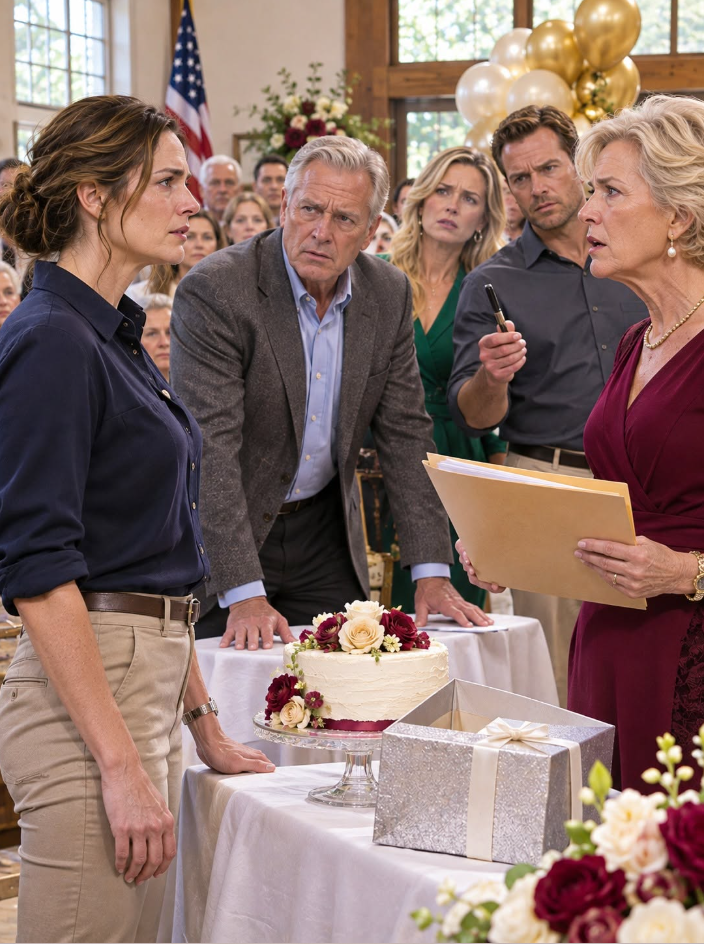
I almost choked when my sister told my niece, “One day this house will be yours!” And my mom turned to me with a smile like it was already settled. So I said, “Since when do you have a say about my house?”
I almost choked when my sister told my niece, “One day this house will be yours!” And my mom turned to me with a smile like it was already settled.
So I said, “Since when do you have a say about my house?”
My name is Cibil Matt. I’m 38, and I almost choked on a piece of grilled trout when my sister told my 9-year-old niece, “One day this house will be yours.”
We were sitting on a deck I built with my own hands at a lake cabin I spent seven years dragging back from the dead.
It was Father’s Day. There were nine of us at the table. My mom turned to me with a smile like the whole thing was already settled.
So I put down my fork and said, “Since when do you have a say about my house?”
She didn’t blink. “Since my $20,000 went into it.”
A week later, my mother put a folder on my kitchen table and gave me two choices. Four months after that, in front of 60 relatives, I asked my father one question.
His answer.
Welcome back to Clara’s drama stories. This is where quiet women tell how they kept what they built, calmly, all the way to the last page.
If someone in your family has ever called your things “ours,” this one is for you. Pour yourself something warm and stay to the end. Drop a comment and be sure to subscribe.
The cabin sits on the west shore of Flathead Lake, Montana, outside a little place called Rollins, where the highway hugs the water and the cherry orchards run down to the rocks.
It was built in 1958 by a man who, as far as I can tell, never met a level.
When I first walked through it in July of 2017, the roof leaked in three places. The floor sloped toward the lake like it wanted to go swimming, and the whole place smelled like mice had been paying rent longer than any human.
The heirs lived in Spokane and wanted it gone.
Estate sale. $318,000 for a third of an acre, 68 feet of shoreline, and a building most people would have scraped.
I was 29. I’d been a finish carpenter for 10 years and had owned my own cabinet shop in Kalispell for two. I had $44,000 in savings, which I’d put together one kitchen at a time.
The bank wanted $64,000 down on a place that old. I was $20,000 short.
My neighbor-to-be, a retired highway man named Lanni Caldwell, leaned on the fence while I crawled under the porch with a flashlight.
“You’re buying a boat anchor, honey,” he said.
I came out with spiderwebs in my hair and rot on my gloves.
“I’m buying 68 feet of lake,” I told him. “The anchor’s just sitting on it.”
He laughed, but he didn’t argue.
That night, sitting in my truck in the gravel lot of the Rollins store, I did the math four different ways. It came out the same every time.
Then I called my mother.
My mother, Rowena, was a school secretary at Flathead High for 31 years, and she ran that front office the way some people run small countries.
She said yes before I finished asking.
We sat at her kitchen table in Kalispell, the one my dad built in 1992, and she wrote it out by hand on a sheet of notebook paper.
“Loaned to Cibil for the lake house: $20,000,” and the date.
I was the one who added the terms. Forty-eight months, $443 a month, 3% interest, because I’d been raised to believe you don’t borrow from family without paying for it.
Mom waved her hand like I’d offered to tip her.
“A lake house is a family house,” she said. “We’ll enjoy it.”
I laughed because that’s what you do when your mother says something that sounds sweet and lands a little heavy.
My dad, Judson, sat at the end of the table and looked out the window at the maple he’d planted the year I was born. He didn’t say anything.
He’d been a dirt contractor until I was 10, then a man who drove other people’s excavators. Somewhere in there, he’d gotten quiet in a way that never came back.
Mom folded the paper and tucked it into the drawer under the phone.
I noticed she wrote the loan in her little ledger, the green one she kept for church money and birthdays.
I noticed she didn’t write anything about how it would be paid back.
I told myself it didn’t matter because I knew how it would be paid back.
I’d be the one paying it.
I paid it the way I build drawers, one at a time and exactly the same.
The first check went out in July of 2017.
I wrote them on the 15th of every month at the shop desk. $443. Memo line: lake house loan.
I drove them to Kalispell or mailed them if the snow was bad.
Mom cashed every one.
I know because I kept the bank statements in the back of my materials notebook, the one with the carpenter’s pencil clipped to it, right behind the receipts for lumber and hinges.
By June of 2021, I’d made 48 payments. $21,264.
The last check I handed her in person, in her kitchen, with my dad standing by the door with his keys.
He drove her to Glacier Bank that afternoon.
I asked for one thing.
“Mom, would you write ‘paid in full’ on that paper you kept?”
She looked at me like I’d asked her to sign a receipt for a hug.
“Between a mother and daughter? Don’t be silly.”
The paper stayed in the drawer.
I wasn’t being silly.
I’d watched a client’s family fight for two years over a boat because nobody wrote anything down.
So I did what I could.
I stapled the last statement into my notebook and wrote the date on it in pencil.
That’s not proof that moves a mother.
It’s just proof.
In October that year, my parents went to Branson, Missouri, for nine days.
Mom posted pictures of a dinner cruise and a show with a lot of fiddles.
In November, a new furnace went into the house on Fourth Avenue West.
I didn’t think about where the money came from.
I was busy under a house.
The first thing I did was jack the whole cabin up off its rotten wooden posts and pour new concrete piers under it.
That cost $41,000 with a contractor, and I saved $11,000 of it by doing the demolition myself, which means I spent the spring of 2018 on my back in the crawl space, pulling out beams that came apart in my hands.
Lanni watched from his side of the fence with a coffee cup.
“You’ve got rot in your hair,” he’d say.
“It’s the lake’s rot now,” I’d say.
The roof was $19,000.
After that, it was all me.
New windows, one wall at a time over three winters. A kitchen I built at the shop and carried in piece by piece.
Built-in bookshelves. A bench under the big window. New decking on the dock. Cedar siding where the old stuff had gone soft.
I slept on an air mattress in the one dry room with the smell of wood glue in my nose.
Saturday nights. Sunday mornings. Every week off I ever took.
By last spring, the materials notebook said $147,000 in lumber, glass, hardware, and concrete, and not one hour of my labor.
My family came up to look.
They came up a lot.
Mom brought potato salad and took pictures of the view.
My sister Kendall brought her daughter and let her fish off the dock while I was on a ladder.
Nobody picked up a hammer, and I never asked them to.
The pictures went on Mom’s Facebook with the same caption every time.
“Our lake place.”
I’d see it on my phone at night and feel something tighten behind my ribs.
And then I’d go back under the house.
Thanksgiving of 2023, at my parents’ table in Kalispell, my mother told the Ashley Lake story again.
Everyone in our family has heard it.
Her parents had a little cabin up on Ashley Lake, west of town. And in 1998, it was gone.
“The lawyers took it,” Mom said, the way she always did, with her chin up and her eyes wet. “They took it from my parents, and there was nothing anyone could do.”
My aunt Marge shook her head the way she always did.
Dad got up to check the pie.
Later, while I was drying the good plates, Mom came and stood close to me.
“I lost one lake house already,” she said quietly. “I won’t lose this one.”
I set the plate down.
“You didn’t buy this one, Mom.”
She smiled and patted my arm.
“Family doesn’t keep score, Cibil.”
Then she went back to the living room and turned the game up.
I stood there with the towel in my hands and thought about my father, who had checked a pie that didn’t need checking.
He’d done that every single time the Ashley Lake story came up for 25 years.
I’d never asked him why.
You don’t ask your dad why he leaves a room. You just notice that he does.
That night, I drove the 35 minutes back to Rollins with the heater on high and the brass lamp over my door, the only light on the whole shore.
I’d thought my mother’s story was about lawyers.
I was starting to think it was about something else, and that whatever it was, she’d decided my house was going to fix it.
Here’s a thing nobody tells you about being the one in the family who can build.
You stop being a person and start being a set of hands.
In 2019, I built my mother’s kitchen. Maple doors, soft-close, everything.
And I paid half the materials because she said money was tight.
In 2021, I built Kendall’s back deck. Two weekends, my lumber discount, my truck, my knees.
Last year, her husband Jared wanted shelving in his garage, and I did that, too, on a Sunday I’d meant to spend on my own dock.
Jared has a way of saying thank you that sounds like an invoice.
“You’ve got the hands,” he told me, slapping the shelf. “We’ve got the family.”
Elroy Tibbitz, my shop foreman, who’s 61 and has worked wood since before I was born, heard about the garage and set his coffee down very carefully.
“Cibil,” he said, “you don’t owe people the wood just because you own the saw.”
I knew that.
I’d known it for years.
I did it anyway because doing the job was easier than having the conversation.
And I’d gotten very good at jobs and very bad at conversations.
At the shop, I could tell a client no in one sentence.
At my mother’s table, no came out of me as a question.
And questions get answered for you.
My father never asked me for anything.
He’d stand at the edge of whatever I was building and hand me the next board.
And when it was done, he’d say, “That’s square.”
Which, from my dad, is a love letter.
He never once said the word “ours.”
I hung on to that.
It turned out to be the only thing in that house I could hang on to.
By the spring of this year, Kendall’s rent in Evergreen had gone from $2,400 a month to a letter saying it would be $2,650 in August.
She’s a dental hygienist. Jared manages a tire shop.
And between them, they make a good living that the Flathead Valley no longer thinks is good enough.
She said so at Sunday dinner in the voice she uses when she wants Mom to fix it.
Mom didn’t look at Kendall.
She looked at me.
I’ve known that look since I was six.
It’s the look that says the solution is sitting at the table and just hasn’t volunteered yet.
So I volunteered on my own terms.
“You can have the cabin for the summer,” I told Kendall. “Weekends, whole weeks, whatever. No charge. As my guests.”
Mom’s fork stopped.
“As guests?” she said, like I’d offered to charge them for the air. “In the family place?”
I kept my voice even.
“In my place, which the family is welcome at.”
Maddie, who was nine and had been listening the way kids do, pretending not to, looked up.
“Can I fish off the dock, Aunt Cibil?”
I told her every day she wanted.
That was the only easy part of the meal.
On the drive home, I replayed it, which is what I do with conversations, the way other people replay bad putts.
I’d said the right thing.
I’d said it clearly.
And I had the distinct feeling that nobody at that table had heard the word “guests.”
Two weeks later, Mom called to say they’d do Father’s Day at the lake this year.
“We’ll bring everything,” she said. “You just open the door.”
June 21st was the kind of day the lake does once a summer to make you forgive the other 90.
Flat water, no wind, the Mission Mountains sitting across the bay like they had been painted on.
I grilled trout on the deck I’d built.
Mom brought her potato salad.
Dad brought a bag of ice and sat in the chair closest to the water, the way he always did.
Kendall and Jared and Maddie came up at noon.
And Aunt Marge, Uncle Gibb, and my cousin Payton rounded it out.
Nine of us.
Maddie had been down on the dock all afternoon with a bobber and no fish.
And when she came up to eat, Kendall pulled her into her lap. She kissed the top of her head and looked out at the water.
And she said it the way you’d say the sky is blue.
“One day this house will be yours, baby.”
Maddie grinned, and my mother turned and looked at me.
She didn’t say a word.
She just smiled. A small, pleased, finished smile, like she’d watched me sign something.
I had a piece of trout halfway down, and it stopped.
I coughed. I drank water.
Everybody waited for me to be fine.
Then I set my fork down on the plate I’d bought at a yard sale in Somers, and I said, as calmly as I could manage:
“Since when do you have a say about my house?”
Nobody breathed.
Mom’s smile didn’t move.
“Since my $20,000 went into it.”
Dad looked at the lake.
Jared leaned back and spread his hands.
“Come on, Cib. It’s a family place.”
I looked right at him.
“It’s a place where family is welcome. That’s different.”
Kendall held Maddie a little tighter.
Aunt Marge studied the potato salad.
And my mother, still smiling, picked up her lemonade and said, “We’ll talk next week, honey. I have something for you to look at.”
She came the following Sunday with Jared and a manila folder, which told me more than anything inside it.
Mom doesn’t bring Jared to anything unless she needs someone to carry things.
And Jared doesn’t carry things unless he thinks he’s getting a piece of them.
They sat at my kitchen table, the one I’d made out of a fir beam from the old crawl space.
Mom slid the folder across like a menu.
“The Matt Family Lake Trust,” it said on the first page.
And under that, a lot of typing by somebody named Rance Straoud, who turned out to be Jared’s cousin and a paralegal at a title company in Kalispell.
I read the whole thing.
I read it twice.
The cabin would go into a trust.
My mother would be the trustee.
Maddie would be the final beneficiary.
The stated purpose, in a sentence Rance must have been proud of, was to keep the property in the Matt family in perpetuity and prevent its sale by any single member.
I put it down.
“Who pays the mortgage?” I asked.
Mom tilted her head.
“You, of course. It’s still your home.”
I nodded slowly.
“Then it’s still my house.”
Jared tapped the table.
“It’s protection, Cib. Nobody can take it from the family.”
I asked who exactly was trying to take it.
He didn’t have a name.
Mom folded her hands on top of the folder.
“This isn’t about taking. It’s about keeping. You’ll understand when you have children.”
I’d been hearing that sentence since I was 25.
It’s never once been followed by an explanation.
“I understand now,” I said. “I’m not signing it.”
Mom stood up.
She smoothed the front of her blouse the way she did before parent meetings.
“I didn’t want to do this at the table,” she said.
Then she walked out onto my porch and waited for me to follow.
If you’ve ever had someone hand you a pen and call it love, you know where this is going.
Stay with me, because what my mother said next on that porch is the sentence this whole story turns on.
And if you’re still here, hit subscribe, because the way I finally answered her took me four months and exactly one question.
She stood on the top step with the lake behind her, and Jared stood one step down, holding the folder against his chest like a hymnal.
“I’m going to say this once,” Mom said. “Sign, or you’re not my daughter anymore.”
The afternoon was so quiet I could hear a boat two bays over.
I’d been afraid of that sentence my whole life without ever hearing it.
The way you’re afraid of a stair you know is loose.
Now it was said.
And the strange thing was that it didn’t hurt the way I’d expected.
It just sat there in the open where I could finally look at it.
“Then I guess I’m not,” I said.
Her face went white, and then it went hard, which is the order things happen with my mother.
“You’ll regret that sentence,” she said.
“No,” I said. “I’ll remember it. That’s different.”
Jared started to say something about how we could all calm down, and Mom cut him off with one hand and went down the steps.
He followed her.
I heard his truck start, and gravel, and then nothing but water against the dock.
I sat on the top step until the sun went behind the Salish Ridge and the lake turned the color of pewter.
I thought about the piers under me.
$41,000 of concrete poured so this house could never again slide toward the water.
I’d spent seven years making sure the place couldn’t sink.
I hadn’t spent a single hour thinking about the people.
That was my mistake.
And I own it.
I’d built the house to hold weight.
I’d never once asked who’d be standing on it.
When it got dark, I went inside and turned on the brass lamp by the door.
And I didn’t call anybody because there was nobody left in that family who would have picked up.
July was quiet in a way I wasn’t used to.
No Sunday dinner invitations. No pictures of my dock on Facebook.
Dad didn’t call, which hurt more than Mom not calling, because Dad never called anyway.
And somehow this was different.
The only thing I had of my sister’s was a work order.
Back in May, Kendall had ordered kitchen cabinets from the shop, and I’d quoted them at cost, which for her meant about $9,000 instead of the $14,000 a stranger would pay.
She’d put down half.
The rest of it, in the way our family did things, had been quietly understood to be a gift.
Elroy and I finished the boxes the second week of July.
They were good work. Shaker doors, painted the gray-blue she’d picked, drawers that closed like a held breath.
I delivered them on the day I’d promised with my own truck, and I stacked them in her garage next to the shelves I’d built for Jared.
Then I handed her an invoice for the balance at cost, not a dollar of my labor on it.
Kendall looked at the paper like it was in another language.
“So now I’m a customer,” she said.
“You always were,” I told her. “I just never sent the bill.”
She didn’t yell.
Kendall doesn’t yell.
She folded the invoice in half and in half again and said she’d pay it by the end of the month.
She did.
The check came in the mail with no note, no card, not even her name on the memo line.
Elroy saw it on the desk and nodded once, which from Elroy is a standing ovation.
I put the check in the bank.
Then I sat in my truck in the shop lot for a while and didn’t start it.
My cousin Payton called on a Tuesday night from the parking lot of Trinity Lutheran, where my mother has run the quilting circle since before Payton could drive.
“I’m just going to tell you what she said,” Payton said, “because somebody should.”
What she said in front of 11 women and a folding table full of fabric was that I had taken $20,000 from my parents for that house and never paid a dime of it back.
And that now I was pushing the family out of the family place.
Aunt Marge had nodded along.
Two women had said how sad.
One had said she always thought I was the responsible one.
I thanked Payton.
I didn’t argue.
There’s no arguing with a story that’s already been told to 11 people with pins in their mouths.
After I hung up, I went to the shelf by the door and took down my materials notebook.
Forty-eight bank statements stapled in order, each one with a $443 check cleared to Rowena Matt.
I could have photographed every page and sent it to my mother’s quilting circle before bed.
I had Payton’s number and Marge’s, and I knew the church secretary.
I sat with the notebook open on my lap for a long time.
Then I closed it and put it back.
Here’s what seven years of building taught me.
Paper doesn’t argue with a mother.
People do.
Anybody can wave a statement.
The women at that table would nod at my pictures the same way they’d nodded at her story.
And then they’d go home and believe whoever they’d known longer.
I didn’t need them to see a check.
I needed one person who’d been in the room to say so out loud.
I just didn’t know yet who that was going to be.
My grandmother Wyman is 86 and lives at Meark Senior Living in Kalispell, in a room with a window on the mountains and a drawer full of butterscotch.
She’s my mother’s mother.
She’s also the only person in our family who’s never once called anything of mine “ours.”
I went on a Thursday with a bag of cherries from the Rollins stand.
She looked at me over her glasses before I sat down.
“Your mother’s doing the lake thing again,” she said.
It wasn’t a question.
I told her about the folder and the porch.
Grandma ate a cherry and spat the pit into her hand like she was 50 years younger.
“Let me tell you about Ashley Lake,” she said, “since nobody else will.”
Her husband, my grandpa Harvey, who died before I was born, built that cabin in 1961 with his brother.
In 1998, my father’s excavating company went under.
He’d signed for a machine he couldn’t pay for, and the bank was coming for the house on Fourth Avenue West.
The one I grew up in.
The one with the maple.
“Your mother came to us,” Grandma said, “crying. Asked us to sell the cabin to cover Jud’s note. So we sold it. There were no lawyers. There was a realtor from Whitefish and a check. We handed that check to your father.”
I sat very still.
“She’s told everyone the lawyers took it for 28 years,” I said.
Grandma nodded.
“Your mother can’t say the word ‘sold,’ so she says ‘family’ instead.”
I thought about my dad checking a pie that didn’t need checking.
I thought about him never saying “ours.”
“He’s carried it,” I said.
“He’s carried her,” Grandma said.
Then she reached over to the nightstand and pulled open the drawer, and I heard something small and metal slide against the wood.
It was a key.
Brass, worn soft at the edges, on a leather fob that had gone almost black with hand oil.
“Ashley Lake,” Grandma said. “Front door. Harvey cut the key himself at the hardware store in Kalispell.”
She held it in her palm and looked at it the way you look at a photograph of someone young.
“I kept the key,” she said. “Nobody signs away a thing they built. Your mother forgot that, don’t you?”
She put it in my hand and closed my fingers over it.
It was warm from the drawer.
I’m not a crier.
I’m not built for it.
But I had to look at the mountains out her window for a minute before I could say anything.
And when I did, it was only “thank you,” which was not nearly enough and was all I had.
I drove home with the key on the seat beside me and the cherries on the floor.
When I got to Rollins, I found a cup hook in the junk drawer, screwed it into the fir trim beside my front door, and hung the key there under the brass lamp.
It doesn’t open anything.
The door it belonged to has been gone since 1998, torn down by whoever bought the lot.
That’s not the point of it.
Every time I go in or out of my house, I see a key to a place my family lost because nobody in it could say the word “sold.”
I decided that night that I would be the one who could.
Not sold, but mine.
I’d say it out loud in a room, to people’s faces, and I’d let it sit there the way my mother’s sentence had sat on my porch.
I just needed the right room and the right people.
And I needed to find one question that nobody could fold up and put in a drawer.
Lanne Ferris has an office above a bakery on Main Street in Kalispell and a laugh you can hear from the sidewalk.
I’d built her conference table.
She read the Matt Family Lake Trust in about four minutes and slid it back across that table with two fingers.
“This is a wish,” she said. “A nicely typed wish. It does nothing unless you sign it in front of a notary. Even then, it’s a terrible idea.”
I asked what my mother could actually do legally.
“Nothing. She can’t record it. She can’t sell it. She can’t put a lien on it. You bought it. You pay the note. Your name’s on the deed. That’s the whole story.”
I told her the story was a little longer than that.
Lanne leaned back.
“The part she can do is the part she’s already doing,” she said. “Talk.”
Then she gave me the advice I’d come for, which was not about my mother at all.
“Set up your own living trust. Pick your own beneficiary. Pick your own terms. Then if anybody asks who gets the lake house, you answer in one sentence, and the sentence will be yours.”
I did it the next week.
I’m not going to tell you everything that’s in it.
It’s mine.
I’ll tell you this much.
There’s a girl in it who likes to fish off my dock.
And there are conditions, and every one of them is in my handwriting.
I didn’t tell my family.
I didn’t tell Lanne’s receptionist.
Elroy asked me at the shop how the lawyer went, and I said, “I’m not fighting my mother. I’m just not signing.”
He went back to his saw.
That was the whole conversation.
And it was the first one in a month with a floor under it.
The first week of August, Payton texted me a photo of an invitation.
Pink balloons, a cartoon cake, a fishing pole.
“Maddie is turning 10. Saturday, August 15th, 2:00. Grandma Rose Lake Place, Rollins.”
My address was printed under it in a cheerful font.
Payton said 40 of them had gone out.
Nobody had asked me.
Nobody had told me.
I stood in my shop with sawdust on my arms and read the words “Grandma Rose Lake Place” four times.
And on the fourth time, I stopped feeling anything at all, which is how I knew I was about to do something I’d thought about for a long time.
I called my sister.
She picked up on the fifth ring.
“Not at my house,” I said.
“No hello, Kendall?”
“I love Maddie. The party is not at my house.”
There was a pause with a television in it.
“Mom said you came around,” Kendall said. “Mom said you two talked.”
I asked her when.
She didn’t know when.
She just knew Mom had said it.
The way she’d known Mom had said the lawyers took Ashley Lake.
“I didn’t come around,” I said. “Nobody talked. Move the party.”
Kendall’s voice got small and tight.
“The invitations are out, Cibil. Forty people. What am I supposed to tell them?”
“Tell them the truth,” I said. “Tell them it’s booked.”
She said something I’ll leave out about how I’d always been like this.
And then she said the sentence that told me how far along the plan was.
“Jared’s already got the tables.”
I hung up and stood very still.
I’d spent seven years making this house hold.
Now I was going to find out whether the gate did.
Jared came Friday afternoon with a flatbed trailer behind his truck, eight folding tables, a stack of chairs, and a pop-up canopy still in the bag.
I was already standing at the gate.
I’d been there since I heard the truck downshift on the highway.
He got out with the easy walk of a man who’s never been told no by anyone he’s related to.
“Hey, Cib, just going to set up in the yard. We’ll be out of your way by dark.”
I didn’t open the gate.
“This is my property,” I said. “The party isn’t here.”
He laughed like I’d made a joke that needed a second to land.
Then he stopped laughing.
“You do that to a 10-year-old?”
“I do it to you,” I said. “Maddie can fish off my dock any day she wants. As my guest, not as the reason you parked a trailer on my grass.”
He looked past me at the deck, the dock, the 68 feet of water.
I watched him do the math I’d done in my truck nine years before, except he was doing it with somebody else’s numbers.
“Rowena’s going to lose her mind,” he said.
“That’s between Rowena and her mind,” I said. “Drive safe.”
He got back in the truck.
He backed that trailer out of my gravel with a lot more noise than it needed.
And then he was gone.
Over on his side of the fence, Lanni Caldwell was pretending to coil a hose.
He’d heard every word.
He didn’t say anything, which was its own kind of applause.
The party happened the next day at the county park in Lakeside, I found out later, with a rented pavilion and Mom’s potato salad.
Mom told the whole table that I’d thrown my own niece off my property.
By Sunday, it was all over the quilting circle.
By Monday, it was the truth.
The text from Kendall came the Wednesday after the party at 11 at night, which is when my sister sends things she’s been drafting since dinner.
“You never paid Mom back. She showed us the ledger. $20,000. Your name. No payments.”
I read it standing in my kitchen with the lights off and the lake black in the window.
The ledger.
The little green book from the drawer under the phone, with the church money and the birthdays.
“Loan to Cibil. $20,000,” in my mother’s handwriting.
And under it, nothing, because she had never written anything under it.
Not one of 48 payments.
I’d watched her not write them.
I’d stood in that kitchen with a check in my hand and watched her cash my money and keep her book clean.
It had never occurred to me that an empty page could be used as a weapon.
It should have.
An empty page is the most convincing thing in the world if the person holding it is your mother.
I looked at my phone for a while.
I looked at the brass key on its hook.
I could have sent Kendall 48 photographs.
I didn’t, for the same reason I hadn’t sent them to the church.
She wouldn’t have believed a picture over a page her mother had held in her own two hands.
So I typed one line and sent it.
“Ask Dad where the last check went.”
And then I put the phone face down on the counter.
She didn’t answer that night.
She didn’t answer the next day.
On Saturday morning, I was on the dock with coffee when I heard a car on the gravel.
And it wasn’t Kendall’s, and it wasn’t Mom’s.
It was the old Buick my father has driven since I was in high school.
My father came alone, which he’d never done.
And he sat on my top step, which he’d never done either, because the chair by the water was his, and he’d always taken it.
He was 67 and wearing the canvas coat he wears from September to May, regardless of the weather.
He didn’t say anything about my mother.
He talked about the piers.
“Those holding?” he asked.
I said they were good concrete.
He said, “You tied the rebar yourself?”
I had.
He nodded at the lake for a while.
Then he said, “She’s planning something for her birthday.”
My mother turned 65 on the 18th of October.
“The hall at Trinity,” Dad said. “Sixty people. Marge is doing the cake.”
I waited.
“And the folder?”
He looked at his hands.
They’re big and scarred, and he’s never once in my life used them to hold a piece of paper for very long.
“She says it’s her gift,” he said. “To the family. She wants you there to sign it in front of everybody.”
I let that sit.
“And if I don’t come?”
“Then she tells 60 people why.”
He said it flat, like a weather report.
He wasn’t warning me.
He was telling me the forecast.
I asked him the thing I’d been carrying since the text.
“Dad. Kendall says there were no payments.”
He was quiet for a long time.
A loon called from somewhere up the shore.
“I drove her to the bank,” he said finally. “Every one of them.”
That was all.
He didn’t say he’d tell anyone.
He didn’t say he wouldn’t.
He stood up, put one big hand on the post I’d set, tested it like he was checking if it was plumb, and said, “That’s square.”
Then he drove the Buick back to Kalispell, and I sat on the step and knew what I was going to do.
We had a big order that month, a whole kitchen for a house in Bigfork with a view that cost more than my cabin.
And I spent the next three weeks with my hands busy and my head somewhere else.
Elroy noticed because Elroy notices everything that happens within 40 feet of a table saw.
On a Thursday, while we were fitting a run of uppers, he asked me what I was going to do about the 18th.
I told him I was going.
He asked what I was bringing.
“Nothing,” I said. “No notebook, no lawyer, no statements.”
He set his clamp down.
“You’ve got the paper, Cibil.”
“I’ve got the paper,” I agreed. “Paper doesn’t argue with a mother. People do.”
I decided it on the step after my father left.
Anybody can show a bank statement.
A room full of relatives can look at a bank statement and decide it’s complicated.
What a room can’t do is unhear a man who was there.
My father had driven my mother to the bank 48 times.
He had never said so to anyone.
And I was not going to ask him in private, where he could say it to me and nothing would change.
I was going to ask him one question in front of 60 people.
And I was going to ask it so plainly that the only answers were the truth or a lie.
And my father has never told a lie in his life.
He’s just left rooms.
This time, there’d be nowhere to go.
“You’re going to walk in there as her daughter,” Elroy said.
“I’m going in as her daughter,” I said. “I’m leaving as the owner.”
He picked his clamp back up.
“Well,” he said, “that’s square.”
Everybody I love talks like a carpenter.
I’ve stopped fighting it.
On the first Sunday in October, Kendall’s car came down my gravel and stopped by the gate.
And my sister did not get out.
Maddie did.
She had her fishing pole and a tackle box I’d given her, and she walked past me toward the dock with the businesslike nod of a 10-year-old who has somewhere to be.
Kendall stayed behind the wheel with the engine running and her sunglasses on.
I didn’t go to the car.
I went to the dock.
Maddie cast badly, reeled in, cast again.
We watched the bobber for a while.
Then she said, without looking at me, “Is this house going to be mine?”
I thought about how to answer a 10-year-old honestly without handing her anything she’d have to carry.
“Someday a lot of things might be yours,” I said. “But nobody gets to promise my house for me. Not your mom, not your grandma. Only me.”
She thought about that with the seriousness kids give to things that are actually simple.
“Okay,” she said. “Can I still fish?”
“Every day you want.”
That was the end of the hardest conversation of the fall, and it took less time than tying a hook.
We caught nothing.
We didn’t need to.
When she went back up to the car, Kendall rolled her window down four inches, which for my sister is a diplomatic breakthrough.
She didn’t say hello.
She said, “Mom wants to know if you’re coming on the 18th.”
I looked at my sister’s eyes behind her sunglasses, and I thought about the ledger with its empty page, and about the man in the Buick who’d said every one of them.
“I’ll be there,” I said.
Kendall nodded once and rolled the window up.
And I watched my niece wave from the back seat all the way to the highway.
Right now, you probably want to know if I actually walked into that hall.
I did.
But before I tell you what happened, I want to ask you something.
Has your family ever called your things “ours”?
Tell me in the comments.
And if you’re still here, hit subscribe, because the next 20 minutes in that church hall changed what my whole family believes about my mother.
The night before, I sat on the dock with the brass key in my hand and the lake doing its slow October breathing against the pilings.
I didn’t write a speech.
I’d never given one in my life, and I wasn’t going to start in a church basement.
I had one question, and I turned it over the way I’d turn a board to check for twist.
It had to be plain.
It had to have only one honest answer.
It had to be about a thing, not a feeling, because my mother can argue with a feeling until the cows come home, but she has never once in her life been able to argue with a furnace.
I called Elroy.
“If I don’t come in Monday,” I said, “I’m not in jail. I’m fishing.”
He grunted, which is Elroy for “I love you.”
Then I called nobody else because there was nobody else to call, and that was fine.
I’d spent 38 years measuring my mother.
Measuring what she’d say, what she’d do, where the loose stair was.
I’d measured her twice before every cut, like a good carpenter.
And I’d still cut wrong every time because you can’t measure a person who keeps moving the tape.
I was done.
Tomorrow, I’d just stand in the room and let the room measure her.
The key was warm in my hand by the time I went in.
I hung it back on its hook.
I laid out a clean shirt, the olive canvas jacket I wear to client walkthroughs, and nothing else.
No folder, no notebook.
I slept better than I had in four months, which tells you something about what carrying paper does to a person and what putting it down does.
Trinity Lutheran’s Fellowship Hall is a long room with a drop ceiling, a kitchen pass-through, and a floor that’s seen 60 years of potlucks.
On the 18th of October, it had balloons that said 65, two sheet cakes from Aunt Marge, and more of my relatives than I’d seen in one place since my grandfather Matt’s funeral.
Sixty people, give or take a cousin.
I came in at two, alone, and the room did the thing rooms do when someone walks in who’s been talked about.
It got a little quieter and then a lot louder.
My mother crossed the floor in a blue dress and hugged me like June had never happened.
“You came,” she said into my ear.
And I heard the pleasure in it.
And under the pleasure, something tighter.
On the gift table, between a candle and a bag from the bookstore, sat a box wrapped in silver paper, flat, exactly the size of a manila folder.
I didn’t look at it long.
Aunt Marge waved from the cake.
Payton caught my eye from across the room and raised her eyebrows a quarter inch, which was a whole conversation.
Grandma was in a wheelchair in the front row with a butterscotch in her cheek.
And when she saw me, she patted the pocket of her cardigan.
And I understood she meant the hook by my door.
Kendall was by the coffee urn, not looking at me, holding Maddie’s shoulder.
Jared stood beside her with a pen in his shirt pocket.
The good kind.
The kind you bring when you expect someone to sign.
My father sat at the end of the first table in his canvas coat, hands folded, looking at nothing.
I took the empty chair beside him.
He didn’t turn his head.
“That’s a lot of people,” he said.
“It is,” I said.
Then my mother tapped a fork against her glass.
She gave the speech she’d been giving at the front office for 31 years, the one about family and gratitude and how much everybody means to her.
And the room gave her the applause a room gives a woman turning 65.
Then she picked up the silver box.
“This year,” she said, “I’m the one giving the gift.”
She tore the paper slowly.
The folder came out, and she held it up like a diploma.
“The Matt lake house stays in this family forever. For Maddie, for all of us.”
A few people clapped.
A few looked at me.
My mother looked straight at me and smiled the Father’s Day smile.
The finished one.
“Cibil, honey, come up here. Sign it, and we’re family again.”
The room stopped breathing.
Jared took the pen out of his pocket.
I stood up.
My father’s hand didn’t move on the table, but I saw his fingers pressed down into the wood.
I walked up the aisle between the folding tables, past Aunt Marge with a cake knife, past Payton, past my grandmother, who said very quietly as I went by, “Mine.”
I stopped in front of my mother.
She held the folder out.
Jared held the pen out.
I didn’t take either.
I just stood there in my olive jacket with my hands at my sides, where everyone could see they were empty.
“I’m not going to sign that, Mom,” I said. “I told you in June.”
Her smile held.
It’s a professional smile.
It has survived four principals and two superintendents.
“Then why did you come?” she asked, loud enough for the back row.
I looked at her for a long second.
Then I turned just slightly so that I could see my father.
“Mom,” I said, and I kept my voice low, lower than hers, so the room would have to lean in. “Where did my last check go?”
She blinked.
It was the first time her face had done anything she hadn’t planned.
“What check?”
“The 48th one. June of 2021. $443. Same as the other 47.”
She laughed.
One short note.
And looked around the room for help.
“There were no checks, Cibil. That money was a gift to the family house.”
A couple of heads nodded.
Aunt Marge’s didn’t.
“You cashed it,” I said. “Dad drove you to Glacier Bank. I was standing in your kitchen.”
“Honey, you’re confused,” my mother said.
And now she was talking to the room, not to me.
“Your father and I never asked for a dime back. Not from either of our girls.”
Kendall, by the coffee, looked at the floor.
Here’s the thing I’d figured out on the dock.
I could stand there all afternoon and say I paid, and she could say I didn’t, and 60 people would go home and believe whichever one of us they’d been believing for 60 years.
So I didn’t say it again.
I turned all the way around.
My father was still sitting at the end of the first table with his hands folded.
And every eye in that hall followed mine to him the way eyes follow a dropped plate.
“Dad,” I said. “Where did it go?”
It was quiet enough to hear the coffee urn tick.
My mother said his name sharp, the way she’d said it across the kitchen for 40 years.
“Jud.”
He didn’t look at her.
He looked at me.
Then he unfolded his hands, put them flat on the table, and pushed himself up to standing.
Slowly, the way a man stands when his knees are 67 and he knows exactly what he’s about to carry.
“Branson,” my father said.
His voice wasn’t loud.
It didn’t need to be.
“The trip that October. Nine days.”
He let that land.
“And the furnace in November. The one in the basement right now.”
Nobody in that room moved.
Aunt Marge set the cake knife down without a sound.
My father kept going the way he does when he’s finally started a job.
“Forty-eight checks. Four years. She wrote them on the 15th. I drove Rowena to the bank with every one. Glacier Bank on Main. Same teller most times.”
He looked down the table at my mother.
And for the first time in my life, I saw my father look at my mother like a man who was done leaving the room.
“You paid your mother back with interest.”
I watched from the coffee urn so quietly I almost missed it.
My sister said, “You told us she never paid you back.”
Kendall wasn’t looking at me.
She was looking at Mom.
“You showed me the ledger.”
My mother’s hand came up with the folder still in it.
“It was a loan to the family house,” she said.
And her voice had gone up half a step.
“That house belongs to all of us. The money came from this family, and it stays in this family.”
Aunt Marge took one step away from the cake table.
“Ro,” she said. “You cashed them? All of them?”
“Marge, this is not the time.”
“You stood in my quilting circle,” Marge said, “and told 11 women that girl stole from you.”
The folder came down to my mother’s side.
The smile was gone now.
And what was under it was something I’d only seen once on a porch in June.
In the second before her face went hard, Jared put the pen back in his pocket.
He did it slowly, like he hoped nobody would notice.
And everybody did.
Then my mother did the thing she does when the floor goes out from under her.
She got bigger.
“I am your mother!”
It came out of her like something that had been in a drawer for 28 years.
“I lost one lake house already. I will not lose another one to a piece of paper or to a daughter who thinks she’s better than her family.”
Her hand was shaking.
The folder was shaking with it.
“Everything I have ever done, I did for this family. Every single thing.”
She looked around the room for the nods.
There were fewer than there had been 10 minutes earlier.
Aunt Marge’s voice came from the cake table.
Not loud, just puzzled, the way you ask about a street that’s been renamed.
“Ro, you told us the lawyers took Ashley Lake.”
My mother’s mouth opened.
Nothing came out of it.
And then my father, still standing, said the quietest thing anyone said all day.
“It was my loan, Ro.”
He said it to her, not to the room.
“Not the lawyers. Your folks sold it to cover my note in ’98. You know that. I know that.”
He stopped.
“I should have said it a long time ago.”
From the front row, in a wheelchair with a butterscotch still in her cheek, my grandmother said, “I kept the key.”
Just that.
My mother turned to her mother, and her face did something I won’t describe because she was 65 years old that day, and it was hers.
Then she started to cry.
And it was the crying she does.
The kind with words in it.
“Nobody understands what I’ve carried. Nobody. I did all of it for you, for Maddie, for everyone.”
She looked at me when she said “Maddie.”
I didn’t say a word.
I stood with my empty hands at my sides and let the room hear her.
All of it, until she ran out.
When it was quiet again, I spoke, and I kept it low.
“You said I wasn’t your daughter anymore,” I said. “All right. I’m still the owner.”
I reached out and took the folder from her hand.
She let it go.
I laid it back in the silver box on the gift table, straightened the tissue paper, and put the lid on square, the way I’d close a drawer.
Then I slid the box back toward her across the tablecloth.
“Happy birthday, Mom.”
I turned to the coffee urn, where my sister had both hands on Maddie’s shoulders.
“Maddie,” I said.
And my niece looked up at me.
“One day, a lot of things might be yours. If that house is one of them, it’ll be my choice. Nobody gets to sign that for me.”
She nodded because that’s what she’d said on the dock, too.
“Okay.”
And then, “Can I still fish?”
Somebody near the back laughed.
A real one.
And it broke something in the room that needed breaking.
“Every day you want,” I said.
Then I looked at all 60 of them.
“Everybody here is welcome at Rollins,” I said. “As my guests. The dock’s open Sunday.”
That was all.
I’d said what I came to say, and it had taken less time than her speech.
I walked back down the aisle.
Grandma Ena reached out as I passed and squeezed my wrist hard with a grip that had held on to one brass key for 28 years.
My father was still standing.
He didn’t follow me.
He sat down next to his mother-in-law and folded his hands again.
And that was where he belonged that afternoon.
In the room, not out of it.
Behind me, I heard a chair scrape, and then Jared’s voice saying, “Come on.”
And Kendall’s heels on the old floor.
And the door.
And then I was in the parking lot with the October sun on my face and nothing in my hands.
I drove the 35 minutes home with the windows down.
The Sunday after, Kendall’s car came down the gravel.
And this time, my sister got out.
Maddie went straight to the dock with her pole.
Kendall came and sat beside me on the top step, the one Mom had stood on in June.
And for a while, neither of us said anything, which in our family counts as a conversation.
“I believed her,” Kendall finally said. “I needed to. Rent went up again.”
I nodded.
I’d figured.
“She showed me the ledger, and I thought, well, there it is.”
She picked at the paint on the step.
My paint.
“You could have just signed it, Cib. It’s just paper to you.”
I looked at the piers under us, the ones nobody at that birthday had ever crawled under.
“It’s seven years under a house to me,” I said.
She didn’t argue.
She didn’t apologize either.
And I didn’t need her to.
Down on the dock, Maddie yelled that she had one, and it was a perch the size of a hand.
And we both went down to see it.
That’s how the fall went.
The folder never came back.
Rance Straoud, I heard, stopped mentioning that he’d drafted anything.
My mother skipped the quilting circle for a month.
When she went back, Payton told me nobody asked her about the lake.
And nobody asked her about the lawyers either, which in that room is a verdict.
Aunt Marge sent me a card with a loon on it and nothing written inside but her name, which was plenty.
Jared has not been to Rollins since.
Kendall comes without him.
Kendall paid for her next cabinet job the same as any customer.
Ten percent off for family.
And that’s the number now.
My father drives the Buick to Rollins every Saturday with two coffees from the Rollins store.
He sits in the chair by the water, and we don’t talk about my mother.
He checks the posts.
He says, “That’s square.”
I let him.
The second week of November, my father handed me his phone on the dock without a word.
It was a text from my mother.
“Your mother wants to know if she’s still invited for Thanksgiving.”
Third person through her husband, which is as close to a question as Rowena Matt has ever come.
I typed the answer on his phone and handed it back.
“Guests are welcome. Owners aren’t. Tell her the dock’s open.”
She came.
She sat in the guest chair, not the one by the water.
She stayed four hours and left before dark.
She brought the potato salad, and she did not say the word “family” once all afternoon.
Maddie fished.
Grandma ate her pie on the deck with a blanket on her lap.
On her way out, she looked at the key by my door for a long moment and said nothing at all.
And didn’t need to.
Here’s what I know now, after seven years under a house and four months out from under my mother.
You can love your family with the door open and still keep your name on the deed.
Because the people who call your things “ours” are usually the ones who never carried the lumber.
And the ones who did carry it, like my father, usually waited too long to say so.
So you may have to be the one who says it first.
That’s my story.
Seven years under a house, 48 checks, and one question my father finally answered out loud.
If someone in your family keeps calling what you built “ours,” you’re allowed to say the word “mine” out loud in a room, to their faces, without a folder in your hand.
Share this with someone who needs to hear that.