Three days later, the first consequence arrived at Vanessa and Mark’s front door in the form of a certified envelope requiring an adult signature before it could be delivered. Mark happened to answer the door because Vanessa was upstairs telling my parents the entire situation would disappear once everyone stopped encouraging my dramatic behavior.
May be an image of child and smiling
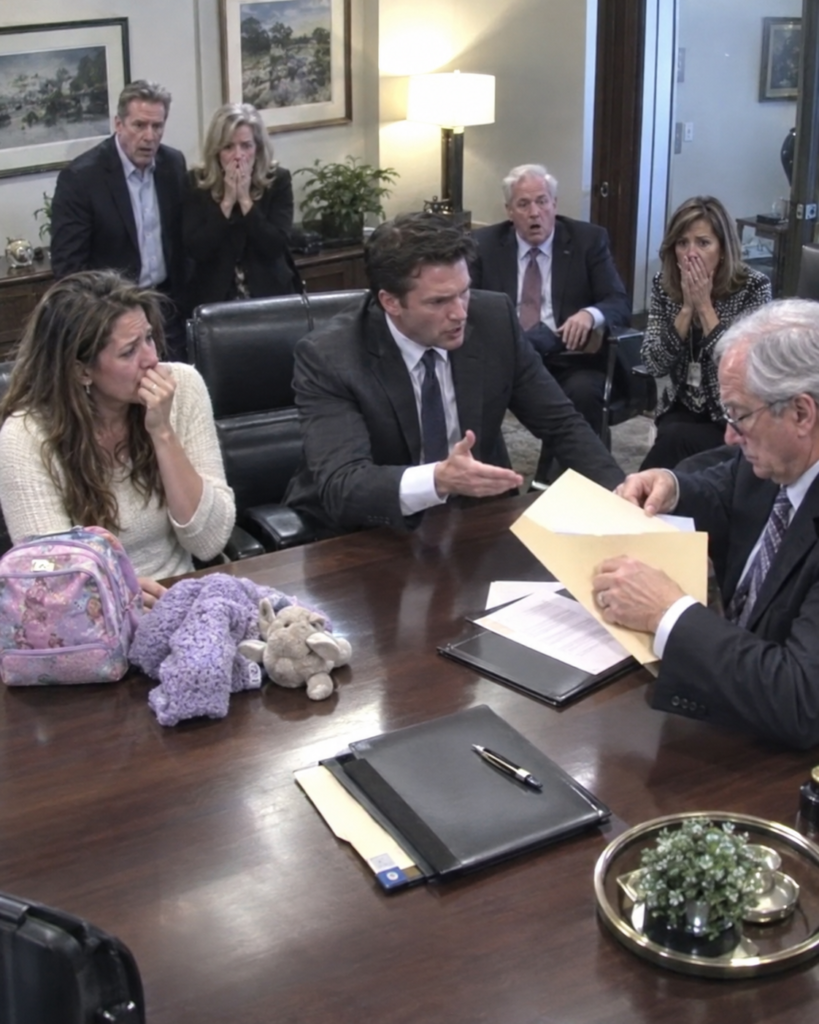
The courier asked him to confirm his identity before placing two thick legal packets into his hands, each bearing the letterhead of my attorney’s law firm.
Vanessa walked downstairs smiling until she noticed the expression on her husband’s face, and her confidence disappeared before she even reached the bottom step.
“What is it?” she asked, reaching for the envelopes.
Mark pulled them away instinctively.
“They’re addressed to both of us.”
My attorney had prepared separate notices explaining that hotel surveillance footage, employee statements, and witness interviews had already been formally preserved before anyone could request their deletion.
The letters also instructed Vanessa to retain every text message, photograph, and social media post connected to the vacation because destroying evidence could create additional legal consequences.
Vanessa laughed after reading the first page.
“This is ridiculous.”
“It was a family disagreement.”
“My niece wasn’t abandoned.”
My attorney had anticipated exactly that response.
Attached behind the notice were sworn statements from three hotel employees who had no relationship with any member of our family.
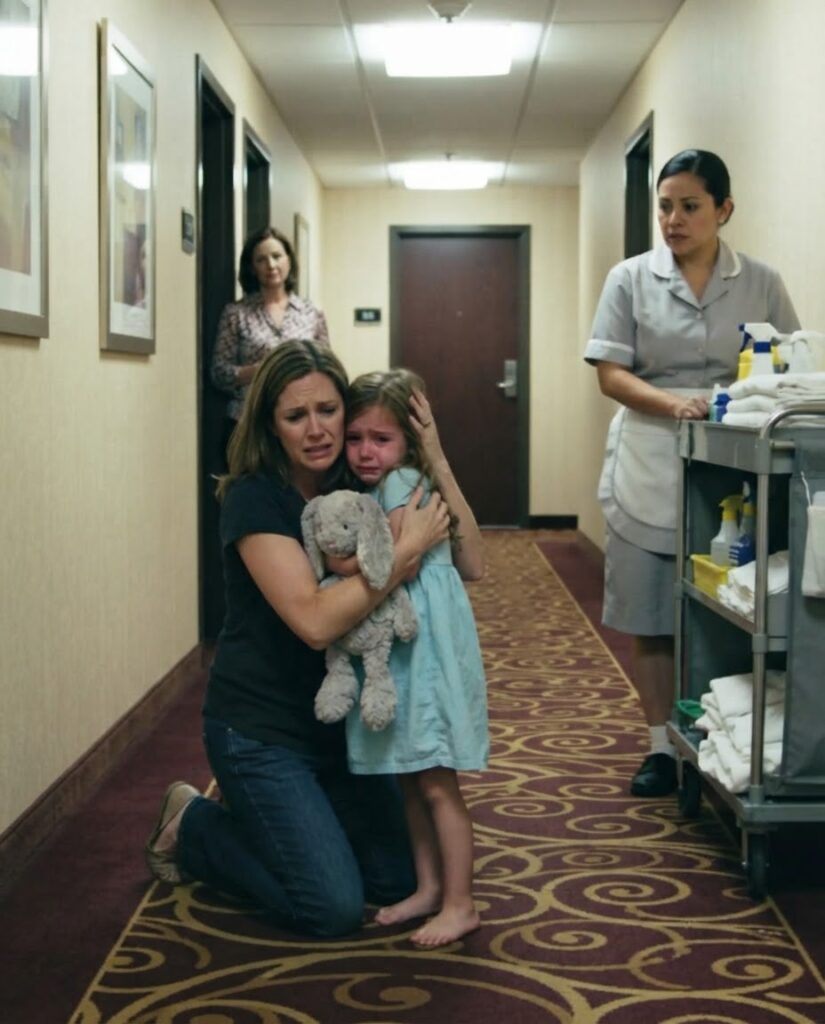
The first belonged to the housekeeper who discovered Lily curled beside the ice machine while hugging her stuffed rabbit with both trembling arms.
She stated that Lily repeatedly whispered she was afraid to knock again because her aunt had become angry the first time.
The second statement came from a maintenance technician repairing an electrical outlet several doors away from our room during the entire afternoon.
He reported hearing a little girl quietly asking to be allowed inside before an adult female voice answered that the room was only for real family members.
The third statement belonged to the front desk supervisor who personally spoke with my father less than five minutes before he called me downstairs.
According to the supervisor, my father never discussed any billing problem because there had never been one.
Instead, he had casually asked whether guests could receive replacement keycards without informing everyone staying in the room.
That single detail changed everything.
My father had never been confused.
He had deliberately created a reason to separate me from Lily.
When Mark reached the final page, he looked toward Vanessa with genuine disbelief instead of automatic loyalty.
“You told me Mom and Dad had no idea Lily was outside.”
Vanessa folded her arms.
“They didn’t.”
Mark slowly turned another page.
“The housekeeper says both of them looked directly at Lily through the doorway.”
Vanessa said nothing.
The silence lasted just long enough for Mark to understand she was deciding whether another lie sounded more believable than the truth.
Finally she shrugged.
“They probably thought Claire was coming back any minute.”
Mark stared at her.
“For three hours?”
She avoided answering.
Instead, she grabbed her phone and called our mother.
Twenty minutes later, my parents arrived looking far more irritated than worried.
My mother never asked what the legal documents contained.
Her first question was whether I had really hired an attorney against my own sister.
When Mark handed her the witness statements, she skimmed the pages without reading more than a few lines before dropping them onto the dining room table.
“Employees exaggerate.”
“They don’t know our family.”
My father remained unusually quiet.
He read every page slowly, his expression becoming increasingly uneasy each time another independent witness confirmed the same timeline.
When he finished, he quietly asked Vanessa one question.
“Did Lily really spend three hours outside that room?”
Vanessa hesitated.
“It wasn’t exactly three.”
My father’s shoulders sank almost imperceptibly.
“So she was outside.”
Nobody answered him.
Meanwhile, across town, I was sitting inside my attorney’s office while Lily colored quietly beside the window with a fresh box of crayons the receptionist had given her.
My attorney, Rebecca Sloan, organized several binders across the conference table before sliding one toward me.
“There’s something you need to see.”
Inside were printed copies of every incident I had documented during the previous six years.
I had nearly forgotten some of them.
The birthday party where Vanessa intentionally gave every child a gift except Lily.
The Thanksgiving dinner where Lily was told the children’s table was already full despite two empty chairs.
The family barbecue where Vanessa laughed after telling Lily that only cousins born into the family could swim in the neighborhood pool.
Each event had seemed too small to report individually.
Together they formed a disturbing pattern.
Rebecca tapped the final section.
“I also contacted hotel management.”
“They completed an internal investigation yesterday.”
She handed me another document.
According to hotel policy, any adult intentionally leaving a young child unattended in a public corridor without supervision created a mandatory safety report.
The report included precise timestamps gathered from electronic keycard records.
At 1:07 p.m., I left the room after receiving my father’s phone call.
At 1:11 p.m., Vanessa used her keycard to lock the connecting room.
At 1:18 p.m., Lily attempted to reenter by knocking repeatedly.
At 1:24 p.m., Vanessa briefly opened the door before closing it again.
At 4:09 p.m., I returned.
The electronic records matched the witness statements almost perfectly.
Nobody could honestly argue Lily had wandered away.
She had been deliberately excluded.
Rebecca leaned back in her chair.
“This matters.”
“Not because children cry.”
“Because adults made a coordinated decision and maintained it for hours.”
I looked toward Lily.
She was drawing a small rabbit sitting beside a very large hotel door.
My chest tightened.
Rebecca lowered her voice.
“Has Lily spoken about what happened after you left?”
“Only pieces.”
“Don’t pressure her.”
“When children feel safe again, details usually return naturally.”
She was right.
That evening, while we unpacked inside our apartment, Lily suddenly carried her rabbit into the kitchen and climbed onto a stool beside me.
“Mom?”
“Yes, sweetheart.”
“I didn’t only knock once.”
I turned off the faucet.
“What do you mean?”
“I knocked lots of times.”
She stared at the floor.
“Aunt Vanessa said I was making everyone uncomfortable.”
I remained silent.
She continued without looking up.
“Grandpa told me big girls don’t cry in hotels because people think something is wrong with their parents.”
Every word felt like another stone settling inside my stomach.
“Then Grandma came.”
“What did she say?”
Lily wrapped both arms around her rabbit.
“She said if I kept crying, nobody would want to invite us on vacations anymore.”
I could barely breathe.
Those weren’t careless comments.
They were deliberate attempts to convince a frightened six-year-old that being abandoned was somehow her own fault.
The next morning Rebecca called before eight.
“I have another update.”
“What happened?”
“The hotel reviewed additional hallway footage.”
My pulse quickened.
“They found something the first investigator missed.”
She paused.
“Your father didn’t simply send you downstairs.”
“He remained in the hallway for nearly two minutes after you entered the elevator.”
“Doing what?”
“He watched Lily.”
I closed my eyes.
Rebecca continued.
“He looked directly at her.”
“He watched Vanessa lead both boys into your room.”
“He watched Lily follow them.”
“He watched the door close.”
“And then?”
“He walked away.”
I couldn’t speak.
Because the final excuse had disappeared.
Nobody could claim they forgot Lily.
Nobody could argue they believed another adult was supervising her.
The footage showed my father personally watching his six-year-old granddaughter become trapped outside the room before calmly returning to the lobby.
That afternoon another unexpected phone call arrived.
It wasn’t from my parents.
It wasn’t from Vanessa.
It was from Mark’s business partner, David Mercer.
“I think you deserve to know something.”
I stepped onto the balcony so Lily couldn’t overhear.
“What is it?”
“I only learned about this yesterday.”
“My wife works with one of the hotel managers.”
I waited.
“Apparently Mark knew there wasn’t any billing problem.”
Every sound around me seemed to disappear.
“What?”
“Your father asked him to keep you downstairs for as long as possible.”
My hand tightened around the phone.
“Are you sure?”
“I’ve seen the internal interview.”
“Mark admitted your father told him it would teach Lily not to cling to you every minute.”
I leaned against the railing.
The betrayal hurt even more because I had watched Mark look shocked while reading those witness statements.
He hadn’t been completely innocent.
He simply hadn’t expected the truth to become impossible to hide.
Before ending the call, David quietly added one final sentence.
“Claire… if everything in those reports is accurate, I don’t think this started during the vacation.”
“I think they’ve been testing how much your daughter would tolerate for years.”
As I lowered the phone, I looked through the apartment window at Lily laughing softly while dressing her stuffed rabbit in a tiny pink sweater.
For the first time since leaving the hotel, I stopped wondering how to protect my daughter from one terrible afternoon.
Instead, I began wondering how many other moments she had silently endured because the people responsible had convinced her that being treated differently was simply the price of belonging to our family.
The answer arrived sooner than I expected.
Two days later, Lily wandered into the kitchen carrying an old blue backpack she had insisted on bringing home from the hotel.
“I forgot something,” she said quietly.
She reached inside one of the smaller pockets and pulled out three folded sheets of notebook paper secured with a faded pink hair tie.
“I made these.”
I unfolded the first page.
Across the top, written in careful first-grade handwriting, were four heartbreaking words.
How To Be Better.
Below the title sat a numbered list.
Don’t cry.
Don’t ask for Mommy.
Smile when Aunt Vanessa looks angry.
Be quieter.
Maybe then they’ll let me stay.
My hands began shaking before I reached the bottom of the page.
The second sheet contained little stick figures standing outside a hotel room.
Every member of our family appeared inside except one.
A tiny girl holding a stuffed rabbit stood alone beside an ice machine.
Above her head, Lily had written one sentence.
Waiting makes people love you again.
I could no longer stop the tears.
Rebecca arrived less than an hour later after I texted photographs of both pages without saying another word.
She studied them silently before placing each sheet into protective plastic sleeves.
“These weren’t made after the vacation,” she said.
“The pencil pressure is different.”
“The paper has been folded for months.”
I looked toward Lily.
“Sweetheart.”
“When did you write these?”
She shrugged.
“I don’t remember.”
Rebecca gently crouched beside her.
“Can you remember why?”
Lily thought for several seconds.
“Grandma said families like happy girls.”
“And I wasn’t happy enough.”
The room became unbearably quiet.
Rebecca waited another moment.
“Did Grandma say anything else?”
Lily nodded.
“She said Daddy loved me because Mommy made him.”
The words hit me harder than I expected.
Daniel had adored our daughter from the moment she was born.
Even during chemotherapy.
Even when he could barely stand without help.
Even during the final week of his life.
Someone had been trying to rewrite those memories after he died.
Rebecca stood slowly.
“This isn’t just favoritism anymore.”
“This is emotional conditioning.”
“They’ve been teaching her to believe love depends entirely on obedience.”
Before I could answer, my phone vibrated.
Mark.
I stared at the screen until the call stopped.
Thirty seconds later he called again.
Then a third time.
Finally he sent a message.
Please let me explain.
I didn’t respond.
Instead, Rebecca asked me to save every message without opening a conversation.
“They’re beginning to panic.”
“Panicked people make mistakes.”
She proved correct the very next morning.
At 9:14, my mother arrived at my apartment without calling first.
She carried two shopping bags filled with toys, coloring books, and new clothes.
“I just want to see my granddaughter.”
I stepped outside and closed the door behind me.
“You can leave those here.”
“I’d rather she didn’t see you today.”
My mother’s expression hardened immediately.
“You’re poisoning her against us.”
I almost laughed.
“She’s six.”
“She doesn’t even know what a lawsuit is.”
“She only knows who left her crying outside a hotel room.”
My mother folded both arms.
“Children exaggerate.”
“No.”
“Adults do.”
She took one step closer.
“You’ve always hated your sister.”
“Ever since you were little.”
I looked at her for several long seconds.
“You remember my eighth birthday?”
She frowned.
“What about it?”
“You bought Vanessa a bicycle.”
“You gave me a coloring book because you said my present had to wait.”
Her face remained blank.
“It never came.”
For the first time, I understood something that had haunted me for decades.
She truly didn’t remember.
Not because it hadn’t happened.
Because it had never mattered to her.
My mother suddenly changed the subject.
“This family doesn’t deserve to be destroyed over one afternoon.”
I met her eyes.
“This family wasn’t destroyed in one afternoon.”
“It was built this way.”
She opened her mouth to argue, but another voice interrupted.
“Mrs. Bennett?”
A man wearing a charcoal suit walked toward us from the parking lot carrying a leather briefcase.
He introduced himself as Investigator Samuel Ortiz from Child Protective Services.
My mother’s face lost all color.
“I have a few follow-up questions regarding the hotel incident,” he said politely.
“I was hoping to speak with everyone involved.”
My mother immediately looked at me.
“You called CPS?”
I shook my head.
“No.”
“I didn’t have to.”
Ortiz opened his folder.
“The referral came directly from hotel management after reviewing staff interviews and security footage.”
He paused before continuing.
“They’re mandatory reporters.”
“When employees believe a child has been intentionally abandoned or emotionally endangered, they’re legally required to notify our office.”
My mother stumbled backward.
“They… they reported us?”
“They reported what they observed.”
He looked down at his notes.
“A six-year-old child was left unsupervised in a public hotel hallway for approximately one hundred seventy-eight minutes.”
He raised his eyes again.
“Is that timeline inaccurate?”
My mother couldn’t answer.
Because for the first time, the story no longer belonged to our family.
It belonged to independent witnesses, electronic keycard records, hallway surveillance, and professionals whose only responsibility was protecting a frightened little girl.
As Investigator Ortiz closed his notebook, another vehicle slowly pulled into the parking lot.
Rebecca stepped out carrying a slim black folder.
She smiled politely after recognizing the investigator.
“I wasn’t expecting to see you here.”
Ortiz returned the smile.
“Neither was I.”
Rebecca glanced toward my mother before quietly asking one question.
“Have you informed her yet?”
“Informed me of what?” my mother demanded.
Ortiz looked at her calmly.
“We’ve expanded the investigation.”
“Why?”
“Because during our interviews yesterday, your granddaughter described another incident that occurred approximately six months before the hotel vacation.”
My heart skipped.
I hadn’t heard about another incident.
Ortiz continued.
“She said she was locked outside your house during Thanksgiving while the adults finished dinner.”
My mother immediately shook her head.
“That’s impossible.”
“We never—”
She stopped speaking.
Not because she remembered differently.
Because she suddenly realized she did remember.
Rebecca slowly opened her folder and placed a single photograph on the hood of my mother’s car.
It showed last Thanksgiving.
Every adult sat around the dining room table.
Through the sliding glass door, barely visible in the reflection of the porch lights, sat a tiny figure hugging a stuffed rabbit alone on the back patio.
The timestamp beneath the image read 47 minutes.
Neither Rebecca nor Investigator Ortiz said another word.
They didn’t have to.
The photograph spoke for itself.