I married a stranger I met in a hospital waiting room so he wouldn’t die alone — after our one-week marriage, his lawyer handed me his backpack and said, “He wanted you to know the truth.”
I was twenty-nine when my life came to a standstill after losing my mother.
To cope, I spent a year volunteering at the hospital, sitting beside patients who were facing the end of their lives alone.
That was where I met Thomas.
He was seventy-two, with hollow eyes and a tired smile, quietly fading away because his heart was failing him.
Within days, our long conversations turned us into inseparable companions.
Then Thomas asked a question that stopped me in my tracks.
“Marry me, Sarah,” he whispered.
My heart pounded.
“Thomas… you’re seriously ill. We barely know each other.”
“I don’t want the state handling my final hours,” he said, touching my fingers. “My last wish is to leave this world as a husband, not as a nameless file.”
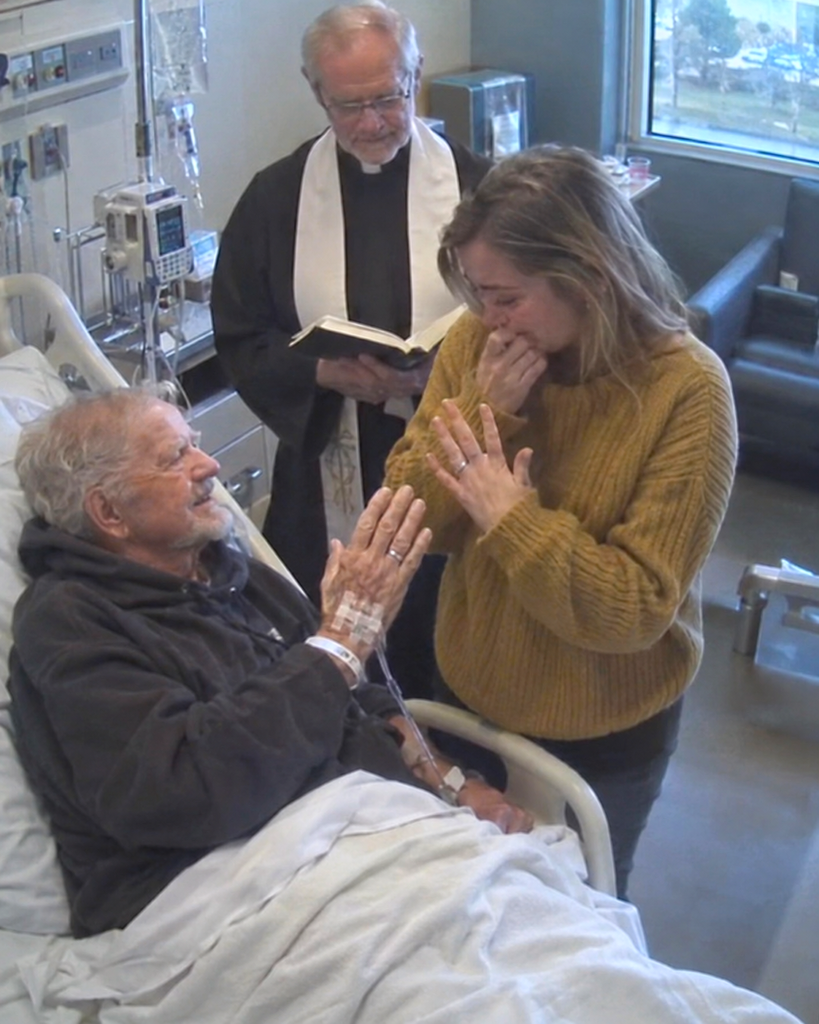
Two days later, a chaplain married us.
I wore a yellow sweater, and Thomas used a soda-can pull tab as my ring.
For seven days, I held his hand until his heart stopped.
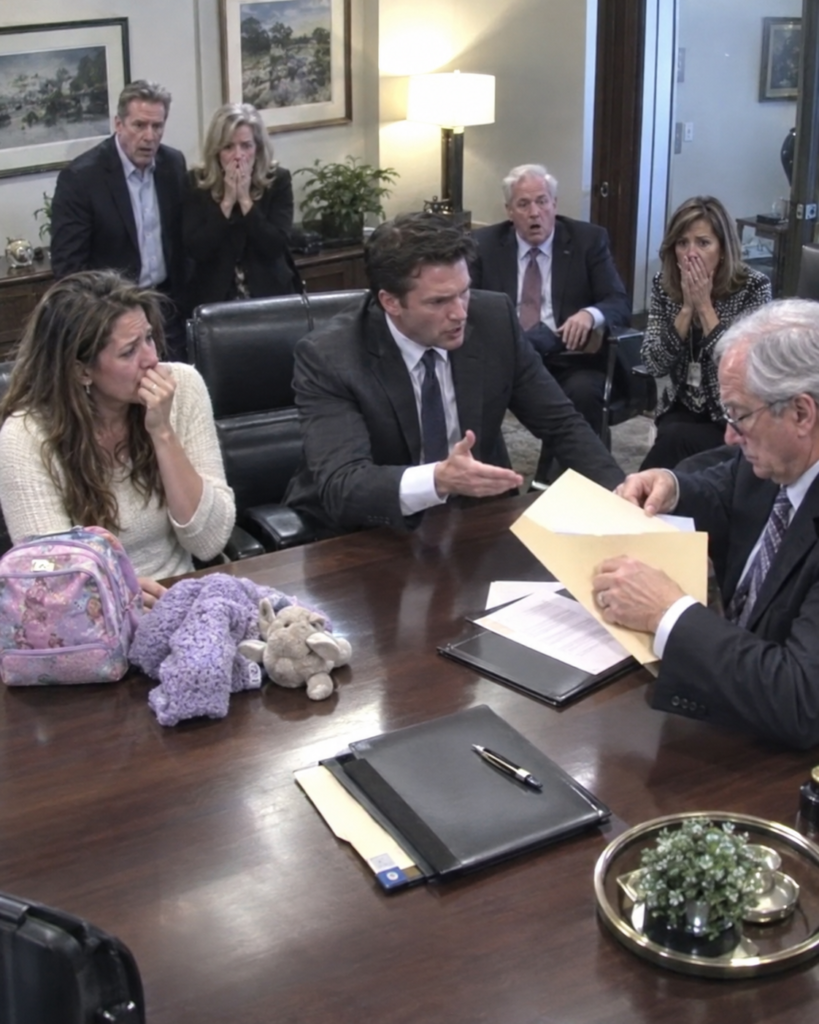
I was sitting alone in his empty room when an elderly attorney walked in carrying a green backpack.
“Sarah?” the man asked. “I’m your husband’s attorney. He left this backpack for you.”
Then he handed it to me.
It felt heavy.
“Thomas wasn’t who you thought he was, Sarah,” the old man whispered.
“He wanted you to know the truth.”
Part 2: The Secret Inside the Green Backpack
I stared at the green backpack in my lap, unable to understand what the attorney had just told me.
“What do you mean Thomas wasn’t who I thought he was?” I asked. “He was a dying man who had nobody. I married him because I didn’t want him to die alone.”
The attorney, whose name was Richard Collins, pulled a chair beside me.
“I know, Sarah. And that is precisely why he chose you.”
My stomach tightened.
“Chose me? You make it sound as if our marriage was some kind of arrangement.”
Richard lowered his eyes.
“In a way, it was. But not for the reason you think.”
He reached into his briefcase and placed an envelope on my lap.
My name was written across the front in Thomas’s shaky handwriting.
I opened it with trembling fingers.
Inside was a photograph of a much younger Thomas standing beside a beautiful woman and a little girl. They were smiling in front of a large brick house, their arms wrapped around one another.
On the back of the photograph, someone had written three words.
My whole world.
I looked at Richard.
“Who are they?”
“His wife, Margaret, and his daughter, Emily.”
I felt as though the air had been knocked out of my lungs.
“He had a family?”
“Yes.”
“Then where were they? Why did he spend his final days alone?”
Richard took a long breath.
“Because twenty-six years ago, Thomas made a terrible mistake. He believed he was protecting his family by keeping a secret from them. Instead, that secret destroyed everything he loved.”
He told me that Thomas had been a successful businessman who owned several properties and a construction company. He had built a comfortable life for his wife and daughter, but his obsession with work eventually consumed him.
One night, while driving home after a business meeting, Thomas received a phone call from his daughter.
Emily was sixteen. She had been waiting for him to attend an important school performance, something he had promised her he would never miss.
He was late.
Again.
When she confronted him, Thomas lost his temper and told her she was selfish and ungrateful.
Those were the last words he spoke to his daughter before she left home that night.
Emily was involved in a serious car accident on her way to a friend’s house.
She survived, but she suffered a traumatic brain injury that required years of rehabilitation.
Thomas blamed himself.
His wife, Margaret, blamed him, too.
Their marriage fell apart under the weight of guilt, anger, and accusations. Margaret eventually took Emily to another state, refusing to allow Thomas to contact them.
He could have fought harder to rebuild the relationship.
He could have admitted his mistakes and begged for forgiveness.
Instead, he buried himself in work, convinced that sending money was the only way he could make amends.
Years passed.
Margaret died of cancer.
Emily, who had spent much of her adult life rebuilding her independence, eventually learned that her father had continued supporting her anonymously.
But by then, she had made one thing clear.
She didn’t want his money.
She wanted the father who had never shown up when she needed him.
Thomas never found the courage to tell her that he understood.
I sat motionless, staring at the photograph.
“So he wasn’t alone because he had nobody,” I whispered. “He was alone because he pushed everyone away.”
Richard nodded.
“Exactly.”
I wiped my tears.
“But why did he marry me?”
Richard looked at the green backpack.
“Because he knew he was dying, and he had one final opportunity to do something he should have done decades ago.”
My hands shook as I unzipped the backpack.
Inside were several old letters, a small wooden box, a stack of legal documents, and a sealed envelope marked:
FOR SARAH — READ THIS LAST.
I opened the wooden box first.
Inside was a silver necklace with a tiny heart-shaped pendant.
Beneath it lay a photograph of a little girl sitting on a hospital bed, her head wrapped in bandages. Beside her sat a younger Thomas, holding her hand and crying.
I turned the photograph over.
Emily, age sixteen. The day I promised her I would never let her face anything alone.
A sob escaped my throat.
Then I opened the first letter.
It was addressed to Thomas.
The handwriting was unmistakably feminine.
Dad,
I don’t need you to pay for my life. I need you to understand that money cannot replace a single birthday, hospital appointment, or night I cried myself to sleep wondering why you weren’t there.
I waited for you for years.
Eventually, I stopped.
Please don’t send me anything else.
Your daughter, Emily.
I pressed the letter against my chest.
Thomas had carried those words for years.
And somehow, in the final week of his life, he had found a way to place that pain into my hands.
I turned to Richard.
“Does Emily know he’s dead?”
“She does.”
“Did she come to see him?”
Richard hesitated.
“No.”
I looked down at the photograph again.
“Then what am I supposed to do with all this?”
Richard pointed to the sealed envelope.
“Thomas left specific instructions. He wanted you to read that letter before making any decisions about the documents.”
I broke the seal.
Inside was a handwritten message.
Dear Sarah,
If you’re reading this, then I have finally run out of time.
You sat beside me when you had absolutely no reason to. You listened to stories I had told nobody in years. You held my hand when I was afraid, and you gave me something I thought I had lost forever.
You gave me the chance to feel like a human being again.
I know our marriage was unusual. I also know you didn’t marry me for money, because you never once asked about my life before the hospital.
That is why I need you to do something for me.
My daughter believes I never loved her enough to fight for her. I cannot blame her for believing that.
But there is something she doesn’t know.
And before you decide what to do next, I need you to hear the truth about the night everything fell apart.
I stopped reading.
My eyes moved to the stack of legal documents.
The top page bore the name of a bank I recognized from the news. Beneath it was a statement showing an account balance of more than $8 million.
My hands went cold.
I looked at Richard.
“What is this?”
He folded his hands.
“Thomas didn’t die a poor man, Sarah.”
I stared at him in disbelief.
“Then why did he live in a hospital room with nothing but an old backpack?”
“Because he gave nearly everything away over the years, except for the money he had reserved for one final purpose.”
Richard slid another document toward me.
It was a trust agreement.
And my name appeared at the top.
I couldn’t breathe.
“Why am I listed here?”
Richard’s expression grew serious.
“Because Thomas didn’t want his last act to be another attempt to buy his daughter’s forgiveness.”
He leaned closer.
“He wanted someone who had shown him kindness without knowing his name, his history, or his bank balance to make the decision he had been too afraid to make himself.”
I looked at the envelope again.
There was one final sentence at the bottom of Thomas’s letter.
Sarah, before you decide whether to accept anything I leave you, please find my daughter and give her the one thing I should have given her twenty-six years ago.
The truth.
And beneath those words was an address.
An address that would lead me to a woman who had spent most of her life believing her father had abandoned her.
A woman who had no idea he had died with her name on his lips.
A woman who, when I finally found her, would look me in the eyes and ask a question that would change everything.
“Why would my father marry a stranger instead of coming to find me?”
I didn’t have an answer.
Not yet.
But I was going to find one.
Part 3: The Daughter Who Never Forgave Him
Three days later, I stood outside a modest house in a quiet neighborhood in Ohio.
The address from Thomas’s letter had led me to a small blue house with white shutters and a garden filled with flowers.
I almost turned around twice.
What right did I have to walk into a stranger’s life carrying the secrets of her dead father?
But then I remembered Thomas’s hand trembling in mine during his final night.
“Don’t let me leave this world having made the same mistake twice,” he had whispered.
So I knocked.
A woman in her late forties opened the door.
She had dark hair streaked with gray, tired eyes, and a faint scar near her temple.
“Can I help you?”
“My name is Sarah. I knew your father.”
The change in her face was immediate.
“My father is dead.”
“I know.”
Her jaw tightened.
“Then you don’t need to be here.”
She started to close the door.
“Please,” I said quickly. “He asked me to give you something.”
She stopped.
I held out the old photograph of her and Thomas.
For several seconds, she didn’t move.
Then her eyes filled with tears, but her voice remained cold.
“Where did you get that?”
“He kept it in his backpack.”
She took the photograph with trembling fingers.
“I haven’t seen this picture in twenty years.”
She stared at the little girl in the photograph.
Then she looked at me.
“What did he want?”
I swallowed.
“He wanted you to know the truth.”
Emily let out a bitter laugh.
“Twenty-six years, and he finally finds the courage to send someone else to say what he couldn’t say himself.”
“I don’t think he expected you to forgive him.”
“Good. Because I won’t.”
She stepped aside, almost reluctantly.
“Come in.”
Her living room was filled with books, family photographs, and the ordinary evidence of a life carefully rebuilt.
I noticed a framed photograph on the mantelpiece.
Emily stood beside a young man in a graduation gown. A little girl sat between them, smiling with missing front teeth.
“My daughter and my husband,” she explained when she caught me looking.
“They’re beautiful.”
“They are.”
For a moment, her expression softened.
Then she turned away.
“Tell me what happened.”
I told her about the hospital, the conversations, the soda-can ring, and the seven days we had spent together.
I told her how Thomas had held my hand when he was frightened.
How he had spoken about regret.
How he had asked me to marry him because he didn’t want to die as a nameless patient in an empty room.
Emily listened without interrupting.
When I finished, she sat very still.
“He married you?”
“Yes.”
“For a week?”
“Yes.”
“And you actually said yes?”
I looked down at my hands.
“I had lost my mother. I knew what loneliness felt like. When he asked me, I didn’t think about what anyone else would say. I just thought about how afraid he looked.”
Emily turned toward the window.
“My father used to look at me that way when I was little. Like I was the most important thing in the world.”
Her voice cracked.
“Then one day, I wasn’t important enough for him to show up.”
I didn’t try to defend Thomas.
There was nothing I could say that would erase what Emily had endured.
Instead, I placed the letters on the coffee table.
“He wanted you to have these.”
Emily stared at them.
“I’ve read his apologies before. He sent them every Christmas. Sometimes with checks. Sometimes with expensive gifts.”
“These aren’t apologies written to make you forgive him,” I said softly. “They’re the things he never had the courage to tell you.”
She opened the first letter.
Then the second.
By the third, tears were falling onto the pages.
The final letter was dated two weeks before Thomas entered the hospital.
Emily,
There is something I have never told you about the accident.
You remember that I was late to your performance. You remember the argument. You remember leaving the house.
And I know you have spent years believing that I chose my work over you.
I did. That part is true, and I will regret it until my last breath.
But the reason I never came to see you afterward wasn’t because I stopped loving you.
It was because I was ashamed.
I visited the rehabilitation center three times during your first year. I watched you through the glass because your mother had told me you didn’t want to see me.
Each time, I promised myself I would come inside the next day.
Each time, I found another excuse to leave.
Eventually, I learned that you were doing better. I heard you had gone back to school. I heard you had started working.
And instead of being brave enough to face you, I convinced myself that staying away was the kindest thing I could do.
It wasn’t kindness.
It was cowardice.
I am not asking you to forgive me.
I am asking you to know that every year I stayed away, I thought about the little girl who waited for me in the school auditorium.
I should have been there.
I should have been there for all of it.
I love you, Emily.
I always did.
Dad.
Emily pressed the letter to her mouth.
For a long time, she cried without making a sound.
Then she whispered, “He was there?”
“He said he visited.”
“He watched me through the glass?”
I nodded.
She closed her eyes.
“I used to look for him in every crowd. At my high school graduation, I kept staring at the back doors. At my wedding, I left an empty chair beside my mother because some foolish part of me thought he might walk in.”
Her shoulders shook.
“I spent years telling myself I hated him because it was easier than admitting I still wanted him to come home.”
I reached for her hand.
She didn’t pull away.
After several minutes, she wiped her face and looked at me.
“What did he leave you?”
I hesitated.
“He left a trust. Richard, his attorney, explained that I would have to decide what to do with it.”
“How much?”
“More than eight million dollars.”
Emily went completely still.
Then her expression hardened.
“So that’s why he married you.”
“No.”
“You were a stranger in a hospital room. He knew he was dying, and suddenly he had a wife. Now you have millions of dollars, and I’m supposed to believe this was some beautiful act of kindness?”
“I understand why it looks that way.”
“You don’t understand anything about my family.”
“You’re right,” I said quietly. “I don’t. But I know what he told me, and I know what I saw.”
I took the trust documents from my bag and placed them on the table.
“I haven’t touched a dollar. I haven’t made a decision. I came here because he asked me to give you the truth before I did anything else.”
Emily stared at the papers.
Then she noticed a second envelope tucked beneath them.
It was smaller than the others and addressed to her in Thomas’s handwriting.
She opened it.
Inside was a single sheet of paper and a key.
The paper read:
Emily,
There is one thing I kept because I could never bring myself to sell it.
It’s the house where you grew up.
I bought it back three years ago after learning that it was going to be demolished. I restored your bedroom exactly as it was when you were sixteen. Your books are still on the shelves. Your blue curtains are still at the windows.
I know you may never want to see it again.
But if you ever want to remember the good days before I ruined so much, it’s yours.
The key is in your hand.
I am sorry I waited until I was dying to give you something that should have been yours all along.
Emily stared at the key.
Then she began to cry again.
Not because the house was valuable.
Not because her father had left her money.
But because, somewhere beneath all the years of silence, he had remembered the blue curtains in her childhood bedroom.
He had remembered the little girl she used to be.
And he had finally understood that what she had wanted was never a bigger house or a more expensive gift.
She had wanted her father.
“I can’t forgive him,” she whispered.
“You don’t have to.”
“What if I’m too late?”
I looked at her.
“Too late for what?”
“To tell him I wanted him to come inside that rehabilitation room. That I waited for him. That even after everything, I would have let him hold my hand.”
My throat tightened.
I thought about Thomas’s final seven days.
About the way he had looked at me when I held his hand.
About how desperately he had wanted one more chance to make things right.
“He knew he had failed you,” I said. “But I don’t think he ever stopped hoping that, someday, you might understand why he was sorry.”
Emily looked down at the key.
Then she asked, “Would you come with me?”
We drove to the old brick house the following morning.
It stood at the end of a tree-lined street, its windows clean and its garden carefully maintained.
Emily stood on the front porch for nearly five minutes before unlocking the door.
Inside, everything was quiet.
The furniture had been covered with white sheets, but the photographs remained on the walls. A child’s drawing was still pinned to the refrigerator.
Emily walked slowly down the hallway.
When she reached her old bedroom, she stopped.
The blue curtains were still there.
Her books stood neatly on the shelves.
And on her desk sat a small wooden music box.
She opened it.
A familiar melody filled the room.
Emily sank to the floor, clutching the music box against her chest.
“He gave me this when I was ten,” she whispered. “I thought he’d thrown everything away.”
I sat beside her.
For the first time since meeting her, I saw something other than anger in her face.
I saw grief.
The kind that comes when you realize the person you spent years hating was also a person who had been hurting, even if his pain never excused what he had done.
That afternoon, Emily called Richard.
She asked him to arrange a private memorial for her father.
She also asked him to explain the trust.
I returned to the hospital’s volunteer office a week later and learned that Thomas had quietly donated money to support patients who had no family members to sit beside them.
The trust he had left me was intended to continue that work.
I could accept the money and administer the charitable program, or I could decline the inheritance and allow Richard to arrange another trustee.
After meeting with an independent attorney, I made my decision.
I accepted the responsibility, but not as a reward for marrying Thomas.
I established a fund to pay for bedside volunteers, counseling for grieving families, and small comforts for patients who had nobody to visit them.
Emily chose to help.
She also kept her father’s house.
She didn’t suddenly forgive him. Grief doesn’t work that way, and neither does forgiveness.
But she began visiting his grave.
Sometimes she brought flowers.
Sometimes she sat in silence.
And once, several months later, she brought the little music box and played its melody beside his headstone.
I never forgot the man I married for seven days.
People sometimes ask me whether I regret marrying a stranger.
I tell them the truth.
I regret that Thomas spent so many years believing his mistakes made him unworthy of love.
I regret that Emily spent so much of her life waiting for an apology she thought would never come.
And I regret that neither of them had the courage to reach across the distance while there was still time.
But I don’t regret sitting beside a dying man and holding his hand.
Because in the end, Thomas didn’t leave me his greatest fortune.
He left me a responsibility.
He taught me that kindness doesn’t require us to excuse someone’s past, and forgiveness doesn’t mean pretending that the hurt never happened.
Sometimes, it simply means allowing the truth to be heard.
And sometimes, the most valuable thing a dying person can leave behind isn’t money, property, or a name on a legal document.
It’s the chance to make sure someone else doesn’t spend the rest of their life wondering whether they were ever loved.
Thomas had been a stranger when I met him.
But during those seven days, he became a husband, a friend, and a reminder that even at the very end, a life can still make a difference.
And every time I walk into a hospital room and find a patient sitting alone, I pull up a chair.
I take their hand.
And I stay.
Because nobody should have to face the end of their story believing they don’t matter.
Not when a little kindness can remind them that they do.