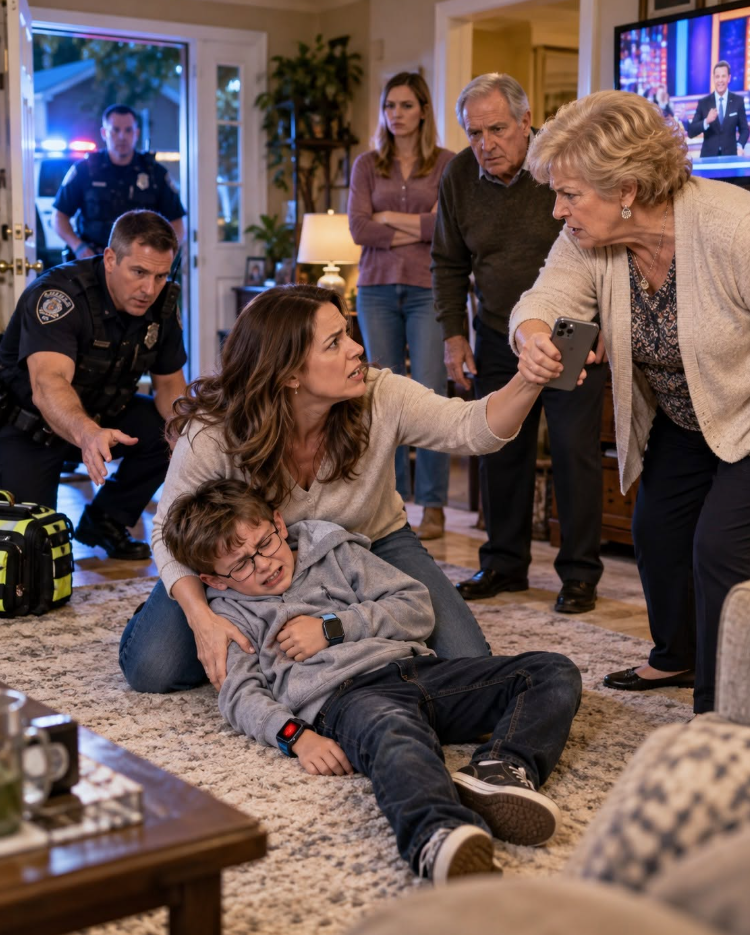
My eight-year-old son lay gasping on my parents’ floor after his twelve-year-old cousin’s beating fractured one of his ribs. When I reached for my phone to call 911, Mom snatched it away. “Boys fight. Don’t ruin your nephew’s future.”
Dad barely looked up. “You’re overreacting.”
My sister only smirked.
The living room smelled like burnt coffee and the lemon cleaner Mom used before company came over.
A game show kept chattering from the television while I dropped beside my son on the beige carpet. His face was pale around the mouth. One hand pressed against his left side, and every shallow breath ended in a small broken sound.
His glasses sat crooked on his nose. One sneaker had come loose. His smartwatch was half hidden beneath his hoodie sleeve, the one I usually reminded him to charge before school.
“It hurts,” he whispered.
I reached for my phone.
Mom grabbed my wrist, ripped it from my hand, and stepped back with the phone tucked behind her hip.
“Boys fight,” she said again. “You call the police over this and you could ruin your nephew’s future.”
I looked at my son. He tried to breathe deeper and stopped halfway.
Dad lowered the television by one click.
“You’re overreacting.”
My sister stayed against the doorway, arms crossed, while her twelve-year-old son remained somewhere down the hall.
“He started it,” she said.
My son shook his head once. Then pain stopped him.
I slid one arm behind his shoulders without lifting him and told him to stay still.
“Look at me, buddy. Small breaths.”
Mom stepped closer. “Stop making this dramatic.”
I asked for my phone again.
She refused.
I asked Dad to call instead.
He picked up his glass. “No.”
My sister glanced toward the hallway, then back at me.
“We just need everyone to calm down before somebody says something they can’t take back.”
I reached toward the landline on the side table.
Mom moved between us.
That failed too.
My son made another sharp sound, and I stopped arguing with them long enough to pull his hoodie away from his neck and make sure nothing was restricting his breathing.
The air conditioner blew cold against my hands. A contestant on television won a vacation. The audience applauded.
Nobody in that room moved toward my child.
Then something red flashed beneath his sleeve.
I pushed the cuff back.
His watch screen was scratched, but a red SOS symbol blinked above a timer.
11:07.
11:08.
11:09.
I knew what that screen meant because I had set up the emergency feature when he started walking from the bus stop with a friend.
My son looked at me.
I looked at him.
He gave the smallest nod.
I stopped asking for my phone.
Mom noticed the change immediately.
“There,” she told my sister. “He finally understands.”
Dad took my phone from her and set it beside his recliner where I could not reach it without crossing the room.
My sister smiled again.
“See? Nobody needs police.”
Outside, tires rolled slowly over the gravel at the edge of my parents’ driveway.
I kept one hand beside my son’s shoulder.
Dad muted the television.
Nobody spoke.
A car door shut outside.
Then another.
Mom turned toward me.
“Who did you call?”
I checked my son’s breathing instead of answering.
Blue light moved across the wall and briefly washed over the framed school pictures Mom kept lined above the couch.
My sister pushed away from the doorway.
Dad stood up.
Mom grabbed my phone from the table and shoved it onto the end table beside me.
“Nobody says anything until we agree on what happened.”
A hard knock rattled the glass in the front door.
“Emergency services.”
I got up and opened it.
The first officer took one look past me and called the paramedics forward. His partner moved toward the hallway while he crouched several feet from my son.
Mom followed him into the room.
“This is a misunderstanding,” she said. “Boys fight, and my son is upset—”
The officer’s radio crackled.
He listened without interrupting her.
Then he looked toward my mother, looked at the watch on my son’s wrist, and held out his hand toward him.
Part 2: “Can I see your watch?” the officer asked.
My son lifted his trembling wrist just enough for him to take it without pulling on his injured side. The officer studied the screen, then touched his radio.
“Dispatch, confirm the emergency call came from this device.”
A voice answered immediately.
“Confirmed. Child-initiated SOS. Location matched this address.”
Mom stopped talking.
The paramedic beside my son asked where the pain was worst. When my son pointed to his ribs, she told her partner to bring the stretcher closer and warned everyone not to move him unnecessarily.
My sister stepped forward. “He was fine five minutes ago.”
The officer turned to her.
“You said he started the fight?”
“Yes.”
From the hallway, his partner called out, “I found the other boy.”
My nephew appeared behind him, suddenly pale. Before my sister could reach him, the officer asked one simple question.
“Did he hit you first?”
My nephew looked at my son, then at his mother.
“No.”
My sister’s face changed.
Mom whispered his name like a warning.
The officer heard that too.
Then my son spoke from the floor.
“
Grandma took Dad’s phone so he couldn’t call 911.”
The room went completely still.
Part 2: “Can I see your watch?” the officer asked.
My son lifted his trembling wrist just enough for him to take it without pulling on his injured side. The officer studied the screen, then touched his radio.
“Dispatch, confirm the emergency call came from this device.”
A voice answered immediately.
“Confirmed. Child-initiated SOS. Location matched this address.”
Mom stopped talking.
The paramedic beside my son asked where the pain was worst. When my son pointed to his ribs, she told her partner to bring the stretcher closer and warned everyone not to move him unnecessarily.
My sister stepped forward. “He was fine five minutes ago.”
The officer turned to her.
“You said he started the fight?”
“Yes.”
From the hallway, his partner called out, “I found the other boy.”
My nephew appeared behind him, suddenly pale. Before my sister could reach him, the officer asked one simple question.
“Did he hit you first?”
My nephew looked at my son, then at his mother.
“No.”
My sister’s face changed.
Mom whispered his name like a warning.
The officer heard that too.
Then my son spoke from the floor.
“Grandma took Dad’s phone so he couldn’t call 911.”
The room went completely still.
Part 3 The worst moment of that afternoon was not when my son got hurt.
It was when I realized the adults around him had decided protecting a family secret mattered more than protecting a child.
My eight-year-old son was lying on my parents’ living room floor.
He was struggling to breathe normally.
One hand was pressed against his side.
His face had gone pale.
And the person I expected to help me first was the person who tried to stop me.
My mother grabbed my phone.
“Boys fight.”
She said it like those two words could erase everything happening in front of her.
My father looked at the situation and decided I was overreacting.
My sister stood nearby defending her twelve-year-old son.
Nobody asked my child if he was okay.
Nobody moved toward him.
The room continued pretending everything was normal.
The television was still on.
The coffee was still sitting on the table.
The same house where I grew up suddenly felt unfamiliar.
I had trusted these people.
I had believed that if something happened to my child, everyone would immediately protect him.
Instead, they protected the person who caused the injury.
My son tried to tell me he was hurting.