She thought I would apologize and pay.
She had no idea I had already used the money to buy a lake house—or that I had been documenting thirty-two years of being treated like the family’s invisible bank account.
I came home on my birthday to the small chocolate cake I had bought for myself sitting on my Chicago coffee table. One candle. One plate. One fork.
I opened Facebook while I waited for midnight.
That was when I saw my entire family inside an expensive restaurant, champagne raised beneath a gold banner that read, “Congratulations on Your Promotion, Miles!”
My brother stood in the center, smiling like the evening belonged to him.
The post had gone up four hours earlier.
On my birthday.
Dad’s caption said, “So proud of our superstar. The Edwards legacy continues.”
Mom commented, “Could not be more proud of our boy.”
Not one of them had texted me.
At 11:59, my phone finally rang.
For one stupid second, I thought Mom had remembered.
“Quinn, darling,” she said brightly. “We’re planning something special for Miles and Jessica’s anniversary. Could you handle the catering and décor? You’re so good at arranging things.”
The clock changed to midnight.
My birthday ended while she assigned me another job for my brother.
“Mom,” I said, “today was my birthday.”
Silence.
Then she sighed as if I had embarrassed her.
“Oh, honey. With Miles’s promotion, it just slipped our minds. Don’t make this into something bigger than it is.”
I looked at the untouched candle.
It was already bigger than one forgotten date.
At eleven, they missed my birthday because of Miles’s debate competition. At seventeen, they sent me to Grandma’s while they toured Yale with him. At my college graduation dinner, Miles proposed to Jessica before dessert, and my parents spent the rest of the night celebrating their engagement.
Every milestone I had was treated like empty space waiting for Miles to fill it.
I didn’t argue with Mom.
I simply said, “Good night,” and ended the call.
Ten minutes later, an email appeared from my company.
The Westfield campaign bonus had been approved.
$82,000.
For the first time that night, I smiled.
A week later, Mom accidentally added me to a family group chat.
Dad had written, “Quinn should contribute at least $20,000 to Miles’s anniversary gift. She just got that big bonus.”
Mom replied, “Exactly. Time she supports the family for once.”
They spelled my name “Quin.”
One N.
Even while discussing my money, I was still an afterthought.
I took screenshots before Mom removed me.
Then I opened my laptop and searched three words: Lakefront property Michigan.
Two weeks later, I stood barefoot on a cedar deck overlooking Lake Michigan. The house had four bedrooms, tall windows, weathered pine floors, and water stretching so far it looked like the world had finally made room for me.
The Realtor held out a folder.
“Would you like time to think?”
I looked at the lake.
“I’ve been thinking for thirty-two years,” I said. “I’ll take it.”
I wired the down payment from my bonus account.
For the next month, I spent my weekends painting walls, carrying boxes, and hanging photographs no one else had chosen for me. I bought a blue chair for the deck and a dining table that did not have a designated seat at the far end.
No one in my family noticed I was gone.
Until I posted one photograph.
I was standing on the deck at sunset with the lake behind me and a glass of wine in my hand.
The caption contained nine words:
“Weekend at my new lake house. Birthday gift. To myself.”
I turned my phone face down.
Ten minutes later, it began vibrating against the wood.
When I finally looked, I had seventeen missed calls, thirty-two messages, and a text from Mom marked urgent.
“Family emergency meeting. Tuesday. You need to explain yourself.”
Dad called me reckless.
Miles asked why I had “hidden an asset from the family.”
Jessica wanted to know whether they could use the house for their anniversary weekend.
Mom sent six paragraphs about trust, loyalty, and how deeply I had humiliated them by letting relatives discover the purchase on Facebook.
No one asked whether I was happy.
No one apologized for my birthday.
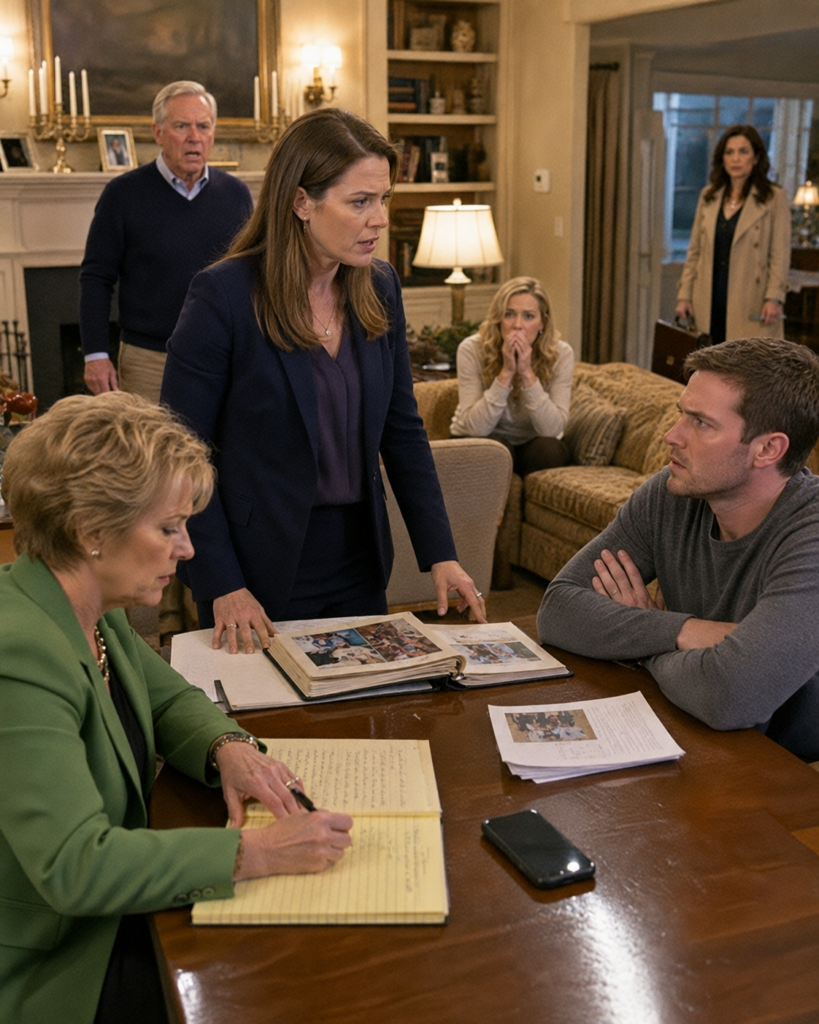
So on Tuesday evening, I walked into my parents’ living room carrying three old photo albums, a sealed property folder, and printed screenshots from the group chat.
Miles and Jessica were already on the sofa. Dad stood beside the fireplace. Mom sat at the head of the dining table with a yellow legal pad, as though I were an employee attending a disciplinary hearing.
“Sit down,” Dad ordered. “We need to discuss what you’ve done.”
I stayed standing.
Mom tapped her pen against the pad. “Your brother’s anniversary plans were based on everyone contributing. Buying a vacation property without consulting us was selfish.”
“With my bonus?” I asked.
Miles leaned forward. “This isn’t just about the money. It’s about family.”
I placed the first album on the table.
Then the second.
Then the third.
Finally, I laid the screenshots on top.
“You invited me here to explain myself,” I said. “So I brought the records.”
Mom’s expression tightened. “Records of what?”
I opened the first album to a page marked with a red tab.
Dad looked down at the photograph, read the date written beneath it, and went completely still.
Warm Memories
PART 2
The photograph showed my eleventh birthday table—paper plates, an untouched cake, and one empty chair where Dad had promised to sit. Beside it, I had placed the program from Miles’s debate tournament and
Mom’s handwritten note: “We’ll celebrate Quinn next weekend.”
We never did.
I turned the page. My high school award ceremony. My college graduation. The apartment deposit I paid when Miles lost his job. The hospital bill I covered for Dad. Every photograph had a receipt, date, or message beside it.
Miles shoved the album closed. “This is pathetic. You kept score?”
“No,” I said. “I kept proof.”
Dad’s face hardened. “Keep humiliating this family and you can forget about your inheritance.”
I slid the sealed property folder toward him.
“That threat might matter,” I said, “if there were anything left to inherit.”
Mom stopped breathing for a second.
Then the doorbell rang.
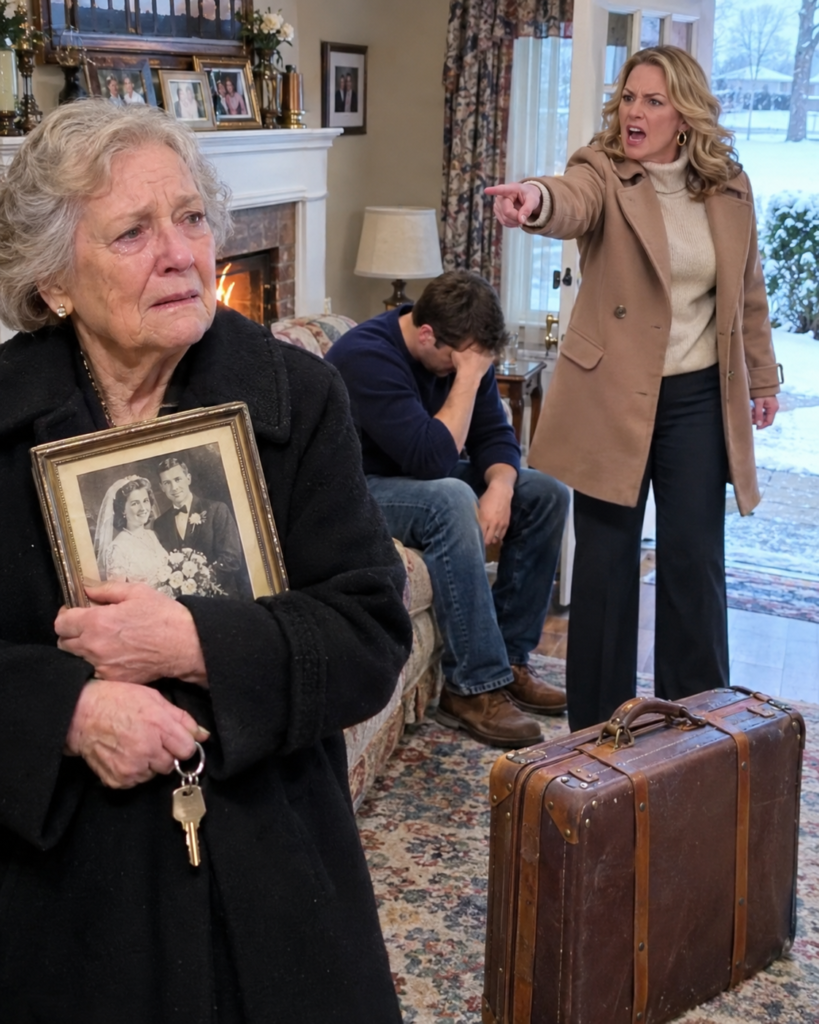
Through the glass, we could all see the woman holding a briefcase.
The woman standing on the porch was Evelyn Vance, my mother’s elder sister, accompanied by standard-issue legal counsel.
My mother’s face drained of color. “What is she doing here? Quinn, what have you done?”
“I didn’t do anything, Mom. Aunt Evelyn did,” I said quietly, leaning against the edge of the dining room table. “Because unlike you, she actually remembered my birthday. She called me the next morning to ask why I wasn’t at the family dinner. That’s when we started talking about Grandma’s trust.”
The atmosphere in the room shifted instantly. Dad’s defensive posture evaporated, replaced by a look of sharp, sudden panic. Miles looked back and forth between our parents, his confidence faltering for the first time.
Grandma had passed away three years prior. At the time, Mom and Dad had quietly informed Miles and me that Grandma’s estate was entirely depleted by her end-of-life care. They claimed there was nothing left to pass down. I had accepted it without question, even transferring $6,000 to my parents to help cover the “remainder of her funeral arrangements.”
Aunt Evelyn didn’t wait for anyone to open the door. She unlocked it herself with her copy of the key and walked into the foyer, her heels clicking crisply against the hardwood. Behind her came a tall man carrying a leather portfolio.
“Hello, Eleanor,” Evelyn said, addressing my mother without a drop of warmth. “Donald.”
“Evelyn,” Dad said, his voice straining for control. “This is a private family matter. Quinn is throwing a temper tantrum over a financial misunderstanding.”
“It isn’t a misunderstanding, Donald,” Evelyn replied sharply. She gestured to the lawyer, who placed a thick bound document on the table directly beside my photo albums. “It’s a formal audit. And an intention to file for an accounting of Mother’s estate.”
“Estate?” Miles scoffed, though his voice sounded thin. “Grandma didn’t have any money left.”
Evelyn turned her cool gaze onto my brother. “Your grandmother had a $450,000 liquid trust reserved explicitly for her grandchildren’s major life milestones, Miles. It was established in 1998. Your parents were named co-trustees with a fiduciary duty to distribute it equally between you and Quinn.”
Silence descended on the room, heavy and suffocating.
“Four years ago,” Evelyn continued, opening the document, “a withdrawal of $225,000 was made from that trust. The reason listed was ‘housing assistance and career establishment.’ It went directly into the down payment for your townhouse, Miles. And your wedding.”
I looked at Miles. His jaw was slack. He turned slowly toward Mom. “What?”
“We… we intended to replenish it,” Mom stammered, her hands trembling as she clutched her yellow legal pad. Her regal composure was entirely gone. “Miles needed the head start. He was launching his career. Quinn was already doing so well at her firm—”
“Quinn was paying off her own student loans while working sixty hours a week!” Evelyn snapped. “And when the second half of the trust was due to be released to Quinn on her thirtieth birthday, you told her the money didn’t exist. Instead, you’ve spent the last two years quietly siphoning interest out of the remaining funds to cover your own debts while demanding she pay for Miles’s life.”
The truth sat raw and exposed on the dining table.
It wasn’t just that they preferred Miles. It wasn’t just that they forgot my birthdays, skipped my ceremonies, or saw me as an endless source of passive income. They had actively stolen my inheritance to fund my brother’s life, keeping me in the dark while gaslighting me into believing I owed them my hard-earned bonuses.
“Is this true?” Jessica asked, stepping back from Miles as if he were suddenly a stranger. “Our down payment came from Quinn’s share of the trust?”
“We did what was best for the family!” Dad shouted, slamming his fist on the mantelpiece. “Miles had potential! Quinn was always self-sufficient. She didn’t need the hand-holding!”
“I didn’t need hand-holding because you left me to drown,” I said. My voice was entirely flat, devoid of the emotion I had carried for thirty-two years. “You didn’t just mismanage the trust, Dad. You committed fraud.”
The lawyer stepped forward. “Mr. and Mrs. Edwards, my client has authorized me to offer you a choice before we file formal civil charges and report the trust’s mismanagement to the state probate board.”
“A choice?” Mom whispered, tears finally leaking down her cheeks—not tears of guilt, but tears of exposure.
“Option one,” the lawyer stated smoothly. “Quinn files a formal claim for breach of fiduciary duty. The discovery process will freeze all associated accounts, including the title on Miles’s townhouse, which was purchased with misappropriated trust funds. The entire extended family and your professional networks will be made aware of the proceedings.”
Miles turned pale. “Wait, freeze my house? I just got promoted! If this gets out at the firm—”
“Option two,” I interrupted, taking the floor. “You execute a full release of the remaining trust assets to me immediately. In addition, Dad, you sign over the deed to the inheritance share you took from Grandma’s estate to offset the $225,000 you gave to Miles. And finally, you repay every single personal loan I’ve given you over the last decade. I have the receipts right here.”
I tapped the thick folder sitting on top of my childhood photos.
“We don’t have that kind of money liquid, Quinn!” Dad yelled, his face turning a dark, dangerous red. “You’re ruining your brother’s future! You’re destroying this family over a petty grudge because we missed a birthday cake!”
“No,” I said, looking him dead in the eye. “You destroyed this family the moment you decided one of your children was a person, and the other was a ledger.”
I picked up my keys from the table.
“You have until 5:00 PM on Friday to execute the transfer documents,” Evelyn added, gathering her papers. “If the signatures aren’t delivered to my attorney’s office by then, the lawsuit will be filed Monday morning. Along with a copy sent to the managing partners at Miles’s firm.”
Miles looked like he was going to vomit. “Mom, Dad, fix this! Do something!”
Mom looked at me, her eyes pleading with a desperate, manipulative grief. “Quinn… darling. Please. We’re your parents. We brought you into this world. How can you be so cold?”
I looked around the room one last time. At the expensive artwork purchased with money they claimed not to have. At the brother who had built his life on my stolen foundation. At the mother who couldn’t even spell my name with two Ns.
“I’m not cold, Mom,” I said gently. “I’m just closed.”
I turned and walked out of the house.
PART 3
The deadline passed on Friday at 4:15 PM.
My father signed every single document. To prevent a public lawsuit that would destroy Miles’s reputation at his firm and expose their financial misconduct, my parents sold their country club membership, liquidated their personal investments, and signed over the remaining trust assets along with a formal promissory note to repay the personal funds I had lent them over the years.
Miles’s anniversary party didn’t happen.
Instead, Jessica put a temporary freeze on their marriage, moving out to stay with her parents after realizing the extent of the deceit her lifestyle was built upon. Miles was forced to refinance his townhouse to pay back his portion of the misappropriated funds, taking on a massive debt burden that his recent promotion barely covered.
They tried to contact me, of course.
Over the first three weeks, my phone exploded with messages. First came the furious rants from my father, calling me ungrateful and venomous. Then came the frantic, desperate pleas from Miles, asking me to give him a break. Finally came the long, tearful voicemails from my mother, begging me to come home for Sunday dinners, promising that we could “start fresh” and properly celebrate my birthday.
I didn’t block them. I simply changed my settings so their calls went directly to voicemail and their texts went to an archived folder I never opened.
True independence isn’t about hiding; it’s about becoming entirely unbothered by the noise.
Two months later, autumn settled over Lake Michigan. The leaves turned deep shades of crimson and amber, framing the blue expanse of the water outside my floor-to-ceiling windows.
It was a Saturday morning. The air was crisp, carrying the clean, sharp smell of pine and lake salt.
I sat on my cedar deck in my blue chair, wrapped in a thick wool blanket, holding a warm mug of coffee. Beside me sat a small wooden box that had arrived in the mail two days earlier from Aunt Evelyn. It contained Grandma’s old hand-drawn recipe cards and a small silver locket she had left specifically for me, hidden away in Evelyn’s safety deposit box until the dust had settled.
Inside the locket was a tiny photograph of me at seven years old, sitting on Grandma’s porch, smiling naturally without a trace of performance or burden.
My phone chimed on the small side table.
I picked it up. It was a notification from my bank. The first monthly installment of my father’s court-ordered repayment plan had been automatically deposited into my account.
Right below that notification was a text message from Aunt Evelyn: “Heading up the coast now. I bought a fresh apple pie from the orchard down the road. Put the kettle on?”
I smiled—a real, quiet smile that reached my eyes.
“Kettle’s already on,” I texted back. “See you soon.”
I set the phone down, face up, on the table. The screen went dark, reflecting nothing but the wide, open sky above the lake.
For thirty-two years, I had thought I was fighting to earn a seat at a table where I was never truly wanted. It had taken a forgotten birthday, an untouched slice of cake, and a single moment of clarity to realize the truth: I didn’t need to beg for a place at their table when I had the power to build my own home.
I took a sip of my coffee, leaned back against the blue chair, and watched the sunrise paint the water in gold.
The room was made. The space was mine. And for the first time in my life, I was finally home.