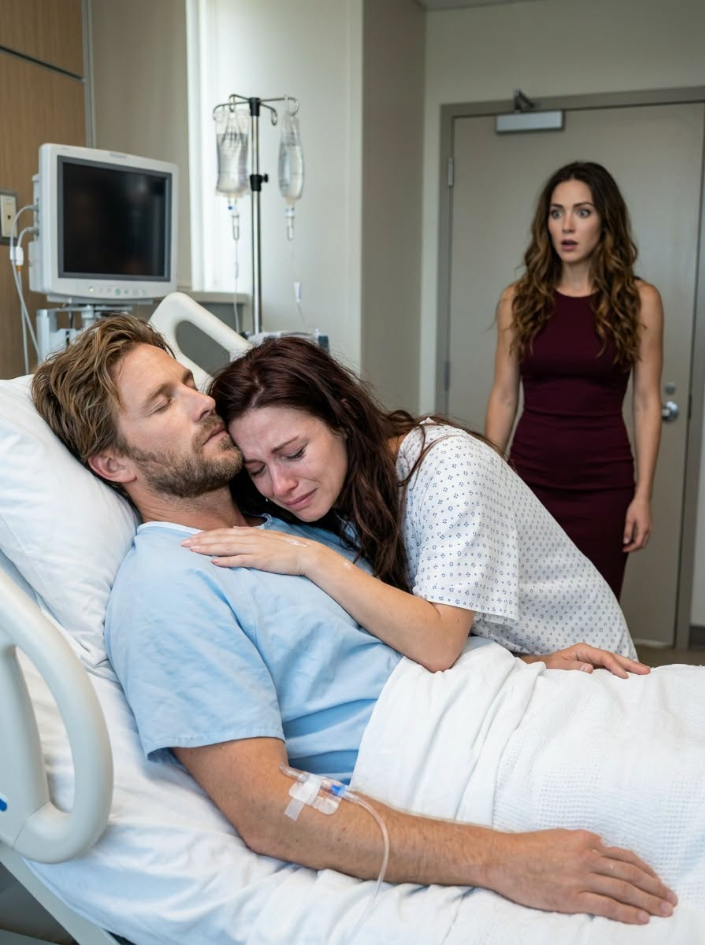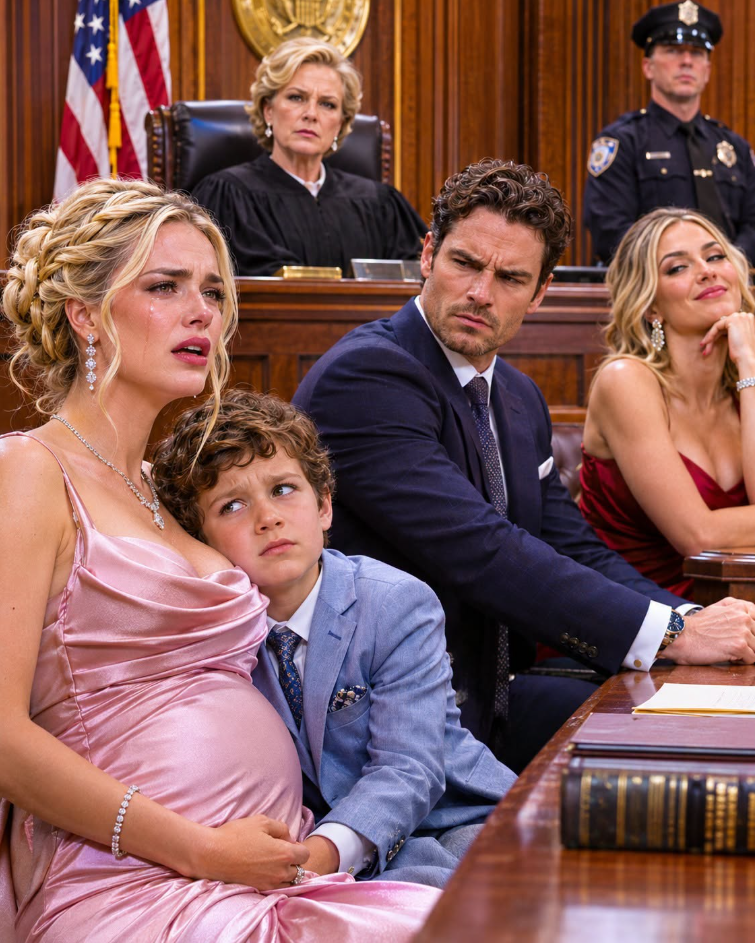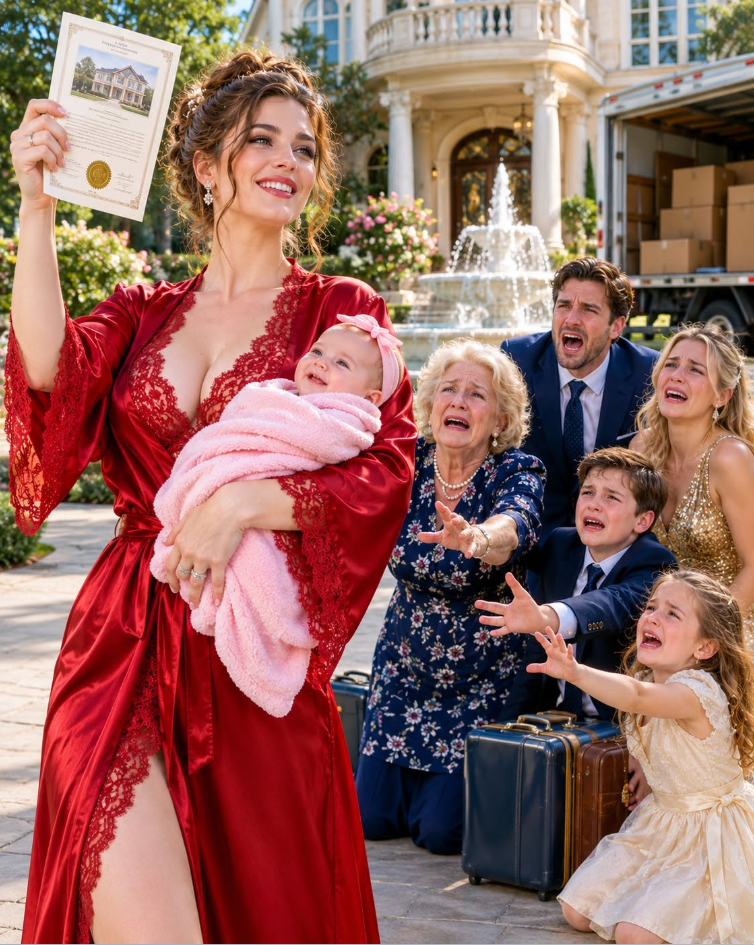
My daughter, Aria, was only four days old when I grasped that I was not settling into recovery—I was preparing for a siege.
“We’re arriving tomorrow morning,” Sylvia announced, skipping any greeting and never asking about the newborn granddaughter she still had not met.
“What do you mean, arriving?” I asked, my voice rough with exhaustion.
“Chloe’s lease expired today. She and the kids need stability, and you have three empty bedrooms sitting right there,” she snapped. “It’s settled. Nobody tells me what I can or can’t do with my own grandchild. If you don’t like it, you can get out!”
A chill of dread settled in my stomach. She had not made a request; she had launched an invasion. She was counting on my postpartum exhaustion to make the takeover of my home effortless.
I forced myself to speak in the same steady, unyielding voice I used in corporate boardrooms. “Sylvia, absolutely no one is moving into this house.”
“Stop being dramatic, Elara,” she sighed with practiced condescension. “You just had major surgery. You’re unwell, and you clearly need us to take over.”
I ended the call without another word. My hands were shaking—not from fear, but from the cold rush of adrenaline that arrived with the certainty that the threat was real.
I immediately called my attorney, Vivian Sterling, a formidable litigator with a razor-sharp mind. After I explained everything in sixty seconds, she answered without hesitation.
“Change the locks. Tonight,” Vivian commanded. “Start a time-stamped log and record every interaction. We’re in a one-party consent state.” She paused, lowering her voice. “And Elara? Don’t argue at the door. Let them make the first mistake on camera.”
By 11:30 PM, an emergency locksmith was already drilling out the front deadbolt. As I watched brass shavings scatter across the porch, a sudden memory made my blood run cold: two weeks earlier, I had lent Sylvia my spare keychain for my old apartment, and she had never returned it. Had she made a copy of a key from my purse while I was in the hospital?
“Change every single lock on every door,” I instructed the locksmith, paying him twice his fee.
By 1:00 AM, exhaustion had settled deep into my bones. I carefully placed Aria in her bassinet before collapsing onto the bed. Just as my eyelids began to close, two headlights slowly swept across my bedroom wall.
Outside, at the far end of my peaceful cul-de-sac, the deep rumble of a heavy engine abruptly stopped, leaving complete silence.
My eyes flew open. They had not even waited for morning.
Sitting upright despite the pain from my stitches, I reached for my phone—not to ask for help, and certainly not to beg. Remember what Grandma Helena always told me? Only ink is loyal. Tomorrow morning, when they came charging into my house with their suitcases, behaving as though they owned the place, their smug smiles would disappear—the very moment they saw who was waiting for them inside…
I dialed the non-emergency line first, then, when the dispatcher heard the details of the earlier call and the vehicle now idling at the end of my drive, she transferred me to the on-duty sergeant. I kept my voice low and precise, the same tone I used when presenting risk matrices to executives. I described the unsolicited declaration of occupancy, the possible duplicated keys, the newborn, the recent surgery, and the fact that I had already changed every lock. I requested a welfare check and documentation of the vehicle’s presence. Within twenty minutes, two patrol cars arrived without lights or sirens. One officer stayed with the idling SUV while the other came to my door. I let him in, showed him the time-stamped log I had already started on my phone, played the recording of Sylvia’s call, and explained that my attorney had advised me to remain silent at the threshold and let any further attempt be captured on the security cameras the locksmith had also installed at my request.
The officer—a calm man in his forties named Ruiz—listened, then radioed his partner. The SUV’s driver, my sister Chloe, rolled down the window long enough to claim they were “just making sure Elara was all right.” They left the cul-de-sac at 1:47 AM. Officer Ruiz offered to remain until morning. I accepted. Vivian arrived at 2:15 AM after I texted her the developments; she had already drafted a temporary restraining order petition and brought a notary she kept on retainer for after-hours emergencies. By 3:00 AM the three of us—Vivian, Officer Ruiz, and a second officer named Patel who relieved the first patrol—were settled in the living room with the lights low. Aria slept through it all. I did not.
Dawn came gray and cold. At 7:12 AM the same dark SUV returned, this time followed by a second vehicle—Sylvia’s sedan. I watched from the kitchen window as doors opened and suitcases were hauled onto the lawn. Chloe’s two children, a boy of seven and a girl of five, climbed out still in pajamas. Sylvia strode up the walk with the posture of someone who had already won. She carried a large tote that I recognized as the one she used for “temporary stays” that never ended. Chloe trailed her, phone raised as if she intended to livestream the reunion.
Vivian touched my arm. “Stay here. Let them try the old key. The cameras are rolling. The officers will step into the foyer the moment the door is opened or the moment any attempt is made to force entry. You do not speak until I signal.”
I nodded. My incision burned with every breath, but the adrenaline had settled into a clean, metallic clarity.
Sylvia reached the porch first. She fished a key from her pocket—exactly as I had feared—and slid it into the new deadbolt. It did not turn. She tried again, harder. The second vehicle’s occupants, Chloe’s husband Marcus and an aunt I barely knew, joined them. Suitcases were stacked against the railing. Sylvia’s voice carried through the door, bright and proprietary.
“Elara, open up. We brought coffee and the kids are freezing.”
No answer. She rattled the knob. Then she raised her voice.
“This is ridiculous. Chloe’s lease is up. The children need a place. You can’t just lock your own mother out of the house you bought with family money.”
I felt Vivian’s hand tighten once on my wrist—steady, not restraining. Officer Patel moved silently to the side of the foyer. Officer Ruiz stayed near the interior door that led to the hall. Both had their body cameras activated.
Sylvia knocked hard enough to rattle the glass. “Elara! I know you’re in there. Don’t make me call the police on you for neglecting my grandchild.”
Chloe added, loud enough for any neighbors who might be listening, “She’s only four days postpartum. She needs help. We’re family.”
The old key failed a third time. Sylvia stepped back, studied the lock, and then, with a sharp motion, ordered Marcus to try the side door. He walked around the house. Thirty seconds later we heard the metallic scrape of another unsuccessful key. Vivian’s phone was already open to the live feed from the exterior cameras; she angled the screen so I could see Marcus testing the kitchen door, then the basement bulkhead.
Sylvia returned to the front. Her tone shifted from cheerful to clipped.
“Last chance, Elara. Open this door or we’re coming in through a window. You are not well enough to care for that baby alone.”
That was the line. Vivian nodded to the officers. Officer Patel opened the interior door just as Sylvia, frustrated, shoved her shoulder against the front door. The deadbolt held, but the motion was unmistakable. Patel stepped into the foyer and opened the front door from the inside.
Sylvia’s face was already arranged in the expression she used when she expected compliance—chin lifted, mouth ready to issue the next order. The expression lasted less than a second. She saw the uniform first, then the second uniform, then Vivian standing just behind them in a dark suit with a manila folder under her arm. The tote bag slipped from Sylvia’s fingers and hit the porch with a soft thud.
Chloe, halfway up the steps with a suitcase, stopped so abruptly that Marcus nearly walked into her. The children’s chatter died. For three full seconds no one on the porch spoke.
Officer Ruiz’s voice was even. “Good morning. This is private property. The owner has declined entry. Please step back from the doorway.”
Sylvia recovered first. “This is my daughter’s house. I’m her mother. She just had a baby. We’re here to help.”
“The owner has already contacted counsel and law enforcement regarding unwanted entry,” Vivian said. She did not raise her voice. “Any further attempt to enter or remain will be documented as trespass. I have a petition for a temporary restraining order that will be filed at the courthouse when it opens in forty minutes. It names you, Sylvia Vance, Chloe Hart, and Marcus Hart. It includes the recording of last night’s call and the video of this morning’s attempts to use unauthorized keys.”
Chloe’s face flushed. “You can’t do that. We’re family. The baby—”
“The baby is four days old and recovering from a C-section,” Vivian continued. “Her mother is the sole legal custodian. No court has granted any of you visitation or occupancy rights. You will remove yourselves and your belongings from the property now.”
Marcus, who had circled back, spoke for the first time. “This is insane. Elara, tell them we can talk.”
I stayed where Vivian had positioned me, just inside the kitchen arch, Aria still asleep in the bassinet I had wheeled into the room. I did not step forward. I did not speak. The silence itself felt like the first complete sentence I had been allowed to finish in years.
Sylvia’s eyes found me anyway. The condescension was gone; what replaced it was something colder and more calculating. “You called the police on your own mother. On the day after you brought your daughter home. Do you have any idea what this looks like?”
Officer Patel answered before I could. “It looks like a homeowner who changed her locks after receiving an unsolicited declaration of occupancy and who requested a documented welfare check when a vehicle arrived unannounced at 1:00 AM. That is all it looks like at present.”
The aunt—whose name I still could not recall—began to argue about “grandmother’s rights.” Vivian produced a single printed page and held it so Sylvia could see the caption: Emergency Petition for Temporary Restraining Order and Exclusive Possession. The list of exhibits already included the call recording, the locksmith invoice, the camera stills of the failed key attempts, and a signed statement from me describing the hospital-key incident.
Sylvia stared at the page. For the first time since I was a child, she looked uncertain. Then the uncertainty hardened into the expression she wore when a plan had failed and she needed a new one.
“We’ll be back with our own lawyer,” she said.
“You are free to do so,” Vivian replied. “Until a judge says otherwise, you will not return to this property. The officers will remain until you and your vehicles have left the cul-de-sac. Any subsequent approach will be treated as a violation of the order once it is signed, which I expect will be before noon.”
Chloe’s daughter tugged at her sleeve and asked, in a small voice, why they couldn’t go inside. Chloe did not answer. She turned, lifted the smallest suitcase, and walked back toward the SUV. Marcus followed. The aunt lingered long enough to mutter something about ungrateful daughters, then left as well.
Sylvia was the last. She looked past the officers, past Vivian, and directly at me. Her voice dropped so that only those nearest the door could hear.
“You think ink will protect you. Your grandmother thought the same thing. Look where that got her.”
I felt the old, familiar pull—to explain, to soften, to offer one more chance so the scene would end without permanent rupture. The pull lasted the length of a single heartbeat. Then I remembered the precise weight of Aria against my chest at 3:00 AM, the way her breathing had stayed even while three adults sat in the dark keeping watch. I remembered the locksmith’s drill and the brass shavings on the porch. I remembered Vivian’s instruction: let them make the first mistake on camera.
I met Sylvia’s eyes and said nothing at all.
She turned and walked to her sedan. The two vehicles reversed out of the cul-de-sac at 7:41 AM. Officer Ruiz confirmed their departure on the radio. Vivian closed the front door, engaged the new deadbolt, and turned to me.
“That was the easy part,” she said. “Now we file.”
The rest of the morning moved with the strange, suspended quality of a day that has already spent its crisis before most people have finished coffee. Vivian left for the courthouse at 8:15. Officer Patel remained until a private security officer I had hired through Vivian’s firm arrived to take over exterior patrol. I fed Aria, changed her, and then sat at the kitchen table with the time-stamped log open on my laptop. I added the exact minutes of the porch confrontation, the names of the officers, the words Sylvia had used about the window, and the final sentence she had aimed at me. My hands were steady.
At 11:52 AM Vivian called. The temporary order had been signed. Exclusive possession of The Hawthorne Residence was granted to me. Sylvia, Chloe, and Marcus were prohibited from coming within one hundred yards of the property or of me and Aria for fourteen days, at which point a full hearing would be held. Copies would be served that afternoon.
I thanked her, ended the call, and sat for a long moment with the phone in my lap. The house was quiet again. The scent of fresh paint had faded overnight; now it smelled only of the oak floors and the faint, clean scent of the baby wash I had used that morning. Aria made a small sound in the bassinet. I lifted her, settled her against the uninjured side of my torso, and walked slowly through the rooms I had bought with the money my grandmother had left specifically so that I would never have to ask anyone for shelter.
In the largest of the empty bedrooms I stopped. Sunlight came through the tall windows and lay in clean rectangles on the floor. I had not yet decided what the room would become. For the first time since the phone call at 9:14 the night before, the future of the space felt like a decision that belonged only to me.
The fourteen days passed. Sylvia’s attorney filed a response that claimed I was emotionally unstable and that the child’s best interests required maternal-family support. Vivian answered with the recordings, the medical notes confirming an uncomplicated though surgical delivery, the security footage, and a letter from my obstetrician stating that I was physically capable of caring for the infant and that additional household occupants had not been medically indicated. At the hearing the judge listened, reviewed the exhibits, and extended the order for six months with the possibility of renewal. Visitation, if any, would be supervised and scheduled through counsel. No occupancy rights were granted.
Chloe did not attend the hearing. Marcus sent a brief email through their lawyer stating that they had found a new rental and would not contest the order. Sylvia attended. She sat straight-backed and silent while Vivian spoke. When the judge asked whether she had anything to add, she said only that she had been trying to help. The judge thanked her and signed the order.
I walked out of the courthouse into thin November sunlight. Vivian offered to drive me home. I accepted. In the car she was quiet for several blocks, then said, “You did the hardest part on the porch. Most people speak. You didn’t. That silence is what made the record clean.”
I nodded. The incision no longer burned with every step; the pain had become a dull, manageable ache. At the house the security officer nodded from the end of the drive and continued his circuit. Inside, the bassinet was empty because the part-time newborn nurse Vivian had helped me hire was walking Aria in the back garden, both of them wrapped against the cold. I stood at the kitchen window and watched them. The nurse was speaking softly; Aria’s head turned toward the sound.
I opened the laptop and added one final entry to the log: date, time, outcome of the hearing, and the single sentence Sylvia had spoken in the courtroom. Then I closed the document and saved it to three separate locations. Ink, as my grandmother had promised, remained loyal.
That evening I moved the bassinet into the sunlit bedroom that had been empty. I placed a chair beside it. When Aria woke for her late feeding I sat with her and watched the last of the light leave the windows. The house was large and still mostly unfurnished, but the quiet no longer felt like the pause before an invasion. It felt like the beginning of the recovery I had purchased the house to protect.
Outside, the cul-de-sac remained empty. No headlights swept the walls. No engine idled at the far end of the drive. I rested my cheek against Aria’s head and let the silence settle, unbroken, around both of us.