Chapter 1: The Facade of Flour and Lace
The scent of rising yeast and warm vanilla is a liar. It promises comfort, safety, and a predictable, quiet life. For twenty years, I wrapped myself in that lie. I was Roxanne, the perpetually smiling, flour-dusted owner of The Daily Crumb, a respectable little bakery tucked into the sleepy, affluent suburbs of Connecticut. It was a good life, a meticulously constructed terrarium built to keep my daughter, Mia, entirely bathed in the light, far away from the shadows that had birthed her. Mia was my masterpiece. She was radiant, kind-hearted, and currently eight months pregnant, glowing with the kind of naive joy only achievable by someone who had never known true terror. She had married into a world I had only ever read about in glossy magazines: the Montgomery family of Newport, Rhode Island. They possessed the kind of centuries-old, ostentatious wealth that didn’t just buy yachts; it bought senators, silence, and absolute impunity. Mia was completely, tragically blinded by her husband Nathaniel’s charm. He had the jawline of a catalog model and the practiced, sweeping romantic gestures of a man who had been trained since birth to perform perfection.
I hated him. I hated his mother, Cordelia, even more. But a mother smiles when her daughter is happy, even if the smile cracks her face.
The reality of the Montgomerys’ disdain for us was never spoken aloud; it was administered in micro-doses of venom. We were currently enduring a suffocatingly formal baby shower hosted at the sprawling Montgomery ancestral estate. The air inside the grand conservatory tasted of expensive orchids and suffocating entitlement. Women dripping in inherited diamonds politely ignored me, while I stood in a corner, smoothing down my modest beige dress, feeling like a muddy dog that had wandered into a cathedral.
Cordelia, draped in a sheer silk shawl that likely cost more than my bakery’s industrial ovens, glided toward me. She carried two crystal flutes of vintage champagne. She handed me one with a smile that didn’t reach her pale, calculating eyes.
“It is truly a miracle, isn’t it, Roxanne?” Cordelia murmured, her gaze dropping deliberately to my hands. Despite years of lotion, the knuckles remained permanently thickened, the skin faintly scarred—souvenirs from a life she couldn’t possibly fathom. “How a woman with such… obscure origins managed to buy her daughter a seat at a table she could never naturally belong to. Let us hope Mia’s wealth is enough to compensate for her lack of pedigree.”
My jaw tightened. I looked down at my champagne. The stipulations of Mia’s massive trust fund were no secret to Cordelia. It was a sum of money I had secured long ago, violently and decisively, routing it through an impenetrable labyrinth of shell corporations to ensure my daughter would never know the taste of poverty. Cordelia thought it was lottery winnings or a lucky tech investment.
I swallowed the venom. I gripped the delicate stem of my teacup—which I had swapped the champagne for moments prior—so tightly that a microscopic hairline fracture spider-webbed up the porcelain. Smile, Roxanne. Be the baker.
“Mia’s heart is her pedigree, Cordelia,” I replied, my voice steady, warm, and entirely hollow. “And her trust fund is ironclad. It exists solely for her and the baby. I just want them secure.”
Cordelia’s eyes flashed with something sharp and hungry before the aristocratic mask slammed back into place. “Of course. Security is everything.”
I left the estate early, claiming a headache, but the unease in my gut writhed like a coiled snake. That evening, the storm broke.
I was in my kitchen, wiping down the counters, when my cell phone vibrated. It was Mia.
“Mom?” she whispered. Her voice was trembling, stripped of all its usual bright melody. She sounded terrified.
“Mia, sweetie, what’s wrong? Are you hurt?” I dropped the dishcloth, my heart instantly accelerating.
“Mom, I’m in Nathaniel’s study. He’s at the club. I was looking for a pen and… Mom, I found a hidden folder behind the bookshelf. It’s full of foreclosure notices. Final demands. And there are these strange, massive offshore debts. Millions of dollars to names I can’t even pronounce. He’s… he’s broke, Mom. The Montgomerys are completely bankrupt. He’s been transferring—”
A heavy, oak door creaked open in the background of the call.
“Mia, darling?” Nathaniel’s smooth, perfectly modulated voice echoed through the speaker. “What are you doing in the dark?”
Mia gasped. “Mom, I have to—”
The line went dead.
Chapter 2: The Death of the Baker
The human brain is a fragile instrument. When subjected to catastrophic trauma, it doesn’t process reality in a linear fashion; it shatters it into a mosaic of unbearable sensory details.
For me, the shatter occurred at exactly 2:14 AM. The phone rang, tearing through the quiet darkness of my bedroom. The caller ID was a local Rhode Island precinct.
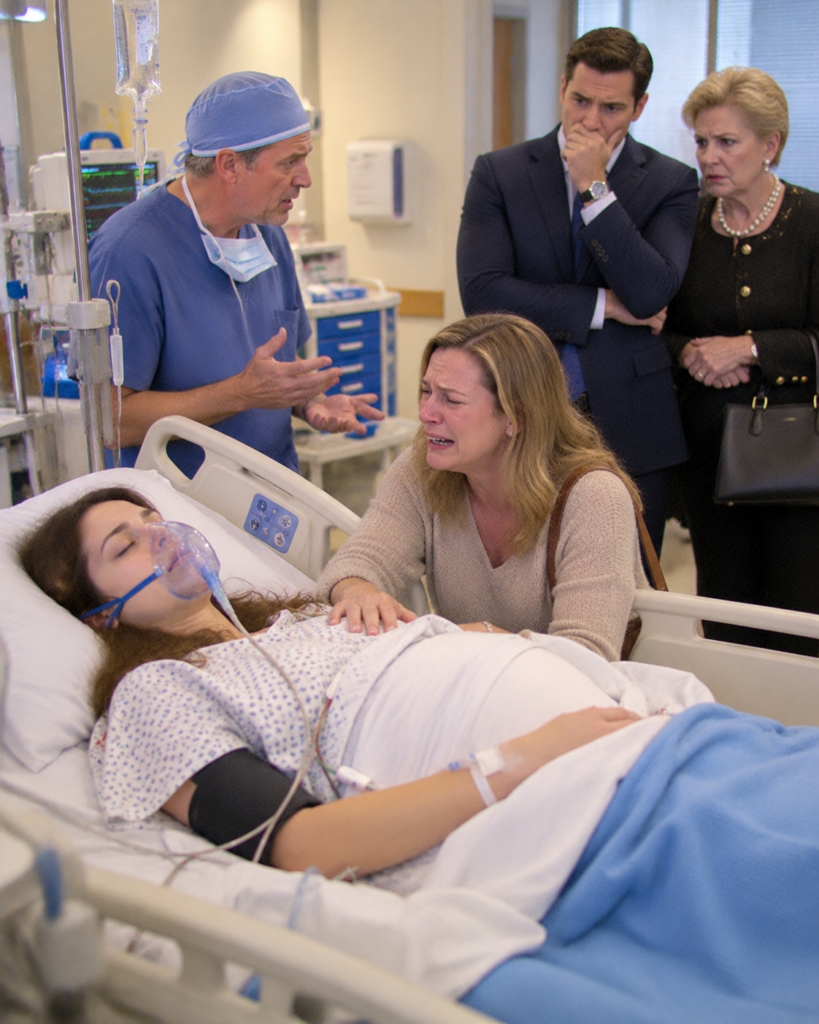
The next three hours were a blur of blinding, fluorescent hospital lights, the sterile reek of bleach, and the rhythmic, mocking hiss-click of a mechanical ventilator. I stood in a freezing hallway, my clothes soaked from the torrential rain outside, listening to a trauma surgeon with exhausted, hollow eyes dismantle my universe.
“Her vehicle went off the coastal road, plunged to the bottom of the ravine,” the surgeon said, his voice a low monotone of practiced grief. “She suffered massive cranial trauma on impact. I am so profoundly sorry, ma’am. She is brain dead.”
The floor seemed to tilt. I couldn’t breathe. Mia. My light. My reason for existing.
“The baby?” I choked out, the words tasting like ash.
“We are keeping your daughter on full life support,” the surgeon explained gently. “The fetus is in distress but viable. We need to buy the baby a few more weeks to ensure lung development before we perform the emergency cesarean. But as for Mia… she is gone.”
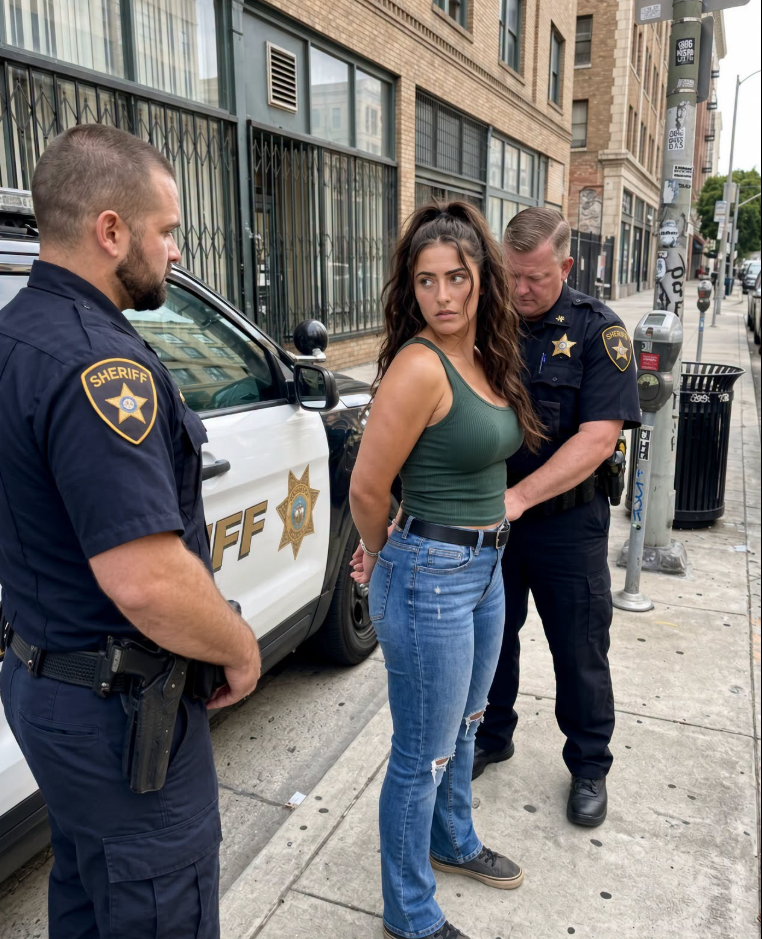
He paused, glancing over his shoulder before leaning in close. “The police are currently looking for her husband. Ma’am… the preliminary extraction report noted something. The brake lines on her SUV weren’t ruptured by the crash. They were cleanly severed. They were cut.”
My vision went completely black. It wasn’t a metaphor. The blood rushed from my head, leaving a ringing void in my ears.
The brakes were cut.
I didn’t scream. I didn’t collapse. A suburban mother, a woman who baked sourdough and gossiped at farmers’ markets, would have fallen to her knees and wailed to the heavens. But in that blinding, suffocating darkness, the baker died.
The entity that replaced her was something cold, ancient, and deeply familiar. It was the ice that used to flood my veins twenty years ago on the freezing, blood-stained streets of Chicago.
I stepped back into the shadows of the waiting room as the elevator dinged. Nathaniel and Cordelia burst through the doors. They were a masterpiece of theatrical tragedy. Nathaniel’s hair was artfully disheveled, and he was dry-heaving into his hands, staggering toward the nurses’ station. Cordelia trailed behind him, clutching her pearls, weeping elegantly without smudging her mascara. The staff immediately swarmed them, offering water and sympathetic murmurs.
I moved silently down the corridor, positioning myself behind a heavy privacy partition, unseen.
Nathaniel played the devastated husband brilliantly for a passing orderly. But the very second the orderly turned the corner, the grief evaporated. Nathaniel’s posture snapped straight. He dragged a hand down his face, wiping away the fake tears, his expression hardening into cold stone.
Cordelia stepped close to him, checking the hallway to ensure they were alone. Her face was completely void of sorrow. It was hungry.
“Pull yourself together,” Cordelia whispered harshly, gripping his arm. “The lawyers confirmed it this morning. With her incapacitated, legally dead but biologically sustaining the child, and the baby ultimately falling under your sole guardianship, the trust fund bypasses probate. It transfers entirely to the Montgomery estate’s control.”
Nathaniel let out a long, shuddering breath, a sick smile tugging at the corner of his mouth. “We are saved, Mother. The cartel gets their money. We keep the house.”
“It was a perfect accident,” Cordelia hissed, smoothing his lapel. “Now, go look at your dead wife and cry.”
I turned away from the partition. I didn’t feel my feet touching the linoleum. I didn’t feel the freezing rain pounding against my face as I walked out of the hospital doors. I drove home in a mechanical trance, the windshield wipers thrashing violently against the storm.
When I reached my house, I didn’t go inside. I walked to the very back of my garden, where the soil was thick and heavy. I bypassed the shed, went straight to the tool rack on the side, and took down a heavy, iron spade.
The mud sucked at my boots as I began to dig. Rain plastered my hair to my face. With every thrust of the shovel, another piece of my humanity sloughed off into the dirt. I dug until the metal struck something hard with a dull, resonant clank.
I fell to my knees in the muck, my bleeding, calloused fingers scraping away the wet earth to reveal a rusted steel box. It was the box I swore to God, upon Mia’s birth, that I would never open again. I had made a pact with the universe: my soul in exchange for her safety.
The universe had broken the deal.
I stared at the heavy iron latch. I clicked it open.
Chapter 3: The Ghost in the Machine
The interior of the steel box smelled of ozone, gun oil, and ghosts. It was perfectly sealed, a time capsule of violence. Inside rested three passports from countries that no longer existed under those names, a stack of pristine bearer bonds worth more than the Montgomerys’ entire hollowed-out estate, an encrypted, heavy-duty satellite phone, and a beautifully maintained, integrally suppressed compact 9mm firearm.
Beneath it all lay a weathered, black leather ledger. The ink inside was faded, but the names were seared into my brain. It contained the contact protocols for the most dangerous fixers, ghosts, and hackers operating in the American criminal underworld.
I took a hot shower, watching the mud and the last remnants of Roxanne the baker swirl down the drain. I dried off, dressed in dark slacks and a heavy coat, and picked up the satellite phone. I punched in a sequence of numbers I hadn’t used in two decades. It rang twice.
“The wind is blowing cold in Chicago,” a synthesized voice crackled through the receiver. It was a challenge phrase.
“But the fire still burns in the slaughterhouse,” I replied, my voice steady, stripped of all inflection.
A heavy pause followed. “Queen?” the voice asked, the synthesis dropping to reveal a gravelly, stunned whisper. “You’re supposed to be dead.”
“I was. I need a meeting. Two hours. The neon diner off Route 9. Come alone, Silas.”
At 4:00 AM, the diner was a desolate island of humming fluorescent lights in a sea of rain-slicked asphalt. I sat in the deepest back booth, nursing a cup of black coffee that tasted like battery acid. The bell above the door chimed.
Silas slid into the booth across from me. He looked older, his face mapped with new scars, his eyes twitching with the paranoia that kept men in his profession alive. He looked at me, really looked at me, and whatever he saw made him lean back against the cheap vinyl.
“Holy hell,” Silas breathed. “It really is you.”
I didn’t offer a greeting. I slid a stack of pristine, twenty-year-old bearer bonds across the sticky table. Silas’s eyes widened as he calculated the zeros.
“I don’t need a hitman, Silas,” I said, my tone absolute zero. “I need a ghost-hacker. I need schematics of the Montgomery estate in Newport. I need a bypass sequence for their security grid. And I need enough military-grade thermite to melt solid stone.”
Silas didn’t touch the bonds yet. “Thermite? You’re not looking to send a message, Roxanne. You’re looking to erase something from the map.”
“They took my daughter’s future,” I stated, staring right through him. “I am taking their past, their legacy, and their sanctuary. What did you find on Nathaniel Montgomery’s financials?”
Silas pulled a slim tablet from his coat, tapping the screen before pushing it toward me. “The kid is a degenerate. He was playing high-stakes shadow markets. He lost. But he didn’t lose to banks, Roxanne. He borrowed eight million dollars from the Volkov syndicate—an Eastern European cartel that likes to skin people alive when they default. The debt was due two days ago. He told them he had a trust fund unlocking this week to cover it.”
Mia’s blood money.
“He killed her to pay his markers,” I whispered, the words vibrating with a lethal resonance.
“Yeah. Looks like it,” Silas said softly. He finally put his hand over the bonds. “When do you want to move?”
“Saturday night,” I replied, standing up from the booth.
Saturday was the night the Montgomerys, in a staggering display of premature arrogance and sociopathic narcissism, were hosting a lavish “memorial gala” at their estate. The invitations had been sent out just forty-eight hours after Mia was declared brain dead. They claimed it was to “honor her memory and raise funds for trauma victims,” but I knew exactly what it was. It was a grand performance to garner high-society sympathy and solidify their victimhood before Nathaniel inherited the fortune. They were already spending the anticipated trust fund, throwing a party with the money they believed they had successfully murdered my daughter for.
By Saturday afternoon, I was a ghost inside their walls.
Silas had bypassed their antiquated, over-priced security system with laughable ease. Disguised in the uniform of the high-end catering company they had hired, I moved silently through the sprawling, unoccupied wings of the ancestral home. The Montgomery estate was a monument to theft and exploitation, built by robber barons and maintained by arrogance.
It was a labyrinth of mahogany, imported marble, and historic oil paintings. I bypassed the grand halls where caterers were currently arranging towers of caviar and champagne. I descended into the damp, cavernous depths of the ancestral wine cellar, a maze of stone arches dating back two hundred years.
Moving with the precise, muscle-memory efficiency of my past life, I knelt on the cold stone. I pulled a brick of gray putty from my catering bag—military-grade thermite, rigged with remote detonators. I wedged it deep beneath the primary load-bearing arches of the east and west wings. I moved from pillar to pillar, arming six separate charges.
As I pressed the final switch, a silent red light blinked to life in the darkness.
Upstairs, I could faintly hear the string quartet beginning to tune their instruments. The elites were arriving. Oblivious to the fact that they were dancing on top of a bomb, Cordelia was likely upstairs, practicing her tragic, brave widow-mother face in the mirror.
I packed my bag, slipped out through the service entrance, and retreated to the shadows of the tree line overlooking the estate. I pulled the encrypted phone and a remote detonator from my coat.
Let the gala begin.
Chapter 4: The Arithmetic of Vengeance
The Montgomery memorial gala was a masterclass in grotesque opulence. From my vantage point in the darkened tree line, peering through high-powered binoculars, the estate looked like a glowing jewel box. Hundreds of Newport’s elite, dripping in dark silks and somber diamonds, mingled under crystal chandeliers.
At exactly 10:00 PM, the string quartet faded into a respectful silence. Through the massive, open French doors of the grand ballroom, I watched Nathaniel step up to a gilded microphone. He looked incredibly handsome, a perfectly tailored suit hugging his frame, his face a mask of practiced, noble sorrow. Cordelia stood just behind him, a black lace veil barely concealing the triumphant gleam in her eyes.
“My friends,” Nathaniel’s voice drifted out over the manicured lawns, thick with fake emotion. “We are gathered here to honor an angel taken too soon. My beloved Mia…”
I dropped the binoculars. I pulled the satellite phone from my pocket. I had a live feed established by Silas, tapping directly into Nathaniel’s offshore and domestic financial networks.
“Silas,” I spoke into the receiver. “Do it.”
“Executing transfer,” Silas’s voice cracked back. “Bypassing the trust protocols. Rerouting the Montgomerys’ entire liquid assets, leveraging their hidden equity, and dumping every single cent directly into the Volkov cartel’s primary Cayman accounts. Writing the memo as: Debt settled in full. Courtesy of the Baker.“
“Confirm zero balance,” I ordered.
“Accounts draining… domestic empty. Offshore bleeding out… three, two, one. They have thirty-four cents left to their name, Roxanne. They are financially erased.”
I looked down at the heavy, matte-black remote detonator in my other hand. The safety cover was already flipped up.
“Now,” I whispered to the night, “for the physical erasure.”
I pressed the button.
The implosion was not a Hollywood fireball. Thermite does not blast outward; it consumes inward with a heat so absolute, so blindingly white-hot, that it turns solid stone to magma and vaporizes steel in seconds.
The ground beneath my feet violently shuddered.
Inside the ballroom, Nathaniel had just raised his glass for a toast. Suddenly, a sickening, deep-bass CRACK echoed through the very foundation of the earth. The sound was deafening, the horrific groan of centuries-old architecture giving way.
The grand ballroom didn’t collapse, but the entirety of the sprawling west wing—housing the library, the antique galleries, and centuries of Montgomery history—simply folded in on itself in a silent flash of blinding white light. A massive plume of pulverized brick and ash exploded into the night sky.
The string quartet stopped. For one suspended second, there was total silence. Then, absolute pandemonium.
Screams ripped through the air as the elite guests abandoned their champagne and scrambled over each other like rats fleeing a sinking ship. The fire alarms began to shriek, a piercing, mechanical wail. The lights flickered and died, leaving the estate illuminated only by the emergency strobes and the dull, angry orange glow of secondary fires starting in the ruined wing.
Through the chaos, I saw Nathaniel frantically pull out his phone, his face bathed in its pale light. I knew exactly what he was seeing. Alerts. Dozens of them. Every bank, every portfolio, every hidden account plummeting to zero in real-time.
He looked up, his face a mask of absolute, uncomprehending terror. He grabbed Cordelia by the arm, roughly dragging her away from the stampede and shoving their way toward the heavy mahogany doors of his private study at the far end of the hall. They were seeking sanctuary. They were seeking the very place they had plotted my daughter’s murder.
I moved from the trees, slipping through the panicked crowd like a shadow. My catering uniform allowed me to blend into the hysteria. I reached the heavy oak doors of the study just as Nathaniel slammed them shut from the inside.
I kicked the door open and stepped inside.
Nathaniel was pacing frantically, screaming into his cell phone. “What do you mean it’s gone?! All of it? The trust hasn’t cleared yet, you idiots, how can you—”
Cordelia was slumped in a leather wingback chair, hyperventilating, staring blankly at the dust filtering down from the ceiling.
I closed the door behind me and slid the deadbolt home.
“Cancel the call, Nathaniel,” I said. My voice wasn’t loud, but it cut through the noise of the alarms like a straight razor.
He spun around, dropping the phone. When he saw me, the baker’s daughter’s mother, standing there in a dust-covered uniform, a black gun hanging loosely at my side, his brain simply couldn’t process the image.
“Roxanne?” he stammered, backing away until his spine hit his mahogany desk. “What… what are you doing? Are you insane? The house is collapsing!”
Cordelia shrieked, finally registering the weapon. “You! You low-class psychotic bitch! What have you done?!”
I stepped fully into the room, the shadows clinging to me. I raised the pistol, leveling it perfectly with the bridge of Nathaniel’s nose.
“You thought you married a baker’s daughter,” I said, my voice eerily calm, devoid of all human warmth. “You ran your little background checks. You saw suburban Connecticut. You saw flour and yeast. You didn’t check who bought the bakery twenty years ago.”
Nathaniel’s eyes darted wildly, his breathing shallow and rapid. “I… I don’t understand…”
“Your debts are paid, Nathaniel,” I said, taking a slow step forward. “I drained your accounts. Every hidden offshore penny. I wired it to the Volkovs. You don’t owe the cartel anymore.”
His face drained of all color. He looked like a corpse. “No… no, you couldn’t have…”
“Your money is gone,” I continued, my voice a rhythmic, hypnotic chant of doom. “Your ancestral home is ash. It’s currently burning to the foundation. You killed my daughter for a trust fund that no longer exists.”
Cordelia lunged from her chair, her face contorted in an ugly, feral snarl. “You lying whore! We will have you arrested! We will destroy you!”
Without breaking eye contact with Nathaniel, I shifted my aim slightly and pulled the trigger. The bullet shattered the antique Ming vase sitting on the table mere inches from Cordelia’s head. The porcelain exploded, raining shards over her silk dress. She collapsed back onto the floor, shrieking, covering her head with her hands.
I pressed the cold steel of the silencer firmly under Nathaniel’s trembling chin. He whimpered, a pathetic, wet sound.
“You broke my world, little boy,” I whispered, pressing the barrel harder until he was forced onto his tiptoes. “So I broke yours. You are going to live a very long, very destitute life, knowing that a woman who smells like vanilla took everything you have.”
Above us, the massive wooden beams of the ceiling began to buckle and groan under the intense heat radiating from the adjacent wing. Plaster rained down on us.
Nathaniel’s eyes rolled wildly. The total, instantaneous loss of his wealth, his home, and his fabricated reality snapped whatever fragile tether held his sanity intact. With a sudden, guttural scream of absolute madness, he swatted at the gun, grabbed a heavy, bronze antique letter opener from his desk, and lunged at my throat.
“If I’m going to hell, you’re coming with me!” he roared.
Chapter 5: The Breath of Life
The attack was desperate and sloppy, the flailing of a spoiled child who had never been in a real fight in his life.
My body reacted on pure instinct. I didn’t shoot him; that would be too quick, a mercy he hadn’t earned. I stepped slightly to the right, letting his momentum carry him past me. I brought the heavy steel frame of my pistol down in a brutal, calculated arc, striking the nerve cluster at the base of his neck.
Nathaniel collapsed instantly, the letter opener clattering harmlessly against the floorboards. He hit the ground hard, gasping for air that his paralyzed diaphragm refused to draw in, his limbs twitching uselessly.
I looked down at him, an insect writhing in the dust of his ruined empire.
“The police are already outside,” I told him quietly, holstering my weapon. “They aren’t just coming for the fire. Ten minutes ago, an anonymous, irrefutable dossier was delivered to the Rhode Island State Police, the FBI, and the District Attorney. It contains the bank transfers from your secret account to the mechanic in Boston who cut Mia’s brakes. It contains the burner phone logs. It has everything.”
Cordelia was sobbing hysterically on the floor, her hands tearing at her hair, her aristocratic facade entirely shattered. She was a broken, pathetic creature.
“You’re going to prison, Nathaniel,” I said, turning my back on them and walking toward the shattered French doors. “And your mother is going to have to learn how to scrub floors to survive. Goodbye.”
I stepped out into the chaotic night just as the first wave of red and blue police sirens breached the estate gates, cutting through the smoke. I melted back into the shadows, leaving the ruins behind.
Six weeks later, a split-screen reality unfolded.
In a sterile, concrete visitation room at a federal penitentiary in upstate New York, a hollowed-out Nathaniel Montgomery sat in an oversized orange jumpsuit. He was gaunt, his eyes vacant, staring at the scarred table. He was entirely abandoned. Cordelia couldn’t afford a lawyer, let alone the travel fare to visit him; she was currently facing eviction from a squalid, one-bedroom apartment in a neighborhood she wouldn’t have even driven through a month ago. High society had exiled them with terrifying speed, treating the Montgomery name like a contagious disease.
Miles away, the world was a different color.
I sat in a rocking chair, bathed in the soft, warm glow of the neonatal intensive care unit at the hospital. The beeping monitors here weren’t counting down to death; they were tracking life.
Two days prior, the doctors had finally turned off Mia’s machines. The room had been silent. I had held my daughter’s cold hand, kissed her forehead, and whispered a final, tearing goodbye. A piece of my soul died in that room, a jagged hole that would never heal.
But out of that profound darkness came a fierce, fragile light. The emergency cesarean was successful.
I looked down at the tiny, swaddled infant girl resting on my chest. She was impossibly small, hooked to a few remaining oxygen tubes, but she was fighting. She had Mia’s nose, and a tuft of dark hair that defied the sterile environment.
A single tear, the very first I had allowed myself to shed since the night the police called, broke free. It tracked slowly down my cheek and fell, landing gently on the baby’s forehead. I wiped it away with a calloused thumb.
The cold, lethal enforcer that had burned down the Montgomery legacy slowly receded, sinking back into the dark depths of my mind. The grandmother emerged. I realized then that true revenge wasn’t just about destroying the monsters who took my daughter; it was about ensuring her bloodline survived, thrived, and lived wildly in the sun.
“You’re going to be okay, little bird,” I whispered to the infant. “I promise you.”
The heavy NICU doors swung open. The trauma surgeon walked in, a genuinely warm, relieved smile breaking through his exhaustion.
“She’s doing remarkably well, Roxanne,” he said softly, checking her chart. “Her lungs are strong. If she keeps this up, she’s strong enough to go home by the end of the week.”
“Thank you, Doctor,” I breathed, pulling the blanket tighter around her.
I stood up, holding the child close to my heart, swaying gently. I walked toward the large window overlooking the hospital parking lot, watching the morning sun break over the horizon, painting the sky in strokes of gold and bruised purple.
But as my eyes scanned the street below, the grandmother retreated, and the enforcer instantly flared back to life.
Idling across the street, parked entirely legally but dripping with menace, was a sleek, unmarked black SUV. It had heavily tinted windows. It sat there for exactly ten seconds, facing my window, before slipping quietly into traffic and disappearing.
It wasn’t the police. I knew the Volkovs’ signature. Silas had routed the money, but in doing so, the ghosts of my past realized I was no longer dead. The underworld network I had violently awakened knew the Queen of Chicago was back on the board.
I tightened my grip on the baby, my jaw setting into granite.
Let them look.
Chapter 6: The Oldest Law
Five years is enough time for ashes to wash away and for new roots to take hold.
The afternoon sun sets over the rugged, breathtaking coast of Oregon, bleeding fire into the Pacific Ocean. We live far from the suffocating money of Rhode Island, in a beautiful, sprawling home made of cedar and glass. It is entirely paid for, secured under an impenetrable alias, and outfitted with an integrated security system that Silas updates bi-weekly.
To the locals in this sleepy coastal town, I am just Roxanne. I opened a small bookstore-café near the pier. I bake muffins in the mornings. I am polite, quiet, and fiercely protective of my family.
“Grandma, look!”
I pull my eyes away from the horizon and look down at the lush, blooming garden. Five-year-old little Mia is a force of nature. She is running through the tall grass, her dark curls bouncing, laughing hysterically as she chases a giant monarch butterfly. She is healthy, brilliant, and deeply loved. She knows her mother is an angel, and she knows she is safe.
Back east, the Montgomery name is nothing more than a cautionary tale whispered at country clubs—a story of how arrogance and hidden debt can vaporize a dynasty overnight. Nathaniel remains in a cell. Cordelia is a ghost. Justice was not sought through a broken legal system that caters to the wealthy; it was delivered through a mother’s math.
Watching little Mia from the wooden porch, I take a slow sip of my coffee. The air smells of salt and pine.
Beneath the heavy floorboards of the porch where I sit, perfectly oiled, locked, and ready, rests the rusted steel box. I know I will likely never need to open it again. The life I have built here is serene, a fortress of peace. But the box’s presence beneath my feet is a deep comfort.
I accept what I am. I am a monster to those who deserve it, a nightmare waiting in the wings, but I am a guardian angel to the child I love.
They thought they were untouchable, I think to myself, a soft, dangerous smile touching my lips as the coastal wind whips my hair. Because they had money and a name. But they forgot the oldest, most violent law of nature: you never, ever go near a mother’s cub.
I finish my coffee and stand up, brushing the invisible dust from my jeans. “Alright, little bird!” I call out. “Time to come inside! The sun is going down!”
Little Mia stops running. She stands near the dense, ancient tree line at the very edge of our property, where the shadows of the forest begin to stretch long and dark across the grass.
She doesn’t run back to me. Instead, she stands perfectly still, her head tilted, peering into the gloom of the pines. She raises a small finger and points.
“Grandma,” she asks, her voice innocent and clear in the twilight. “Who is that man in the shadows?”
My coffee mug slips from my hand, shattering on the porch boards.
My eyes instantly lock onto the woods. My posture shifts, dropping low, the baker vanishing instantly into the ether. My blood runs ice cold, my heart settling into a slow, lethal rhythm. If the ghosts of my past, the cartels, or the remnants of my old life have dared to cross the continent to test me, they will find out exactly what happens when you corner a mother with nothing left to lose but the child behind her.
I step off the porch, my hands balling into fists, ready to unearth the steel box and unleash absolute hell upon the world once more.
END