While they posted cocktails and sunsets online, I was screaming into a dead phone, clutching my dying son and praying the ambulance would get there before his tiny body gave up.
My son turned blue while my husband’s mother laughed over the rim of her tea.
Three days after I gave birth, our kitchen still smelled like warmed milk, laundry detergent, and the bitter tea Eleanor kept reheating until it seemed baked into the walls. July light bounced off the white cabinets so hard it made my eyes ache, and every time I shifted Leo higher against my chest, my stitches burned like someone had pressed a match to my skin.
His breathing was wrong.
Not fussy. Not sleepy. Wrong.
His lips had gone dusky, and his tiny fingers curled once against my robe before loosening again.
“Ethan,” I whispered, because my voice felt too thin to carry across our own kitchen, “call an ambulance.”
My husband stood by the island with his phone in his hand, scrolling through flight prices like my panic was just another sound in the house. Eleanor had come to stay with us “to help,” which apparently meant correcting how I folded burp cloths, telling me my milk looked thin, and treating every frightened sentence out of my mouth like evidence I was unraveling.
She glanced at Leo for half a second and smiled. “New mothers see monsters in shadows.”
I stared at her. “His skin is blue.”
“He’s cold,” she said, setting her mug down with a neat little click. “Babies get cold.”
“No. Something is wrong.”
Ethan finally walked over, looked at our son, and sighed like I had asked him to throw away his whole life. “Mom raised three kids. You’ve been a mother for three days.”
That sentence went into me like a blade.
The refrigerator hummed behind us. A grocery bag from the pharmacy still sat on the counter, the receipt curled beside the sink. Outside the kitchen window, the little flag on our mailbox was still raised from the thank-you cards I had mailed the day before, because some ridiculous part of me had still believed we were a normal family.
I reached for my phone on the counter, but Eleanor moved faster.
She took it and slid it into the pocket of her cream cardigan.
“You need rest,” she said sweetly. “Not Google. Not drama.”
“Give it back.”
Ethan picked up my wallet from the diaper bag by the back door. My credit card was tucked behind my hospital insurance card, right where I had left it after the discharge desk sent us home at 11:42 a.m. on Monday.
He pulled the card free.
“We’re leaving before you ruin this trip too,” he said.
I blinked at him. “Trip?”
Eleanor’s smile widened. “Hawaii. Five days. Ethan needs peace, and frankly, so do I.”
“With my card?”
“You owe this family some gratitude,” she said. “After all Ethan has tolerated.”
There are people who call cruelty concern because it helps them sleep at night. There are people who call theft family because they know shame keeps decent people quiet.
They had misread me.
I stood barefoot in my own kitchen, bleeding through a postpartum pad, holding a baby who was fighting for air, while my husband packed sunglasses and his mother laughed about ocean-view rooms. Leo made another shallow sound against my robe, and I pressed my lips together so I would not waste breath screaming at people who had already chosen a vacation over a newborn.
Eleanor had known me for five years. She had eaten Thanksgiving turkey at my table, asked me to organize her medical bills, and cried once in my laundry room because her sister had stopped speaking to her. I had given her the garage code. I had given her the spare key. I had given her access to the softest version of me.
She used that access to take my phone.
Ethan kissed Leo’s forehead without really looking at him. “Stop scaring yourself,” he told me. “We’ll talk when I get back.”
The front door closed. A minute later, the family SUV backed out of the driveway.
The house went silent except for Leo’s breathing.
For one ugly heartbeat, I imagined hurling Eleanor’s tea mug through the glass front door. I imagined Ethan turning around because, for once, something I did was loud enough to matter.
Then Leo stopped making sound.
I knew what panic wanted from me. It wanted shaking hands, wasted seconds, begging people who had already driven away. So I did what I had been trained to do long before I became Ethan’s wife.
I documented.
At 2:18 p.m., I wrote the time on the back of the pharmacy receipt with a pen from the junk drawer. At 2:19 p.m., I checked the hallway landline and found it dead because Ethan had canceled it two months earlier to “save money.” At 2:21 p.m., I opened the old tablet we kept for recipes and prayed it still had enough battery to reach 911 over Wi-Fi.
Before marriage, before motherhood, before Eleanor decided exhaustion made me weak, I had spent seven years as a hospital risk investigator. My job was building truth out of timestamps, call logs, intake notes, discharge papers, and the lies people told after they thought no one could prove otherwise.
Leo’s mouth opened silently against my chest.
I wrapped him in the blue hospital blanket, pressed two fingers to the tiny place under his jaw, and tapped the emergency call button with my thumb.
The screen flashed low battery.
I heard one ring.
Then the tablet went black.
I staggered toward the front window with Leo limp in my arms, and through the July glare, I saw red lights turning into our driveway…
The siren cut off.
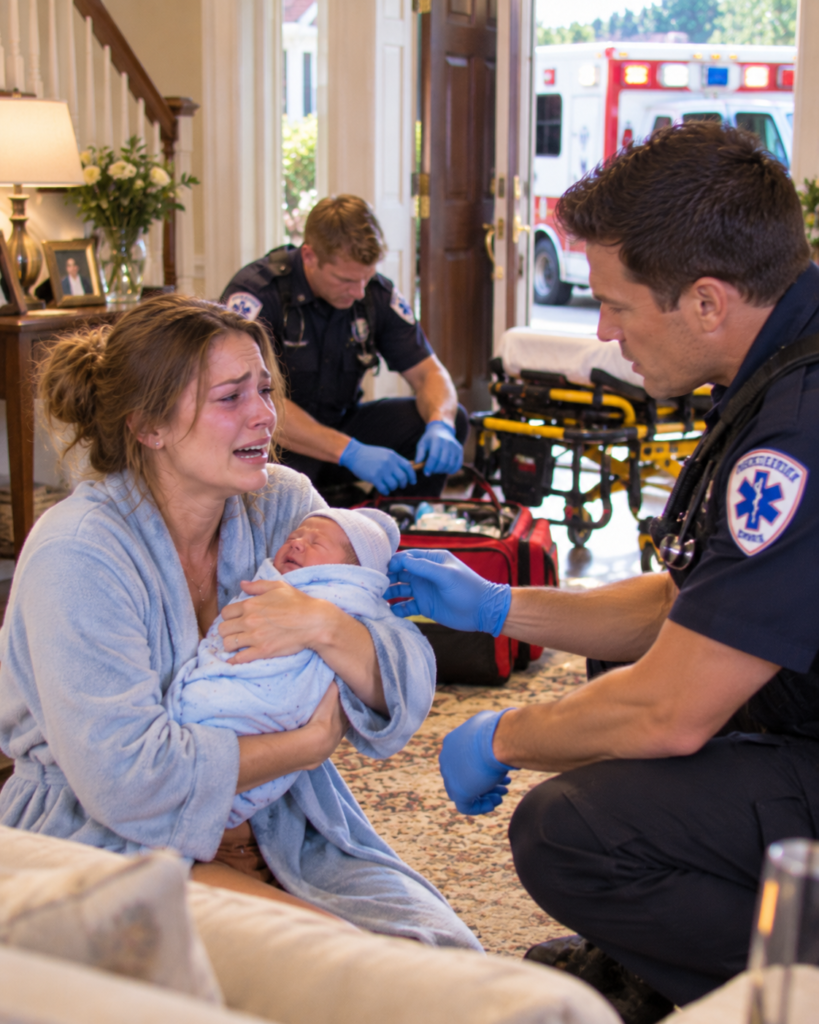
Two paramedics ran toward my porch.
And the part of me they underestimated opened its eyes.
The first paramedic reached the porch before I even got the door open all the way.
“Baby is three days old,” I said, because the old part of my brain was already building the intake note. “Bluish lips. Shallow breathing. Went limp approximately two minutes ago. Discharged Monday at 11:42 a.m.”
The woman in navy gloves looked at me once, and whatever she saw on my face made her stop asking soft questions. She took Leo from my arms with practiced hands while her partner dropped the medical bag onto our entry rug hard enough to make the framed family photo rattle on the wall.
“Who else is home?” she asked.
“No one.”
That was when my dead phone buzzed from inside Eleanor’s cream cardigan, which she had tossed over the back of a kitchen chair before she left.
The paramedic’s partner looked at the cardigan. Then he looked at me.
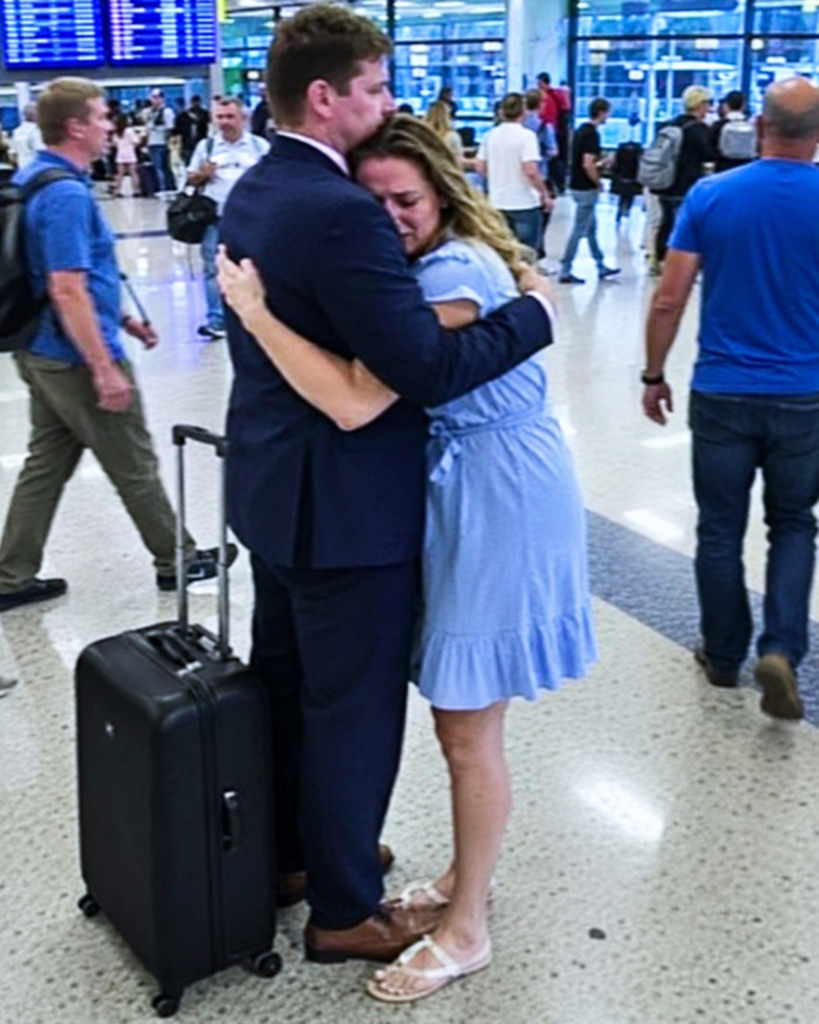
I pulled the phone out with fingers that barely felt attached to my body. The screen lit up with Ethan’s name and a new photo message: him and Eleanor at the airport, smiling over paper coffee cups, my credit card receipt visible on the table between them.
Below it, Eleanor had typed one sentence.
Tell her not to call anyone. She needs to learn consequences.
The paramedic standing over Leo went still for half a breath.
Not long. Not enough to stop working. But enough.
Her mouth tightened, and her eyes moved from my son to the phone, then back to me.
“Ma’am,” she said quietly, “keep that message. Do not delete anything.”
And as they lifted Leo onto the stretcher, my husband’s phone call came through again, ringing and ringing in my hand, while the paramedic looked at the screen and said—
Part 2 and full ending: Type “YES” and Press “Like” so we can post the full story. Thank you!