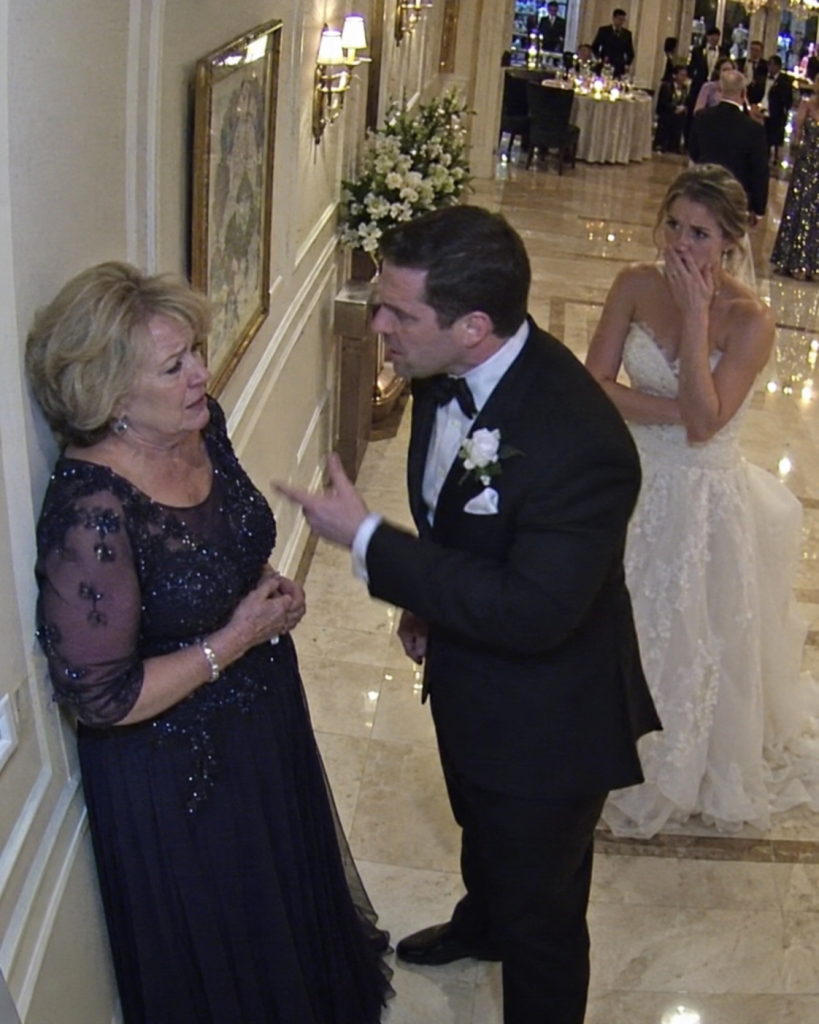
The first address belonged to Lena Ortiz, the venue’s event coordinator.
The second belonged to Cassandra.
Michael leaned across the table as if he could somehow close the laptop before the rest of us read what followed.
My attorney turned the screen away from him.
“Sit down, Michael.”
“This is private correspondence.”
“Sent from a company account while you were acting as a company officer,” she replied. “That distinction matters.”
Michael remained standing.
Lena’s first response had arrived six minutes after his deletion request.
She had written that security recordings could not be erased by event staff and that only Daniel could authorize changes to retention.
Michael had answered almost immediately.
He identified himself as vice president of Whitaker Millwork and reminded Lena how much our company had spent hosting client dinners at the property.
Then came the sentence that made my stomach tighten.
If the venue wanted Whitaker business in the future, he wrote, they needed to respect his family’s privacy now.
Ellen looked at me.
This was no longer merely our son trying to hide what happened at his wedding.
He had used the company we built to pressure a vendor into destroying evidence.
Michael finally sat.
“I was panicking,” he said. “That doesn’t make it some corporate conspiracy.”
My attorney scrolled downward.
“There’s another reply.”
Cassandra had responded from her personal email because Michael had copied her on the chain.
Her message contained only nine words.
“Make sure they remove the section by the oak wall.”
Nobody spoke.
That wall was exactly where the recovered video showed Ellen being struck and shoved.
Cassandra pulled off her sunglasses.
“I didn’t mean—”
“Don’t,” Ellen said.
It was the first word she had directed at either of them that morning.
Cassandra stopped.
Ellen’s voice wasn’t loud.
“You knew exactly which section you wanted erased.”
Michael pushed his chair backward.
“Dad, you’re turning this into something insane. We made a bad decision after a stressful night. That’s it.”
I looked at the ownership papers beside my attorney.
For months, those documents had represented continuity.
I had imagined Michael eventually sitting in my office, making decisions after Ellen and I finally stepped away.
Now they looked like a loaded weapon I had nearly handed him myself.
“The transfer is canceled,” I said.
Michael stared at me.
“Canceled today?”
“Canceled.”
His expression changed from fear to anger so quickly that I finally understood how much he had expected my love to function as insurance.
“You promised me those shares.”
“I intended to give them to you. I never signed them.”
“I built the sales division.”
“You helped build it.”
He laughed once.
“So Mom tells one dramatic story and suddenly thirty years of being your son means nothing?”
Ellen flinched.
I didn’t.
“Your mother didn’t tell me the story. The camera did.”
That was when Michael turned toward her.
“Are you happy now?”
I stood before Ellen could answer.
“You don’t get to make her responsible for what happens next.”
My attorney slid a single-page notice across the table.
Michael looked down but didn’t touch it.
It placed him on administrative leave from Whitaker Millwork effective immediately while we reviewed his use of company systems and vendor relationships.
He looked at me again.
“You’re firing your only son?”
“I’m suspending a vice president who used his title to pressure a vendor into deleting security footage.”
“Same difference.”
“No,” I said. “That’s the problem. You think everything becomes personal when accountability reaches you.”
He refused to surrender his company laptop at first.
My attorney reminded him that the device belonged to Whitaker Millwork and that withholding it would become another employment issue.
He dropped it onto the conference table hard enough to make Ellen jump.
I hated him for that movement more than I expected.
Not because the laptop mattered.
Because even after watching his mother recoil, he still chose intimidation.
Cassandra stood beside him.
“We’re leaving.”
Ellen raised her head.
“Before you do, I need to say something.”
Michael looked almost hopeful.
For one painful second, I knew he expected his mother to rescue him again.
She didn’t.
“I lied for you Friday night,” Ellen said. “I told your father I fell because you threatened to keep future grandchildren away from me.”
Michael’s face hardened.
“I was upset.”
“You knew what would frighten me most.”
He opened his mouth.
Ellen continued before he could answer.
“And you used it while I was sitting on the floor after you shoved me into a wall.”
Cassandra glanced toward the door.
Ellen removed the ice pack from her knee and set it on the table.
“I’m done helping you pretend that didn’t happen.”
Michael stared at her for several seconds.
Then he walked out.
Cassandra followed without looking back.
The conference-room door closed softly behind them.
That softness somehow made the silence afterward worse.
Ellen began shaking.
I moved toward her, but she raised one hand.
“I need to do the next part myself.”
She picked up her phone.
“I’m calling the police.”
I sat back down.
“Okay.”
She made the call before fear could bargain her out of it again.
That afternoon, we gave investigators the recovered video, photographs of Ellen’s bruises, the torn gown, and the email chain Daniel had preserved.
Daniel provided the original system timestamps and documentation showing when his technician recovered the recording.
Lena also agreed to speak with investigators.
She had not witnessed the entire assault, but she had seen Ellen emerge from the corridor crying and holding her arm.
More importantly, Lena explained what happened after Michael emailed.
He had called the venue twice before sunrise.
He repeatedly invoked Whitaker Millwork and suggested future corporate events depended on the footage disappearing.
Daniel had refused.
The damaged file had already been flagged for technical review, which was why Michael’s request never accomplished what he wanted.
That small procedural detail changed everything.
Michael hadn’t failed because he suddenly became careless.
He failed because he assumed a wedding venue’s camera system worked like a phone video he could simply demand someone erase.
The company review was harder for me than the police interview.
Family anger was one thing.
Reading Michael’s professional record as his employer was another.
Our attorney brought in outside employment counsel so nobody could later claim I had invented a process simply to punish my son.
We reviewed his emails, vendor communications, expense records, and access history within the scope counsel approved.
Most of it was ordinary business.
That almost made the relevant messages worse.
Michael had spent years earning genuine trust with customers and employees.
He hadn’t been pretending to be competent.
He had simply decided competence entitled him to use the company when his personal life became inconvenient.
Two days into the review, our HR director found another message connected to the venue.
Michael had sent it the morning before our conference-room meeting.
He asked an assistant to remove the estate from our preferred-events list because management had been “uncooperative during a private family matter.”
The assistant had not processed the change.
She had questioned the lack of a business reason and forwarded the request to HR.
Michael never knew she had done that.
When counsel interviewed him, he argued that choosing venues fell within his authority.
Technically, he was right.
That was his strongest defense.
Then counsel asked why he initiated the change less than thirty hours after the venue refused to delete security footage.
Michael had no good answer.
He said the timing was coincidental.
The documentation said otherwise.
I still didn’t fire him immediately.
That surprised Ellen.
It surprised me too.
But I wanted the decision to survive my anger.
For thirty-two years, I had told employees that family ownership didn’t mean family members operated under different rules.
Now I had to prove I meant it.
The review lasted twelve days.
Michael remained on paid leave while counsel interviewed the employees involved and verified the email records.
During that time, he called me repeatedly from his personal phone.
I answered once.
“Dad, you’re letting lawyers destroy this family.”
“No.”
“Then stop this.”
“I didn’t send those emails.”
He went quiet.
“You know Cassandra was the one who hit Mom first.”
There it was.
Not denial.
Allocation.
“You grabbed her,” I said.
“I was trying to control the situation.”
“By shoving your mother into a wall?”
“You weren’t there.”
“That’s why cameras exist.”
He hung up.
That conversation ended whatever hesitation I still carried.
At the conclusion of the review, outside counsel found that Michael had misused his company position in a personal dispute and attempted vendor retaliation afterward.
I terminated his employment that afternoon.
The decision cost us.
Michael managed several major accounts, and three customers called within a week asking whether his departure meant Whitaker Millwork was unstable.
I spent hours explaining the transition without exposing Ellen’s private details.
Our sales director took over Michael’s accounts temporarily.
Two senior representatives divided the rest.
Nobody walked out.
Nobody demanded that Michael return.
What they did demand was clarity.
So I gave them what I could.
I told our management team that an executive had violated company standards and attempted to involve a vendor in a personal matter.
I told them the same standards applied to my surname.
Then I answered questions until there were none left.
We lost one account that quarter.
We kept the others.
That mattered because justice sounds simple until it threatens the payroll of people who had nothing to do with your family disaster.
Ellen struggled more quietly.
Some mornings she defended Michael before remembering she no longer had to.
She would say, “He wasn’t always like this,” as if the sentence might reduce what happened.
I never argued with her.
He hadn’t always been like that.
People are harder to grieve when the good memories are real.
The criminal case moved slower than our company review.
Investigators authenticated the footage through the venue’s system records and interviewed Daniel, Lena, Ellen, Michael, and Cassandra separately.
Michael and Cassandra hired attorneys.
They stopped speaking to us directly.
Several months later, both cases were resolved without a trial.
Their attorneys negotiated plea agreements involving assault-related offenses, probation requirements, court-ordered programs, and restrictions on contacting Ellen without her consent.
The outcome wasn’t cinematic.
Nobody was dragged from a courtroom.
Nobody applauded.
Ellen sat beside me while the agreements were entered and cried in the parking lot afterward.
“I thought I’d feel better,” she said.
“Maybe better isn’t the first thing.”
She nodded.
“I just wanted him to admit I wasn’t lying.”
The court record couldn’t give her the apology she wanted.
It did something else.
It made silence unnecessary.
Michael’s marriage began unraveling before the legal process ended.
I learned that from his attorney, not gossip.
Cassandra increasingly blamed him for using the company email and creating the evidence trail.
Michael blamed her for striking Ellen first.
Neither explanation changed what the camera showed each of them doing.
I didn’t celebrate their problems.
I had already lost enough by then.
The ownership-transfer papers remained unsigned in our attorney’s file until I finally asked her to shred them.
We replaced the proposed family transfer with a formal succession plan.
Our operations director joined the executive leadership team.
The sales director received additional authority.
Ellen and I created a profit-sharing program that rewarded employees who had spent years helping build the company beside us.
I stopped treating bloodline as a qualification.
That lesson embarrassed me because I should have learned it earlier.
Michael had worked hard at Whitaker Millwork.
He had also grown up believing the company would eventually become his because everyone around him treated that future as automatic.
I had helped create that expectation.
I couldn’t undo it.
I could stop formalizing it.
Almost eight months after the wedding, Michael mailed Ellen a handwritten letter.
There was no demand inside.
No threat about future grandchildren.
No request for money or employment.
He wrote that he was ashamed of grabbing her and more ashamed that he tried to erase the evidence afterward.
He did not blame Cassandra in the letter.
Ellen read it twice.
Then she placed it in the kitchen drawer where we kept warranties and takeout menus.
“Are you going to answer?” I asked.
“Not yet.”
I waited.
She looked toward the hallway where the locksmith had changed our locks months earlier.
“Forgiving him someday and trusting him again aren’t the same decision.”
That was the strongest thing I had heard her say since the wedding.
She eventually wrote back three sentences.
She told him she loved him.
She told him she was not ready to see him.
She told him any future relationship would require patience, accountability, and respect for whatever boundaries she set.
Michael didn’t answer immediately.
For once, he didn’t get to control the deadline.
Our life did not become peaceful overnight.
Some holidays felt hollow.
Ellen occasionally reached for her phone before remembering why she had stopped calling him.
I sometimes drove past the office Michael once used and still expected to see his light on.
But Whitaker Millwork kept running.
Ellen’s bruises faded.
The torn evening gown stayed in an evidence bag until the case ended, then she threw it away herself.
She kept the shoes.
Cassandra had mocked one of them in that text after the wedding.
Ellen wore those same shoes to our company holiday dinner the following December.
Nobody there knew why that mattered.
I did.
Halfway through the evening, she crossed the room toward me without limping.
She took my hand and looked around at the employees whose futures we had nearly placed in Michael’s control.
“You know what still bothers me?” she asked.
“What?”
“I thought protecting our family meant hiding what he did.”
I squeezed her hand.
“And now?”
She watched two machinists laughing near the dessert table before answering.
“Now I think protecting a family sometimes means refusing to help one of them become worse.”
I never forgot that.
Neither did I forget the flash drive Daniel placed between us in that dark office.
I had thought the worst thing on it was watching my son put his hands on his mother.
I was wrong.
The worst part was seeing how confidently he expected everyone afterward to help erase it.
The camera preserved only a few minutes.
What changed our family was everything we chose to do once those minutes could no longer be denied.