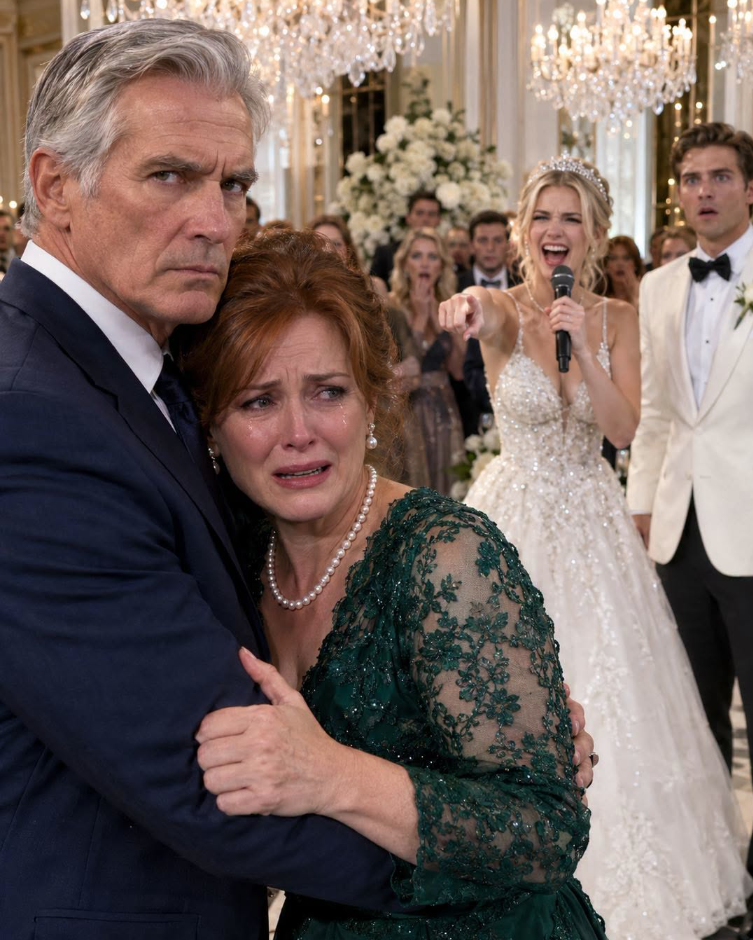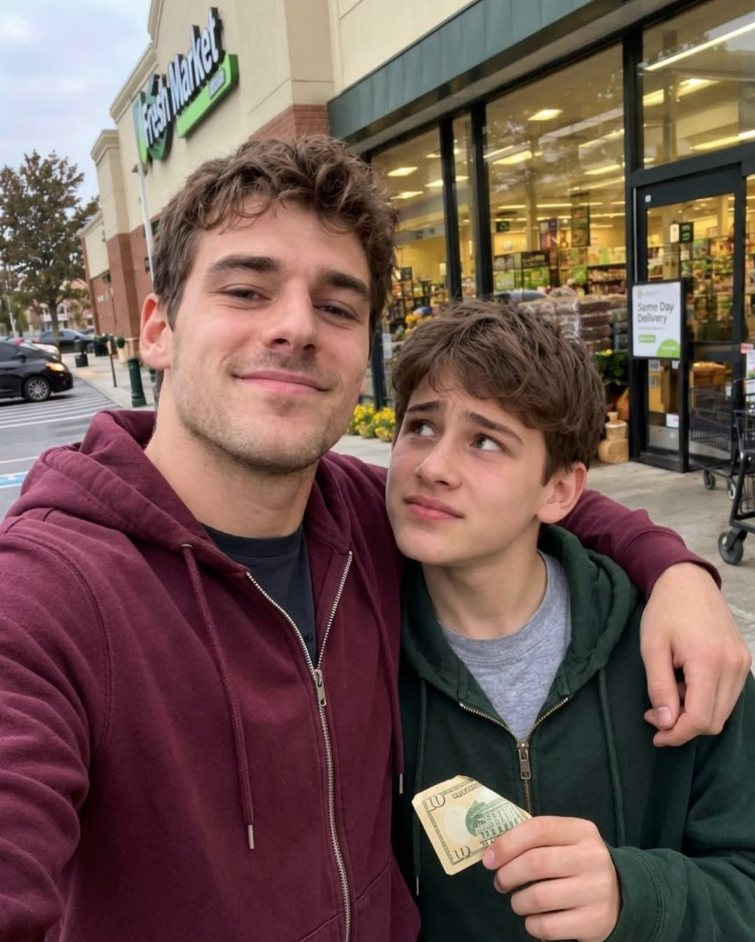
My name’s Aaron. I’m 32, and I’ve spent the past 13 years of my life trying to erase the version of me my family used to mock. The quiet one, the weird one. The one who would never make it out there because I didn’t follow their playbook. Growing up, I was the middle child sandwiched between my golden boy older brother Jake, who got a full ride for football and later joined Dad’s real estate business, and my younger sister, Vanessa, who could wreck the car and somehow still get a hug and a, “You’re just stressed, sweetheart.”
Me, I kept to myself. I liked computers. I liked quiet. And I especially liked being left alone.
That didn’t fly in our house. Mom didn’t understand me. Dad barely acknowledged me. And Vanessa? She treated me like her personal errand boy until I finally pushed back.
That happened when I was 19. I just finished my first year of community college and landed an internship at a small tech startup. I was excited, really excited. The kind of excited where you run home to tell your parents because, for once, you feel like maybe, just maybe, you’re starting to become someone.
I still remember walking into the kitchen that night, holding the offer letter in my hand. Vanessa was there too, sprawled out on the couch with a half-eaten sandwich, complaining about how her boyfriend wasn’t texting her back.
I told them the news, how they picked me over three university grads, how I’d be helping develop real products that were already getting investor attention.
Mom looked up from the sink, barely impressed.
“Is it paid?” she asked flatly.
“It wasn’t,” I admitted that, but explained it was temporary, that it could turn into something full-time.
“Well, we’re not paying for your gas just so you can go play computer games,” she said.
Dad didn’t even look up from his newspaper.
“Waste of time,” he muttered. “Get a real job.”
That was the beginning of the end.
I tried to stick it out. I took shifts at a grocery store in the evenings to cover my costs. I rode a beat-up bike five miles each way to the office.
Vanessa would still toss me her laundry, ask me to fix her laptop, and call me names when I said no. But I believed in that internship. I believed it would go somewhere.
Then one Friday night, I came home to find my boxes packed in the living room. I thought it was some kind of mistake.
“What’s going on?” I asked Mom.
She didn’t even blink.
“You’re leaving,” she said as casually as if she were reading off a grocery list. “You’re a grown man now. It’s time to stop mooching. We need the space for Vanessa’s baby.”
That was the first I’d heard that my sister was pregnant.
I looked at Dad, stunned.
“Seriously, you’ve had your chance,” he said, his voice cold. “We supported your silly dreams long enough. It’s time to grow up.”
That night, I slept in my car. I couch surfed for a while. Friends from college helped where they could. I showered at gyms, $8 menu burgers.
But I didn’t quit.
I kept showing up to that unpaid internship.
When the company got its first major funding round, they offered me a job. A real one, not glamorous, just back-end development work. But I took it like it was gold.
The years that followed weren’t easy. I worked like a machine. No vacations, no weekends, just work.
Every bonus went into savings. Every raise was reinvested in myself, learning, building, networking. I moved cities, changed my number, didn’t look back.
By 29, I was working for a major tech firm in San Francisco, building security infrastructure.
At 30, I helped launch a startup with two colleagues. And within 18 months, we were acquired for just under $40 million.
After taxes and equity splits, I walked away with a little over $2 million.
And no, I didn’t throw a party. I didn’t post it online.
I just exhaled.
I bought a house in the Bay Area. A sleek, modern, four-bedroom beauty with glass walls, a rooftop deck, and a view of the city. It cost just over $1 million.
To me, it wasn’t just a house. It was closure. It was proof that the kid they threw away had done just fine without them.
Then I made the mistake of inviting them to the housewarming.
I don’t know what possessed me to do it. Guilt, maybe, or curiosity. I hadn’t spoken to any of them in years. Not since Vanessa sent a blurry photo of her kid.
“Just in case you want to know your nephew.”
I ignored it, but something in me wanted to see if they’d changed. If maybe, just maybe, they’d apologize.
I didn’t expect a tearful reunion, but a nod. A “we were wrong.” Something human.
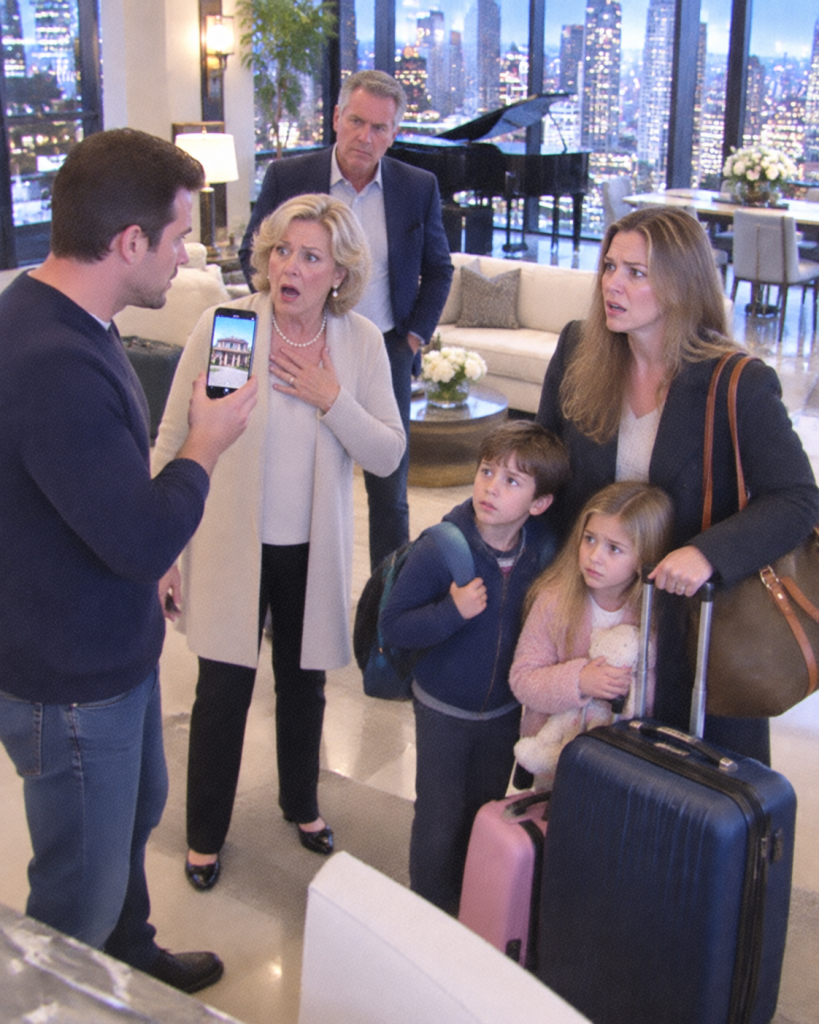
Instead, I got Vanessa in heels too high for my floors, dragging two screaming kids through my doorway like she owned the place.
She didn’t even say hi. Just looked around with this fake little smirk and said, “Wow, this $1 million house has plenty of room for me and the kids.”
I blinked.
“What?”
She turned back and waved toward Mom, who was already making herself at home in my kitchen.
“Well, you invited us, and you’ve got all this space. We thought we’d stay for a bit, you know, until I can find a place.”
My jaw must have been on the floor.
Then Mom looked at me and said in that patronizing tone I remembered all too well, “Be a good brother, Aaron. Let her stay. She’s been through a lot.”
I stood there for a second, just stunned at the casual entitlement. Like this was normal. Like I owed them something. Like the years of silence, of abandonment, of struggle meant nothing. Like I was still the quiet middle child who’d take whatever scraps they threw me.
And that’s when I smiled.
I unlocked my phone, pulled up the deed, and said it slowly, making sure every word landed like a brick.
“Remember when you threw me out at 19? I bought this house with the bonus I got after leaving all of you behind.”
The room went silent.
Vanessa’s face tightened. Mom blinked. The kids were still whining, but I barely heard them.
And just when I thought they might try to walk it back or laugh it off, Dad walked in through the front door. He looked around, took in the space, and then locked eyes with me.
“Nice place,” he said.
I nodded.
“You did all right.”
It wasn’t a compliment. It was an assessment. Like he was calculating what he could get out of it.
And in that moment, I realized they weren’t here to celebrate with me. They were here because they thought they still had a claim.
They thought I still belonged to them.
That’s when the real story began.
I didn’t kick them out right then and there. Looking back, I’m not sure why. Maybe I wanted to see how far they’d go. Maybe I wanted proof, something undeniable, something so grotesqually clear that even I couldn’t make excuses for them anymore.
Or maybe part of me still hoped they’d stop themselves, catch their own behavior, and apologize.
Instead, things escalated fast.
Vanessa immediately started acting like the house was hers.
“The kids can take that room,” she said, pointing at my guest bedroom, the one with the in-suite bathroom and a view of the hills. “Oh, and I’ll take the one across from it. I need to be close to them at night.”
Then, as if she was doing me a favor, she added, “We won’t be here long. Just a few weeks, maybe two months at most.”
I didn’t say anything.
I just watched her unpack her trunk of bags like she was on vacation. Her kids already tracking mud across the floor.
She didn’t ask if they could stay. She announced it. Claimed it.
Mom, meanwhile, had found the wine I’d bought for the party and poured herself a glass without asking.
“You always had expensive taste,” she said, swirling it like some kind of connoisseur. “Maybe now that you’ve done so well, you’ll understand how hard it was raising three kids.”
“Four,” I said, my voice low.
She blinked, confused.
“You forgot David,” I added. My youngest brother. The one who ODed at 17 and whom they never talked about again. Not at the funeral, not in therapy, not once.
She made a face like I’d mentioned a spider crawling up her arm.
“That was a long time ago. No need to dredge up the past.”
I stared at her, wondering if she even knew how twisted that sounded.
Dad, of course, didn’t bother with small talk. He was already surveying the backyard like it was a potential property listing.
“You should put in a pool,” he said. “Really ups the resale value. And that shed? Tear it down. Looks cheap.”
I finally asked, “Why are you really here?”
He turned and smiled like a salesman.
“Family should stick together. Especially now that you’re successful.”
There it was.
Not even subtle.
That night, they stayed.
Despite every bone in my body screaming that I should have ended it, then I let them.
I watched Vanessa set up her kid’s iPad in the living room and cranked the volume up. I listened as Mom criticized my furniture for being too modern and too sterile.
I even endured Dad asking if I’d considered letting him handle my finances since real estate is always safer than those tech stocks.
They didn’t come to visit me.
They came to move in.
By the second day, the manipulation started.
Vanessa came to me while I was working in my home office. She knocked softly, playing the concerned sister.
“I know this is a lot, Aaron,” she began. “But I really need your help. Child support has been a nightmare, and daycare costs are insane. If I could just stay a few more months, I’ll get back on my feet. I promise.”
I asked her what she was doing to actually get back on her feet.
She blinked as if I’d asked her in another language.
“Well, I’m taking time for my mental health right now. It’s been hard.”
“You’ve been posting spa selfies on Instagram all week,” I said flatly.
Her face twisted instantly.
“Wow. So, that’s how you see me?”
“No, Vanessa,” I said, leaning back in my chair. “That’s how the entire internet sees you.”
She stormed off, and five minutes later, Mom was in the room.
“You really need to learn empathy,” she said. “She’s your sister, and those kids are your family. What happened to you?”
“What happened?” I repeated. “You kicked me out. You didn’t talk to me for years.”
“That’s not fair,” she said. “We were trying to teach you responsibility.”
“You taught me survival,” I said. “And I learned it without you.”
She scoffed and left.
That night, dinner was tense. Vanessa refused to make eye contact. Mom criticized everything I cooked. The kids screamed through half the meal and threw food on the floor.
Then Dad pulled me aside.
“I know this is overwhelming,” he said in his classic, “Let’s talk man-to-man” voice. “But you’re in a position to help. It’s what good sons do. You can afford it. Why not let us stay for a while? You’ve got plenty of space.”
“I’m not a hotel,” I said.
“Then stop acting like a stranger,” he shot back.
That was the moment it clicked.
They weren’t just entitled. They were playing a game they thought they’d already won.
They were used to getting what they wanted. Vanessa had always had someone cleaning up after her. Mom had always guilt her way through conflict. And Dad, he’d always made it clear that love was conditional and earned only through obedience.
And now they thought I was still that same desperate-for-approval kid from 13 years ago.
So I stopped arguing.
I stopped pushing back.
I let them think they’d won.
Let them unpack fully. Let Vanessa fill the fridge with her oat milk and overpriced snacks. Let Mom rearrange my spice rack for efficiency. Let Dad make calls from my backyard like it was his office.
All while I quietly collected receipts, texts, video, audio.
Because if they were going to try and stake a claim to my house, they were going to do it while I built my case.
And trust me, what I had planned next, they’d never see it coming.
It all came to a head exactly 12 days after they arrived.
By then, they were fully settled in like squatters who’d been handed a lease.
Vanessa was having groceries delivered to my address and charging them to my account. Yes, I found that out when I got a notification for a $174 Whole Foods order I never placed.
My father had somehow managed to convince one of my neighbors that he owned the house and started handing out advice to the HOA like he was some kind of community elder.
And my mom, in her usual fashion, took every quiet moment as an opportunity to remind me that I’d be alone forever if I didn’t start acting more like a normal person.
The manipulation had stopped being subtle.
Now, it was a constant background hum, as if the house itself had become infected with their delusion.
I was working from my home office that Monday morning when I heard a knock at the front door.
Thinking it was a package, I ignored it.
A few minutes later, I heard voices, unfamiliar male, firm.
I got up and walked down the hallway only to see two men in gray polos talking to my mother by the entrance.
One of them turned to me.
“Hi, are you the homeowner?”
I nodded slowly, cautious.
“We’re from Everlux Home Staging. We received a call to come take measurements for an upcoming listing.”
I blinked.
“Listing?”
He double-checked his clipboard.
“Yes, we were told the property is going on the market next month.”
I looked at my mom, whose face had gone stiff.
“Excuse me?” I asked more sharply this time. “Who scheduled you?”
“Uh, let me check,” he said, flipping through his notes. “Vanessa Trent. She said she was handling the listing paperwork.”
I swear the air got sucked out of the room.
Vanessa came strolling in from the kitchen just then, sipping coffee like she didn’t have a care in the world.
“Oh,” she said casually. “I was going to tell you. We’re putting the house on the market.”
“We?” I repeated, stunned.
“Well, you work all the time,” she said in that sing-song mocking tone she used as a teenager. “You barely use the house. And Mom and Dad agreed. You’d be better off downsizing and getting a little condo or something closer to the city. This place is too much for you anyway.”
My jaw actually dropped.
“Are you out of your mind?”
“It’s what’s best for everyone,” Mom chimed in, trying to sound gentle, like she was guiding a toddler. “You’re overextended. You’re not married. You don’t need all this space. Vanessa needs stability, and this house is perfect for the kids.”
I stepped back, nearly laughing.
“This isn’t some shared inheritance. I bought this house with my money. My name is the only one on the deed.”
Dad appeared behind them, leaning on the wall with his arms crossed like some kind of mafia boss.
“You’re being dramatic,” he said. “It’s just a house. If it helps the family, then that’s what matters.”
“And if it bankrupts me?” I asked. “What then?”
“You won’t go bankrupt,” he said, shrugging. “You’re smart. You’ll bounce back.”
I looked at Vanessa.
“And what exactly do you get out of this?”
She didn’t even blink.
“The house goes on the market. I get the proceeds to buy a new place for me and the kids. And you get, well, peace of mind. Honestly, it’s a win-win.”
I felt something inside me crack.
Not anger, something deeper. Like a final string snapping after years of holding too tightly to a hope I should have let go of a long time ago.
“You really think you can just sell my house?” I said slowly, the words tasting foreign in my mouth.
“I already called a realtor,” she said. “She’s coming by tomorrow to take pictures.”
“You’re trespassing,” I said.
“We’re family,” Mom snapped. “We have every right to be here.”
That was it.
I walked into the kitchen without a word, grabbed my phone, and opened my security system app.
I’d installed the cameras quietly just after they moved in. Two inside, one in the front yard, one covering the garage.
I tapped the folder labeled incidents and sent myself five choice clips.
I didn’t tell them what I’d done.
I didn’t need to.
But later that afternoon, I got a call from my bank.
Someone had tried to access my mortgage account online. Incorrect password entries had triggered a fraud alert.
The rep asked if I knew of Vanessa Trent.
I thanked him and hung up.
That night, I sat at the dinner table in silence, barely eating. My family chatted like nothing had happened, like they hadn’t just tried to sell my home out from under me, like they hadn’t just committed fraud.
And then Vanessa looked up from her phone and smiled sweetly.
“I was thinking,” she said, “we could paint the walls in the living room before the photographer comes. Maybe brighten it up a bit.”
I looked at her, then at my mother, then my father, and I realized finally that they didn’t see me as a person.
I was a resource, a stepping stone, a means to an end.
But what they didn’t know was that I wasn’t trapped with them.
They were trapped with me.
I didn’t sleep that night.
Not because I was scared, though I’d be lying if I said I wasn’t, but because something inside me had shifted finally and completely.
The house I once thought symbolized freedom, the reward of all my grit and effort, now felt like a cage. Every corner of it echoed with their footsteps, their voices, their complete and utter disregard for me.
I sat on the edge of my bed for hours, staring at nothing, replaying every word from that day over and over.
“We’re putting the house on the market.”
“We have every right to be here.”
“You get peace of mind.”
I felt like a guest in my own home.
The next morning, I woke to screaming.
Vanessa’s oldest had spilled orange juice on the rug in the living room. And she was berating the poor kid like he’d broken a priceless vase.
I stepped out to see the stain still soaking through the fibers on the rug I bought with my first real paycheck, one I’d kept pristine for years.
Vanessa was using one of my bath towels to clean it.
“Maybe don’t buy white rugs if you plan on having family over,” she said, not even looking at me.
I didn’t answer.
I just turned, walked back into my room, and closed the door.
That was the moment I decided I was done playing defense.
But before I could act, things got worse.
Two days later, I came home from a long day at the office. I’d started spending more time there just to avoid them, to find my home office completely rearranged.
My triple monitor setup was unplugged. My work documents had been shoved into a drawer, and in its place, a foldable crib.
Vanessa walked in behind me like she’d been waiting for the reveal.
“The baby’s been fussy,” she said. “He needs a quiet space to nap during the day. The living room is too noisy.”
“You turn my office into a nursery?” I asked quietly, feeling heat build behind my eyes.
“You can work in your room,” she said, waving a hand like it was obvious. “You’ve got that little desk by the window, right?”
“You went through my things.”
“Don’t be dramatic. It’s my house, too, now. We all need to make adjustments.”
I couldn’t speak.
I genuinely couldn’t.
I just walked into the bathroom and locked the door, sat on the toilet lid, and stared at the tile.
My hands were shaking. I wasn’t sure if I was going to cry or scream or collapse.
Instead, I pulled out my phone and I began making a list, a quiet, methodical list.
Every single line of entitlement I had endured since they arrived. Every lie, every overreach, the Whole Foods charges, the realtor, the attempted mortgage login, the office takeover, the attempted sale of my house.
Then I started documenting things in real time.
I placed an AirTag inside the living room lamp so I’d know if anything of mine was moved without explanation.
I enabled 24/7 backup for all interior cameras.
I recorded every conversation on my phone, even the ones that felt harmless.
I wanted everything cataloged.
Not for them, for me.
For the part of me that needed proof this wasn’t in my head.
Because deep down, some stubborn part of me still wanted to believe that maybe I had misunderstood, that maybe I was exaggerating, that maybe somehow there was still something salvageable in this family.
That illusion shattered completely one night about a week later.
I just come back from a walk. Needed some air, some quiet.
When I stepped into the house, I heard Vanessa on the phone in the kitchen laughing.
“Yeah, girl,” she was saying. “He’s such a loser. Can you believe he actually let us stay here? Like, for free? I swear he’s always been like this. So desperate for love. He’ll put up with anything.”
She laughed again.
“I give it two more months. We’ll get that down payment. He’ll fold. He always does.”
I froze.
Not because of what she said. I’d already guessed it.
But because of how she said it.
The ease, the certainty, like it wasn’t just a plan, it was a pattern, one she’d run before.
And I realized she didn’t think I’d ever fight back.
Not her, not Mom, not Dad.
They thought the boy they kicked out at 19 was still here. That the man I’d become, the one who survived, rebuilt, and thrived, was just a temporary shell.
That deep down, I was still waiting for their approval. Still clinging to the scraps they tossed me.
They were wrong.
But I didn’t confront her.
Not yet.
Instead, I did something I should have done years ago.
I took the next day off work and drove two hours out of the city to a little spot by the coast I used to visit during college. A rocky overlook with a single bench and no cell signal.
I sat there for a long time, just breathing, letting the noise drain out of me.
And when I got back into my car, I wasn’t angry anymore.
I was ready.
Not for a fight.
For freedom.
Because I wasn’t going to scream or slam doors or demand respect.
I was going to take back everything they stole quietly, legally, and permanently.
And when it was done, I’d vanish again.
But this time, they’d feel the absence.
I returned home that evening calm in a way I hadn’t felt in years.
Everything felt clearer now. There was no more confusion, no more mental tug-of-war about whether I owed them anything or whether I was overreacting.
The fog had lifted.
And once I made peace with that, everything started to click into place.
The first step was subtle.
I rekeyed the garage door access code and removed everyone else from the security app.
No announcement, no confrontation, just a quiet boundary.
That same night, I called my lawyer, someone I hadn’t spoken to since the startup acquisition, but who’d always told me to reach out if the past ever tries to come knocking.
“Well,” I said, half joking, “they’re not just knocking anymore. They’ve moved in, stolen my chair, and are trying to sell the house.”
She didn’t laugh.
Instead, she gave me a to-do list.
One by one, I started checking things off.
I filed formal trespassing warnings with the city because even though I had let them in initially, the continued stay, especially with the attempted home sale, qualified as unlawful occupancy.
I froze all shared accounts and cards, opened new ones with biometric ID requirements, and hired a private security consultant to help me install a discrete lock system on my bedroom door that couldn’t be tampered with without setting off an alert.
I hired a financial investigator, not for me, but for Vanessa.
I wanted to know exactly where her money was going, how she was financing her online shopping binges, and whether she was doing anything that could come back to bite me legally.
Turns out she had several payday loan defaults and a minor pending fraud charge in another state.
Not exactly a smoking gun, but enough to prove she wasn’t just irresponsible, she was dangerous.
Meanwhile, at work, life began to level up, too.
A feature I had quietly built over the past year suddenly caught the CTO’s attention. It became the cornerstone of our new partnership with a global cybersecurity firm.
My name was added to the press release.
Bonuses followed.
Stock options spiked.
For the first time in months, I started to look forward to waking up in the morning.
I got invited to speak at an industry panel in Chicago.
I agreed.
Vanessa didn’t even blink when I mentioned I’d be gone for a weekend.
“Bring me back something cute,” she said without missing a beat. “A candle or a blanket or whatever they sell in those airport stores.”
While I was gone, I had someone I trusted from work house-sit for me.
Daniel, a quiet, brilliant systems engineer who hated drama and loved dogs.
I knew he wouldn’t tolerate any nonsense.
He texted me twice during the trip.
Once to tell me Vanessa asked him to babysit her kids. He refused, and once to tell me she tried to get into my office again.
He bolted the door shut.
I thanked him and promised him a week of free coffee on me.
When I returned, I had something else waiting, something I hadn’t anticipated.
An offer.
A rival tech firm in Seattle had caught wind of the panel and reached out.
They wanted me as their new head of information security.
It came with a signing bonus, relocation package, and, most importantly, executive-level housing assistance.
I could buy another home up north and keep this one as a rental property.
I hadn’t even applied.
They came to me.
The power dynamic had shifted quietly, completely.
They still thought I was stuck with them.
But now I had leverage, all of it.
And I was going to use it not to lash out, not to get even, but to walk away clean.
Because while they were busy playing house, I was building an exit so clean, so airtight, so irreversible that by the time they realized what had happened, the locks would have changed, the lights would be off, and I’d be long, long gone.
But first, I had one last move to make.
Not petty, not loud, just precise.
And devastating.
A week after I returned from Chicago, things inside the house hit a strange kind of calm.
Vanessa must have sensed something had shifted.
Maybe it was the way I stopped responding to her passive-aggressive remarks, or how I no longer argued when she left her dishes in the sink.
Maybe it was just the quiet.
That’s the funny thing about people like her. They can smell change, but they always misread the source.
She thought I was giving up.
In truth, I was gathering the last puzzle pieces.
The offer from Seattle sat untouched in my inbox, but not because I wasn’t interested.
I was preparing to leverage it.
Before I officially accepted, I needed to tie up every loose end.
That meant bulletproofing everything.
My legal standing, my finances, my ownership, and most importantly, my narrative.
That’s when I learned something that changed everything.
It started with a call to my HOA.
A simple inquiry to make sure I was clear to rent out the property if I moved out.
The woman on the other end of the line, Marlene, was sweet but surprisingly chatty.
When I mentioned my family was staying with me temporarily, she chuckled and said, “Oh yes, your parents and sister already introduced themselves at the last board meeting.”
I froze.
“Board meeting?”
“Oh yes,” she said. “It was a few days after your housewarming. They said you were traveling a lot and they were helping manage the property.”
My throat went dry.
“What exactly did they say?”
Marlene, bless her, pulled up the notes.
“Vanessa filed a request for a temporary variance on occupancy limits. Said it was for extended family cohabitation. Your parents backed her up. There was a small discussion about property usage, but since your name is on the deed, the board just assumed everything was fine.”
I thanked her and hung up.
Then I pulled up the HOA’s online portal.
And there it was.
A PDF uploaded three weeks ago.
Temporary family occupancy addendum, digitally signed with my name.
Only I hadn’t signed it.
Not electronically.
Not in ink.
It was forged.
And suddenly, all those little red flags from the past few weeks lit up at once.
The bank login attempts.
The calls from the home stagers.
The casual questions about my work travel.
They hadn’t just been trying to freeload.
They were actively laying the groundwork to claim my house legally.
If I had died suddenly or been incapacitated, they might have tried to argue shared ownership or caretaker rights.
It sounded absurd, but stranger things had happened in probate court, and Vanessa was always crafty in just the wrong ways.
I emailed the document to my lawyer.
Her response came within minutes.
“This is actionable. I’m contacting a forensic document expert and preparing a civil claim for fraud and identity misrepresentation.”
Now, I had legal ammunition.
I also had something else.
Leverage.
Vanessa had a pending court appearance for her other fraud charge, and any new accusations, especially ones involving forged legal documents, could jeopardize her bail agreement.
One call and she wouldn’t be on my couch watching daytime reality shows.
She’d be in jail.
But I wasn’t going to call yet.
Not until everything was ready.
I began orchestrating the final phase.
I hired a realtor, my own, and scheduled a private showing of the house under a shell LLC I’d just formed.
The company would appear to be purchasing the house, but in reality, I’d still own it, just through a legal veil.
If anyone tried to pull anything later, they’d be going after an entity, not me personally.
Next, I contacted the Seattle company and accepted their offer.
They were ecstatic.
I asked for a start date two months out.
That gave me time to finalize everything here and ensure my revenge unfolded exactly how I wanted.
Then I reached out to a property manager, someone local, someone strict.
We met for coffee.
I laid everything out.
The fake signatures, the freeloading family, the attempted sale.
I told him what I wanted.
Long-term rental management with a zero-tolerance policy.
I didn’t want to worry about this place once I left.
He agreed.
Even offered to be present when the house was formally vacated.
And finally, my favorite part.
I had copies made of the document Vanessa forged, of her voice recorded on camera admitting the sale plan, of the charges filed against her in her previous case.
And I printed a neat little packet with a cover page that simply read, “My house, my name, my rules.”
It wasn’t meant to scare them.
It was meant to be the last thing they saw before the locks changed.
Because now the plan was ready, the fuse was lit, and all I had to do was watch it burn.
The morning it all began, the house was still.
Not quiet, still.
The kind of eerie calm before a storm where even the creak of the floor feels intentional.
I woke up early, showered, brewed coffee, and stood at the kitchen island like it was any other day.
Vanessa’s kids were still asleep on the pullout sofa.
My parents were upstairs in the guest rooms they’d unofficially claimed as theirs.
Vanessa was already scrolling through her phone at the dining table, one leg propped up on a chair like she owned the place.
“You’re up early,” she mumbled without looking at me.
I smiled.
“Yeah, just figured I’d enjoy the silence while it lasts.”
She grunted and returned to whatever feed she was doom scrolling.
She had no idea it was her last morning in my home.
At precisely 9:00 a.m., the doorbell rang.
Three people stood at the door.
One was Greg, my property manager, clipboard in hand and looking every bit the no-nonsense enforcer I needed.
The second was Janine, a legal rep from my attorney’s office with a folded folder tucked under her arm.
The third was Mark, a uniformed locksmith.
I opened the door casually, right on time.
Vanessa appeared behind me, suspicious.
“Who are they?”
Greg stepped forward.
“Property inspection. We’re here to walk through the premises before the new tenants arrive.”
Vanessa blinked.
“New tenants?”
I turned to her, keeping my voice level.
“Right. I sold the house last week.”
The silence that followed was so thick I could hear the hum of the refrigerator.
“You what?” she hissed.
“I sold it,” I repeated as calmly as someone commenting on the weather. “Well, technically, I transferred it to a holding company I control. But as far as public records go, this house is no longer owned by me. It’s managed by Everwatch Holdings LLC.”
Her eyes flicked to Greg.
“That’s not legal. You can’t just— This is our home.”
I reached under the counter and pulled out the packet I prepped.
I placed it gently on the counter in front of her.
She flipped through the first few pages.
Her face drained of color when she reached the scanned HOA filing, the one she forged my name on.
“I never—”
“You did,” I said, cutting her off. “And I have proof. IP logs, timestamps, audio of you bragging about it to your friend Tara, who, by the way, has zero chill and posted part of that phone call on her story.”
She swallowed hard.
Mom came downstairs next, rubbing her eyes.
“What’s all the noise about?”
Greg stepped forward.
“Ma’am, I’m with the new property manager for Everwatch Holdings. This house is no longer available for personal occupancy. You are being formally notified to vacate the premises within 24 hours. Refusal to comply will result in an unlawful detainer action being filed.”
“Excuse me?” she barked. “This is our son’s house.”
I turned toward her.
“Correction. Was my house. Now it’s company property, and you’re trespassing.”
Dad followed down, grumbling.
“What’s going on?”
“I sold the house,” I said again. “And you all need to leave.”
He looked around confused, then furious.
“You ungrateful little—”
Janine stepped forward now, opening her folder.
“Sir, before you say anything else, I’m serving you and your family members a cease and desist order regarding fraudulent representation of property ownership. We’ve also filed preliminary charges for document forgery and impersonation with the local precinct. You are advised to speak to an attorney.”
“I—what? He’s our son!” Mom exploded.
“You’re squatters,” Greg replied, flipping through his clipboard. “And under the law, your relationship doesn’t grant you immunity. You weren’t on the lease. You weren’t given express long-term residency. And you tried to sell a home that wasn’t yours.”
Vanessa was now pacing, panicking.
“Where are we supposed to go? What about the kids?”
“I don’t know,” I said. “You should have thought of that before trying to steal my life out from under me.”
Mark the locksmith stepped in behind them.
“Sir, I can begin changing the locks now or wait until they’ve cleared out.”
“Begin,” I said.
That was the moment the chaos started.
Vanessa began screaming at her kids to pack everything.
My mother sobbed on the stairs about how heartless I’d become.
My father stood there stiffly, arms folded, unable to comprehend that he wasn’t in charge for once.
The woman who’d once scoffed at my dream job was now begging me not to ruin her daughter’s life.
I didn’t raise my voice.
I didn’t argue.
I just stepped outside, stood on the porch, and let the locksmith work.
Within two hours, they were gone.
Bags hastily packed, kids wailing, my parents fuming.
Vanessa tried one last time as she loaded her kids into her car.
“We’re family,” she whispered. “You’ll regret this.”
I walked over to her window, leaned down, and said, “I already did for 19 years.”
Then I turned and walked back into my house and closed the door.
The weeks that followed were, in a word, quiet.
And I cherished every second.
Vanessa tried to retaliate.
She posted vague rants on social media about evil brothers who forget their blood, painting herself as the tragic single mom who was abandoned by family.
She even tried to start a GoFundMe, claiming she and her children were suddenly homeless due to a selfish tech bro.
It raised $62 before someone commented with a link to public court documents, including her pending fraud charge and the cease and desist order I filed against her.
The post vanished by morning.
Mom called once.
I didn’t pick up.
She left a voicemail crying, saying how I’d ripped the family apart.
I played it once, then deleted it.
I knew she didn’t mean the words, only the loss of control.
Dad never reached out.
Typical.
He didn’t know how to exist without authority. And since I’d removed every trace of his power, he just disappeared.
Three months later, I moved into my new place in Seattle.
High-rise corner unit, floor-to-ceiling windows overlooking the Sound.
I kept the Bay Area house under Everwatch Holdings and rented it out to a wonderful couple, newlyweds with two dogs and zero sense of entitlement.
They send me holiday cards now.
At work, my title changed.
Head of security became chief of security.
My team doubled.
My income did too.
For the first time in my life, I didn’t feel like I had to apologize for my success or shrink myself so others wouldn’t feel small.
I finally understood something most people never learn.
Family is not defined by blood.
It’s defined by choice, by boundaries, by respect.
And as for Vanessa, she took a plea deal on the fraud charge in her home state.
Community service, a year of probation, and mandatory financial counseling.
I heard she’s living in a small apartment now with her kids, barely scraping by.
It’s not what I wanted for her.
I never wanted to ruin her life.
I just wanted her out of mine.
And I got exactly that.
One evening, as the Seattle sky turned gold behind the buildings, I sat on my balcony with a cup of coffee, reflecting on everything that had happened.
The betrayal, the manipulation, the years I’d spent trying to prove I was enough.
And then my phone buzzed.
A text from an unknown number.
“Hope you’re happy. We lost everything.”
I didn’t respond.
Instead, I smiled, turned off my phone, and whispered to the wind, “No, I finally found everything I needed.”