I never told my mother-in-law that the little girl she had treated like a stranger had one day been given the power to change her life.
For three years, Gene had found countless ways to remind my daughter that she wasn’t quite family.
She never called Holly her granddaughter.
She called her “Brandon’s girl.”
Sometimes it was “your child.”
And when she wanted to sound particularly polite, she called her “that sweet little visitor.”
Always almost family.
But never quite enough.
Then, on Christmas morning, Gene handed my seven-year-old daughter a cheap $3 vanilla candle while her cousins received iPads and envelopes filled with cash.
The candle itself wasn’t what broke my heart.
It was the handwritten tag attached to it.
To Brandon’s Girl.
The entire room went quiet.
Holly looked at the tag.
Then she looked at me.
She didn’t cry.
She didn’t complain.
She simply stood there in her gold dress, calm and composed, as though something inside her had finally clicked into place.
Because the night before, her stepfather, Brandon, had given her a small red velvet box.
And he had told her that if Grandma ever made her feel invisible again, she could decide whether to give it to her.
The next morning, Holly decided.
And when Gene opened that box, she screamed.
But the story began long before Christmas.
Gene’s dining room looked flawless that morning—the kind of flawless that only happens when everyone inside is carefully holding their breath.
Pine garlands framed the doorway.
Cinnamon rolls cooled beneath sheets of foil.
The chandelier reflected against the silver napkin rings.
Outside, a small American flag tapped softly against the porch railing in the winter wind.
Everything was perfectly arranged.
Everyone knew Gene’s rules.
Smile.
Remain polite.
Never challenge her when she decided someone needed to be reminded of their place.
That Christmas, she chose my daughter.
Holly sat beside me in the gold dress Brandon had steamed twice before we left home.
She was seven years old.
Her black Mary Janes were tucked beneath the chair, and both hands rested neatly in her lap.
Before we had even entered the house, Brandon had noticed a small scuff on one of her shoes.
He wiped it away.
Then he quietly leaned toward her and said, “You deserve at least one holiday where you feel chosen.”
Gene had spent the previous three years making sure she never did.
Holly was my daughter from my first marriage.
But Brandon had never treated that fact as though it made her less important.
He packed her lunches.
He attended her school conferences.
He taught her to ride a bicycle after working double shifts at the fire station.
He remembered that her stuffed rabbit had to face the bedroom door at night.
He even knew the difference between her genuine laugh and the careful little laugh she used around adults who made her uncomfortable.
To Brandon, Holly was his daughter in every way that mattered.
Gene saw things differently.
She had never accepted the blended family.
Instead, she created little exclusions that were always just subtle enough to deny.
A plain plate here.
A missing Easter clue there.
A gift that was slightly cheaper.
A family photograph that somehow never included Holly.
And words that sounded harmless until you heard them often enough.
“Brandon’s girl.”
“Your child.”
“Sweet little visitor.”
Brandon had quietly recorded 41 incidents like that on his phone.
Not because he wanted to start a war with his mother.
Because he was waiting for the day when pretending not to notice would no longer be an option.
That Christmas morning, that day arrived.
At 8:47 a.m., Gene began distributing presents like she was conducting an elaborate ceremony.
One cousin opened an iPad.
Another received the same gift.
The older children pulled thick envelopes of cash from shiny holiday cards.
Everyone laughed.
Everyone thanked Gene.
Then she turned toward Holly.
“Oh. Holly.”
She held out a thin drugstore gift bag decorated with a crooked bow.
“This is for you, sweetheart. I didn’t want you to feel completely left out.”
Holly accepted the bag with both hands.
She carefully pulled away the tissue paper.
Inside was a cheap vanilla candle.
The room was still.
The candle itself wasn’t what hurt.
It was the tag.
To Brandon’s Girl.
A fork froze halfway toward someone’s plate.
One cousin suddenly became fascinated with the carpet.
The little dog hiding beneath the table backed away from the chair legs.
Beside me, Brandon crushed the side of his paper coffee cup without even realizing he was doing it.
Gene continued smiling.
She behaved as though the insult was far too insignificant for anyone with manners to mention.
I quietly said Brandon’s name.
He leaned toward me.
“I told her to give Mom the red box if this happened again.”
I stared at him.
“What red box?”
“The one in her overnight bag.”
“You planned this?”
Brandon shook his head.
“No. I prepared for it.”
That evening, at 9:12 p.m., I found Holly sitting on the guest-room bed.
Her gold dress was wrinkled.
The candle rested in her lap.
She kept staring at the tag as though she believed the words might somehow change if she looked at them long enough.
Then she asked the question that broke both of our hearts.
“Mom, am I only Dad’s girl?”
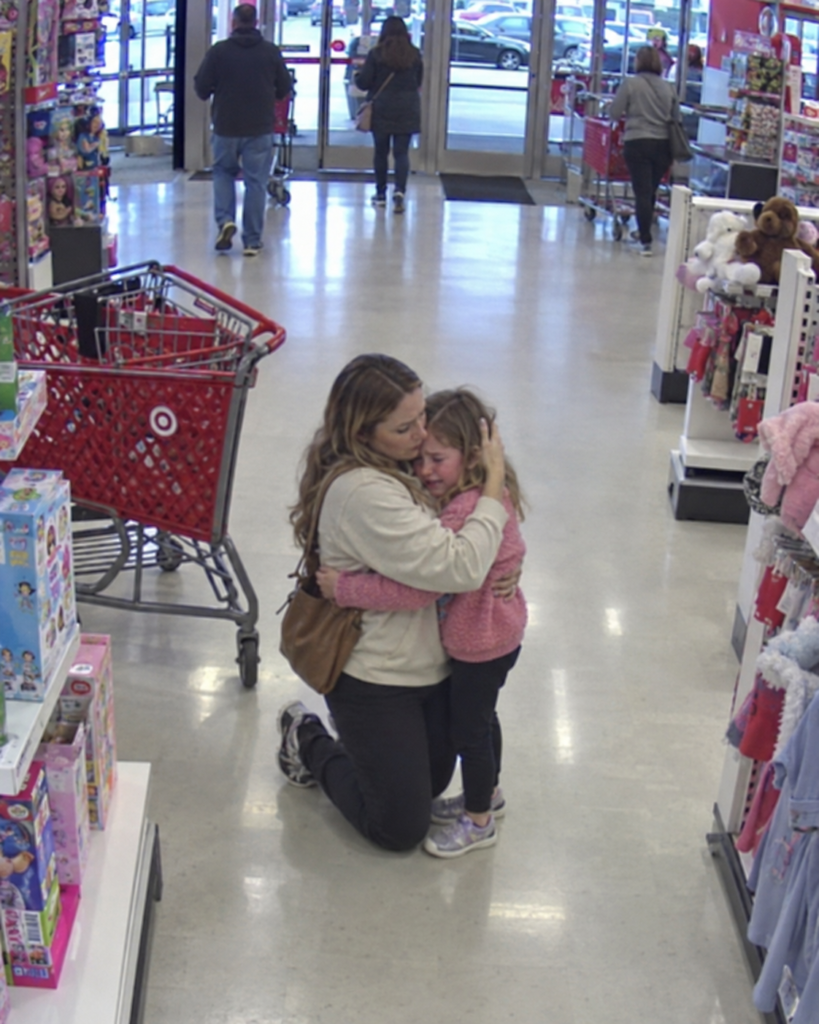
Before I could answer, Brandon knelt in front of her.
“You are my daughter,” he said.
His voice was steady, but his eyes weren’t.
“No tag gets to decide who you are.”
Then he reached into her overnight bag and placed the small red velvet box in her hands.
“If Grandma ever makes you feel invisible again,” he said, “you get to decide whether she receives this. Not me. Not your mom. You.”
Holly turned the box over in her hands.
“Will she be mad?”
“Probably.”
“Will you still be my dad?”
For half a second, Brandon looked completely broken.
“Always.”
The following morning, Gene hosted brunch.
The table was once again arranged perfectly.
White dishes.
Silver napkin rings.
Handwritten place cards.
Everyone had a name.
Everyone except Holly.
Her card contained one word.
Guest.
Holly noticed it at exactly the same moment Brandon and I did.
She didn’t cry.
She didn’t ask either of us to fix it.
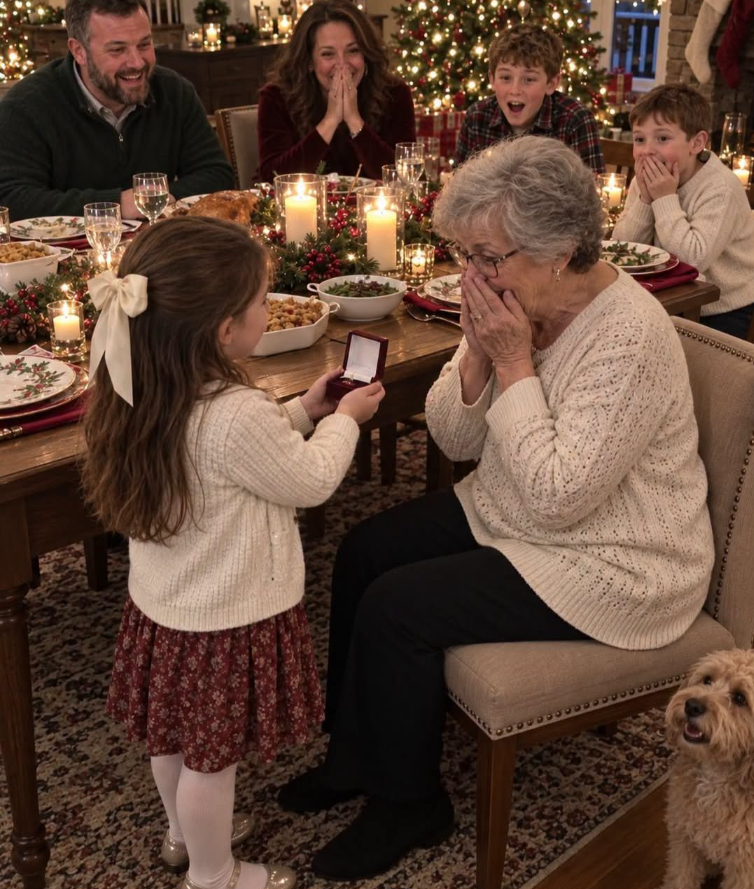
Instead, she reached into the tiny purse Brandon had given her.
Her fingers closed around the red velvet box.
Then she stood.
She walked across the dining room while every aunt, uncle, cousin, and in-law watched.
She stopped directly in front of Gene.
“Grandma,” Holly said, loudly and clearly enough for everyone at the far end of the table to hear, “Dad told me to give this to you if you ever ignored me again.”
Gene’s polished smile tightened.
“Well, isn’t that dramatic.”
Brandon stood behind our daughter.
“Open it,” he said.
Gene lifted the lid.
She was still wearing that smug expression, as though she already had a speech prepared about overly sensitive children and modern parenting.
Then she saw what was inside.
And screamed.
The cousin standing near the window flinched.
Everyone leaned forward.
Inside the red velvet box was a small brass key and a folded white card.
Gene stared at them.
Then she unfolded the paper.
The first words made the color drain from her face.
Six years earlier, after Gene’s husband had died, she had been left with a mortgage and a high-interest second loan connected to a failed $150,000 restaurant investment.
She had struggled to keep the house.
What Gene didn’t know was that Brandon had quietly bought that loan from its private lender.
He had become the creditor while allowing his mother to believe he had simply negotiated better terms with the bank.
With help from an attorney, Brandon had kept the home protected.
Every payment went into an account he controlled.
Gene had continued living in the house and making the same payments, never realizing who actually controlled the debt.
Now, however, the document inside the red box changed the arrangement.
The lien was being transferred into a trust established for Holly.
I would serve as administrator until Holly turned 25.
Gene could remain in the house.
She could continue making the same payments.
But there was now one condition.
Holly had to be treated like every other grandchild.
No more exclusions.
No more carefully chosen insults.
No more pretending that a child who had done nothing wrong was somehow less deserving of a place at the family table.
If the exclusion continued, an independent attorney could enforce the balance within 30 days through court.
It wasn’t an insurance claim.
It wasn’t an estate dispute.
It wasn’t a threat to seize the house.
It was a firm boundary attached to years of financial protection.
Gene looked at Brandon.
“You did this?”
Brandon didn’t answer immediately.
Then he looked at Holly.
“I did what I should have done a long time ago.”
Gene’s eyes moved back to the document.
The room was silent.
For years, she had believed she held all the power.
She controlled the guest list.
She controlled the gifts.
She controlled the seating arrangements.
She controlled who was welcomed and who was made to feel like an outsider.
But now she was staring at a document that made one thing very clear.
Holly was not a guest.
She was family.
And if Gene continued treating her otherwise, there would be consequences.
For the first time, Gene had nothing clever to say.
She simply closed the box.
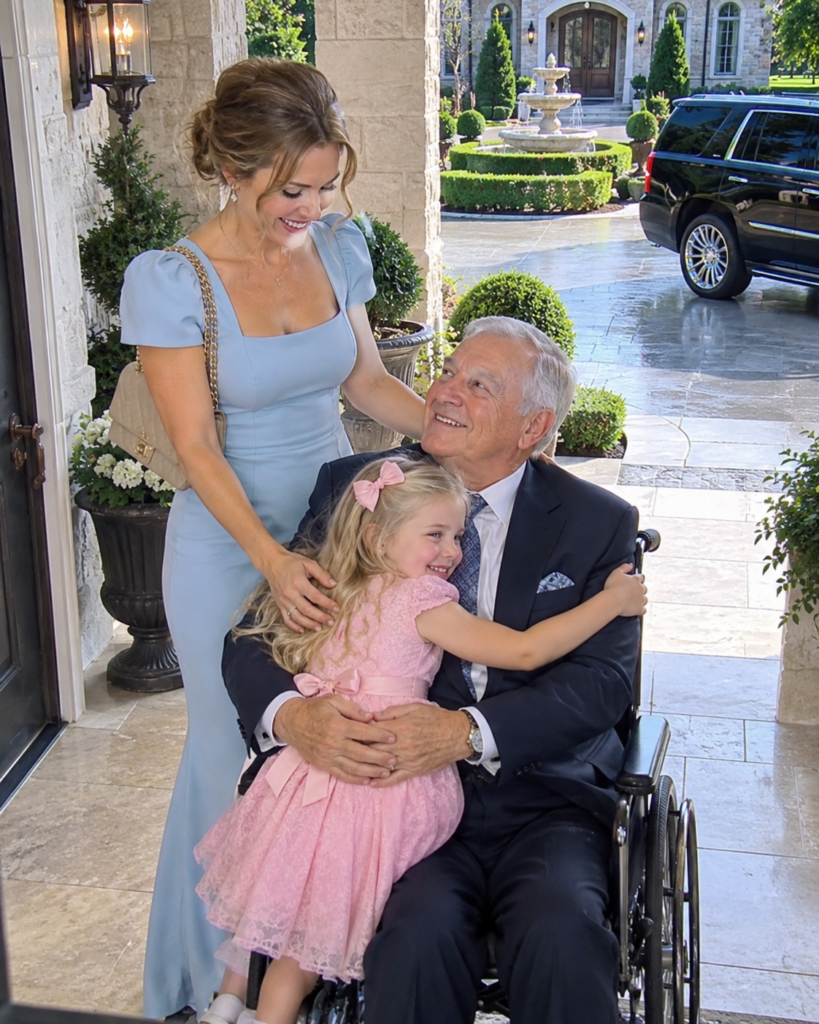
Three weeks later, she came to our house.
She wasn’t carrying another cheap gift.
She wasn’t carrying a legal threat.
She was carrying a carefully wrapped necklace shaped like a holly leaf.
When Holly opened the box, Gene stood quietly in front of her.
Then she apologized.
Not with excuses.
Not with explanations.
She admitted that her anger about our blended family had landed on a child who had done absolutely nothing wrong.
Holly listened.
Then she accepted the apology.
But she also gave her grandmother a warning.
“Another candle incident gets reported immediately.”
Gene nodded.
Their relationship didn’t transform overnight.
There were no magical hugs.
No instant reconciliation.
Years of exclusion couldn’t disappear because of one apology.
But something changed.
Gene began writing Holly’s name on every place card.
She chose equal gifts.
She started making sure Holly was included in family activities.
And whenever an old habit slipped through, she corrected herself.
Brandon kept the trust documents current.
He never needed to enforce them.
Because Gene eventually understood what the red box was really saying.
A year later, she gave Holly a family photo album.
Inside were childhood photographs of Brandon.
But there was also a handwritten message.
Gene wrote that she had finally understood something she should have understood years earlier.
Family couldn’t be defined according to her comfort.
Holly read the message.
Then she thanked her grandmother.
No hesitation.
No bitterness.
Just a simple thank-you.
Looking back, the red velvet box had protected a house.
But that wasn’t its greatest purpose.
Its greatest purpose was giving a seven-year-old girl something far more important than property or money.
It gave her a voice.
For years, Holly had been treated as though she were standing just outside the family circle.
Close enough to see what everyone else had.
But never close enough to belong.
A $3 candle with a cruel little tag had been meant to remind her of that.
Instead, it became the moment everything changed.
Because Holly finally understood that belonging wasn’t something Gene had the right to grant or take away.
She was already family.
She always had been.
And on that Christmas morning, the little girl Gene had called a “guest” stood in the middle of the dining room and quietly reminded everyone of something that should never have needed to be said in the first place:
A child’s place in a family should never depend on whether an adult chooses to accept her.
The red velvet box didn’t create Holly’s place at the table.
It simply made sure nobody could take it away.