Part 2
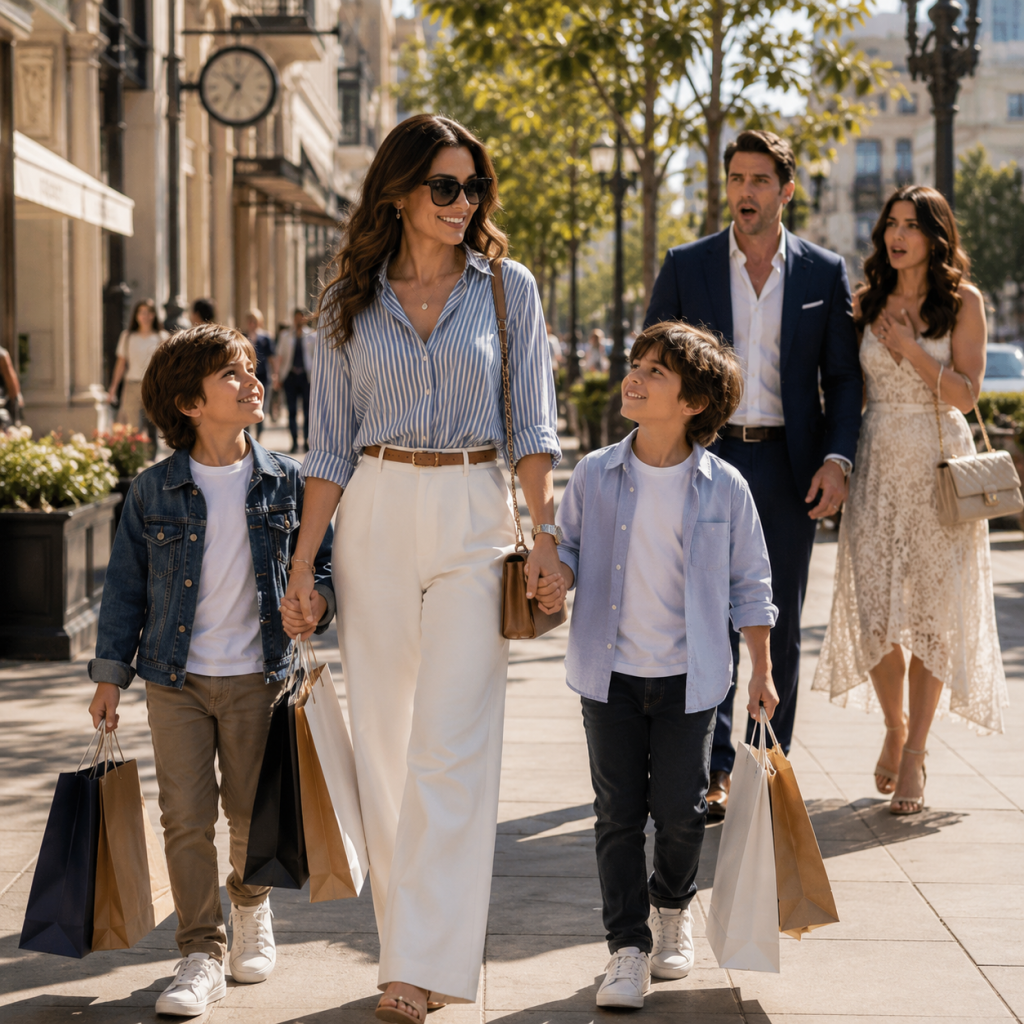
His mother appeared at the edge of the crowd in a cream-colored coat, one hand clutching the strap of her handbag.
Evelyn Mercer had always been composed.
Even when she was angry, she spoke softly. Even when she delivered a threat, she smiled as though she were offering helpful advice. Her calm had once made me feel small and inexperienced, as though every feeling I possessed was evidence that I did not belong in Damien’s world.
But there was nothing calm about her now.
She had seen the boys.
And for the first time since I had known her, Evelyn Mercer looked afraid.
“Damien,” she repeated, hurrying toward us. “We’re late.”
He did not look at her.
His gaze remained fixed on Ethan and Noah.
“Are they mine?” he asked me again.
Ethan glanced from Damien to me, his excitement about the robot display already forgotten. Noah moved closer to my side.
I felt the warmth of their small hands in mine.
Whatever answers Damien believed he deserved, my sons did not deserve to receive them beneath fluorescent lights while strangers pushed shopping bags past us.
“This is not the place,” I said.
Damien swallowed.
“That isn’t a no.”
“No,” Evelyn said quickly. “It certainly is not. But Mara is right. This is neither the time nor the place for an emotional conversation.”
I turned toward her.
Five years had not changed her much. Her dark hair was shorter, and faint lines now framed her mouth, but her expression was the same one she had worn the day she came to my apartment with a check inside a blue leather folder.
Practical.
Controlled.
Certain that everything had a price.
“You don’t get to decide what kind of conversation this is,” I said.
Her eyes met mine.
For a second, the mall disappeared.
I was twenty-eight again, standing in my tiny kitchen while Evelyn looked around as though the mismatched chairs and chipped ceramic mugs confirmed every suspicion she had ever held about me.
Two million dollars, she had said.
Enough to begin again anywhere you like.
All I had to do was sign a confidentiality agreement, leave New York, and never contact Damien again.
I had refused.
She had not raised her voice. She had merely placed the folder on the counter and told me that pride was an expensive luxury for a woman about to become a single mother.
I had left the folder untouched.
When I returned from work the next evening, it was gone.
At the time, I assumed she had come back for it.
Now I wondered if that had been a mistake.
“Mara,” Damien said.
I looked at him.
There was a pleading quality in his expression that I might once have mistaken for love. Now I recognized it as panic.
He wanted the truth, but only because the truth had found him.
“Mom,” Ethan whispered, “can we go?”
“Yes.”
I started walking.
Damien stepped after us.
“Mara, please.”
I stopped and turned just enough to face him.
“You had one chance to ask me about my child,” I said quietly. “You had it five years ago.”
His face tightened.
“I know.”
“No, you don’t.”
“I know what I did.”
“Do you?”
The question came out more sharply than I intended.
Noah flinched.
I immediately regretted it.
I crouched in front of the boys and smoothed Noah’s hair away from his forehead.
“Hey,” I said gently. “Why don’t we go find Aunt Lily? She’s probably wondering why we disappeared.”
“Are we still getting pretzels?” Ethan asked.
His ability to return to important matters almost made me smile.
“Yes. We are absolutely still getting pretzels.”
When I stood, Damien had not moved.
I reached into my purse, took out one of my business cards, and held it toward him.
Evelyn’s eyes widened.
“Mara, I don’t think—”
“I wasn’t speaking to you.”
Damien took the card.
My name was printed above the address of the small architectural design firm I had built with Lily over the past three years.
Mara Bennett
Bennett & Cole Residential Design
Damien stared at it as though it were a legal summons.
“Call me on Monday,” I said. “Not tonight. Not tomorrow. Monday.”
“What happens Monday?”
“We talk.”
His eyes shifted toward the boys.
“And them?”
“They go to school. They live their lives. You do not come near their home, their school, or anywhere else they might be until I decide what is appropriate.”
“I would never frighten them.”
“You frightened their mother.”
The words hung between us.
His hand closed around the card.
“I understand.”
I did not believe him.
Not yet.
But he stepped back.
That mattered.
I led the boys away without looking at Evelyn again.
Still, I could feel her watching us.
Not with dislike.
With calculation.
And beneath it, something far more unsettling.
Recognition.
As though the moment she had spent five years preventing had finally arrived.
Lily was waiting near the food court with three paper cups and an expression that changed the instant she saw my face.
“What happened?”
“Not here.”
She looked over my shoulder.
Damien stood in the distance, surrounded by the moving crowd. Evelyn was speaking urgently beside him, but he seemed not to hear her.
Lily’s mouth fell open.
“Oh.”
Ethan climbed into a chair.
“Mom knows that man.”
Lily sat beside him. “Does she?”
“She said he was no one important,” Noah explained.
Children remembered everything.
I placed a pretzel in front of each boy and tried to keep my hands steady.
Lily studied me across the table.
She had been my closest friend since college. She was the person who drove me to the hospital when I went into labor two weeks early. She stayed through seventeen hours of labor, slept in a plastic chair, and cried harder than I did when the nurse placed Ethan beside Noah in the same bassinet.
She knew the entire story.
Or at least, I had believed she did.
“He recognized them,” she said quietly.
“Yes.”
“And?”
“He asked if they were his.”
Ethan was busy tearing his pretzel into careful pieces. Noah was watching a pigeon outside the glass doors.
Lily lowered her voice further.
“What did you say?”
“Nothing.”
“Good.”
I looked at her.
She immediately shook her head.
“No. Not good forever. Just good there. In front of the boys.”
I exhaled.
“He’s calling Monday.”
“You gave him your number?”
“My office number.”
Lily reached across the table and covered my hand.
“You don’t owe him access to them.”
“I know.”
“You don’t owe him forgiveness either.”
“I know that too.”
Her thumb moved gently against my knuckles.
“But?” she asked.
I glanced at Ethan.
He had Damien’s habit of tilting his head when he concentrated. Noah had the same deep crease between his eyebrows, though his appeared when he was worried rather than angry.
“But they may be owed the truth.”
Lily did not answer.
Outside, the afternoon sunlight reflected against the glass, turning every passing figure into a pale shadow.
For five years, I had told myself that Damien’s absence was simple.
He had made a choice.
I had made mine.
The boys had grown up surrounded by people who loved them. My father visited every Thursday. Lily was family in every way that mattered. Their teachers described them as kind, curious, and secure.
They were not waiting beside the window for a father who never arrived.
I had made sure of that.
Yet now, for the first time, I wondered whether protecting them from Damien and protecting myself from him were still the same thing.
Across the food court, Evelyn reached for Damien’s arm.
He pulled away.
Then he turned to her and said something that made her go completely still.
I could not hear the words.
But I saw Evelyn look toward us.
Her face told me enough.
Damien had started asking questions.
He called at nine-oh-three on Monday morning.
I was standing in our office kitchenette, pouring coffee into a mug, when the receptionist transferred him.
“Mara.”
His voice carried none of the polished confidence I remembered.
“Damien.”
“Thank you for answering.”
“I said I would.”
“I wasn’t certain you meant it.”
“That sounds like your problem.”
A pause followed.
“I deserve that.”
I leaned against the counter.
Through the glass wall, I could see Lily pretending to review fabric samples while watching me.
“Where do you want to meet?” Damien asked.
“Somewhere public.”
“Of course.”
“And your mother does not come.”
“She won’t.”
I heard something in his tone.
“What happened after we left?”
Another pause.
“She told me the boys could not be mine.”
My grip tightened around the phone.
“What reason did she give?”
“She said you ended the pregnancy.”
The office seemed to tilt.
I stared at the dark surface of my coffee.
“And you believed her?”
“For five years.”
Anger rose so quickly that I had to set the mug down.
“You never called to confirm?”
“I tried.”
“No, Damien. You didn’t.”
“I went to your apartment three days after you left me.”
The words stopped me.
“What?”
“You were gone. The landlord said you had moved out.”
I had.
After Evelyn’s visit, I no longer felt safe staying in a building partly owned by a Mercer holding company. Lily helped me move into her cousin’s spare room in Queens.
“I called your number,” Damien continued. “It had been disconnected. Your email bounced back. I went to the design studio where you worked, and they told me you had resigned.”
“That doesn’t mean I ended my pregnancy.”
“No.”
“Then why did you believe her?”
“Because she showed me a signed agreement.”
The air left my lungs.
“What agreement?”
“A confidential settlement. It said you had accepted two million dollars in exchange for ending the pregnancy and severing all contact with me.”
For several seconds, neither of us spoke.
Lily stepped into the kitchenette.
One look at my face and she closed the door behind her.
“I never signed anything,” I said.
“I know that now.”
“How?”
“My mother admitted it wasn’t your signature.”
A cold pressure formed behind my ribs.
“She admitted forgery?”
“Not in those words. She said arrangements were made to protect the family, and that certain documents were created to prevent confusion.”
“That is forgery.”
“I agree.”
I turned away from Lily and lowered my voice.
“Where is this agreement?”
“With a law firm.”
“Which firm?”
“Graham, Voss and Merritt.”
I recognized the name immediately.
The business card in the envelope Damien had placed before me five years ago had belonged to Charles Voss.
The private clinic information had carried the same firm’s letterhead.
My stomach turned.
“When can I see it?”
“Today.”
We agreed to meet at a small café near Bryant Park at six.
Before Damien ended the call, he said, “Mara?”
“What?”
“I need to ask something, and I know I have no right.”
“Then perhaps you shouldn’t.”
“Did you ever plan to tell me?”
The question hurt because I had asked it of myself many times.
“In the beginning,” I said. “Every day.”
“What changed?”
“You didn’t come looking.”
“I did.”
“Three days later.”
His silence was answer enough.
I closed my eyes.
“You gave me an envelope containing the address of a clinic. Then you watched me walk out of your office.”
“I was a coward.”
“Yes.”
“I thought I had more time to fix it.”
“You thought I would remain where you left me.”
He breathed out slowly.
“That too.”
I looked through the glass at the office Lily and I had built. Samples covered the tables. Rolled plans leaned against the walls. A framed photograph of Ethan and Noah sat beside my computer, both boys grinning through missing front teeth.
I had not remained anywhere.
“Six o’clock,” I said.
Then I hung up.
Lily waited.
“What did he say?”
I told her.
By the time I finished, the color had faded from her face.
“The folder,” she said.
“What about it?”
“The one his mother brought to your apartment.”
“She took it when she left.”
“No,” Lily said slowly. “She didn’t.”
I stared at her.
Lily rubbed her forehead.
“I came by that night, remember? You were asleep. I used my key.”
I remembered waking to find soup in my refrigerator and a blanket tucked around me.
“There was a blue folder on the counter,” she continued. “I thought it was from Damien. I put it in the top drawer because I didn’t want you to see it the moment you woke up.”
“It wasn’t there the next morning.”
“I know.”
“Did you take it?”
“No.”
“Then who did?”
Lily’s expression changed.
“What?”
She walked quickly toward her desk, opened a drawer, and removed an old ring of keys.
“Your landlord had access.”
“The landlord worked for Mercer Properties.”
“And the building superintendent.”
The memory returned with uncomfortable clarity.
The faint smell of lemon polish in my kitchen.
A chair slightly out of place.
The conviction that grief had made me careless.
Someone had entered my apartment after Lily left.
Someone had taken the unsigned agreement.
“What would that prove?” I asked. “An unsigned contract is worthless.”
“Unless someone signed it for you.”
Damien was already seated when I arrived at the café.
He stood the moment he saw me.
Five years ago, he had worn tailored suits like armor. Tonight, he had removed his tie and rolled his sleeves to his elbows. He looked less like the heir to Mercer Holdings and more like the man who once made pancakes in my kitchen at midnight because I had casually mentioned being hungry.
That man had existed.
So had the man in the conference room.
I had spent years believing I needed to choose which one had been real.
Now I understood that they both were.
“Mara.”
I sat opposite him.
“Do you have the agreement?”
“Not yet.”
I nearly stood again.
“My attorney filed a formal request this morning,” he added. “The firm says the record is sealed under a confidentiality provision.”
“A provision based on my forged signature.”
“Yes.”
“Then unseal it.”
“I’m trying.”
The waiter approached. I ordered tea I did not want.
Damien watched me until we were alone again.
“They’re twins,” he said.
The softness in his voice irritated me more than anger would have.
“You saw that.”
“What are their names?”
I hesitated.
Names were intimate.
Names belonged to bedtime stories, scraped knees, school forms, and whispered reassurance after bad dreams.
But he had heard them in the mall.
“Ethan and Noah.”
A faint, pained smile touched his mouth.
“Ethan and Noah Bennett.”
“Yes.”
“How old are they?”
“Four years and nine months.”
His gaze dropped to the table.
“I missed their birthdays.”
“All of them.”
“First words.”
“Yes.”
“First steps.”
“Yes.”
Each answer seemed to settle inside him.
I did not soften them.
He needed to understand that fatherhood was not an idea waiting to welcome him. It was a history already in progress.
“Were they early?” he asked.
“Two weeks.”
“Healthy?”
“Eventually.”
His head lifted.
“What happened?”
“Noah had trouble breathing. He spent four days in the neonatal unit.”
Damien’s face changed.
I remembered standing beside the incubator, afraid to touch my son through the round openings. Ethan had been in a bassinet in my room while Noah lay beneath blue-white lights on another floor.
I had never felt so divided.
“Was someone with you?” Damien asked.
“Lily. My father arrived the next morning.”
“I should have been there.”
“Yes.”
The waiter delivered my tea.
Neither of us touched our drinks.
Damien looked through the window. Evening had settled over the street, and office lights glowed in the buildings across from us.
“I loved you,” he said.
The words landed quietly.
“That isn’t enough.”
“I know.”
“Do you?”
“I loved you, but I was more afraid of disappointing my family than I was afraid of losing you. I told myself I needed time to think. I told myself the envelope was practical. That we could discuss everything once the panic passed.”
“You put a price beside a clinic address.”
“I did.”
“You made me feel as though my pregnancy were a crisis to be managed.”
“I know.”
“No. You know the sentence. You don’t know the feeling.”
He nodded once.
“You’re right.”
His lack of defense unsettled me.
I had prepared for excuses. For claims that his mother manipulated him. For reminders that he had been under pressure from the board, his father’s illness, and the terms of the family trust.
Instead, he sat there and allowed the weight of his actions to remain where it belonged.
“What exactly did your mother tell you?” I asked.
“That you had accepted the settlement. She said you wanted a clean break and had left the city.”
“And the pregnancy?”
“She said the clinic confirmed the appointment.”
My tea trembled slightly as I lifted it.
“I never went to the clinic.”
“I believe you.”
“Why now?”
“Because I saw them.”
“Their faces convinced you. Not my word.”
His jaw tightened.
“That’s fair.”
“It isn’t fair. It’s true.”
He looked down again.
“My mother also knew their names.”
I set the cup down.
“What?”
“Saturday night, I asked if she had known you kept the pregnancy. She denied it. Then she said, ‘Those children have been safe and provided for.’”
A chill moved through me.
“Those children.”
“Yes.”
“She knew there were two.”
“Yes.”
I thought of every birthday party held in public parks. Every photograph Lily had posted to her private social media account. Every school pickup. Every unfamiliar car that had seemed ordinary enough to forget.
“Did you ask how?”
“She said she had received periodic assurances.”
“From whom?”
“She refused to tell me.”
I pushed back from the table.
Damien’s hand moved instinctively toward mine, then stopped before touching me.
“Mara.”
“Has someone been watching us?”
“I don’t know.”
“That is not an answer.”
“I’m trying to find out.”
“You don’t get to try casually. These are my children.”
“They may be mine too.”
The words came out firmer than anything else he had said.
I stared at him.
For one breath, I saw the old Damien—the man accustomed to entering rooms and assuming the world would shift to accommodate him.
Then his expression softened.
“I’m not claiming rights,” he said. “I’m saying that if someone has been watching them, I need the truth as much as you do.”
“No. You want the truth. I need to know they are safe.”
“You’re right.”
Again, he accepted the correction.
It was infuriatingly difficult to fight someone who refused to fight back.
His phone vibrated on the table.
He glanced at the screen.
“My attorney.”
“Answer it.”
He did.
For the next minute, he mostly listened.
Then he said, “Send it to me now.”
When he ended the call, his face had gone pale.
“What?”
“The firm has agreed to release part of the file.”
“Part?”
“The original agreement and payment authorization. The remaining documents require a court order because they involve another person.”
“What person?”
“My attorney doesn’t know. The name is redacted.”
His phone chimed.
An email appeared.
He opened the attachments and placed the phone between us.
The first page was a formal settlement agreement dated five years earlier.
My name appeared in the opening paragraph.
So did Damien’s.
The amount was written in both numbers and words.
Two million dollars.
I scrolled downward.
There, at the bottom, was my signature.
Except it was not mine.
It was close enough to fool someone who had seen my name only on holiday cards or restaurant receipts. The first letter curved correctly. The double “n” in Bennett leaned slightly to the right.
But I never crossed my final “t” separately.
Whoever had copied my signature had.
“That isn’t mine,” I said.
“I know.”
“How?”
“Because I have the note you left me.”
I looked at him.
He reached into the inside pocket of his jacket and removed a folded piece of paper.
The edges were worn.
I recognized it before he opened it.
Damien,
One day you will understand that fear is still a choice.
I hope, for your sake, you can live with yours.
Mara
I had written it on the back of a restaurant receipt and left it beside his office door because I could not bear to go back inside.
“You kept that?”
“Every day.”
I wanted to ask why.
I did not.
Instead, I compared the signatures.
They were clearly different.
“Look at the payment authorization,” Damien said.
He opened the second attachment.
The money had been transferred from a Mercer family trust into an account at a private bank in Connecticut. The recipient was listed as MB Consulting.
“That isn’t me,” I said.
“The company was created two days after you left.”
“By whom?”
“The registration is sealed.”
“Of course it is.”
“The account was closed eighteen months later.”
“Where did the money go?”
“My attorney is tracing it.”
I read the page again.
At the bottom was an authorization signed by Evelyn Mercer and witnessed by Charles Voss.
Beside the witness line was a handwritten reference number.
I knew that number.
I took out my wallet and searched through the inner pocket until I found an old, softened business card.
I had carried it for five years, not from sentiment, but because it was the only physical evidence I retained from that week.
Charles Voss
Graham, Voss and Merritt
On the back, written in blue ink, was the same reference number.
Damien stared at it.
“Where did you get that?”
“It was inside the envelope you gave me.”
His brows drew together.
“I never put a lawyer’s card in that envelope.”
I looked at him.
“What did you put in it?”
“Information about the clinic and a letter.”
“There was no letter.”
His face changed.
“What letter?”
He hesitated.
“One saying I was sorry. That I was frightened. That I would support whatever decision you made, even if I wasn’t ready to be a father.”
I almost laughed.
Not because it was funny.
Because it was unbearable.
“You told me to read everything when I got home,” I said.
“Yes.”
“I did. There was money, a clinic brochure, and that card.”
“What money?”
“Twenty thousand dollars in a cashier’s check.”
Damien went completely still.
“I didn’t put a check in the envelope.”
A noise from the café kitchen broke the silence between us.
Plates clattered.
Someone laughed near the door.
Our world remained suspended over a table neither of us could leave.
“Then who changed it?” I whispered.
Damien’s gaze moved to the forged agreement on his phone.
“My mother had access to my office.”
“That doesn’t prove she did it.”
“No.”
“Did she know you planned to meet me?”
“Yes.”
“Did she know about the letter?”
“She knew I had written something.”
I looked down at the lawyer’s card.
For five years, I had remembered Damien’s envelope as the moment that revealed his entire character.
Now the truth was less convenient.
He had still failed me.
He had still presented termination as the easiest answer. He had still allowed fear to speak before love.
But perhaps he had not said everything I believed he had said.
Perhaps someone had sharpened his cowardice into cruelty, then placed the weapon in his hand.
My phone rang.
Lily’s name appeared on the screen.
I answered immediately.
“Mara, are you with him?”
“Yes.”
Her breathing sounded uneven.
“What happened?”
“Someone came to the office.”
I sat straighter.
“Who?”
“A man from Graham, Voss and Merritt. He said he needed to deliver something directly to you.”
“Is he still there?”
“No. He left an envelope.”
Damien was already signaling for the check.
“Don’t open it,” I said.
“I already did.”
“What is it?”
“Copies of old building-access records from your apartment.”
My heart began to pound.
“Why would the law firm have those?”
“There’s a letter. It says Charles Voss died three months ago, but before he died, he instructed his assistant to release certain records if Damien ever challenged the settlement.”
Damien’s eyes narrowed.
“What do the records show?” I asked.
Lily went silent.
“Lily?”
“Someone entered your apartment the night the blue folder disappeared.”
“Evelyn?”
“No.”
“Then who?”
“The access card belonged to Mercer Properties, but the employee name attached to it was removed.”
“That doesn’t tell us anything.”
“There’s more.”
I heard paper unfolding.
“The card was used again six months later at St. Anne’s Hospital.”
Every muscle in my body tightened.
St. Anne’s was where I gave birth.
“Which part of the hospital?” I asked.
“The maternity records office.”
Damien leaned closer.
Lily continued.
“The letter says someone requested copies of Ethan’s and Noah’s birth records. There’s a signature on the release form.”
“Whose?”
“That’s the problem. It was signed with your name.”
The café suddenly felt too warm.
“I never authorized that.”
“I know.”
“Send me everything.”
“I’m scanning it now.”
When the files arrived, Damien and I bent over my phone together.
The building-access log was exactly as Lily described. At 11:42 p.m., someone had entered my apartment using a master access card.
The same card appeared in the hospital’s visitor system months later.
Attached to the records was a scanned request for certified copies of the twins’ birth files.
The signature was another imitation of mine.
But below it, the requester had been required to list a relationship to the children.
One word had been typed into the box.
Guardian.
Damien read it twice.
“Who would claim to be their guardian?”
“No one. I was their only legal guardian.”
He scrolled to the final page.
It was a copy of the identification used to support the request, but the photograph and name had been blacked out.
Only the date of birth remained visible.
Damien stared at it.
Then he sat back.
“What?” I asked.
He did not answer.
“Damien.”
“That date.”
“What about it?”
“I know it.”
His voice had become almost inaudible.
“It’s my mother’s birthday.”
The realization should have felt like an answer.
Instead, it created another question.
If Evelyn had been watching the boys, why had she seemed genuinely startled at the mall?
Why had she looked at them as though she were not merely seeing Damien’s children, but recognizing something she had hoped never to see?
My phone chimed with another message from Lily.
There’s one more page. It was stuck inside the envelope.
A photograph appeared.
It showed the reverse side of the hospital request form.
At the top was a handwritten note from Charles Voss.
Release approved under prior guardianship arrangement. Identity verified through original Bennett file.
Below the note was a copy of an older document.
A birth certificate.
Not Ethan’s.
Not Noah’s.
Mine.
I enlarged the image.
My mother’s name appeared where it belonged.
Eleanor Bennett.
But the space for my father’s name did not contain the name of the man who had raised me.
It contained another.
Jonathan Mercer.
Damien’s late father.
Neither of us moved.
The sounds of the café faded into a distant hum.
“That’s impossible,” Damien said.
I could barely breathe.
Jonathan Mercer had died four years ago.
I had met him only twice.
Both times, he had looked at me with a strange, lingering sadness I had mistaken for disapproval.
Damien reached for the phone, then stopped.
“Mara…”
I stared at the document until the words blurred.
If it was real, then Evelyn’s two-million-dollar lie had never been only about keeping Damien from discovering his sons.
It had been about keeping both of us from discovering who I was.
And why, for five years, someone had been quietly recording every detail of my children’s lives.
END OF PART 2 – LIKE, SHARE AND COMMENT “”THE ENTIRE STORY”” IF YOU WANT TO READ THE FULL STORY