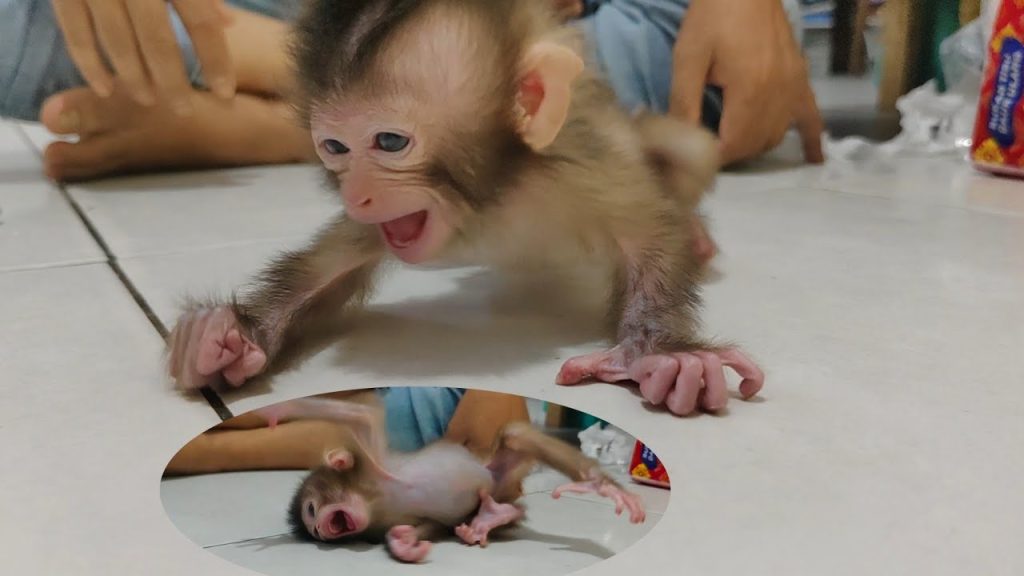
Molly woke in a storm of anger, fists clenched, tail stiff, eyes flashing with refusal. The caregiver tried to set her gently on the floor, just for a moment to clean the mat, but Molly shrieked in protest and twisted with surprising strength. The instant her feet touched the ground, she sprang back up, clinging to warm arms as if the floor itself were an enemy.
Again the caregiver tried, lower, slower, whispering comfort. Again Molly resisted. Her cries were sharp and stubborn, the sound of a tiny heart demanding closeness above all else. She kicked, pushed, and arched her back, determined not to be laid down. To her, being placed on the floor meant being left behind, even if only for a second.
Tears welled in her eyes as she fought the hands that loved her. It was not cruelty that lived in her anger, only fear stitched tightly to her need. She had learned too early what it felt like to be cold and alone, and now every separation felt dangerous.
The caregiver paused, holding Molly close, letting her feel the steady heartbeat beneath gentle fingers. Molly’s cries softened but did not stop. When she was lowered again, even carefully, the anger flared once more. She lunged upward with all her tiny strength, wrapping her arms tight around the familiar chest.
Minutes passed in this fragile struggle. Finally, the caregiver sat on the floor instead of placing Molly there. Surprised, Molly hesitated. Her body trembled, uncertain. Slowly, she loosened her grip just enough to sit while still leaning into safety.
Her breathing slowed. The anger melted into sniffles. The floor no longer felt like abandonment because the arms never left.
Molly did not need space.
She needed reassurance.
And in that quiet moment on the floor she felt.