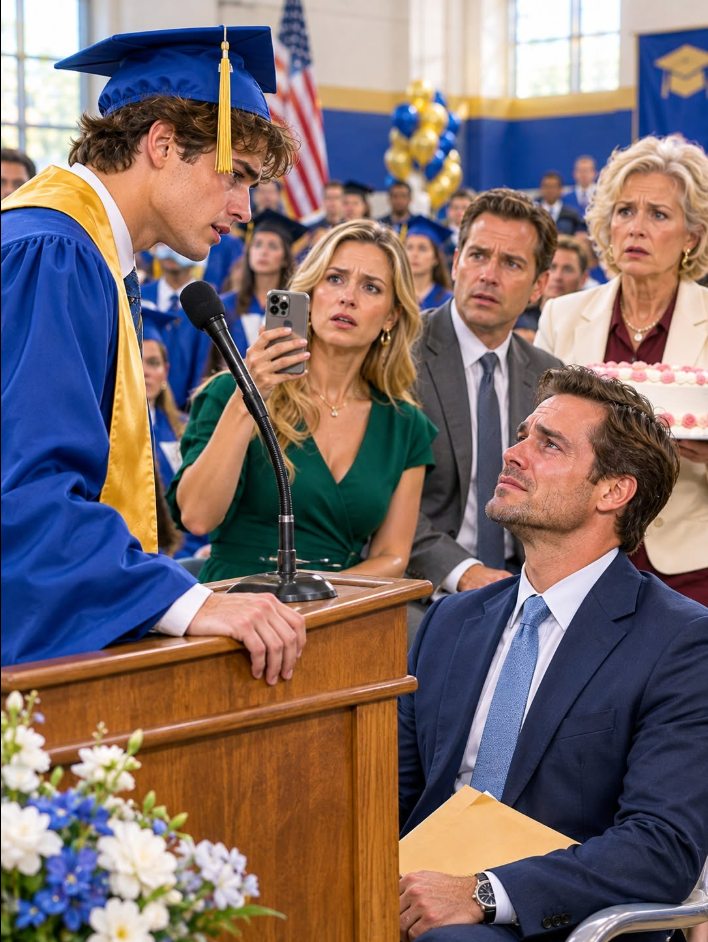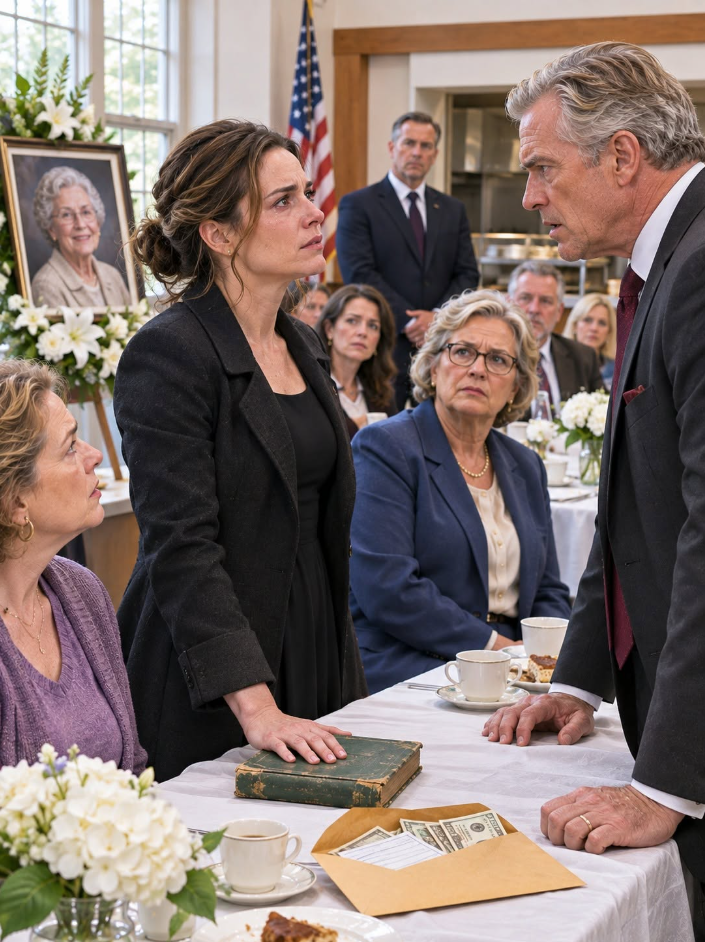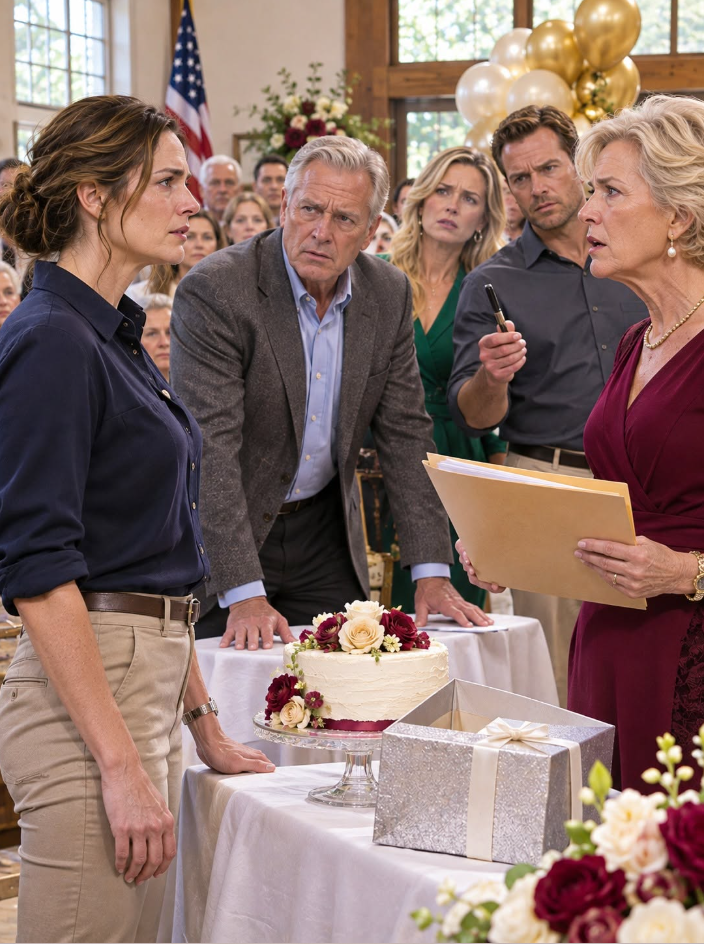
My aunt accidentally sent me a video of my family calling me a “pathetic failure” while I’d been paying their bills for six years. “She should be grateful!” my mother laughed. I stayed silent for 24 days until the next payment was due. Then my brother made a terrible mistake in front of 40 people at our father’s memorial.
My aunt accidentally sent me a video of my family calling me a “pathetic failure” — while I’d been paying for their bills for years. “She should be grateful!” they laughed. I stayed silent… until… the next payment was due…
My name is Ansley Offstead. I’m 35, and my aunt accidentally sent me a video of my family calling me a pathetic failure.
38 seconds.
My brother on his feet at my mother’s table, raising her good wine. My mother laughing behind her hand.
“She should be grateful,” my mom said, and the whole table laughed with her.
For 6 years, I had been paying their bills — the gas, the water, my mother’s health insurance, the truck my brother drove to that dinner.
I didn’t answer the video. I didn’t call anyone. I stayed silent for 24 days because, on the first of the month, the next payment was due.
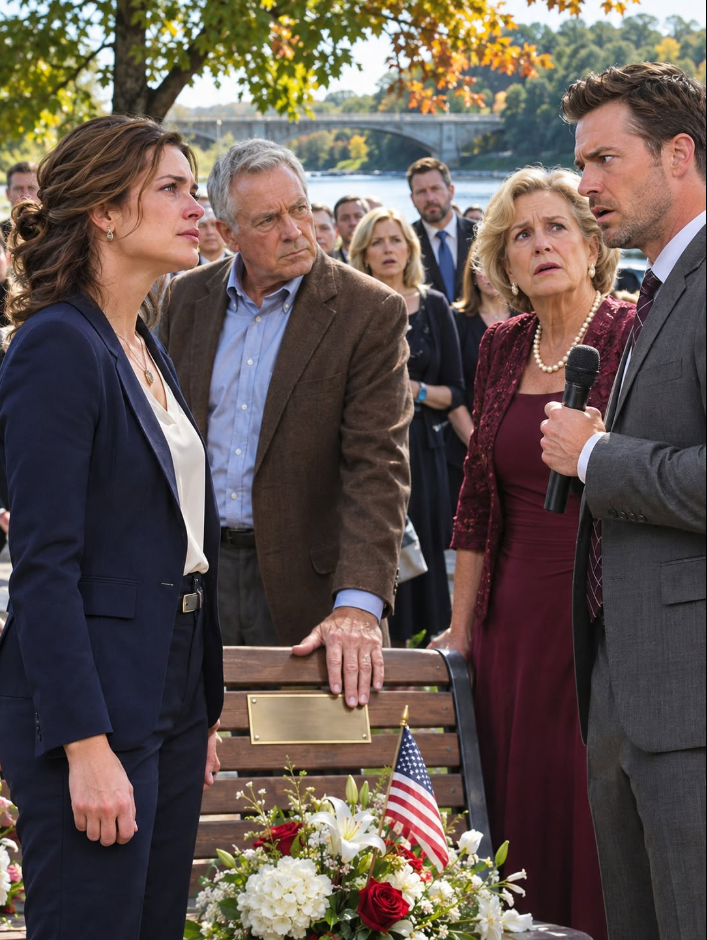
And what my brother said into a microphone at my father’s memorial bench 3 weeks later, in front of 40 people, is the reason I’m telling you this at all.
Welcome back to Clara’s Drama Stories.
This is where quiet women tell how they stopped caring what was never theirs, calmly, all the way to the last page.
If you’ve ever been the one who pays and the one who gets laughed at, this one’s for you. Pour yourself something warm and stay with me. Drop a comment and be sure to subscribe.
Pueblo, Colorado, is a steel town, and my father was a steel man.
Irv Offstead worked 33 years at the mill on the south side, most of them on the night shift, and he smelled like hot metal and Lava soap until the day he died.
That day was a Tuesday in October, 6 years ago.
He finished his shift, walked to his truck in the employee lot, and sat down behind the wheel. A co-worker found him 20 minutes later.
The heart attack had been quiet. The ambulance got him to Park View with a pulse, and I spent the next two days in a plastic chair beside his bed in the ICU.
My brother Dustin got there on the second night. He had a client, he said.
My father woke up once around 4 in the morning, with my hand already in his. He looked at me the way he looked at a gauge he didn’t trust.
“Make sure your mother’s covered,” he said.
I told him I would.
He squeezed my fingers, and he went back to sleep. And he didn’t wake up again.
I’m a dental hygienist. I’ve been one for 12 years at Dr. Villaina’s practice on the north side. And I’ll tell you something about my job.
I look into people’s mouths all day.
You learn who grinds their teeth at night. You learn who’s been lying to the dentist about flossing. You learn a lot about a person from what they do when they think nobody’s looking.
I thought I knew what my father meant by covered. I thought he meant money.
It took me 6 years and one video to learn what he actually meant.
It started with one letter.
4 months after the funeral, my mother handed me an envelope from her Medicare supplement company without opening it. I opened it in her kitchen.
Her premium was 40 days late, and the letter used the word termination.
I knew what that meant because I work in healthcare. My mother was 65 then, with a bad knee and my father’s blood pressure.
She’d signed up for the supplement that spring, in the window where nobody asks health questions. If it lapsed, she couldn’t just buy it back. She’d have to answer questions, and the answers would cost her.
So, I paid it over the phone, standing at her counter, and I set it up on my own bank account so it would never be late again.
That was the first one.
The gas and electric came next because Black Hills sent a pink notice in January, and my mother said she didn’t understand the online portal.
Then the water, then the homeowner’s insurance, because the house on Belmont was paid off. But a paid-off house with no insurance is a bonfire waiting for a match.
Then the phone plan. Three lines in my name because my mother said the store was confusing.
By the end of the first year, I had six scheduled payments in my banking app, and every one of them was for somebody else.
I want to be clear about something because I know what you’re thinking.
I tried.
The second year, I brought a one-page agreement to Sunday dinner. When Dustin got on his feet, he’d take half.
My mother slid it back across the table.
“Families don’t do contracts, Ansley.”
The third year, I canceled the cable and moved the water bill to her account.
[Snorts.]
She let it go past due, paid a late fee, and cried. I took it back.
My mother got $3,400 a month from my father’s pension and her own Social Security. I knew that, but the supplement was the one bill I was afraid to test.
By the sixth year, the total was a little over $85,000.
Then there was the truck.
My brother Dustin is 38 and calls himself a business consultant. What he does, as far as I can tell, is sell marketing funnels to people who own small businesses and don’t know what a funnel is.
Every month, he was about to close something. He’d been about to close something since 2017.
In March of 2022, his old Tacoma died on Highway 50, and the credit union turned him down.
My mother called me that night.
“Give him a runway, honey. Just a runway.”
So, I bought a 2018 Silverado for $27,000.
The loan was in my name. The title was in my name. The insurance was on my policy.
Dustin promised $462 a month, and he paid it four times. Then the client fell through, and then the next one, and then the subject just quietly closed.
The way a door closes when nobody’s holding it.
He drove that truck to church. He drove it to Sunday dinner. He called it “my truck,” and nobody corrected him because I didn’t.
His wife, Caitlyn, sells wellness on Instagram, which means she sells pictures of herself drinking green things in my brother’s kitchen.
They rent a house in PBlo West, 20 minutes from my mother. And every month, from my father’s pension, my mother sent Dustin $900.
She called it a runway, too.
I didn’t know that for 6 years. I’m going to tell you how I found out, but not yet.
I kept the spare key to the Silverado in my kitchen drawer, next to the batteries and the takeout menus. I told myself it was there in case he locked himself out.
Sunday dinner at the house on Belmont was my mother’s stage, and she liked an audience.
Most weeks, that meant Ruth Anne Wheeler from church, who sat at my father’s end of the table and said grace like she was reading a weather report.
My aunt Sheree, my father’s younger sister, played the piano at that same church and came for the pot roast.
Dustin and Caitlyn came late. I came early because somebody had to peel the potatoes.
One Sunday in August, Ruth Anne asked my mother how she was managing since Irv passed.
My mother put down her fork.
“Dustin handles everything,” she said. “The day we buried his father.”
Ruthanne looked at my brother the way you look at a man who’s carried a casket.
Dustin nodded, humble as a deacon.
Then Ruthanne turned to me because I was standing at the sink with my hands in dishwater.
“And what do you do, honey?”
My mother answered before I could dry my hands.
“She cleans teeth.”
That was the whole sentence.
Aunt Sheree laughed. A small laugh. The kind you let out so you don’t have to say anything.
Caitlyn didn’t even look up from her phone.
I rinsed a plate.
I could have said that I’d done the math on Dustin’s handling. I could have said that I owned half a duplex on the east side and rented out the other half to a nursing student named Bonita, and that my mother had never once asked where I lived.
I didn’t say any of it.
Correcting my mother in her own kitchen is like flossing a tiger. You might be right, but you’re going to lose a hand.
“Your brother handles it,” my mother said again, to nobody, “and pass the roles.”
On the first Sunday in September, I wasn’t at that table.
A hygienist at the county’s free clinic had a baby early, and I took her Saturday and Sunday shifts because nobody else would.
I spent the day scaling the teeth of people who hadn’t seen a dentist in a decade. And I came home at 7, with my back aching and my phone on silent.
At 9:14 that night, it lit up.
A video from Aunt Sheree.
No message, just the file.
I pressed play.
It was my mother’s dining room. The lights too warm. The camera a little tilted.
Dustin was on his feet with a glass of my mother’s pino, the bottle she saves for company.
“To Ansley,” he said, and the table laughed before he’d even finished. “Our pathetic failure. 35 years old, scraping plaque for a living, no husband, renting half a duplex.”
Caitlyn snorted.
My mother waved her napkin at him the way she does when she’s pleased and wants to look like she isn’t.
“Oh, stop. She should be grateful.”
The table went quiet enough for her to finish.
“Letting her help is the only thing that gives that girl a purpose.”
Laughter.
Caitlyn leaned into the frame.
“She should be grateful we let her sit at the table.”
And behind the camera, close to the microphone, I heard my aunt laugh.
38 seconds.
Then a hand covered the lens, and it was over.
I watched it again. I watched it a third time with the sound, just to look at my mother’s face.
At 9:40, a second message came.
“Oh my gosh, wrong person. Please delete. It was just a joke.”
Then a praying hands emoji.
I set the phone face down on the kitchen table. Then I turned it over and watched it one more time.
I didn’t answer my aunt. I didn’t call my mother. I didn’t drive to Belmont at 10:00 at night and stand in her yard.
I know some of you would have, and I understand it.
[Snorts.]
But I’ve spent 12 years with my hands in people’s mouths. And the first thing they teach you is that you don’t poke something inflamed.
It only gets worse.
So, I sat at my kitchen table with the overhead light on, and I thought.
My father’s voice came first, the way it always does.
“Make sure your mother’s covered.”
Then my mother’s voice over the pino.
“It gives her a purpose.”
I thought about what the video meant, and then I thought about what it didn’t mean.
It didn’t mean they knew I’d seen it.
My aunt wasn’t going to tell them. Sher had never told anyone anything that made her look bad in her entire life.
The others would go on exactly as before. They would laugh at me on Sundays and let me pay on the first.
I opened my banking app and looked at the scheduled payments tab.
Six lines: Black Hills Energy, PBLO water, the supplement, the Part D plan, the insurance set aside, the truck.
I took a screenshot of the list, and I saved it to a folder I named October.
Then I did something I hadn’t done in years.
I got up, opened the file in my closet, and took out the deed to my half of the duplex, with my name on it and nobody else’s.
I read it the way you’d read a letter from someone who still liked you.
Then I put it back.
Then I looked at the calendar.
The next payment was due on the first.
That gave me 24 days. I decided to use every one of them.
Monday morning, my first patient was Verlin Mackey, 71, who had worked the furnaces with my father for 20 years and now ran the retirees club at the Union Local.
He comes in every 6 months and sits in my chair with his Local 21102 cap in his lap. And he tells me the mill is going downhill while I count his pockets.
“October 18th,” he said while I was changing my gloves. “The bench.”
The retirees club buys a bench on the riverwalk for every member who passes, and my father’s was six years coming because of the waiting list.
“Your mother’s doing the dedication. Asked me to say a few words about the family.”
He looked at me sideways.
“About the son who stepped up,” she said.
I put the mirror in his mouth.
“Open, please.”
Dr. Villanuva caught me in the hallway after.
“You’re quiet today.”
I told her I was fine, and she let it go because she’s known me long enough to know when to.
At lunch, I sat in my car in the parking lot with a legal pad, and I did the math I’d avoided for 6 years.
12 months time 6 years, times the gas and the water and the supplement and the plan and the insurance once a year. The truck, 54 months, and its insurance.
$85,600, give or take a late fee.
I wrote it at the bottom of the page and circled it.
I didn’t want it back. I’m not a fool.
I wanted to know the size of the thing I’d been carrying before I set it down.
23 days.
That week, I made phone calls on my lunch breaks, one a day from the front seat of my car.
Tuesday was Black Hills Energy.
The account was in Janice Offstead’s name. I was listed as nothing at all, just a card number that showed up on the first.
The woman on the line said I could stop paying any time I wanted.
“It’s her account, ma’am. The bill goes to her.”
Wednesday was PBLO Water. Same thing.
Thursday was the insurance company that covered the house on Belmont. The policy was in my mother’s name. The premium was due in November.
And the agent sounded confused about why I was asking.
Friday was the supplement company, and that was the call I’d been dreading.
I asked the question I needed answered.
“If a payment was missed, what happened?”
“30 days of grace,” the man said. “Notices mailed to the policyholder. Payment accepted by phone, by mail, or online from the policyholder herself.”
“Can you send her the phone payment instructions?” I asked. “In writing.”
He said he could.
I asked him to send them twice.
Then I called the phone company about three lines in my name.
They could move my mother’s number to her own plan in one visit. They could cut Dustin’s line at the end of a billing cycle.
I asked for 30 days’ notice on both so nobody could say I’d done it in the dark.
By Friday night, I had a list on my legal pad, and the list told me something I’d known and never looked at.
Not one of those bills had my name on it, except the phones.
The phones and the truck.
The truck was the one I didn’t understand.
So, on Wednesday night, I went to the free legal clinic at the Rawlings Library downtown.
It runs in a meeting room on the second floor with folding chairs and a coffee ern. And the volunteer lawyer that night was a woman named Ms. Padilla, who had reading glasses on a chain and no patience for long stories.
I gave her the short one.
“I bought a truck. My name is on the title. My brother drives it and doesn’t pay.”
“Is there a lease?” she asked.
“No.”
“A bill of sale? Anything he signed?”
“No.”
“Then he’s borrowing your truck.”
She said it like she was telling me the time.
“You can ask for it back. Put it in writing with a date. If he doesn’t return it, you can go get it. Don’t break a window. Don’t pick a lock. Don’t argue in a driveway. Call the sheriff’s non-emergency line before you go so there’s a record. It’s yours.”
I wrote all of it down.
She looked at me over the glasses.
“He’s going to call it stealing.”
“I know.”
“It isn’t.”
I thanked her and drove home down Santa Fe, past the mill where the night shift was lit up orange, the way it was when my father was inside it.
At my kitchen table, I wrote the letter about the truck.
Return the vehicle by October 10th or buy it for the payoff balance.
$11,400.
I signed it the way I sign a chart, small and clear. Then I put it in a folder with the other letter, the one I hadn’t finished yet.
If you’re wondering why I didn’t just call my mother and scream, I thought about it.
I thought about it every night that week.
But I know what happens when you poke something inflamed.
So, I’m going to ask you to do what I did.
Wait.
Hit subscribe because what my mother said when the first bill came back to her will tell you everything about my family.
The next Sunday, I went to dinner.
I peeled the potatoes. I set the table with the good plates, and I sat in my usual chair, the one nearest to the kitchen.
Ruth Anne was there again, and my mother was telling her about the bench.
“Dustin’s going to speak, of course. He handles everything.”
Dustin nodded.
He told a story about a client in Colorado Springs and how he’d driven my truck up there in the snow last winter.
And he said “my truck” both times.
Caitlyn was talking about a woman at her gym who’d gotten a free membership and complained about the towels.
“She should be grateful,” Caitlyn said, and my mother laughed, and I ate my pot roast.
Across the table, Aunt Sheree poured herself more wine, and her hand shook enough that the bottle clicked against the glass.
She didn’t look at me once.
I watched them the way I watch a mouth before I start.
Where the swelling is, where it hurts when you press.
Nobody at that table thought I’d seen anything.
They were exactly the same as they’d been for six years.
And for the first time, so was I.
I rinsed the plates. I dried my hands.
At the door, my aunt caught my sleeve.
“Ansley, did you—”
“Good night, Aunt Sheree,” I said, and I went home.
On September 24th, a Wednesday, I finished the other letter.
One page.
I typed it at my kitchen table and printed it at the clinic.
It listed every bill I had paid for 6 years by name, with the company’s phone number next to each one.
It said that, effective October 1st, I would no longer be making those payments.
It said the supplement company had a 30-day grace period and had mailed her the instructions.
It said the phone lines would be separated at the end of the billing cycle.
It said the truck had to come back by October 10th or be bought for the payoff.
It did not say why.
I didn’t mention the video. I didn’t mention pathetic or failure or purpose.
I wrote it the way I’d write a treatment plan, which is to say the facts and the dates and nothing else.
I drove it to Belmont after work and put it in my mother’s hand at her kitchen table while she was doing the crossword.
She looked at the first line. Then she folded it in half.
“I’ll read it later, honey,” she said.
It under the salt shaker.
I took a photo of the letter before I left, and I sent it to Dustin with a single line.
“This affects you.”
His reply came while I was still in her driveway.
“LOL. She’s bluffing.”
That was all.
I sat in my car and read it twice.
Then I drove home and set the table for one. And I slept like a person who has finally said something true, even if nobody listened.
6 days.
That’s how long it was between the letter and the first.
And my family spent them not reading it.
My mother called once on the Friday.
“Your brother says you’re upset about something.”
Not, “What are you upset about?”
“Says you’re upset about something.”
The way you’d report weather in another state.
“Read the letter, Mom.”
“I don’t like letters, Ansley. You know that. Just tell me.”
“It’s one page.”
She sighed the side. She’s been sighing at me since I was nine.
“I’ll have Dustin look at it.”
Aunt Sherry texted on Saturday.
“Please call me.”
I didn’t.
I used the days the way I’d used them before a long procedure.
I moved three months of my own expenses into my checking account because I didn’t know what my family would do, and I wanted to be able to afford whatever it was.
I told Bonita, my tenant, that I might need a ride early on the 11th, and she said sure without asking why, which is one of the reasons I rent to nursing students.
I opened the kitchen drawer and checked that the spare key to the Silverado was still there, between the batteries and the menus.
It was.
On Tuesday night, the 30th, I set my alarm for 6, and then I turned it off again because I knew I’d be awake.
I slept 8 hours.
It was the first full night I’d slept since the video.
And I remember thinking, as I turned off the lamp, that it felt a lot like the night before a patient finally lets you pull the tooth that’s been hurting them for a year.
October 1st was a Wednesday.
I was up at 6:05, with the coffee going and my phone on the kitchen table, and the sky over the east side was still the color of a nickel.
I opened the banking app.
I went to the scheduled payments tab, where the six lines had sat for 6 years like teeth in a row.
Black Hills Energy, $210. Do the fifth.
I pressed cancel.
The app asked if I was sure.
I was.
PBLO Water, $70.
Cancel.
The Medicare supplement, 178.
Cancel.
The Part D plan, 34.
Cancel.
The monthly set aside for the house insurance.
Cancel.
Then the sixth line.
$462 to the credit union for the Silverado.
I looked at that one a long time.
The loan was in my name, and my credit was mine. And I wasn’t going to let my brother cost me that.
I left it.
Five cancellations.
When I was done, the screen said “no upcoming payments” in gray letters, like it was nothing.
I sat and looked at it until the coffee was cold.
Then I went to work and cleaned four mouths before 9.
At 9:22, my phone buzzed in the pocket of my scrubs.
My mother.
“The gas company says your payment didn’t go through. Can you check your bank, sweetheart?”
I stood in the sterilization room with the autoclave hissing behind me, and I typed back with my thumbs.
“It went through to the right person. Read the letter.”
9 minutes later, Dustin called.
I let it ring. I had a patient in the chair, and I don’t take calls with my hands in somebody’s mouth.
He called again at 10:00 and at 11.
And at 12:15, I sat in my car and called him back.
He didn’t say hello.
“It’s October, Ansley. It’s October in Pueblo. You’re going to let Mom freeze.”
I’d known that sentence was coming since the 1st of September. I’d practice the answer.
“Mom gets $3,400 a month. The gas bill is 210.”
A pause. The kind he takes when a client asks what a funnel actually does.
“That’s not the point.”
“Then what’s the point, Dustin?”
“The point is you’ve been doing it for years, and now you just stop over what?”
I didn’t answer that because he already knew what, and he was waiting to find out if I did.
“The letter has every phone number,” I said. “The gas can be paid today by anyone.”
“Mom doesn’t do phone payments.”
“Then you do them. You handle everything, I’ve heard.”
He hung up.
I sat with the engine off and the windows fogging.
My mother texted while I sat there.
“Dustin says you were rude to him.”
I didn’t answer that either.
In my family, rude means you said a number out loud.
I thought about the $900.
I didn’t know about it yet, not for sure. But I’d been at that table for 6 years.
And I’d watched my brother’s lifestyle sit on a consultant’s income like a house on a cracked slab. And some part of me had always known the money was coming from somewhere.
That Saturday, I found out where.
Saturday morning, I drove to Belmont with my laptop because I meant what I’d written.
I would stop paying. I would not leave her unable to.
“I’ll set up the gas and the water from your account,” I told her. “20 minutes. You’ll never think about it again.”
She was at the kitchen table in her robe, and the letter was still under the salt shaker, and she put her hand flat on the checkbook beside her like I’d reached for it.
“Your brother will handle it.”
“Mom, he hasn’t.”
“He’s busy.”
I pulled out a chair.
The checkbook was open to the register in her careful secretar’s handwriting, and I didn’t mean to read it, but I read it.
Dustin, 900, runway.
The 1st of September. The 1st of August.
I turned back a page.
The 1st of July.
The register only went back to January, but it was there every month. The same hand, the same word.
And I knew, without asking, how many registers came before it.
$900 for my father’s pension. To a man who called my truck his truck.
I looked at her.
She didn’t look away, which is the one thing I’ll give my mother.
“He’s family,” she said.
“I’m family.”
“It’s different. You’re fine. You’ve always been fine.”
Then she told me about Bessemer, about her own mother standing in line at the county office with a paper number and how the whole neighborhood knew.
“No one will ever see this family need,” she said. “A family has a man who provides. That’s how it looks, right?”
“Dad provided. Mom, for 6 years, I’m the one who’s been paying.”
She closed the checkbook.
“Don’t be vulgar about money, Ansley.”
I closed the laptop.
I left the letter under the salt shaker, and I left.
Caitlyn posted on Monday.
I didn’t see it first. Bonita did because nursing students see everything. And she knocked on my side of the duplex with her phone out and an expression like she’d found a bruise on a patient.
The post was a photo of my mother at Easter.
Soft focus.
And underneath it, Caitlyn had written a paragraph about what it means when family abandons their mother in October.
When a widow is left to figure out the gas company alone. When some people decide their own comfort matters more than the woman who raised them.
It didn’t use my name.
It didn’t have to.
By Tuesday, it had 140 likes, and Ruth Anne Wheeler had commented, “Praying for Janice.”
On Wednesday, I saw Ruthanne in the produce section at Safeway.
She looked at me, and then she looked very hard at the avocados.
On Thursday, Dr. Villanuva stopped in the doorway of my operatory after my last patient.
“You okay?”
“Fine.”
“You’ve said fine four times this month.”
“Then I’m consistent.”
She smiled a little and let me go.
And I was grateful for that in the way I’m grateful for a sharp instrument. Quietly and without saying so.
I didn’t post anything. I didn’t comment. I didn’t send the video to the three people who’d have changed their minds about me in 38 seconds.
I decided that in my kitchen on the 7th of September, and I hadn’t changed my mind.
A thing that’s true doesn’t need a phone to prove it.
It just needs the right room and the right question and enough patience to wait for both.
On October 8th, the supplement company’s letter reached the house on Belmont, and my mother called me crying.
Real crying.
Not the kind from the video.
“They’re going to cancel me. It says termination.”
I was in my car at lunch again.
I closed my eyes.
This was the bill I’d been afraid of for 6 years.
And here it was.
And I’d known it would come. And it still landed in my chest like a drop tray.
“Mom, read me the top of the letter.”
She did.
30 days from the due date. Payment accepted by phone. A number.
“Call that number,” I said. “Pay it with your debit card. I’ll stay on the line with you the whole time.”
“I don’t know how to—”
“They’ll walk you through it. It takes 5 minutes.”
“Your brother—”
“Mom.”
I said it the way I say “open, please” to a patient who’s been fighting me.
“Dustin isn’t on the policy. You are. Only you can pay it. And you can pay it today.”
There was a long breath on the other end. The kind that comes right before somebody decides to be angry instead of afraid.
“You’re enjoying this,” she said.
She hung up.
I sat there a minute.
Then I called the supplement company myself, gave them her policy number, and asked one question.
Was it still in grace?
“23 days left,” the man said.
“Can you mail her the phone instructions again?” I asked. “And flagged the account so someone calls her.”
He said he would.
I didn’t pay it.
I want you to hear that because it was the hardest thing I did that whole month.
I didn’t pay it.
2 days later, on the 10th, the deadline for the truck came and went, and that night, my brother texted me a dare and a laugh.
“Come get it. LOL.”
Saturday, October 11th.
I was awake before the alarm.
At 6:40, I called the sheriff’s non-emergency line from my kitchen and told a board deputy exactly what I was about to do.
My name, the truck’s plate, the vehicle number off the title, my brother’s address in Pueblo West, and the time I’d be there.
“You’re the registered owner?”
“I am. I have the title in my hand.”
“Then you’re retrieving your own vehicle, ma’am. Don’t damage anything and don’t make a scene.”
I told him I’d never made a scene in my life.
Bonita drove me in her Civic, with the heat on high and a travel mug between her knees.
The sun wasn’t up yet over the wet mountains, and there was frost on everything — the fences and the mailboxes and the windshields — so that the whole neighborhood looked dusted with sugar.
The Silverado sat in my brother’s driveway with its nose to the street.
No garage, no other car.
The house was dark.
I got out with the spare key from my kitchen drawer in my glove. And I walked up the driveway the way I’d walk up to a patient I didn’t want to startle.
The [snorts] door unlocked with a soft click.
The seat was pushed all the way back because my brother is tall and I’m not. And there was a gas station receipt on the dash and a wellness smoothie cup in the holder that wasn’t mine.
I moved the seat.
I started the engine.
The frost on the windshield cleared in a slow fan.
Nobody came to the window. Nobody opened the door.
I backed out carefully, and Bonita pulled in behind me, and we drove back to the east side in a line like a very small parade.
At 8:50, my brother called 911 and reported his truck stolen.
I know the time because the deputy told me.
He called my cell at 9:10, polite and tired, and asked me to confirm I was the registered owner of a gray 2018 Silverado.
I read him the title number off the document in my hand.
“Thank you, ma’am. That’s what the system shows.”
He paused.
“The complainant is pretty upset.”
“I imagine he is.”
“I’ve explained to him it’s your vehicle. He says you took it without permission.”
“He had my permission for 4 years, Deputy. I withdrew it in writing on September 24th. He has the letter.”
Another pause.
“He didn’t mention a letter.”
“No, I thought he wouldn’t have.”
The deputy wished me a good morning, which I think he meant.
Then the texts started.
11 of them before noon, each one louder than the last. The way a person gets when the thing he’s been leaning on turns out to be a wall he painted himself.
“You stole from your own brother.”
“Caitlyn had to drive me in front of the whole street.”
“Mom is sick about this.”
“Dad would be ashamed of you.”
I read each one, and I put the phone down, and I cleaned my kitchen, which was already clean.
My mother called it one.
“You humiliated your brother in front of his neighbors.”
“I didn’t say a word to his neighbor’s, Mom.”
“The deputy did.”
“The deputy told him the truth. The title was in my glove box the whole time.”
She was quiet.
Then, in the voice she uses for the crossword when she’s missing a letter:
“You’ve changed.”
I thought about that after she hung up.
I hadn’t changed.
I’d just stopped translating.
On Tuesday, Verlin Mackey came into the clinic without an appointment, which he had never done in 12 years.
He told the front desk he thought he had a cleaning.
He didn’t.
I knew it, and he knew it.
And I put him in my chair anyway, and tipped it back, and turned on the light because it’s easier for some men to talk looking at a ceiling.
“Your mother called me Sunday,” he said. “She wants me to talk about the son who stepped up at the bench.”
I checked his gums.
They were fine. They’d been fine in April.
“She wants me to say Dustin’s been carrying the family since Irv.”
I didn’t say anything.
He waited.
Then he said, “I saw a thing on the Facebook from the wife.”
“Caitlyn?”
“That one.”
He was quiet while I ran the scaler along a tooth that didn’t need it.
“Your dad told me something,” Verlin said. “In that hospital, the night before, you’d gone to the cafeteria with your mother. It was just him and me.”
I stopped.
I took the mirror out of his mouth so he could say it, and he didn’t.
He closed his mouth and looked at the ceiling.
“I’ll say it when it’s time.”
“You don’t have to,” I said. “Verlin, you don’t have to say anything.”
“I know I don’t.”
He sat up and put his cap back on.
“Irv was my friend for 30 years. I know what I have to do and what I don’t.”
He paid for a cleaning he didn’t get at the front desk, over my objection, and he left.
I stood in the empty operatory with the lights still on and realized my hands weren’t steady.
It was the first time that month.
Wednesday night, Dustin came to my door.
My mother sent him, I found out later, to talk sense into me, which is a phrase my family uses when it means make her stop.
I opened the door the width of my shoulder and no more.
He had on the jacket I’d bought him for Christmas and the face he uses on clients.
Reasonable and a little hurt.
“Ans, come on. This has gone far enough.”
“Read the letter.”
“I read the letter. Mom’s a wreck. The gas is past due. You took the truck in front of—”
“You had until the 10th. You texted me to come get it.”
He breathed out through his nose.
The client face slipped.
“You know what? Mom’s right about you. You’ve always been like this. You act like such a—”
He stopped himself.
I watched him stop.
“Like a what, Dustin?”
“Nothing.”
“Say it.”
I kept my voice where I keep it with a frightened patient.
Low and even.
“You said it before. You said it on video.”
He went white.
I’ve seen a lot of faces go pale in my chair. But I’d never seen my brother’s.
“What video?”
“38 seconds. Mom’s pino. ‘To Ansley. Our pathetic failure.’ Caitlyn’s part about the table. Mom’s part about my purpose.”
He took one step back off the stoop.
“Sherry,” he said, not to me.
“Sherry [snorts] sent that to—to me by mistake on the 7th of September.”
I let that sit between us in the cold.
“I’ve known for 5 weeks, Dustin. I haven’t told a soul. Think about what that means about which one of us is pathetic.”
I closed the door.
Not hard. Just closed it.
Through the wood, I heard him stand there for almost a minute before his footsteps went back down my walk.
Here’s where you probably want me to play that video for the whole family and be done with it.
I’m not going to.
I don’t need a phone to tell the truth about my own life.
But I did need one more week and a bench with my father’s name on it.
If you’ve ever been the one everybody counted on and nobody counted, stay with me. Hit subscribe.
The next part happened in front of 40 people.
My mother called on Thursday night, and I could tell from the first word that Dustin had gotten to her first.
“Sherry says she sent you something by mistake. Some silly thing from dinner.”
“She did.”
“It was a joke, Ansley. You know how your brother is.”
“Which part was the joke, Mom?”
Silence.
I could hear the kitchen clock on Belmont.
The one shaped like a rooster.
“Was it the failure part, or the part where I should be grateful, or the part about my purpose?”
“You’re twisting it.”
“I’m quoting it.”
She changed her voice then to the one she uses with the pastor.
“Saturday is for your father. Don’t come if you’re going to make a scene.”
“I’ll be there,” I said. “I won’t be the one making it.”
After she hung up, Aunt Sheree texted so and a crying face.
I looked at it a long time.
Then I put the phone in the drawer with the spare key, and I ironed a shirt for Saturday, a forest green one with long sleeves, the kind you wear when you want to look like you came to listen.
Saturday, October 18th, was cold and clear.
The kind of PBLO morning where the sky is so blue it looks painted on, and your breath hangs in front of you like a question.
I drove the Silverado downtown and parked it on Union Avenue in plain sight, and walked down to the riverwalk.
The bench was already there at a bend in the channel where the water goes slow and green.
Oak slats, iron arms, and a brass plate on the backrest.
Irving “Irv” Offstead, 33 years at the mill. Local 21102 retirees.
Somebody had set a card table with coffee and donuts and taped a laminated photo of my father to the end of it.
The one from the Union newsletter where he’s squinting at the camera like it owes him money.
I touched the edge of the brass plate before anyone else got there, and the metal was so cold it felt wet.
The retirees were there in their union jackets. A dozen gray men standing the way men stand at a job site.
Ruthanne and four church ladies in good coats.
My cousin Nichollet, who should have gotten the video, hugging herself against the wind.
Aunt Sheree by the coffee, looking at the river.
40 people, give or take.
Dustin and Caitlyn arrived last in Caitlyn’s white SUV.
And my brother came down the path with his hands in his pockets and his jaw set. And when he saw me, he looked away.
My mother was in her church coat with a folder of notes, and she saw the truck key in my hand, and her face did something small and tight before the smile came back.
Verlin Mackey stood at the end of the bench with his cap over his heart, and when I caught his eye, he nodded once, the way my father used to nod at the end of a shift.
Then the president of the retirees club handed my mother the microphone.
My mother gave a good speech. I’ll give her that, too.
She talked about my father’s hands and the smell of Lava soap and the way he’d come home at 7 in the morning and make pancakes before he slept.
She cried at the right places.
Then she put her hand on my brother’s shoulder.
“V would be so proud of the son who stepped into his shoes. Dustin has carried this family since the day we buried his father.”
The retirees clapped because they’d clapped for worse.
Ruth Anne dabbed her eyes.
Then my mother handed Dustin the microphone, and my brother did the thing I’d watched him practice in the mirror of our childhood bathroom for 30 years.
He became my father.
The voice dropped, the shoulders squared.
“Dad taught me that family carries family,” he said. “And I’ve done my best to live that, even when it’s hard. Even when some of us make it hard.”
He didn’t look at me.
He didn’t have to.
“Even when a man has to beg a ride to his own father’s bench because his sister took the truck Dad helped him get. Even when a widow’s heat gets cut in October by her own daughter.”
A sound went through the crowd, low and ugly.
The sound a room makes when it decides who the villain is.
One of the church ladies said, “Oh, no.”
Ruth Anne turned and looked straight at me.
“After everything Mom’s done,” Dustin said, and his voice broke exactly where he wanted it to. “She should be grateful.”
He handed the microphone back.
My mother squeezed his arm.
The wind came up off the river and moved the dead leaves along the walk.
And in that noise, I noticed one thing.
Verlin Mackey hadn’t clapped.
He was looking at me with his cap in his hands, waiting to see what I’d do.
I stepped forward.
I didn’t take the microphone.
40 people on a riverbank will hear a woman who speaks clearly. And I’ve spent 12 years asking people to open wider.
“Mom,” I said, “I have three questions, then I’ll sit down.”
She looked at the retirees president like he might stop me.
He didn’t.
“Whose name is on the gas bill at the house?”
My mother’s smile stayed, but her eyes went to Dustin and back.
“That’s not—”
“It’s a simple question, Mom. Whose name?”
A pause long enough for the river.
“Mine.”
“Thank you. Who paid it? For the last six years. Every month on the first.”
Nobody moved.
Caitlyn said, “This is disgusting,” to no one, and nobody answered her.
I waited the way I wait for a patient to stop fighting the mirror.
“Who paid it, Mom?”
My mother looked at the brass plate with my father’s name on it.
“You did,” she said.
It wasn’t loud.
It didn’t need to be.
The church ladies heard it. The retirees heard it. Ruth Anne Wheeler heard it, and her hand went to the collar of her good coat and stayed there.
“Last question.”
I turned to my brother.
“The truck you drove to Sunday dinner for four years. The one you told everyone was yours. Whose name is on the title, Dustin?”
“Don’t,” he said.
“Whose name?”
He looked at my mother.
She looked at the ground.
“Mine,” I said into the quiet. “It’s parked on Union Avenue. I have the title in my pocket. Dad had been gone 2 years when I signed for it.”
Nobody said anything for a while.
Somewhere behind us, a duck landed on the water, and it was the loudest thing on the riverwalk.
“I didn’t cut anything off,” I said.
I kept my voice where it had been, low and even, and I looked at the people and not at my family.
“I stopped paying bills that were never mine. I told my mother in writing on September 24th. The letter is under the salt shaker on her kitchen table. Anyone can read it. Every bill in it has her name on it. Her phone number is next to each one. The gas can be paid today by phone in 5 minutes.”
Caitlyn said, “She’s lying.”
And Ruth Anne, who had known my mother for 30 years, said, “Janice?” in a voice that wasn’t sure anymore.
My mother didn’t answer her.
I did.
“$85,600.”
That’s what I paid over six years while my brother handled everything.
I let it sit.
Then I said the part I’d carried since the 7th of September.
“A few weeks ago, my mother said I should be grateful. She was right. I was. I was grateful for 6 years, and that’s what it cost. And she said that helping gives me a purpose.”
I looked at her then.
“You were right about that, too, Mom. It did. I found a different one.”
Dustin started to say something, and Caitlyn’s hand closed on his sleeve.
One of the retirees, a wide man with a Local 21102 patch I didn’t know, said quietly, “Jan, what’s pension come to?”
My mother didn’t answer that either.
She didn’t have to.
The silence answered it.
I stepped back to where I’d been standing.
I’d said what I came to say, and I’d said it in the right room. And I was ready to sit down on my father’s bench and let the wind do whatever it wanted.
Then Verlin Mackey put his cap on and stepped up to the brass plate and cleared his throat the way he does before I tell him he’s been flossing.
“I’m going to say something,” Verlin said. “And then I’m done.”
He didn’t take the microphone either.
He has a furnace voice, the kind that was built to carry over machinery, and it carried over a river fine.
“Jan asked me to talk about the son who stepped up. I told her I’d talk about the family. So, here’s the family.”
He put one hand on the backrest of the bench, over my father’s name.
“The night before Irv died, I sat with him. Jan was in the cafeteria with the girl. Dustin hadn’t got there yet.”
[Snorts.]
He looked at my brother without heat.
“That’s not a dig, son. It’s just where everybody was.”
Then he looked at the crowd.
“Irv was in and out, but he came up clear for a minute. He grabbed my wrist, and he said this. He said, ‘Annsley’s got it. She always has.’ Then he said, ‘Don’t let Jan turn that girl into a wallet.’”
Nobody breathed.
Ruth Anne’s hand came off her collar and covered her mouth.
Two of the retirees looked at the ground the way men do when a thing is true and there’s nothing to be done about it.
My mother said, “He never—”
And Verlin said, “He did, John. I was there. You were getting coffee.”
He took his hand off the bench.
“V didn’t mean money when he said covered. He meant looked after. He meant somebody in that house would have the sense God gave a goose. And he knew which one of his kids that was.”
He turned to me, and his eyes were wet and his voice wasn’t.
“That’s all. I said I’d say it when it was time. It’s time.”
He stepped back into the line of jackets.
The president of the retirees club, who had not expected any of this when he ordered the donuts, held the microphone at his side like a man holding a wrench he’d forgotten the purpose of.
My brother broke first.
He always has.
“You set this up!” he shouted, and it came out high.
Nothing like my father.
He pointed at me across the bench.
“You planned this. You’ve been against this family since Dad died. You and your little letters and your—”
Caitlyn pulled his arm, and he shook her off.
“You took my truck in front of my neighbors. You let Mom’s bills go to collections to make a point.”
“Nothing’s gone to collections, Dustin,” I said. “It’s been 17 days.”
My mother was crying now.
The loud kind.
The kind that recruits.
“After everything I’ve done for you, after everything I gave up, you do this at your father’s bench.”
I waited until she had to breathe.
Then I said the last of it to her quietly because it wasn’t for the crowd.
“Mom, I’ll pay this year’s insurance on the house one more time into an account in your name, and you pay the company yourself. Dad asked me to make sure you were covered. Now I know what he meant. That’s the last bill of yours I’ll ever pay.”
I turned to my brother.
“The truck is $11,400. Buy it by the end of the month, or I sell it. Either way, it’s done.”
My mother reached for the only sentence she had left.
“Your brother will handle—”
“Then let him,” I said, and I sat down on my father’s bench.
Dustin stood there with his mouth open, and nobody looked at him.
After a moment, he walked back up the path toward the white SUV, and Caitlyn went after him, and nobody else did.
My mother stood alone by the coffee.
Verlin Mackey came and sat on the other end of the bench and put his cap on his knee, and we looked at the river together for a while without saying anything, which is how my father would have done it.
My mother caught me in the parking lot on Union Avenue by the truck.
She’d stopped crying, and her face looked older than it had an hour before.
And for one second, she was somebody I hadn’t seen since the funeral.
“Your father carried everything,” she said. “3 years. I never worried a single day.”
She looked at the Silverado.
“I wanted that back. I wanted somebody to see us carried.”
It was the truest thing she’d said to me in 6 years.
And I let it be true for about as long as it took her to find her car keys.
“But you could have waited until after the bench.”
I told her I’d see her at dinner.
And I got in my truck.
Aunt Sherry called that night.
I answered because she’d waited six weeks to use her own voice.
“I laughed,” she said. “In that video, I did.”
“I know, Aunt Sheree.”
“I’m not going to tell you it was an accident. I’m going to tell you I’m ashamed.”
I told her that was a better call than the one she’d meant to make in September.
And she cried, and I let her.
The rest happened the way things happen in a steel town, which is to say slowly and all at once.
On October 27th, with 4 days left in the grace period, my mother paid her supplement over the phone with her neighbor, Mrs. Benvitz, sitting beside her at the kitchen table.
She paid the gas the same afternoon.
Mrs. Benvitz told me.
Not my mother.
Ver’s grandson bought the Silverado for the payoff, $11,400, and the credit union closed the loan in my name on November 4th.
Dustin put in an application at the mill in the rail division, where Verlin said they were hiring.
I didn’t ask about it.
Caitlyn’s post came down after two church ladies commented under it, one after the other.
“Ansley paid it, Caitlyn.”
On the last day of October, my mother walked into the phone store with Mrs. Benvidz and moved her number onto a plan of her own, and the clerk told her it took 11 minutes.
Dustin’s line went dark at the end of the cycle because nobody moved it.
And I heard from Nichollet that he’d bought a prepaid phone at the gas station and complained about the price.
Bonita left a bag of pumpkin bread on my side of the porch with a note that said, “For the parade driver.”
I ate half of it standing at the kitchen counter, over the drawer where the spare key used to live.
The $900 stopped.
My mother told Dustin herself, I heard, the Sunday after Ruthanne asked her in front of the pot roast what’s pension actually came to.
On November 1st, I transferred $1,680 into an account at my mother’s bank, with her name on it and mine nowhere.
And I wrote one line in the memo:
“House insurance. Last one. Love, A.”
I still go to Sunday dinner once a month now, on the first Sunday, and I bring myself and nothing else.
No checkbook, no potatoes.
My mother hasn’t apologized, and I’ve stopped waiting for her to because I’ve learned you can’t make a person say a thing any more than you can make a tooth stop hurting by asking it nicely.
But she sets a plate for me.
She did it the first Sunday after the bench, without a word, at my usual chair, the one by the kitchen.
And when Ruthanne asked her last month what I did for a living, my mother said, “She’s a dental hygienist. 12 years.”
That’s not an apology.
In my family, it’s close.
Here’s what 6 years and 38 seconds taught me.
Being needed is not the same as being loved. And gratitude that somebody else demands from you isn’t gratitude at all.
It’s a bill, and I finally stopped paying it.
That’s my story.
38 seconds of laughter, 24 days of silence, and one bench with my father’s name on it.
If you’re the one quietly paying, go look at whose name is on the bill.
Then decide.
Share this with someone who needs to hear it.