PART 1 — The Man They Were Ashamed Of
For eleven years, the road that mattered most to me ran south. Every Sunday at exactly 8:15, I backed my battered Civic out of the gravel alley behind my rented Clintonville apartment and headed onto Route 23. Fifty miles of central Ohio passed beneath my tires: broad stretches of weathered limestone country, then the gentler hills around Chillicothe. My destination never changed. On Lick Run Road stood a small, two-bedroom bungalow wrapped in old asbestos shingles, their color as dull as a November sky. My grandfather, Walter Whitmore, would already be waiting on the screened porch.
My contribution was four bags of Kroger store-brand groceries. Grandpa inspected everything, invariably lifted out the margarine, and examined it through bifocals held together with green florist wire before protesting the prices. He drove a 1998 Ford Ranger with rust eating through its cab corners, clipped newspaper coupons with surgical scissors, and heated his drafty living room with kerosene. The central furnace had failed during the winter storm of 1996. I earned forty-six thousand dollars a year as an elementary school librarian, but before leaving, I always tucked twenty dollars beneath his sugar container.
Diane lived in a custom-built, six-thousand-square-foot brick house in Dublin, north of Columbus. Her husband, Greg, managed an automobile dealership and favored loafers without socks. Their thirty-year-old daughter, Ashley, sold residential property and presented each expensive quartz countertop on social media as though she were announcing an event of worldwide importance. At Thanksgiving, Grandpa ate sliced deli turkey from chipped Corelle plates at my little kitchen table. Diane’s household called him the hermit. They did not seem to hear the cruelty in it.
At a distant cousin’s wedding in German Village, Ashley once approached me, slowly turning a glass of dry prosecco. “Doesn’t it turn your stomach, Claire?” she asked. “The tar-paper roof? That ancient truck rattling like a coffee can full of roofing nails? It’s mortifying. People from my brokerage drive past that hollow on their way to the state parks.” “It doesn’t bother me,” I had replied softly. I meant every word. Only later did I recognize that Walter’s plain existence reminded them of a family history they were desperate to leave behind.
The first serious change came the previous October. Bacterial pneumonia put Grandpa in Scioto Valley Medical Center for nine days, dependent on supplemental oxygen. I took three personal days from the school district and slept beside his monitor in an olive-green vinyl recliner. On the third afternoon, Diane appeared in the doorway. I had not seen her anywhere in Ross County in more than a decade. An insulated Panera bag hung from one hand; beneath her cashmere-covered arm, she carried a thick manila folder.
“Just some mundane paperwork, Dad,” Diane murmured in the overly soothing voice she reserved for older people. “Just authorizing me to pay your electric bill and handle the hospital discharge so poor little Claire doesn’t have to miss more school.” Grandpa looked at me above the green tubing beneath his nose. His pale blue eyes were alert, his expression as exact and unyielding as the steel tools he had handled all his working life. At the time, I did not know what he was trying to convey. Now I do.
He recovered and returned to the hollow, but his movements had slowed and his footing was less dependable. An irregular heartbeat sent him back to the hospital’s telemetry unit in early November. Suddenly, the Dublin relatives became attentive. Diane arrived with elaborate arrangements from expensive Columbus florists. Ashley brought a woman who looked to be in her late thirties and wheeled a black leather catalog case behind her. She introduced the visitor as “a legal associate who assists families with transitional documentation.” Their interest was so abrupt that I could not dismiss it.
Documents covered Grandpa’s rolling bedside table. When I reached toward them, Ashley laid her manicured hand against my forearm. “Boring adult logistical clutter, Claire. Don’t worry your little head about it. Mom and I are handling the heavy lifting.” My librarian’s instincts immediately rebelled. These were people who had scarcely set foot on his porch in eleven years. Now they were eager to supervise every detail of his affairs, and equally eager to keep me from seeing what those details involved.
The next Sunday, I found him bent over a thick green ledger at the dining table. He called it his Sunday Book. Since the spring of 1962, he had kept a volume for each calendar year, recording temperatures, rainfall to a tenth of an inch, blood pressure, motor-oil prices, and every visitor. Each entry appeared in the same tiny, precise machinist’s handwriting. “They brought forms to the hospital,” he said, his steel-nibbed pen still moving. “Twice.” I stopped with a box of tea bags in my hands. “Did you sign them?”
He snapped the ledger shut. “I’m old, Claire,” he rasped, looking toward the bare hickories beyond the window. “I am not stupid.” That ended the conversation. Walter Whitmore handled words as carefully as machine components; he used only what was needed. Through the winter, however, small failures began disturbing his orderly life. His landline was disconnected in December for an unpaid bill, something that had never happened in fifty-four years. In January, Hawke Valley Bank sent a notice about altered administrative access to his accounts. Grandpa said Diane was “sorting out the utilities.” His expression discouraged further questions.
Freezing rain covered Route 23 on February’s first Sunday. I reached his uneven driveway at ten. His porch was empty. No smoke climbed from the stovepipe, and the usual blue flame was missing beneath the coffee kettle. I found him in his imitation-leather armchair, glasses resting against his flannel shirt, the Sunday Book open across his wool trousers. A physician later explained that his heart had stopped during the early morning hours. He was eighty-nine. I cannot recall calling for help. I remember sitting on the faded braided rug, holding his cool right hand, its skin still rough from decades at grinding wheels.
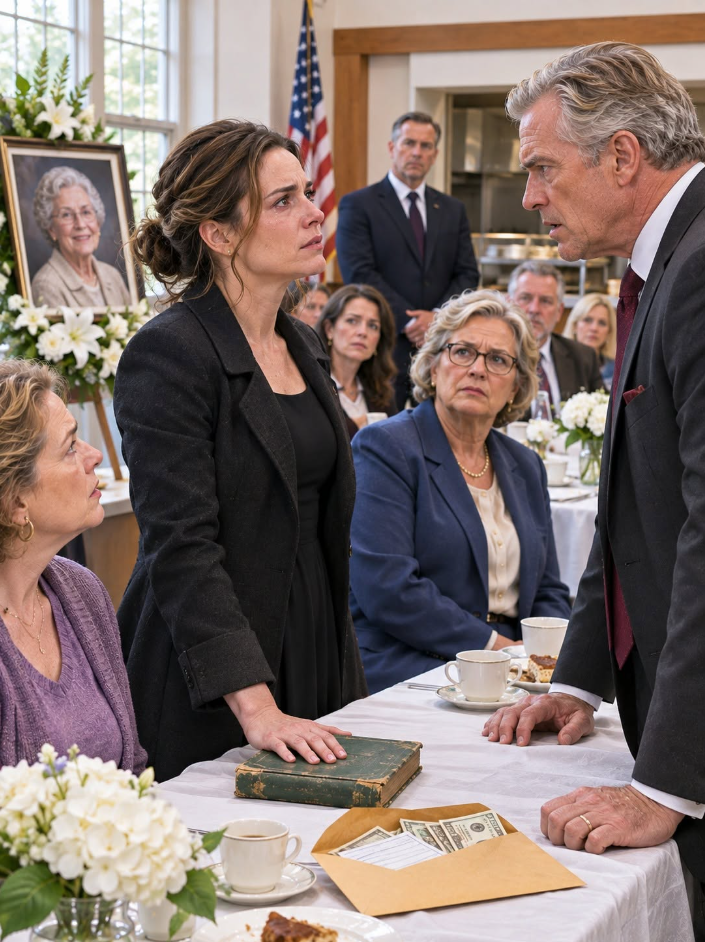
The memorial took place in a small brick Methodist church outside Chillicothe. Diane took charge with the brisk competence of someone closing a corporate transaction. She chose a six-thousand-dollar bronze casket and an obituary that gave considerable space to her family’s Franklin County standing while leaving little room for Grandpa’s achievements. At visitation, she accepted condolences from retired machinists and lathe operators whose names meant nothing to her. Her beautifully tailored wool coat cost more than several months of my salary. Afterward, church volunteers handed out chicken salad on buttered rolls.
She cornered me near the large coffee dispenser. “I’ll be needing your set of keys to the house on Lick Run,” she said quietly. I looked over my Styrofoam cup. “Why?” She tilted her head with exaggerated sympathy. “Because I am his surviving daughter, Claire,” she answered. “And I hold his durable power of attorney. I will be administering the physical estate. You were very sweet to drive down here and play cards with him, truly. But you need to disabuse yourself of any romantic expectations. You aren’t getting anything. Dad and I settled his entire distribution in November.”
Greg stood nearby, eating a deviled egg and looking past my shoulder. Across the linoleum hall, Ashley occupied herself with her iPhone. The instant she caught me watching, she looked at the ceiling. I did not surrender the key. I said I had left it at my apartment. Diane’s mouth tightened, and she dismissed me with a short sound. That evening, sleet ticked against my windshield as I drove beside the Scioto River. I kept picturing the hospital folder, the woman with the wheeled case, and Grandpa attached to cardiac monitors. What, exactly, had they settled?
Two mornings later, I was shelving worn copies of Charlotte’s Web at Hamilton Elementary when my phone vibrated. The unfamiliar number began with 740. I stepped into the storage area. “Claire Whitmore speaking.” A man answered in a low, deliberate voice. “Ms. Whitmore?” His measured delivery suggested a lawyer long accustomed to a small Ohio community. “My name is Harold Brenner. I served as your grandfather Walter’s private legal counsel for thirty-one years. First, allow me to express my profound personal condolences.” “Thank you, Mr. Brenner.” I leaned against a stack of old encyclopedias and waited.
“I need you to present yourself at my office in Chillicothe at your earliest possible convenience,” he continued. Papers shifted at his end. “Walter left exceptionally rigid testamentary instructions, and a significant procedural conflict has arisen. Ma’am, he designated you as the successor trustee of the Whitmore Family Trust.” I searched for some explanation that fit the grandfather I knew. “Mr. Brenner, I think there’s a misunderstanding. Aunt Diane told me she holds a power of attorney. She said the house—”
“A power of attorney expires the instant the principal stops drawing breath, Ms. Whitmore,” Brenner interrupted. “And I do not know how much Walter chose to reveal to you regarding his operational holdings, so I shall deliver the unvarnished figure: the trust’s dominant asset is a forty-one percent equity interest in Kessler Industrial.” After a brief pause, he added, “Its current market valuation stands at approximately one point two billion dollars.” The smell of floor polish and old book glue seemed to vanish. A rushing sound filled my ears.
“Ms. Whitmore?” he asked. “Are you still on the line?” I slid down beside the cardboard boxes until my knees met the linoleum. “I’m here,” I managed. “I just… I think you have the wrong Walter Whitmore.” His reply was gentle. “There was only one Walter Whitmore in Ross County,” Brenner answered. “And he was exceptionally deliberate.” I had spent eleven years worrying about groceries, heating bills, and twenty-dollar notes. Now a stranger was telling me that the man in the worn hunting jacket had left me responsibility for something beyond anything I could imagine.
Brenner’s office occupied the second floor above an antique clock shop on Paint Street. Oak paneling, cracked horsehair plaster, and rows of banker’s boxes made the place feel preserved from another generation. He looked about eighty, with wispy white hair, a spotless silk bow tie, and slightly trembling, age-spotted hands. As he poured black coffee, he regarded my clothes over half-moon glasses. “Your grandfather would have been pleased you arrived in denim,” he observed. “Walter harbored a profound spiritual distrust of any human being who wore a worsted wool suit to discuss practical affairs.”
Over the next half hour, he reconstructed a life Grandpa had never explained. In 1971, Walter, already a skilled toolmaker, partnered with an engineer named Frank Kessler. They started in an unheated cinder-block garage on Eastern Avenue. Their insistence on precision eventually produced Kessler Industrial, an international manufacturer of turbine components for commercial aircraft and instruments for delicate surgical procedures. Four major Midwestern plants employed roughly nineteen hundred union machinists. Frank’s descendants handled executive leadership and public business. Walter avoided the spotlight, declined a board seat, and kept his original forty-one percent interest.
He restricted himself to twenty-four hundred dollars in personal monthly dividends. The rest of his distributions—tens of millions annually—went into an anonymously managed charitable fund supporting vocational apprenticeships and pediatric burn programs across Appalachia. “Walter always maintained that unearned capital was like an ungrounded high-voltage line,” Brenner explained. “It will run a machine, or it will burn your house to the foundations if you get careless with the insulation.” Grandpa had created a revocable living trust in 2009 and amended it after a routine cognitive assessment in 2022, naming me sole successor trustee and principal beneficiary.
Diane was to receive two million dollars; Ashley, one million. “Both bequests,” Brenner said, touching his legal pad, “were bound by an ironclad, unconditional in terrorem clause—a no-contest provision.” He explained, “Any beneficiary who mounts a judicial challenge against the trust without probable cause forfeits their distribution in its entirety.” Then he took off his glasses. “Now, Claire. We arrive at the rot.” He laid two documents before me. The first was the durable power of attorney Diane had obtained during Grandpa’s October admission.
“This is facially valid,” he acknowledged. “Walter executed it so she could reconcile his basic medical bills. However, an attorney-in-fact is a fiduciary. She is bound by law to act solely for the principal’s benefit.” He brought out a statement. “Between October twenty-eighth and his death, Diane drained six hundred and forty-one thousand dollars from his non-trust checking and money market reserves at Hawke Valley Bank.” I stared. “Six hundred thousand dollars? He wouldn’t let me buy the name-brand dish soap!” Brenner continued, “Three hundred thousand was wired directly to Diane’s personal checking,” followed by, “And a cashier’s check for two hundred thousand was drafted directly to an escrow title company in Delaware County for a down payment on a waterfront vacation home.”
The second document bore the heading Second Amendment to the Whitmore Family Trust — November 14. It removed me from every administrative role, made Diane sole successor trustee, and assigned her seventy percent of the remaining assets. Ashley would receive twenty percent. My share was Grandpa’s personal possessions and the old Ranger. Walter’s familiar-looking signature appeared beside the blue stamp of Tasha Greer, an Ohio notary. “Diane’s counsel, a corporate litigator in Columbus named Scott Kimble, served this on me the morning after the funeral,” Brenner said. “He is demanding immediate surrender of the corporate share certificates.”
The handwriting had Grandpa’s compact slant and sharply crossed t, but not the firm pressure I recognized. “He told me he didn’t sign anything,” I whispered. “He looked me in the eye and said, I’m old, Claire. I’m not stupid.” Brenner was cautious. “A probate judge requires more than familial intuition, Claire,” he said. “Facially, this instrument complies with the Ohio trust code. If we cannot prove fraud, Diane assumes absolute voting control of nineteen hundred livelihoods on Monday morning.” The money was staggering. The responsibility frightened me more.
That night, I barely slept. In my cold apartment, surrounded by discarded library catalogs, I counted my resources: forty-one hundred dollars in savings, thirty-eight thousand in student debt, and a Chapter 7 bankruptcy discharged six years earlier after my mother’s cancer treatment consumed our finances. Diane knew all of it. Her attorneys could depict me as a desperate relative who had cultivated an elderly man for eleven years. At seven, I called Brenner. “What is our tactical objective?” His answer was immediate. “We must establish that Walter lacked testamentary capacity, was subjected to undue influence, or that the execution is an outright forgery,” he said. “We need the clinical chart from November fourteenth. We need the notary’s record journal. And we must restrain Diane from exercising voting rights over Kessler Industrial.”
That afternoon, I drove to Lick Run Road and climbed onto the porch. My brass key would not turn. The familiar deadbolt had been replaced with a shiny security lock. A laminated notice announced that the property belonged to the trustee and threatened prosecution for trespassing under Ohio law. Diane had signed it as trustee. Cold air moved through the hickories while I stood beside Grandpa’s empty wicker rocking chair. She had not waited for a court to decide anything. She had already shut me out.
Then I thought of the green Sunday Book. It had lain open on his trousers when I found him, yet after the emergency responders carried him away, it was no longer on the side table. For decades, Walter had recorded details as ordinary as the pressure of the air. Surely he had written something about November fourteenth. Somewhere behind that newly locked door might be the only account that could contradict Diane’s document. But if she had reached it first, what would be left for us to find?
PART 2 — What Happened at Two-Ten
Ten days later, Brenner filed an emergency complaint in Ross County Probate Court, alleging a fiduciary breach and asking that the Second Amendment be invalidated. He requested a temporary restraining order against changes to trust assets and, crucially, preservation of the Lick Run Road house and every journal, ledger, and personal record inside it. Subpoenas went to Scioto Valley Medical Center and Tasha Greer. Diane’s family answered almost at once. Ashley posted a black-and-white photograph of Grandpa on Facebook, describing the “heartbreaking tragedy of estranged relatives who only appear when an estate opens, driven by predatory greed.”
At the preliminary hearing, Judge Patricia Hale listened from the bench of the imposing stone courthouse on Paint Street. In her late sixties, with iron-gray hair and a formidable reputation, she made even seasoned lawyers speak carefully. Scott Kimble presented me as a disappointed beneficiary harassing a rightful administrator. Brenner, leaning on his cane, argued that preserving the status quo would hurt no one, whereas disputed control of a major manufacturer threatened employees and the business itself. Judge Hale suspended Diane’s trustee powers, placed the shares with a neutral bank escrow officer, and ordered a supervised inventory of Grandpa’s home and writings.
My pulse accelerated. Then I remembered that Grandpa never trusted important information to a single copy. He duplicated engineering drawings. He preserved records. I went to the hall linen closet and pulled down the wooden ladder to the attic crawlspace. “What is she doing?” Kimble protested. “This exceeds the scope—” Leon clicked his pen. “The court order encompasses all personal writings of the decedent, Counsel,” he said. “Step aside.” He followed me upward with a work light. Beneath the eaves, green canvas covered six boxes labeled by decade, from the 1960s through the 2010s. A smaller wooden crate read 2020–PRESENT.
Inside were four black-bound record books and, beneath them, an immaculate olive-green ledger with reinforced cloth corners. An engineering duplicate. My hands shook as I opened it. The October fourth entry recorded pneumonia, Diane’s utility paperwork, and his uncertainty about signing the power of attorney. He had written that he needed to check with Harold. On November fourteenth, he recorded Diane and Ashley arriving at eleven with an unfamiliar woman carrying a legal case. They demanded trust revisions cutting me down to the tools. He refused, told them to leave, and pressed the nurse call button.
The afternoon entry was equally precise. At 1:45, orderlies had taken him to basement radiology for a contrast CT of his thoracic aorta. The dye made him vomit. He returned at 2:45. I arrived at 5:15 with clean socks, and he had deliberately said nothing because he did not want to alarm me. Leon read the pages, photographed them, and sealed the ledger in a tamper-evident bag. Below the attic opening, Diane watched. The moment she recognized what he was holding, the color left her face.
Three weeks later, the certified hospital records reached Brenner’s office. At 11:20 on November fourteenth, nurse Carla Mendez had documented Grandpa’s demand that his relatives be removed. Her note quoted him: ‘Get these vultures out of here, I’m not signing away my life.’ A separate transport record placed him in basement imaging from 1:52 until 2:41. I compared it with the notarization, which certified his signature in Room 314 at 2:10. Brenner removed his glasses. “At two-ten in the afternoon,” he said quietly, “Walter Whitmore was lying inside an electromagnetic imaging cylinder one floor beneath the earth with two hundred cubic centimeters of iodine in his vascular system.” He looked at me. “This ceases to be a civil contest, Claire. This is an aggravated felony.”
Their next move came away from any courthouse. On a Thursday afternoon in late April, I left Hamilton Elementary after the final bell, carrying a canvas tote of children’s paperbacks awaiting cataloging. Greg leaned against my Civic’s driver’s door, silver-streaked hair neatly swept back and an expensive sports jacket open. His broad dealership smile looked rehearsed. Two spaces away, Diane sat behind the closed, tinted windows of their idling white Lexus, staring ahead. “Afternoon, Claire,” he said. “Got two minutes for family?” I tightened my hold on the tote. “Step away from my vehicle, Greg,” I replied.
“Let’s bypass the legal theater,” he said, coming closer as the smile vanished. “Here is the trajectory if you refuse to dismiss this complaint by Friday. Diane is filing a formal report with Ross County Adult Protective Services.” He continued, “We have documented your eleven-year history of visits. An impoverished librarian with a personal bankruptcy, spending every Sunday behind closed doors with an isolated octogenarian whose estate is worth ten figures. It’s a textbook financial exploitation narrative.” My mouth went dry. “He was entirely lucid.” Greg’s expression hardened. “It does not matter what he was,” he answered. “It matters what it looks like on the evening news.”
He described television coverage, an emergency school-board session, and unpaid suspension. “And when the local television affiliates pick up the story, this school board will hold an emergency administrative session. You will be placed on unpaid suspension before the weekend. No school district within fifty miles will allow you within fifty feet of a child.” His signet ring tapped my car’s roof. “Diane is prepared to let you keep the Ford Ranger and twenty thousand in cash to clear your credit card balances. Walk away, Claire. Or we will tear your life down to the wet dirt.” Then he joined Diane, and the Lexus pulled away, scattering gravel.
They followed through. An Adult Protective Services caseworker visited my apartment the next Monday. Two days afterward, my principal, Dr. Lisa Okafor, called me into her office. Someone had emailed the superintendent screenshots of Ashley’s posts and an accusation that the district employed a “predatory elder abuser.” Rather than surrender to panic, I assembled the records. In a windowless Chillicothe office, I met caseworker Denise Fry and spread out Grandpa’s duplicate ledger, certified nursing notes, and eleven years of my own bank statements. The statements documented hundreds of small purchases for groceries, milk, kerosene, and other necessities.
Beside those modest expenses, I placed Hawke Valley’s records of Diane’s withdrawals and transfers. Denise spent forty minutes studying the title-company transactions. “Who initiated this administrative complaint?” she asked, pen hovering. “My aunt,” I answered. “Diane Pruett.” She adjusted her glasses and wrote in the file. “Case closed as unsubstantiated. A formal referral for malicious reporting will be forwarded to the county prosecutor.” Dr. Okafor later added a written clearance to my employment file. Not long after that, Ashley quietly removed her social media account.
Early May brought a different weapon. On a rainy Tuesday, Kimble delivered a formal offer: fifty million dollars, paid from the trust in five equal annual installments. In return, I had to drop every objection, recognize the Second Amendment, relinquish the successor trusteeship, and accept permanent confidentiality and non-disparagement restrictions. “Fifty million dollars,” I whispered across Brenner’s desk. His radiator hissed. “It is generational independence,” he observed. “You could buy three libraries and spend the rest of your natural life traveling the Mediterranean.” For someone with my savings and debts, it was almost impossible to comprehend.
But I pictured the plants and the families living on their wages. “And what happens to the nineteen hundred machinists at Kessler Industrial?” I asked. Brenner opened a drawer and handed me a report prepared by Kessler’s chief financial officer, Margaret O’Shea. In January, while Grandpa spent his final days in the hollow, Diane had retained an aggressive Chicago private equity consultant. Once confirmed as trustee, she intended to sell the forty-one percent holding to an overseas investment fund. Its plan was to close the Ohio plants, end the union agreement, and transfer turbine-blade production to Southeast Asia.
The proposed settlement was not peace. It was payment for standing aside while Walter’s work was dismantled. I rose from the leather chair. “Tell Kimble,” I said, “that my grandfather’s principles are not something anyone can purchase through monthly payments.” Two days later, an elderly stranger telephoned. “Claire? My name is Earl Duffy. I operated the horizontal boring machines beside your grandfather for thirty-eight years. He told me that if Diane ever tried to interfere with his legacy, there was something I needed to give you.” We arranged to meet at the Bob Evans near Bridge Street.
Earl was eighty-four, his immense work-worn hands as gnarled as oak roots. His clean flannel shirt was buttoned to his throat. From his denim jacket, he produced a yellowing legal envelope addressed to me in Grandpa’s minute handwriting. The letter was dated December ninth, three weeks after Diane’s supposed transfer. Walter warned that his daughter might behave exactly this way after his death. He told me not to be frightened. People who believed every difficulty could be solved with money, he wrote, had no answer for someone whose decisions could not be purchased.
He explained that Kessler was not merely machinery; it was nineteen hundred households sustained by honest work. He had chosen me because I understood the value of that work, but I was not to shoulder everything alone. He directed me to Margaret O’Shea, the person in the administration building who still knew what an honest balance should look like. His postscript reminded me that I owed sixty-five cents from Thanksgiving cribbage. In the vinyl restaurant booth, I held the letter close and breathed in its faint, familiar traces of cutting oil and pipe tobacco.
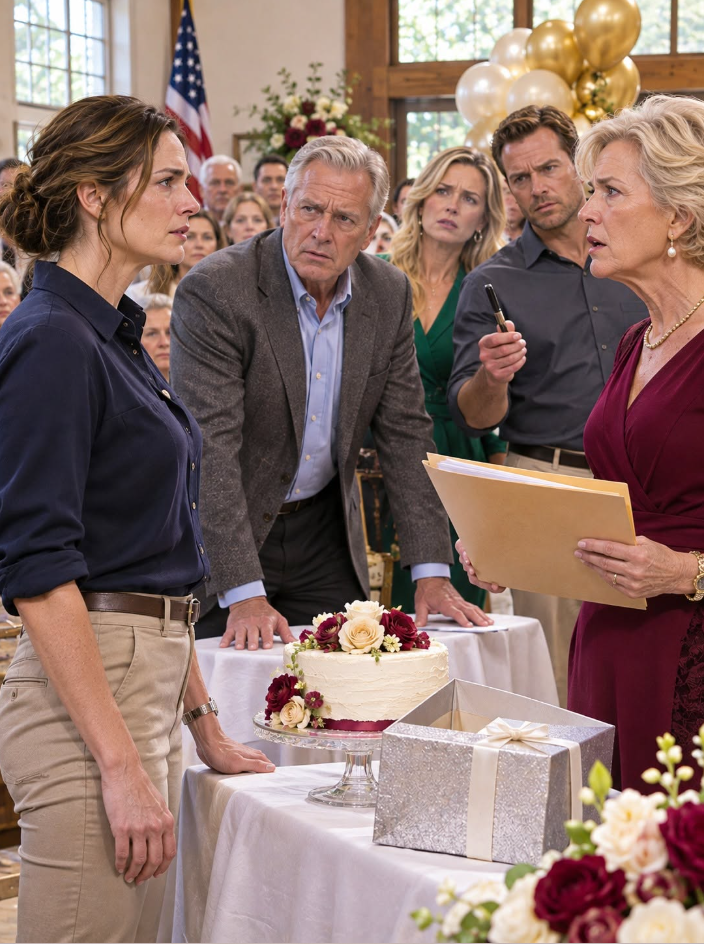
Three weeks before trial, on a humid Saturday in mid-May, my apartment buzzer sounded. Diane’s voice came through the intercom without its customary confidence. “Claire, please. It’s your aunt. Ashley is here with me. We haven’t brought any attorneys. We only want five minutes to speak as a family.” Against my better judgment, I unlocked the building entrance. They appeared in the narrow hallway dressed like women coming from an expensive suburban memorial. Diane held a leather photograph album with tarnished brass corners. Ashley wore a modest linen dress and carried a tied bakery carton.
“We brought lemon bars from that bakery in Dublin,” Ashley said with lowered eyes. “You used to love them when we were younger.” I kept the security chain fastened a moment longer. “I never liked lemon bars, Ashley,” I replied. “You were the one who ate them.” After I opened the door, they sat at my small round table. I left my four-inch-thick black evidence binder prominently between us, its colored tabs visible. Diane watched those tabs with restless interest before opening the album.
The pictures were unfamiliar: Walter beside an engine block in 1958, five-year-old Diane on a Chevrolet Bel Air’s hood in his arms, my eight-year-old father wearing a toy sheriff’s badge. “I thought you should have these pictures, Claire,” Diane whispered. “This legal dispute has brought out so much bitterness in everyone. Losing Dad reopened wounds we should have healed years ago. Robert would have been heartbroken to know we were facing each other in court.” She reached for my hand. I moved both hands into my lap.
“This lawsuit is draining the family’s resources,” she continued, leaning forward with carefully displayed distress. “Harold Brenner is charging the estate hundreds of dollars every hour. If this becomes a public trial, reporters will focus on Kessler. Investors will panic, the share value could collapse, and the board might have to seek bankruptcy protection.” Then, “Would Dad have wanted that? Would he want the company he built placed at risk over a disputed legal document?” I answered steadily. “Grandpa wanted people to tell the truth, Diane,” I said. For an instant, her concern vanished and something colder showed through.
Ashley tapped her polished nails against the table. “Claire, we need to be practical. You work as an elementary school librarian. Do you genuinely understand how the board of an international manufacturing corporation functions?” She went on, “You probably couldn’t distinguish mezzanine financing from a machine tap. The Kessler family will overwhelm you before your first quarter is finished. At least Mom knows the right professionals to manage complicated investments.” “Grandpa never said I needed influential connections,” I replied. “He believed I needed an honest way to measure things.”
Ashley’s composure broke. “Grandpa,” she interrupted, “was a confused, stubborn old man who lived in a rundown cottage and ate canned soup from damaged dishes!” Silence filled the room. Diane shot her daughter a furious look, then recovered. “What Ashley is trying to explain, Claire, is that Dad wasn’t always thinking clearly during his final months. He became fearful and suspicious of people around him.” She added, “And Ashley has something important you should hear before you testify and make statements you may later regret.” Ashley removed an iPhone from her expensive handbag and set it beside the untouched lemon bars.
A faint hiss came from its speaker, followed by the rough voice I knew so well. “…Claire pushes me. She’s always pushing me…” Four seconds, and silence. For a moment, the floor seemed to move beneath me. Hearing him used against me at my own kitchen table left me shaken. Had I pressed him without recognizing it? Had my weekly journeys become a duty he resented? I imagined all those quiet afternoons suddenly stripped of the meaning I had given them. Then the part of me trained to examine details noticed Ashley’s satisfied face.
“Where is the remainder of that recording, Ashley?” I asked quietly. She blinked. “What are you talking about? That’s the voice recording Dad—” I stood. “Those four seconds were taken from a much longer conversation,” I interrupted. “What did he say immediately beforehand? What came afterward? And exactly when did somebody record this?” Their answers overlapped. “Last November,” Diane said. “During Thanksgiving,” Ashley said at the same moment. They stopped and looked at one another. “Please leave my apartment,” I told them.
Diane stayed seated for a moment, abandoning the pretense of family concern. Then she stood and leaned across the table. “You have absolutely no idea what you’re dealing with,” she said. “Do you really believe you’ve won because a rural hospital nurse made an entry in a medical chart?” Her voice sharpened. “Scott Kimble will bring medical specialists to court who will testify about Walter’s cognitive condition. Your bankruptcy records will become public. You’ll face hours of detailed questioning until you can barely organize your answers.”
She was not finished. “And afterward, we will pursue every professional complaint available against you. You could lose your position and everything you thought this inheritance would provide.” She added, “You will leave that courthouse without fifty million dollars, without the Lick Run property, and without even that old pickup truck.” I indicated the door. “Leave,” I repeated. “Otherwise, I will contact the Columbus police.” Ashley snatched up her phone. Diane closed the album sharply, taking it with her, and hurried into the hall, her expensive heels striking the wood.
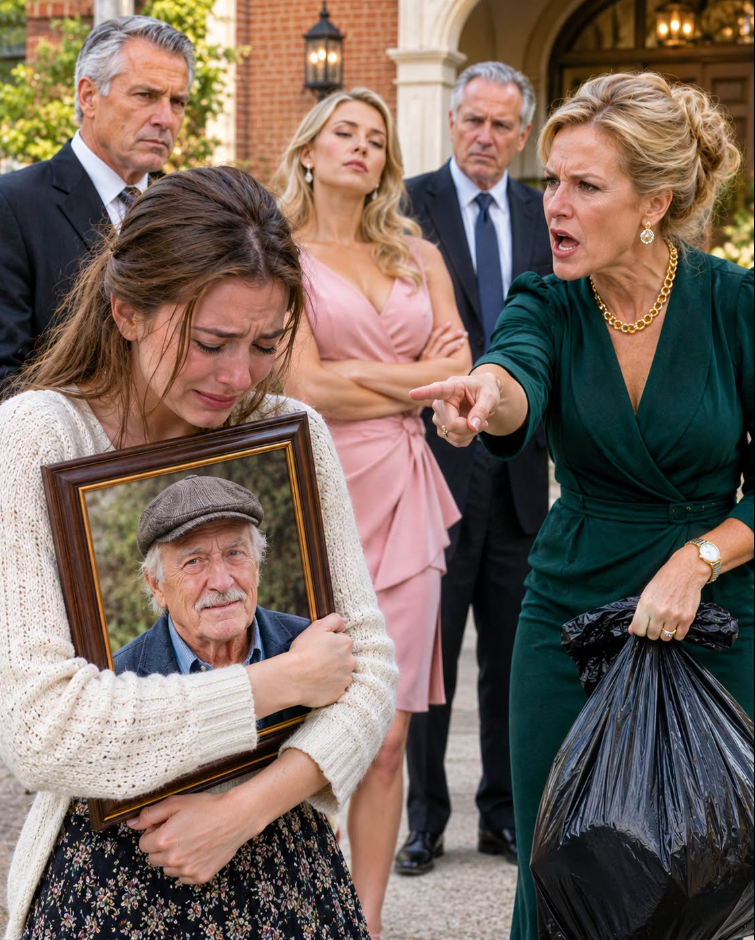
At the threshold, Ashley turned back, her voice trembling with years of resentment. “You were always his favorite,” she said. “Spending every Sunday in that unpleasant old house. Do you think we never understood what you hoped to receive?” “The front door was always open, Ashley,” I answered. “You could have visited Grandpa on any Sunday during those eleven years.” She slammed the door hard enough to crack the surrounding plaster. I remained at the table with both hands braced against it, working to steady my breathing.
Then I called Brenner at home. “Harold,” I began, “Ashley has an audio recording of Walter. It’s only four seconds long, and he mentions me. They’re planning to use it as evidence that I pressured him.” He was silent long enough for me to hear a pipe settle into a ceramic holder. “Excellent,” he said. “Excellent?” I repeated. “If opposing counsel intends to introduce an audio recording as evidence, Claire,” he explained, “we can request the complete original file and its associated digital information to examine authenticity and context.” Then came the words that changed what those four seconds meant: “We will seek a subpoena for the device first thing Monday morning.”
PART 3 — The Voice They Could Not Silence
Courtroom B was eighty-four degrees. The courthouse’s aging cooling system strained against June’s heavy humidity, sending a low vibration through the plaster. Judge Hale sat above us at the mahogany bench, half-moon glasses low on her nose and her gavel untouched. Diane wore a tailored navy wool suit and gripped a gold pen. Beside her, Ashley sat in a charcoal dress, her blonde hair wound into a tight bun. Greg occupied a gallery bench behind them, arms crossed and eyes fixed on the decorative ceiling molding.
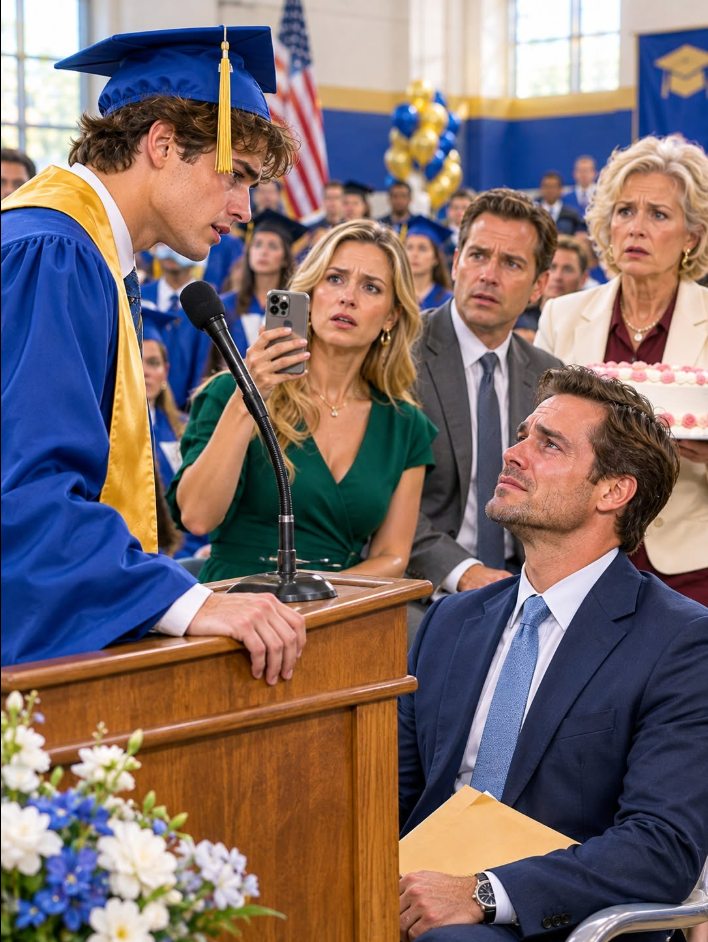
Kimble opened with polished assurance. He called Diane, who spoke softly about her father’s supposed desire to reconcile the family and keep his property with his immediate relatives. “Mrs. Pruett, did you personally witness Walter Whitmore sign the Second Amendment on November fourteenth?” he asked. She placed a manicured hand against her chest. “Yes,” she replied. “It happened at approximately two o’clock that afternoon. Ms. Greer, the notary, completed the necessary formalities. My father was visibly relieved.” It was the story she had relied on since the funeral, now delivered under oath.
Brenner rose slowly, crossed the carpet with his silver-tipped cane, and adjusted his bow tie. “Mrs. Pruett,” he began gently, “you testified under oath that your father signed this document at two o’clock inside Room 314.” He paused. “Are you completely confident about that time?” Diane answered without hesitation. “The notary’s stamp shows two-ten,” she said. “It happened shortly after lunch.” Brenner took a document from the evidence cart. “I am presenting Petitioner’s Exhibit Fourteen, the certified patient transportation record from Scioto Valley Medical Center.” He offered it to her. “Would you kindly read the highlighted entries aloud for the court?”
Her expression changed as she studied the page. Judge Hale intervened. “Please read the highlighted section, Mrs. Pruett,” she instructed. Diane’s voice weakened. “Patient… patient transported to basement imaging at one-fifty-two p.m.,” she read. “Returned to Room 314 at two-forty-one p.m.” Brenner approached the witness rail. “Therefore, at two-ten that afternoon,” he said, “Walter Whitmore was undergoing a medical imaging procedure in the hospital’s lower level.” He let the times stand before continuing. “He was not in Room 314. Can you explain who supposedly signed the document in his absence?”
“Those hospital records must contain an error!” Diane protested. “Hospitals enter incorrect times all the time!” Brenner remained measured. “That is certainly something we can examine,” he replied. “Perhaps you also believe the registered nurse made an error at eleven-twenty that morning when she documented the patient’s request for relatives to leave and his refusal to sign additional paperwork.” Diane’s jaw tightened. “He changed his mind afterward!” Across the courtroom, the confident account she had given only minutes before was beginning to collapse beneath records created long before anyone knew there would be a lawsuit.
Brenner raised the green duplicate ledger. “In that case,” he said, “why did he write in his duplicate Sunday Book that evening that he had refused and asked everyone to leave?” Then, “And why, three weeks later, did he provide Earl Duffy with a handwritten warning about your intentions concerning these very documents?” Kimble sprang up. “Objection! Hearsay!” Judge Hale answered firmly. “Overruled, Counsel,” she said. “The court will consider these contemporaneous writings under the applicable evidentiary provisions. You may continue, Mr. Brenner.” Diane could not immediately answer.
The next witness was Tasha Greer. She entered with her appointed attorney, pale and visibly nervous, holding a damp handkerchief. A limited immunity arrangement approved by the county prosecutor allowed her to testify about the notarization. She kept her eyes lowered. Brenner asked the question at the center of the case: “Ms. Greer, did you actually witness Walter Whitmore sign the Second Amendment?” She wiped carefully beneath her eyes. “No,” she answered tearfully. For all the paper, argument, threats, and money, the answer was one syllable.
“When I arrived at Room 314, nobody was in the bed. Ashley, his granddaughter, told me he’d been taken for an urgent vascular examination,” Greer continued. “She handed me the document with a signature already on it. She explained that he was too exhausted to sign another copy and insisted it was only a routine family matter.” Brenner asked, “And did you receive any payment beyond the ordinary notarial fee for completing that certification?” Greer struggled to compose herself. “Five… five thousand dollars,” she said. “It came through Venmo. I was about to lose my vehicle because I couldn’t keep up with the payments.”
“I understood that I wasn’t following the proper requirements. I still agreed to do it.” Murmurs spread through the gallery. Ashley covered her face and sank into her chair. Brenner turned toward Judge Hale. “Finally, Your Honor,” he said, “regarding the four-second audio excerpt, we have obtained the complete original digital recording through the court-authorized evidence process.” He continued, “I request permission to play the entire recording so its full context can be considered.” The judge approved. A brief crackle came through the speakers, and this time the sound did not stop after four seconds.
The original recording lasted two minutes and eleven seconds. Behind the voices were autumn wind against windowpanes, a whistling kettle, and a Detroit Lions Thanksgiving football broadcast from three years earlier. Ashley spoke first. “Grandpa, why won’t you come to Dublin for Thanksgiving dinner? Mom arranged for a caterer.” Then came her complaint: “It’s em.bar.ras.sing when we have to explain to everyone that you refuse to leave this old house.” I listened to that familiar room emerge from the speakers, its ordinary sounds intact, no longer reduced to the fragment they had chosen.
Walter answered in the rough voice I had known all my life. “Because Claire pushes me. She’s always pushing me to leave the house, visit people, and keep myself active.” He went on, “So this year I told her she could come down here and share a turkey roll with an old machinist.” Then, “That girl… she’s the only one who actually makes the journey across the creek.” His dry, affectionate chuckle followed. The same laugh that had accompanied so many cribbage hands now filled a courtroom full of strangers.
I lowered my face into my hands, and tears slipped between my fingers. He was not discussing an inheritance or bargaining over control of a company. He was explaining our visits, the simple act of showing up. I heard the man who repaired my broken lamps and shared quiet Sunday afternoons, the man whose work had helped sustain nineteen hundred families. They had taken his affection, cut away its meaning, and tried to make me afraid of it. The complete recording gave him back his own words.
Diane twisted toward Ashley, her face red with anger. “You told me you’d removed the background conversation!” she exclaimed. Ashley stood abruptly. “You were the one who told me to edit it, Mom!” she answered. “You said we needed something to use against her!” Judge Hale brought down the gavel. “Silence!” The room went utterly still. From the third row, Greg rose, looked from his wife to his daughter, and walked through the heavy double doors without looking back.
Kimble stood and approached the bench. “Your Honor, I respectfully request permission to withdraw as counsel for the respondents immediately.” Judge Hale refused. “Your request is denied at this stage, Mr. Kimble,” she said. “You will remain present while this court announces its findings.” The ruling took fourteen minutes. She spoke carefully, without theatrical anger or haste. The Second Amendment was fraudulent and invalid from its creation. The 2022 trust remained effective. I was its sole successor trustee, authorized to oversee Walter’s forty-one percent interest in Kessler Industrial.
The court also found that Diane had improperly transferred assets while acting under the power of attorney. Judge Hale ordered restitution of six hundred and forty-one thousand two hundred dollars, secured by a judicial lien against the Delaware County property. Then she addressed the bequests. “The 2022 trust includes a valid and enforceable no-contest clause,” she explained. “The submission of a falsified testamentary document, supported by improper notarization, constitutes a bad-faith challenge within the meaning of that provision.” Diane’s gold pen no longer moved between her fingers.
“Consequently, the two-million-dollar bequest designated for Diane Pruett and the one-million-dollar bequest designated for Ashley Pruitt Lane are forfeited in their entirety.” Judge Hale continued, “Those amounts will return to the charitable trust.” She arranged the papers before her. “The clerk is instructed to forward the complete hearing transcript and relevant exhibits to the Ross County Prosecuting Attorney’s Office, the Ohio Division of Securities, and the Ohio Real Estate Licensing Board for their consideration.” Then, “Court is adjourned.” There was nothing triumphant about the sound. It marked the end of one proceeding, not the end of what they had done.
Diane remained seated, hands flat on the polished table, staring at the empty bench. As I collected my coat, she finally looked up. The confidence that had carried her through the funeral, the threats, and the settlement demand was gone. “He was my father, Claire,” she whispered. I stopped and looked at her carefully tailored jacket. “I know, Diane,” I answered quietly. “That is why your decisions are so difficult for me to forgive.” I could acknowledge her loss without pretending it excused the choices she had made.
The criminal consequences arrived gradually. In August, a Ross County grand jury indicted Diane on allegations involving financial misconduct against an elderly person, a second-degree felony under the applicable Ohio law, and two forgery-related counts. Ashley faced felony allegations involving a falsified document and altered government records. Tasha Greer permanently surrendered her notary commission and entered diversion in exchange for sworn testimony. Electronic banking records, the recording’s original metadata, and Grandpa’s duplicate Sunday Book left little for the defense to dispute effectively.
In October, Diane pleaded guilty to felony theft. With no prior convictions, she received community-based sanctions rather than state imprisonment: five years of intensive supervision, two hundred and fifty hours of service, and repayment of the full six hundred and forty-one thousand dollars. She was permanently barred from fiduciary, corporate, and financial administrative positions in Ohio. The Delaware County lake property went through a sheriff’s auction toward restitution. Four months after the plea agreement, Greg filed for divorce. The Dublin house was sold as taxes and legal costs mounted.
Ashley fought her case until December, then pleaded guilty to a reduced fifth-degree felony forgery charge. The following March, the Ohio Division of Real Estate revoked her license. She now works at the dispatch desk of an independent automobile-detailing business near Hilliard. Her criminal record permanently lists State of Ohio v. Lane, Forgery, F-5. Their consequences were not sudden reversals delivered for anyone’s entertainment. They accumulated through records, hearings, orders, and the practical damage that followed decisions they had repeatedly been given the opportunity to stop making.
For the first six months, I made few dramatic changes. I continued at Hamilton Elementary three days a week, spending Tuesdays through Thursdays arranging reading materials and helping seven-year-olds recognize words and sound out unfamiliar syllables. On Mondays and Fridays, I drove the Civic to Kessler’s Columbus headquarters. I did not ask for an executive office. Margaret and I worked in a modest meeting room, where I studied debt-to-equity ratios, equipment capitalization, and depreciation in international trade. Learning the responsibility mattered more than displaying the title.
At my first annual shareholder meeting, I sat in the back on the same folding chair Walter had used for forty years. I successfully proposed doubling the support for the machinist apprenticeship school on Eastern Avenue. With Brenner and Margaret, I also established the Walter Whitmore Foundation, funded entirely by distributions from his company dividends. It provides full four-year vocational scholarships for students from Appalachian communities and operates a free legal clinic for older people facing financial exploitation by relatives. In its first year, that clinic helped southern Ohio seniors recover nearly four million dollars.
I bought a modest century-old brick house with a Clintonville garden, paid off my undergraduate loans, and transferred the Ranger into my name. Every Sunday at 8:15, I still head south through the familiar limestone hills. The bungalow’s exterior remains weathered, but cedar supports now reinforce the porch roof, and an efficient wood-burning stove warms the living room. Grandpa’s imitation-leather chair still stands by the window. At noon, Earl arrives in his pickup, and we make strong black coffee, sit at the scarred laminate table, and deal cribbage. He adjusts the score in his favor, just as Grandpa did.
Last month, I brought Daniel to the hollow. He teaches high school industrial arts in Lancaster. Before showing much interest in the rest of the house, he spent twenty minutes studying the precision hand-scraping on Walter’s old bench lathe. People often ask how it feels to oversee a billion-dollar manufacturing enterprise while continuing to work in an elementary school library. My answer does not change. Money is another operating tolerance. Without reliable guidance, it can do tremendous harm before anyone notices. Managed by honest principles, it can help create something worth leaving behind.
The final Sunday Book sits on my Clintonville desk. Each evening, I record the temperature, the work I completed, and the people who came through my door. Walter entrusted me with forty-one percent of an aviation manufacturing giant, but the part of his inheritance that matters most was never a number of shares or a dividend payment. It was the instruction he put in ordinary black ink at the beginning of every page: The tolerance is zero. Measure twice. Guard the shop.
Last month, Brenner also mailed an envelope to my house. I would not answer what it contained. I would walk down the hallway, open the furnace compartment, and feed the single index card into the small pilot flame. But first I took it out and recognized Ashley’s handwriting. After everything the records had exposed, everything Grandpa’s own voice had restored, she still had one question for me: Are you satisfied now?