PART 2
I read the letter three times.
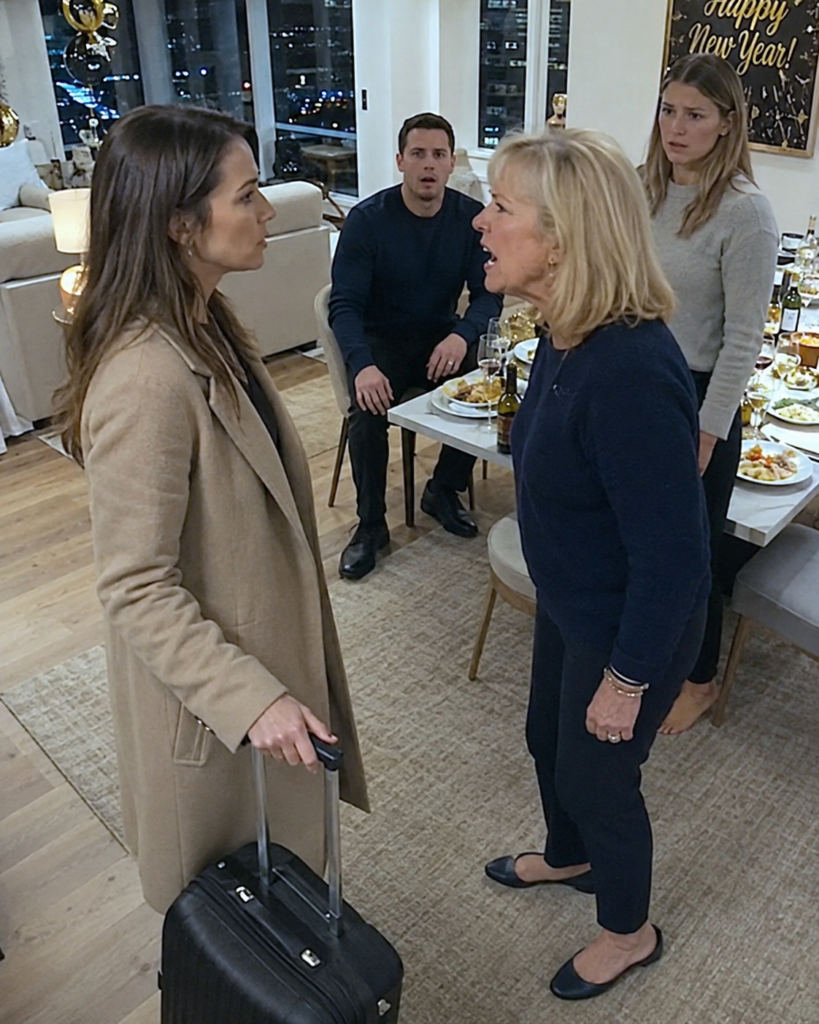
Then I walked over to the couch and held it up in front of Vivica’s face. “What is this?”
She didn’t even blink.
“It’s for the best, Severin. Your father agrees. She’s not happy here. We’re not happy with her here. The state will find her a nice family.”
“She HAS a family. She has me.”
Vivica laughed.
“You? You’re a twenty-year-old Marine who lives in a barracks in North Carolina. What are you going to do? Take her to boot camp?”
I didn’t answer her.
I picked up my sister, still wrapped in her blanket, and took her to my old bedroom. I tucked her into my bed. I read her one of her library books.
She fell asleep in four minutes. She’d been so cold for so long.
Then I sat in the kitchen and waited for my father.
He got home at 8:30. He saw me and froze.
“Severin. You’re home.”
I put the letter on the table.
“Dad. You were going to give her away?”
He sat down slowly. He wouldn’t look at me.
“It’s not like that. Vivica’s stressed. The baby’s a lot of work. Zora’s a lot of work. It’s hard, son.”
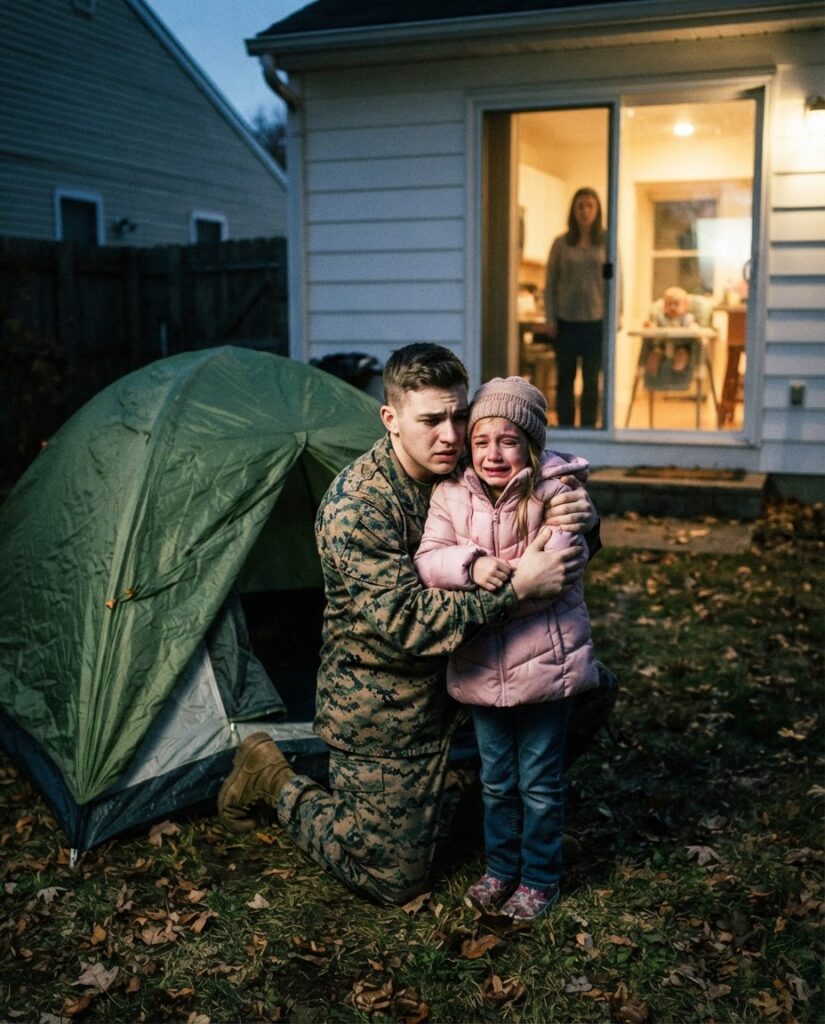
“She’s been sleeping in a tent since September.”
He didn’t say anything.
“Where’s the money I sent for her? Nine hundred dollars.”
He stared at the table.
“We needed it for the baby.”
I stood up.
“She’s your daughter, Dad. Mom’s daughter. Did you forget that?”
My father put his face in his hands and started crying. Vivica stood in the doorway with her arms crossed.
“Don’t make him feel bad. He’s doing what’s best.”
I called my commanding officer that night.
I told him everything. The tent. The money. The letter.
He was quiet for a long time.
“PFC, I’m going to make some calls,” he said. “Don’t do anything stupid. Go to that appointment Monday. In uniform.”
On Monday morning, I went to the county office with my father and Vivica.
I wore my dress blues.
I held Zora’s hand the whole time.
When the caseworker asked my father why he was there, I stood up.
“Ma’am, my name is Severin. I’m her brother. I’d like to apply for guardianship.”
Vivica rolled her eyes. “He’s twenty. He lives in a barracks.”
The caseworker looked at me. Then at Zora, holding my hand. Then she read the letter. “Child does not fit with our new family.”
Her jaw tightened.
“Ma’am,” she said slowly to Vivica, “I’m also going to need to ask you about a tent in your backyard.”
The investigation took six weeks.
My commanding officer helped me get approved for family housing on base. The Marine Corps family support office helped me with paperwork, childcare, and a school for Zora near Camp Lejeune.
The judge granted me legal guardianship in January.
My father didn’t fight it. He signed every paper. At the end, he hugged Zora and said he was sorry.
She hugged him back. She’s kinder than I am.
Now we live in a small house on base. Zora has her own room. Pink walls. Glow-in-the-dark stars. A real bed with three blankets.
The other Marine families watch her when I’m on duty. She has six honorary aunts and about twenty honorary uncles.
Last week, she brought home a drawing from school.
It was a picture of a house with a big sun. Two stick figures were standing in front of it. A tall one in a uniform and a little one with braids.
Underneath, she wrote:
“MY FAMILY. WE FIT.”
THE END.