CHAPTER 1: THE PRICE OF A LIFE
There is a particular metallic taste to betrayal. It doesn’t cover your tongue all at once; it slowly seeps in, a bitter copper flavor you mistake for ordinary marital tension until you’re choking on it.
While my body was being torn apart to bring his child into the world, my husband and his mother were secretly selling the roof over my head.
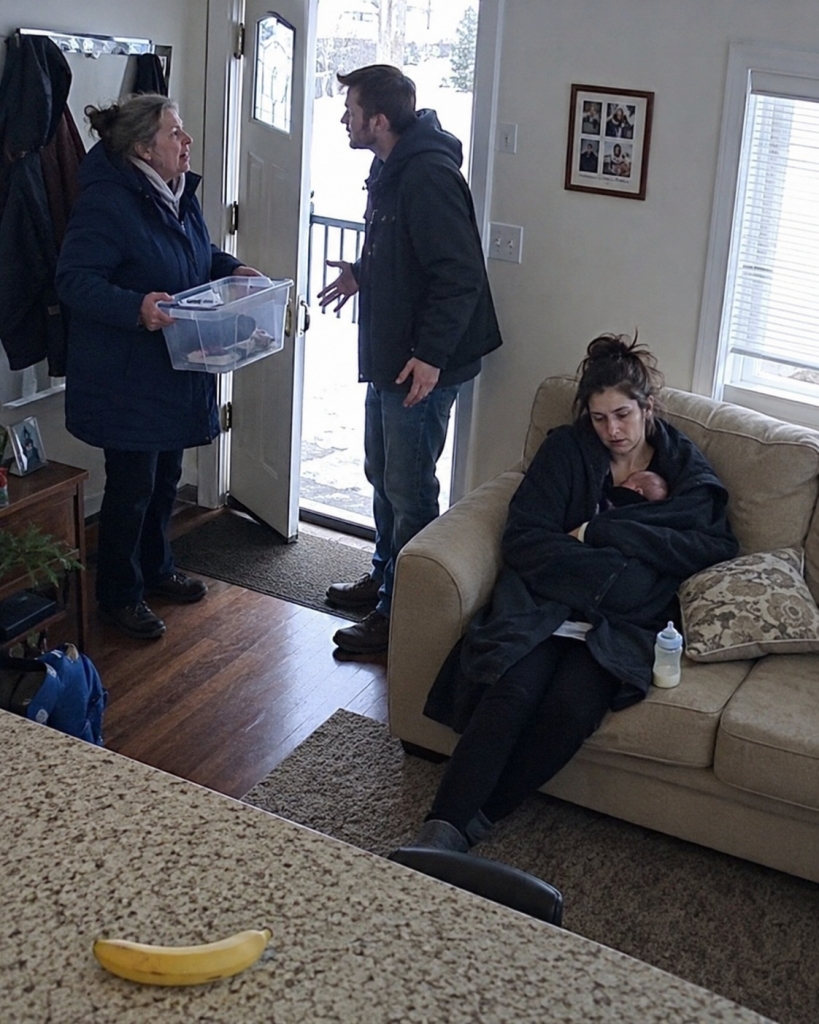
“Take it,” he instructed, his voice stripped of the warmth I had once believed defined him.
I stared down at the money. Two one-hundred-dollar bills. Benjamin Franklin’s solemn face looked back at me, mocking the sheer absurdity of the moment. “What is this?” I rasped, my throat still raw from the screams of labor.
My mind, clouded by a brutal mixture of hormones and sleep deprivation, struggled to process her words. “You want me to leave? Tonight? With a three-day-old infant?”
“The house has been sold, Claire,” Daniel said, crossing his arms to match his mother’s posture. He looked thoroughly inconvenienced, as though my continued presence were a stain on the hardwood he had just polished. “We needed a quick close. The new owners take possession by the end of the week. You have no legal standing to remain here.”
I looked from the money resting in my palm to the man I had shared a bed with for seven years. I noticed the rigid line of his jaw, the arrogant lift of his chin, and the complete lack of remorse in his dark eyes. Behind him stood Patricia, a smug, venomous spider admiring the fly finally caught in her web. They expected tears. They expected a hysterical collapse onto the Persian rug. They believed a new mother, bleeding and frightened, would simply crumble into nothing.
A low rumble started deep inside my chest.
It rose through my throat, pushing past my exhaustion, until it exploded into the dead silence of the foyer. I began laughing. It wasn’t a polite chuckle, nor was it the hysterical giggling of a broken mind. It was a deep, resonant, breathless laugh. I laughed so hard my surgical stitches burned. I had to steady my shoulder against the drywall to keep from dropping my newborn daughter, Lily.
Daniel’s carefully constructed stoicism broke apart. A flush of confused anger crept up his neck. “What the hell is so funny?” he demanded, stepping aggressively into my personal space.
Patricia’s smug expression faltered. “Stop this foolishness, Claire. This isn’t a theatrical performance.”
I forced the laughter back down, brushing a tear of pure, vindicated amusement from my eye. I raised the two hundred dollars, the paper crinkling between my fingers, and then met my husband’s eyes.
“Do you honestly believe you just sold this property?” I asked, my voice sinking into a deadly, quiet tone.
Daniel frowned, his confidence wavering for a fraction of a second. “I know I did. The ink is dry.”
I smiled. It was a feral expression, revealing far too many teeth. “Then tell me something, Daniel. Who, exactly, owned this property when you signed those fraudulent papers?”
The color drained from his face. “What kind of question is that?” Patricia snapped, stepping forward to protect her son.
“A very simple one,” I replied softly, savoring the sudden, heavy tension suffocating the room. I leaned closer, my voice barely above a whisper. “Because the house you just proudly sold… had already…”
I stopped. I pressed my lips together and allowed the silence to linger.
Daniel’s eyes widened, frantic panic replacing his arrogance. “Had already what?” he demanded, his voice cracking. “Claire, finish the goddamn sentence!”
I simply adjusted Lily’s blanket, stepped around him, and headed toward the kitchen. The terror spreading across his face was a masterpiece I had spent weeks creating, and to understand how we reached this moment of beautiful destruction, you have to look back at the foundation of our marriage—a foundation built entirely on slow-burning rot.
Chapter 2: The Architecture of Greed
Before it became a battlefield, the property at 42 Hawthorne Lane had simply been my sanctuary.
It was a sprawling, two-story Victorian nestled in a quiet, affluent suburb outside Boston. It was the kind of neighborhood where ancient maple trees arched over the streets, their roots buckling the sidewalks, and property values rose with the relentless certainty of the tide. The estate was currently valued at just over three million dollars.
My late father, a shrewd commercial architect, had purchased the neglected property two decades earlier, pouring his heart and soul into restoring it. When his heart failed him a year before I met my husband, the deed passed solely into my name. Over the years, I invested my own salary into modernizing the kitchen, replacing the slate roof, and landscaping the expansive backyard.
I had been dangerously naive.
“What do you think the Hawthorne property would appraise for now?” he’d ask casually over morning coffee, scrolling through real estate apps.
“Did your father leave any restrictive covenants on the deed?”
“Are you absolutely certain your name is the only one on the title?”
At first, I brushed off his questions as harmless curiosity. But then his mother moved back to the East Coast, and those subtle interrogations turned into something far more coordinated.
Patricia was a woman who used passive aggression with surgical precision. She never openly insulted you; instead, she disguised her venom beneath a layer of maternal concern.
One rainy Sunday afternoon, four months into my pregnancy, she sat across from me at my granite kitchen island. She slowly stirred a splash of cream into her Earl Grey tea, her eyes wandering over the expensive crown molding above us.
“You know, Claire,” Patricia murmured, her voice painfully gentle. “A primary asset of this magnitude… it can create terrible, unspoken friction in a marriage.”
I stopped chopping vegetables, the knife suspended above the cutting board. “We’re doing just fine, Patricia. Daniel loves this house.”
She gave me a sympathetic smile, the sort reserved for someone she considered incapable of understanding. “Does he? A man needs to feel like the king of his castle, sweetheart. When the largest financial asset in the marriage was handed to the wife by her daddy… well. It makes a hardworking man feel like a permanent guest. A squatter in his own life.”
A cold shiver of unease moved across my arms. “Are you worried about something specific?”
“No, darling,” she replied, taking a delicate sip of her tea. “I’m only worried about Daniel’s security. Ownership problems, inheritance disputes… people never think about these things until it’s entirely too late.”
That evening, I confronted him. While he brushed his teeth in our en-suite bathroom, I asked why his mother had suddenly become so preoccupied with my property deed. Daniel immediately bristled, spitting toothpaste into the porcelain sink.
“She’s just looking out for me,” he snapped, wiping his mouth roughly. “She wants to make sure I’m protected.”
“Protected from what?” I asked, my voice bouncing off the tiled walls. “From me?”
He said nothing. He tossed his towel onto the rack and walked out, leaving me alone with the low hum of the bathroom fan.
That was the precise moment the blinders came off. I stopped inventing excuses for my husband. Instead, I began studying his behavior with clinical, microscopic attention.
Over the next three weeks, the warning signs multiplied into a parade. Daniel started taking quiet, secretive phone calls in the garage. I discovered thick manila envelopes from a private lending firm tucked beneath the passenger seat of his Audi. Patricia began appearing without warning, almost always during the hours I was upstairs working on freelance graphic design.
Then came the Tuesday evening that changed everything.
I had gone downstairs to get a glass of water when I noticed a thin strip of yellow light spilling from my late father’s old study—a room Daniel almost never entered.
I moved quietly down the carpeted hallway. The heavy mahogany door stood slightly ajar. I looked through the opening, and my heart seemed to stop.
Daniel was standing before my father’s locked filing cabinet. Somehow, he had forced the top drawer open. His hands were frantically rifling through the thick green hanging folders containing my personal property records, tax assessments, and the original, notarized deed to Hawthorne Lane.
I pushed the door open.
The hinges groaned loudly.
Daniel jerked backward, slamming the metal drawer shut with a deafening clang. He turned toward me, his chest rising and falling heavily, guilt immediately flushing his cheeks.
“What are you looking for?” I asked, my voice unnervingly calm despite the violent trembling in my hands.
“Nothing,” he stammered, stepping away from the cabinet. “Just… looking for an old insurance policy. For the cars.”
“The auto insurance is kept in the kitchen desk,” I said, my gaze settling on the scratches he had left around the cabinet lock. “You’re digging through my father’s property documents.”
Daniel opened his mouth to lie again, but something in my expression stopped him. He swallowed, his jaw tightening into a stubborn line.
He didn’t apologize.
He didn’t explain.
Instead, he pushed past me, deliberately ramming his shoulder into mine, and stormed upstairs.
I remained alone in the silent study, surrounded by the scent of old paper and worn leather. I placed a trembling hand over my swollen belly, feeling the urgent, fluttering kicks of my unborn daughter.
My husband wasn’t merely searching for documents.
He was searching for a weakness.
And unless I moved faster than the shadow he was casting over my life, he was going to take the ground right out from under us.
Chapter 3: The Secret in the Study
The following morning, the moment Daniel’s car disappeared from the driveway, I grabbed my phone and called a number I hadn’t dialed in two years.
Margaret Hayes was a formidable, iron-willed attorney who had handled my father’s estate. She had known my family since I was in high school. She didn’t deal in emotions; she dealt in airtight contracts and brutal realities.
Margaret listened with the stillness of a predatory bird. She never interrupted. She simply took notes with a silver fountain pen. When I finally finished, exhausted and struggling to hold back tears of pure betrayal, she placed the pen on the table.
“I don’t know,” I whispered, the reality of those words burning my throat. “I don’t know who he is anymore.”
A strange, icy calm slowly replaced the panic tightening my chest. “Then why is he looking at the deed? What is he planning?”
“He’s likely looking for a loophole,” Margaret explained grimly. “Or he plans to forge a power of attorney. Or, perhaps, he simply intends to find a shady title company that won’t look too closely at the signatures if the price is right. Desperate men do incredibly foolish things.”
She leaned back in her leather chair, her fingers steepled. “The more pressing question, Claire, is not what Daniel wants to do. The question is: what do you want to do?”
I stared through the massive window at the Boston skyline. Gray clouds hung heavily overhead, pregnant with rain. I thought about the life I had built. I thought about the man who wanted to tear it away while I was carrying his child. And I thought about the letter my father had left me in his will: Whatever happens, never let anyone convince you that what I built for you is a debt you owe them.
I turned my eyes back to the attorney. “What if I wanted to sell it myself? Before he can.”
Margaret’s lips curved into a sharp, dangerous smile. “Then, my dear, we should execute the sale immediately. Quietly. And leave him holding a handful of dust.”
The following fourteen days became a masterclass in clandestine warfare.
Working entirely through Margaret’s private channels, Hawthorne Lane was quietly placed on an exclusive, off-market network. We didn’t drive a “For Sale” sign into the front lawn. We didn’t hold open houses with fresh-baked cookies. Margaret contacted a vetted, wealthy couple who had been aggressively searching for a property in the Whispering Pines district for more than a year.
They toured the house on a Tuesday afternoon while Daniel was at the office. They fell in love with my father’s custom woodwork. They offered the full asking price of three million dollars, entirely in cash, and waived the inspection contingency for a thirty-day close.
Exactly two weeks before my due date, I sat inside a sterile conference room at a reputable title company and signed my home away.
The buyer was legitimate. The escrow was ironclad. The funds were immediately wired into a newly established, secure trust account bearing only my name and completely inaccessible to my husband. The title was legally transferred and recorded with the county clerk.
When I walked out of the title office into the crisp afternoon air, I felt an overwhelming sense of weightlessness.
The house was gone.
The money was safe.
And Daniel Bennett—the man who believed he was masterminding my destruction—had absolutely no idea he was already sleeping in a house he had no claim to whatsoever.
I planned to sit him down after Lily was born and hand him the divorce papers along with the closing documents.
But Daniel was working on a timeline of his own.
Three days after my secret closing, I was carrying a basket of folded laundry past the interior door leading to the garage. The door was slightly ajar. From inside came the low, conspiratorial murmur of voices.
Daniel and Patricia.
I froze, pressing my back against the cool drywall.
“We can get the paperwork finalized quickly,” Daniel was saying, his voice strained with anxiety. “I found a guy at a discount title firm. He doesn’t ask questions if the commission is high enough.”
“How much is the buyer offering?” Patricia asked.
“Eight hundred and fifty thousand. Cash. It’s a fire sale, Mom. They know it, I know it.”
My stomach dropped.
Eight hundred and fifty thousand.
They were planning to secretly sell a three-million-dollar estate for pennies on the dollar simply to liquidate it as quickly as possible.
“It’s not enough,” Patricia hissed. “But it will have to do. The timing is critical, Daniel. When are we pushing this through?”
“Next week,” Daniel replied. “When she’s in the hospital. The doctor said she’s going to need a C-section. She’ll be hopped up on painkillers, exhausted, and completely distracted by the baby. I’ll sign the papers, wire the funds to my offshore LLC, and it will be done.”
Patricia released a soft, chilling laugh. “Exactly. Once the house is gone, she won’t have anywhere to go. She’ll have to rely on us. She’ll be too weak to fight a legal battle.”
I remained motionless in the hallway, gripping the plastic laundry basket so tightly that my knuckles turned white.
I wasn’t afraid anymore.
The last fragile threads of love I still held for the man inside that garage suddenly combusted, leaving behind nothing but cold, hardened ash.
They weren’t merely greedy.
They were predatory.
They had calculated my physical vulnerability. They had weaponized my motherhood against me.
I quietly stepped backward and returned to the living room. I didn’t scream. I didn’t confront them.
I simply pulled out my phone and sent a message to Margaret.
Let them try.
Chapter 4: The Phantom Transaction
The scent of a hospital maternity ward is unmistakable—a sterile mixture of bleach, latex, and the lingering coppery tang of blood.
I had been in labor for twenty-two agonizing hours. When Lily was finally placed against my chest, a warm, squalling weight of perfection, the world beyond the four walls of Room 412 ceased to matter. My body felt as though it had been run over by a freight train, my eyes were swollen from hours of crying, and every fiber of my being was focused entirely on the tiny, fragile life clinging to me.
He snapped two pictures for social media, kissed my sweaty forehead with lips that felt like ice, and glanced at his Rolex.
At the time, any ordinary wife might have assumed he was rushing home to assemble a crib or make sure the car seat was secured.
He was rushing to meet a notary.
He was racing to sell my ghost.
Four hours later, while Lily slept peacefully in the plastic bassinet beside my bed, my phone buzzed on the tray table.
It was Margaret.
“Claire,” the attorney said, her voice unusually tense. “Are you alone?”
“Yes,” I croaked, shifting my aching body against the stiff pillows. “Patricia went to the cafeteria. What is it?”
“The trap snapped shut,” Margaret confirmed. “I just received a frantic call from the county registrar’s office. Daniel and a fraudulent notary attempted to file a deed transfer this morning. He entered into a binding purchase agreement with a third-party investor. He advertised himself as the sole owner and accepted an escrow deposit.”
I closed my eyes as a wave of profound nausea washed over me, completely unrelated to the painkillers. “Did they actually sell it?”
“No,” Margaret said, releasing a sharp breath. “The transaction violently bounced. It cannot legally close because the property title was already transferred to your buyers fourteen days ago. The system flagged his submission as fraudulent.”
“So, they failed.”
“They did more than fail, Claire,” Margaret corrected, the legal predator in her voice coming fully awake. “Attempting to sell a property you do not own is wire fraud. Accepting an escrow deposit under false pretenses is grand larceny. He signed legal affidavits claiming ownership. It is a spectacular, criminal mess.”
I glanced toward my sleeping daughter. Her tiny chest rose and fell in a steady, peaceful rhythm.
She had been in this world for less than a day, and her father had already tried to sell her sanctuary to pay his secret debts.
“What happens now?” I asked.
“Now,” Margaret said softly, “the second buyer’s title company is going to realize they’ve been defrauded. They will demand their escrow back. And Daniel is going to realize he has stepped off a very high cliff without a parachute. I suggest you brace yourself. He’s going to panic.”
She was right.
The panic began that evening.
My phone lit up with a call from Daniel. I watched his face appear on the screen and let it ring.
A minute later, he called again.
Then a third time.
Finally, a voicemail notification appeared.
I pressed play.
“Claire, pick up the goddamn phone. We need to talk. Right now. Call me the second you get this.”
There was no question about his newborn daughter.
No concern about my physical recovery.
Only the frantic, breathless demand of a man who had suddenly realized the walls were closing in.
I deleted the voicemail, switched my phone to silent, and went to sleep.
The next morning—the day I was scheduled to be discharged—they arrived.
I saw them through the glass partition before they pushed open the heavy wooden door to my room.
Patricia clutched a designer handbag against her chest like a shield. Daniel marched beside her, his face a mask of pale, aggressive desperation. He was carrying a leather folder.
They weren’t there to take us home.
They were there to carry out the final stage of their delusion.
Daniel walked into the room, barely sparing the bassinet a glance. He stopped at the foot of my hospital bed.
“You’re discharged today,” he stated, making it sound like a command rather than a question.
“In an hour,” I replied, pulling my cardigan tighter around my shoulders.
“Good.”
He tossed the leather folder onto the rolling tray table. It landed with a heavy smack.
“We’ve taken care of the house problem.”
I stared at the folder, performing my part flawlessly. “What do you mean, the house problem?”
He exchanged a quick, nervous glance with his mother.
“It’s sold, Claire. The market is crashing, and the taxes were bleeding us dry. I found a cash buyer. It’s done.”
Patricia stepped forward, forcing a ghastly, sympathetic smile onto her face. “You don’t need to stress your pretty little head about it anymore, darling. Daniel handled the heavy lifting so you can focus on being a mother.”
I wanted to spit in her face.
Instead, I widened my eyes in feigned shock. “You sold my house? How much did you sell it for, Daniel?”
He shifted uneasily, refusing to look directly at me. “That’s not important right now. The funds are being secured—”
“Daniel,” I interrupted, my voice sharp enough to cut glass. “How much?”
He swallowed.
“Eight hundred and fifty thousand.”
A gasp escaped me that wasn’t entirely pretend. The sheer audacity of the theft was breathtaking.
“You sold a three-million-dollar estate for eight hundred thousand dollars?”
“We needed liquidity!” he snapped, his temper flaring as he tried to conceal his terror. “I had to move fast. You’re not listening to me. The house is gone, Claire. The new owners want immediate possession.”
“I see,” I murmured, staring at the folder. “And who, exactly, owns the property right now?”
Daniel glared at me. “I just told you. The new buyers.”
“Are you absolutely sure about that?”
Before he could respond, the hospital room door swung open again.
Margaret Hayes stepped through the doorway in a sharp charcoal suit, carrying a sleek black briefcase.
Behind her stood a tall, broad-shouldered man I didn’t recognize, though the grim expression on his face made it clear he hadn’t come to deliver flowers.
Daniel spun around.
The blood drained completely from his face when he recognized my attorney.
“What the hell is she doing here?”
I sat up slightly, wincing as pain shot through my abdomen, but I found an immense strength in the moment.
“Margaret is here because she is my legal counsel. And I believe she brought a guest.”
The tall man stepped forward and produced a business card.
“Mr. Bennett. My name is Thomas Reed. I am the senior litigation attorney representing the buyer you attempted to defraud yesterday afternoon.”
Patricia gasped, clutching her pearls.
Daniel stumbled backward, striking the edge of the visitor’s chair.
“Defraud? What are you talking about? I have a signed contract!”
Margaret opened her briefcase. She withdrew a single sheet of paper bearing a heavy red seal at the bottom and placed it squarely on top of Daniel’s leather folder.
“This,” Margaret announced, her voice carrying terminal authority, “is the recorded deed of transfer for 42 Hawthorne Lane. It officially changed ownership fourteen days ago. My client, Claire Bennett, executed the sale for the full market value of three million dollars.”
The silence that followed was absolute.
It was the sound of a vacuum pulling every trace of oxygen from the room.
Daniel stared at the document.
His eyes raced across the signatures, the dates, and the undeniable county seal.
His mouth opened and closed like a dying fish.
He looked from the paper to Margaret, then finally to me.
“That… that’s impossible,” he choked out. “You didn’t.”
I looked directly into the eyes of the man who had tried to leave me destitute.
“I did.”
“When?” he whispered, his voice breaking.
“Two weeks ago. While you were in the garage whispering with your mother about how my exhaustion would make me an easy target. While you calculated exactly how little you could leave me with.”
Patricia lunged forward, her face twisting with sudden, ugly rage.
“You deceitful bitch! You tricked him! You let him sign those papers yesterday knowing he couldn’t!”
“I didn’t make him sign anything, Patricia,” I shot back, my voice rising. “I didn’t force him to lie to a title company. I didn’t force him to try and steal my child’s inheritance. I simply got out of his way and let him hang himself.”
Thomas Reed cleared his throat and fixed Daniel with a cold stare.
“Mr. Bennett. You accepted a hundred-thousand-dollar earnest money deposit for an asset you did not legally own. You committed wire fraud across state lines. My clients are demanding the immediate return of their funds, plus punitive damages, or we will be forced to involve the district attorney before the close of business today.”
Daniel’s knees finally gave out.
He collapsed into the plastic visitor’s chair, burying his face in his trembling hands.
The arrogant mastermind was gone.
In his place sat a terrified, pathetic little boy who had just discovered that the stove really was burning hot.
Chapter 5: The Collapse of the House of Cards
By the time I was officially discharged and driven home in the private car Margaret had arranged, the full reality of Daniel’s situation had finally taken shape.
He didn’t come with me.
When I unlocked the door to Hawthorne Lane for the last time, I expected the house to feel haunted.
The buyer had generously given me an additional week to collect my personal belongings, a courtesy Margaret had negotiated.
An hour later, the front door unlocked.
Daniel walked inside.
He looked as though ten years had been added to his age in a single afternoon. His tie was gone, his collar hung open, and his eyes were bloodshot.
He didn’t look at me.
He walked straight into the kitchen, stopped at the granite island, braced both hands against it, and lowered his head.
“The escrow is returned,” he said, his voice hollow. “Reed agreed not to file criminal charges if I cover his clients’ legal fees. It wiped out my entire savings.”
I stood in the kitchen doorway, gently rocking Lily in my arms.
I felt no pity.
“Why did you do it, Daniel?”
He released a ragged breath. He didn’t give me the usual excuses about “protecting the family” or “financial strategy.”
Whatever fight he had left had been completely beaten out of him.
“I was drowning, Claire,” he confessed, refusing to lift his head. “I took out margin loans. Crypto. High-risk speculative tech stocks. I thought I was smarter than the market. I lost six hundred thousand dollars in eight months. The private lenders… they were threatening to garnish my wages. They were threatening to come here.”
At last, all the pieces fell into place.
The hushed phone calls.
The manila envelopes.
The desperate fire-sale price of the house.
He wasn’t simply greedy.
He was radioactive.
“And your solution,” I said, my voice shaking with restrained fury, “was to steal the house my father built, sell it for a fraction of its worth, pay off your gambling debts, and throw your wife and newborn daughter into a cheap rental on the edge of town?”
Daniel finally raised his eyes.
Tears streaked through the dirt on his face.
“I thought… I thought we could start over. I thought if you had nothing, you’d have to stay with me. You’d have to forgive me.”
The sheer, sociopathic narcissism behind those words stole my breath.
He hadn’t merely wanted my money.
He had wanted to destroy my independence so completely that necessity itself would chain me to him.
“You didn’t want a wife, Daniel,” I whispered. “You wanted a hostage.”
I turned away from him and headed upstairs to begin packing.
I didn’t scream.
I didn’t throw plates.
I didn’t give him the dramatic confrontation he might have expected.
The silence I left behind was far more devastating than any argument could ever have been.
I had won.
But as I looked down at my sleeping daughter, I realized something I hadn’t understood before.
Victory in a war you never wanted to fight still feels an awful lot like grief.
The collapse of our marriage wasn’t a fiery explosion. It was a slow, deliberate dismantling.
Within forty-eight hours, Daniel had moved his belongings into a small, furnished apartment on the other side of the city. He had no choice. The new owners of Hawthorne Lane were taking possession, and the millions safely held in my private trust were legally beyond his reach, protected by the undeniable paper trail documenting his attempted fraud.
Two days before I moved into my new, sunlit townhome—a beautiful, modest property I had purchased outright—Patricia appeared on my front porch.
She looked stripped of the armor she usually wore.
No pearls.
No cashmere.
Just a tired, aging woman standing in the crisp autumn wind.
“I brought some things for the baby,” she said quietly, extending a pale pink gift bag toward me.
I didn’t invite her inside.
I remained in the doorway, blocking her path.
“Thank you.”
She hesitated, her fingers nervously twisting the strap of her purse.
“Claire… I owe you a profound apology.”
I raised an eyebrow and folded my arms.
“Do you?”
“I convinced myself I was protecting my son,” she whispered, her voice breaking. “But the truth is… I was jealous of you. From the moment I met you.”
I frowned, genuinely caught off guard.
“Jealous of what?”
“Your certainty,” she admitted, a bitter tear slipping down her cheek. “Your father trusted you enough to leave you an empire. You built a life. You had a career. Daniel… Daniel always felt like he was playing a supporting role in your movie. I thought if he controlled the house, if he was the provider, he would finally command respect. I poisoned him against you. I convinced him you would eventually fold.”
I looked at the woman who had orchestrated my near-ruin.
I didn’t feel the burning hatred I had expected.
Instead, I felt an overwhelming sense of pity.
“His insecurities were not my burden to fix, Patricia,” I said softly. “And trying to steal my child’s future to inflate his ego wasn’t maternal protection. It was a crime.”
“I know,” she sobbed, covering her face. “I am so sorry. I broke my son’s family.”
“Yes,” I agreed, completely unmoved by her tears. “You did. You can see Lily on alternating weekends, provided Daniel is present. But you and I are done. Do not ever attempt to cross my threshold again.”
I closed the heavy oak door.
The click of the lock echoed through the quiet house like a gunshot.
It was the most liberating sound I had ever heard. Chapter 7: Foundations of a New Future
Six months is a surprisingly short time to rebuild a life from the ashes, but when you are no longer carrying the dead weight of someone else’s ego, you can move with incredible speed.
I learned that reconciliation isn’t about turning back the clock. It’s about examining the wreckage and deciding whether the remaining bricks are worth using to construct something entirely new.
Daniel and I remained legally married, but our lives were completely separate. He stayed in his cramped apartment, attending intensive financial counseling twice a week and working grueling overtime shifts to slowly climb out of the catastrophic debt he had accumulated.
He visited Lily every Tuesday evening and Saturday afternoon.
At first, those visits were painfully awkward.
He would sit on the floor of my new living room, hovering beside her playmat, terrified of making the wrong move. I would sit silently on the sofa, watching every breath he took like a warden guarding a prisoner.
But gradually, the frost began to thaw.
Not because he begged me for forgiveness.
Because he stopped asking for it.
He stopped making excuses.
He learned to change diapers without being told. He paid his court-ordered child support three days early every month. And, most importantly, he finally severed the umbilical cord connecting him to his mother.
When Patricia tried to interfere with our custody schedule, Daniel hung up on her right in front of me.
“We make our own decisions now,” he had told her firmly.
For the first time in years, I saw the man I had believed I married seven years ago.
A year after the day he handed me two hundred dollars and tried to evict me from my own life, Daniel asked me to meet him at a small, quiet Italian restaurant downtown.
It was neutral ground.
He looked healthier. The dark circles beneath his eyes had faded, and the frantic, desperate energy that had consumed his final months at Hawthorne Lane was gone.
“I have something for you,” he said, sliding a thick, cream-colored envelope across the white linen tablecloth.
My chest tightened instinctively.
My mind flashed back to the hospital—to the fraudulent deeds and the attempted extortion.
I hesitated before reaching for it.
Inside was a handwritten letter.
He didn’t ask me to move back in with him.
He didn’t ask me to forget what he had done.
The letter was a brutal and honest examination of his own failures. He apologized for his entitlement, his financial infidelity, and the way he had weaponized my vulnerability.
I know I cannot buy back your trust, the final line read. I can only spend the rest of my life trying to earn the right to stand beside you again.
I carefully folded the letter and slipped it back into the envelope.
Then I looked across the table at my husband.
The anger that had burned inside me for twelve months was finally, completely extinguished.
In its place was something far more fragile.
Cautious hope.
“Thank you,” I said softly.
He gave me a tentative, genuine smile.
“Are we okay, Claire?”
“We’re getting there,” I replied.
And it was the absolute truth.
We didn’t leave that restaurant holding hands.
We didn’t suddenly become a flawless, resurrected family.
But the door I had slammed shut and deadbolted a year earlier was finally unlocked.
When I returned to my townhome that night, the babysitter had already put Lily to bed.
I walked into my home office and switched on the brass desk lamp.
Hanging on the wall above my computer monitor was a small, inexpensive black frame.
Inside the glass, perfectly centered, were the two one-hundred-dollar bills Daniel had shoved into my hand on the day I returned from the hospital.
Whenever Daniel came over, he couldn’t look at the frame.
He asked me once, his voice thick with shame, why I kept it.
Why I tortured him with a reminder of his lowest moment.
I told him the truth.
I didn’t keep the money to humiliate him.
I kept it as a reminder to myself—and one day, as a lesson for my daughter.
Someday, when Lily is old enough to understand the complexities of human weakness, I will point to that frame.
I will tell her the story of the house, the betrayal, and the trap I set.
I will teach her that love without boundaries is just a hostage situation waiting to happen.
I will teach her that trust is not an entitlement. It is a currency that must be earned every single day.
And I will teach her that revenge doesn’t always require destruction.
Sometimes, the most brutal and absolute victory is simply refusing to become the victim they calculated you to be.
Daniel had handed me that money believing he was deciding exactly what I was worth.
He thought he was buying my silence, my submission, and my future.
He was wrong.
He had handed me the exact price of my absolute, undeniable freedom.
And I have never spent a single cent.