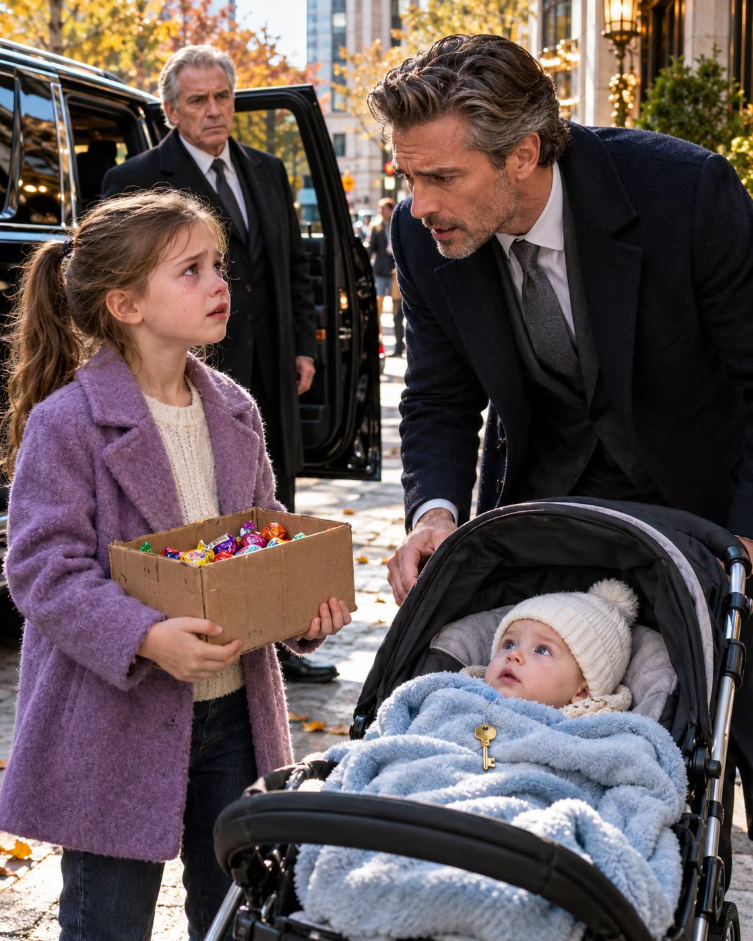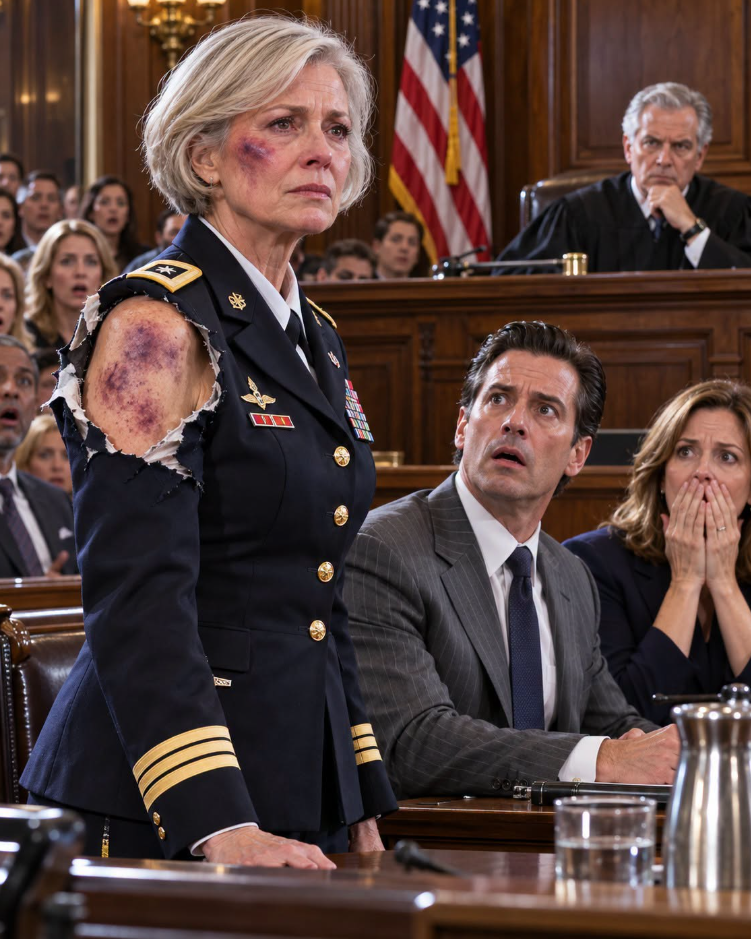
I gave more than ten million dollars to two of my daughters, but my middle daughter received absolutely nothing from me. Years later, when I finally had to ask which of them would care for me, I called her fifteen times before she finally answered and said, “Excuse me, who is calling?”
My name is George Miller. I am seventy-three years old and live in Phoenix. One year earlier, I sold two pieces of property: the home I had inherited from my parents and a small apartment I purchased during my years working as a carpenter. Together, those sales brought me ten point five million dollars. I gave five point two million to my oldest daughter, Samantha, and five point three million to my youngest daughter, Chloe. My second daughter, Hannah, received nothing at all.
“Are you going to spend your whole life gluing torn paper together?” I shouted at her during our last big argument.
Those words stayed with me, just as my cruel response did. “Then do whatever you want, but don’t expect anything from this house ever again,” I barked back. After that argument, ten years went by with barely a conversation between us.
“Should I try calling her again for you?” Samantha asked as she glanced at the empty seat.
Instead, I picked up the phone myself and called Hannah. Once. Then five times. Then ten. Eventually, on my fifteenth attempt, she answered.
“Hello?” Hannah said over the static line.
“Hannah!” I called out into the receiver.
For a long moment, nothing came from the other end. Then she finally spoke. “Excuse me, who is calling?” she asked neutrally.
Her words hit me like a slap across my face. “I am your father!” I yelled into the phone.
There was another long silence before she answered. “Oh, what happened?” she asked in a flat tone.
I told her that I wanted the family together so we could decide who would help care for me now that walking had become increasingly difficult. Her reply remained distant and cold.
“I cannot travel right now because I am working, but I will transfer whatever amount I am legally required to contribute to your monthly expenses,” Hannah stated firmly.
“Is that all you have to say to me?” I asked, feeling my anger rise.
“For now, yes, because I have to get back to my lab,” she replied before hanging up the phone.
Enraged, I struck my fist against the dining table. Then I turned toward the two daughters who had received millions from me.
“Very well, since Hannah wants nothing to do with me, which one of you will take me into your home?” I demanded.
Samantha immediately looked down at her plate. “Dad, my son is about to start college, and our place is just too small,” she stammered softly.
Chloe immediately began explaining why she could not do it either. “We are going through a very tough stretch with my husband’s business, and besides, Samantha lives much closer to you,” she offered quickly.
“So you two are just passing me back and forth between yourselves?” I asked, looking at them both.
Neither daughter answered me.
I stared at the table covered with food nobody was touching and felt humiliated. The two daughters who had received my entire fortune were searching for reasons not to care for me, while the daughter I had given nothing had at least offered to contribute her legal share toward my expenses.
I could not sleep that night.
Before sunrise, I packed my belongings into one suitcase and prepared to travel to Atlanta. I wanted to stand face-to-face with Hannah and demand to know how she could possibly forget the sound of her own father’s voice.
I had no idea that what I discovered there would leave me completely broken instead.
I boarded an early morning bus traveling from Phoenix to Atlanta. The only thing I really knew about Hannah’s career was that she worked at a specialized historical document preservation center. I understood almost nothing about what she actually did there because, for years, I had dismissed her profession by saying she simply repaired old books.
After reaching Atlanta, I hired a taxi to take me to the address.
“Are you visiting someone who works inside that center?” the driver asked curiosity.
“She must be incredibly talented because not just anyone can land a job there, as they restore priceless archives, rare manuscripts, and ancient historical papers worth more than a mansion,” the driver explained.
The facility stood behind enormous oak trees, removed from the noise and traffic of the main roads. Once inside, I approached the reception desk and asked whether I could speak with Hannah Miller.
Soon, a man in his late fifties appeared and greeted me warmly.
“Are you Mr. George Miller?” he asked with a gentle smile.
I was completely surprised that he knew my name. “Yes, I am,” I answered hesitantly.
“I am Dr. Robert Hayes, the head director of this department, and Hannah has spoken about you many times,” he said.
His statement only confused me further. “She talked about me?” I asked in disbelief.
“She told us that you were one of the finest woodworkers and carpenters in your city,” he explained with a warm look.
A painful knot tightened inside my throat.
Dr. Hayes guided me into his office and began telling me things about Hannah that made me feel as though he were describing someone I had never met.
My daughter was not merely another employee. She was one of the organization’s leading specialists. She had created innovative methods for stabilizing severely damaged paper and supervised delicate restoration projects involving centuries-old manuscripts that international experts had believed were beyond recovery.
“She is currently working on an extraordinary piece of history,” Dr. Hayes explained as we walked down a hallway. “We cannot enter the sterile lab room itself, but you can watch her work from the observation gallery above.”
I climbed the stairs alone.
Through a large glass panel, I saw Hannah standing behind a long workstation. She was dressed in a white laboratory coat, protective face mask, and surgical gloves.
An ancient document lay before her, its surface covered with severe cracks, dark stains, and missing fragments.
Three senior specialists stood nearby, carefully observing everything she did.
Hannah lifted a pair of tiny tweezers and delicately positioned a microscopic paper fiber. Then she reached for a fine brush and carefully applied a special solution.
The room remained completely silent as everyone waited for her next direction.
She was not simply gluing damaged pieces of paper together.
The concentration in her face reminded me of myself forty years earlier, when I would spend entire nights adjusting a difficult wooden joint until every edge fit perfectly.
Then the truth struck me.
Hannah and I were exactly alike.
I had devoted my life to wood.
She had devoted hers to paper and history.
And for ten years, I had despised the very quality that made my daughter so much like me.
I returned downstairs to Dr. Hayes’s office with almost no strength remaining in my legs.
Then he told me something that shattered what remained of my pride.
“Hannah always tells us she chose this profession because of you,” Dr. Hayes said softly. “When she was a little girl, she used to watch you transform ruined pieces of wood into beautiful furniture, and she wanted to do the exact same thing for historical documents that time had destroyed.”
My trembling hands rose to cover my face.
A moment later, the office door opened suddenly and Hannah stepped inside.
“Dad, what are you doing here?” she asked in surprise.
Slowly, I rose from the chair.
“I came here to ask for your forgiveness,” I managed to say.
Before Hannah could respond, my mobile phone began ringing loudly inside my pocket.
I pulled it out.
Chloe was calling.
“Dad! We just found out who Hannah really is!” Chloe shouted frantically through the speaker. “She is the famous restorer who signs all her major work as H. Miller, and people are saying her new project just received a hundred million dollars in funding!”
Hannah calmly held her hand out toward me.
“Hand the phone to me, Dad,” she said softly.
I immediately gave it to her.
And as she began speaking to Chloe, I realized that ten years of hidden family resentment were about to come pouring into the open.
“Yes, Chloe, it is me,” Hannah said into the phone in a calm voice.
Chloe spoke so rapidly she could barely breathe between her words. “You have a hundred million dollars and you never mentioned a word to us?” Chloe yelled angrily. “We are your family, Dad is sick, and you could easily hire private nurses, buy him a new home, and help the rest of us out!”
“First of all, those one hundred million dollars do not belong to me,” Hannah explained firmly. “That money is an institutional grant dedicated entirely to research, lab equipment, paper conservation, and training future specialists over several years, meaning every single dollar is strictly audited.”
“Second of all, my personal duty to Dad does not change because of this research grant,” Hannah continued without pause. “I am still going to pay whatever amount is necessary to ensure he receives proper medical care.”
Hannah interrupted before she could continue.
“Were we sisters when Dad excluded me from the inheritance and neither of you spoke up for me?” Hannah asked coldly.
It felt as though the ground had vanished beneath me.
“And do you even remember why I left home in the first place?” Hannah added. “Dad explicitly told me that if I chose this career path, I should never cross his doorstep ever again.”
I could not force myself to meet her eyes.
I had said those cruel things.
Yet over the years, I had rewritten the memory inside my own mind, convincing myself Hannah had walked away because she was stubborn.
The truth was far worse.
I had been the one who forced her out.
Chloe quickly attempted to redirect the discussion.
“Well, that happened a very long time ago, and right now Dad needs our help,” she pleaded.
“Dad is staying with me now, so you do not need to worry,” Hannah stated plainly before hanging up the phone.
Silence filled the office.
“Hannah…” I murmured softly, searching for words.
“You do not have to explain anything to me today,” she said in a tone completely free of anger.
Her calmness hurt much more than anger ever could have.
Hannah arranged temporary accommodation for me in a small apartment belonging to the research center and normally used by visiting scholars.
The apartment was modest, with one bedroom, a living area, a tiny kitchen, and long shelves filled with books about chemistry, history, and paper science.
During my first week, Hannah and I barely spent any time together.
I usually ate breakfast alone because she left early for the laboratory and frequently did not return until after eleven at night.
When we happened to cross paths, she asked me simple questions.
“Have you eaten dinner yet, Dad?” she would ask.
“Yes, I ate earlier,” I would reply.
“Did you remember to take your daily medication?” she would follow up.
“Yes, I took it right on time,” I would answer.
And that was where our conversations ended.
She remained courteous, caring, and dependable, but there was an unmistakable distance between us, almost as though I were simply another temporary visitor.
Before long, Samantha and Chloe started calling me constantly.
Initially, they pretended their calls were about my health.
That pretense did not last long.
“Dad, can you ask Hannah if she can recommend my husband’s firm for a contract?” Samantha asked during an afternoon call. “His company could easily supply raw materials to her laboratory.”
The following day, Chloe called with an even more straightforward request.
“Tell her to get me a job at her center,” Chloe urged over the phone. “They handle so much money that there must be an open position for me.”
Their behavior embarrassed me deeply.
One Sunday morning, Hannah was sitting in the living room working on her computer when Chloe called once again.
While answering, I accidentally activated the speaker.
“Have you talked to her about us yet?” Chloe demanded loudly through the speaker. “She cannot keep everything for herself! If she gets to eat steak every night, the rest of the family should at least get some soup!”
Hannah lifted her eyes from the computer and looked directly at me.
“Let her keep talking, Dad,” Hannah said quietly.
Chloe continued complaining about her problems until Hannah finally spoke.
“Do you really want to talk about financial matters, Chloe?” Hannah asked calmly. “Then let us discuss them right now.”
The sharpness of Hannah’s voice immediately silenced her sister.
“You and your husband owe almost eight hundred thousand dollars, and the bank has already started foreclosure proceedings on your house,” Hannah revealed calmly.
I stared at my daughter in complete disbelief while a heavy silence settled over the call.
“And Samantha’s husband is currently under investigation for major tax irregularities,” Hannah continued. “Most of the money Dad gave her has already been spent trying to cover up those massive debts.”
I sat completely still.
Neither Samantha nor Chloe had ever told me about any of those serious financial problems.
“How on earth do you know all of that?” Chloe whispered nervously over the phone.
“Because the moment you two started harassing Dad about my project funding, I had to hire professionals to ensure no one used family ties to pressure my lab,” Hannah answered coldly. “Fix your own problems because I am not going to pay your debts.”
Then she ended the call.
That evening, an awful realization settled over me.
I had divided my fortune because I thought I was rewarding the daughters who had behaved correctly.
But Samantha and Chloe had simply absorbed the lesson I had taught them—that love, loyalty, and responsibility could all be measured with money.
Hannah alone had refused to participate in that game.
And I had punished her because of it.
Over the following days, I began reading some of the technical books lining her shelves.
I understood barely half of the scientific terminology, but I slowly learned that preserving an ancient document required knowledge of fibers, inks, moisture, acidity, and the compatibility of different materials.
One careless repair could permanently destroy a priceless historical document.
One afternoon, as I passed Hannah’s open bedroom, I noticed her participating in a video conference with an elderly white-haired scholar.
They moved effortlessly between fluent Italian and English.
After she shut her laptop, I approached her.
“Who was that man on the screen?” I asked gently.
“That was Professor Lorenzo Rossi,” she answered. “He was one of my primary mentors during my advanced studies in Rome.”
Once again, I discovered an entire part of my daughter’s life that had happened without me.
“You never told me that you lived and studied in Rome,” I said softly.
A small, sorrowful smile crossed her face.
“We were barely speaking to each other during those years, Dad,” she reminded me.
There was no accusation in her voice.
She was merely stating the truth.
I sat in the chair opposite her.
“Do you hate me for what I did?” I asked hesitantly.
Hannah remained silent for a long moment before answering.
“No, I do not hate you,” she replied gently.
“Then what do you feel toward me?” I asked, bracing myself.
“Pity,” she answered quietly.
The word landed directly against my chest.
“You feel pity for me?” I asked back.
“I feel pity that a master craftsman like you could not recognize the same passion in his own daughter just because she chose to work with paper instead of wood,” she explained softly.
I dropped my gaze, unable to look directly at her.
Then Hannah told me something about her childhood that I had never known.
When she was nine, I had given her a small leather dictionary.
One day, she accidentally dropped it into a muddy puddle.
Afraid that I would become angry because she had ruined my gift, she carefully separated the soaked pages, used cooked rice as an adhesive, then placed the book between two wooden boards in my workshop and clamped it there overnight.
“That was my very first restoration project,” Hannah shared with a gentle smile. “My entire career started right there in your workshop.”
Tears began filling my eyes.
“I went into this field because I admired you so much, Dad,” she confessed softly. “I spent my childhood watching you rescue ruined doors, broken tables, and discarded pieces of walnut wood that anyone else would have thrown into the trash. I truly believed your hands could bring anything back to life, and I thought you would be the first person to understand what I wanted to do with my life.”
Her confession destroyed the last defenses I had left.
I had not simply misunderstood my daughter’s chosen profession.
I had crushed the dream of the child who had admired me more than anyone.
“Please forgive me, Hannah,” I wept bitterly.
For once, my apology was not an attempt to make my own guilt disappear.
I apologized because I finally understood how deeply I had hurt her.
Hannah did not wave away my apology or tell me that everything was fine.
She simply looked at me gently.
“Tomorrow morning, I want to take you on a short trip,” she said softly.
The following morning, Hannah drove us back toward our home region to visit the cemetery where her mother, Margaret, had been laid to rest.
For years, I had avoided her grave because the grief and regret were too painful.
Hannah took white daisies, fine brushes, and soft cloths from the car.
She cleaned Margaret’s gravestone with the same patient precision I had watched her use through the observation window at the laboratory.
“Mom always loved these flowers,” Hannah said as she arranged them near the stone. “She used to tell me that they looked simple, but they could survive almost any harsh weather.”
I stood silently beside her.
Then Hannah removed a cloth-covered object from her bag and placed it in my hands.
It was the little dictionary from her childhood.
The book had been completely restored, with clean pages, repaired edges, and a beautiful new binding.
On the first page, written in elegant handwriting, was one word:
Origin.
“Whenever I feel overwhelmed at work, I look at this book,” Hannah explained softly. “It reminds me of your workshop, the rich smell of sawdust, your hand tools, and that phrase you used to repeat to us.”
Before Hannah could say the words, the old motto returned to me.
“A good piece of work should never bring shame to your hands or your conscience,” I quoted quietly.
Hannah smiled.
“Exactly, Dad,” she replied.
Standing beside Margaret’s grave, I finally broke down.
For once, I made no attempt to hide my emotions from Hannah or from the memory of my late wife.
Tears were running down Hannah’s face too.
“I never stopped being proud of you,” Hannah whispered softly.
Then she took out her phone and showed me a photograph.
It pictured an old wooden desk featuring complicated joinery and a tiny carved orchid in one corner.
I recognized it instantly.
Thirty years earlier, I had built that exact desk for a professor at a local university.
“He was my academic advisor in college,” Hannah explained with a warm smile. “The very first time I walked into his office and saw that desk, I told him that my father built it and that he was the absolute best carpenter in the world.”
I stared at the photograph in amazement.
All those years, I had assumed Hannah was embarrassed by me.
In reality, she had carried my name with pride for decades.
I was the one who had been ashamed of her.
Not long after our cemetery visit, I became sick with a fever, severe exhaustion, and high blood pressure.
Hannah immediately took several days away from the laboratory to care for me.
She prepared chicken soup, kept track of my medication, and stayed beside me while I slowly regained enough strength to walk comfortably again.
We did not suddenly become a perfect father and daughter.
Ten years of separation could not disappear overnight.
But little by little, the wall between us began coming down.
A month later, Professor Rossi traveled to Atlanta for an international academic conference, and Hannah invited me to attend her keynote presentation.
I sat proudly near the back of the auditorium while she addressed some of the world’s leading restoration experts.
She spoke about her research with a level of confidence and authority I had never witnessed before.
After her presentation ended, she remained for nearly another hour answering complicated questions from the audience.
Watching her from across the room, I felt a powerful pride rise inside me.
She truly was my daughter.
Afterward, Hannah brought Professor Rossi over and introduced us.
“This is my father, George,” Hannah announced with a smile.
The professor warmly shook my hand and spoke through a translator.
“Now I finally understand where Hannah inherited her incredible skill,” the professor remarked. “She always speaks of you as the man who taught her that restoring something broken is the highest form of love.”
I had to look away briefly so I could wipe the tears from my eyes.
Several days afterward, I decided that it was time for me to return to my own city.
I did not want my presence to become a permanent burden on the independent life Hannah had worked so hard to create.
At the bus station, she attempted to place a financial card into my hand.
“Dad, take this so you can hire help or move into a comfortable senior living residence,” she offered gently.
I shook my head and pushed her hand gently back toward her.
“No, Hannah,” I said softly.
“Dad, please let me help,” she insisted.
“Let me do at least one thing right as your father,” I replied as I pulled a cloth-wrapped item from my coat pocket.
During the weeks I had stayed in Atlanta, I had purchased a few basic carving tools and secretly worked inside my spare room whenever Hannah was away.
I handed her a polished wooden bookmark I had made myself, with a tiny daisy carved into its top.
Hannah held it carefully between both hands.
“It turned out beautifully,” she whispered softly.
“It is not perfect, but I crafted it with my heart in the right place,” I said with a smile. “A good piece of work should never bring shame to your hands or your conscience, and it took me seventy-three years to realize that rule applies to being a father as well.”
Hannah moved forward and wrapped her arms tightly around me.
The embrace lasted only a short time.
But after ten years of silence between us, that brief hug meant more to me than every million dollars I had given my other daughters.
After returning home, I sold the large workshop equipment that my body could no longer operate and moved into a comfortable senior living residence.
I never gave Samantha or Chloe another dollar to rescue them from their financial problems.
It was not because I hated them.
I simply understood at last that protecting them from every consequence of their choices would neither make them better daughters nor make me a better father.
Hannah started calling me every Sunday evening.
Our conversations did not have to be long for us to feel close.
Sometimes, she sent photographs of historical manuscripts she had successfully restored.
In return, I sent her sketches of complicated woodworking joints I still remembered from my years as a carpenter.
Several months later, a package arrived for me in the mail.
Inside was a historical book about traditional woodworking craftsmanship.
Tucked beneath the front cover was a photograph showing the ancient manuscript Hannah and her laboratory team had successfully restored.
On the back, Hannah had written:
For Dad. Some things can never be returned to their original state, but that does not mean they cannot continue to live on beautifully.
I placed that photograph on the nightstand beside my bed.
For years, I believed Hannah had devoted her life to repairing old sheets of paper.
Eventually, I understood how terribly wrong I had been.
She preserves human memory.
She saves precious things other people have already decided are beyond repair.
And, in her own way, she had done exactly that for me.
Hannah did not erase the wounds I had inflicted.
She never pretended those ten lost years had not happened.
Instead, she accepted what remained of our damaged relationship and patiently began fitting the pieces together again.
Perhaps that is one of the hardest truths to understand when you grow old.
Some mistakes cannot be repaired with any amount of money.
Some words create scars that never completely disappear.
And sometimes our children do not need our fortune.
They simply need us to recognize who they truly are before we lose the chance.
I gave away ten point five million dollars because I believed money would guarantee security during my final years.
Instead, I discovered that the daughter who received nothing from me was the only one who had never wanted my fortune.
What she wanted was much cheaper in dollars but infinitely more difficult for a proud father to offer.
Understanding.
Now, whenever someone at my senior residence asks which of my three daughters followed my profession, I always give the same answer.
“My daughter Hannah,” I tell them proud.
Some people look confused.
“Is she a carpenter too?”
I smile softly.
“No, she works with things that are far more fragile than wood.”
Then I think about Hannah and me.
A gifted daughter who learned how to rescue torn pages.
And an old father who finally discovered that he could be restored too.