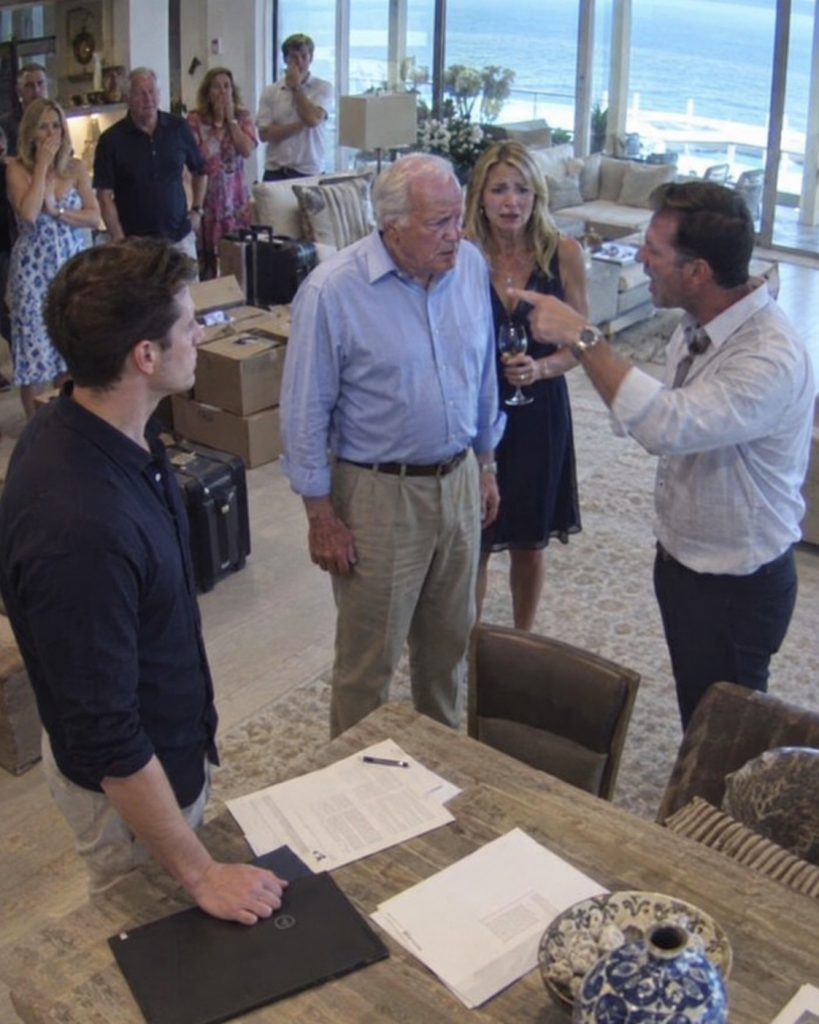
My brother-in-law pointed at my shaking father inside the $425,000 beachfront mansion I had bought my parents and growled, “This is my house now. Get out.”
My sister stood behind him, drinking wine from my mother’s crystal glass.
They thought my parents were helpless. They had forgotten whose name was on the deed.
Three weeks earlier, I had handed my parents the keys to the cream-colored oceanfront house in Cannon Beach, Oregon, for their fiftieth anniversary.
No cameras. No party. No speech.
That was how Samuel and Irene Sinclair had lived their entire lives—quietly, without asking anyone for recognition.
My mother cried when I placed the keys in her palm.
My father walked onto the wraparound porch and stared over the dunes toward the Pacific, both weathered hands gripping the railing.
“You’ve already done too much for us, Lucas,” Mom whispered.
“No,” I said. “You did too much for me.”
There was one detail I deliberately kept simple.
The title remained in my name.
My parents could live there for the rest of their lives, but nobody could sell it, mortgage it, transfer it, or take it from them.
For three weeks, they were happier than I had heard them in years.
Then my sister Fiona arrived with her husband, Gregory, and their two teenage sons.
“Just a few days,” Mom told me over the phone. “The boys love the beach.”
A few days became two weeks.
Then my mother’s cheerful calls stopped.
When I finally reached her, her voice was so quiet I almost couldn’t hear it.
“Lucas… sweetheart… maybe you should come.”
The line went dead.
I left Portland that afternoon.
Gregory’s black pickup was parked sideways across the garage when I arrived.
Wet towels hung over the porch railing. Coolers and beach chairs blocked the walkway. A front window was cracked, and music pounded through the house hard enough to rattle the glass.
Then I heard Gregory shouting.
I opened the front door.
Mom stood near the staircase, pressing a kitchen towel to her mouth.
Dad was beside the entry table.
He was shaking so badly his glasses had slipped down his nose.
At his feet sat a cardboard box packed with his sweaters, medication, and the framed photograph from his fiftieth anniversary dinner.
Gregory stood inches from him.
“This is my house now, old man,” he shouted. “You and Irene need to pack your things and leave.”
Fiona leaned against the kitchen doorway, holding one of Mom’s crystal wineglasses.
She didn’t defend our father.
She laughed.
“Dad, stop being dramatic. You and Mom don’t need a place this big. Gregory and I have children. Lucas won’t mind.”
Gregory kicked the cardboard box toward Dad’s shoes.
“The door’s right there,” he said. “Use it.”
Nobody moved.
Even my nephews had gone silent in the living room.
Dad looked down at the box instead of answering.
That hurt more than Gregory’s shouting.
My father had worked forty-three years without once asking me for money. He had driven the same truck until rust ate through the wheel wells. He had missed vacations so Fiona and I could go to college.
Now he was standing inside his anniversary gift like a trespasser.
I closed the front door behind me.
The music stopped.
Fiona’s smile disappeared.
Gregory slowly turned around.
“Lucas,” Fiona said quickly. “Good. We were actually going to call you.”
“Were you?”
Gregory folded his arms.
“This is family business.”
I looked at the box by Dad’s feet.
“It certainly is.”
Fiona set down her glass.
“Mom and Dad can’t maintain a property like this. Gregory and I have been discussing what makes sense for everyone.”
“And throwing them out makes sense?”
“Don’t twist it,” Gregory snapped. “We’re taking responsibility for the place.”
Then he made his mistake.
He reached onto the entry table and picked up a manila folder.
“We’ve already prepared paperwork,” he said. “Samuel just needs to sign.”
Dad’s eyes met mine.
For the first time, I understood why he was shaking.
They hadn’t merely decided to stay.
They had been pressuring my parents to sign something.
I held out my hand.
“Give me the folder.”
Gregory pulled it against his chest.
“You don’t need to see it.”
That was when I smiled.
Not because anything was funny.
Because Gregory still believed he was negotiating with the frightened son of two frightened retirees.
He had no idea I was the only person in that room who legally owned a single inch of the property.
“Interesting,” I said. “Why don’t you tell me one more time whose house this is?”
Gregory’s jaw tightened.
“Ours now.”
I took out my phone and made one call.
Then I walked to the small writing desk beside the windows, unlocked the bottom drawer with the key on my ring, and removed the sealed property file I had placed there on anniversary weekend.
Fiona stared at the county recording stamp on the first page.
Gregory stopped talking.
I laid the deed on the table between us.
Then the front door opened behind him.
My attorney stepped inside, took one look at the document Gregory had been trying to make my father sign, and said,
“Nobody touch that folder.”
Gregory went pale.
My attorney, Claire, slipped on a pair of reading glasses and opened Gregory’s folder without moving it from the table.
Fiona immediately reached for it.
“That’s private.”
Claire blocked her hand.
“Not anymore.”
The first page wasn’t a deed.
It was an occupancy agreement naming Gregory and Fiona as permanent residents and making my elderly parents responsible for utilities, repairs, and household expenses.
The second page was worse: a handwritten statement claiming Dad had invited them to take control of the property.
Dad whispered, “I never agreed to that.”
Gregory’s face hardened.
“You said we could stay.”
“For a few days,” Mom answered.
Claire looked at me, then at the county deed I had placed beside Gregory’s papers.
“Lucas, there’s something else you need to see.”
She turned to the final page.
Fiona lunged for it.
Claire covered it with her palm.
“Don’t.”
Then she read the signature line.
PART 2
Then she read the signature line.
“Samuel Sinclair.”
Dad stared at the page.
His face went completely white.
“That isn’t my signature.”
Gregory immediately stepped forward.
“Of course it is.”
Dad shook his head.
“No.”
His voice was barely audible, but this time there was something behind it.
Certainty.
“I know my own handwriting.”
Claire looked carefully at the signature.
Then she turned the page over.
“Lucas,” she said quietly, “your father is right.”
Gregory’s expression changed.
Claire pointed to the bottom corner.
“This document was printed three days ago.”
I looked at Gregory.
“You told my father this was prepared for him to sign.”
Gregory said nothing.
Claire continued.
“But someone has already signed his name.”
Fiona dropped her wineglass.
It shattered against the hardwood floor.
Nobody moved.
One of my nephews whispered, “Dad?”
Gregory turned toward him.
“Go upstairs.”
The boy didn’t move.
For the first time, I saw fear on my nephew’s face.
Not fear of me.
Fear of his father.
Claire pulled another sheet from the folder.
“This gets worse.”
She placed it beside the deed.
“The agreement also authorizes Gregory and Fiona to refinance the property, collect rental income, and make financial decisions regarding the occupants.”
Mom covered her mouth.
“They were going to take the house.”
“No,” I said.
I looked directly at Gregory.
“They were going to make my parents sign away control of a house they don’t own.”
Gregory’s jaw tightened.
“You’re making this sound criminal.”
Claire looked at him.
“Forgery of a signature on a property document can have serious legal consequences.”
Silence filled the room.
Fiona suddenly started crying.
“Lucas, please.”
I looked at my sister.
“You watched Dad get threatened.”
She wiped her face.
“I didn’t think Gregory would actually do it.”
“You stood there and laughed.”
“I was scared!”
“So was Dad.”
She looked toward our father.
Dad was still standing beside the box of his belongings.
His hands had stopped shaking.
“Fiona,” he said.
She turned.
“I never asked you for anything.”
Her lips trembled.
“You were always my little girl. Even when you were difficult. Even when you made mistakes.”
He looked at the papers on the table.
“But you brought this man into my home and let him tell me to leave.”
Fiona lowered her head.
Gregory suddenly grabbed the folder.
“This is ridiculous.”
Claire stepped between him and the door.
“Put it down.”
He froze.
I took out my phone.
“I already sent copies of everything to the county recorder and my attorney’s office.”
Gregory stared at me.
“You called the police?”
“No.”
I paused.
“I called Claire.”
His confidence returned for half a second.
Then Claire added,
“And she contacted law enforcement before she came here.”
Gregory’s face changed.
Outside, tires rolled slowly across the gravel driveway.
A police cruiser stopped beside his pickup.
My nephews looked at their father.
Gregory whispered,
“You wouldn’t.”
I answered quietly.
“You threatened my father in his own home.”
“He doesn’t own this house!”
“No,” I said.
“I do.”
The front door opened.
Two officers stepped inside.
Claire handed them the documents.
One officer asked Gregory to step outside.
Gregory looked at Fiona.
She didn’t move.
For the first time that afternoon, he had no one standing behind him.
He walked toward the door.
As he passed me, he stopped.
“You think you’ve won?”
I looked at the cardboard box beside my father.
“No.”
I pointed toward my parents.
“I think they’ve finally stopped losing.”
Gregory walked outside.
Fiona stayed behind.
She sat on the bottom step and cried into her hands.
I didn’t comfort her.
Not because I hated her.
Because for years, whenever Fiona made a mistake, Mom and Dad had rushed to clean up the consequences.
This time, I wouldn’t let them.
Claire gathered the documents.
“We’ll have to document everything. The attempted transfer, the forged signature, the unauthorized occupancy agreement, and the property damage.”
Mom looked at me.
“Lucas, we don’t want Fiona arrested.”
I nodded.
“I know.”
Dad touched her shoulder.
“But we also don’t have to protect her from the consequences.”
That was the sentence that finally broke Fiona.
She looked up at our father.
“I thought you didn’t love me anymore.”
Dad’s eyes filled with tears.
“I never stopped loving you.”
He took a breath.
“But loving you doesn’t mean letting you hurt us.”
Fiona covered her face.
I walked toward the window.
Outside, Gregory was speaking with the officers.
The ocean stretched beyond the dunes, calm and endless.
Three weeks earlier, I had stood in that same room watching my parents open the door to their new life.
I had thought the deed was the most important thing I was giving them.
I was wrong.
The house wasn’t the gift.
Security was.
The knowledge that nobody could walk into their home, threaten them, or take advantage of them simply because they were getting older.
Claire came to stand beside me.
“There’s one more thing,” she said.
I turned.
“What?”
She handed me a sealed envelope.
“This was attached to the original closing documents.”
I opened it.
Inside was a letter from the attorney who had handled the purchase.
There was a handwritten note from me.
I had written it the night before I gave my parents the keys.
*Mom and Dad,*
*You spent your whole lives giving everything to your children.*
*This time, let me give something back.*
*This house is yours to live in for the rest of your lives.*
*No matter what happens.*
I read it twice.
Then I handed it to Dad.
He read it silently.
When he finished, he folded the paper carefully and placed it inside his shirt pocket.
“You meant that,” he said.
“Every word.”
He pulled me into a hug.
My father had always been the strongest man I knew.
But that afternoon, he cried against my shoulder.
Mom joined us.
For a few seconds, none of us spoke.
Behind us, Fiona quietly stood.
She looked at the three of us.
Then she walked toward the door.
“Dad?”
He turned.
“I don’t expect you to forgive me.”
Dad nodded.
“Good.”
She swallowed.
“But someday… I hope I can earn your trust again.”
Dad looked at her for a long moment.
“Then start by telling the truth.”
Fiona nodded.
“I will.”
She walked outside.
I watched her cross the porch and disappear down the driveway behind the officers.
Then I closed the door.
The house became quiet again.
Not the frightened silence from earlier.
A peaceful one.
Mom walked toward the kitchen.
“Lucas?”
“Yeah?”
She smiled through her tears.
“Would you stay for dinner?”
I smiled.
“Of course.”
Dad looked toward the ocean.
“What are we having?”
Mom laughed.
“Whatever your son wants.”
Dad shook his head.
“No. Tonight, we eat what we always eat.”
“What’s that?” I asked.
He looked at me.
“Whatever your mother makes.”
For the first time that day, all three of us laughed.
The next morning, Gregory was formally removed from the property.
The forged document became part of an investigation, and Fiona cooperated with the authorities.
My parents changed the locks.
They repaired the window.
They replaced the damaged furniture.
But they never replaced the crystal wineglass Fiona had broken.
Mom kept one piece of it in a small box.
Not as a reminder of what Fiona had done.
As a reminder of what my parents had survived.
Months later, I visited them again.
The porch looked exactly as it had on the day I gave them the keys.
Dad sat in his chair overlooking the Pacific.
Mom was planting flowers beside the steps.
I handed them an envelope.
Dad raised an eyebrow.
“What is this?”
“Property taxes for the year.”
He immediately pushed it back.
“Absolutely not.”
I laughed.
“Dad.”
“No.”
“It’s my house.”
He pointed at me.
“And we’re your parents.”
Mom smiled.
“Looks like neither side is giving up.”
Dad leaned back in his chair.
“Good.”
I looked at the ocean.
The waves rolled toward the shore, steady and patient.
For years, I had believed protecting my parents meant giving them money, buying them things, and solving every problem before they knew it existed.
But I finally understood something.
Sometimes protection wasn’t about standing in front of someone.
Sometimes it was about giving them a place nobody could take away.
A place where they could grow old without fear.
A place where their door stayed locked against people who thought kindness meant weakness.
Dad reached over and squeezed my hand.
“You did enough, son.”
I looked at him.
“No, Dad.”
I smiled.
“Now I’m just making sure nobody forgets whose house this is.”
He laughed.
And behind us, the front door remained open.
Not because anyone was entitled to enter.
Because, finally, my parents were no longer afraid of who might knock.