Loretta’s voice filled my kitchen. “Since you married my Vance, you both should keep a small allowance and deposit the rest of your paychecks into my account. Young people don’t know how to save. I’ll manage it for you.
I stared at Vance.
I was twenty-nine, seven years into a top consulting firm, owner of a mortgage-free luxury condo with investments and excellent credit. Vance had only finished paying off a $45,000 car loan six months before our wedding.
Yet his mother was supposed to manage me.
Vance shrugged. “It’s generational.”
“Did you give her your paycheck before we married?”
“No.”
“Does Tatum?”
“That’s private.”
I laughed.
“Her marriage is private. Mine belongs to your mother?”
He became defensive but finally declared we “wouldn’t” surrender our salaries, as though granting me special permission to keep my own income.
Then came the condo.
Loretta apparently worried Vance looked like a “kept man” living in property I had purchased before marriage. Her solution was simple.
Put his name on my deed.
“I am never putting you on the deed,” I told him.
His expression changed.
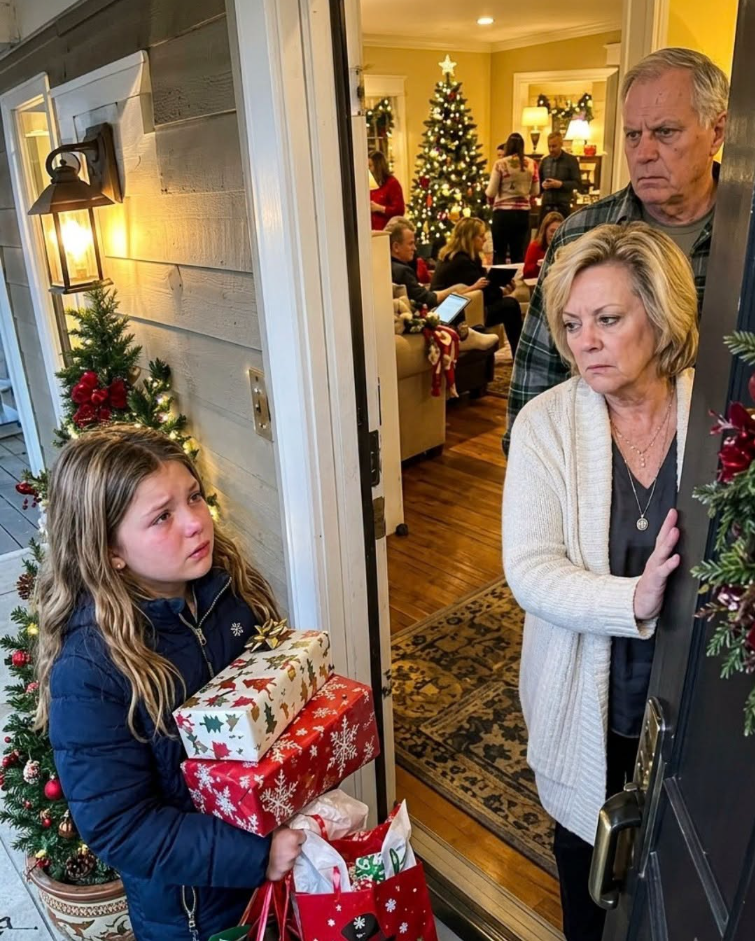
That afternoon, while I was working, Loretta and Tatum appeared outside my condo with two suitcases and shopping bags. They had not been invited.
When I arrived home, Tatum demanded a spare key.
Loretta casually explained that Tatum’s lease would expire soon and her downtown commute was difficult. Since I had a guest room, what was wrong with letting her stay “a couple nights a week”?
“No key,” I said. “No sleepovers.”
They erupted.
I opened my front door.
“If you refuse to leave, building security will escort you.”
After they stormed out, I checked the bowl where I kept three spare key fobs.
Only two remained.
I checked my building access logs.
Vance had let them into the building.
I texted him.
“You gave Tatum my spare key.”
His reply arrived five minutes later.
“She just took one. It’ll be handy sometimes.”
Something inside me became very calm.
I called the concierge and ordered an emergency locksmith.
By the following afternoon, I had a $600 biometric lock. I was the sole administrator. Loretta and Tatum’s access was permanently revoked.
When Vance discovered it, he exploded.
“I live here! I have the right to let my family in!”
“No,” I said. “You have the right to reside here as my husband. You do not own this property, and you cannot distribute access to people I expressly banned.”
That night he accidentally revealed the rest.
Tatum and her husband, Briggs, were struggling financially. They had discussed staying in my guest room for one or two months while apartment hunting.
Without asking me.
The next afternoon, I met my friend Thatcher, a family-law attorney.
“How long have you been married?” he asked.
“Seven days.”
He rubbed his temples.
After hearing everything, he told me two things.
Never touch anyone again.
And document everything.
I went home and created four secure folders: Premarital Real Estate. Condo Assets. Joint Marital Funds.
And one simply labeled The Vances.
Three days later, that final folder received its most important document.
I logged into our new joint checking account.
We had deposited $15,000 each.
The balance should have been $30,000.
Instead, it was just over $20,000.
I opened the transaction history.
Vance had wired exactly $10,000 to Tatum.
The memo read:
Housing transition.
Part 3: A secret $10,000 transfer finally revealed my husband’s allegiance.
I downloaded the bank statement but said nothing.
The next morning, while Vance poured milk into his coffee, I casually asked whether any major payments had left our joint account.
His hand froze.
“No. Nothing major.”
That lie ended my marriage before either of us said the word divorce.
Later that day, Loretta filled the family group chat with tearful accusations. According to her, I was controlling Vance, humiliating Tatum, and tearing apart a loving family.
The aunts joined in.
So I stopped defending myself.
I uploaded evidence.
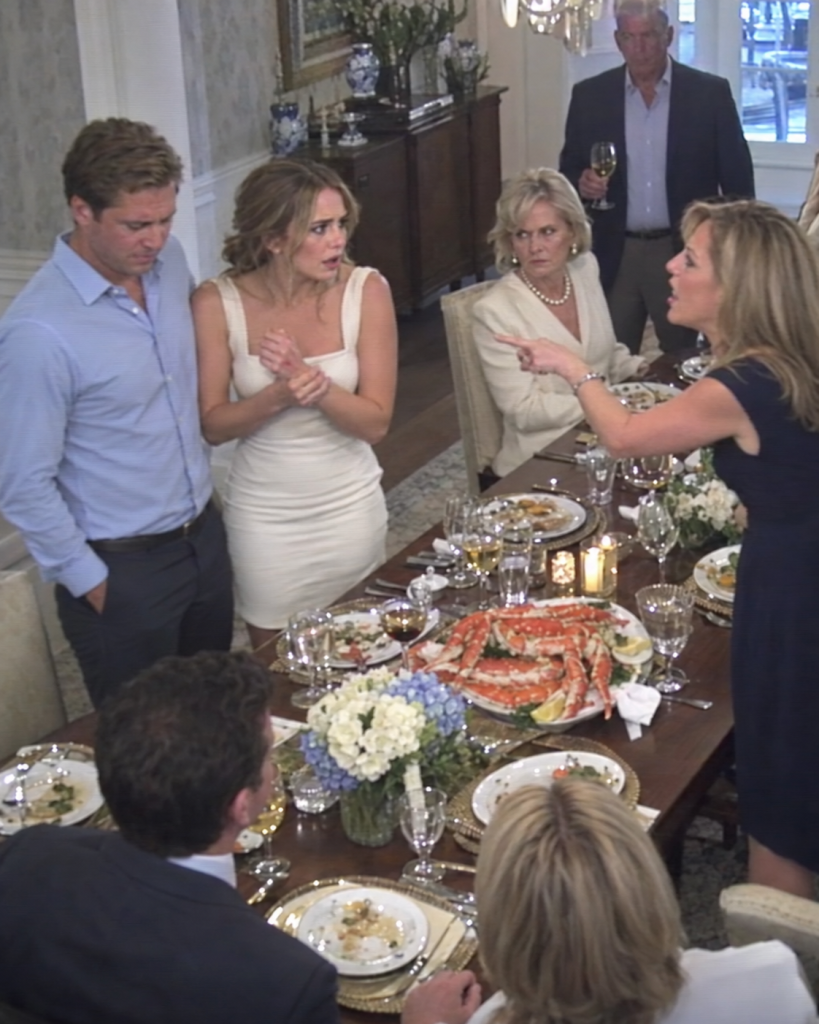
First came a wedding-dinner video captured on a teenage cousin’s phone. Tatum’s fork clearly struck my hand while Loretta talked about controlling our finances.
Then I posted Tatum’s texts admitting Vance had authorized her to move into my condo.
The chat went silent.
Finally, I addressed the $10,000.
Loretta called it a “small family advance.”
That evening, Vance came home and found the printed wire confirmation beside his dinner plate.
His face drained.
“You said nothing major left the account.”
“It was temporary.”
“You took money containing my contribution and gave it to your sister without permission.”
“She needed help.”
“Then use your personal money.”
I ordered the full $10,000 restored.
The following morning Tatum texted me that the money was practically an “initiation fee” for marrying into their family.
I replied with one sentence.
“Do you confirm receiving the $10,000?”
“Yes,” she wrote arrogantly.
Perfect.
She had just documented the transfer herself.
Five thousand dollars came back that afternoon.
I suspended my deposits into the joint account.
Then the concierge called.
Loretta was downstairs screaming because she had been denied access.
I met her on the building terrace.
“You make so much money,” she snapped. “Why are you demanding the remaining five thousand?”
“Because I’m not donating money to someone who struck me, stole my key, and planned to move into my home.”
Loretta threatened that I was headed for divorce.
For once, she was right.
That evening my phone rang again.
Tatum, Briggs, and three enormous suitcases were standing in the lobby.
They claimed Vance had told them they could move into my unit.
I held the phone up to my husband.
His face went white.
“Please,” he whispered. “Just let them stay a few months. Otherwise I’ll look like a liar.”
“You are a liar.”
We went downstairs.
Tatum was already arguing with security. Loretta paced outside like a general awaiting battle.
I told the guard, clearly enough for everyone to hear, that Tatum had no tenant rights and Vance had no ownership interest allowing him to authorize her residency.
Neighbors stared.
Then I faced my husband.
“You have two choices. Come upstairs alone and start telling the truth, or carry one of those bags and go home with your mother.”
He looked at me.
Then Loretta.
Then Tatum.
Slowly, he reached for Briggs’s duffel bag.
My husband chose Mommy.
Four days later, the entire Vance clan bypassed security by following another resident into the building. They crowded my hallway and pounded on my door.
I gave them three minutes to leave.
They refused.
So I called Chicago police.
When two officers arrived, Loretta wailed that I had locked her son out of his own home.
I slid my ID and deed beneath the door.
One officer examined them, then looked at Loretta.
“Being a mother-in-law is not a lease agreement, ma’am.”
They were ordered out.
Vance remained in the hallway.
Eventually, I let him inside under strict conditions: the remaining money returned, no unauthorized guests, and no more demands concerning my title.
He agreed.
At one in the morning, I went into the kitchen for water.
A thick legal envelope sat on the counter.
Inside was a freshly drafted postnuptial agreement.
One clause transferred fifty percent of my condo to Vance.
I photographed every page and sent them to Thatcher.
His reply came minutes later.
“Now you know exactly what this marriage was about.”
Part 4: The final document exposed everything and ended our marriage.
The next morning, Vance’s bags were waiting beside my front door.
I threw the postnuptial agreement onto the kitchen island.
“You promised before our wedding you wanted nothing from my property.”
“My mom pressured me.”
“She didn’t sign this. You were going to.”
“Sloane, please.”
“My condo is worth nearly nine hundred thousand dollars. Your family demanded my salary, stole my key, planned to occupy my guest room, took money from our account, and now you want half my property.”
He began crying.
For the first time, I felt no urge to comfort him.
Thatcher filed immediately.
The last confrontation happened at Loretta’s sixtieth birthday dinner at a suburban country club. I arrived carrying a thick binder because several relatives still claimed everything could be solved with “one reasonable compromise.”
Their compromises included a monthly allowance for Loretta and financial help for Tatum.
I let them finish.
Then I opened the binder.
I played the video showing Tatum hitting my hand.
I distributed copies of the $10,000 transfer.
I showed them the building access records proving the stolen key and unauthorized entry.
Then I placed the postnuptial agreement in front of Loretta.
Nobody spoke.
Finally, I laid Thatcher’s settlement papers beside it.
Vance would waive every claim against my premarital assets. The condo would remain entirely mine. The missing money would be restored. Our financial lives would be separated completely.
Loretta’s face turned crimson.
“You’re destroying this family!”
“No,” I said. “I’m refusing to finance it.”
Vance stood.
“Sloane, please don’t do this.”
I picked up the postnup his mother had arranged, tore it in half, then again.
The pieces fell onto his plate.
“You wanted fifty percent of my home.”
I pushed the divorce papers toward him.
“Here’s the only fifty-fifty arrangement you’re getting. Half the responsibility for admitting this marriage failed.”
Three days later, Vance appeared outside my condo begging me to stop the proceedings. Loretta had suffered a serious blood-pressure episode, and somehow her health had once again become my obligation.
I gave him three requirements.
Return everything belonging to me.
Restore the remaining $5,000.
Sign.
He did.
On his final moving day, Vance carried ten boxes into the elevator and handed his building fob to the concierge.
Before the doors closed, he looked at me.
“I still don’t understand how you could end a marriage over a little money.”
That was the final truth.
He still thought it was about money.
It had never been about a crab leg.
It wasn’t even about ten thousand dollars.
It was about the moment Tatum hit my hand and my husband watched. It was about every demand afterward proving they expected my silence to become permanent access—to my time, my income, my home, and eventually my future.
The divorce moved quickly.
I kept my condo.
Tatum paid her own debts.
Loretta never received a key, an allowance, or a dollar of my salary.
And I transformed the guest room they had planned to occupy into a home gym. I put a Peloton beside the windows, rolled out a yoga mat, and let the afternoon sunlight cover the hardwood floor they had once treated like inherited property.
Some evenings, I cooked salmon or jumbo shrimp and poured myself a glass of wine.
The silence no longer felt lonely.
It felt expensive.
Earned.
Mine.
Five days after my wedding, my husband’s family tried to teach me their rules.
By the time the marriage ended, they had finally learned mine.
Family does not mean ownership.
Love does not require surrender.
And the moment someone asks you to sacrifice your dignity, your financial security, and your boundaries merely to prove you belong, the correct answer is not compromise.
It is the door.
THE END.