Harriet called me at eight the next morning. We met the following week in her office. I brought every account statement and insurance document I owned. I told her enough about the birthday dinner, the business loans, and the expectations surrounding my money for her to understand.
“I want my intentions documented,” I said. “Clearly.”
She folded her hands.
“Do you want to restructure your accounts, or do you want to discuss a trust?”
“Tell me about the trust.”
For two hours, Harriet explained a revocable living trust. My house, savings, and investments could be placed inside it. I could name beneficiaries, establish contingencies, protect specific distributions, and change everything later if I wished.
“It remains yours,” Harriet emphasized. “As long as you’re alive and competent, these decisions belong to you.”
I went home and thought for two weeks.
I walked through the house Terrence and I had shared for twenty-six years. I stood beside the dogwood tree he had planted before he died. I imagined what he would say if he were beside me.
Protect yourself.
So I did.
Everything went into the trust.
My daughter was not the primary beneficiary.
Terrence had a nephew named Caspian, twenty-eight years old, quiet and steady, working toward his nursing degree. Since Terrence’s funeral, Caspian had checked on me without asking for anything. He remembered my birthday. He remembered the anniversary of Terrence’s death.
He reminded me of my husband in a way I could never explain without sounding sentimental.
I named Caspian primary beneficiary.
A charitable fund became secondary.
Then I created protected education funds for both grandchildren. When they turned eighteen, those funds would be available for school and managed by an independent trustee.
Their parents couldn’t touch them.
Neither could Caspian.
That mattered to me.
Then I stopped subsidizing my daughter’s household.
There was no announcement.
When my daughter mentioned that their car was making an expensive noise, I said, “I’m sorry. I hope it isn’t serious.”
When she complained about activity fees for the children, I said, “I know. Everything adds up.”
I meant every word warmly.
I simply stopped reaching for my checkbook.
Several months later, she appeared at my kitchen table on a Thursday evening.
“The business is struggling again,” she said. “We’re behind on bills.”
I reached across the table and squeezed her hand.
“I’m sorry.”
She looked relieved.
Then she said, “We need some help.”
“I can’t provide financial help right now.”
Her hand became still beneath mine.
“What do you mean, can’t?”
“I’ve restructured some things.”
Her face changed.
“Restructured what?”
“My finances.”
“But you have money.”
There it was.
Not Are you okay?
Not Did something happen?
You have money.
“I love you,” I said. “But my answer is no.”
She left quietly.
Three days later, my son-in-law called.
“I heard you’ve changed your estate.”
I said nothing.
“As your son-in-law and the father of your grandchildren, I’m entitled to know how the family finances are arranged.”
“No,” I said. “You’re not.”
His voice rose immediately. He accused me of undermining him, disrespecting his business, controlling my daughter, and pretending I had helped him when he had supposedly built everything himself.
I listened.
When he finished, I said, “I hope you have a good evening.”
Then I hung up.
The following week, I received a four-page handwritten letter from my daughter.
The first half was about her childhood. Some accusations were painful. Some were fair. I had made mistakes as a mother, and I recognized more of them than I wanted to.
But the last two pages were about inheritance.
She said I had “misled” her.
She said she had been counting on certain things.
She called my estate decisions a betrayal.
Then she said she needed space from me.
I cried at my kitchen table.
Afterward, I wrote one page back.
I told her I loved her. I apologized for the places I had genuinely failed her. Then I wrote one sentence twice because I needed her to understand it.
My financial decisions are mine to make.
Six weeks later, Harriet called.
Her voice was different.
“Someone contacted an estate-litigation firm,” she said. “They’re asking whether your trust can be challenged for undue influence.”
I gripped the phone.
“Who?”
Harriet paused.
“I think you should come to the office.”
Part 3: A secret legal attack reveals how far greed had spread.
Harriet closed her office door behind me the next afternoon and placed a folder on her desk.
“Someone is exploring whether they can claim you were manipulated into changing your beneficiaries,” she explained.
For several seconds, I simply stared at her.
Then I laughed.
Not because it was funny.
Because after everything, somebody believed I was so helpless that the only possible explanation for controlling my own money was that another person had controlled me first.
“Can they win?”
“Very unlikely. You contacted us. You attended every meeting alone. We documented your decisions. No beneficiary was present or directing anything.”
“Who made the inquiry?”
“I can’t confirm that yet.”
“My son-in-law.”
Harriet didn’t answer.
She didn’t need to.
I drove home and reheated leftover soup. Outside the kitchen window, Terrence’s dogwood had turned dusty red.
I ate slowly and thought, This is my house. My tree. My life.
Enough.
Three weeks later, my daughter called.
“I miss you,” she said.
Her voice sounded younger than it had in years.
“Come Sunday,” I told her. “I’ll make the chicken you like.”
She arrived with the grandchildren but without her husband.
The children exploded through the doorway.
My grandson had a new bird book and opened it before taking off his coat. My granddaughter hugged my waist so tightly I had to blink away tears.
Dinner felt almost normal.
Almost.
After the children went into the living room, my daughter sat across from me at the kitchen table.
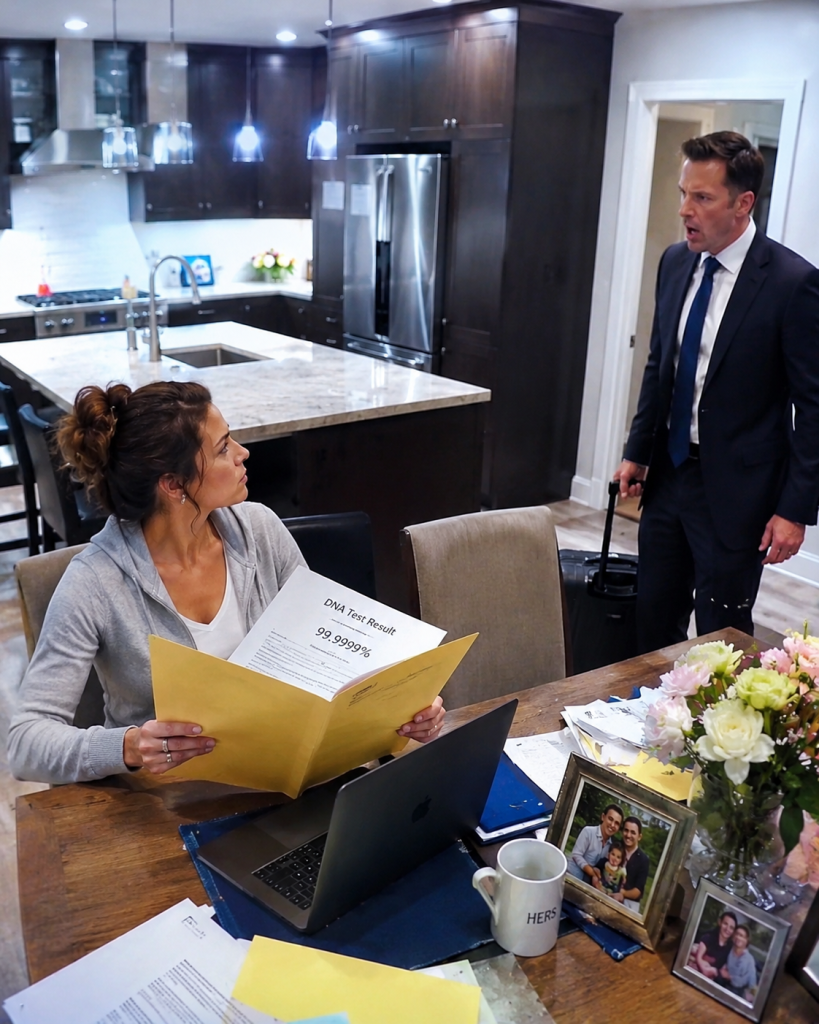
“Mom,” she whispered, “did someone contact a lawyer about your trust?”
I didn’t answer immediately.
Her eyes filled.
“I found emails.”
My stomach tightened.
She pushed her phone across the table.
Her husband’s email account was open.
There were messages between him and an estate attorney. Questions about inheritance expectations. Questions about challenging beneficiary changes. Questions about whether a widow could be considered “vulnerable” after the death of her spouse.
Then I saw something that made my chest go cold.
An attached business forecast.
My son-in-law had listed a future capital contribution under projected assets.
$750,000.
Beside it were three words.
Wife’s expected inheritance.
My daughter covered her mouth.
“I didn’t know,” she said.
For the first time since this began, she looked not angry at me, but ashamed.
“He told me you were punishing us,” she continued. “He said you had always planned for me to inherit everything. He kept saying your money was eventually coming to us anyway.”
I looked at her.
“Did you believe him?”
She started crying.
“Part of me did.”
That answer hurt.
But it was the truth.
She told me the attorney inquiry had been entirely his idea. He had contacted the firm after learning I had changed my estate. Worse, he had already used the assumption of my future inheritance while discussing another expansion with a potential investor.
My money.
My husband’s savings.
My house.
He had treated all of it like capital waiting for me to die.
My daughter reached for my hand.
“I’m sorry.”
I looked down at our fingers.
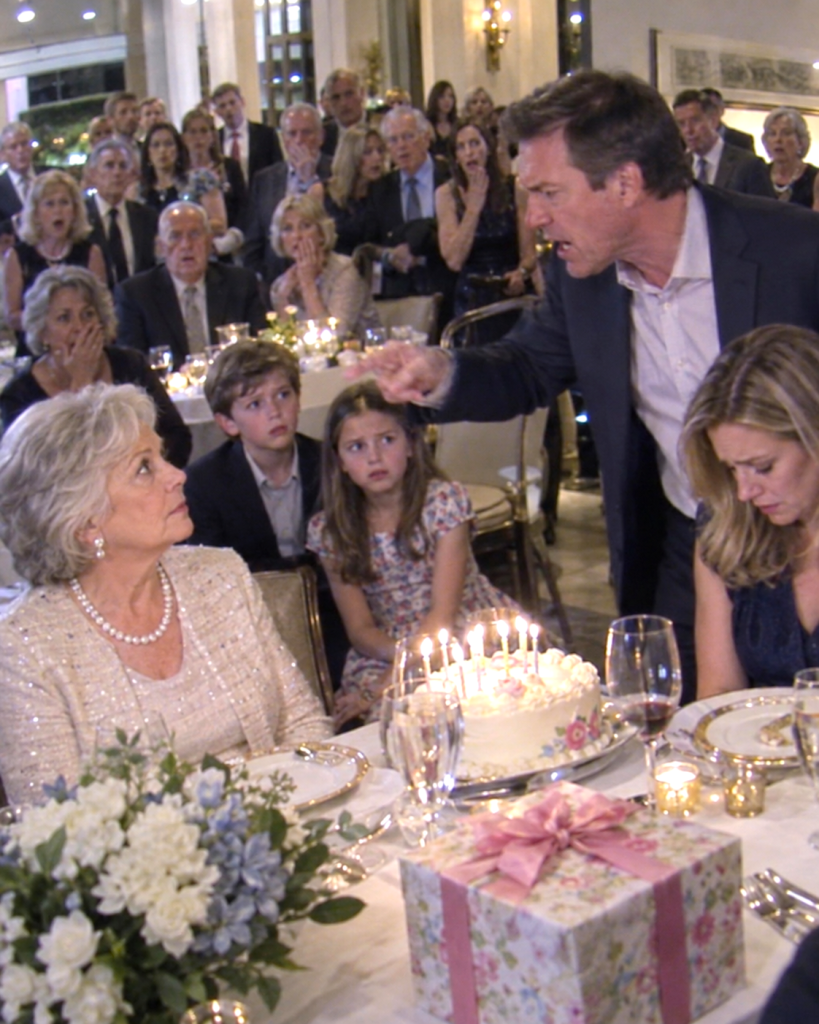
“Not for the money,” I said. “Be sorry for sitting beside me at your birthday dinner and letting him humiliate me.”
Her face crumpled.
“I am.”
That was the apology I had needed.
Then headlights swept across my kitchen window.
A truck pulled into my driveway.
My daughter’s face drained of color.
“He wasn’t supposed to know I came here.”
A car door slammed outside.
My son-in-law was walking toward my house.
Part 4: The final confrontation forces my daughter to choose truth over money.
He knocked hard enough to rattle the glass.
My daughter stood.
I didn’t.
“This is my house,” I told her. “Nobody enters unless I invite them.”
He knocked again.
Then my phone rang.
I answered on speaker.
“What are you doing with my wife?” he demanded.
I almost smiled at the wording.
“Having dinner with my daughter.”
“You’ve poisoned her against me.”
My daughter closed her eyes.
I said, “Did you contact an estate attorney about challenging my trust?”
Silence.
Then his voice became softer.
Calculated.
“I was protecting my family.”
“Did you list seven hundred fifty thousand dollars of my estate as expected business capital?”
Another silence.
My daughter looked toward the door as if she were seeing the man outside differently for the first time.
Finally he said, “That money was always supposed to go to her.”
I looked at my daughter.
Her face changed.
Not dramatically.
Just enough.
Something inside her finally broke loose.
She took the phone from me.
“No,” she said. “It wasn’t.”
He started talking.
She interrupted him.
“You told me Mom was trying to control us. You never told me you were promising investors money she hadn’t given us.”
“I didn’t promise—”
“You put it in writing.”
He raised his voice.
She lowered hers.
“Go home.”
“This is ridiculous.”
“Go home.”
He stopped pounding on the door.
A minute later, his truck backed out of my driveway.
My daughter sat down.
Neither of us spoke for a while.
The children laughed in the living room over something on television. My grandson suddenly shouted that he’d found a picture of a peregrine falcon in his book.
Ordinary life continued ten feet away.
My daughter wiped her face.
“I think my marriage is in trouble.”
I wanted to rescue her.
That instinct rose instantly.
Offer money.
Offer a lawyer.
Offer a place to live.
Fix everything.
Then I remembered every check I had written instead of having a difficult conversation.
So I chose something different.
“You and the children will always have a safe place with me,” I said. “But I won’t finance decisions that aren’t mine.”
She nodded slowly.
“I understand.”
And this time, I believed she did.
Over the next several months, the truth became clearer.
My son-in-law’s business wasn’t merely suffering from bad luck. He had expanded too quickly, hidden overdue accounts, and borrowed against equipment already carrying debt. My daughter had known they were struggling, but she had not known how much he concealed.
The estate attorney never filed a challenge.
Once Harriet’s documentation showed I had independently created the trust, the idea disappeared.
My daughter and her husband eventually separated. What happens to their marriage is theirs to decide, and I learned not to mistake love for management.
But my daughter and I began rebuilding.
Slowly.
Sunday dinners returned.
Sometimes they were uncomfortable. Sometimes we talked about things neither of us wanted to hear. She told me that my habit of solving problems with money had occasionally made her feel as though I didn’t trust her to solve them herself.
She was right.
I told her that allowing her husband to reduce me to a bank account while she remained silent had changed something inside me.
She said she understood.
Months later, she came with me to Harriet’s office.
Not because I was changing the trust.
I wasn’t.
I wanted my daughter to understand the grandchildren’s education funds.
Harriet explained that both children were protected. Their money would go directly toward their futures when the time came.
My daughter listened carefully.
Then she looked at me.
“You did all this even after what happened?”
“They’re my grandchildren.”
She began crying.
I reached across the table.
“I can love you without leaving you everything I own.”
She squeezed my hand.
“I know that now.”
Caspian remains my primary beneficiary.
The charitable fund remains secondary.
The education funds remain protected.
I have never regretted those decisions.
The greatest surprise wasn’t losing my daughter’s inheritance expectations.
It was discovering that removing money from our relationship gave us the first chance we’d had in years to see each other clearly.
Fourteen months after that birthday dinner, my daughter took me back to the same restaurant.
Just the two of us.
We sat near the window.
When dessert arrived, she reached into her purse and placed an envelope beside my plate.
Inside was a reservation confirmation.
Three nights at the historic mountain inn.
The same trip I had bought for her birthday—the gift she had never used after our family fell apart.
Only this reservation had two names on it.
Hers.
And mine.
“I thought maybe we could go together,” she said.
I looked at her for a long moment.
Then I laughed.
Not the bitter laugh from Harriet’s office.
A real one.
“Your father would’ve liked that place.”
“I know.”
She reached across the table.
This time, neither of us was asking the other for anything.
I was sixty-eight by then.
My house was still mine. My savings were still protected. Terrence’s dogwood was preparing to bloom again.
And my daughter was sitting across from me.
I finally understood something I wish I had understood decades earlier.
Love isn’t proved by how much you surrender.
Sometimes love is the boundary that keeps two people from destroying what remains between them.
Sometimes saying no is the first honest thing you do.
And sometimes the family you thought money was holding together only begins to heal after you finally take the money off the table.
THE END.