I didn’t turn around immediately.
I wanted to.
Every instinct in my body screamed at me to put the wine bottle down, walk across that kitchen, and ask the question that had already formed in my mind.
What did you do to my house?
But I didn’t.
Because sometimes, when people reveal something terrible, the most powerful thing you can do is let them keep talking.
My father leaned against the kitchen doorway, completely unaware that every word he said was changing the way I saw him.
“When something sits empty half the year,” he repeated, “it’s foolish not to make use of it.”
My mother nodded.
“I mean, Claire barely goes there anymore. She’s always working. It’s a beautiful property just sitting there.”
Aunt Carol smiled.
“Well, Todd and Melissa certainly appreciate it. The kids will love having a place near the water.”
The cookie tray in my hand nearly slipped.
“Todd?”
The word escaped before I could stop it.
The kitchen went quiet.
Not completely. The Christmas music was still playing from the living room. The dishwasher was still humming. Someone upstairs dropped something and laughed.
But the people closest to me stopped moving.
My mother looked over.
“Oh, Claire. You heard that?”
I stared at her.
“Heard what?”
Her expression changed instantly. Not guilt.
Annoyance.
Like I was the one making things uncomfortable.
“Don’t make this dramatic.”
I almost laughed.
That was always my mother’s favorite phrase whenever someone reacted badly to something she had done.
Don’t make this dramatic.
As if the problem wasn’t the action.
As if the problem was the person noticing it.
“I’m sorry,” I said slowly. “Did you just say Todd and Melissa are using my house?”
My father sighed.
“There it is.”
“There what is?”
“The attitude.”
I looked at him.
My own father.
Standing beside my mother’s Christmas tree, holding a bourbon glass, acting like I was a difficult employee instead of his daughter.
“We were going to tell you,” my mother said.
“When?”
She hesitated.
That hesitation answered everything.
“When it was finished?” I asked.
Nobody spoke.
I felt something inside me settle.
Not break.
Settle.
Because suddenly all those little comments from the past made sense.
My father saying I was selfish.
My mother saying I cared too much about possessions.
My brother joking that I was “too serious about paperwork.”
They weren’t random comments.
They were preparation.
They were trying to make me feel unreasonable before I even knew what they had done.
“I never gave you permission to renovate my house,” I said.
My mother crossed her arms.
“Claire, please. It was a few updates.”
“A few updates?”
I looked at my father.
“The house was mine.”
“We improved it,” he said.
“No. You changed it.”
He shrugged.
“Same thing.”
It wasn’t.
That house wasn’t just a building.
It was the first thing I bought after selling my company. The first decision I made that wasn’t about investors, employees, or proving something to someone else.
I bought Sullivan’s Inlet because I needed somewhere that belonged only to me.
The first night I stayed there, I sat on the unfinished deck wrapped in a blanket, listening to the waves hit the shore.
I remember thinking:
I finally have a place where nobody can tell me who I’m supposed to be.
And now my family had walked in and erased pieces of it like my memories were outdated furniture.
“What exactly did you change?” I asked.
My mother smiled.
That smile was worse than anger.
“We opened up the kitchen.”
I closed my eyes.
Of course they did.
The one thing I had specifically said I would never change.
“That wall was load-bearing.”
My father waved his hand.
“Contractors handled it.”
“Which contractors?”
Silence.
A tiny crack appeared.
“Mom?”
She looked away.
That was when I knew.
They didn’t hire licensed professionals.
They didn’t ask.
They didn’t even think they needed to.
They just decided.
Because in their minds, my success had somehow made my property available to everyone.
“What else?” I asked.
My mother took a sip of wine.
“Todd’s family needed somewhere bigger.”
I stared.
“Needed?”
“He has three children.”
“And?”
“And you don’t.”
The sentence landed harder than I expected.
Not because I was hurt.
Because it explained everything.
The reason my house was easier to take.
The reason my time was easier to take.
The reason my sacrifices were easier to dismiss.
Because I didn’t have children.
Because I was single.
Because somehow, my life was considered extra.
“So you gave my house to my brother?”
“We didn’t give it away,” my father snapped.
“We’re letting them stay.”
“For how long?”
Nobody answered.
I already knew.
“How long?”
My mother finally said it.
“Maybe permanently.”
The room became silent.
I actually smiled.
Not because it was funny.
Because sometimes your mind needs a second to process something so unbelievable.
“You’re serious.”
“Claire,” my father said, lowering his voice, “family helps family.”
I looked around the kitchen.
At the people who had spent years telling me family mattered.
The same people who never asked how many weekends I worked.
The same people who never offered help when I was sleeping four hours a night trying to build my company.
The same people who now thought my home was their solution.
“I need to see the house,” I said.
My mother’s face changed.
“Now?”
“Yes.”
“It’s Christmas.”
“I know.”
“Don’t ruin the evening.”
I looked at her.
“I didn’t.”
Nobody had anything to say after that.
I left twenty minutes later.
Nobody stopped me.
Not my father.
Not my mother.
Not Todd, who suddenly appeared in the hallway wearing a guilty expression.
That bothered me more than anger would have.
Because guilt meant he knew.
He knew this was wrong.
He just hoped I would accept it.
The drive to Sullivan’s Inlet took almost two hours.
The entire way, I tried to convince myself I was misunderstanding.
Maybe they only painted.
Maybe they replaced a few appliances.
Maybe they had some strange idea that they were helping.
But when I pulled into the driveway just after midnight, I knew.
My blue front door was gone.
The door I had chosen because it reminded me of the ocean was replaced with a black modern one.
The porch railing was different.
The landscaping was different.
Even the mailbox was gone.
I sat in my car staring at my own house.
My house.
But it looked like someone else’s.
I walked to the front door and tried my key.
It didn’t work.
I stood there for several seconds.
Then I laughed quietly.
Because apparently changing my house wasn’t enough.
They changed the locks too.
I called my father.
He answered after three rings.
“Claire?”
“Why doesn’t my key work?”
A pause.
Then:
“Oh.”
That single word told me everything.
“You changed the locks?”
“We thought Todd should have privacy.”
I looked at the dark windows.
“My brother is staying in my house.”
“He’s family.”
“And I’m not?”
“Don’t start.”
I ended the call.
Then I did something I had never done before.
I called my attorney.
By sunrise, everything was already moving.
The deed.
The property records.
The renovation invoices.
The unauthorized work.
The messages proving they knew they didn’t have permission.
I didn’t sleep.
I didn’t cry.
I just watched the sun come up over the water and waited.
Because I knew one thing.
My family thought they had taken control.
They thought I would eventually forgive them.
They thought I would apologize for being upset.
They didn’t understand something important.
I wasn’t the same woman who used to sit quietly at Christmas dinner.
I was the woman who built a company from nothing.
The woman who negotiated million-dollar contracts.
The woman who knew exactly what paperwork meant.
And the next morning, at 8:13 a.m., my phone started ringing.
Once.
Twice.
Then nonstop.
By the time I looked at the screen, there were 99 missed calls and voicemails.
All from my parents.
The first voicemail was my mother crying.
The second was my father yelling.
But the last one was the one I played twice.
Because after everything they had done, after walking into my home and claiming it as theirs, they finally realized something.
They had never actually owned anything.
The voicemail was only six seconds long.
My father’s voice shook.
“Claire… the police are here.”
PART 3
“The police are here.”
I stared at the voicemail.
Then I played it again.
“Claire… the police are here.”
There was something almost surreal about hearing my father’s voice like that.
Not angry.
Not commanding.
Afraid.
I looked out through the glass doors of the rental cottage where I had spent the night after discovering my house had been changed without my permission.
The ocean was gray beneath the morning sky.
For a few seconds, I considered calling him back.
Then I stopped.
I didn’t need to.
My attorney, Daniel Reeves, was already awake.
I called him instead.
He answered on the second ring.
“Claire?”
“My parents called the police.”
There was a brief silence.
“About what?”
“I don’t know yet.”
“Don’t go there.”
“I wasn’t planning to.”
“Good. I’m on my way to the county courthouse. I’ve already pulled the property records.”
I sat down.
“How bad is it?”
“Worse than I expected.”
My stomach tightened.
“What did you find?”
“They filed something.”
“What?”
“A temporary occupancy agreement.”
I frowned.
“With whom?”
“Your parents.”
I stared at the wall.
“They filed an agreement giving Todd and Melissa permission to occupy the property.”
“My parents signed it?”
“Yes.”
“On my behalf?”
Another pause.
“Yes.”
My hands went cold.
“Did they forge my signature?”
“They didn’t forge it well.”
I almost laughed.
Almost.
Daniel continued.
“I’ve also got the original deed, the title history, your mortgage records, the insurance documents, and the renovation invoices.”
“What do the invoices say?”
“Everything.”
I closed my eyes.
“Everything?”
“Your father paid the contractor from a joint account with your mother. The contractor listed the property owner as ‘Claire Bennett.’”
I opened my eyes.
“So they knew.”
“They knew.”
“And the contractor?”
“Apparently your parents told him you had given verbal permission.”
I shook my head.
“I never spoke to him.”
“I know.”
“What about the police?”
Daniel’s voice became serious.
“Your father apparently reported that you entered the property without permission last night.”
For a moment, I couldn’t speak.
Then I laughed.
It came out quiet and bitter.
“He called the police on me for entering my own house?”
“Apparently.”
I looked at the ceiling.
There was something almost poetic about it.
They had changed my locks.
They had given my house to my brother.
They had signed documents pretending to have authority over my property.
And when I showed up, they called the police.
Because they believed ownership was something you could rewrite with confidence.
“Daniel?”
“Yes?”
“What happens now?”
“We let the paperwork speak.”
At 9:42 that morning, my phone rang again.
This time it was Todd.
I watched his name flash across the screen.
I didn’t answer.
He called again.
Then again.
Finally, a text appeared.
Please call me. Dad is losing it.
Another message followed.
The police think you broke into the house.
I typed one sentence.
I used my key.
I stared at it.
Then deleted it.
There was no reason to explain myself to someone who had been living inside my house without asking me.
A few minutes later, Todd sent another message.
We didn’t know you would actually care.
I read it three times.
That sentence hurt more than I expected.
Not because I cared about the house.
Because it told me exactly how my family saw me.
They didn’t think I was generous.
They thought I was available.
They didn’t think I had boundaries.
They thought I didn’t need anything because I had money.
They had mistaken my silence for permission.
I put the phone face down.
Then Daniel called.
“They’ve agreed to meet with us.”
“Where?”
“The property.”
I stood.
“When?”
“An hour.”
“I’ll be there.”
“You don’t have to say anything.”
“I know.”
“Claire.”
“Yes?”
“Don’t let them turn this into a family argument.”
I looked toward the ocean.
“I won’t.”
Because this wasn’t a family argument anymore.
It was a property dispute.
And property disputes had documents.
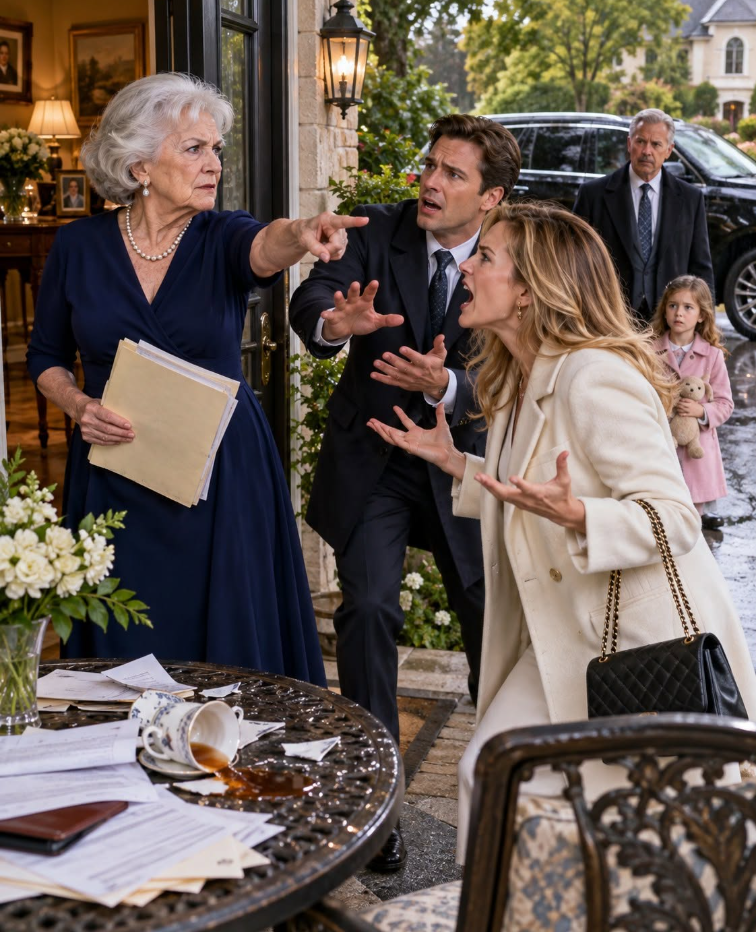
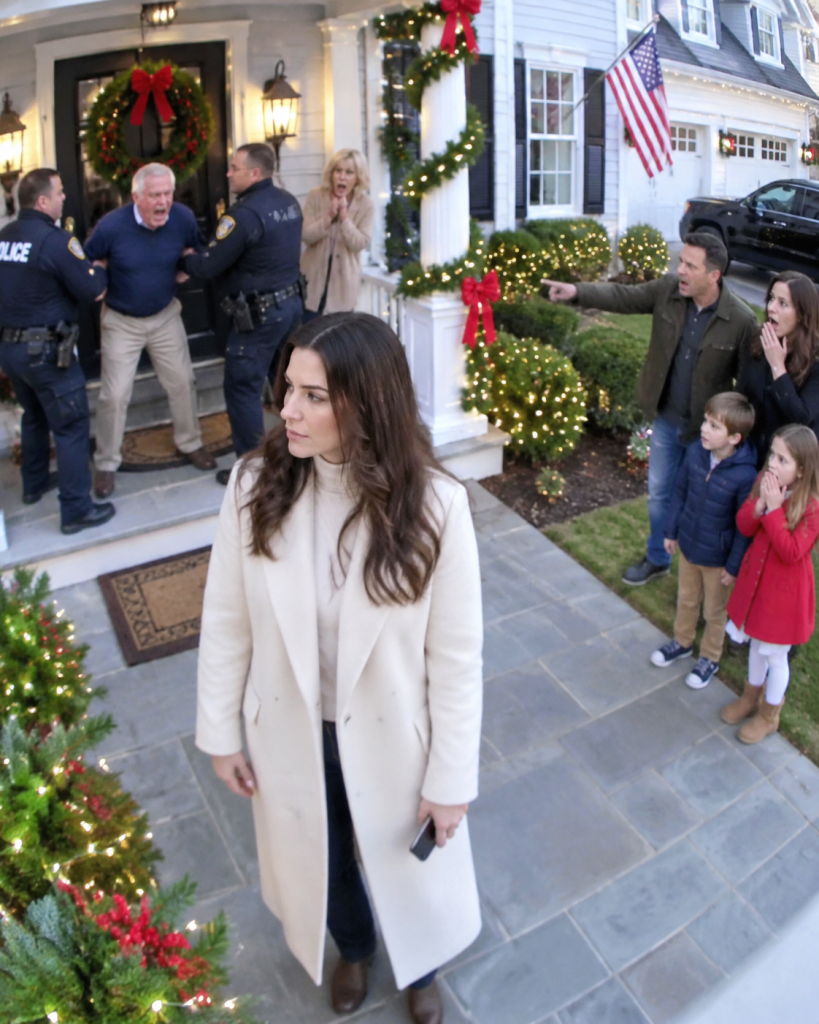
When I arrived at Sullivan’s Inlet, there were two police cruisers parked beside my driveway.
A third vehicle sat behind them.
My parents’ SUV.
Todd’s truck.
And a contractor’s van.
I parked across the street and got out.
The winter wind hit my face.
For the first time since Christmas night, I felt strangely calm.
My father stood on the porch.
He looked smaller than I remembered.
My mother stood beside him in a long beige coat, clutching her purse with both hands.
Todd was behind them.
Melissa wasn’t visible.
Neither were the children.
One of the officers walked toward me.
“Ms. Bennett?”
“Yes.”
“I’m Officer Harris.”
He glanced at the folder in his hand.
“I understand there is a dispute regarding this property.”
“Yes.”
“Your father reported that you entered the home without authorization.”
I looked at my father.
He wouldn’t meet my eyes.
I turned back to the officer.
“I own the property.”
“Can you prove that?”
“Yes.”
Daniel stepped out of his car behind me.
“Officer.”
The officer nodded.
“Mr. Reeves.”
Daniel handed him a folder.
“Deed. County records. Closing documents. Property tax records. Insurance policy. Mortgage statements. And a certified copy of the title.”
The officer opened the folder.
He looked at the first page.
Then the second.
Then the third.
His expression changed.
Not dramatically.
Just enough.
“Mr. Bennett,” he called.
My father stepped forward.
“Yes?”
“Did you tell us your daughter had no legal ownership interest in this property?”
My father swallowed.
“No.”
The officer looked confused.
“You told us she wasn’t authorized to enter.”
“I meant—”
“She’s the registered owner.”
My father looked at me.
His face hardened.
“This is ridiculous.”
The officer raised a hand.
“Sir, I’m not taking sides. I’m telling you what the records show.”
My mother stepped forward.
“But we’ve invested money into this house.”
Daniel answered calmly.
“That doesn’t create ownership.”
“We improved it.”
“You performed unauthorized renovations on someone else’s property.”
My mother stared at him.
“We’re her parents.”
Daniel nodded.
“I understand.”
“Then you understand family doesn’t work like this.”
“No,” he said. “It doesn’t.”
The silence that followed was enormous.
My father finally exploded.
“Claire, what do you want?”
I looked at him.
It was the first time he had asked me that in years.
Not what I could do.
Not what I should do.
Not what would make everyone comfortable.
What do you want?
“I want my house back.”
My mother’s face collapsed.
“Claire—”
“No.”
I shook my head.
“I’ve listened enough.”
My father stepped toward me.
“We were trying to help.”
“You changed my locks.”
“We thought you wouldn’t mind.”
“You gave my house to Todd.”
“We thought you had no use for it.”
“You demolished part of the kitchen.”
“We improved it.”
“You signed documents pretending you had authority to let someone else live there.”
He stopped.
I looked directly at him.
“And then you called the police when I came home.”
Nobody spoke.
The officer looked down at the paperwork.
Todd finally stepped forward.
“Claire.”
I looked at him.
He looked exhausted.
“I didn’t know they were going to do all this.”
“You knew they were renovating.”
He looked away.
“Yes.”
“You knew they changed the locks.”
A pause.
“Yes.”
“You knew they planned to move your family in.”
His silence answered.
I nodded.
“That is enough.”
“Claire, we needed somewhere to live.”
“You needed to ask.”
“Dad said you wouldn’t care.”
I looked at my father.
There it was.
The truth.
Not an accident.
Not a misunderstanding.
A decision.
They had decided my feelings didn’t matter.
The officer eventually told my parents they could not prevent me from accessing my own property.
But Daniel had something else.
He gave my father a second document.
“A formal notice,” he said.
My father read it.
His face drained of color.
“What is this?”
“Notice to vacate.”
My mother grabbed the paper.
“Vacate?”
“Yes.”
“But Todd and the children—”
“They have no legal right to remain here.”
My father looked at me.
“You’re throwing your own family out?”
I almost smiled.
“No.”
“You are.”
“No.”
I pointed toward the house.
“You moved into my home without asking. You renovated it without permission. You changed the locks. You attempted to create an agreement using my name. You called the police on me when I entered my own property.”
I took a breath.
“You did all of that.”
My father looked furious.
“And now you’re punishing us.”
“No.”
I looked him straight in the eyes.
“I’m ending something you started.”
Todd came outside twenty minutes later.
He had a suitcase.
Melissa followed with two children.
The youngest was crying.
I watched them walk toward the truck.
Todd stopped beside me.
“Claire.”
I didn’t answer.
He looked embarrassed.
“I know you’re angry.”
“I am.”
“I should have talked to you.”
“Yes.”
“I thought Dad had permission.”
“You knew I owned it.”
“I knew.”
That was enough.
He rubbed the back of his neck.
“Are we really never going to be family again?”
I looked at him.
“We can be family.”
He seemed surprised.
“But family doesn’t mean access to everything I own.”
He lowered his eyes.
“You’re right.”
It was the first time anyone in my family had said those words.
I wasn’t sure whether to believe them.
So I didn’t.
Not yet.
The renovation damage was worse once I saw it in daylight.
The kitchen wall had been removed.
The original flooring had been torn out.
The bathroom tile I had imported from Charleston was gone.
The built-in bookshelves had been ripped from the living room.
Even the little brass hooks beside the back door were missing.
Things that had taken me years to choose had been discarded in a week.
I walked slowly through every room.
Daniel followed behind me with a camera.
He documented everything.
The contractor’s work.
The damaged materials.
The invoices.
The structural changes.
The new locks.
The new appliances.
Everything.
Then I walked into the kitchen.
I stopped.
The reclaimed heart-pine island was gone.
In its place stood a huge white marble island.
It was beautiful.
That almost made it worse.
Because someone had taken something I loved and replaced it with something they believed was better.
I touched the edge.
Then I whispered:
“You didn’t understand.”
Daniel heard me.
“What?”
I shook my head.
“Nothing.”
But it wasn’t nothing.
It was everything.
My house had never been about money.
That was what they had never understood.
They thought because I could afford another house, I could replace this one.
They thought because I could pay for another kitchen, I shouldn’t care about the one they destroyed.
But ownership wasn’t about whether you could buy something twice.
It was about having the right to decide what happened to the first one.
Three weeks later, the contractor agreed to pay for part of the restoration.
My parents’ insurance covered another portion after Daniel established that they had authorized the work without my consent.
The rest came out of my parents’ savings.
I didn’t demand money from them.
I demanded accountability.
The forged occupancy document became a separate legal issue.
The county rejected it.
The contractor submitted a statement confirming that he had been told I had approved the work.
I hadn’t.
And when my father finally realized how much evidence existed against him, he stopped fighting.
He signed everything.
The house was legally mine.
It always had been.
By February, the kitchen was under reconstruction.
The original wall couldn’t be completely restored, so I changed the layout.
Not because my parents had forced me to.
Because now I wanted to.
I kept the old heart-pine island.
The contractor had found it stored in a warehouse after my mother ordered it removed.
I cried when I saw it.
Not because it was wood.
Because I had gotten something back.
Something that had almost been erased.
I had it refinished and placed beneath the new windows.
Then I painted the front door blue again.
The exact same shade.
My mother didn’t call for almost two months.
My father called twice.
I didn’t answer.
Todd sent Christmas pictures.
I looked at them.
I didn’t respond.
Then, in March, I received an envelope.
No return address.
Inside was a handwritten letter from my mother.
I almost threw it away.
Instead, I read it.
There were no excuses.
No mention of family.
No “we thought you wouldn’t mind.”
No “you have plenty.”
Just one sentence that made me sit down.
I finally understand that being your mother never gave me the right to decide what belonged to you.
I read it again.
Then I folded the letter.
I didn’t forgive her that day.
Forgiveness wasn’t a switch.
It wasn’t something you owed because someone finally understood what they had done.
But I kept the letter.
Because sometimes accountability begins when someone stops explaining themselves.
Six months later, I invited my family to the house.
Not everyone.
Just my parents and Todd.
My mother stood on the porch.
She looked at the blue door.
“You changed it back.”
“Yes.”
She smiled sadly.
“I always liked that door.”
“I know.”
My father stood beside her.
He looked at the house.
“You did a beautiful job.”
“I did.”
He nodded.
For once, he didn’t add anything.
We sat outside that evening.
No Christmas lights.
No crowd.
No relatives.
No alcohol.
Just four people sitting beside the ocean.
After a while, my father spoke.
“I was wrong.”
I looked at him.
He swallowed.
“I thought because you were successful, you didn’t need anything.”
I didn’t answer.
“I thought your house was wasted because you didn’t have children.”
Still nothing.
“And I thought I was helping your brother.”
Todd looked down.
My father continued.
“I didn’t realize I was stealing from you.”
The word hung there.
Stealing.
He finally said it.
I looked toward the water.
“You didn’t steal the house.”
My father looked at me.
“You tried to.”
He nodded.
“And you were wrong.”
“Yes.”
That was all.
No dramatic apology.
No tears.
No sudden miracle.
Just the truth.
And sometimes the truth is the closest thing a broken family gets to a beginning.
A year after Christmas, I hosted another dinner at Sullivan’s Inlet.
The blue door was freshly painted.
The old pine island stood in the kitchen.
The ocean-facing deck had new boards.
There were twelve chairs around the dining table.
My mother brought dessert.
My father brought wine.
Todd brought the children.
Nobody assumed anything.
Nobody arrived early with boxes.
Nobody changed a lock.
Nobody told me what the house should become.
When dinner was over, my nephew Jackson ran onto the deck.
“Aunt Claire!”
I followed him.
He pointed toward the ocean.
“Can we stay here forever?”
I smiled.
“No.”
He frowned.
“Why?”
“Because this is my house.”
He thought about that.
Then he grinned.
“Okay.”
He ran back inside.
I stayed on the deck for a moment.
The sun was dropping behind the water.
A year earlier, I had stood in this same place wondering how people I loved could take something from me so easily.
Now I understood.
They hadn’t taken my house because they hated me.
They had taken it because they believed my boundaries were negotiable.
Because I had spent years saying yes when I meant no.
Because I had confused generosity with obligation.
Because I had allowed being the successful daughter to become a permanent family job.
That Christmas changed something in me.
I stopped explaining why my boundaries existed.
I stopped apologizing for having them.
And I stopped believing that loving someone meant giving them access to everything you owned.
My parents didn’t lose their daughter that Christmas.
They lost the version of me who would stay silent to keep the peace.
And I didn’t lose my family.
I simply stopped allowing them to decide what family meant.
The ocean moved beneath the evening light.
The blue door stood behind me.
And for the first time in a long time, the house felt completely mine again.
Not because the deed said so.
Not because the police confirmed it.
Not because a lawyer proved it.
But because when I walked through that door, nobody else got to tell me who I was allowed to be.
It was my home.
My choice.
My life.
And this time, I wasn’t giving any of it away.