A warning.
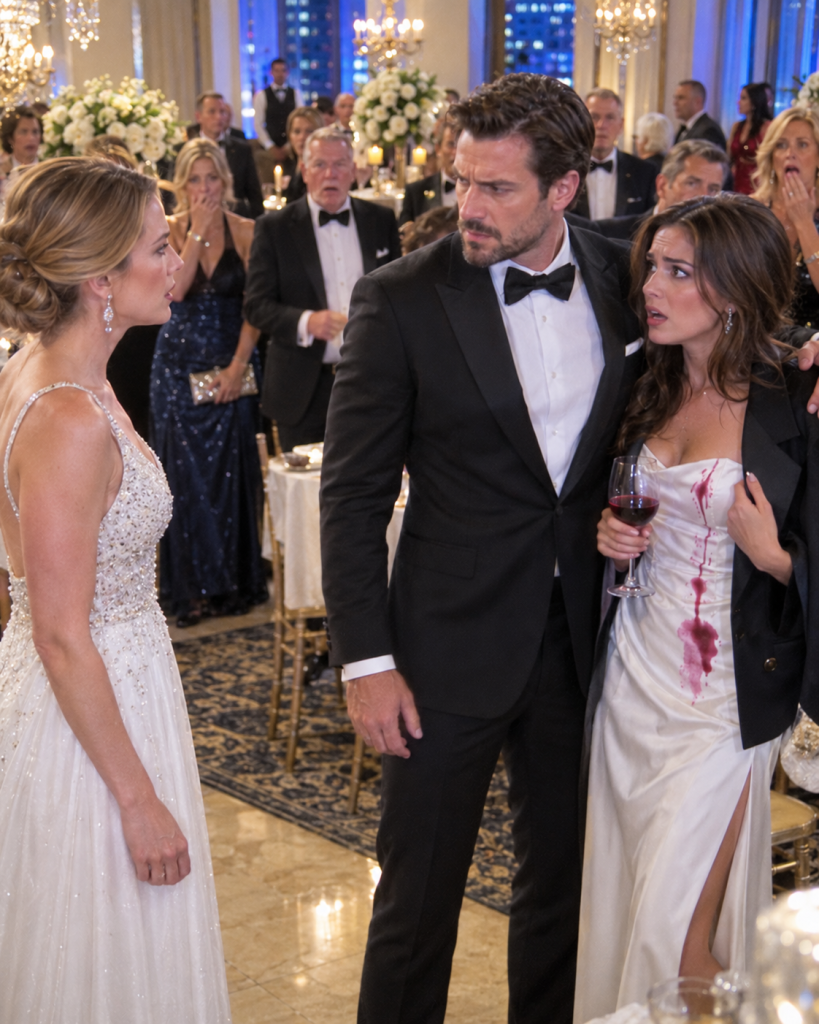
I could feel phones discreetly lifting around the room.
Tomorrow there would be photographs.
CEO Richard Bennett protects former sweetheart at anniversary gala.
Horizon chairman’s wife causes scene.
Maybe someone would write that I had been drinking.
Maybe someone would say I had always been unstable.
People rarely needed truth when a simpler story was available.
“I want you to look at me,” I said.
Richard glanced toward the reporters near the stage.
“Not here.”
“No. Here.”
His eyes finally returned to mine.
I had loved those eyes once.
I had loved them when we were twenty-seven and exhausted and terrified about whether Horizon would survive the quarter.
I had loved them when he stood beside me in a county courthouse because we could not spare three days for the vineyard wedding his family wanted.
I had loved them when our son Leo was born and Richard arrived eight hours after everything was over, carrying flowers that his assistant had ordered.
I had loved them long after loving him had become a habit that cost me more than it gave me.
“Did you see me spill that wine?” I asked.
Richard exhaled through his nose.
“I saw Chloe fall back. I saw the glass in your hand. That’s enough.”
“No, it isn’t.”
“You’re my wife. I expected more restraint from you.”
Something inside me became very still.
It was not heartbreak.
Heartbreak was loud.
Heartbreak had kept me awake at two in the morning staring at his location on a family app while dinner hardened on the stove.
Heartbreak was listening to Leo ask why Daddy missed preschool family day.
Heartbreak was covering for Richard during holidays so Eleanor, his mother, would not realize how rarely he came home.
This was quieter.
Cleaner.
For years, I had thought there would be one final argument, one spectacular moment when I would finally understand that my marriage was over.
Instead, clarity arrived like a door gently clicking shut.
I nodded.
“I understand.”
Richard frowned.
He had expected resistance.
Maybe tears.
Maybe another explanation he could dismiss.
Instead, I reached down, removed the small anniversary clutch from the back of my chair, and turned toward the ballroom doors.
“Sarah.”
I stopped but did not turn.
“We’ll discuss this at home.”
That sentence almost made me smile.
Home.
Richard had not slept there in three nights.
Chloe had returned to Manhattan on Monday.
Richard had suddenly developed three consecutive late strategy sessions.
His driver had brought a fresh suit to an apartment on Park Avenue Tuesday morning.
His assistant had accidentally copied me on the delivery confirmation.
I had said nothing.
I had still come to the gala.
I had still chosen the earrings Eleanor gave me for our wedding.
I had still reserved a private table at our favorite restaurant for after the event because some embarrassingly hopeful part of me believed Richard might remember what the date meant.
Now I understood that hope could become a kind of self-disrespect when you kept offering it to someone who did not value it.
I looked over my shoulder.
“No,” I said. “We won’t.”
Then I walked out.
The autumn air outside the hotel was sharp and clean.
For the first time all evening, I could breathe.
My driver, Martin, jumped out when he saw me.
“Mrs. Bennett? Is everything all right?”
“No.”
It surprised me how easily the truth came out.
I opened the rear door myself.
“Take me to the Hudson residence.”
He hesitated.
The Hudson residence was a corporate apartment Horizon maintained downtown for visiting executives. Almost no one used it anymore.
“Not the townhouse?”
“Not tonight.”
Martin looked at me through the mirror after we pulled into traffic.
I had known him eleven years. He had driven Richard before Richard became CEO. He had driven me to the hospital when Leo was born because Richard had been in Frankfurt.
Martin had never asked me a personal question.
He didn’t ask one now.
He simply turned off the radio.
Manhattan moved past the windows in gold and white streaks.
People were standing outside restaurants.
A couple argued beside a taxi.
A woman in running clothes waited for a light with a golden retriever.
Normal lives.
Ordinary problems.
I pressed my forehead against the cool window and wondered when my own life had become a corporate arrangement that looked beautiful from the outside and felt empty from within.
The Hudson apartment smelled faintly of cedar and unused furniture.
I switched on one lamp.
That was enough.
There were no family photographs.
No framed magazine covers featuring Richard.
No tiny sneakers beside the mudroom bench.
No suit jackets left across dining chairs.
No reminder that for five years I had measured my days by the presence or absence of one man.
I removed my earrings.
Then my shoes.
Finally, I stood in front of the bathroom mirror.
I looked tired.
Not ruined.
Not broken.
Just tired.
I had spent years telling myself tiredness could be fixed with rest.
What I needed was not rest.
I needed a different life.
I turned the faucet on, washed the makeup from my face, and stared at the woman underneath.
She looked older than thirty-four.
Not by much.
Just enough.
There were faint lines around my eyes from years of smiling through dinners where my husband checked email beneath the table.
I lifted my left hand.
My wedding ring caught the bathroom light.
Richard had designed it himself.
Or at least that was what he had told me.
Three years later I discovered his assistant had selected five options and he had chosen one between conference calls.
At the time, I had laughed.
Tonight I did not.
I twisted the ring gently.
My fingers had swollen slightly in the heat of the ballroom, so it resisted.
I ran cool water over my hand and tried again.
This time it slid free.
For several seconds I held it between two fingers.
A very expensive object.
A very simple decision.
I placed it beside the sink.
Then I called my attorney.
Laura Kim answered on the fourth ring.
“Sarah?”
“I’m sorry it’s late.”
She became alert immediately.
“What’s happened?”
“I need you to file.”
Silence.
Laura had prepared the separation papers six weeks earlier.
I had told no one except her.
Not Eleanor.
Not my closest friend.
Certainly not Richard.
When Chloe announced she was returning to New York, I had not panicked. I had done something far more useful.
I had prepared.
Laura and I reviewed the prenup.
My personal assets.
Leo’s school schedule.
The travel authorization Richard had signed months earlier for a six-week design residency I had been offered in Paris.
The apartment my former college friend Daniel had helped me secure near the Jardin du Luxembourg.
A place at an international preschool.
I had arranged everything.
Then I had hesitated.
Because some part of me still wanted Richard to give me one reason not to use any of it.
Tonight he had given me the opposite.
“Are you certain?” Laura asked.
“Yes.”
“I can have the petition submitted first thing in the morning.”
“I also want the temporary parenting arrangement filed immediately.”
“You understand the Paris trip can remain within the existing written travel consent, but permanent relocation will have to be addressed formally.”
“I know.”
“Do not interfere with his access. Do not hide Leo. Do not do anything that can be framed as obstruction.”
“I won’t.”
“Good. Then we do this carefully.”
Carefully.
That word mattered.
I was not disappearing.
I was leaving.
There was a difference.
“Laura?”
“Yes?”
“I don’t want Horizon stock.”
“You helped build that company.”
“I know.”
“Sarah.”
“I don’t want my freedom negotiated against a valuation.”
Laura was quiet for a moment.
“We’ll discuss that before you sign away anything permanent.”
“Fine.”
“And Sarah?”
“Yes?”
“Tonight, don’t make every decision at once.”
I looked at the wedding ring beside the sink.
“That decision was made years ago. I just didn’t admit it until tonight.”
When I ended the call, I went into the guest room and opened the closet.
A large suitcase sat on the top shelf.
I packed only what belonged to me.
Jeans.
Sweaters.
Work notebooks.
My grandmother’s watch.
A sketchbook from college.
The blue cashmere scarf Leo had chosen for my birthday because he said it was “the same color as happy.”
I left everything Richard’s office had purchased.
Designer dresses.
Handbags.
Jewelry.
The gifts had once seemed like evidence of affection.
Now they looked like invoices.
By eleven-thirty, Martin had quietly brought Leo from the townhouse with our longtime nanny, Rosa.
I had told Rosa only that Leo and I would be spending several weeks away.
She took one look at my suitcase and understood there was more.
“Do you need me to come?”
The question nearly undid me.
Rosa had been with Leo since he was six months old.
“I can’t ask you to leave your family.”
“You aren’t asking.”
I smiled.
“Let me get through the first week.”
She nodded.
“Then you call me.”
Leo was asleep when Martin carried him inside.
His cheek rested on Martin’s shoulder, one sneaker half untied.
I took him into my arms.
He murmured, “Mommy?”
“I’m here.”
His fingers closed around my dress.
That was all.
My son trusted that if I said I was there, I would stay.
I intended to become worthy of that trust.
We put him in the small bedroom.
I sat beside him for a long time, smoothing his hair back from his forehead.
Richard loved Leo.
I had never doubted that.
But Richard loved people in ways that always seemed to fit around his schedule.
Birthdays could be moved.
School performances could be recorded.
Promises could be corrected with gifts.
He believed love existed even when presence did not.
Maybe one day Leo would understand his father.
I simply did not want him learning from Richard that women waited while men decided when they mattered.
At midnight, someone knocked.
Not Richard.
Eleanor.
She was still wearing the navy evening gown from the gala beneath a long wool coat. Her silver hair, usually immaculate, had loosened around her face.
The moment she saw the suitcase near the door, she stopped.
“No.”
It came out like a breath.
“Eleanor.”
She looked past me and saw Leo asleep down the hall.
Then she looked back at me.
“You’re leaving.”
“Yes.”
“Because of tonight?”
“Tonight was the last page. It wasn’t the whole book.”
Her eyes filled.
Eleanor Bennett was not a woman who cried easily.
She had taken over Horizon after her husband’s sudden illness when Richard was nineteen. She had negotiated with banks that expected her to fail and walked into boardrooms where men twice her age called her “Mrs. Bennett” instead of “Chairwoman.”
But tonight she looked less like the former head of a Fortune 500 company and more like a mother who had just discovered something important too late.
“I reviewed the ballroom footage.”
My head lifted.
Eleanor reached into her bag and placed her phone on the table.
“I knew what I saw didn’t make sense.”
She played the recording.
A security camera behind the west balcony had captured the entire sequence.
Chloe leaned toward me.
Chloe reached for my wrist.
Chloe tilted the glass against herself.
Chloe stepped backward.
Then Richard arrived.
The video had no sound.
It did not need any.
Eleanor stopped it.
“I sent a copy to our general counsel.”
I stared at the frozen image.
I thought seeing proof would bring relief.
It didn’t.
I had known the truth already.
What hurt was realizing Richard could have known it too if he had given me thirty seconds.
“I’ll show him,” Eleanor said. “Tomorrow. He’ll understand.”
“I don’t need him to understand.”
“Sarah—”
“I needed him to ask.”
Eleanor went quiet.
“He didn’t.”
“No.”
“I can fix this.”
I shook my head.
“That is what I’ve told myself for five years.”
Her mouth trembled.
“He is my son.”
“I know.”
“And I love him.”
“I know that too.”
“But tonight I am ashamed of the man he became.”
I walked to the kitchen and poured her water.
She followed me slowly.
“Where will you go?”
“Paris.”
Her eyes widened.
“For how long?”
“Initially six weeks. After that, the court and the parenting agreement will determine what happens next.”
“You already planned this.”
“Yes.”
“When?”
“When Chloe told a reporter she was returning to New York because she had ‘unfinished history’ here.”
Eleanor closed her eyes.
I almost felt sorry for her.
Almost.
“Richard signed Leo’s travel consent for your design program.”
“Three months ago. He didn’t read it.”
That landed hard.
Of course it did.
Eleanor knew her son.
She knew how often his signature replaced his attention.
“I asked Laura Kim to begin the separation filing tonight.”
“Sarah, please.”
There was no authority in Eleanor’s voice now.
Only grief.
I took her hands.
“You were good to me.”
Her shoulders dropped.
“You were more of a mother to me than anyone has been since mine died.”
“Then don’t do this.”
“I have to.”
“What if he changes?”
I looked down the hall toward Leo’s room.
“Then he can change.”
Hope flickered across her face.
“But he can do it without me.”
The hope disappeared.
That was the moment Eleanor finally understood.
I was not leaving to frighten Richard.
I was not trying to force an apology.
There was no performance here.
I wanted nothing from him.
Not even regret.
Eleanor sat down at the dining table.
For several minutes neither of us spoke.
Finally, she asked, “What do you need?”
The question was so different from Richard’s that I almost cried.
“I need you not to tell him before the flight leaves.”
She looked at me.
“I won’t help anyone hide Leo from his father.”
“I’m not asking you to. Laura will serve Richard in the morning. My address will be available through counsel. He’ll have legal access to every process he’s entitled to.”
Eleanor studied me.
Then she nodded.
“I can give you until morning.”
“Thank you.”
She stayed until four.
We talked more honestly in those four hours than Richard and I had spoken in four years.
She told me she had once nearly left Richard’s father.
I had never known.
“He was not a bad man,” she said. “But business made him believe everything could wait. Dinner. Vacations. Children. Me.”
“What stopped you?”
“He got sick.”
“Did things become better?”
“For a while.”
“And then?”
Eleanor looked toward the dark windows.
“People don’t become different simply because they’re afraid to lose something. They become different when they understand why they were willing to neglect it in the first place.”
I remembered that sentence years later.
At five-fifteen in the morning, Eleanor drove us to JFK herself.
No security convoy.
No company driver.
Just the three of us and sleeping Leo in the back seat of her old Volvo wagon, the car Richard constantly teased her for refusing to replace.
The city was beginning to turn blue with dawn.
At the terminal, Eleanor helped me unload the luggage.
Then she hugged Leo for a long time.
He woke enough to recognize her.
“Grandma?”
“Yes, sweetheart.”
“Are you coming to France?”
Her face folded for half a second.
“Not today.”
“You can come later.”
“I would like that very much.”
He reached into his backpack and handed her a small plastic dinosaur.
“For when you miss me.”
Eleanor pressed it against her chest.
“I’ll keep it safe.”
Then she turned to me.
“I put some money in an account under my name. Laura has the details.”
“Eleanor—”
“Not for you.”
I frowned.
“For Leo. If there is a legal emergency, school deposit, medical issue, anything. You don’t have to touch it. But I need to know I did one useful thing tonight.”
I wanted to refuse.
Instead, I hugged her.
She held on tightly.
“I’m sorry,” she whispered.
I closed my eyes.
“So am I.”
As I stepped toward the terminal doors, she called my name.
I turned.
“Sarah.”
“Yes?”
“Don’t disappear from me too.”
That was the only promise I made.
“I won’t.”
Two hours later, the plane lifted through gray clouds over New York.
Leo sat beside me with headphones far too large for his head, completely fascinated by an animated movie.
I looked out the window.
The city became smaller.
Then indistinct.
Then gone.
I expected triumph.
I expected grief.
Instead, I felt something stranger.
Space.
For the first time in years, the next decision belonged entirely to me.
Richard woke after noon in Chloe’s Park Avenue apartment.
According to what he told Eleanor much later, he spent the first several minutes convinced the anxiety in his chest came from the whiskey he had drunk after the gala.
Chloe brought him coffee.
She told him I would calm down.
She said wives sometimes needed a dramatic evening to remember what they could lose.
That sentence bothered him.
Not enough.
Not yet.
He showered, changed clothes, and drove to a jewelry boutique on Madison Avenue.
He purchased a pink diamond necklace.
Not because I liked pink diamonds.
I didn’t.
Because expensive jewelry was the language Richard used when he did not want to speak.
He arrived at the townhouse shortly after two.
Eleanor was waiting.
The ring sat on the coffee table.
Beside it was a copy of the filing Laura’s office had delivered electronically thirty minutes earlier.
Richard stopped inside the doorway.
“What is this?”
Eleanor did not stand.
“Sit down.”
“Where’s Sarah?”
“Sit.”
“Mother.”
“Your wife and your son are on their way to Paris.”
Later, Eleanor said Richard did something she had never seen him do before.
He simply stared at her.
No immediate anger.
No command.
No denial.
As though the sentence had been delivered in a language he did not understand.
“Paris?”
“Yes.”
“For what?”
“For a life that does not revolve around waiting for you.”
His expression changed.
“She took Leo?”
“She traveled with Leo under the authorization you signed in May.”
His jaw tightened.
“That was for a design program.”
“It still is.”
“Then why are divorce papers sitting on my table?”
“Because your marriage is over.”
He laughed once.
It was not amusement.
It was disbelief.
“No.”
Eleanor looked at him.
“No?”
“Sarah wouldn’t do this.”
“She already did.”
“She’s angry.”
“Yes.”
“She’ll come back.”
“Maybe for court.”
His face hardened.
“What did you say to her?”
Eleanor stood.
That question, more than anything, ended whatever patience she had left.
“What did I say to her?”
Richard immediately knew he had made a mistake.
But he was still Richard.
He had spent too many years being the person rooms adjusted around.
“I didn’t mean—”
“You walk into this house after publicly choosing another woman’s version of events over your wife’s, and your first instinct is to ask what I said to make Sarah leave?”
Richard looked at the ring.
“She staged this.”
Eleanor’s voice dropped.
“No. Chloe staged something.”
She unlocked her phone.
She played the security footage.
Richard watched once.
Then again.
On the third viewing he took the phone from her hand.
He zoomed in.
Chloe’s fingers around my wrist.
The tilt of the glass.
The deliberate step backward.
My expression.
His arrival.
Richard stopped the video.
The room became very quiet.
“Where did you get this?”
“From our own security system.”
“Who else has seen it?”
Eleanor laughed without humor.
“There. That is your problem.”
Richard looked up.
“Your first question is still about Horizon.”
His face changed.
Only slightly.
But enough.
“She lied.”
“Yes.”
“Chloe lied.”
“Yes.”
Richard turned toward the windows.
Eleanor let him stand there.
Then she delivered the part he was least prepared for.
“Sarah didn’t.”
He looked back.
“She told you exactly what happened, and you didn’t give her half a minute.”
Richard said nothing.
“Do you know what she asked me last night?”
His mouth tightened.
“No.”
“Nothing.”
That unsettled him more than accusation would have.
“She didn’t ask me to defend her. She didn’t ask me to punish anyone. She didn’t ask me to convince you. She packed her suitcase and called her lawyer.”
Richard’s gaze moved to the ring.
“She can’t just end seven years.”
“Apparently she can.”
“She’s my wife.”
“Not for much longer.”
“And Leo is my son.”
“Yes. Which is why you should start thinking like his father instead of a man whose property moved without permission.”
That was the first time Richard finally lost his composure.
He grabbed the divorce petition.
“Where is she staying?”
“Her lawyer has provided the appropriate contact information.”
“I want her address.”
“No.”
“I can have security find her.”
“And if you use company resources to pressure your separated wife during an active family matter, I will personally call the board.”
Richard stared at his mother.
Eleanor stared back.
“You wouldn’t.”
“Try me.”
For the first time that day, Richard looked afraid.
Not of Eleanor.
Of consequence.
He called me twenty-three times.
My old number remained active.
Laura had told me not to block him unless he became threatening.
So I didn’t.
I simply did not answer.
The messages changed over the course of six hours.
Sarah, call me.
Then:
We need to talk about Leo.
Then:
I saw the video. I know what happened.
Then:
I’m sorry about last night.
Then:
Please call me.
Finally, at 11:47 p.m. Paris time:
I came home. You’re really gone.
I stared at that last message longer than the others.
Not because I wanted to respond.
Because the sentence contained the entire marriage.
I came home.
You’re gone.
Richard had always assumed those two events would happen in the opposite order.
He would return.
I would be there.
Paris was not magical.
That surprised me.
I had expected escape to feel cinematic.
Instead, the first week was exhausting.
Leo woke at three in the morning because his body thought it was dinner time.
The apartment radiator made mysterious banging noises.
My French was good enough for restaurants and terrible for school forms.
I cried in a grocery store because I could not find the cereal Leo liked.
Freedom, I learned, often arrived wearing ordinary clothes.
Daniel found me standing in the cereal aisle with tears running down my face.
He did not ask what was wrong.
He looked at the shelves.
“Is this about oats or your husband?”
“Both.”
He nodded thoughtfully.
“The oats seem more solvable.”
I laughed for the first time in days.
Daniel Mercer had been two years ahead of me at Parsons.
In college, everyone assumed we would date because we worked well together and spent nights arguing over fabric samples.
We never did.
Our timing had always been wrong.
When I married Richard, Daniel moved to Paris and eventually built a small but respected textile sourcing firm.
When I contacted him about the design residency, he had asked only three questions.
Do you need a studio?
Do you need a school recommendation for Leo?
Do you need me to tell anyone you’re here?
The answer to the third had been no.
He respected it.
That mattered.
I spent six weeks in the residency.
Then twelve.
Laura handled the legal process in New York.
Richard objected to permanent relocation.
Of course he did.
For the first time in his life, a family schedule existed that he could not change by moving a meeting.
We negotiated.
He wanted Leo in New York.
I wanted Paris.
The court did not care what either of us wanted emotionally.
It cared about school continuity, parental involvement, travel, financial stability, existing caregiving patterns and Leo’s best interests.
That reality improved everyone.
Including me.
I could not simply say Richard had been a disappointing husband and therefore should become an absent father.
The law separated those issues.
So did I.
Eventually.
The temporary agreement gave Leo residence with me in Paris during the design program, scheduled video calls with Richard, and in-person parenting time arranged in advance.
Richard missed the first video call.
Investor meeting.
He joined the second fourteen minutes late.
Leo had already lost interest and was building a train station under the table.
The third call, Richard was early.
By the sixth, he stopped taking calls from his office.
He sat in the townhouse kitchen instead.
By the tenth, he knew the names of Leo’s two closest friends.
Growth did not make me want him back.
But I noticed it.
Richard flew to Paris three months after I left.
Not secretly.
Not through corporate security.
Through counsel.
He spent four days with Leo.
I stayed away except for the handoff.
The first time we saw each other again was outside Leo’s preschool.
Richard looked thinner.
He also looked angry.
At me.
At himself.
At the world.
Maybe all three.
“You’re staying here.”
It was not a question.
“For now.”
“You built all this in three months?”
“I started building it before I left.”
That hurt him.
“When?”
“Does it matter?”
“Yes.”
“Why?”
“Because I want to know how long you were planning to leave me.”
I looked at him for a long moment.
“I was planning how to survive the possibility that nothing would change.”
His expression shifted.
“That’s not the same thing.”
“No. It isn’t.”
He stared past me toward the preschool windows.
“Leo speaks French now.”
“A little.”
“He corrected my pronunciation.”
I almost smiled.
“That sounds like him.”
Richard looked at me.
For one second, the old familiarity returned.
It disappeared just as quickly.
“Are you happy?”
The question surprised me.
“I am becoming happy.”
He nodded.
Then he looked down.
“I don’t know what to do with that answer.”
“You don’t have to do anything with it.”
That was the hardest thing for Richard to understand.
For most of our marriage, every emotion I had eventually became his problem to solve, ignore or postpone.
Now my life existed outside his jurisdiction.
The separation became final eleven months later.
I kept my own assets.
Richard kept Horizon.
After weeks of negotiation, Laura convinced me not to surrender every financial interest I had earned during the marriage.
“You are confusing freedom with forfeiture,” she told me.
She was right.
I accepted the settlement I was legally entitled to, then placed most of it into a trust for Leo and invested part of the remainder into my new company.
For the first time, I stopped apologizing for having contributed to the empire everyone called Richard’s.
I had done work.
Real work.
Before Leo was born, I had spent four years helping Horizon reposition two failing lifestyle brands.
I designed retail concepts.
I negotiated licensing partnerships.
I introduced Richard to the creative directors who transformed Horizon’s consumer division.
Then I stepped away because someone needed to build a stable home for our son.
My absence from the office had rewritten history.
People began calling the success Richard’s instinct.
Eventually, I had started believing them.
Paris changed that.
My first collection was small.
Twelve pieces.
No giant runway.
No famous models.
Daniel convinced a gallery owner in the Marais to let us use the back room for one evening.
Thirty-seven people came.
One buyer placed an order.
Then another.
A stylist borrowed one coat for an actress attending a film premiere.
Three weeks later, photographs of that coat were everywhere.
Orders arrived.
Not thousands.
Enough.
I hired one assistant.
Then two.
We moved into a narrow studio with tall windows and uneven wooden floors.
Leo did homework beneath my cutting table.
Daniel kept fruit snacks in a desk drawer.
I worked harder than I ever had at Horizon.
The difference was that exhaustion no longer felt like disappearing.
It felt like building.
A year after I left New York, my label showed during Paris Fashion Week.
Not on the main calendar.
Not yet.
But enough editors came that we could no longer pretend we were a tiny experiment.
After the show, I stood backstage listening to applause and felt my hands begin to shake.
Daniel noticed.
“Too much?”
I shook my head.
“No.”
“What, then?”
I looked through the curtain at the room.
“I forgot I was good at something.”
Daniel’s expression softened.
“You weren’t allowed to forget.”
“I allowed it.”
“Fair.”
That was another thing I appreciated about him.
He did not rewrite my past to make me innocent.
Richard had neglected our marriage.
But I had also participated in my own disappearance.
I had said yes when I wanted to say no.
I had protected him from consequences.
I had called silence maturity.
I had told myself patience was love.
I had made an entire identity out of being the woman who understood.
In Paris, I became less understanding.
It was wonderful.
Two years after the gala, my company signed a collaboration with a major hotel group expanding through Europe.
The contract was negotiated through several subsidiaries.
I did not notice Horizon’s investment arm held a minority stake until the week before the partnership dinner.
Daniel noticed first.
He walked into my office carrying the briefing packet.
“You might want to look at page forty-two.”
I read it.
Horizon Capital Partners.
My stomach tightened.
Not from longing.
From memory.
“Do you want to withdraw?”
“No.”
“You don’t need this contract.”
“I know.”
“Then why go?”
I closed the packet.
“Because I am tired of arranging my life around the possibility of seeing Richard.”
Daniel nodded.
“Good answer.”
The dinner was held at a private dining room near Place de la Concorde.
I wore navy.
Not white.
That detail made me smile.
For years afterward, strangers online would claim I wore white intentionally the night Richard found me again.
People liked symbolism.
Real life was usually less organized.
Richard arrived twenty minutes late.
I recognized his voice before I saw him.
My body reacted before my mind did.
My shoulders tightened.
My hand stopped above my water glass.
Then I reminded myself where I was.
Paris.
My company.
My contract.
My life.
I turned.
Richard stood near the entrance speaking to the hotel chairman.
Two years had changed him.
The arrogance was quieter.
The expensive suit remained.
So did the controlled posture.
But there were new lines around his eyes.
He looked less like a man who owned every room and more like one who had learned rooms continued existing after he left them.
Then he saw me.
He stopped speaking.
The hotel chairman followed his gaze.
“Mr. Bennett?”
Richard did not answer.
I stood.
Not because I owed him respect.
Because I was hosting.
“Richard.”
He crossed the room slowly.
“Sarah.”
No one else knew what to do.
I did.
I extended my hand.
“Welcome to Paris.”
Richard stared at it.
Then shook it.
His hand was cold.
“You’re working on this account?”
“My company is leading the creative partnership.”
“I didn’t know.”
“Neither did I.”
He almost smiled.
Then didn’t.
“You look well.”
“I am.”
The old Sarah would have returned the compliment.
I did not.
Dinner continued.
Richard sat six seats away.
He barely touched his food.
I presented our expansion concept after dessert.
Twenty minutes.
No hesitation.
No searching his face for approval.
When I finished, the hotel chairman applauded first.
Richard did not.
For one irrational second, the old wound opened.
Then he stood.
The room quieted.
“This is the strongest creative direction Horizon has seen for this project.”
He looked directly at me.
“Our investment team should approve the full proposal.”
No personal comment.
No history.
Business.
I nodded.
“Thank you.”
That was all.
After dinner, I stepped onto the terrace.
Paris stretched below in soft gold light.
I heard the door open behind me.
I knew it was Richard.
“You used to hate cold weather.”
“I still do.”
“Then why are you outside?”
“Because you followed me.”
He stopped.
That surprised him.
I turned around.
“What do you want?”
His expression changed.
“I’ve asked myself that every day for two years.”
“That’s a long time to remain confused.”
“I want my family back.”
There it was.
The sentence he had traveled across an ocean to say.
Once, it would have given me everything I thought I needed.
Now it felt strangely small.
“Leo is your family.”
“You know what I mean.”
“Yes.”
Richard moved closer but left distance between us.
“I was wrong.”
“I know.”
“I let Chloe manipulate the situation.”
“No.”
His brow furrowed.
“No?”
“You keep saying that because it makes what happened easier to explain.”
“She staged the entire scene.”
“She did.”
“Then how—”
“Chloe lied to you for thirty seconds. You neglected me for years.”
Richard went still.
“Those are different problems.”
He looked away.
The traffic below sounded distant.
“I ended all contact with her.”
“That has nothing to do with me.”
“I removed her family’s firm from Horizon’s vendor network.”
“That also has nothing to do with me.”
“I thought you would want to know.”
“Why?”
Richard opened his mouth.
Closed it.
Because there was no good answer.
He had spent two years building regret into evidence.
Look what I changed.
Look what I gave up.
Look what I corrected.
But none of it could purchase what he wanted.
“I’ve changed,” he said.
“I think you have.”
Hope appeared in his eyes.
I ended it gently.
“That doesn’t mean we belong together.”
He looked at me as if I had spoken too quietly.
“What?”
“Change is good, Richard. Keep doing it.”
“For what?”
“For yourself. For Leo.”
His jaw tightened.
“You really feel nothing?”
I considered lying.
Then decided he deserved truth.
“I feel a lot.”
His breathing changed.
“I remember loving you. I remember what our life could have been. Sometimes I still get angry about how small I became inside that marriage.”
He did not move.
“But wanting my old life back?”
I shook my head.
“No.”
Richard lowered his eyes.
“What about Daniel?”
Of course.
There was always another man in the imagination of someone who could not accept that a woman might leave simply because she was finished.
“Daniel is important to me.”
“Are you with him?”
“That’s personal.”
“I’m still Leo’s father.”
“And that gives you a right to know about Leo’s welfare. It does not give you a right to audit my private life.”
He almost argued.
Then stopped himself.
That small restraint told me more about his change than every apology.
“I deserved that.”
“This isn’t about what you deserve.”
“Then what is it about?”
“Boundaries.”
Richard laughed quietly.
“You used to hate that word.”
“No. I used to be afraid of what would happen if I used it.”
He stared at me.
Then nodded slowly.
“You’re different.”
“Yes.”
“I don’t know you anymore.”
The sentence should have been sad.
Instead, it felt like praise.
“Maybe you never did.”
Before Richard could respond, the terrace door opened.
A small voice called, “Mommy!”
Leo ran outside.
Daniel followed at a slower pace.
We had agreed Leo would meet me after dinner because he had been begging for hot chocolate from a café nearby.
Leo reached me and wrapped both arms around my waist.
Then he saw Richard.
His face brightened.
“Dad?”
Something crossed Richard’s face so quickly I almost missed it.
Joy.
Then pain.
Then gratitude.
He crouched.
“Hey, buddy.”
Leo walked over and hugged him.
Richard closed his eyes.
There are moments when you understand someone can fail you profoundly in one role and still matter in another.
That realization took me longer than I am proud to admit.
Richard had been a poor husband.
But in the two years since our separation, he had become a more present father.
Not perfect.
Present.
He learned Leo’s school calendar.
He arranged business travel around parenting weekends instead of arranging parenting around business travel.
He attended parent conferences remotely.
He knew which dinosaur Leo currently loved and which friend at school had recently moved away.
He still made mistakes.
But he stopped assuming money could replace time.
That mattered to Leo.
So I let it matter to me.
“You didn’t tell me Dad was coming,” Leo said.
“I didn’t know.”
Richard looked at me over our son’s shoulder.
For once, he did not turn the moment into a request.
“Are you staying in Paris?” Leo asked him.
“Just two days.”
“Can we get breakfast?”
Richard glanced at me.
He waited.
Another small change.
I nodded.
“If it works with the schedule.”
Leo cheered.
Daniel came to stand beside me.
Richard looked at him.
The two men had met during parenting exchanges before, but never socially.
“Daniel.”
“Richard.”
No hostility.
No ridiculous contest.
Just two adults standing beside a child who deserved better than being turned into proof of anyone’s victory.
Leo grabbed Daniel’s hand.
Then Richard’s.
“Come on. Hot chocolate.”
Richard looked alarmed.
“Now?”
“Yes.”
Daniel smiled.
“You’ve been assigned.”
For one second I thought Richard might refuse.
Instead, he let Leo pull him toward the door.
I remained on the terrace.
Daniel looked back.
“You coming?”
“In a minute.”
He studied me.
“You okay?”
I looked through the glass.
Richard was helping Leo with his coat.
Two years earlier, that sight would have destroyed me.
Tonight it simply existed.
“I’m okay.”
Daniel smiled.
“I know.”
Three months later, my label opened its first permanent Paris showroom.
Six months after that, we entered Milan.
A year later, New York Fashion Week invited us to present.
The email sat unanswered on my laptop for three days.
Daniel finally asked why.
“I don’t know if I want to go back.”
“Because of Richard?”
“No.”
That was the interesting part.
New York no longer belonged to Richard in my mind.
It belonged to the woman I had been there.
I was not afraid of my former husband.
I was afraid of meeting my former self.
The woman who waited.
The woman who accepted.
The woman who turned neglect into devotion because admitting the truth would have forced her to change her entire life.
Eventually, I accepted the invitation.
Eleanor came to Paris the weekend before we left.
She had visited every few months since my departure.
Her relationship with Richard had changed too.
She loved him.
She also stopped protecting him from himself.
That might have been the greatest gift any parent could give an adult child.
We were sitting in my kitchen while Leo built something impossible from magnetic tiles.
Eleanor watched me pack garment bags.
“Are you nervous?”
“Very.”
“Good.”
I laughed.
“Good?”
“Nerves mean you understand something matters.”
She stirred her tea.
“Fear is different.”
I sat across from her.
“Do you think I’m afraid?”
“I think you spent years believing New York was the place where you lost your life.”
She looked around my apartment.
“It wasn’t.”
“No?”
“You didn’t lose your life there. You finally noticed you had stopped living it.”
I looked at her.
“You always know exactly what to say two years late.”
She smiled.
“It runs in the family.”
I laughed so hard Leo looked up from the floor.
“What?”
“Nothing, sweetheart.”
New York smelled the same.
That was almost offensive.
The air outside JFK had the same combination of exhaust, coffee and rain.
The skyline still appeared in the distance as if nothing important had ever happened beneath it.
Our hotel overlooked Bryant Park.
I refused Horizon’s offer to provide cars.
I refused the Bennett townhouse.
I refused nearly every invitation unrelated to the show.
Not from anger.
From focus.
The night before our presentation, I walked alone for six blocks.
I passed the restaurant where Richard and I had celebrated our first investment round.
The florist where I used to order centerpieces for Eleanor.
The building where Horizon had once occupied three borrowed offices before it grew into a corporate empire.
I expected ghosts.
There were none.
Memory was not haunting when you stopped inviting it to tell you who you were.
Our show the next evening became the most important event of my career.
Not because every critic loved it.
They didn’t.
One editor called the collection “too emotionally controlled.”
I framed the review.
What mattered was that the final model stepped onto the runway wearing a structured ivory coat based on the first garment I ever designed at Parsons.
Not my wedding dress.
Not an anniversary gown.
Not anything connected to Richard.
Mine.
When the lights rose, I walked onto the runway.
Applause filled the room.
Daniel stood near the production booth.
Eleanor sat beside Leo in the front row.
And three seats away from them, Richard stood applauding too.
He did not approach me afterward.
He sent flowers to the studio the next morning.
No diamonds.
No expensive apology.
White tulips.
The card contained only one sentence.
Congratulations, Sarah. You built something extraordinary.
I kept the flowers.
I threw the card away.
Not because I hated him.
Because I no longer needed proof that he finally saw me.
That night, after everyone left, I stood alone in the showroom surrounded by garment racks, empty glasses and half-packed equipment cases.
New York glowed outside the windows.
My phone buzzed.
A photograph from Eleanor.
Leo asleep in the back seat of Richard’s car after they went for pizza.
His mouth was open.
A paper crown from the restaurant sat crooked on his head.
Richard’s hand appeared in the corner of the photograph, holding the crown in place so it would not fall.
I smiled.
Then I put the phone away.
There was a time when seeing Richard become the man I had asked him to be would have reopened every wound.
Now I understood something I had not known when I boarded that flight to Paris.
Sometimes people change after losing you.
That does not mean you were supposed to stay long enough to receive the improved version.
Sometimes an ending performs the work that love could not.
Richard became a better father because our separation forced him to learn presence.
I became myself because leaving forced me to stop asking permission.
Neither truth required reconciliation.
Years later, people still wanted a simpler ending.
They wanted Richard miserable.
Or they wanted me to forgive him.
They wanted Daniel and me married beneath the Eiffel Tower.
They wanted Chloe publicly disgraced.
They wanted a villain punished and a heroine rewarded so the story could close neatly.
Real life did not cooperate.
Chloe eventually moved to Los Angeles and built a career in luxury real estate. Richard never spoke about her to me again.
Horizon continued growing.
Eleanor retired properly this time.
Daniel and I eventually became partners outside the office too, slowly and without promises made from fear. He never tried to replace Richard as Leo’s father. He simply became another adult who showed up.
Richard dated occasionally.
Nothing serious, as far as I knew.
He remained part of Leo’s life.
So did I.
The extraordinary thing was not that anyone suffered forever.
It was that life continued.
On the third anniversary of the night I left New York, I returned to Paris after a week of meetings in Milan.
Leo was asleep.
Daniel had left soup warming on the stove.
The apartment was quiet.
I placed my suitcase by the door and noticed a small box on the bookshelf.
Inside was the wedding ring I had removed that night.
Eleanor had returned it months after the divorce was finalized.
I had forgotten I still owned it.
I carried the box to the balcony.
Paris shimmered beneath the evening sky.
Three years earlier, I might have thrown the ring into the river.
That would have felt dramatic.
Symbolic.
Final.
Instead, I looked at it and smiled.
The ring was not cursed.
It had not ruined my life.
It was simply an object from a chapter that had ended.
I placed it back inside the box.
One day, perhaps, Leo would ask about it.
When he did, I would tell him the truth.
I would tell him his parents loved each other once.
I would tell him love was real even when it did not last forever.
I would tell him his father made choices he later regretted.
I would tell him I made choices I regretted too.
Most importantly, I would tell him that staying is not the only proof of love.
Sometimes leaving is how you stop teaching the people you love that your happiness is disposable.
The balcony door slid open.
Daniel stepped outside.
“You’re awake.”
“So are you.”
“I heard the suitcase.”
He noticed the box in my hand.
“What’s that?”
“Ancient history.”
He leaned against the railing beside me.
“Good history or bad history?”
I thought about it.
“Necessary history.”
Daniel nodded as though that answer made complete sense.
From inside the apartment, Leo called sleepily.
“Mom?”
I turned immediately.
“I’m here.”
Those two words.
I had said them to him on the night we left New York.
I had built my entire new life around them.
I am here.
Not waiting somewhere else.
Not shrinking.
Not hoping someone eventually decides I deserve their attention.
Here.
Present.
Alive inside my own choices.
I placed the ring box on the balcony table and walked inside.
Leo was standing in the hallway wearing dinosaur pajamas, his hair pointing in six directions.
He lifted both arms.
I picked him up even though he was getting too heavy.
“You came back,” he murmured against my shoulder.
“Always.”
Daniel turned off the balcony light behind us.
The city remained bright beyond the glass.
For years, I had believed my life began when Richard chose me.
Then I believed it ended when he stopped.
Both ideas had been wrong.
My life had never belonged to the person who chose me.
It belonged to the person I chose to become after I finally stopped waiting.
And that was the part of the story no one in that glittering Manhattan ballroom could have predicted.
Not Chloe.
Not Richard.
Not the reporters watching from beneath the chandeliers.
Not even me.
The woman who walked out of that gala had believed she was losing a marriage.
She had no idea she was walking toward herself.