My aunt wanted to adopt my little sister after our parents died.
She told everyone it was because she wanted to give Vicky a stable home.
But I eventually discovered there was another reason.
And once I found the one detail she had overlooked, everything changed.
My name is Michael.
I’m 19 years old.
Three months ago, my parents died in a massive house fire.
It was the kind of night that divides your life into a before and an after.
One moment, I was their son and Vicky’s older brother.
The next, I was standing outside a burning house, watching the life we knew disappear.
My little sister was only seven.
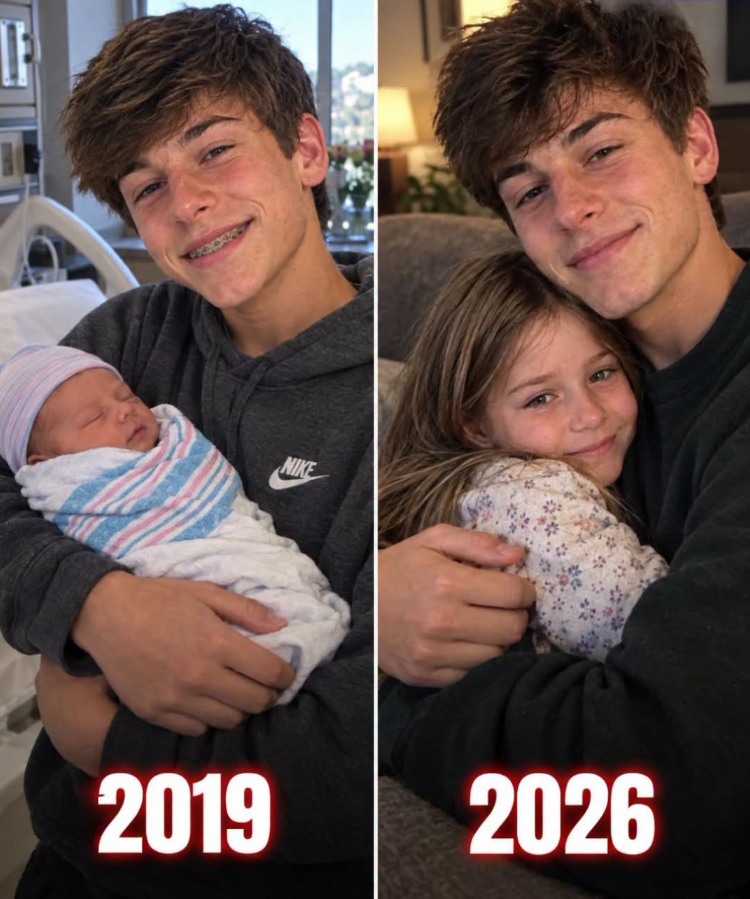
She survived because I went back inside for her.
I still remember carrying her out.
She was crying, coughing, and holding onto me so tightly that I could barely breathe.
After that night, there was no time to grieve properly.
There was Vicky.
And there was me.
I became her sole guardian.
I had been accepted into my dream college, but I put those plans on hold.
Instead, I took two jobs.
One during the day.
Another in the evenings.
I learned how to make meals a seven-year-old would actually eat.
I learned which teachers she liked, which foods she refused, what time she needed to go to bed, and how to sit beside her when nightmares woke her in the middle of the night.
It wasn’t easy.
Some days, I was exhausted before breakfast.
Other days, I wondered how I was supposed to keep doing this for years.
But Vicky was my sister.
She was the only family I had left.
So I did what I had to do.
Then Aunt Denise and her husband, Howard, appeared.
They hadn’t visited us in years.
Before our parents died, I could go months without hearing from Denise.
But suddenly, after the funeral, they were everywhere.
They wanted guardianship of Vicky.
Then they started talking about adoption.
Denise sat across from me one afternoon, wearing an expensive coat and speaking in the soft, reassuring voice she seemed to reserve for other people’s children.
“You’re nineteen,” she told me.
“Go enjoy your life. Let the grown-ups raise her.”
I couldn’t believe what I was hearing.
“I’m not giving Vicky away,” I said.
Denise smiled as though I were a stubborn child refusing to understand what was best for him.
“You don’t know what you’re doing, Michael.”
I did know.
I knew Vicky needed someone who wouldn’t disappear.
I knew she had already lost both parents.
And I knew I wasn’t going to let her lose her brother too.
After I refused, the complaints began.
Child services started receiving reports about me.
Denise claimed I left Vicky home alone.
She claimed I barely fed her.
She said I had a temper and frightened my sister.
Every accusation brought another inspection.
Every inspection meant another person walking into our home and looking at the life I had been desperately trying to hold together.
One afternoon, a child-services worker stood in my kitchen and opened the refrigerator.
Inside were milk, eggs, yogurt, apples, leftovers, and three lunches I had already packed for Vicky.
Everything was organized.
Everything she needed was there.
Still, it was the third complaint in five weeks.
I stood there wondering whether everything I had sacrificed since my parents died still wasn’t enough.
I had given up college.
I was working two jobs.
I was raising a seven-year-old.
And somehow, I was still being treated as though I were the problem.
Temporary guardianship had been approved, but Denise and Howard wanted permanent guardianship.
Then they started talking openly about adoption.
Denise even began acting as though Vicky already belonged to her.
One afternoon, she arrived with an expensive coat and a pink jacket for my sister.
She smiled and called herself “Mommy Denise.”
Vicky didn’t like it.
She never called her that.
She barely spoke whenever Denise was around.
Then, one evening, Vicky told me something that made me uncomfortable.
“Aunt Denise said I could have a bigger bedroom,” she whispered.
I smiled.
“That sounds nice.”
But Vicky didn’t smile back.
“She also said something about a boarding school.”
I looked at her.
“A boarding school?”
“With horses,” she said.
Then she lowered her voice.
“She said grown-ups need quiet.”
That sentence stayed with me.
Days later, I took Vicky to Denise and Howard’s house for a visit.
I had planned to pick her up later that afternoon.
But my bicycle tire went flat outside their home.
I crouched beside the bike and began patching it.
Their window was open.
I wasn’t trying to listen.
Then I heard Denise’s voice.
“The sooner we get guardianship finalized and ship that girl off to boarding school, the better.”
My hands stopped moving.
“I can’t stand having her here,” Denise continued. “All she does is cry for my sister. I’m sick of it.”
My stomach tightened.
Then Howard answered.
“Just hold on a little longer, dear.”
His voice was calm.
Almost amused.
“Think about all the money we’ll get. Once it’s ours, we’ll never have to work another day.”
I stared at the bicycle tire.
My hands were trembling.
For a few seconds, I couldn’t even think.
Then I forced myself to finish repairing the bike.
I waited several minutes.
Then I knocked on the door as though I hadn’t heard anything.
Denise opened it with a smile.
I smiled back.
I said nothing.
Because I had learned something important.
Denise wasn’t simply trying to take care of Vicky.
She had a financial plan.
And I needed to understand exactly what was behind it.
That night, after Vicky went to bed, I called my legal-aid attorney.
I told her everything.
I explained what I had overheard.
I admitted I didn’t have a recording.
But she wasn’t concerned.
“You don’t necessarily need a recording,” she told me.
Then she reminded me that she already had access to Denise and Howard’s financial proposal and the documents governing Vicky’s trust.
That was when she pointed me toward the detail I hadn’t fully understood before.
The trust wasn’t simply a pile of money waiting for whoever became Vicky’s guardian.
It had rules.
Restrictions.
Conditions.
The money belonged to Vicky.
It could be used for her legitimate needs.
But it wasn’t a personal source of income for her guardians.
It couldn’t simply become household money.
It couldn’t be treated like a private bank account.
And that mattered.
A lot.
Because the hearing was the next morning.
A judge would decide where Vicky would live.
Denise arrived at court dressed perfectly.
Her hair was styled.
Her clothes were expensive.
Her expression was confident.
She walked toward me with a smile.
“Let’s settle this quickly,” she said.
“My daughter, Vicky, and I have a very busy day planned.”
I didn’t respond.
I simply watched her walk into the courtroom.
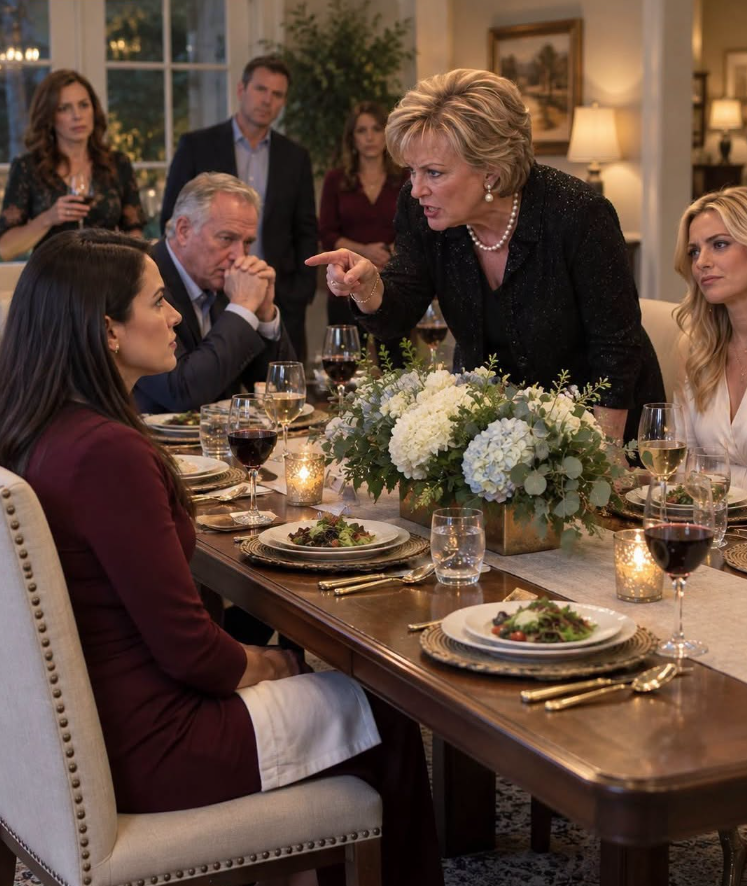
Denise and Howard presented themselves as the obvious choice.
They were married.
They had a larger home.
They had stable income.
They talked about private schooling and a better future for Vicky.
They described me as a nineteen-year-old who had abandoned college and was working two jobs.
On paper, their argument sounded convincing.
Until the judge began asking questions about the money.
Then my attorney presented their financial proposal alongside the trust restrictions.
She asked a simple question.
Could Denise and Howard provide the private school, larger home, transportation, and reduced work schedule they had promised without using Vicky’s trust as household money?
The room became very quiet.
Denise’s confidence began to fade.
My attorney continued.
If the trust couldn’t be used to support the household in the way they had proposed, how would they pay for the lifestyle they were promising?
The answers became less certain.
The plan that had looked so polished began falling apart one question at a time.
Then the court looked at the rest of the situation.
Vicky had been living with me.
She was attached to me.
I had been her primary caregiver since our parents died.
The complaints against me had not been supported by the evidence.
And there was evidence that Vicky had been pressured to accept Denise and Howard as her new parents.
The court also considered the support plan I had agreed to build around us.
In the end, the decision was made.
Vicky would remain with me.
I was still only nineteen.
But I was her brother.
And for the past three months, I had been the person getting her up in the morning, feeding her, taking her to school, comforting her at night, and making sure she knew that someone was still there.
After the hearing, Denise cornered me.
“You just wanted to make sure nobody could touch Vicky’s money,” she accused.
I looked at her.
“No,” I said.
“The money belongs to Vicky.”
That was all.
There was nothing else I needed to explain.
That evening, after Vicky had gone to sleep, I sat on the edge of my bed and opened my backpack.
Inside was an old college envelope.
My acceptance information.
The same envelope Denise had pointed to when she told people I had thrown away my future.
For months, I had believed that maybe she was right.
Maybe college was over.
Maybe the life I had planned was gone.
Maybe being Vicky’s guardian meant giving up everything I had once wanted.
But that night, I looked at the envelope differently.
I hadn’t chosen to abandon my future.
I had chosen to protect my sister.
Those were not the same thing.
The next morning, I called the college admissions office.
I explained my situation.
Then I asked a question I hadn’t allowed myself to ask for months.
“What options do I still have?”
There was a pause.
Then the admissions counselor began explaining what might be possible.
For the first time since the fire, I felt something I thought I had lost.
Hope.
Later that day, Vicky found the college envelope beside my laptop.
She looked at it.
Then she looked at me.
“Are you doing homework?”
I laughed.
“Something like that.”
She reached into her box of crayons and pulled out a handful.
Then she placed half of them beside my laptop.
“You can have these,” she said.
I smiled.
“Thanks.”
“So you can do your homework too.”
I pulled the laptop closer.
For a moment, I looked at my little sister sitting beside me with her crayons scattered across the table.
Three months earlier, I had carried her out of a burning house.
Since then, I had spent every day trying to give her a safe life.
I had believed that protecting her meant sacrificing my own future.
But that wasn’t necessarily true.
I could take care of Vicky.
And I could still build a life of my own.
Denise had tried to convince everyone that I was just a nineteen-year-old boy who didn’t know what he was doing.
She was wrong.
I knew exactly what I was doing.
I was keeping a promise I had never needed to say out loud.
I was making sure my little sister would never again wonder whether someone was coming back for her.
And this time, I wasn’t giving up my future to do it.
I was going to fight for both.