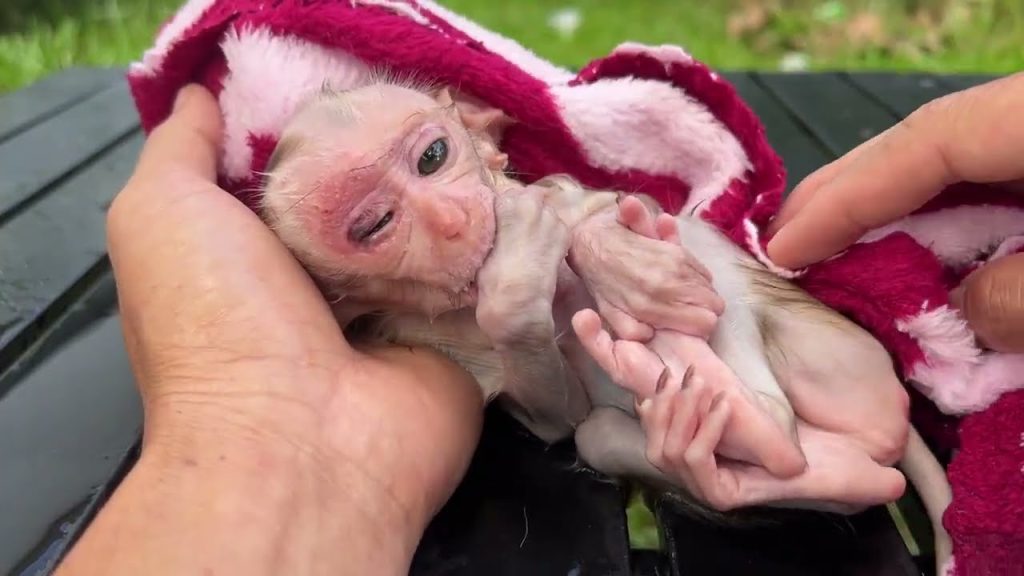
It was supposed to be a peaceful new beginning for the tiny newborn baby monkey. After his adoption, he had been carefully settling into his new home, surrounded by soft blankets, gentle voices, and people determined to make him feel safe. But suddenly, Mom noticed something was wrong with his left eye.
The tiny baby was unusually distressed. He kept his little left eye partly closed and cried whenever he became uncomfortable. Mom’s heart sank as she carefully looked at him.
“Oh, poor baby,” she whispered. “What happened to your eye?”
She knew immediately that an eye injury in such a young animal could be serious. Instead of trying to treat it herself, Mom kept the newborn calm, prevented him from rubbing the eye, and contacted a qualified veterinarian or wildlife-care professional for urgent advice.
The baby continued making tiny cries while Mom held him securely and gently reassured him.
“You’re safe, sweetheart. Mommy is here.”
Every little sound made Mom more worried, but she stayed calm for him. She knew that a newborn could not explain what hurt, so his cries were the only way he could communicate his discomfort.
Soon, the professional guidance arrived: the baby’s eye needed to be examined as soon as possible. Mom carefully prepared him for the trip, keeping him warm and comfortable while avoiding unnecessary handling of the injured area.
At the clinic, the veterinarian examined his left eye and explained that eye injuries should never be ignored, especially in a newborn. The baby received appropriate professional care, and Mom was given careful instructions for watching him during his recovery.
Back home, the little monkey rested quietly in his warm, secure space.
Mom stayed nearby.
She watched his breathing, his behavior, and his ability to settle comfortably. She did not touch or disturb the injured eye unless specifically instructed by the veterinarian. Every few minutes, she softly spoke his name.
“You’ve had a hard first chapter, little one,” she whispered. “But you’re not alone.”
The newborn slowly relaxed.
His tiny fingers curled around the edge of his blanket, and eventually his cries became quieter. He looked exhausted, but he was finally resting.
Mom knew his recovery might take patience, professional follow-up, and careful observation. But adoption meant more than simply giving him a new home. It meant protecting him when something went wrong and getting him the specialized help he needed.
That night, Mom sat beside his resting place and watched over him.
“Welcome home, little baby,” she whispered. “We’re going to take this one day at a time.”
The newborn closed his eyes and rested peacefully.
His first days had not been easy, but he had already learned something important: even when he was frightened or hurting, gentle hands would be there to protect him.