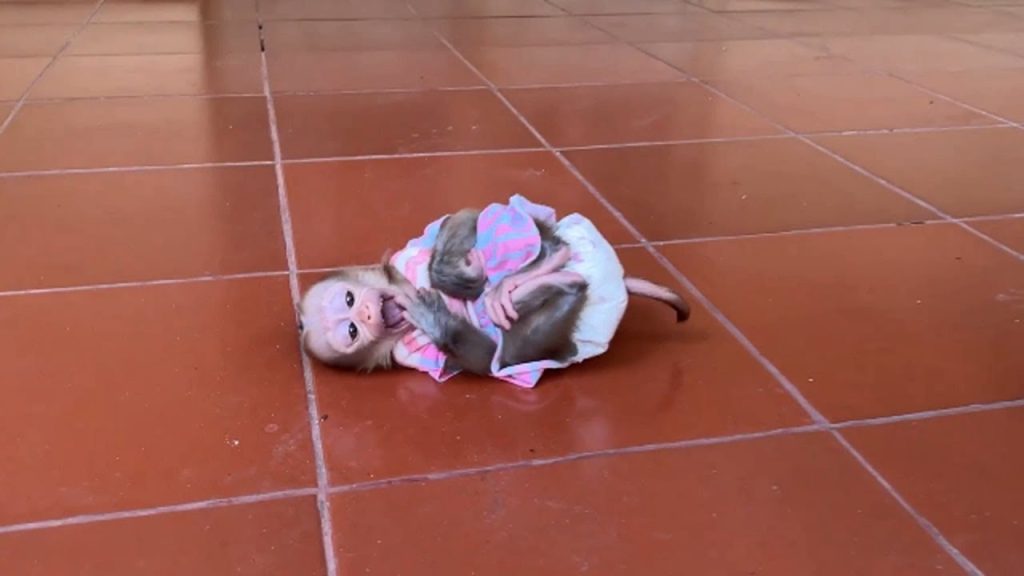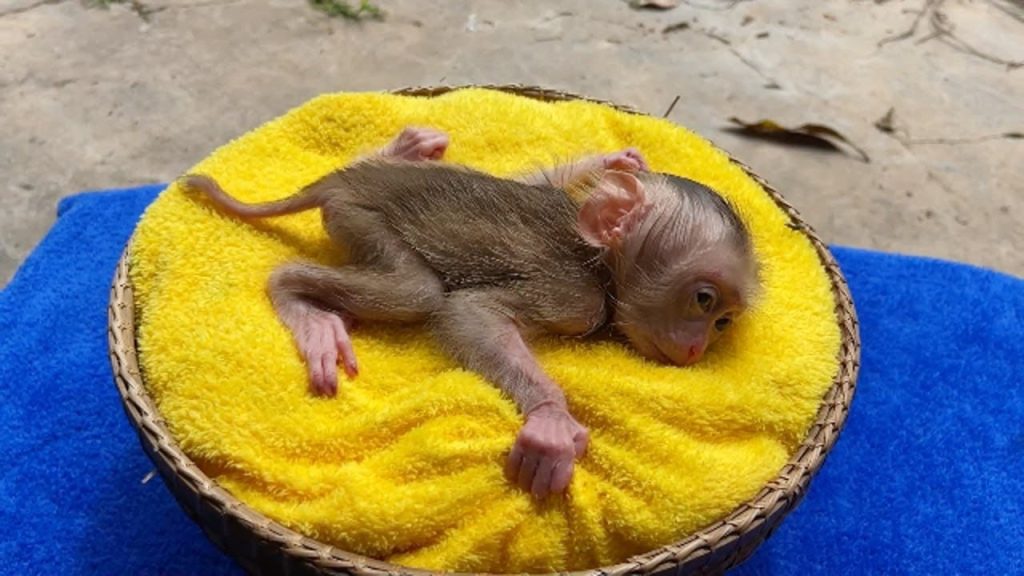
Poor little A Tong lay quietly on the soft mat, his small body curled tightly, legs folded beneath him like a tiny frog. He was deeply asleep, breathing slow and shallow, completely drained of strength. Just hours earlier, he had been restless and weak, barely able to lift his head. Now, sleep had claimed him fully, as if it were the only place his fragile body could recover.
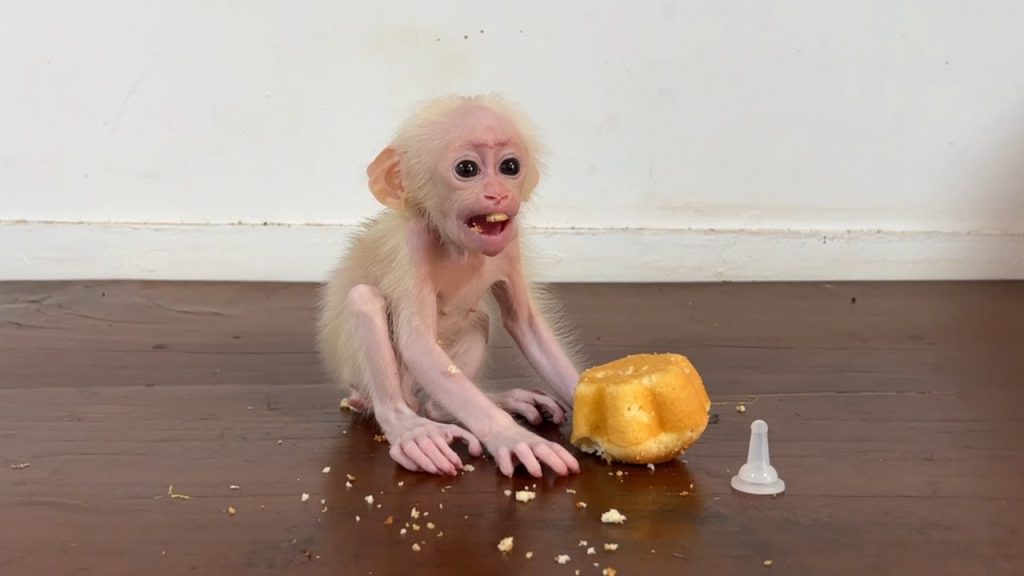
A Tong was still very young, far too small to be strong. His thin arms rested close to his chest, and his fingers twitched softly from time to time. Every breath showed how tired he truly was. Hunger, stress, and weakness had taken their toll. Sleep became his quiet escape from discomfort and fear.
Mom watched closely, worried but hopeful. She noticed how A Tong’s frog-like sleeping posture meant he was seeking warmth and security. His tiny body curled instinctively, trying to conserve energy. Though he looked peaceful, his weakness was impossible to ignore. His fur looked thin, and his little belly rose slowly with each breath.
The room stayed silent so he wouldn’t be disturbed. Mom gently placed a cloth nearby, ready to cover him if he stirred. She knew this sleep was important—perhaps the most important thing he needed right now. Food could wait. Comfort could wait. Rest could not.
As A Tong slept, his face softened. The tension faded, replaced by a fragile calm. In that moment, he wasn’t struggling or crying. He was simply surviving the best way he could.
This deep sleep was not laziness. It was recovery. It was a tiny body asking for time.
Everyone hoped that when A Tong woke up, he would be a little stronger than before. Until then, they let him sleep—like a tiny frog—holding onto the quiet hope that rest would help heal his small, brave heart.