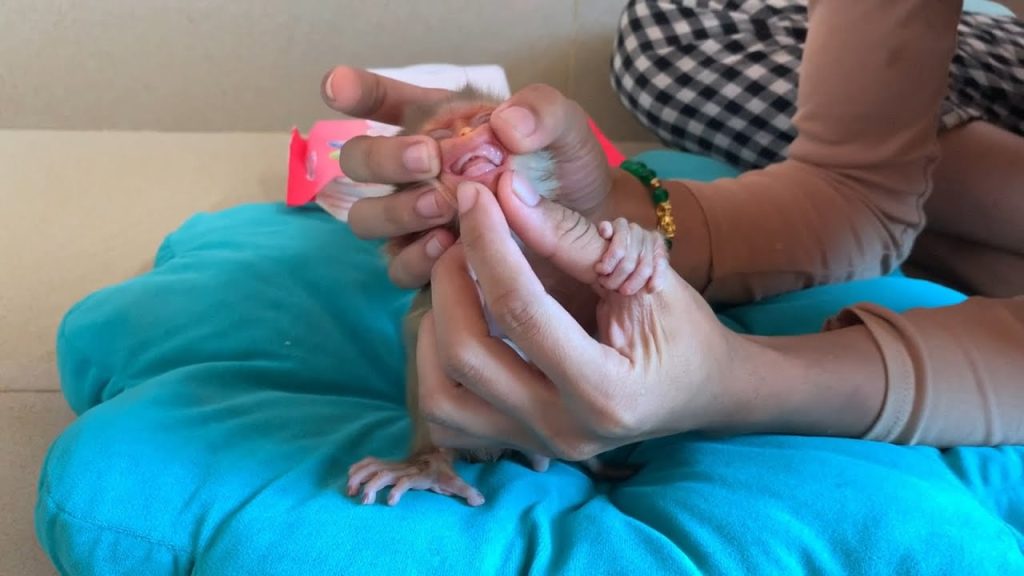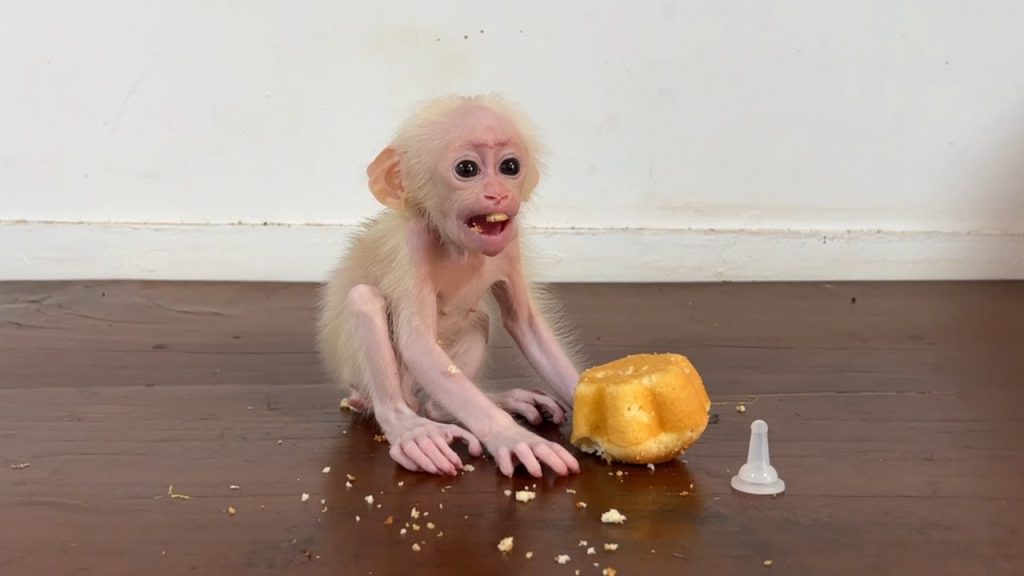
Minea sat in front of the baked egg cake, staring at it with confusion and disappointment. It smelled nice, and everyone expected her to enjoy it, but the moment a small piece touched her mouth, her face changed. She tried to chew, slowly and carefully, but the cake was too hard for her tiny teeth.
She paused, frowned, and pushed the food slightly away. Minea opened her mouth again, giving it another try, but it was no use. Her jaw was still weak, and chewing felt like hard work. Frustration quickly replaced curiosity. Her eyes filled with emotion, and she let out a soft complaining sound, clearly unhappy.
Mom watched closely and realized the problem immediately. Minea wasn’t being picky or naughty—she truly couldn’t chew it. Still, Minea felt upset. She wanted to eat like the others, but her body wasn’t ready yet. The more she tried, the more annoyed she became. She shook her head, lips trembling, refusing the next bite.
Soon, the soft complaints turned into a small tantrum. Minea slapped the table lightly and turned her face away. Hunger mixed with frustration made her moody. She wanted food, but she needed something gentle and easy, not something that hurt her mouth.
Mom gently took the cake away and spoke softly, comforting her. She prepared a softer meal instead, something Minea could swallow without effort. When the new food came, Minea relaxed almost instantly. She accepted it gladly, eating calmly, her mood slowly improving.
As she ate, her eyes softened, and the tension disappeared from her little face. She wasn’t angry anymore—just relieved. The problem had never been the food itself, but her ability.
This small moment reminded everyone that babies need patience and understanding. Minea didn’t reject the cake because she disliked it. She rejected it because she wasn’t ready. With gentle care and the right food, she felt understood again—and that made all the difference.