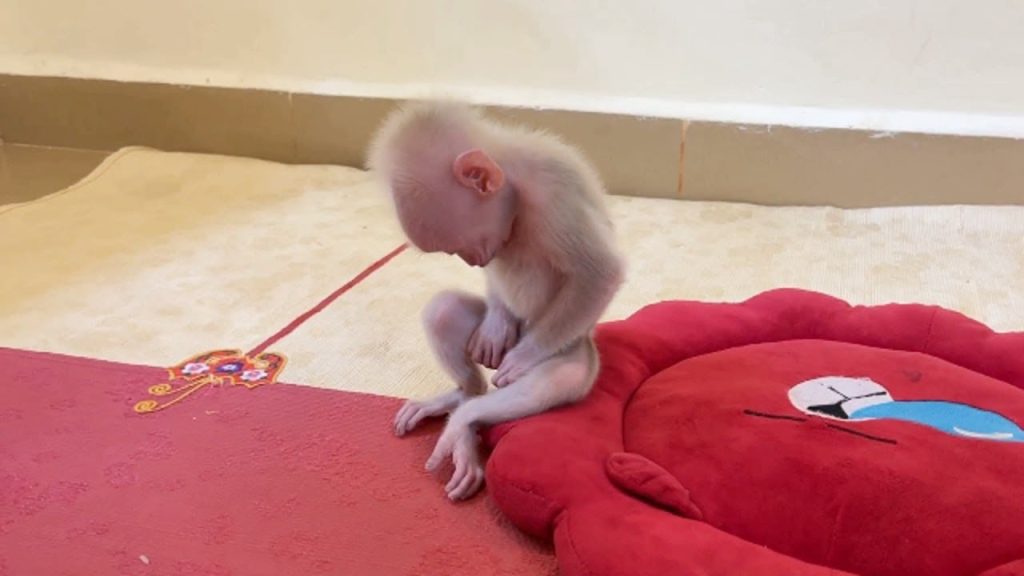
Little Pavpav sat quietly on the mat, legs tucked close, his posture unusually calm. Instead of playing or calling out, he looked down with serious focus, gently checking his private area with careful movements. It wasn’t curiosity for play—it was concern. Something felt itchy, uncomfortable, and Pavpav wanted to be sure everything was okay.
He shifted slightly, scratching once, then stopping to observe his own reaction. His face showed concentration, not mischief. Pavpav had learned that small discomforts could become big problems if ignored. He paused, listening to his body, tilting his head as if asking himself questions only he could answer.
Mom noticed immediately. She moved closer without startling him, speaking softly to let him know he wasn’t in trouble. Pavpav looked up briefly, eyes honest and trusting, then looked back down again. He wasn’t embarrassed. He was simply checking, like a child learning how to understand his own body.
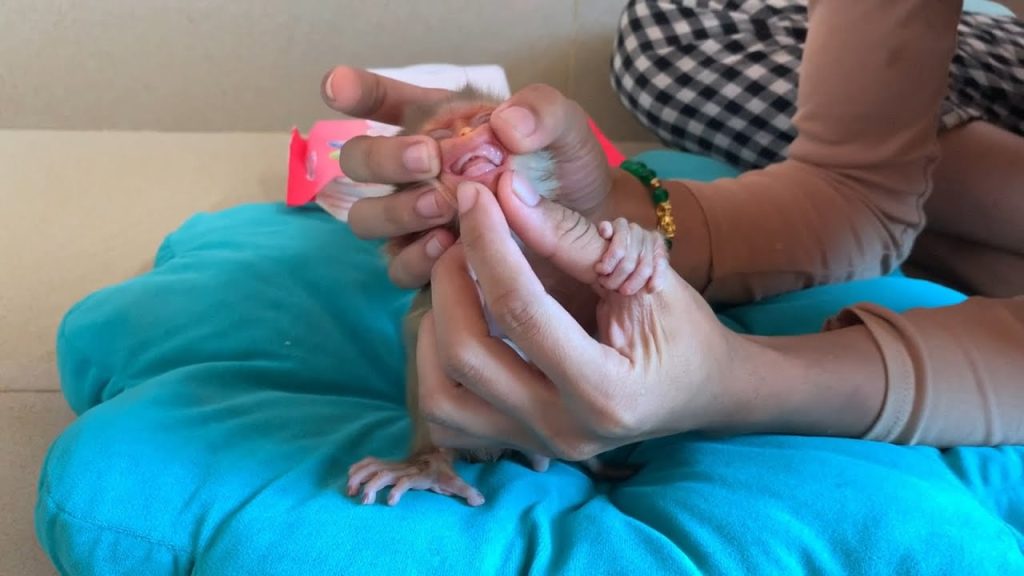
Mom gently guided his hands away and inspected the area herself, careful and respectful. She cleaned him with warm water and a soft cloth, explaining each step in a calm voice. Pavpav stayed still, cooperative, his earlier worry slowly fading. The itching had likely come from sweat and dust after a long, warm day.
When Mom finished, Pavpav sat back up, relaxed and relieved. He no longer scratched. Instead, he looked around, interest returning to the world beyond his small concern. Mom smiled, praising him softly for being calm and patient. That moment wasn’t awkward—it was caring. Pavpav had learned something important: noticing discomfort and allowing help keeps him healthy. Clean, comfortable, and reassured, he leaned closer to Mom, ready to move on with his day. Sometimes, growing up starts with quiet awareness—and gentle guidance makes all the difference.