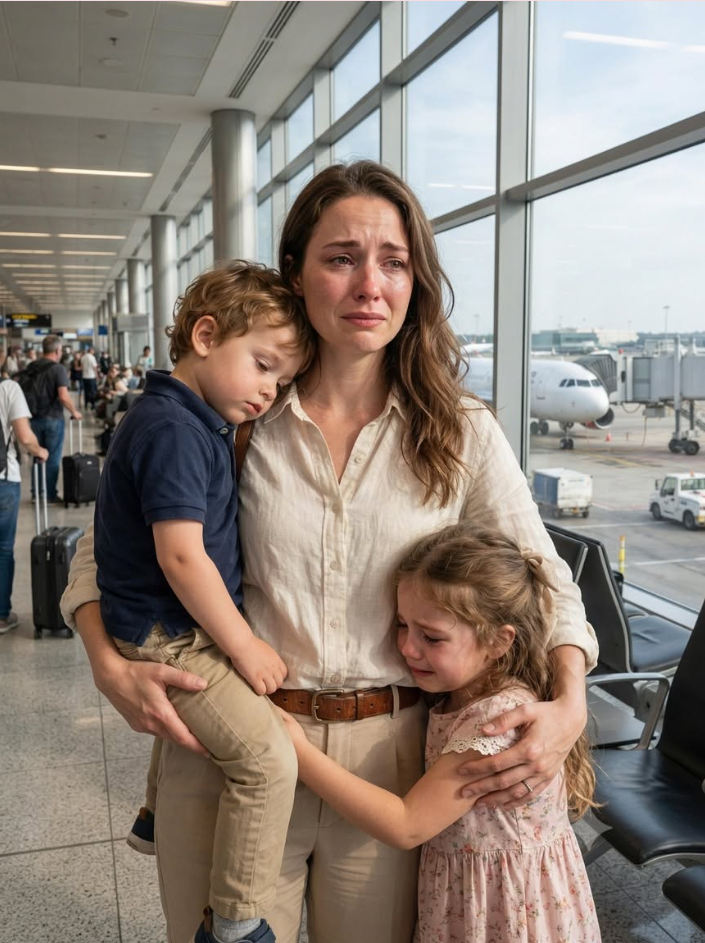
PART 1 — The Fortune That Sent Me Away
The man I had shared a house with for three years offered me ten million dollars to leave him, and I agreed before his lawyer could finish explaining. I signed, accepted the transfer, and vanished with our two children. What I did not know was that the money had never been intended to purchase my departure—or that discovering our empty rooms would send him into a rage that left his office in ruins. When Gabriel Mercer’s attorney reached the Nashville estate, I was in the kitchen making a warm bottle for my infant daughter. “Miss Parker, Mr. Mercer has arranged for you to retain full custody of both children, and you will receive a one-time payment of ten million dollars with three days to vacate the property,” he stated. I measured three scoops of formula, tested the water against my wrist, and gently shook the bottle. Hannah whimpered in her stroller. On the floor, my two-year-old son, Owen, concentrated on a tower of brightly painted wooden blocks. “Miss Parker, did you hear what I just said to you?” the lawyer asked, shifting his briefcase. “I heard every word you said, and I understand the terms,” I answered, crossing to my daughter.
Three years before that afternoon, I had entered the mansion carrying two battered suitcases and almost no money. At twenty-two, newly finished with college, I was barely keeping up with the rent on my little apartment. Gabriel was the only heir to an immensely powerful logistics empire. His grandmother wanted great-grandchildren to preserve the Mercer name, and he wanted a healthy woman who would provide them without making emotional demands. I wanted enough financial security to keep my life from collapsing. On the first night he visited my room in the east wing, he wasted no time dressing the proposal in kindness. “Have a child with me, and I will give you one hundred thousand dollars for your trouble,” he said. I accepted. Nine months afterward, Owen arrived. The family marked the birth of its heir with an extravagant celebration that appeared in society magazines, but no one presented me as his mother. Within those walls, I remained Tessa Parker, the unobtrusive woman housed in the east wing. The next time Gabriel sought me out, his grandmother had decided Owen should have a sister. “I want another child with you,” he said with the same emotional distance. Once again, I agreed. By then, my love for Owen exceeded anything I had known, and I had also begun loving his father—a truth that hurt to acknowledge.
At seven that evening, I was fastening Owen into his car seat when my phone vibrated inside my coat. Gabriel had written, “Have you signed the papers?” I quickly answered, “Yes, I signed everything.” Another question followed. “Have you received the money in your account?” “Yes, the transfer went through,” I replied. After several drawn-out seconds, two words appeared: “Then leave.” I kept staring until the display dimmed and went black. I sent nothing else. Instead, I got behind the wheel and drove through the estate’s high iron gates. As we reached the road, Owen twisted around to study the mansion’s illuminated windows. “Mommy, doesn’t Daddy want us to live at home anymore?” Something seemed to split inside my chest, but I kept watching the road. “No, sweetheart, Daddy isn’t kicking us out, we are just going to live in a different house for a while.” He was not satisfied. “Why do we have to leave our house?” At the next red light, I reached back and smoothed his hair. “Because Mommy is very tired, and we need a fresh start somewhere sunny.”
Three days afterward, we were staying at a peaceful beachfront resort in Key West. Owen splashed in the pool’s shallow end while Hannah slept in a shaded bassinet beside my lounger. For the first time in years, I could breathe without listening for heavy footsteps outside my room. Then, while browsing my phone, I came across a post by Lucas, Gabriel’s longtime assistant. Above a photograph of broken crystal and papers scattered over an office floor, he had written, “Everyone should stay away from the boss’s office today because he just destroyed half of the furniture.” My thumb accidentally touched the like button. Within three seconds, the post disappeared. Immediately afterward, Gabriel’s name filled my screen. I rejected the call, and a message arrived. “Do you think this situation is funny to you?” “It was a complete accident, I didn’t mean to tap the screen,” I explained. He answered, “Do you really think you can take my money, disappear into thin air, and then laugh at me on top of everything else?” I remained calm. “I am not laughing at you, Gabriel.”
Five minutes passed before he wrote again. “How are the children doing?” “They are both doing fine and adjusting well,” I answered. A shorter pause followed. “Does Owen ever ask about me?” “Yes, he asks about you every day,” I admitted. “What do you tell him when he asks where I am?” “I tell him that you are busy working,” I typed. After another long silence, he asked, “Tessa, don’t you really have anything else to say to me after all this time?” I looked at Hannah sleeping beneath the Florida warmth and remembered the bitter chill of the maternity ward. I remembered that door remaining closed while I waited for someone who never came. “Yes, I do have one thing to say, so next time a woman gives birth to your child, make sure you stay with her at the hospital because maternity rooms are terribly cold,” I wrote. He read it almost immediately but did not respond. Closing my eyes, I assumed that exchange marked the end of whatever connection remained between us.
That night, his lawyer called. The tremor in his voice brought me fully awake. “Miss Parker, I need you to listen to me very carefully because I just reviewed the physical document you signed, and something is terribly wrong.” I pushed myself upright against the hotel headboard, my pulse accelerating. “What happened? Is there a problem with the bank transfer?” His answer made no sense. “Mr. Mercer has just discovered that you left the mansion for good.” I tightened my grip on the phone. “He literally sent me a text message telling me to leave.” The lawyer spoke urgently. “No, Tessa, that eviction order was never part of his original instructions to me.” Cold spread down my back. “What on earth are you talking about? I read the first page myself.” He drew an unsteady breath. “The ten million dollars were never meant to be compensation for ending your relationship with him.” “Then what were they supposed to be for?” I asked.
For a moment, I could hear only the quiet of the hotel room. Then he said, “Mr. Mercer put that money in your name so you could choose to stay with him without ever feeling financially dependent on him, but someone altered the agreement before you signed it, and that same person has just filed an urgent legal petition seeking full custody of both your children.” I could not answer. Hannah slept in her portable crib by the window, and Owen lay across the large bed with his green stuffed dinosaur clutched against him. The fortune, the demand that I leave, and the attempt to take my children suddenly looked like pieces of an elaborate cruelty everyone understood except me. “Explain yourself right now,” I finally whispered, careful not to wake them. The attorney, Simon Bennett, sighed after a weighted silence. “The original document I drafted at Gabriel’s explicit instruction stipulated an irrevocable transfer of ten million dollars in your favor, primary physical custody of the children for you, and the legal right to continue living in the mansion for as long as you wished.” I struggled to absorb it. “Continue living there with him?”
“Yes, without any romantic, personal, or financial obligation to Mr. Mercer whatsoever, and I had even arranged for the entire east wing to be legally separated into a private trust for you and the children,” Simon explained. An incredulous, bitter laugh escaped me. “Well, the document you placed on the kitchen counter in front of me clearly stated that I had three days to pack my bags and leave.” “I know that now, and I take full responsibility for my negligence,” he said. “How could a lawyer of your standing not notice that the terms had been changed?” I demanded. He confessed, “There were two separate versions of the digital file saved on our server, and the physical copy you signed was swapped out after my final review, so I made the catastrophic mistake of not reading the printed pages again before driving out to the mansion.” I already suspected the answer to my next question. “Who replaced the pages in that folder?” “That is precisely what our forensic team is trying to prove right now,” he replied cautiously. “Do not lie to me, Simon, because I deserve to know who is trying to destroy my life.” His silence lasted far too long. Then he answered, “We strongly suspect that Miriam Mercer is behind the entire scheme.”
I closed my eyes. Gabriel’s grandmother had arranged it, and the realization carried no real surprise. She had never accepted the possibility of my standing beside them as an equal, but neither could she tolerate my leaving with the great-grandchildren she considered hers. In her mind, Owen and Hannah belonged to the dynasty. I had merely supplied the means of bringing them into it. “Tell me about this custody lawsuit she just filed,” I said, forcing steadiness into my voice. Simon explained, “Miriam filed an emergency motion through her own private attorneys, alleging that you removed the children from their habitual residence purely for financial gain and without a valid custodial agreement from their father.” Anger surged through me. “That is absurd because I have a signed legal document right here in my suitcase!” “That is precisely why we need to examine your copy immediately, because Miriam is challenging the validity of the separation clause while claiming Gabriel never authorized taking the children out of Tennessee,” he said. I climbed out of bed and began pacing across the carpet. “And what does Gabriel have to say about his grandmother’s little ambush?”
Simon’s voice softened. “He told me that no one on this earth has the right to take your children away from you.” Warmth stirred inside me, unwanted and immediate. After years of hoping Gabriel would defend me, a sentence repeated by his attorney could still reach the most vulnerable part of my heart. I hated how quickly that hope awakened. “Tell him that I do not need him to ride in and save me, I just need him to sign whatever sworn statement is required to protect our children from his grandmother,” I said coldly. “He is already working with our litigation team to prepare a formal affidavit,” Simon assured me. “Then make sure he files it with the court first thing tomorrow morning, and please do not call me again just to relay his personal feelings,” I told him before hanging up.
For a while, I remained beside the bed, watching Owen. One chubby hand rested on his dinosaur, while the other reached into the space I had left. When I slipped beneath the covers, he immediately rolled against me. “Mommy, can we go swim in the ocean again tomorrow morning?” he murmured, his eyes still closed. I held him close and kissed his hair. “Of course we will, sweetheart, we can spend all morning by the water.” I made the promise softly, with my mouth against the top of his head, while fear pressed beneath it. Until that call, I had believed leaving the mansion meant I could finally give my children peace. Now I did not know whether I could even promise them another ordinary morning.
Miriam called at precisely eight the next day. She dispensed with any greeting. “Tessa, you have made a grave and foolish mistake by running off like a common thief,” she snapped. I was cutting buttered toast into little squares at the kitchenette counter. “Good morning to you too, Miriam.” “Do not play games with me, young lady, and tell me right now where you have taken the children.” I placed Owen’s plate before him. “We are sitting at the table having breakfast together.” Her voice sharpened. “You know perfectly well what I am asking you.” “And you know perfectly well that I am their mother, which means they are safe with me,” I answered. Her breathing grew harsh as she struggled to regain control. “Those children are the direct bloodline descendants of the Mercer family, and their place is here in Nashville.” “They are also my children, Miriam, and I have raised them every single day since they were born,” I reminded her.
“A woman of your modest background simply cannot offer them the elite education, social standing, or future they deserve,” she declared. At the table, Owen had spilled his orange juice and was earnestly pressing a napkin into the puddle. Hannah cheerfully struck her highchair tray with a plastic spoon. “How strange that you feel that way now, because for three years I was good enough to wake up with them at night, feed them, take them to every doctor appointment, and nurse them through fevers, yet suddenly I am unfit to raise them,” I said, no longer hiding my frustration. Miriam replied without hesitation. “Do not confuse the duties of a caretaker with actually belonging to a prestigious family.” The words hurt, not because I valued her judgment, but because I had spent so long accepting that place beneath everyone else. “You are completely right about one thing, Miriam, because I never belonged to your family, though my children certainly belong to mine,” I answered.
Her next words stopped me cold. “Bring Owen and Hannah back to the mansion immediately, and I will personally ensure that you are allowed to keep every penny of that ten million dollars.” My fingers tightened on the counter. “What did you just say to me?” She sounded as casual as someone discussing a property sale. “Ten million dollars is an unimaginable fortune for someone like you, enough to buy a lovely home, travel the world, and start a brand new life, plus you are still young enough to marry and have more children of your own.” Owen held up his soaked napkin, proud of having cleaned his spill. I gave him a smile and a thumbs-up before speaking again. “Listen to me very carefully, Miriam, because you can keep all of your Mercer properties and hire every expensive lawyer in the state, yet you will never again treat my children as if they are mere assets in your estate.”
“You are going to regret this defiance when the judge strips you of custody,” she threatened. I drew a measured breath. “I have already regretted plenty of choices in my life, including ever stepping foot inside your mansion, waiting for Gabriel in empty hospital rooms, and confusing financial security with a real life,” I said. “However, I will never regret having Owen and Hannah, and you will never take them from me.” I ended the call before she could answer. Only then did I notice that my hands were perfectly still. For the first time since I had met Miriam Mercer, standing up to her had not left them shaking.
Gabriel reached Key West that afternoon. I learned he was there from Lucas, not from him. His assistant sent a candid photograph of Gabriel slumped in a hotel-lobby armchair, his white dress shirt creased and exhaustion plain on his face. Beneath it, Lucas wrote, “He has been sitting down here in the lobby for two full hours because he refuses to come up to your room without your explicit permission.” I studied the image in disbelief. Gabriel normally looked immaculate: bespoke dark suits, polished shoes, watches that cost more than houses. The man in the photograph seemed to have forgotten the habits that held his polished exterior together. I replied, “Tell him he can come up to see the children tomorrow morning for one hour, provided that I am present the entire time.” Lucas answered almost at once. “Understood, Miss Parker, I will let him know right away.”
Twenty minutes later, a tentative knock sounded at my door. Expecting the towels I had requested, I opened it. Gabriel stood in the corridor. My immediate impulse was to shut him out. “I explicitly told Lucas that you could see them tomorrow morning,” I said, keeping myself between him and the room. His answer came in a voice worn rough by sleeplessness or shouting. “I know you did, Tessa.” Behind me, the suite was bright with afternoon sunshine, and Owen was on the woven rug making his plastic dinosaur walk along the floor. Gabriel remained outside the threshold.
I had spent three years waiting for him to cross the distance between us. Now that I had finally left, he was standing at my door before the time I had agreed to give him. I held my ground and looked directly at him. “Then what are you doing standing outside my door right now?”
PART 2 — The Truth Behind the Replaced Page
“I just needed to see with my own eyes that you and the kids were safe and okay,” Gabriel said. I did not move aside. “Simon already spoke to me last night and confirmed to you that we are doing fine.” His gaze passed over my shoulder. Owen looked up, spotted him, and dropped his dinosaur. “Daddy!” he shouted, scrambling up and racing to the entrance. Gabriel sank to one knee as our son flung his arms around his neck. I had never seen him close his eyes with such effort, as though holding back tears required everything he possessed. Owen leaned away to inspect his tired face. “I thought you were busy working far away.” Gabriel stroked his tangled hair. “I was working very hard, buddy.” “Are you all finished with your work now?” Owen asked. Gabriel paused before answering. “Right now, I am right here with you.”
After both children were asleep, we went onto the private balcony. I left the sliding door slightly open so I could hear them. Gabriel stood at the railing facing the dark ocean; I settled into a wicker chair. “I did not fly down here to beg you to come back to Nashville with me,” he began. “I am genuinely glad to hear that, because my answer would be no,” I said. He turned toward me. “I came here because I owe you an honest explanation about that ten million dollars.” I folded my hands. “I am listening, Gabriel, so go ahead and explain.” He passed a weary hand over his face. “When I first approached you three years ago, I honestly thought our arrangement was simple and fair. You needed financial stability, my family needed an heir, and I foolishly believed that as long as I kept my end of the bargain, everything would work out fine.” “It certainly worked out fine for you and your grandmother,” I observed. “I realize how selfish that was now,” he admitted, offering no defense.
“When Owen was born, Miriam called me and insisted that you did not want me inside the delivery room because you were exhausted and wanted total privacy,” he said. His account chilled me. “I asked the nurses about you three separate times during labor, Gabriel.” He lifted his head sharply. “What did you just say?” I made myself repeat the memory. “I asked the delivery nurse, I texted Lucas, and I even called your personal cell phone twice while I was in labor, yet nobody ever answered.” He looked physically struck. “I was overseas in London closing a shipping merger, and Miriam swore to me that you were too nervous to have me watching you give birth.” I asked, “And what is your excuse for when Hannah was born right there in Nashville?” His hands closed around the railing until his knuckles whitened. “That afternoon I was locked in an emergency board meeting, and Miriam sent word through my secretary that the delivery had gone smoothly and that you had left strict instructions for no visitors.”
I wanted to laugh and cry at once. “Do you know what the worst part of all this is? Even if Miriam lied to you twice, you never once bothered to check on me yourself afterward.” “You are completely right, Tessa,” he said. My throat tightened. “No, Gabriel, this is not about me winning an argument or being right,” I told him. “This is about me being completely alone in a hospital bed twice, and then returning to a massive house where I was not even invited to sit at the dinner table with you.” He bowed his head. Behind us, the ocean breeze moved the sheer curtains. Once, the sight of his remorse would have been enough to make me retreat from my own pain. That night, I remained firm. “Explain the ten million dollars to me right now.” He sat in the opposite chair and leaned forward, elbows on his knees. “Six months ago, I accidentally discovered that my grandmother was quietly drafting a legal agreement designed to push you out of the children’s lives the moment Hannah turned one year old.” I went still. “What kind of legal agreement was she planning?”
“She intended to pressure you into signing a waiver relinquishing all parental decision-making rights regarding their schooling, medical care, and primary residence, in exchange for a modest monthly stipend and supervised weekend visits,” he explained. Recognition swept through me, cold and sickening. Miriam had repeatedly spoken of sending Owen to a prestigious Swiss boarding school. Even Hannah’s future seemed, to her, something to arrange like a corporate alliance. “Why didn’t you warn me about what she was plotting?” I asked. Gabriel answered, “Because I arrogantly believed I could neutralize her plan behind the scenes before it ever caused you any stress.” Bitterness sharpened my reply. “Always making life-altering decisions for me without ever asking my opinion.” He briefly closed his eyes, then nodded. “Yes, I always tried to control everything, so I instructed Simon to establish an independent trust fund, transferred ten million dollars directly into your name, and added ironclad clauses ensuring no one in my family could ever touch a cent of it. I wanted you to have complete financial freedom to choose your own path, even if you decided to walk away from me.”
“Then why did Simon tell me the original contract included terms for a separation?” I asked. He explained earnestly, “Because the genuine agreement gave you every possible option without strings attached, meaning you could stay in the mansion, move into your own home, or build a completely independent life while retaining full custody and financial security.” I searched his face, unable to understand the route his thoughts had taken. “And you genuinely thought giving me ten million dollars would convince me to stay with you?” The guarded expression he showed the rest of the world finally slipped. He met my eyes. “I hoped that you would stay.” The admission lingered between us in the warm night.
“I foolishly thought that if I gave you the complete freedom to walk away and you still chose to remain under my roof, maybe I could finally find the courage to start over with you as a real partner,” Gabriel said. I slowly shook my head. “So you decided to transfer ten million dollars into my bank account before ever telling me with your own mouth that you wanted me to stay?” He answered quietly, “I have never known how to ask someone to stay in my life, Tessa.” “Well, you really should have learned how to use your words instead of your checkbook,” I told him. He nodded with weary sadness. “I know that now.”
Tears burned at the edges of my eyes. His admission did not undo the neglect. Instead, it illuminated something painful: for three years, we had occupied the same house with a closed door between us, neither knowing how to open it. But we had not been equally trapped. Only one of us could have changed that arrangement without threatening the security on which the other depended. That person had never been me. Across the balcony, Gabriel sat without his usual armor, while beyond the railing the ocean stretched into darkness. He had been able to offer a fortune. Somehow, he had not been able to walk down a hallway and speak.
Two days later, Simon sent scans of both agreements to my laptop. Comparing them turned my stomach with fury. Near the beginning of the authentic document’s third page was a straightforward provision: “The beneficiary may remain in the family residence indefinitely or establish her primary domicile wherever she deems appropriate, without either choice affecting her financial settlement or sole physical custody rights.” In the version I had signed, that paragraph had disappeared. Its replacement read, “The beneficiary agrees to vacate the family residence within a maximum period of seventy-two hours.” Someone had also inserted a strict confidentiality clause preventing me from speaking publicly about the family. The digital evidence was more chilling still. Simon’s forensic specialists had traced the changes to the desktop computer used by Miriam’s longtime executive assistant. The firm retained its original timestamped draft and a complete editing history. What remained unresolved was how the printed pages had been exchanged inside Simon’s briefcase before his visit.
That evening, Simon called with another finding. “Tessa, our handwriting expert just finished examining the signature page you scanned for us.” I sat at the hotel desk. “What did the expert find?” “Mr. Mercer initially signed the authorization establishing your trust fund and confirming your primary custody rights, which means he never signed the page ordering you to vacate the property,” he said. Shock tightened my voice. “Are you telling me that the signature on the agreement I signed was a forgery?” “It appears to be a high-resolution digital reproduction lifted from an older corporate filing and printed onto the altered page, which our forensic team is documenting right now for the court,” he confirmed. I felt sick as the extent of Miriam’s planning emerged. “Did she orchestrate this entire forgery just to get me out of the house?” Simon replied, “We believe she engineered the eviction clause knowing you would leave immediately, intending to use your sudden departure as ammunition in court to portray you as a greedy mother who abandoned her children’s stable home for cash.”
One detail still caught at me. “Yet Gabriel sent me a text message that evening explicitly telling me to leave.” Simon explained, “Because when you texted him confirming that you had signed the papers and received the wire transfer, he assumed you had freely chosen to walk away under the terms of the genuine agreement.” I pressed my lips together. He had believed I had taken the money and willingly left him. I had believed he was paying to be rid of me. Miriam had trusted our silence to stop us from discovering the difference. “Simon, why would Miriam go through the trouble of forging legal documents when she has enough wealth and influence to simply file a custody petition directly?” I asked. “Because she knew Gabriel would immediately block her in court, so she needed manufactured proof that you had willingly severed your ties to the family in exchange for a payout in order to discredit you before a judge,” he answered. I looked over the papers on the desk, anger hardening into resolve. “I am not going to let that woman twist a desperate choice into proof that I do not love my children.”
The emergency hearing was set for three weeks later in Nashville. In the meantime, Gabriel did not pressure me to return to the estate or dictate our living arrangements. He rented a modest furnished apartment ten minutes from the boutique hotel where I had moved with the children and followed our agreed visiting schedule. Some days he brought wooden toys or picture books for Owen. On others, it was fruit, diapers, or soft pajamas for Hannah. One afternoon, I found him at the kitchen table studying the dosage instructions on a bottle of children’s fever medicine. “What are you doing with that bottle?” I asked. “Owen felt a little warm when he woke up from his nap, so I am double-checking how to calculate the exact milliliter dose the pediatrician recommended,” he answered. “The pediatrician already wrote the exact measurement down on the discharge sheet in the kitchen drawer,” I reminded him. He held the syringe toward the light. “I know she did, I just want to verify it myself to be completely certain.”
I watched him measure the pink liquid with the concentration he ordinarily gave enormous business deals. I had performed that ordinary task alone for years. He did not deserve applause for becoming a father to his own children, and I offered none. Yet when Owen’s fever rose again around midnight, Gabriel remained beside his bed with me until morning. Not once did he check his work phone. On the hearing day, Miriam arrived in a perfectly fitted charcoal suit and two strands of pearls. She looked prepared for a charitable luncheon, not an effort to separate small children from their mother. Her expensive attorney produced enlarged photographs of our luxury-resort stay, the bank transfer receipt, and even an image of Lucas’s deleted post about the ruined office. In his telling, I had accepted a fortune and carelessly removed two young children from a secure home.
My attorney, Claire Dawson—Hannah’s godmother and an experienced family litigator—answered with the complete original agreement, the transfer authorization, and every message Gabriel and I had exchanged. She added pediatric records, daycare attendance logs, and sworn accounts from nurses and nannies establishing that I had been the children’s primary caregiver since birth. Miriam remained rigidly composed until Claire questioned her under oath. “Mrs. Mercer, can you explain to this court why the original clause allowing Miss Parker to remain in the family residence was deleted and replaced with a seventy-two-hour eviction order?” Miriam folded her hands. “I am completely unaware of the administrative drafting details handled by my grandson’s legal team.” Claire continued, “The digital audit trail clearly proves that the alteration was made on your personal executive assistant’s workstation.” Without losing her icy manner, Miriam answered, “Dozens of household staff and consultants have access to the computers in my private wing.”
Claire lifted a transcript. “Are you also claiming to be unaware that two days prior to filing this lawsuit, you personally telephoned Miss Parker and offered to let her keep the ten million dollars if she surrendered the children to your custody?” Miriam’s jaw tightened. “My sole intention has always been to protect the well-being and heritage of my great-grandchildren.” Then Claire submitted an internal email from a junior lawyer who had resigned from Miriam’s team rather than assist the scheme. She read Miriam’s words aloud: “If she accepts the money and leaves the kids behind, we will have undeniable proof for the judge that those children were never her true priority.” My pulse pounded. It was not her contempt that shocked me; I had lived with it. It was the certainty that my former poverty could be made into lasting evidence against my character. To her, once needing money meant I could never truly love my children. Claire read the last line: “Once she is discredited, Gabriel will eventually accept that the children belong permanently under our roof.”
Gabriel rose and respectfully requested permission to speak. When the judge allowed it, he went to the podium without looking at his grandmother. “Your Honor, I want to state clearly for the record that Tessa Parker never abandoned our children, nor did she take them away against my wishes,” he said firmly. “She left the estate because a forged document led her to believe I had ended our relationship and ordered her out of the house.” Miriam swung toward him. “Gabriel, sit down at once.” He ignored her. “The ten million dollars was an unconditional, irrevocable gift to ensure her independence, and any document suggesting otherwise is a fraud that directly contradicts my instructions. I am not asking this court to separate our children from their mother, rather I fully support them remaining in her primary physical custody while we work together on a cooperative co-parenting schedule.” Only then did he face her. “Furthermore, I am formally revoking any authority for my name or my company’s resources to be used in further legal harassment against Tessa.”
Miriam’s gloved fingers tightened around her handbag. Gabriel had finally defended me publicly, but I felt none of the romantic triumph I might once have imagined. Instead, there was a subdued sadness that it had required a court case for my place as my children’s mother to be recognized. The judge denied the emergency motion, finding no credible grounds to remove Owen and Hannah from my care, and referred the forged signature to the district attorney for investigation. Outside, we descended the courthouse steps into clear afternoon sunlight. At my car, I turned to Gabriel. “Thank you for testifying honestly in there today, Gabriel.” “It was the bare minimum of what I owed you and our kids,” he answered. I appreciated that he did not pretend otherwise. “Yes, it was.” After a moment, he asked, “Do you have ten minutes to sit down and talk before you head back?” The children were safe at my apartment with Rachel, my younger sister, who had flown from Ohio to help. I checked my watch. “I can spare ten minutes.”
We sat apart on a stone bench beside the courthouse rose garden. When Gabriel leaned forward, I noticed a jagged healing mark across his right knuckles. “Did you do that to your hand when you tore apart your office?” I asked. He looked at it, embarrassed. “Yes, I lost my temper completely that afternoon.” “Lucas posted a picture of the mess online before deleting it,” I said. He sighed. “I know he did, and I nearly fired him on the spot for it.” I wanted to understand. “Why did you react like that if you were the one who created the trust fund?” He studied the gravel before replying. “Because I came home from work that night expecting to finally sit down and talk to you, and when I walked down to the east wing, your room was completely empty.” I let him continue. “I looked up at the top of your closet and saw that the two old suitcases you arrived with were gone, along with Hannah’s yellow knit blanket and the tiny sneakers Owen always left lined up by the doorway,” he said, his voice breaking. “I had foolishly convinced myself that if I handed you total financial freedom, maybe you would still choose to be there the next morning so we could start over, yet I walked into an empty room where nothing of you remained.”
A deep ache settled in my chest. “Gabriel, that room had been empty for you for three entire years.” He raised his head, confused. Tears burned behind my eyes. “I was right there inside that room every single night, through both pregnancies, through every night Owen cried with teething pain, and through every evening Hannah screamed with colic, literally thirty feet down the hall from your bedroom,” I said. “Yet you never once knocked on my door to ask if I needed help or company.” He covered his face and exhaled raggedly. “I know I didn’t, Tessa.” I lowered my voice. “You had a thousand opportunities to walk across that hallway and be with me, yet you lacked the courage to take a single step.” We sat in silence until he lowered his hand and looked at me. “I fell in love with you, Tessa.”
My heart gave a painful jolt. I had wanted those words desperately for years; now, hearing them, I did not know where to put them. “Since when?” I whispered. “I honestly do not know the exact day it started, maybe right after Owen was born or even before that, because I found myself inventing excuses to leave the office early just so I could walk past the east wing and hear you laughing with him,” he confessed. My voice shook. “Then why on earth did you never open the door and come inside?” He replied, “Because I was convinced that you resented me for trapping you into a cold business arrangement, and I did not want to force you to endure my presence on top of everything else.” I stared at him, shaking my head. “Gabriel, your fear of being rejected did not stop you from acting like a present father, nor did it stop you from treating me with basic human kindness.” He accepted it without protest. “You are completely right.”
A tear slipped down my cheek, and I brushed it away. “And silently watching someone suffer from across a hallway is not love, Gabriel,” I said. “The cruelest part is that I loved you too.” He went still. “I waited up for you every single night, memorizing the low rumble of your car engine pulling into the driveway long before your key ever turned in the front lock, and whenever you worked late, I left a warm plate of dinner covered in the kitchen even though I knew you would never sit down to eat with me,” I admitted. I remembered winter evenings beneath the kitchen light, listening to his steps retreat down the corridor. “For so long I prayed that one day you would look at me and see a woman worth loving rather than just the hired mother of your children.”
Gabriel extended his hand across the bench, stopping just short of mine. “Tessa, please give me another chance.” I looked at the fingers trembling beside me. The words I had waited years to hear had finally arrived, along with the love I had once believed would make everything bearable. But wanting something for so long did not mean I still knew how to receive it. I gently shook my head. “I loved you with everything I had, Gabriel, until I finally grew too exhausted from waiting for you to notice.” His hand remained between us, and the future he was asking for remained unanswered.
PART 3 — A Home No Fortune Could Buy
I used part of the ten million dollars to buy a bright coastal house in Savannah, well away from the oppressive Mercer estate. It was not a mansion lined with silent corridors. It had four bedrooms, a wraparound porch, an enclosed backyard, and a white kitchen filled with morning light. Owen helped settle the decision when he discovered a twisted lemon tree in the yard and announced that his green dinosaur would enjoy living beneath it. Hannah was not yet speaking in full sentences, but whenever the sea breeze lifted her nursery curtains, she clapped and smiled. I employed a dependable nanny for three mornings each week and returned to the ambition I had set aside when I became pregnant: residential interior design. Working was no longer necessary to cover expenses. It was necessary for another reason. I wanted to build something that reminded me who Tessa Parker had been before she became an unnoticed presence in someone else’s house.
One sunny Saturday, Gabriel knelt on the patio repairing a loose wheel on Owen’s training bicycle. Owen looked up from his juice box. “Daddy, why don’t you ever sleep in a bedroom here at our house?” Gabriel stopped with the wrench against the bolt and glanced toward the open kitchen window, where I was rinsing berries. Then he returned his attention to our son. “Because Mommy and I live in two separate houses now, buddy.” Owen frowned. “Are you mad at Mommy?” “No, I am not mad at Mommy at all,” Gabriel assured him. “Then is Mommy still mad at you?” Owen persisted. Gabriel looked toward me again, his expression holding sadness and honesty. “Mommy and I had some very serious problems in the past, and the biggest ones were completely my fault.” Owen folded his arms in thought. “When I break my toys, you tell me I have to say I am sorry.” With a subdued chuckle, Gabriel ruffled his hair. “I already told Mommy how sorry I am, buddy.”
Six months after my departure from Nashville, Simon called with the final resolution of the forged-contract dispute. Confronted with extensive digital evidence and the prospect of criminal charges, Miriam’s attorneys had negotiated a formal settlement. She acknowledged responsibility for the unauthorized changes and permanently withdrew every custody claim. She also signed a binding restraining agreement prohibiting interference in our lives or unauthorized contact with Owen and Hannah. Gabriel had reorganized the conglomerate’s voting shares so she could no longer use its funds or legal staff against me. There was no theatrical apology. Miriam did not fall to her knees or beg for forgiveness. She had simply lost the power she once used to frighten me. The peace that came with that was enough.
A week after the settlement, Gabriel invited me to dinner. Instead of reserving a lavish private dining room, he suggested a small family-run seafood restaurant beside the marina. They served grilled fish at weathered wooden tables overlooking the boats. I accepted. We talked comfortably about Owen’s forthcoming preschool performance, Hannah’s unsteady first steps, and a difficult historic-cottage renovation that had been keeping me awake. Gabriel listened with patience and real interest. He did not consult his phone or interrupt with advice about how I should run my work. When our plates were cleared, however, he reached into his jacket and placed a thick cream envelope between us. The sight of legal stationery immediately tightened my shoulders.
I drew my hands away from the table. “Gabriel, please tell me this is not more money.” He answered gently, “It is not money, Tessa, I promise you that.” After hesitating, I opened the envelope. Inside was an irrevocable deed placing the mansion’s entire east wing and the surrounding acreage into an educational and housing trust for Owen and Hannah. I was named its sole managing trustee. Behind it lay a handwritten page. I recognized Gabriel’s strong handwriting before I began reading. Once, a document across a table had been something handed to me with decisions already made. I held this one carefully, aware of how quickly that old unease had returned.
“Dear Tessa,” the letter began. “For far too long I confused providing financial security with actually caring for the person I loved. I gave you a roof over your head, yet I never made that house feel like your home. I offered you millions of dollars when all you ever wanted was my time and companionship, and when I panicked at the thought of losing you, I hid behind my bank account once again. I am not writing this to ask you to come back to me, nor am I asking you to rush to forgive pain that I caused. I simply want you to know that I will never again try to make decisions on your behalf. If you ever feel ready to talk about a future for the two of us, I will be right here ready to listen, and if that day never comes, I will still show up every single day for Owen and Hannah without a single condition attached. Always, Gabriel.”
I folded the letter and returned it to the envelope, an unexpected tightness rising in my throat. “Why are you giving me this deed tonight?” He explained, “Because I needed to make sure that every last thread of my grandmother’s control was severed permanently, and Simon will send a duplicate copy to your lawyer tomorrow morning so you do not have to sign anything tonight.” Across the candlelit table, he seemed steadier and less burdened without his old corporate armor. “You really have changed over these past months, Gabriel.” He lowered his gaze with a small shrug. “I am trying my hardest to become a better man every day.” I said, “Six months ago, you would have slid a gold pen across the table and expected me to sign without asking questions.” A self-mocking smile appeared. “I know I would have.”
I slipped the envelope into my purse. We left the table together and walked onto the harbor boardwalk, where sailboat lights shimmered on the dark water. After a few quiet minutes, I stopped near the railing. “Do you want to know what hurt me the most during those three years in Nashville?” I asked. He answered softly, “That I left you completely alone when you needed me.” I looked toward the water and shook my head. “Not just that,” I said. “The worst part was that I slowly began to believe I did not deserve anything better than crumbs.” He stood beside me without moving, taking in the confession. “And unlearning that lie is something I am still working on every single day,” I added.
Gabriel did not reach for me or promise that love could instantly erase what had happened. He nodded, then accompanied me to my car. Only after I unlocked it did he speak. “Would you ever let me take you out for a cup of coffee sometime next week, not to discuss schedules or lawyers, just to spend an hour with you?” The nervousness in his voice was unfamiliar. Beneath the streetlamp, I considered him for several moments. “You can ask me that again another day, Gabriel.” His smile contained none of his former certainty. “I promise you I will.”
Owen’s third birthday fell on a Saturday, and an unexpected coastal storm ruined the backyard celebration we had planned. By noon, clouds had swept in from the ocean, sending Rachel and me hurrying to move balloons, folding tables, and the dinosaur cake indoors. Gabriel arrived punctually, carrying a huge cardboard appliance box covered in bright-blue wrapping paper. As soon as I opened the door, Owen ran to him and hugged his legs. “Daddy, look outside, it is raining everywhere!” Gabriel set the box on the floor. “I see those big raindrops, buddy.” Owen’s lip trembled. “My whole birthday party is completely ruined!” Gabriel crouched beside the enormous box and tapped its side, wearing a mischievous grin. “Ruined? Nonsense, we just need to build our own indoor jungle headquarters.”
Within an hour, the living room had become a blanket fortress. Dining chairs and couch cushions held up its walls, warm fairy lights glowed beneath its roof, and the cardboard box formed a secret entrance tunnel. Owen crawled through it repeatedly with his dinosaurs. Hannah giggled and pulled at the low blankets. Rachel took photographs from the hall while I watched from the kitchen island. On the floor, Gabriel wore a crooked gold paper crown and a shiny green dinosaur sticker on his cheek. Whenever Owen ordered him to become a monster, he roared. He bore little resemblance to the remote billionaire I had met three years earlier. Yet he seemed more at ease with himself than I had ever seen him.
We gathered around the coffee table and lit the cake’s three candles. Owen shut his eyes tightly, concentrating on his wish, then extinguished all three flames in one breath. Everyone applauded as the smoke drifted upward. Rachel began cutting slices. “What did you wish for this year, big guy?” Owen pressed a finger to his lips. “I am not allowed to tell or it won’t come true!” Twenty minutes later, Gabriel took him to the downstairs bathroom to wash blue frosting off his hands. Passing the partly open door, I heard Owen whisper, “Daddy, I wished that Mommy would laugh out loud every single day.”
Silence followed before Gabriel answered, his voice thick with emotion. “That is the best birthday wish anyone could ever make, buddy.” Owen asked, “Will you help me make sure my wish comes true?” After another pause, Gabriel replied, “I am going to spend the rest of my life trying, champ.” I moved away before either could notice me, wiping tears from my face. Later, I cried quietly in the kitchen, but not because I was still mourning the same heartbreak. My three-year-old had understood something I had needed years of pain to learn. A home was not made warm by its size or the fortune behind it. It became warm when the people inside felt loved.
A year after I drove away from the Nashville estate, Gabriel asked me for coffee again. This time, I smiled and accepted. It did not feel like returning to a beautiful prison, and I did not confuse one shared cup with the erasure of three lonely years. During the preceding twelve months, we had gradually learned to speak honestly. We discussed disagreements instead of retreating into punishing silence. Decisions about the children became conversations rather than contests over who held more power. Gabriel had begun therapy to examine the lifelong habit of using money and control as protection. I had worked with a counselor too, trying to understand why I had once believed I should accept so little affection.
Nothing changed through a single miraculous reconciliation. There were difficult conversations, memories that could still ache, and countless small tests of consistency. Gabriel asked how my client presentations had gone. He invited me to quiet dinners without treating my acceptance as a promise. One afternoon, he listened for forty minutes while I described tile samples and never looked at his watch. That was when I understood that I was finally getting to know a different version of him. His ambition and success had not disappeared. What had changed was his willingness to stop using power against me.
One golden Sunday evening, after a day of building sandcastles, we stayed behind to gather buckets and towels while Rachel took the children toward the car. Gabriel bent beside my towel and retrieved a smooth white scallop shell. “Owen found this earlier and told me to make sure I gave it to you,” he said, offering it. I smiled. “Thank you, I will put it on my studio desk.” Amber and violet streaked the evening sky above the Atlantic, and the sand still held the day’s warmth beneath our bare feet. Gabriel turned toward me, suddenly serious. “Tessa,” he said. “Can I ask you a hypothetical question?” I tilted my head. “You technically just asked me one.” He laughed warmly. “Fair enough, then let me ask you one more.” “Go ahead, I am listening,” I encouraged.
Looking out over the waves, he asked, “If you and I had met under completely normal circumstances, say at a neighborhood coffee shop or through mutual friends, do you think we would have been happy together?” I considered the bright horizon. There was no way to answer. We could not invent a past in which I had not been a desperate young graduate and he had not been an emotionally guarded heir carrying his family’s expectations. We could not go backward and remove the scars our choices had left. “Honestly, Gabriel, I do not know,” I said. He nodded. “I suppose I do not know either.” I turned toward him as the breeze brushed my hair away from my face. “However, there is one thing I do know for certain.” “What is that?” he asked. “Right now, for the very first time, both of us actually get to choose,” I told him.
His gaze held mine. “Choose what?” “We get to choose what kind of people we want to be, how we raise our children together, and whether we want to keep getting to know each other from scratch,” I explained. Hope crossed his face, accompanied by unmistakable vulnerability. “And what do you choose today, Tessa?” In an instant, I remembered the first cold night in Nashville, the hundred-thousand-dollar bargain, both lonely hospital stays, the ten million I had accepted without reading, and Owen’s wounded confusion as we drove away. Then I returned to what existed now: my bright coastal home, Hannah’s peaceful weight against my shoulder in the memories I treasured, Owen’s laughter beneath blankets, and the patient man standing before me. “I choose never again to be the woman waiting silently behind a closed door,” I said firmly. Gabriel lowered his eyes, accepting the boundary.
I stepped closer across the warm sand. “However, if you are free next Sunday evening, I would love for you to come over to my house for dinner.” He looked up immediately. “Dinner with you and the kids?” I smiled and shook my head. “Actually, I was thinking we could have dinner after the kids go to sleep.” For a moment, he appeared almost unable to believe me. Then a radiant smile spread across his face—not the controlled expression of a corporate photograph, but an unguarded happiness. “I would love that more than anything,” he said. He offered his hand slowly, stopping halfway with his palm open. “May I?” I looked at the scarred knuckles and waiting fingers. That modest gesture touched me more deeply than any expensive thing he had bought me. He was asking, not assuming. I placed my hand in his and threaded our fingers together. “Yes, Gabriel, you may.”
I kept the entire ten million dollars. I never offered to return it, and I never permitted anyone to turn it into leverage. Half went into irrevocable educational and investment trusts for Owen and Hannah. Another portion helped expand my interior design studio. The balance remained in a high-yield account, an enduring reminder that leaving an unhappy place would never again require someone else’s permission. Several months later, on an autumn evening, Gabriel joined us at my dining table for homemade pasta. Owen paused over his plate. “Mommy, why did we used to live in Daddy’s giant house in Tennessee, and now we live here by the beach?” Gabriel set down his fork and looked toward me, leaving the answer in my hands. Our observant little boy was beginning to notice more, though the full complexity of the past was still far beyond him.
“Because a long time ago, Mommy and Daddy did not know how to talk to each other properly when we had problems,” I explained. Owen wrinkled his nose. “Like when Hannah screams and throws her blocks because she cannot say what she wants?” Gabriel laughed. “Yes, buddy, it was actually very similar to that.” Owen looked between us. “And do you and Mommy know how to talk nicely now?” I met Gabriel’s eyes and smiled. “We are still practicing, sweetheart, and we are getting much better at it every single day.” Satisfied, Owen returned to winding spaghetti around his fork. Hannah struck her highchair tray with her spoon, requesting more strawberries. Around us, the dining room felt warm and welcoming. There were no uniformed servants standing silently against the walls, no grandmother deciding where everyone belonged, and no heavy silence filling the spaces words should have occupied.
When Gabriel prepared to leave that night, he kissed my forehead on the porch, tenderly and without hurry. He did not press for an invitation to stay or ask when we might share a house again. “Thank you for inviting me over tonight, Tessa,” he murmured. “Goodnight, Gabriel, drive safely,” I said, smiling. “Goodnight, Tessa,” he replied, then descended the steps toward his car. I remained outside until his taillights disappeared along the quiet street. At last, I understood what that ten-million-dollar transfer had truly accomplished. Gabriel had imagined his fortune could give me enough freedom to choose him. But money could not purchase my presence, forgiveness, or love. It had only given me the independence to stop needing him for survival. Now that needing him was no longer part of the decision, one question remained entirely mine to answer: would I choose to love him again?