PART 1 — The Face He Wanted Hidden
Two years after the birth of our son, my husband put a sparkling Halloween mask into my hands and said I could wear it to his company’s Christmas gala or remain at home. “Nobody needs to see your face tonight,” Everett said. I was standing at the bottom of the staircase in the blue dress I had bought especially for that evening. I looked down at the mask, unable for a moment to make sense of what he was asking. I waited for a laugh, an apology, anything that would turn the exchange into a badly delivered joke. I imagined him taking my hand and admitting that he had chosen a terrible way to tease me. Instead, he simply stood there. Nothing in his expression suggested that he intended to take the words back.
Before the stroke, he had liked telling me I was the most beautiful woman wherever we went. Afterward, our outings gradually stopped. He always offered an explanation: I would become tired, the room would be crowded, or he would be working late regardless. Weddings, company dinners, picnics, and ordinary evenings with friends disappeared from our calendar. When the invitation to the Seabrook Freight Christmas Gala arrived, I attached it to the refrigerator. Spouses were welcome. That small statement allowed me to picture something I had nearly stopped expecting: entering a room at my husband’s side simply as his wife. I bought a long blue dress, selected earrings, and practiced my makeup. Sometimes I felt foolish for hoping that a color or a little care could make me resemble my former self. Even so, I was excited. I wanted one ordinary evening with Everett.
Everett collected his keys. “If you won’t wear it, stay home. Paige from accounting can sit at my table. She’s already agreed.” Then he left me in the hallway, still dressed for the evening I had imagined, with the glittering plastic mask in my hands. Finn toddled over in his pajamas and wrapped his arms around my leg. “Mama pretty,” he said. His certainty was so uncomplicated that something inside me steadied. I did not cry. I walked into the kitchen, dropped the mask into the trash, and called our neighbor, Mrs. Bellamy, to ask whether she could watch Finn for a few hours. After that, I made another call, one I had spent two years putting off. “Mr. Doyle? It’s Lydia. Is your invitation still open for tonight?” Franklin Doyle chaired Seabrook Freight’s board. He had also been my father’s closest friend for more than forty years.
There was something about Seabrook Freight that Everett did not know: my father had founded it. Starting with two borrowed trucks and a rented warehouse, Dad had grown the business into one of the region’s largest freight companies. When he withdrew from its public life, he changed the company’s name and allowed Franklin to become its recognizable representative. Dad preferred a fishing rod and his old pickup to cameras and boardrooms. After his death three years earlier, fifty-one percent of the company’s voting shares had gone into a private trust for me. That trust would end on my thirty-fifth birthday, one week away, and the shares would become mine directly. Everett thought the business interest had been donated to charity. I had never said that it had, but neither had I corrected his assumption. At first, grief made money the last thing I wanted to discuss. Pregnancy followed, then the stroke, hospitalization, and the exhausting work of recovery.
By the time I could think beyond getting through each day, I was no longer certain I trusted Everett with the truth. I did not want to discover that wealth could make him kinder when being his wife could not. Franklin answered immediately. “Lydia, I’m glad you called. I’ll send a car. Wear something blue. Your father always liked you in blue.” Mrs. Bellamy arrived first. She was sixty-eight, widowed, and the kind of neighbor who brought soup before anyone had thought to ask. She had watched Finn grow and had witnessed the growing silence in my marriage. Seeing my dress, she pressed a hand to her chest. “Oh, Lydia.” I looked down. “Is something wrong with the dress?” She shook her head. “Wrong?” Then she said, “You look lovely, sweetheart.” I attempted a smile, uneven as always. Taking my hands, she looked at me with concern rather than pity. “Does Everett know you’re going?” “No.” She waited. “I think I have to go,” I said. She squeezed my hands. “Then go.”
The December evening was damp and cool. During the drive toward downtown Savannah, Christmas lights passed outside while memories of Dad filled the quiet. He had loved the waterfront. When I was eight, we watched cargo ships together, and he told me, “Every one of those boxes belongs to somebody.” He explained, “Somebody waiting for medicine, shoes, birthday presents, or the parts that keep a shop running.” When I asked why boxes mattered so much, he laughed. “Because business isn’t really about boxes, sweetheart. It’s about promises.” He had built his company around the people doing the work, not around displays of ownership. He encouraged me to choose my own path; I studied communications and worked for a local nonprofit before meeting Everett. In those early days, Everett brought coffee, remembered details, and left handwritten notes on my windshield. After meeting him, Dad asked, “Does he make you feel safe being yourself?” I laughed and replied, “Of course.” Dad said, “Good. Don’t ever accept less than that.” During the drive, I wondered whether he had seen something I had missed.
Dad had been sick for months before he died. Near the end, I sat beside his bed holding his hand. Shortly before midnight, he woke and smiled tiredly. “Lydia?” “I’m here, Dad.” He said, “You always were stubborn.” I tried to laugh. “I learned from you.” After studying me, he said, “Remember who you are.” I leaned closer. “Dad?” He continued, “Whatever happens, whoever you’re standing beside, remember who you are.” His trust had been another way of giving me choices, not a prediction that my marriage would collapse. During my recovery, Franklin repeatedly invited me to headquarters, but fear of stares, exhaustion, and losing my words kept me away. Three months before the gala, he suggested I meet the board. “They can learn my name from the paperwork,” I said. “You’re not a document, Lydia,” he replied. “You’re a person, and you have every right to be seen.” At a traffic light, Everett messaged about spare cuff links, then said he had found them. His next message read: Please don’t do anything embarrassing tonight. I have enough to deal with. This time, I felt anger rather than shame. At the hotel, seventy-two-year-old Franklin waited beneath the entrance in a dark tuxedo. He came down the steps and embraced me. “My dear girl.”
For an instant, the familiarity of his greeting made it almost possible to imagine Dad there with us. Franklin stepped back, looking at me without inspecting my face for damage. “You look beautiful, Lydia.” I swallowed. “Thank you.” He smiled. “Your father would have loved that dress.” “He always liked blue.” “He certainly did.” When he offered his arm, I explained that Everett knew nothing about the trust or my attendance. Then I told him about the mask. His expression went still. “Did he hurt you?” “Not physically.” Franklin nodded. “All right. I won’t make a decision tonight out of anger, but I won’t let anyone tell you that you don’t belong in a company your father built.” I needed that distinction. I had not come to turn the company into a weapon against my husband. I wanted to enter as myself, rather than as a punishment arranged for someone else. “Then let’s go inside,” I said.
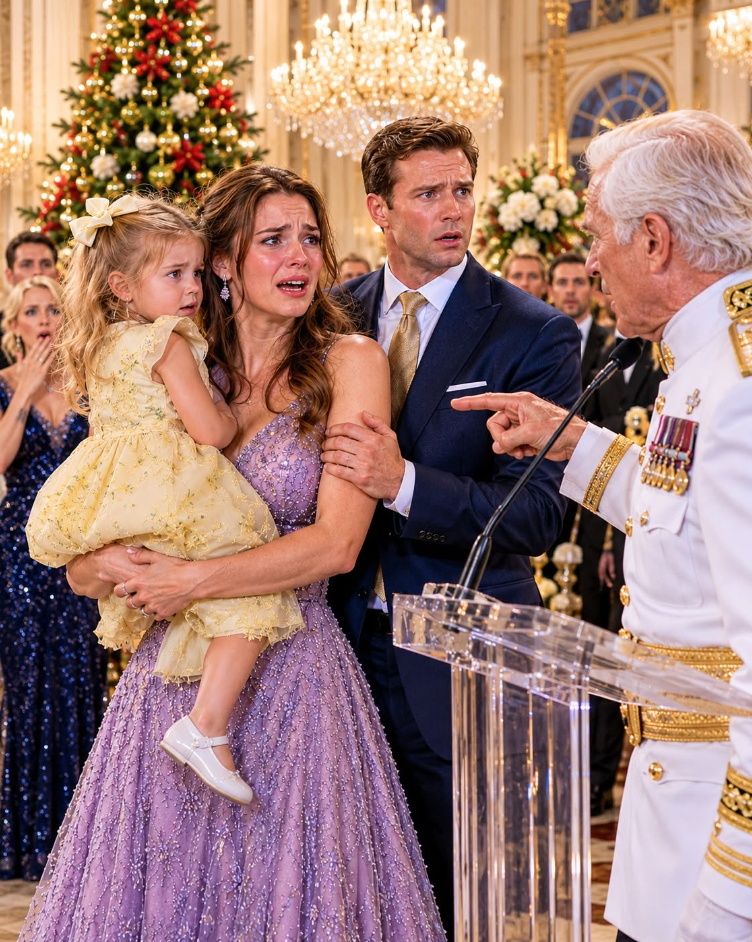
Crystal chandeliers shone above a crowded ballroom. White roses and evergreen branches decorated the tables, and a string quartet played near the stage. I crossed the threshold beside Franklin without anything covering my face. People looked around. A few glanced at my left side longer than I liked, but I continued walking. Across the ballroom, Everett stood with a hand on Paige’s chair. His smile disappeared the instant he recognized me. He hurried over, visibly tense. “What are you doing here?” he whispered. “Where’s the mask? You’re embarrassing me.” Before I could respond, the music stopped. Franklin approached the microphone. “Ladies and gentlemen, before we toast, I’d like to introduce someone very special: the daughter of our founder, and, next week, the majority owner of Seabrook Freight.” He gestured toward me. The spotlight moved, and I found myself standing in its brightness with Everett’s hand still around my arm.
For several seconds, the room’s applause seemed far away. Then I heard it clearly, gathering strength as guests stood. There was surprise and curiosity, and some people still looked at my face. Gradually, though, their attention shifted toward the reason Franklin had introduced me. He extended his hand toward the stage. “Lydia, would you join us?” Everett reached for me again. “Wait. You can’t just go up there.” I turned to him. “Why not?” He hesitated. “You’re not prepared.” I thought of learning to stand after the stroke, of practicing speech until my jaw ached, of holding my newborn while rebuilding confidence in my own body. Crossing a ballroom was something I could do. “I’ll manage,” I said. I started toward the stage, moving carefully because nerves sometimes brought stiffness into my left leg. Franklin waited at the steps with his hand extended. Beyond him stood the microphone, the waiting room, and the place where my father should have been.
PART 2 — What His Apology Could Not Hide
The absence of my father nearly overwhelmed me as I took my place beside Franklin. The applause continued while he spoke about Dad’s determination and integrity. Then he spoke about the difficulties I had faced and the courage it had taken to meet them. He did not present me as broken, nor did he invite the room to pity me. My recovery belonged to my story, but it was not the whole of who I was. When he asked whether I wanted to speak, I realized I had nothing prepared. My mouth felt dry, and the muscles on the left side of my face were tightening. I worried that the words would sound uneven or fail me altogether. Then I remembered the way Dad had talked about promises. I approached the microphone. “Good evening. My name is Lydia Mercer, and my father was Thomas Mercer.”
“Three years ago, I lost my father. Two years ago, after I gave birth to my son, I suffered a stroke. Recovery changed my life in ways I never expected. For a long time, I thought I had to look and feel like my old self before I could return to the world. Then I began to understand that the old version of me wasn’t coming back exactly as she had been—and maybe she didn’t have to.” My grip tightened. “I can still think. I can still work, love my family, make decisions, and keep a promise. My face changed. My responsibilities didn’t.” For a moment, no one moved. A woman near the front began applauding. The man beside her joined her, and then applause spread through the ballroom. Franklin squeezed my hand. “Well done,” he whispered. “I was terrified.” He replied, “Your father used to say courage wasn’t the absence of fear.” I managed a slight smile. “It’s doing what matters while you’re afraid.” Franklin nodded. “Exactly.”
Then Everett came to my side. “Lydia,” he said, using the softened, affectionate tone he reserved for moments when other people could hear. “Sweetheart, can we talk?” “Of course.” His eyes moved toward the people standing nearby. “Privately.” Franklin noticed him. “Everett.” My husband straightened. “Mr. Doyle.” Franklin said, “I believe you know Lydia.” Everett laughed stiffly. “Of course. She’s my wife.” Franklin regarded him for a moment. “Yes. She is.” Everett told me he was proud of me. The word felt heavy between us. Earlier that evening, he had insisted that no one should see my face. Now he was expressing pride while the chairman watched. Franklin asked whether I wanted to speak alone with him. I agreed, and Everett led me toward a quiet corridor, away from the conversations and music.
As soon as the ballroom was out of earshot, his public warmth disappeared. “What is going on?” he demanded. I folded my hands together. “You heard the announcement.” “Your father owned Seabrook Freight?” “Yes.” “Fifty-one percent?” “Yes.” “And you’re inheriting it next week?” I answered, “The trust transfers the shares on my birthday.” He stared. “You’ve been sitting on control of this company while I’ve been working myself to the ground trying to move up?” I felt the old impulse to apologize and make the conversation easier for him. This time, I let the feeling pass without obeying it. “My father’s ownership wasn’t something I was required to discuss with you.” Everett said, “I’m your husband.” “I know.” His expression sharpened. “You lied to me.” I replied, “I never told you the shares went to charity. You assumed that.”
His anger was unmistakable. I continued before my courage could falter. “I wasn’t ready to talk about the trust after Dad died. Then I became ill. And when I started to recover, I didn’t feel safe discussing it.” His face hardened. “What does that mean?” I held his gaze. “It means I didn’t know whether you would care about me or about what I owned.” He flinched, then frowned. “After everything I’ve done for you?” I considered him before answering. “What have you done for me, Everett?” He seemed honestly startled that I would ask. “I stayed.” There it was: his presence offered as if it should settle every question. He spoke as though remaining in our house and paying bills ought to have been enough, as though not leaving entitled him to my gratitude regardless of what living together had become.
“You stayed physically,” I said. “You stopped taking me anywhere. You stopped touching me. You stopped looking at me.” He protested, “That’s not fair.” I answered, “You told me to wear a mask.” His eyes moved toward the ballroom. “Keep your voice down. People can hear.” Even in that corridor, his first concern was whether somebody might notice. “I’ve spent two years whispering about what hurt me because you were afraid someone might notice,” I said. “You made me feel like an inconvenience in my own marriage.” He dragged a hand through his hair. “I didn’t know you were going to be introduced tonight.” For a moment, I could only stare. “What?” He said, “If I’d known, obviously I would have handled things differently.” I asked, “Handled what differently?” After hesitating, he answered, “The mask.”
I looked at him for a long time before asking the question that mattered. “Would you still have asked me to cover my face if I didn’t own the company?” His mouth opened, but he turned his eyes away instead of answering. That silence told me enough. “I need to go back inside,” I said. He caught my sleeve. “Wait. We need to talk about what this means. Your shares. Your position. My promotion.” I lowered my gaze to his hand and kept it there until he released me. “The only thing that’s changed is what you know about me. You knew I was your wife this morning. You knew I was Finn’s mother. You knew what happened to me in that hospital, and you still asked me to hide.” He warned me not to make a decision I would regret. Once, the possibility of losing our marriage, our home, and our shared life would have frightened me into silence. Now I understood how much of that life I had already been losing.
“The decision I regret,” I said, “is how long I believed I deserved to be treated this way.” I left him in the corridor and returned to the ballroom. A little later, Paige approached near the dessert table, gripping her purse in both hands. “Mrs. Mercer?” “Yes?” She said, “I’m Paige. I think I owe you an explanation.” Everett had told her that crowds were difficult for me and that I disliked being photographed. He said I would not be attending and asked her to help entertain guests at his table. “I thought it was just a work thing,” she explained. “He didn’t ask me to come as his date. I was already helping with the event.” I thanked her, and relief crossed her face. “I’m sorry if I made things worse.” “You haven’t.” She hesitated before explaining that my speech had reminded her of her grandmother’s recovery from a stroke. “Her face changed,” Paige said, “but she didn’t.” My eyes filled. She touched my hand lightly, wished me a pleasant evening, and went on her way.
I switched off my phone. Everett had sent message after message asking where I was, what I was saying, and whether I could stop talking to board members without him beside me. For so long, he had treated his professional life as something beyond my understanding. Now those same conversations troubled him because I was having them without his permission. Franklin came over to check on me. “How are you holding up?” “Better than I expected.” I explained that I did not want anyone believing I was using Dad’s shares to retaliate against Everett. Franklin asked whether that was my intention. “No.” He replied, “Then don’t. Your personal life matters, but it can’t become the standard by which business decisions are made. His work can be evaluated through the proper process.” I nodded. My worth did not depend on destroying Everett’s career, and protecting his career was not my responsibility either.
Franklin gave me a folded card. Its paper had softened with age, and when I opened it, I recognized Dad’s handwriting immediately. He had written: A person who loves you only when you’re easy to admire does not yet understand love. I read the sentence twice. “When did he write this?” “During one of our last conversations.” I asked, “Was he talking about Everett?” Franklin paused before answering. “Your father worried about you sometimes. But he knew you loved your husband, and he believed you needed to make your own decisions.” I kept the card in my palm, wishing Dad could have met Finn, heard him say “Mama,” and seen me standing beneath those lights. Franklin seemed to understand what I could not quite say. “He loved you exactly as you were,” he told me. “I know.”
A senior executive came to speak with Franklin. I remained where I was, but I heard Everett’s name and the word “promotion.” When Franklin returned a few minutes later, he asked whether my husband had told me he expected my support for his advancement. “No,” I said. “He mentioned the promotion, but I never promised him anything.” Apparently, Everett had suggested to a director that being married to me gave him particular insight into the company’s future. The board would make clear that I had endorsed no candidate and that the usual process remained in place. Sadness washed over me. When my face threatened to embarrass him, he had wanted me concealed. Now that my name might help him advance, he wanted to use it. “What happens now?” I asked. Franklin answered, “Nothing dramatic tonight. The board will assess the candidates as it normally would.”
I was grateful for his restraint. Hundreds of employees depended on the company, and decisions affecting them deserved care rather than the heat of our private conflict. I also knew I did not want every remaining moment of the evening to belong to Everett. Franklin introduced me to people who had worked with Dad in the first warehouse. I asked about those early days and listened to stories about drivers and routes. Other employees told me about their current work. Conversation by conversation, I began to understand that I could have a place there without pretending my recovery had returned me to exactly who I was before. I did not have to become an earlier version of myself to enter the life still available to me.
Close to eleven, I stepped onto the hotel balcony. Harbor lights trembled in the distance, and the cool air moved against my cheeks. The ballroom door opened behind me. I knew Everett’s footsteps before he spoke. “Lydia.” I kept my eyes on the water. “Hello, Everett.” He stood beside me for a while, then said he owed me an apology. He admitted that the mask had been wrong and that he had behaved cruelly. I told him the cruelty had not begun or ended with that one object. It included the excuses, the lost affection, and the expectation that I should make myself smaller so his colleagues would not have to see me. He lowered his gaze. “I don’t know how to fix this.” “Neither do I.” Music and voices drifted through the open door as he admitted he had feared being judged and had let ambition matter more than the people he claimed to love. I listened without mistaking regret for repair.
I went home after the gala. Everett returned close to two in the morning and found me still awake in the dim living room. I had imagined the applause and spotlight might leave me triumphant, but mostly I felt exhausted. The following morning, he waited in the kitchen while Finn slept. He looked like someone who had spent the night searching for the right words. He apologized again, this time for his behavior rather than merely for the way the evening had unfolded. When he asked whether our marriage could be repaired, I told him I did not know. For two years, I had changed my clothing, my makeup, and eventually how often I asked to leave the house with him. I had stopped asking because another excuse hurt too much. My confidence had diminished until even shopping alone could fill me with dread.
“I can’t make all of that disappear because you understand it now,” I said. Everett nodded. I explained that Finn needed stability, that we had to keep arguments away from him, and that I wanted Everett to live somewhere else for a while. He closed his eyes. Then he asked whether he would still be able to see his son. “Of course,” I said. “We’ll work out a schedule that makes sense for Finn.” Our little boy came into the kitchen carrying his stuffed elephant and ran straight to his father. Everett lifted him, and Finn put both arms around his neck. Their love mattered. So did the example we would give him. I watched them together, knowing I had asked for something I could no longer take back: the first real distance between the marriage I had endured and whatever life would come next.
PART 3 — The Smile I No Longer Hid
During the following days, Everett moved into a furnished apartment nearby. We worked out regular visits with Finn and tried to choose our words carefully whenever he was present. Some conversations were uncomfortable; others hurt. There was no sudden ease simply because I had finally said what I needed. Still, something important had shifted. Instead of organizing each decision around what Everett might prefer, I began considering what I wanted and what our son needed. Loving Finn meant more than telling him that respect mattered. It meant allowing him to see it in the way his parents treated each other, and in the way I treated myself. The separation did not answer every question about our future, but it gave me space to stop disappearing inside those questions.
There had been a time when simply holding a pen seemed beyond me. After the stroke, I had practiced my signature repeatedly, watching unsteady letters emerge from a hand I was still learning to control. Now those same hands were completing the transfer of fifty-one percent of Dad’s company. My handwriting remained imperfect. For once, I did not need it to be anything else. Franklin looked at the signature and smiled. “Welcome home, Lydia.” I began coming to headquarters regularly after that. I listened to department leaders, asked questions, and walked the loading docks. I wanted to understand the people who arranged routes, handled accounts, and kept freight moving. Dad had cared about the work and the people carrying it out. If I was going to accept the responsibility he had left me, listening seemed the right place to begin.
When Everett called to ask whether I had instructed the board not to promote him, I was sitting in Dad’s old office. The brass key rested on the desk. “No, Everett. I wasn’t involved in that decision.” He fell quiet. “You’ll need to ask the people who evaluated you,” I added. He began apologizing, but I gently interrupted him. “I’m not responsible for managing your career anymore.” “I know,” he said. Our separation continued. We saw counselors individually and later attended sessions together to improve the way we communicated as co-parents. Everett became more reliable with Finn and stopped commenting on my appearance. He began to understand that remorse only carried weight when behavior changed with it. I appreciated those efforts. But gratitude for improvement was not the same thing as wanting our marriage back. Trust required time, and I remained uncertain whether rebuilding it as his wife was what I wanted.
Spring came, and Finn turned three. He wanted explanations for everything: trucks, boats, cookies, and why my work was close to the water. One Saturday morning, I brought him to the harbor, where we watched a cargo ship travel slowly through the channel. “Big boat, Mama!” “Very big.” He asked, “What’s inside?” “Lots of things.” “Like toys?” “Sometimes.” He considered that before asking why boats brought things. I crouched beside him. “Because people are waiting for them, sweetheart. The people who bring them are keeping a promise.” Finn nodded with complete seriousness. “Good promise.” “Yes, baby. A good promise.” He put his arms around my neck. Standing there with him, explaining the work my father had begun, I felt a quiet peace that had been absent from my life for a long time. The harbor held a memory of being Dad’s daughter and the present reality of being Finn’s mother.
Everett and I had our final conversation about the marriage in early summer. We met at a quiet café while Mrs. Bellamy watched Finn. At first, we discussed preschool, books he liked, and his habit of asking “why” after nearly every sentence. Then Everett put down his coffee. “Lydia, I know things have changed.” “They have.” He said he still loved me. I believed he wanted to love me. I had spent months remembering our happier years alongside the lonely ones that followed: our wedding, our first house, and the night we discovered I was pregnant. Those memories remained real. So did the mask, the excuses, and the way I used to practice a smile before he came through the door. Remembering the good did not erase the rest. I could acknowledge both without letting either one make the decision for me.
“I believe you’re sorry for what you did,” I told him. “But I don’t think I can come back. I spent so long trying to become acceptable to you that I forgot how to accept myself. Now that I’m learning, I can’t return to a place where I was afraid to be seen.” A tear slid down his cheek. He said he wished he could change what had happened. “So do I,” I answered. We agreed to proceed with a divorce. We were not choosing it to wound or punish each other. I had finally understood that remaining married was not the only way to respect the life we had shared. We would always be Finn’s parents. We could still speak with consideration and make decisions that protected him. Ending the marriage did not mean pretending that nothing good had ever existed between us.
The months afterward were hard. Legal meetings filled parts of the calendar, along with discussions about holidays and schedules. Sometimes, after putting Finn to bed, I cried. I missed the man Everett had once seemed to be, or perhaps the man I had believed him to be. I allowed myself that grief without treating it as proof that leaving had been a mistake. Loneliness no longer meant failure. I stopped believing affection had to be earned through making myself easier to admire, and I no longer treated my changed face as evidence that I was less of a woman. Nearly a year after the Christmas gala, Seabrook Freight organized an event for employees who had served the company for twenty years or more. I was asked to speak. For the occasion, I chose the same midnight-blue dress I had kept carefully in my closet.
That dress reminded me of the evening I had decided to stop hiding. As I stood at the mirror fastening my earrings, I could still see all the differences the stroke had left behind. My left eye did not close fully. My mouth moved unevenly when I smiled. Yet I no longer saw a woman waiting to be repaired. I saw a mother, a daughter, a business owner, and someone who had learned how to stand again. Finn appeared in the doorway wearing blue pajamas, his stuffed elephant in his arms. “Mama?” “Yes, sweetheart?” He looked at my dress with wide eyes. “Pretty!” I laughed. “Thank you.” He ran toward me, and I picked him up. He reached for my left cheek, as he had always liked to do. Children notice so much. He must have recognized that the two sides of my face did not look quite alike, but to him, both belonged to his mother.
He leaned forward and kissed my cheek. Then he asked, “Mama, why you smile like that?” For a moment, I had no answer. I had known the question would come eventually and had imagined shame arriving with it. Instead, I sat on the edge of the bed with him and touched my cheek. “Do you remember when Mommy was very sick after you were born?” He nodded. “Hospital.” “That’s right. Something happened inside Mommy’s brain, and some of the muscles in my face stopped working the way they used to. So when I smile, this side moves a little differently.” He examined me carefully, then put his hand against his own face. “Mine moves.” “Yes, it does.” He stretched his mouth into the widest smile he could manage, and I laughed. The explanation had not frightened him. He was simply learning something about the face he had loved all his life.
Then he asked, “Mama happy?” My eyes filled. “Yes, sweetheart.” He nodded. “Then smile good.” I held him close as tears ran down my cheeks. He was not measuring my expression against an older photograph. He did not need my mouth to move the way it once had. He only wanted to know whether my smile meant happiness. My little boy had reached, in a few simple words, an understanding that had taken me two painful years to find. I had devoted so much effort to considering what strangers might see and what Everett might feel that I had nearly forgotten the purpose of a smile. Finn had not. To him, the important question was not whether it looked right. It was whether his mother was happy, and whether her face was telling the truth.
At the company event that evening, I spoke about loyalty, sustained effort, and the employees who had spent years fulfilling the promises Dad cared about. I thanked them and their families. When I stumbled over something small, I laughed, corrected myself, and kept going. Later, I smiled for photographs. A photographer asked if I wanted to turn toward the side of my face that photographed better. I shook my head. “This side is fine.” He accepted the answer and took the picture. The exchange was brief, but I knew how differently I might once have handled it. I would have searched for the safest angle, thought about what Everett would prefer, or worried that the picture would preserve something I ought to conceal. This time, I did not need to make those calculations. I had come to honor the employees, and I wanted to be present in the memory of that evening.
After Finn had gone to sleep, I sat in my room with the photograph. There I stood beneath warm lights in my blue dress, smiling. One side of my face lifted while the other remained still. I looked happy. Not unchanged, and not perfect, but genuinely happy. I placed the photograph beside an older picture of Dad. Nearby rested the brass key Franklin had given me and the card bearing Dad’s handwriting. I read it once more: A person who loves you only when you’re easy to admire does not yet understand love. Those words no longer felt like an accusation I needed to bring against Everett. They felt like something I could carry into the rest of my own life, a reminder of what love was supposed to include when admiration was no longer effortless.
I no longer hated Everett, and I did not want him to fail. I hoped he would keep becoming a better man and a better father. But his growth was no longer a task I had to supervise. My life was my responsibility now. Passing through the kitchen, I remembered the white plastic mask in the trash and the woman who had stood in the hallway feeling small and unwanted. Then I remembered walking into the ballroom, the spotlight finding me, and the moment I crossed toward the stage with my face uncovered. For a long time, I had believed that evening mattered because everyone discovered who owned Seabrook Freight. The more I understood it, the clearer another truth became. Money had not healed me. Shares had not made me beautiful. Owning part of a company had not supplied the dignity I lacked.
My dignity had been there before the announcement. So had my worth. I had simply lost sight of both while trying to fit inside Everett’s discomfort. He thought hiding me would protect the future he wanted for himself. Instead, his demand forced me to recognize that I needed a future of my own. Before going to bed, I checked on Finn and kissed his forehead. Then I returned to the mirror. I smiled, letting the expression be as crooked and uneven as it was. It carried the hours in the hospital, the rehabilitation appointments, the tears I had shed alone, and the work of learning to live as myself again. I could see all of that without wishing it erased. The woman in the reflection had survived those things. She did not need to apologize for looking like someone who had.
It was not the smile I had worn at thirty. It was the smile I had earned by surviving, and I loved it. My face was not something that needed covering. It was evidence that I was still here. The greatest victory was not holding fifty-one percent of Seabrook Freight, nor was it receiving applause from a ballroom full of people. It was the quiet freedom of looking at myself without hearing my husband’s judgment. In its place, I could hear my son. Mama pretty. He had been right without knowing anything about trusts, voting shares, promotions, or introductions beneath chandeliers. His certainty had nothing to do with whether I looked as I once had. I was worthy of love in the face I had now, in the life I was living now, without waiting to become easier for someone else to accept.
The night Everett handed me that mask, I had already spent a long time wearing one no one could see. I had pretended his words did not hurt, pretended our marriage was all right, and pretended I could manage without being truly seen. Throwing the plastic mask away had begun something larger than refusing a cruel request. Slowly, I had started taking off the invisible one as well. Beneath it was not a restored version of the woman I had been before the stroke, before motherhood, or before the lonely years of my marriage. Beneath it, after everything, I had found myself. And now I could no longer hide from what that discovery meant: the future ahead of me would finally have to be my own.
Disclaimer: This story is a work of fiction inspired by real-life themes. Names, characters, places and events are fictionalized, and any resemblance to real persons is purely coincidental. It does not represent any person or organization and does not encourage inappropriate behavior. Images are for illustration purposes only.