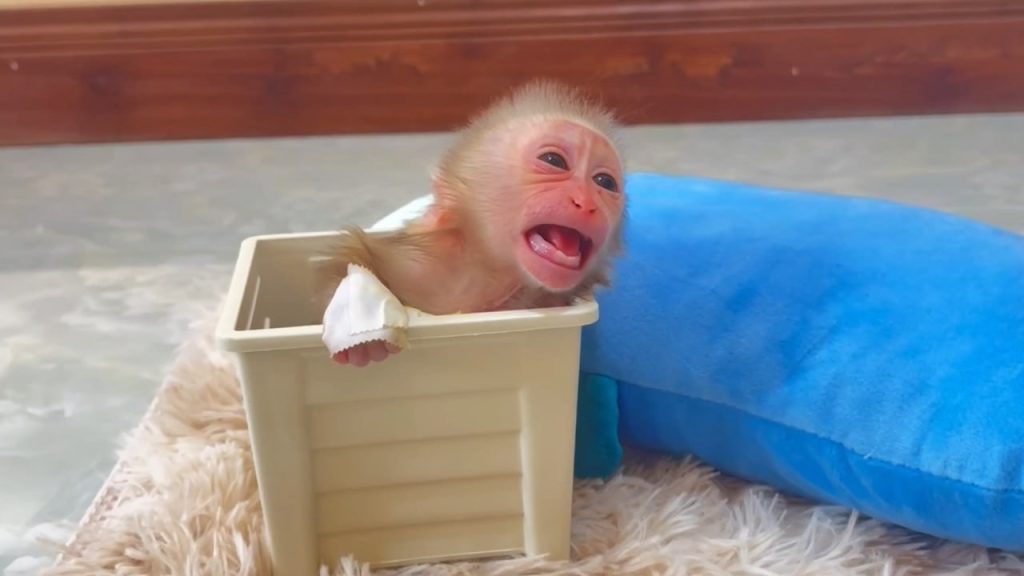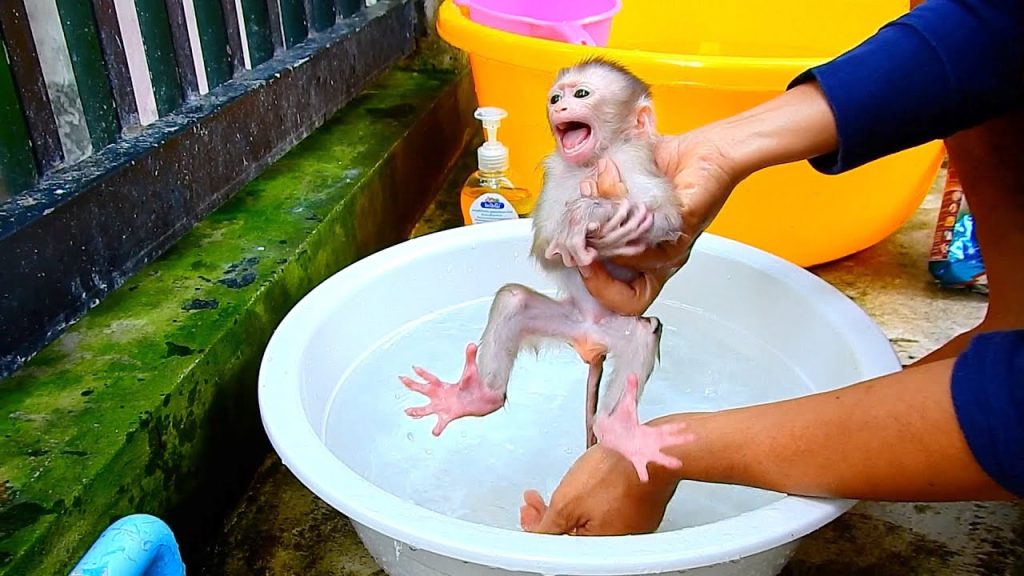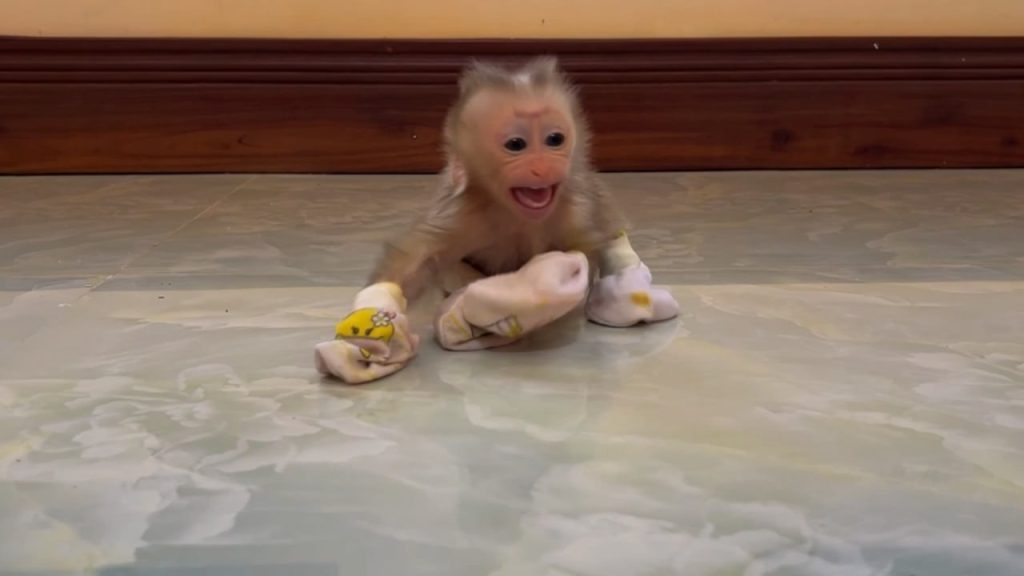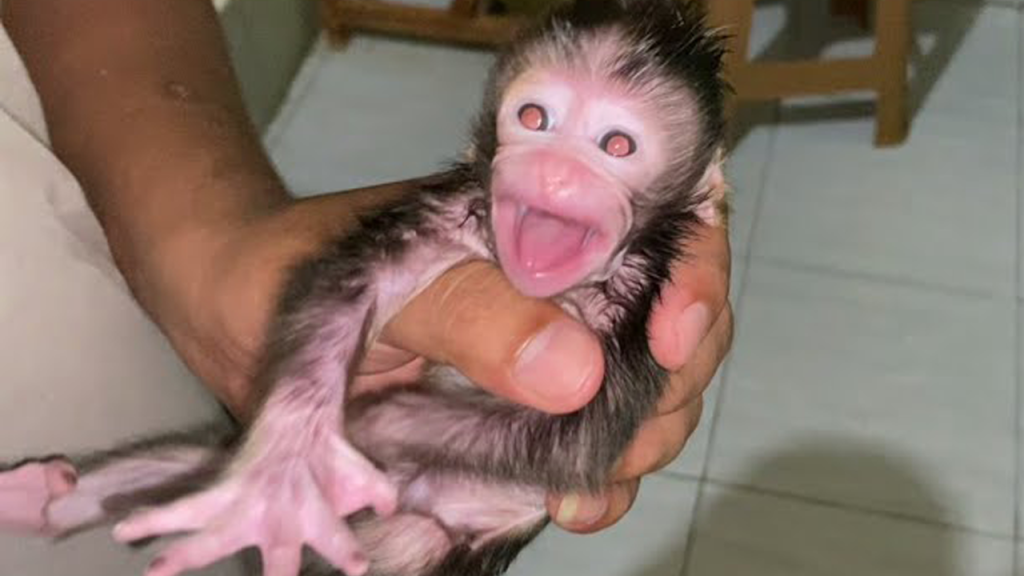
Little Loui was only a newborn when his life suddenly changed. This tiny long-tailed baby monkey had just been adopted, and he was beginning a completely new chapter with people who promised to care for him.
He was so small that his little hands seemed almost too delicate to hold anything. His eyes were bright and curious, but his expressions showed that he was still trying to understand the strange new surroundings.
When Loui first arrived, he remained very quiet. He looked around, moved his tiny fingers, and occasionally made soft calling sounds. Everything was unfamiliar. The voices, the room, the blankets, and the new faces were all different from what he had known before.
His new caregiver watched him carefully.
“Hello, little Loui. You’re home now,” the caregiver whispered.
Loui turned his head toward the voice. He didn’t know who this person was, and he wasn’t ready to trust anyone immediately. Instead of reaching for him or trying to make him smile, the caregiver gave him time to observe.
The family had prepared a special resting area before his arrival. It was warm, secure, quiet, and designed to prevent falls or accidental injuries. They also arranged for a veterinarian experienced with primates to guide his care.
Everyone understood that adopting a newborn monkey was a much bigger responsibility than simply welcoming a cute little animal into the house.
His First Evening
As evening approached, Loui began making more little sounds. Sometimes he looked toward the caregiver, and sometimes he seemed to be searching around the room.
The caregiver stayed nearby and spoke softly. Loui slowly became familiar with the sound of that voice.
When he became restless, the caregiver checked his condition. Was he warm enough? Was he hungry? Was he comfortable? Did he need medical attention?
Every little detail mattered because newborn monkeys are extremely delicate.
The caregiver followed the veterinarian’s feeding instructions and prepared the appropriate primate formula. Loui was offered his food only when he was alert and able to swallow safely. He was never forced to drink, and the caregiver carefully watched for coughing or difficulty feeding.
Afterward, Loui rested in his warm enclosure.
He looked so tiny and peaceful that everyone wanted to take pictures, but the family decided to keep visitors away and avoid unnecessary handling. His health and adjustment were more important than photographs.
The First Morning With His New Family
The next morning, Loui woke up and began making little noises again.
The caregiver approached slowly. This time, Loui seemed a little more interested in the familiar voice. He looked toward the person and moved his little hands.
“Good morning, baby Loui!”
The caregiver smiled.
Loui made a tiny sound, almost like a little greeting. It was a small moment, but everyone felt happy to see him becoming more comfortable.
Later, the family noticed that Loui enjoyed watching movement around his resting area. He followed the caregiver with his eyes and seemed curious whenever someone walked past.
However, nobody tried to make him interact before he was ready. They knew that a newborn monkey needed proper rest, a stable environment, and expert care.
A Little Scare During the Day
That afternoon, Loui suddenly began crying more loudly than usual.
The caregiver immediately checked him. At first, they wondered whether he was hungry, but they didn’t assume that hunger was the only possible reason.
They checked his temperature, breathing, alertness, and general behavior. They also reviewed his feeding schedule.
Because Loui was so young, the caregiver contacted the primate veterinarian for advice rather than trying random home remedies.
Fortunately, after being assessed and receiving the appropriate care, Loui gradually became calmer. The family learned another important lesson: every unusual cry from a newborn deserves attention.
They promised never to ignore signs of discomfort or illness.
A Promise to Protect Little Loui
As the days passed, Loui slowly became familiar with his surroundings. He began recognizing familiar voices and appeared more relaxed when his caregiver approached.
But the family also understood that his future needed careful planning.
Long-tailed macaques are wild primates, not domesticated pets. They need species-appropriate nutrition, complex environments, social relationships with their own kind, and specialized veterinary care. A loving home alone cannot replace those needs.
The caregiver began discussing a long-term welfare plan with qualified primate professionals, including the possibility of appropriate companionship and a suitable sanctuary or licensed facility if that would provide Loui with a better life.
The family wanted to do what was best for him, even if that meant making difficult decisions later.
One evening, Loui rested quietly while the caregiver sat nearby. His tiny fingers curled against his soft bedding, and his eyes slowly closed.
The caregiver looked at him and whispered:
“You are very small, Loui, but you deserve a big, safe, and happy future. We will do everything we can to protect you.”
Little Loui couldn’t understand those words yet. But his new beginning was no longer just about being adopted. It was about receiving the right care, growing safely, and having the opportunity to live a healthy life.
Welcome to the world, little Loui! Your story is just beginning, and the most important gift your new family can give you is a lifetime of responsible care and protection. ❤️