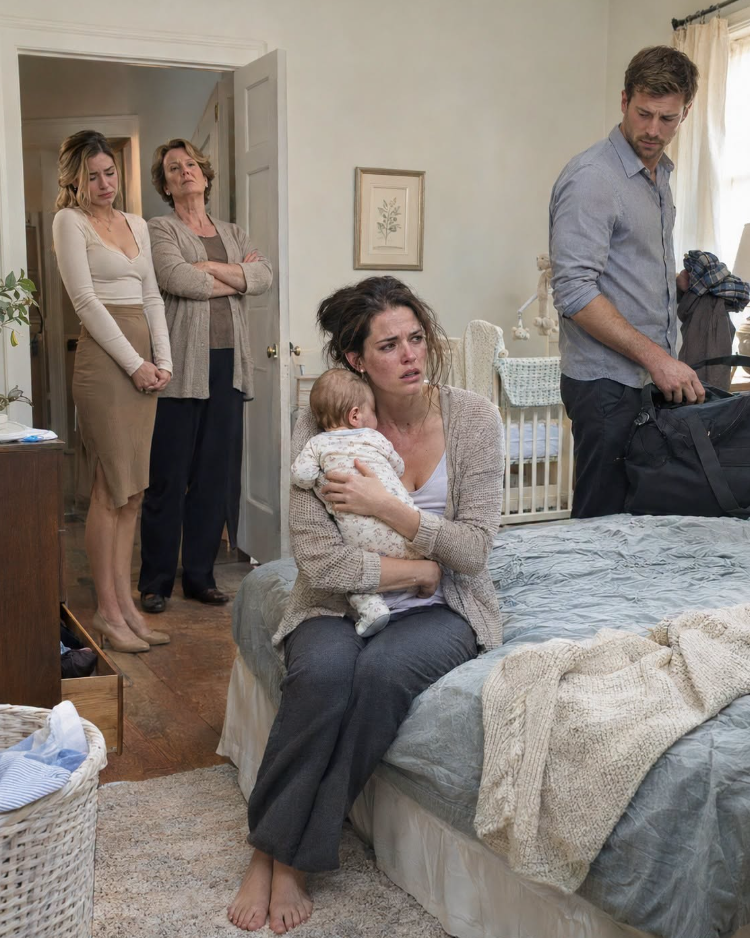
The man I had shared a home with for three years offered me ten million dollars to bring our relationship to an end, and I agreed before his attorney had even finished explaining the arrangement.
I signed the documents, accepted the payment, and moved away with our two children, never imagining that the money had been intended for an entirely different purpose or that discovering my departure would leave him deeply unsettled and his office in considerable disarray.
When Gabriel Mercer’s attorney arrived at the Nashville estate, I was standing at the kitchen counter preparing a warm bottle of formula for my youngest child.
“Miss Parker, Mr. Mercer has arranged for you to retain full custody of both children, and you will receive a one-time payment of ten million dollars with three days to vacate the property,” the attorney explained professionally.
I measured three scoops of formula into the bottle, carefully checked the temperature against my wrist, and gently mixed everything together. Hannah was becoming a little restless in her stroller, while Owen, my two-year-old son, sat nearby assembling a bright tower of wooden blocks.
“Miss Parker, did you hear what I just said to you?” the attorney asked gently, repositioning his briefcase.
“I heard everything you said, and I understand the arrangement,” I responded calmly as I approached the stroller.
“Then, regarding the details of the separation agreement, we should go over the specific clauses,” he suggested.
“Where exactly should I sign my name?” I asked, keeping my attention on my daughter.
The attorney appeared surprised and paused briefly before retrieving a substantial folder from his leather briefcase.
“I strongly recommend that you read the terms carefully because Mr. Mercer has also included some additional provisions for your future.”
“I don’t believe reading every one of those pages will be necessary,” I replied, handing Hannah her bottle before finally looking directly at him. “Once the money is transferred into my account, I will pack our things and leave tonight.”
The attorney seemed genuinely puzzled by how calmly I had accepted the unexpected arrangement.
“If you feel that the amount is insufficient for raising two children, we can certainly negotiate a higher figure.”
“Ten million dollars will provide more than enough for the three of us to establish a new life,” I answered quietly.
“And what about the father’s visitation rights moving forward?” he asked, preparing his gold pen.
“He can spend time with the children whenever we establish a schedule that is suitable for everyone,” I explained simply.
“Mr. Mercer would also like to know whether you have any final message you would like me to pass along to him,” the attorney added gently.
I considered his question for several moments as I watched Owen carefully place another red block on top of his colorful tower.
“Tell him I have nothing to say.”
Three years before that afternoon, I had entered the expansive Mercer residence carrying two well-used suitcases and possessing very little money in my bank account.
I was twenty-two, had recently completed college, and was struggling to cover the monthly rent for my modest apartment.
Gabriel Mercer was the only heir to one of the country’s most influential logistics corporations, and his grandmother was eager to welcome great-grandchildren who would continue the family’s legacy.
He was searching for someone willing to enter a private family arrangement without romantic expectations, while I was urgently seeking the financial stability I had never experienced.
On the first evening Gabriel visited my room in the east wing, he explained his proposal directly, without attempting to disguise the practical nature of the arrangement.
“Have a child with me, and I will give you one hundred thousand dollars for your trouble,” he said in a remarkably businesslike manner.
I accepted his proposal that evening, and nine months afterward, our son Owen arrived.
The Mercer family welcomed their newest member with an elaborate celebration that appeared in several prominent society publications, although my role as his mother was rarely acknowledged publicly.
Within that enormous residence, I remained Tessa Parker, the reserved young woman occupying the rooms in the east wing.
When Gabriel approached me for the second time, his grandmother had expressed her wish for Owen to have a younger sister with whom he could grow up.
“I want another child with you,” he told me with the same reserved expression.
I accepted his proposal again because Owen had already become the center of my world, and because, despite my reluctance to acknowledge it, I had developed genuine feelings for his father.
When Hannah arrived, Gabriel was unable to be present at the Nashville hospital.
Throughout the night, I waited in the quiet maternity room, looking hopefully toward the entrance whenever someone opened the door, but Gabriel never appeared.
His grandmother visited the next morning, briefly looked at the baby resting comfortably in her bassinet, and offered a surprisingly detached observation.
“A girl is fine, though at least we already have the male heir.”
She departed approximately ten minutes later, leaving me to complete the necessary hospital discharge paperwork independently.
That afternoon, while carrying my newborn daughter toward the waiting car, I understood that I could not continue hoping for affection from someone who had repeatedly been absent during the most meaningful moments of our family’s life.
In the afternoon Gabriel’s attorney delivered the agreement. I spent several hours organizing our belongings while members of the household staff observed my preparations with quiet astonishment.
Maria, the children’s nanny, became emotional as she stood beside the bedroom entrance watching me carefully fold Owen’s sweaters.
“Miss Parker, are you really leaving this house for good?” she asked with obvious concern.
“Yes, Maria, it is time for us to go,” I answered as I closed the larger suitcase.
“Does Mr. Mercer know that you are packing everything right now?” she asked, her expression growing increasingly worried.
“His lawyer just paid me ten million dollars to walk out that door,” I explained with a small, weary smile.
At seven that evening, as I was securing Owen comfortably in his car seat, my phone vibrated inside my coat pocket.
Gabriel had sent me a text message.
“Have you signed the papers?” his message read.
“Yes, I signed everything,” I responded promptly.
“Have you received the money in your account?” he asked shortly afterward.
“Yes, the transfer went through,” I confirmed.
Several moments passed before his final message appeared on the illuminated screen.
“Then leave.”
I studied those two words until the display dimmed, deciding that there was nothing more I needed to say.
After settling into the driver’s seat, I started the car and proceeded carefully through the estate’s impressive iron entrance gates.
As we reached the main road, Owen glanced through the window toward the brightly illuminated mansion behind us.
“Mommy, doesn’t Daddy want us to live at home anymore?” he asked in a quiet, uncertain voice.
His innocent question filled me with sadness, although I remained focused on the road stretching ahead of us.
“No, sweetheart, Daddy isn’t kicking us out, we are just going to live in a different house for a while.”
“Why do we have to leave our house?” he asked again softly.
When we stopped safely at the next traffic light, I turned slightly toward him and offered a reassuring smile.
“Because Mommy is very tired, and we need a fresh start somewhere sunny.”
Three days afterward, the children and I had comfortably settled into a peaceful beachfront resort in Key West.
Owen was happily enjoying the shallow section of the swimming pool under my supervision, while Hannah rested peacefully in her shaded bassinet beside my lounge chair.
For the first time in three years, I could relax without constantly wondering whether Gabriel might unexpectedly appear in the hallway outside my room.
As I browsed social media on my phone, I unexpectedly encountered an update shared by Lucas, Gabriel’s longtime personal assistant.
“Everyone should probably give the boss some space today because things have become rather unsettled in his office,” the caption explained beneath a photograph showing displaced office furnishings and paperwork scattered across the wooden floor.
Before I could reconsider what I was doing, my finger accidentally touched the like button beneath the photograph.
Approximately three seconds later, the post disappeared from my feed, and my phone began ringing on the little table beside my chair.
Gabriel was calling, and after I declined the incoming call, a text message immediately appeared.
“Do you think this situation is funny to you?” he asked with evident frustration.
“It was a complete accident, I didn’t mean to tap the screen,” I responded truthfully.
“Do you really think you can accept the money, leave without another conversation, and then find amusement in what has happened here?” he asked.
“I am not laughing at you, Gabriel,” I answered calmly.
Nearly five minutes passed without another response before a different question finally appeared on my screen.
“How are the children doing?”
“They are both doing fine and adjusting well,” I reassured him.
“Does Owen ever ask about me?” he wrote following a brief hesitation.
“Yes, he asks about you every day,” I acknowledged honestly.
“What do you tell him when he asks where I am?” Gabriel wanted to know.
“I tell him that you are busy working,” I responded.
Another lengthy pause followed before his next message appeared.
“Tessa, don’t you really have anything else to say to me after all this time?”
I looked toward Hannah, resting comfortably beneath the Florida sunshine, and found myself remembering the unfamiliar chill of the maternity room in Nashville.
I recalled watching a closed hospital door, repeatedly hoping that someone important to me would eventually arrive.
“Yes, I do have one thing to say, so next time a woman gives birth to your child, make sure you stay with her at the hospital because maternity rooms are terribly cold,” I wrote before sending the message.
Gabriel opened it within moments, but no further response arrived.
I closed my eyes, convinced that this brief exchange would probably be the final personal conversation between us.
Later that same evening, however, my phone rang again, and Gabriel’s attorney spoke with noticeable concern when I answered.
“Miss Parker, I need you to listen to me very carefully because I just reviewed the physical document you signed, and something is terribly wrong.”
I immediately sat upright against the headboard of my hotel bed, suddenly concerned about what he might have discovered.
“What happened? Is there a problem with the bank transfer?”
“Mr. Mercer has just discovered that you left the mansion for good,” the attorney explained urgently.
“He literally sent me a text message telling me to leave,” I responded, thoroughly confused.
“No, Tessa, that eviction order was never part of his original instructions to me,” the attorney clarified.
An unexpected feeling of uncertainty settled over me as I held the phone more closely.
“What on earth are you talking about? I read the first page myself.”
The attorney paused to collect his thoughts before continuing his explanation.
“The ten million dollars were never meant to be compensation for ending your relationship with him.”
“Then what were they supposed to be for?” I asked quietly.
His explanation left me sitting in complete silence inside the peaceful hotel room.
“Mr. Mercer put that money in your name so you could choose to stay with him without ever feeling financially dependent on him, but someone altered the agreement before you signed it, and that same person has just filed an urgent legal petition seeking full custody of both your children.”
The Woman Who Wanted to Keep My Children
For several moments, I found myself unable to respond as the attorney’s unexpected explanation settled over me in the quiet hotel suite.
Hannah was resting peacefully in her portable crib near the window, while Owen slept comfortably across the spacious bed with his favorite stuffed green dinosaur.
A ten-million-dollar payment, an instruction to leave the family estate, and an unexpected custody petition suddenly seemed like interconnected developments in a carefully arranged situation that nobody had explained to me.
“Explain yourself right now,” I finally said, speaking quietly enough to avoid disturbing the sleeping children.
The attorney, Simon Bennett, remained silent for several uncomfortable seconds before releasing a weary breath.
“The original document I drafted at Gabriel’s explicit instruction stipulated an irrevocable transfer of ten million dollars in your favor, primary physical custody of the children for you, and the legal right to continue living in the mansion for as long as you wished.”
I held the phone firmly against my ear, attempting to understand the significance of his explanation.
“Continue living there with him?”
“Yes, without any romantic, personal, or financial obligation to Mr. Mercer whatsoever, and I had even arranged for the entire east wing to be legally separated into a private trust for you and the children,” Simon continued.
I released a quiet, disbelieving laugh as I considered the enormous difference between the two arrangements.
“Well, the document you placed on the kitchen counter in front of me clearly stated that I had three days to pack my bags and leave.”
“I know that now, and I take full responsibility for my negligence,” Simon acknowledged with evident regret.
“How could a lawyer of your standing not notice that the terms had been changed?” I questioned firmly.
“There were two separate versions of the digital file saved on our server, and the physical copy you signed was swapped out after my final review, so I made the catastrophic mistake of not reading the printed pages again before driving out to the mansion,” he explained.
“Who replaced the pages in that folder?” I asked, already suspecting whose name might eventually emerge.
“That is precisely what our forensic team is trying to prove right now,” Simon answered cautiously.
“Please be straightforward with me, Simon, because I deserve to understand who may be responsible for this situation,” I insisted.
His response came after another extended silence on the telephone.
“We strongly suspect that Miriam Mercer is behind the entire scheme.”
The possibility that Gabriel’s grandmother had arranged everything did not particularly surprise me as I sat in the softly illuminated room.
She had never welcomed me as an equal member of their household, yet she had also been unwilling to consider the possibility of her great-grandchildren living somewhere beyond her immediate influence.
From her perspective, Owen and Hannah represented the future of the Mercer family, while my position as their mother had frequently been treated as secondary.
“Tell me about this custody lawsuit she just filed,” I requested, making a conscious effort to remain composed.
“Miriam filed an emergency motion through her own private attorneys, alleging that you removed the children from their habitual residence purely for financial gain and without a valid custodial agreement from their father,” Simon explained seriously.
“That is absurd because I have a signed legal document right here in my suitcase!” I responded with understandable frustration.
“That is precisely why we need to examine your copy immediately, because Miriam is challenging the validity of the separation clause while claiming Gabriel never authorized taking the children out of Tennessee,” he clarified.
I moved the blankets aside, stood beside the bed, and began walking slowly across the carpeted hotel room.
“And what does Gabriel have to say about his grandmother’s little ambush?”
“He told me that no one on this earth has the right to take your children away from you,” Simon answered gently.
That unexpected sentence stirred a familiar feeling of affection that I had been trying very hard to leave behind.
After spending three years quietly hoping Gabriel would acknowledge and support me, a few words delivered through his attorney were enough to remind me of feelings I had never completely resolved, and I found myself frustrated by my own reaction.
“Tell him that I do not need him to ride in and save me, I just need him to sign whatever sworn statement is required to protect our children from his grandmother,” I replied firmly.
“He is already working with our litigation team to prepare a formal affidavit,” Simon reassured me.
“Then make sure he files it with the court first thing tomorrow morning, and please do not call me again just to relay his personal feelings,” I requested before concluding the conversation.
For a long moment, I remained beside the bed, observing Owen as he slept with one hand resting on his stuffed dinosaur and the other extended toward the place where I had previously been sitting.
I quietly returned to the bed beside him, and within moments, he moved closer and settled comfortably against me.
“Mommy, can we go swim in the ocean again tomorrow morning?” he murmured sleepily without opening his eyes.
I gently embraced him and placed an affectionate kiss on his hair.
“Of course we will, sweetheart, we can spend all morning by the water.”
I offered him that quiet reassurance, although the unexpected legal developments had left me uncertain about what the coming days might bring.
Miriam’s Ultimatum
At precisely eight o’clock the following morning, Miriam Mercer called my phone and immediately began discussing the situation without offering her usual formal greeting.
“Tessa, you have made a very serious mistake by leaving the estate under these circumstances,” she declared in her distinctly authoritative voice.
I was standing beside the kitchenette counter, preparing small pieces of buttered toast for Owen’s breakfast.
“Good morning to you too, Miriam.”
“Do not play games with me, young lady, and tell me right now where you have taken the children,” she demanded impatiently.
“We are sitting at the table having breakfast together,” I answered calmly, placing Owen’s plate in front of him.
“You know perfectly well what I am asking you,” she responded sharply.
“And you know perfectly well that I am their mother, which means they are safe with me,” I reminded her evenly.
I could hear Miriam pause on the other end of the conversation, apparently attempting to regain her usual composure.
“Those children are the direct bloodline descendants of the Mercer family, and their place is here in Nashville.”
“They are also my children, Miriam, and I have raised them every single day since they were born,” I replied firmly.
“Someone with your limited financial background cannot provide the educational opportunities, social connections, or long-term advantages they would receive here,” she asserted dismissively.
I glanced toward the little dining table, where Owen had accidentally tipped over his orange juice and was carefully attempting to clean it with a paper napkin.
Beside him, Hannah was happily exploring her plastic spoon while sitting comfortably in her highchair.
“How strange that you feel that way now, because for three years I was good enough to wake up with them at night, feed them, take them to every doctor appointment, and nurse them through fevers, yet suddenly I am unfit to raise them,” I replied, allowing some of my disappointment to become apparent.
“Providing everyday care is not the same as being an established member of a family like ours,” Miriam answered without reconsidering her words.
Her remark affected me more deeply than I had anticipated, not because I valued her judgment, but because I had spent far too long quietly accepting that uncomfortable position within her household.
“You are completely right about one thing, Miriam, because I never belonged to your family, though my children certainly belong to mine,” I responded steadily.
“Bring Owen and Hannah back to the mansion immediately, and I will personally ensure that you are allowed to keep every penny of that ten million dollars,” she proposed.
I became completely still beside the kitchen counter, surprised by the implication of what she had just suggested.
“What did you just say to me?”
“Ten million dollars is an unimaginable fortune for someone like you, enough to buy a lovely home, travel the world, and start a brand new life, plus you are still young enough to marry and have more children of your own,” she explained with the detached manner of someone discussing a business transaction.
I looked toward Owen, who had successfully cleaned most of the spilled juice and was proudly holding up his damp paper napkin.
I offered him an encouraging smile and a cheerful thumbs-up before returning my attention to the conversation.
“Listen to me very carefully, Miriam, because you can keep all of your Mercer properties and hire every expensive lawyer in the state, yet you will never again treat my children as if they are mere assets in your estate,” I told her with quiet determination.
“You may reconsider your decision when the court reviews the custody arrangement,” she replied sternly.
“I have already regretted plenty of choices in my life, including ever stepping foot inside your mansion, waiting for Gabriel in empty hospital rooms, and confusing financial security with a real life,” I explained, taking a moment to collect myself.
“However, I will never regret having Owen and Hannah, and you will never take them from me.”
I ended the conversation before she could respond, suddenly recognizing that, for the first time since meeting Miriam Mercer, I felt completely confident about standing by my own decisions.
The Man on the Other Side of the Door
Gabriel traveled to Key West that very afternoon, although I learned about his arrival through someone other than Gabriel himself.
His assistant Lucas sent me a message containing an informal photograph of his employer sitting wearily in an armchair in the resort lobby, dressed in a slightly wrinkled white shirt and looking unusually tired.
“He has been sitting down here in the lobby for two full hours because he refuses to come up to your room without your explicit permission,” Lucas explained beneath the photograph.
I examined the image on my phone with considerable disbelief.
Gabriel had always maintained an exceptionally polished appearance, favoring individually tailored dark suits, immaculate leather shoes, and expensive Swiss watches that could easily exceed the value of an ordinary home.
In the photograph Lucas had shared, however, Gabriel looked like someone who had temporarily forgotten about maintaining that carefully cultivated appearance.
“Tell him he can come up to see the children tomorrow morning for one hour, provided that I am present the entire time,” I responded.
“Understood, Miss Parker, I will let him know right away,” Lucas replied almost immediately.
Approximately twenty minutes later, however, I heard a gentle, uncertain knock at the entrance to my hotel suite.
Expecting a member of the housekeeping staff to deliver the additional towels I had requested, I opened the door and unexpectedly discovered Gabriel standing in the corridor.
My immediate inclination was to close the door and return to the peaceful afternoon I had been enjoying.
“I explicitly told Lucas that you could see them tomorrow morning,” I reminded him firmly while remaining in the doorway.
“I know you did, Tessa,” he answered, sounding unusually tired and speaking with a slightly hoarse voice.
“Then what are you doing standing outside my door right now?” I questioned.
“I just needed to see with my own eyes that you and the kids were safe and okay,” he explained quietly.
“Simon already spoke to me last night and confirmed to you that we are doing fine,” I reminded him without stepping aside.
Gabriel glanced beyond my shoulder into the naturally illuminated suite, where Owen was sitting on the woven carpet, pretending that his plastic dinosaur was walking across the floor.
The moment Owen recognized his father standing near the entrance, he set aside his favorite toy and looked up excitedly.
“Daddy!” Owen exclaimed happily as he stood and hurried across the room.
Gabriel immediately knelt in the entranceway, welcoming Owen as the little boy wrapped his arms affectionately around his father’s shoulders.
For the first time since we had met, I watched Gabriel briefly close his eyes, visibly moved by the unexpected warmth of his son’s greeting.
“I thought you were busy working far away,” Owen said, leaning back slightly to study his father’s tired expression.
“I was working very hard, buddy,” Gabriel answered gently, smoothing Owen’s slightly untidy hair.
“Are you all finished with your work now?” the little boy asked hopefully.
Gabriel paused for a brief moment before offering his son a quiet reassurance.
“Right now, I am right here with you.”
Owen took Gabriel’s hand and enthusiastically encouraged him to follow him toward the living area.
“Come look, Daddy, because Hannah already knows how to sit up all by herself without falling over.”
I moved aside and looked directly at Gabriel, making certain that he understood the conditions of his visit.
“You have exactly one hour with them, and after they go to sleep, you and I are going to talk.”
He accepted my instructions with a silent nod and followed Owen into the comfortable hotel suite.
There were no elaborate declarations or carefully rehearsed apologies during the hour that followed.
Gabriel sat comfortably on the carpet and helped Owen assemble a tall tower of wooden blocks, playfully rebuilding it whenever his delighted son asked to start again.
When Hannah awakened from her afternoon nap, Gabriel carefully picked her up, taking a few moments to adjust his position so she could rest comfortably in his arms.
It was remarkable to observe someone who confidently managed thousands of employees and oversaw complicated corporate transactions becoming uncertain about fastening the tabs of an ordinary baby diaper.
I remained nearby, allowing Gabriel to become familiar with the simple responsibilities and meaningful everyday experiences he had previously missed.
When Hannah eventually fell asleep again, Gabriel settled onto the sofa and spent several quiet minutes looking affectionately at his daughter’s peaceful expression.
“She has grown so much since I last held her,” he observed softly.
“Babies tend to grow quickly when you actually spend time watching them,” I answered evenly.
Gabriel looked down at Hannah’s little fingers and remained thoughtfully silent.
The Price of Freedom
After both children had settled comfortably for the night, Gabriel and I stepped onto the private balcony to continue our conversation.
I left the sliding glass door slightly open so I could hear the children, while Gabriel stood beside the railing overlooking the evening ocean and I settled into a wicker chair.
“I did not fly down here to beg you to come back to Nashville with me,” he began quietly, finally breaking the silence.
“I am genuinely glad to hear that, because my answer would be no,” I replied calmly.
“I came here because I owe you an honest explanation about that ten million dollars,” he continued, turning away from the ocean to face me.
“I am listening, Gabriel, so go ahead and explain,” I responded, resting my folded hands in my lap.
He rubbed his tired face thoughtfully before leaning against the balcony railing.
“When I first approached you three years ago, I honestly thought our arrangement was simple and fair. You needed financial stability, my family needed an heir, and I foolishly believed that as long as I kept my end of the bargain, everything would work out fine.”
“It certainly worked out fine for you and your grandmother,” I observed without enthusiasm.
“I realize how selfish that was now,” he acknowledged without attempting to defend himself.
I shook my head slowly, remembering the circumstances under which we had originally met.
“Gabriel, I was twenty-two years old, living in a cramped rented room, and weeks away from being evicted onto the street. You walked in offering a sum of money I could barely comprehend, so did you truly believe we were negotiating as equals?”
He lowered his gaze toward the balcony tiles and offered no explanation.
“I accepted your offer, and I am not going to pretend that someone forced me to sign that first contract, yet you never once cared to ask how I was feeling after our children were born,” I continued, carefully maintaining my composure.
“I honestly thought you preferred keeping a polite distance between us,” Gabriel admitted quietly.
“Who on earth put that ridiculous idea into your head?” I asked, genuinely astonished by his explanation.
“My grandmother told me that repeatedly,” he revealed.
I studied him across the softly illuminated balcony, surprised that he had accepted someone else’s interpretation of my feelings without questioning it.
“And it never once occurred to you to walk down the hall and ask me directly?”
Gabriel remained quiet for a moment before answering with evident regret.
“No, it never did, and that was my mistake.”
It was the first occasion I could remember when Gabriel had openly acknowledged a personal mistake without attempting to explain it away through his demanding professional responsibilities.
“When Owen was born, Miriam called me and insisted that you did not want me inside the delivery room because you were exhausted and wanted total privacy,” he explained, his expression growing increasingly remorseful.
I felt a familiar sadness returning as his words offered an entirely different explanation for one of my most difficult memories.
“I asked the nurses about you three separate times during labor, Gabriel.”
He looked up immediately, his expression revealing genuine surprise.
“What did you just say?”
“I asked the delivery nurse, I texted Lucas, and I even called your personal cell phone twice while I was in labor, yet nobody ever answered,” I explained quietly.
Gabriel appeared genuinely overwhelmed by information he had apparently never received.
“I was overseas in London closing a shipping merger, and Miriam swore to me that you were too nervous to have me watching you give birth.”
“And what is your excuse for when Hannah was born right there in Nashville?” I asked softly.
He rested both hands against the balcony railing before explaining what he remembered about that particular afternoon.
“That afternoon I was locked in an emergency board meeting, and Miriam sent word through my secretary that the delivery had gone smoothly and that you had left strict instructions for no visitors.”
I found myself experiencing an unexpected mixture of sadness and disbelief.
“Do you know what the worst part of all this is? Even if Miriam lied to you twice, you never once bothered to check on me yourself afterward.”
“You are completely right, Tessa,” he acknowledged quietly.
“No, Gabriel, this is not about me winning an argument or being right,” I explained, struggling briefly to express everything I had kept to myself.
“This is about me being completely alone in a hospital bed twice, and then returning to a massive house where I was not even invited to sit at the dinner table with you.”
He lowered his head as the gentle ocean breeze moved the lightweight curtains behind us.
During the previous three years, an expression of regret from Gabriel might have persuaded me to overlook my disappointment and continue hoping things would improve, but that evening I remained committed to understanding the complete situation.
“Explain the ten million dollars to me right now,” I requested quietly.
Gabriel approached the seating area and lowered himself into the chair across from mine, resting his elbows against his knees.
“Six months ago, I accidentally discovered that my grandmother was quietly drafting a legal agreement designed to push you out of the children’s lives the moment Hannah turned one year old.”
I remained completely still, trying to understand the implications of his discovery.
“What kind of legal agreement was she planning?”
“She intended to pressure you into signing a waiver relinquishing all parental decision-making rights regarding their schooling, medical care, and primary residence, in exchange for a modest monthly stipend and supervised weekend visits,” Gabriel explained seriously.
His revelation reminded me of the numerous occasions when Miriam had confidently discussed sending Owen to a prestigious Swiss boarding school.
I also remembered how frequently she spoke about Hannah’s future in terms of the family’s social connections and long-term business interests rather than the personal choices Hannah might eventually wish to make.
“Why didn’t you warn me about what she was plotting?” I asked firmly.
“Because I arrogantly believed I could neutralize her plan behind the scenes before it ever caused you any stress,” he acknowledged.
“Always making life-altering decisions for me without ever asking my opinion,” I observed with disappointment.
Gabriel briefly closed his eyes before accepting the truth of my observation with a slow nod.
“Yes, I always tried to control everything, so I instructed Simon to establish an independent trust fund, transferred ten million dollars directly into your name, and added ironclad clauses ensuring no one in my family could ever touch a cent of it. I wanted you to have complete financial freedom to choose your own path, even if you decided to walk away from me.”
“Then why did Simon tell me the original contract included terms for a separation?” I questioned, still trying to understand the contradictory explanations.
“Because the genuine agreement gave you every possible option without strings attached, meaning you could stay in the mansion, move into your own home, or build a completely independent life while retaining full custody and financial security,” Gabriel explained sincerely.
“And you genuinely thought giving me ten million dollars would convince me to stay with you?” I asked, looking at him with considerable disbelief.
Gabriel met my gaze directly, allowing the reserved expression he usually maintained around other people to finally disappear.
“I hoped that you would stay.”
Those five unexpected words remained between us in the pleasant evening air.
“I foolishly thought that if I gave you the complete freedom to walk away and you still chose to remain under my roof, maybe I could finally find the courage to start over with you as a real partner,” he admitted quietly.
I slowly shook my head, attempting to comprehend the extraordinary misunderstanding that had developed between us.
“So you decided to transfer ten million dollars into my bank account before ever telling me with your own mouth that you wanted me to stay?”
“I have never known how to ask someone to stay in my life, Tessa,” he confessed softly.
“Well, you really should have learned how to use your words instead of your checkbook,” I answered gently.
Gabriel acknowledged my remark with a slow, regretful nod.
“I know that now.”
My eyes became noticeably moist, not because his explanation suddenly erased three years of emotional distance, but because it finally confirmed something I had struggled to understand.
We had occupied the same enormous residence for three years, separated by an emotional barrier that neither of us had known how to overcome, although only one of us had possessed the financial independence and authority to change our circumstances without considerable personal uncertainty.
And throughout those years, that person had never been me.
The Replaced Page
Two days afterward, Simon sent scanned versions of both agreements to my email address, allowing me to examine the original document alongside the revised copy I had signed at the Nashville estate.
Comparing the two versions on my laptop filled me with renewed frustration as the significant differences became increasingly apparent.
The authentic agreement included a straightforward provision positioned near the beginning of its third page.
“The beneficiary may remain in the family residence indefinitely or establish her primary domicile wherever she deems appropriate, without either choice affecting her financial settlement or sole physical custody rights.”
In the modified document I had received, that entire provision had been removed and replaced with a considerably more restrictive sentence.
“The beneficiary agrees to vacate the family residence within a maximum period of seventy-two hours.”
Furthermore, an additional confidentiality provision had been inserted, apparently intended to restrict my ability to discuss matters involving the Mercer family publicly.
The most concerning discovery involved the electronic document history examined by Simon’s digital investigation specialists.
According to their preliminary findings, the changes appeared to have originated from a computer assigned to Miriam’s longtime executive assistant.
Gabriel’s attorneys retained the original dated draft and the relevant electronic revision records on their firm’s server, although further investigation was necessary to establish precisely how the printed agreement had been replaced before Simon traveled to the residence.
Simon contacted me that evening to explain another important development in their continuing review.
“Tessa, our handwriting expert just finished examining the signature page you scanned for us.”
“What did the expert find?” I asked, sitting beside the writing desk in the hotel suite.
“Mr. Mercer initially signed the authorization establishing your trust fund and confirming your primary custody rights, which means he never signed the page ordering you to vacate the property,” Simon explained professionally.
“Are you telling me that the signature on the agreement I signed was a forgery?” I asked with considerable surprise.
“The preliminary examination suggests that the signature was reproduced from an existing document, and our specialists are currently preparing their findings for the court’s review,” he confirmed.
A growing sense of concern settled over me as I began to understand the potential extent of the document alterations.
“Did she orchestrate this entire forgery just to get me out of the house?”
“We believe she arranged for the departure clause to be inserted because she expected you to leave immediately, potentially allowing her attorneys to present your decision as evidence that financial considerations had influenced your choice to relocate the children,” Simon explained carefully.
“Yet Gabriel sent me a text message that evening explicitly telling me to leave,” I reminded him quietly.
“Because when you texted him confirming that you had signed the papers and received the wire transfer, he assumed you had freely chosen to walk away under the terms of the genuine agreement,” Simon clarified.
I pressed my lips together thoughtfully as the extraordinary misunderstanding between Gabriel and me finally became clear.
Gabriel had believed I had accepted the financial arrangement and independently chosen to leave, while I had understood the payment as his way of formally ending our relationship, and Miriam appeared to have relied on our longstanding lack of communication to prevent either of us from discovering the discrepancy.
“Simon, why would Miriam go through the trouble of forging legal documents when she has enough wealth and influence to simply file a custody petition directly?” I asked, still attempting to understand the reasoning behind her apparent involvement.
“Because she understood that Gabriel would immediately oppose her petition, so she apparently wanted documentation suggesting that you had voluntarily ended your association with the family in exchange for financial compensation, hoping that interpretation would influence the court’s assessment,” he explained.
I looked down at the printed documents arranged across the hotel desk, feeling a renewed sense of confidence and determination as I considered the evidence now available to us.
“I am not going to let that woman twist a desperate choice into proof that I do not love my children.”
The Courtroom Hearing
The emergency custody hearing was arranged for three weeks later in Nashville, and throughout that period, Gabriel respected his promise by never asking me to return to the mansion or attempting to influence my living arrangements.
Instead, he rented a comfortable furnished apartment approximately ten minutes from the boutique hotel where the children and I were temporarily staying, visiting them according to the schedule we had established together.
On some occasions, he brought colorful wooden toys and illustrated books for Owen, while on others, he arrived with fresh fruit, diapers, and comfortable cotton sleepwear for Hannah.
One afternoon, I entered the living area and discovered him sitting at the kitchen table, carefully reviewing the instructions on a bottle of children’s medication.
“What are you doing with that bottle?” I asked curiously from the doorway.
“Owen seemed a little warm after his afternoon nap, so I am reviewing the pediatrician’s instructions to make sure I understand everything correctly,” Gabriel explained without lifting his eyes from the packaging.
“The pediatrician already wrote the exact instructions on the medical information sheet in the kitchen drawer,” I reminded him gently.
“I know she did, I just want to verify it myself to be completely certain,” he answered thoughtfully.
I remained quietly beside the doorway, observing him approach this ordinary parenting responsibility with the same careful attention he usually devoted to major corporate agreements.
It was a familiar task I had managed independently throughout the previous three years, so I did not feel the need to congratulate him for becoming involved in his children’s everyday care.
Nevertheless, when Owen felt uncomfortable again later that evening, Gabriel remained beside his bed with me until morning, and for the first time since we had met, he never once checked his business phone.
On the morning of the hearing, Miriam arrived at the family courthouse wearing an impeccably tailored charcoal suit and two elegant strands of pearls.
Her appearance suggested that she was attending a prestigious social gathering rather than participating in a significant family custody dispute.
Her attorney promptly submitted enlarged photographs from our stay at the Key West resort, copies of the bank transfer confirmation, and a screenshot of Lucas’s subsequently deleted social media update showing Gabriel’s disorganized office.
According to the argument presented by her legal representative, I had accepted a substantial financial payment before relocating two young children from their established residence without adequate consultation.
My attorney, Hannah’s godmother and experienced family law specialist Claire Dawson, responded calmly by presenting the complete original trust agreement, the authorization for the financial transfer, and the full record of messages exchanged between Gabriel and me.
She also provided the children’s relevant healthcare documents, daycare attendance records, and formal statements from household caregivers confirming that I had consistently been responsible for their daily care since birth.
Miriam maintained her composed expression at the opposing counsel’s table until Claire approached to question her directly under oath.
“Mrs. Mercer, can you explain to this court why the original clause allowing Miss Parker to remain in the family residence was deleted and replaced with a seventy-two-hour eviction order?” Claire asked professionally.
Miriam rested her carefully manicured hands together on the table before answering.
“I am completely unaware of the administrative drafting details handled by my grandson’s legal team.”
“The electronic document history indicates that the changes originated from your executive assistant’s computer,” Claire explained evenly.
“Dozens of household staff and consultants have access to the computers in my private wing,” Miriam responded with remarkable composure.
“Are you also claiming to be unaware that two days prior to filing this lawsuit, you personally telephoned Miss Parker and offered to let her keep the ten million dollars if she surrendered the children to your custody?” Claire continued, displaying a printed transcript.
Miriam’s expression became noticeably more restrained, although she continued sitting with her chin raised.
“My sole intention has always been to protect the well-being and heritage of my great-grandchildren.”
Claire approached the judge’s bench and submitted a printed internal email provided by a junior attorney who had recently withdrawn from Miriam’s legal team because of concerns about the proceedings.
She then read Miriam’s recorded statement aloud to the attentive courtroom.
“If she accepts the money and leaves the kids behind, we will have undeniable proof for the judge that those children were never her true priority.”
I felt increasingly emotional, not because Miriam’s opinion of me was entirely unexpected, but because she appeared to believe that my previous financial difficulties could permanently undermine my credibility as a mother.
From her perspective, my earlier need for financial stability seemed incompatible with the genuine affection and dedication I had always shown my children.
Claire continued reading the remaining sentence from the correspondence.
“Once she is discredited, Gabriel will eventually accept that the children belong permanently under our roof.”
At that moment, Gabriel rose from his seat and respectfully requested permission to address the court.
After receiving the judge’s approval, he approached the podium without looking toward his grandmother.
“Your Honor, I want to state clearly for the record that Tessa Parker never abandoned our children, nor did she take them away against my wishes,” Gabriel stated clearly, his steady voice carrying throughout the courtroom.
“She left the estate because an unauthorized alteration to the agreement led her to believe that I had ended our relationship and instructed her to move out.”
Miriam turned toward him immediately, her expression revealing considerable displeasure.
“Gabriel, sit down at once.”
He continued addressing the judge without responding to her interruption.
“The ten million dollars was an unconditional, irrevocable gift to ensure her independence, and any document suggesting otherwise directly contradicts my original instructions. I fully support our children remaining in their mother’s primary physical custody while we establish a respectful and cooperative parenting arrangement.”
Gabriel paused briefly before finally turning toward his grandmother.
“Furthermore, I am formally withdrawing any authorization for my name or my company’s resources to be used in additional legal proceedings against Tessa without my approval.”
I watched Miriam adjust her grip on the handle of her elegant leather handbag, her carefully maintained composure beginning to fade.
It was the first occasion Gabriel had openly challenged his grandmother’s decisions in order to support me, yet I did not experience the overwhelming romantic satisfaction I might once have imagined.
Instead, I felt a quiet sadness that formal court proceedings had been necessary before someone finally acknowledged the simple reality that Owen and Hannah were my children, too.
The Truth Nobody Wanted to Hear
The judge denied Miriam’s emergency custody request, explaining that the evidence presented did not establish sufficient grounds for changing Owen and Hannah’s existing living arrangements.
The concerns regarding the altered signature were referred to the appropriate authorities for an independent review.
Gabriel and I departed the courthouse together beneath the clear afternoon sunshine, descending the broad stone staircase without exchanging many words.
When we reached my parked vehicle, I stopped beside the driver’s door and turned toward him.
“Thank you for testifying honestly in there today, Gabriel,” I said quietly.
“It was the bare minimum of what I owed you and our kids,” he replied simply.
I nodded, appreciating that he had not attempted to portray his decision to support us as an extraordinary personal sacrifice.
“Yes, it was.”
He remained beside the vehicle for several moments before cautiously continuing the conversation.
“Do you have ten minutes to sit down and talk before you head back?”
I checked the time, knowing that the children were comfortably settled at my apartment with my younger sister Rachel, who had traveled from Ohio to support me during the hearing.
“I can spare ten minutes.”
We walked toward a secluded stone bench beside a small rose garden near the courthouse entrance and sat a comfortable distance apart.
As Gabriel leaned forward and rested his arms on his knees, I noticed a faint, healing mark across the back of his right hand.
“Did that happen when things became unsettled in your office?” I asked gently, indicating his hand.
He looked down and nodded with visible embarrassment.
“Yes, I allowed my frustration to get the better of me that afternoon.”
“Lucas posted a picture of the mess online before deleting it,” I mentioned calmly.
“I know he did, and I was extremely unhappy about it at the time,” Gabriel acknowledged with a quiet sigh.
“Why did you react like that if you were the one who created the trust fund?” I asked, genuinely wanting to understand his unexpected response.
Gabriel studied the gravel walkway for several moments before answering thoughtfully.
“Because I came home from work that night expecting to finally sit down and talk to you, and when I walked down to the east wing, your room was completely empty.”
I remained silent, allowing him to finish expressing what he had been keeping to himself.
“I looked inside your closet and realized that the two suitcases you originally brought with you were gone, along with Hannah’s yellow knitted blanket and the little shoes Owen always left beside the entrance,” he continued, his voice becoming increasingly emotional.
“I had convinced myself that giving you complete financial independence might allow us to begin again if you freely chose to remain there, but instead, I found a room where all your belongings had disappeared.”
I studied the weary man sitting beside me, feeling a familiar sadness return.
“Gabriel, that room had been empty for you for three entire years.”
He raised his head immediately, clearly uncertain about what I meant.
“I was there every evening, throughout both pregnancies, during Owen’s restless nights and Hannah’s difficult bedtime routines, only a short distance from your bedroom,” I explained, becoming increasingly emotional as those memories returned.
“Yet you never once knocked on my door to ask if I needed help or company.”
Gabriel briefly covered his face with one hand before releasing a long, thoughtful breath.
“I know I didn’t, Tessa.”
“You had so many opportunities to walk across that hallway and spend time with me, but you never found the confidence to take that first step,” I said softly.
For a considerable moment, neither of us spoke as we sat together beside the peaceful courthouse garden.
Eventually, Gabriel lowered his hand and looked directly at me.
“I fell in love with you, Tessa.”
Those unexpected words brought back feelings I had spent three years hoping he would acknowledge, and now that he had finally expressed them, I found myself uncertain about how to respond.
“Since when?” I asked quietly.
“I honestly cannot remember exactly when those feelings began, perhaps shortly after Owen arrived or even before then, because I started finding reasons to leave work early simply so I could pass the east wing and hear you laughing with him,” he admitted.
“Then why on earth did you never open the door and come inside?” I questioned, my voice carrying a noticeable trace of emotion.
“Because I believed you regretted becoming part of an arrangement that had begun as a business agreement, and I did not want my presence to make your circumstances even more uncomfortable,” he explained sincerely.
I looked at him in disbelief before slowly shaking my head.
“Gabriel, being afraid that I might reject you did not prevent you from becoming an involved father or treating me with ordinary consideration and kindness.”
He accepted my observation without attempting to defend his previous decisions.
“You are completely right.”
“And caring about someone from a distance is not the same as actually being there for them, Gabriel,” I continued, gently brushing away a tear that had escaped down my cheek.
“The most difficult part is that I loved you too.”
Gabriel became completely still beside me, visibly surprised by the admission he had apparently never expected to hear.
“I waited for you every evening, recognizing the familiar sound of your car entering the driveway before you even opened the front door, and whenever you stayed late at work, I left dinner covered in the kitchen even though I knew you probably would not sit down with me,” I confessed.
“For so many evenings, I hoped that you would eventually recognize me as someone worthy of your affection rather than simply the woman who had agreed to become the mother of your children.”
Gabriel slowly moved his hand across the bench toward mine, stopping before making contact.
“Tessa, please give me another chance.”
I looked down at his outstretched hand and gently shook my head.
“I loved you with everything I had, Gabriel, until I finally grew too exhausted from waiting for you to notice.”
A House with Open Windows
With a portion of the ten million dollars, I purchased a beautiful, naturally illuminated coastal home in Savannah, comfortably removed from the complicated memories associated with the Mercer residence.
It was not an enormous mansion filled with lengthy corridors, but a welcoming four-bedroom house featuring a spacious wraparound porch, an enclosed backyard, and a bright white kitchen that received abundant morning sunshine.
I selected that particular property because Owen immediately noticed an old lemon tree in the far corner of the garden and announced that his favorite stuffed dinosaur would enjoy living beneath its branches.
Although Hannah was not yet speaking in complete sentences, she smiled and clapped enthusiastically whenever the coastal breeze gently lifted the lightweight curtains in her nursery.
I arranged for a dependable part-time nanny to help three mornings each week so I could finally pursue the professional ambition I had postponed after becoming pregnant: residential interior design.
Although I no longer needed employment to cover our household expenses, I wanted to create something independently and rediscover the interests and ambitions I had possessed before moving into the Mercer estate.
My sister Rachel remained nearby throughout the first two months, helping me organize my home studio and establish connections with my earliest local clients.
I began by redesigning modest, older beach cottages, discovering tremendous satisfaction in transforming dated interiors into comfortable, welcoming spaces where families could genuinely enjoy spending time together.
Perhaps that work meant so much to me because I had spent three years living inside an impressive residence that had never truly provided the warmth and familiarity of a home.
Gabriel consistently respected the boundaries of our new circumstances, renting a townhouse approximately twenty minutes away so he could become a dependable and involved father.
Twice each week, he collected Owen from preschool and took him out for afternoon ice cream, while Saturdays became his regular opportunity to spend quality time with both children.
Gradually, the successful corporate executive learned Hannah’s preferred bottle temperature, discovered that Owen strongly disliked cooked carrots, and understood that our son settled most comfortably at bedtime after hearing his favorite dinosaur story twice.
One bright Saturday afternoon, while Gabriel was kneeling on the backyard patio adjusting a loose wheel on Owen’s training bicycle, our son looked up from his juice box and asked an unexpectedly direct question.
“Daddy, why don’t you ever sleep in a bedroom here at our house?” Owen asked innocently.
Gabriel paused with his wrench resting against the bicycle, briefly glancing toward the open kitchen window where I was rinsing fresh berries.
He returned his attention to Owen and answered gently.
“Because Mommy and I live in two separate houses now, buddy.”
“Are you mad at Mommy?” Owen asked with a slightly puzzled expression.
“No, I am not mad at Mommy at all,” Gabriel reassured him warmly.
“Then is Mommy still mad at you?” our son continued curiously.
Gabriel glanced toward the kitchen window once more, meeting my eyes with an expression that conveyed both regret and sincerity.
“Mommy and I had some very serious problems in the past, and the biggest ones were completely my fault.”
Owen folded his little arms and considered his father’s explanation for several moments.
“When I break my toys, you tell me I have to say I am sorry.”
Gabriel released a gentle, somewhat wistful laugh and affectionately smoothed his son’s hair.
“I already told Mommy how sorry I am, buddy.”
“Then why don’t you move back in with us?” Owen asked, understandably confused by the complexities of grown-up relationships.
Gabriel placed the wrench beside him and lowered himself to Owen’s eye level.
“Because saying you are sorry does not mean the other person owes you what you want, Owen, and real love means respecting someone else’s choices.”
Owen quietly considered his father’s explanation before returning to his newly repaired bicycle.
“Okay, Daddy, well you can still come to my birthday party next month.”
Gabriel smiled affectionately and rested a reassuring hand on his son’s shoulder.
“I would not miss your birthday party for anything in the world.”
The Last Condition
Six months after my departure from Nashville, Simon contacted me to explain that the legal proceedings concerning the altered agreement had finally reached a lasting resolution.
Following an extensive review of the electronic records and the possibility of additional legal proceedings, Miriam’s representatives negotiated a formal settlement in which she acknowledged responsibility for the unauthorized changes and agreed to withdraw all remaining custody requests.
She also signed a binding agreement establishing clear boundaries regarding her involvement in our family affairs and preventing unauthorized contact with Owen and Hannah.
Meanwhile, Gabriel reorganized the voting structure of the family corporation to ensure that its financial resources and legal representatives could no longer be used in personal disputes involving me without his authorization.
There was no elaborate confrontation in which Miriam suddenly appeared asking for forgiveness.
Nevertheless, the influence she had previously exercised over my circumstances had been substantially limited, and the resulting peace of mind was everything I had hoped to achieve.
Approximately one week after the settlement was completed, Gabriel invited me to join him for dinner.
Rather than reserving an exclusive dining room at an internationally recognized restaurant, he suggested a welcoming, family-operated seafood restaurant near the marina, where freshly prepared meals were served on rustic wooden tables overlooking the boats.
I accepted, and throughout dinner, our conversation moved naturally between Owen’s approaching preschool performance, Hannah’s early attempts at walking, and a particularly challenging historic cottage renovation that had occupied much of my attention.
Gabriel listened with sincere interest and remarkable patience, never reaching for his phone or interrupting to offer professional suggestions I had not requested.
When our server collected the dinner plates, Gabriel reached into his jacket and retrieved a substantial cream-colored envelope, placing it carefully on the wooden table between us.
The familiar appearance of formal legal stationery immediately made me somewhat uneasy.
“Gabriel, please tell me this is not more money,” I said quietly, withdrawing my hands from the table.
“It is not money, Tessa, I promise you that,” he reassured me gently.
After a moment of hesitation, I picked up the envelope and carefully removed the folded paperwork inside.
It contained a permanent property transfer establishing ownership of the Nashville mansion’s east wing and surrounding grounds within a dedicated housing and educational trust for Owen and Hannah, with me designated as its sole managing trustee.
Behind the official paperwork was a single sheet of elegant stationery filled with Gabriel’s distinctive handwriting.
“Dear Tessa,” the letter began.
“For far too long, I confused providing financial stability with genuinely caring for someone I loved. I provided you with somewhere to live, but I never made that residence feel like a place where you truly belonged.”
“I offered you substantial amounts of money when what you really wanted was my attention and companionship, and when I became concerned about losing you, I once again relied on financial arrangements instead of an honest conversation.”
“I am not writing this letter to persuade you to return, nor do I expect you to immediately forgive the disappointment my decisions caused.”
“I simply want you to understand that I will never again assume the right to make important choices on your behalf. If you eventually feel comfortable discussing a possible future together, I will be here and ready to listen.”
“If that moment never arrives, I will continue being present for Owen and Hannah every day, without expectations or conditions.”
“Always, Gabriel.”
I carefully folded his handwritten message and returned it to the envelope, feeling unexpectedly moved by what he had expressed.
“Why are you giving me this deed tonight?”
“Because I wanted to ensure that the remaining complications involving my grandmother’s influence were permanently resolved, and Simon will forward another copy to your attorney tomorrow so you will not be expected to sign anything this evening,” he explained calmly.
I studied his expression across the softly illuminated restaurant table, noticing how much more relaxed and approachable he appeared without his previous air of corporate authority.
“You really have changed over these past months, Gabriel.”
He lowered his eyes briefly and offered a modest shrug.
“I am trying my hardest to become a better man every day.”
“Six months ago, you would have slid a gold pen across the table and expected me to sign without asking questions,” I observed gently.
A small, understanding smile appeared on his face.
“I know I would have.”
I placed the envelope securely inside my handbag before leaving the table and accompanying him onto the peaceful wooden boardwalk beside the marina.
The coastal evening was pleasantly warm, and the lights from anchored sailboats reflected beautifully across the quiet water.
After several minutes of comfortable silence, I stopped beside the railing and turned toward him.
“Do you want to know what hurt me the most during those three years in Nashville?” I asked softly.
“That I left you completely alone when you needed me,” he suggested quietly.
“Not just that,” I replied, slowly shaking my head as I looked toward the water.
“The most difficult part was that I gradually began believing I did not deserve anything more than the limited affection I received.”
Gabriel remained silently beside me, thoughtfully considering the significance of what I had just shared.
“And learning to believe something different is something I am still working on every single day,” I added honestly.
He nodded with understanding, making no attempt to embrace me unexpectedly or suggest that our renewed connection could immediately resolve everything that had happened.
Instead, he accompanied me back to my parked vehicle, waiting until I unlocked the driver’s door before continuing.
“Would you ever let me take you out for a cup of coffee sometime next week, not to discuss schedules or lawyers, just to spend an hour with you?” he asked, sounding unusually uncertain.
I looked at him thoughtfully beneath the gentle illumination of the nearby streetlamp.
“You can ask me that again another day, Gabriel.”
For perhaps the first time, Gabriel smiled without the carefully maintained confidence he usually displayed in professional settings, appearing entirely sincere and approachable.
“I promise you I will.”
Owen’s Birthday
Owen’s third birthday arrived on a Saturday afternoon, bringing an unexpected coastal rainstorm that required us to reconsider our plans for an outdoor celebration.
By midday, thick clouds had gathered above the ocean, prompting Rachel and me to quickly relocate the colorful balloons, dinosaur-themed birthday cake, and folding tables into the living room.
Gabriel arrived precisely on time, carrying an enormous cardboard box covered in bright blue wrapping paper.
As soon as the front door opened, Owen hurried excitedly across the carpet and affectionately wrapped his arms around his father’s legs.
“Daddy, look outside, it is raining everywhere!” Owen exclaimed dramatically.
“I see those big raindrops, buddy,” Gabriel replied while carefully placing the large package on the wooden floor.
“My whole birthday party is completely ruined!” Owen declared, visibly disappointed by the unexpected weather.
Gabriel crouched beside him and playfully tapped the side of the enormous cardboard box.
“Ruined? Nonsense, we just need to build our own indoor jungle headquarters.”
Within an hour, Gabriel had transformed the living room into an imaginative indoor fortress using dining chairs, comfortable cushions, decorative lights, and the large cardboard box fashioned into a playful tunnel entrance.
Owen was absolutely delighted, traveling through the tunnel with his collection of toy dinosaurs while Hannah happily explored the soft blankets nearby under our supervision.
Rachel stood beside the hallway taking informal photographs with her phone, while I observed the cheerful activity from the kitchen island.
Gabriel sat cross-legged on the carpet, wearing a slightly crooked golden paper crown and a bright green dinosaur sticker on his cheek, enthusiastically imitating dinosaur sounds whenever Owen invited him to join the game.
He barely resembled the reserved, exceptionally polished billionaire I had encountered three years earlier, yet for the first time, he appeared entirely comfortable simply being himself.
When everyone gathered around the coffee table for Owen’s birthday cake, our son closed his eyes with great concentration to make his special wish before blowing out the three candles.
The room filled with applause and happy laughter as we celebrated another wonderful year of his childhood.
“What did you wish for this year, big guy?” Aunt Rachel asked playfully while cutting the cake into slices.
Owen shook his head determinedly and placed a finger against his lips.
“I am not allowed to tell or it won’t come true!”
Approximately twenty minutes later, however, while Gabriel was helping Owen rinse the colorful frosting from his hands in the downstairs bathroom, I passed the partially open doorway and unexpectedly overheard their quiet conversation.
“Daddy, I wished that Mommy would laugh out loud every single day,” Owen shared sincerely.
A lengthy, thoughtful silence followed before Gabriel responded, his voice carrying unmistakable emotion.
“That is the best birthday wish anyone could ever make, buddy.”
“Will you help me make sure my wish comes true?” Owen asked hopefully.
Another brief moment passed before Gabriel answered with genuine affection.
“I am going to spend the rest of my life trying, champ.”
I quietly moved away from the bathroom entrance before either of them noticed me standing nearby, gently brushing away the tears that had unexpectedly appeared.
Later that evening, I became emotional again while standing in the kitchen, not because of the disappointment I had previously experienced, but because my three-year-old son had naturally understood something that had taken me years to recognize.
The warmth of a home was never determined by its size or the amount of money its occupants possessed, but by the genuine affection, consideration, and appreciation shared among the people living inside it.
The Choice
An entire year after I had driven through the gates of the Nashville mansion for the final time, Gabriel once again asked whether I would join him for coffee, and on this occasion, I smiled and accepted.
Agreeing to meet him did not feel like returning to my previous circumstances, nor did I believe that a simple conversation over coffee could erase three years of emotional distance.
Throughout the preceding twelve months, we had gradually developed healthier ways of communicating, discussing disagreements honestly rather than withdrawing into prolonged silence and making important parenting decisions without either person attempting to control the other.
Gabriel had independently begun working with a therapist to better understand his longstanding tendency to rely on financial influence and control, while I had also consulted a counselor to explore why I had previously accepted so little emotional support.
There had been no immediate transformation resembling a romantic fairy tale, only numerous sincere and occasionally difficult conversations, memories that sometimes remained uncomfortable, and consistent everyday efforts to establish a healthier connection.
He sent considerate messages asking how my client presentations had gone, invited me to relaxed dinners without attaching expectations, and once spent an entire afternoon listening attentively while I enthusiastically discussed tile samples for forty minutes without looking at his watch.
That was the afternoon I recognized that I was finally becoming acquainted with a different side of Gabriel, not because he had abandoned his professional ambition or accomplishments, but because he had learned to respect my independence rather than rely on his influence.
One beautiful Sunday evening, after spending the day constructing sandcastles beside the ocean with the children, Gabriel and I remained on the beach collecting plastic buckets and folding towels while Rachel accompanied Owen and Hannah back to the car.
Gabriel bent down beside my beach towel and retrieved a smooth white scallop shell from the sand.
“Owen found this earlier and told me to make sure I gave it to you,” he explained, placing the shell in my hand.
“Thank you, I will put it on my studio desk,” I answered with an affectionate smile.
The sun was gradually approaching the Atlantic horizon, coloring the evening sky with delicate shades of amber and violet while the sand beneath our feet retained the warmth of the afternoon.
“Tessa,” Gabriel began unexpectedly, turning toward me with a thoughtful expression.
“Can I ask you a hypothetical question?”
I smiled playfully and tilted my head slightly.
“You technically just asked me one.”
He responded with a genuine laugh that brought familiar lines of happiness to the corners of his eyes.
“Fair enough, then let me ask you one more.”
“Go ahead, I am listening,” I encouraged gently.
His expression became more reflective as he looked toward the gentle ocean waves.
“If you and I had met under completely normal circumstances, say at a neighborhood coffee shop or through mutual friends, do you think we would have been happy together?”
I gazed toward the illuminated horizon, understanding that his question did not have a simple or certain answer.
There was no alternative version of our history in which I had not been a twenty-two-year-old graduate experiencing financial difficulties and he had not been a reserved corporate heir carrying the expectations of his influential family.
We could not return to those earlier years or pretend that the choices we had made had not influenced our lives.
“Honestly, Gabriel, I do not know,” I answered sincerely.
He accepted my response with a slow, understanding nod.
“I suppose I do not know either.”
I turned toward him completely, allowing the pleasant coastal breeze to move my hair away from my face.
“However, there is one thing I do know for certain.”
“What is that?” he asked quietly.
“Right now, for the very first time, both of us actually get to choose,” I explained steadily.
Gabriel looked directly into my eyes, his expression revealing quiet curiosity.
“Choose what?”
“We get to choose what kind of people we want to be, how we raise our children together, and whether we want to keep getting to know each other from scratch,” I answered softly.
A mixture of sincere hope and understandable uncertainty appeared across his face.
“And what do you choose today, Tessa?”
For a brief moment, I remembered that first unfamiliar evening in Nashville, the hundred-thousand-dollar agreement, the two lonely maternity rooms, the ten-million-dollar document I had signed without reviewing, and Owen’s confused expression as we departed his father’s estate.
Then I returned my attention to the life I had created: my bright coastal home, Hannah resting peacefully against my shoulder, Owen laughing inside his birthday fortress, and the thoughtful, increasingly patient man standing before me.
“I choose never again to be the woman waiting silently behind a closed door,” I answered with quiet confidence.
Gabriel lowered his gaze slightly, acknowledging the importance of the boundary I had expressed.
I took a deliberate step closer to him on the comfortably warm sand.
“However, if you are free next Sunday evening, I would love for you to come over to my house for dinner.”
He immediately looked up, his expression brightening with unexpected hope.
“Dinner with you and the kids?”
I shook my head gently, offering him a warm smile.
“Actually, I was thinking we could have dinner after the kids go to sleep.”
For a brief moment, he appeared genuinely surprised, as though he needed several seconds to fully understand what I had suggested.
Then a broad, radiant smile appeared, entirely different from the polished expression he usually displayed in corporate photographs and instead reflecting unmistakable happiness.
“I would love that more than anything,” he replied softly.
Gabriel slowly extended his hand toward mine, pausing with his palm open rather than immediately reaching for my fingers.
“May I?”
I looked down at his outstretched hand, feeling more deeply moved by that simple, considerate gesture than by any expensive gift he had previously purchased during our three years together.
This time, he was respectfully asking for my permission instead of assuming that he already knew what I wanted.
I placed my hand comfortably inside his and gently intertwined our fingers.
“Yes, Gabriel, you may.”
The Ten Million
I retained every dollar of the ten-million-dollar payment, never suggesting that I should return it to Gabriel or allowing the financial arrangement to become a source of pressure in our relationship.
I allocated half of the fortune to permanent educational and investment trusts intended to support Owen and Hannah’s futures, directed another portion toward expanding my coastal interior design business, and kept the remaining funds in an interest-bearing savings account.
That financial independence served as a lasting reminder that I would never again require another person’s approval to leave circumstances in which I no longer felt comfortable or fulfilled.
Several months later, on a pleasantly cool autumn evening, Gabriel and I were enjoying homemade pasta around my dining table when Owen paused during his meal to ask an unexpectedly thoughtful question.
“Mommy, why did we used to live in Daddy’s giant house in Tennessee, and now we live here by the beach?” Owen asked curiously.
Gabriel carefully placed his fork beside his plate and looked toward me, allowing me to decide how best to explain our family’s circumstances.
I smiled affectionately at my observant little boy, recognizing that he was becoming increasingly aware of the world around him, although many aspects of grown-up relationships remained too complicated for him to fully understand.
“Because a long time ago, Mommy and Daddy did not know how to talk to each other properly when we had problems,” I explained simply.
Owen wrinkled his nose thoughtfully while considering my answer.
“Like when Hannah gets frustrated with her blocks because she cannot explain what she wants?”
Gabriel laughed warmly from the opposite side of the dining table.
“Yes, buddy, it was actually very similar to that.”
“And do you and Mommy know how to talk nicely now?” Owen asked, looking curiously between us.
I glanced across the table toward Gabriel and offered him a sincere smile.
“We are still practicing, sweetheart, and we are getting much better at it every single day.”
Owen nodded with complete satisfaction before returning to his spaghetti, while Hannah cheerfully tapped her plastic spoon against her highchair tray, enthusiastically requesting additional sliced strawberries.
We continued sharing dinner in the welcoming dining room, without household employees standing silently nearby, without another family member deciding where everyone belonged, and without the uncomfortable silences that had once defined our evenings together.
Later that night, as Gabriel stood on my front porch preparing to return to his townhouse, he leaned closer and placed a gentle, affectionate kiss on my forehead.
He did not suggest that I should invite him inside, nor did he ask when we might eventually decide to share a residence again.
“Thank you for inviting me over tonight, Tessa,” he said softly.
“Goodnight, Gabriel, drive safely,” I replied with a genuine smile.
“Goodnight, Tessa,” he answered before descending the porch steps and walking toward his vehicle.
As I remained on the porch, watching his car lights gradually disappear along the peaceful coastal street, I finally understood the deeper significance of that ten-million-dollar payment.
Gabriel had originally believed that his considerable wealth could provide me with the freedom to choose a future with him, yet money could never purchase the things he genuinely hoped to receive—not my companionship, not my forgiveness, and certainly not my affection.
What his financial gift had actually provided was the independence to build a meaningful life without relying on him, and only after I no longer needed him to establish my own security was I genuinely free to decide whether I wanted to love him again.