PART 1 — What Josie Saw
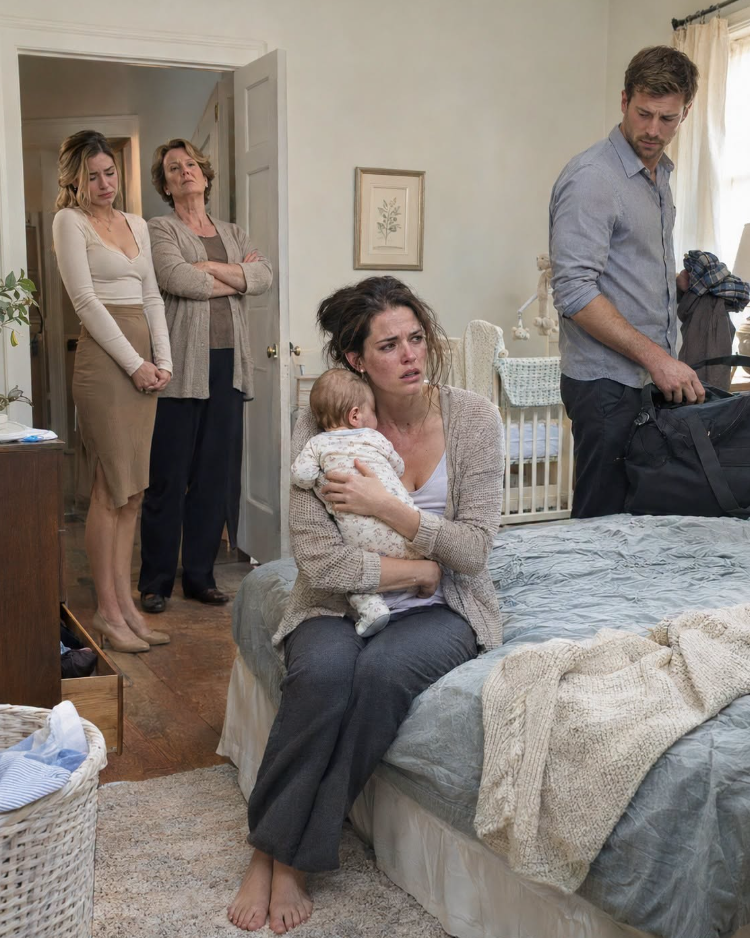
“Mom, Daddy hides under your bed every night. But he said if I told you, our family would get in trouble.” My seven-year-old daughter, Josie, whispered the words as I washed the shampoo from her hair. My blood turned cold. “What did you just say, sweetheart?” She answered, “That Daddy crawls under the bed when you’re asleep. I saw him three times. Last time he had a black trash bag, and he asked me to be quiet.” The showerhead slid from my fingers. Water struck the tiles, making Josie flinch.
“And what did he say?” Josie lowered her gaze. “That it was our secret. That you weren’t supposed to know yet.” A painful tightness gripped my chest. Determined not to frighten her, I finished washing her, dressed her in pajamas, and settled her into bed. But sleep would not come to me that night. I kept looking at our bed, noticing the space beneath its frame. A grown man could fit there. Finally, I knelt and raised the comforter. There was nothing underneath except dust and a small mark on the wooden floor.
I went completely still. On the screen, my husband walked back into the bedroom and disappeared from view. Twenty-seven minutes passed before he emerged again, this time carrying a black trash bag. He took it onto the back porch and returned empty-handed. I watched the sequence several times, hoping repetition might make it less unsettling. Instead, every replay made his movements seem more deliberate. Then I opened Wednesday night’s recording. Again, he appeared in the hallway. This time, he carried a folder and a small flashlight.
I raised the volume. His whisper was faint, but one sentence came through clearly: “I found a place to hide it. My wife still doesn’t suspect a thing.” He ended the call and entered the bedroom where I lay asleep. I stared at the recording, my hands icy. My husband had not merely misrepresented his travel plans. He had returned without telling me, while our daughter and I slept, to conceal something beneath our bed. I still had no idea what that something was.
The following morning, I took Josie to elementary school and went directly home. The sight of Russell carrying that hammer would not leave my mind. I examined the bedroom carefully. Nothing appeared damaged on the walls, but beside one bed leg, a floorboard caught my attention. Its color differed slightly from the surrounding wood. I crouched and pushed one corner. The board shifted. Using a putty knife, I lifted it and uncovered a small cavity.
A black trash bag lay inside, matching the one in the recording. I opened it and found a collection of photographs. Every picture featured the same woman. She appeared to be about thirty-five, with dark hair, large eyes, and a composed expression. Some showed her choosing vegetables; others captured her crossing a town square or working inside a flower shop. The photographs spanned months. A notebook lay with them. Its opening entries read: Day 38: left the flower shop at 6:20. Day 51: visited an elderly couple. Day 67: investigator confirmed her address.
Nausea rose in my stomach. Was Russell following this woman because they were having an affair? Or was he preparing to hurt her? Under the notebook, I discovered a receipt showing a $4,800 payment to a private investigation agency. I knew that amount. Russell had said he needed it for an urgent problem at a job site, and it had come from our family savings. I lowered myself onto the floor, surrounded by evidence that the man I trusted had been secretly investigating a stranger.
For years, I had shared my home, my fears, and my future with him. Even the money intended for Josie’s needs had been part of that trust. Now a woman’s hidden photographs lay in my hands. I searched farther into the bag and found a yellowed envelope at the bottom. Inside was an old picture of two small children—a boy and a girl—sitting together with a birthday cake. The boy had Russell’s eyes. Written on the back were the words: Four years old. Together, always.
The envelope also contained a newspaper clipping so brittle it nearly broke beneath my fingers. Its headline concerned a little girl who had disappeared from an Ohio county fair thirty-two years earlier. Her name was Violet. In the accompanying photograph, she wore a flowered dress and a pink bracelet. I compared her face with the recent photographs from the flower shop. The resemblance was unmistakable. Then I noticed a surname on one of the documents, and my hands began trembling. It was Russell’s birth name.
My husband had always described himself as an only child. Why, then, did he possess a photograph of those two children? What linked him to the woman he had spent months investigating? I photographed everything, then returned the contents to the bag and replaced it beneath the floorboard. Afterward, I called my sister, Dana. “I need Josie to stay with you tonight.” She immediately asked, “Did something happen?” I answered, “I don’t know yet. But I have to talk to Russell, and I don’t want her there.”
That afternoon, Russell arrived home from his alleged trip with a cheerful expression and a box of roadside-shop fudge. “I’m home, family!” I regarded him as though I had never truly known him. During dinner, I asked, “Did you sleep well at the hotel?” He replied, “Like a rock. Why?” “No reason.” The lie came without the slightest hesitation. At midnight, convinced I was asleep, he climbed out of bed. I watched silently as he knelt, raised the comforter, and began crawling underneath.
I turned on the bedside lamp. “Get out of there, Russell!” His head struck the bed frame. When he finally sat upright, all color had drained from his face. I tossed my phone onto the mattress, displaying the photographs. “I want to know who that woman is. I want to know why you spent our savings following her. And I want to know what in God’s name you’re hiding from me.” He stared at the screen, his hands starting to tremble.
“Marnie, please, let me explain.” I could barely contain my anger. “You’ve been lying to me for months! You even asked our daughter to keep your secrets!” He bowed his head. “I know. And I have no right to ask you to trust me.” I held his gaze. “Then tell me who Violet is.” At her name, Russell began weeping. I had never witnessed him cry that way. Covering his face, he gave an answer that left me breathless: “Because the night that little girl disappeared, I was standing right next to her.”
The clipping hidden beneath our bed belonged to a tragedy larger than anything I had imagined. “Violet is my twin sister,” Russell said, his voice breaking. “We were four years old when she disappeared. For thirty-two years I’ve lived believing it was my fault.” I remained utterly still as he sat on the edge of the mattress and began describing a childhood I had never heard about.
Their parents had taken them to the county fair. There had been food stalls, rides, and sellers displaying toys. Russell and Violet had walked together, holding hands. While their mother bought something to eat, a woman approached them with candy. Russell remembered dropping a toy car. He released his sister’s hand so he could retrieve it. When he straightened, Violet was gone.
PART 2 — The Envelope He Could Not Open
Their parents had searched desperately. Police investigated, neighbors formed search parties, and newspapers and flyers carried Violet’s photograph for months. None of it brought her home. “My mom never stopped looking,” Russell went on. “Every birthday she baked two cakes. One for me and one for Violet. Even though she knew nobody would come to claim it.” He dragged his T-shirt sleeve across his tears. “When I turned eighteen, my dad gave me a box with all the documents from the investigation. He told me that if they were ever gone, I shouldn’t let my sister be forgotten.” His father had died ten years earlier, his mother five. Neither had surrendered hope.
“Why didn’t you ever tell me?” I asked. He fell silent before answering. “Because I was ashamed to admit I was still searching. I’d spent money on false leads, traveled to cities where I found nothing, and met people who tried to take advantage of my desperation. I thought you’d tell me I had to accept she was dead.” His explanation hurt. “Did you honestly believe I’d say something like that?” “I don’t know, Marnie. I was afraid.” I drew a steadying breath. “Being afraid didn’t give you the right to lie to me. Much less to drag Josie into it.” Looking down, he said, “You’re right.”
When I asked about the woman in the photographs, he explained that an investigator had discovered a new lead four months earlier. A little girl had entered the care of a children’s services agency a few months after Violet disappeared. A couple from a small Indiana town had adopted her. She was now Elise Warren, thirty-six years old, with the same birth date as Russell. In photographs from her childhood, she wore a pink bracelet matching Violet’s. “The investigator managed to reach her,” he explained. “Elise agreed to review the documents and take a DNA test voluntarily. But we haven’t met in person yet.”
“Do you have the results?” Russell indicated the black bag. “The report came two days ago. I haven’t been brave enough to open it.” I could hardly believe him. “You’re telling me you’ve spent months investigating that woman, hiding documents under our bed, and lying to me about your trips, because you’re afraid to open an envelope?” His answer was quiet. “I’m afraid it’ll all turn out to be another lie.” For the first time, I grasped the extent of his anguish. Understanding it, however, did not erase what he had done.
“And the forty-eight hundred dollars?” He shut his eyes. “I paid the agency out of our savings. I told you it was a work expense. I know that was wrong.” Anger and sadness surged through me together. “Russell, that money was mine too. It was our family’s. You can’t make decisions like that behind my back.” He offered, “I’ll pay it back with my bonus and whatever I can save.” But repayment was not the whole issue. “It’s not only about the money. It’s about trust.”
One question still haunted me. “Why were you hiding under the bed?” He gave a bitter laugh. “The first night, I came down to look at the box because I couldn’t sleep. I didn’t want to turn on a light and wake you. I sat on the floor reading those documents. After that I started doing it whenever new information came in.” I pressed him. “But why crawl all the way under?” “Because I knew if you caught me, I’d have to explain everything. And I wasn’t ready.”
“Is that why you built a hiding place in the floor?” He nodded. A loose board had allowed him to create somewhere to keep the files. The bags taken outside contained wood scraps and debris from clearing that space. “When I traveled to Cincinnati, I came back a few nights to put away new papers. Then I’d leave again before dawn. I was acting like a madman, I know.” I studied the man who had made our bedroom a place of concealment because he could not share his pain. Yet one part remained impossible to overlook.
“Josie is seven years old, Russell. You told her our family would be in trouble if she told me what she saw. Do you know how frightening that can be for a little girl?” He buried his face in his hands. “I didn’t think about how she’d feel.” I answered, “Then you need to start thinking. Never again ask her to keep a secret that scares her.” He nodded. There were no embraces that night, no sudden healing of everything between us. We slept separately. I needed time.
The next morning, Russell contacted the investigator and arranged for her to review the file with us. When we finally opened the report, his hands shook so violently that I held the pages. The laboratory had identified a conclusive genetic match establishing a biological sibling relationship. The older records and adoption documents supported the same conclusion. Elise was Violet. After thirty-two years of searching, Russell had found his sister alive.
He read the result three times before his knees gave way. Sinking to the floor, he began sobbing without restraint, as though a lifetime of grief had finally broken free. “We found her, Mom,” he repeated. “We found her.” I knelt beside him and, this time, put my arms around him. The search had not truly begun four months earlier. It had started when a four-year-old boy released his sister’s hand and then spent the rest of his life trying to bring her back.
The investigator told Elise that Russell would meet her whenever she felt prepared. We would not arrive at her workplace without warning or take that choice away from her. Six days passed before she responded. She agreed to meet us at her flower shop on Sunday morning. The night before, Russell hardly slept. Three times he got up to study the photograph from their fourth birthday.
“What if she doesn’t want to know me?” he asked. “Then we’ll respect her decision.” Another fear followed. “What if she blames me for not finding her sooner?” I held his hand. “You were a child too, Russell.” The following morning, we drove to Indiana. Josie stayed with Dana; we believed the first meeting should involve only the adults.
The shop stood on a quiet street, with hydrangeas beside the entrance and buckets of white blossoms arranged on small wooden tables. Russell remained outside the door for several minutes. “I can’t,” he whispered. “You don’t have to do it all at once.” Eventually, we stepped inside. A woman came around the counter, and I recognized her immediately from the photographs.
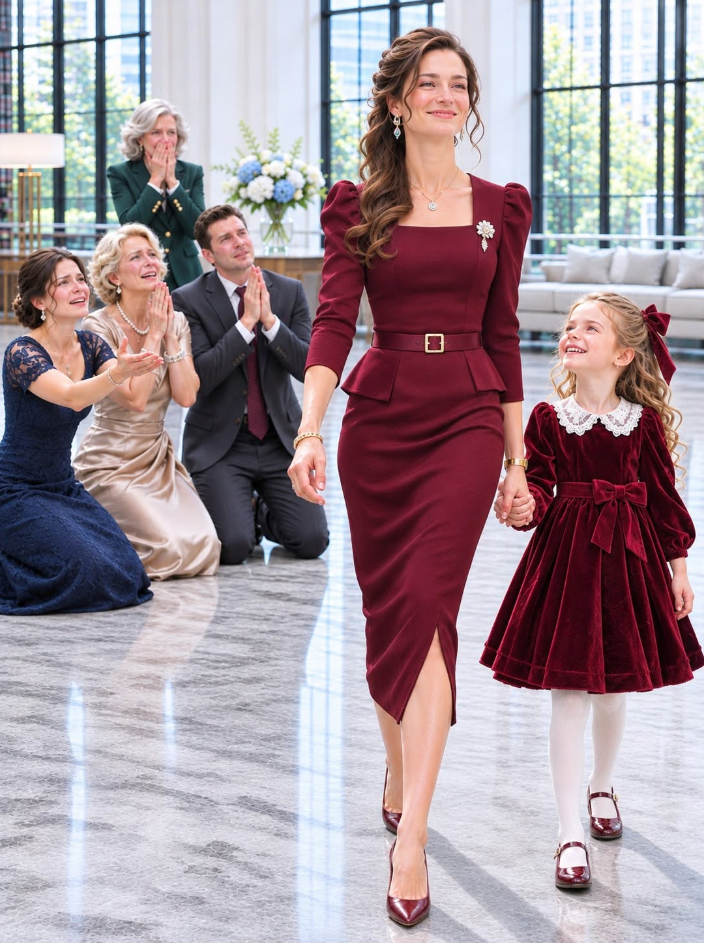
She had Russell’s eyes and the same crease between her brows. When she smiled uncertainly, I saw an expression I had watched cross my husband’s face countless times. “Russell?” she asked. He tried to speak, but nothing emerged. Elise moved a step closer. “I don’t know what to say either,” she admitted.
Russell removed the birthday photograph from his pocket and placed it on the counter. “My mom kept this picture her whole life.” Elise lifted it with care, tracing the little girl’s face with her fingers. “My adoptive parents told me I arrived with almost nothing. They never knew much about what came before.” Pointing to the boy, she asked, “Is that you?” Russell nodded. Tears spilled down her face, and his followed.
For several moments, neither could cross the space separating them. Then Elise opened her arms. Russell held her with desperate strength. “I’m sorry,” he murmured. “I’m so sorry I let go of your hand.” She leaned back enough to meet his eyes. “We were two little kids.” He struggled with the old guilt. “But I was supposed to look out for you.”
“No, Russell. The people who took us apart are the ones responsible. You don’t have to carry that your whole life.” Her words broke through something inside him, and he cried harder. I moved aside so they could have that moment without feeling watched. Later, we sat together and talked. Elise described adoptive parents who had raised her with tremendous love. She had studied business, spent years working, and eventually established her flower shop.
She had not lived an unhappy life, but questions about her origins had always remained. “I don’t want you to think I’m trying to replace my parents,” she said. Russell answered, “You don’t have to replace anyone. I just want to know you.” Elise smiled. “Then we can start there.”
During the weeks that followed, they began speaking by telephone. Their first conversations were brief; gradually, they lasted an hour. Russell offered pieces of their shared childhood, while Elise sent photographs of the flowers she grew. I saw a happiness returning to my husband that I had never known was missing. But finding his sister had not settled what remained between us.
PART 3 — What Trust Requires
One evening, after Josie had fallen asleep, I said, “I’m so happy you found your sister. But we need to talk about us.” Russell switched off the television. “I’m listening.” I explained, “I can’t live wondering what else you’re keeping from me. If we want to stay together, you have to learn to trust me.” Taking my hand, he promised, “I won’t hide something like this from you again.”
“And we’re going to manage our money together. No more decisions behind each other’s backs.” He agreed. We spoke with Josie, too. Sitting in front of her, Russell apologized for frightening her. “Daddy did something that wasn’t okay,” he told her. “I should never have asked you to keep a secret that worried you. You can always tell Mom anything, even if someone asks you not to.”
Josie wrapped her arms around him. “So you’re not going to sleep under the bed anymore?” Russell laughed. “Never again, sweet pea.” For the first time in weeks, all three of us laughed together. A month later, Elise asked us to visit the shop again. This time, Josie came along.
Our daughter had devoted the entire week to a drawing. Four people held hands among flowers. When Elise opened the shop door, Josie hurried straight toward her. “Aunt Elise! I made you a present!” Elise bent down to accept it, then became very still as she examined the page.
“Is this me?” she asked, indicating the woman surrounded by blossoms. Josie answered, “Yes. Because Daddy says you’re his sister, so that means you’re my family too.” Elise covered her mouth with one hand before drawing Josie into a gentle embrace. “Thank you so much, sweetheart.”
Russell stood in the doorway with tears in his eyes. I nudged him. “Crying again?” He wiped his face. “I’m not crying,” he said. “There’s just a lot of pollen in here.” I laughed. In time, Elise started spending weekends with us. We met her adoptive parents as well, and they welcomed the discovery of her biological family with warmth and composure.
Neither family treated the other as competition. There was enough room for everyone to be loved. One evening, Russell proposed buying a larger house so Elise would have a guest room during visits. His initial suggestion was to draw on Josie’s college savings. I refused. “We can help your sister without compromising our daughter’s future.”
He said nothing for a moment, then acknowledged that I was right. Together, we established a budget, restored the savings used for the investigation, and waited until moving was genuinely affordable. Six months later, we found a three-bedroom house. By then, Elise had chosen to open a second, smaller shop in Columbus while keeping her Indiana business.
She asked whether she could live with us temporarily while she arranged this new stage of her life. We were delighted to agree. Then, on moving day, Russell discovered something neither of us had expected. As he dismantled our old bed, he found a yellowed envelope lodged in the wooden frame.
The front read: For Marnie, my wife. Surprised, I looked at him. “What’s this?” His expression grew serious. “I wrote it before you found out about Violet.” I opened the envelope and unfolded a handwritten letter.
Marnie: If you ever find this letter and I’m no longer around, I want to ask your forgiveness. I’ve spent so many years searching for my sister that sometimes I forgot to look at the people who were right beside me. I was afraid to tell you about my pain. I convinced myself I had to solve it alone, as if that would make me stronger. But now I know there’s no courage in hiding the truth from the person who shares your life.
If I ever find Violet, I’d want you to meet her. And if I don’t, I hope she knows I never stopped looking. Thank you for our daughter. Thank you for our home. And forgive me for not knowing how to ask for help. Russell.
My eyes were wet when I finished. Russell waited while I folded the letter and put it away. “I’m keeping this.” He asked, “What for?” I answered, “To remind you that you never have to hide from me again when you’re hurting.” He embraced me. This time, I did not feel that I was holding the flawless man I had once imagined.
I was holding someone wounded, frightened, and capable of mistakes. He had hurt us by concealing the truth, but he was finally learning to share it. On our first evening in the new house, Josie ran down the hall, proudly displaying her bedroom. Elise prepared a simple meal, and Russell insisted on arranging the table flowers himself.
After dinner, while we cleared the dishes, Josie appeared in the kitchen. “Mom, can I tell you a secret?” Russell and I looked at each other. The memory of that night in the bathroom sent a pang through me. “Of course, sweetheart.” She brought her mouth close to my ear. “I’m really happy I have an aunt.”
I smiled. “Me too, sweet pea.” Josie ran to embrace Elise, and Russell slipped an arm around my waist. “What are you thinking about?” I looked into the living room, where our daughter and her aunt were laughing as they adjusted flowers in a vase. “How different everything would have been if I’d never pried up that floorboard.”
Russell dropped his gaze. “I’m sorry I scared you so badly.” I answered, “What matters is that we learned something.” He asked, “What’s that?” Looking directly at him, I said, “That a family isn’t protected by hiding the hard things. It’s protected by facing them together.” He nodded.
That night, Russell slept peacefully. There were no unexplained footsteps, no murmured telephone conversations, no knocks beneath the floorboards. Only a quiet home and four people learning how to belong together. Even now, if I wake before dawn and discover his side of the mattress empty, a small flicker of alarm sometimes returns.
But these days, I find him making coffee in the kitchen or sitting beside a window, smiling over an old photograph. Once, before sunrise, I discovered him studying the picture of two children together behind their birthday cake. I sat beside him. “Do you still think about that day?”
“Yes,” he said. “But I don’t only remember losing her anymore.” I asked, “Then what do you remember?” Russell smiled. “The day she called me her brother again.” Resting my head against his shoulder, I understood something that would remain with me.
Sometimes, the secret that terrifies us does not conceal a betrayal. It conceals a wound someone never learned to heal. Yet loving someone does not require accepting every lie they tell. It means allowing them the opportunity to speak honestly, acknowledge their mistakes, and demonstrate through their choices that trust can be earned again.
Russell had searched for his sister for thirty-two years. Because he could not share that story, I had nearly lost my faith in him. Today, nothing lies hidden beneath our bed. Around our table, however, sits one more person. Whenever I watch him smiling beside Elise, I remember the words Josie whispered that night: “Mom, Daddy hides under your bed.”
I could never have guessed that the words which caused the greatest fear of my marriage would lead us toward a family we had believed impossible. Someone had spent a lifetime longing to come home. Yet when I first lifted that floorboard, I had expected only a nightmare—not knowing who was waiting on the other side.