PART 2
I don’t remember the drive to the hospital.
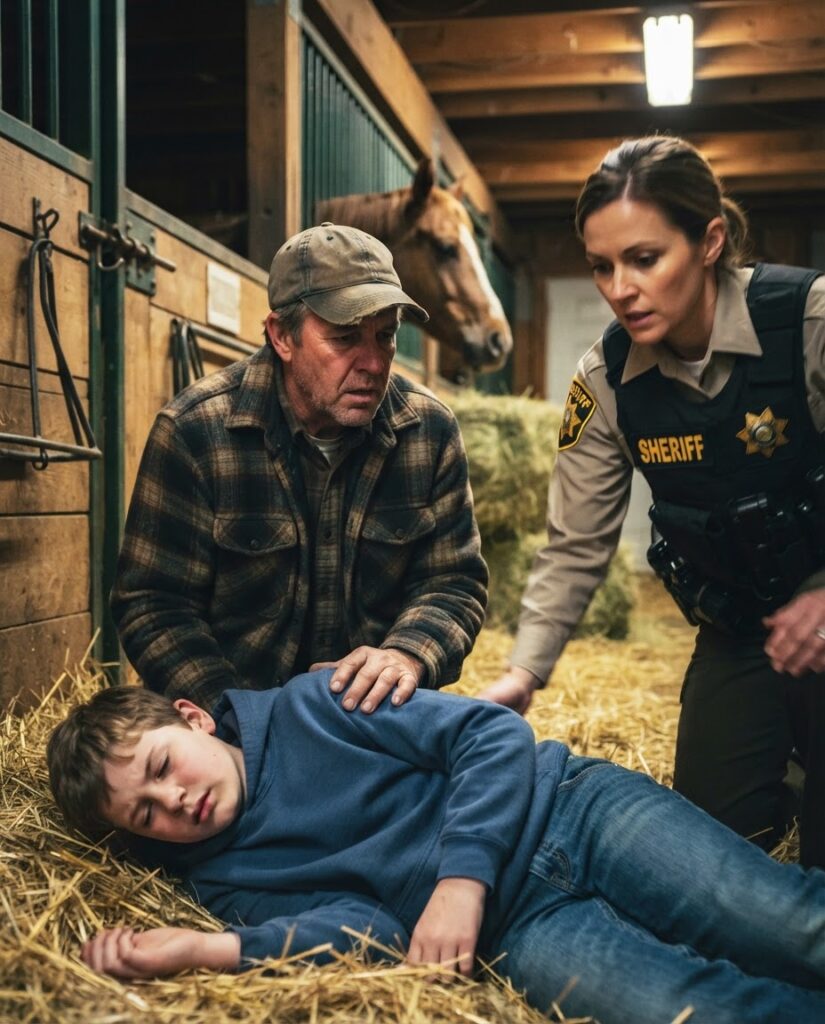
They’d already flown Willem by helicopter to the trauma center in Portland. Three hours away. My neighbor drove me. I sat in the passenger seat holding his notebook against my chest the whole way. When I got there, a doctor met me in the hallway.
“Your son has a skull fracture and swelling on his brain,” she said. “We put him in a medically induced coma to protect it. The next seventy-two hours will tell us a lot.”
I sat next to his bed for three days. I held his blistered hand. I talked to him. I read him his favorite books.
I didn’t go to dialysis. The nurses at the hospital arranged for me to have it there, two floors down, so I didn’t have to leave him.
On the third day, they started waking him up.
On the fourth day, he opened his eyes.
He looked at me for a long time. Then he whispered, “Mom? Did I miss work?”
I laughed and cried at the same time.
“No more work, baby. Never again.”
He looked scared.
“But your medicine. Who’s going to pay for your medicine?”
That’s when I finally broke down.
“Willem, I found your notebook. I know everything. You’re eleven years old. Taking care of me is not your job. It’s my job to take care of you.”
“But you’re sick,” he whispered. “I didn’t want you to die.”
I held him as gently as I could.
The sheriff investigated Mr. Yardley’s farm. He’d been paying three other kids under fourteen in cash. No safety training. No adults supervising in the barn before sunrise. It was illegal child labor.
Mr. Yardley was fined and charged with child endangerment.
When the story got out in our little town, something happened that I never expected.
The pharmacist started it. She put a jar on her counter with a sign.
“For Willem’s mom.”
Then the diner put one out. Then the grain elevator. Then the school.
Within a month, the town had raised enough to cover my medicine for three years.
The farmers in the area held a benefit dinner at the community center. Three hundred people came. Willem was there in a wheelchair, with a bandage still on his head. Every single person in that room shook his hand.
An old farmer stood up at the end of the night.
“I’ve been farming for sixty years,” he said. “I’ve never met a harder worker than that boy. Or a better son.”
Everyone stood up and clapped.
Willem turned red and hid behind me.
Then, in February, at 2 a.m., my phone rang.
It was the transplant center.
“Tabitha, we have a kidney for you. Can you be here in four hours?”
My surgery went perfectly. My new kidney started working right away.
When I woke up, Willem was sitting next to my bed. He’d fully recovered. His hair had grown back over the scar.
He was holding a little bottle of my old medicine.
“Do you still need this?”
“Not anymore,” I said. “I’m going to be okay.”
He took a deep breath. His whole body seemed to relax for the first time in a year.
Now Willem goes to bed at 9 p.m. like a normal kid. He sleeps until 7.
On weekends, he sleeps until noon.
Last Saturday, I peeked into his room at 11 a.m. He was sprawled across his bed, snoring, one foot hanging off the side.
I stood in the doorway for a long time, just watching him.
Being eleven.
THE END.