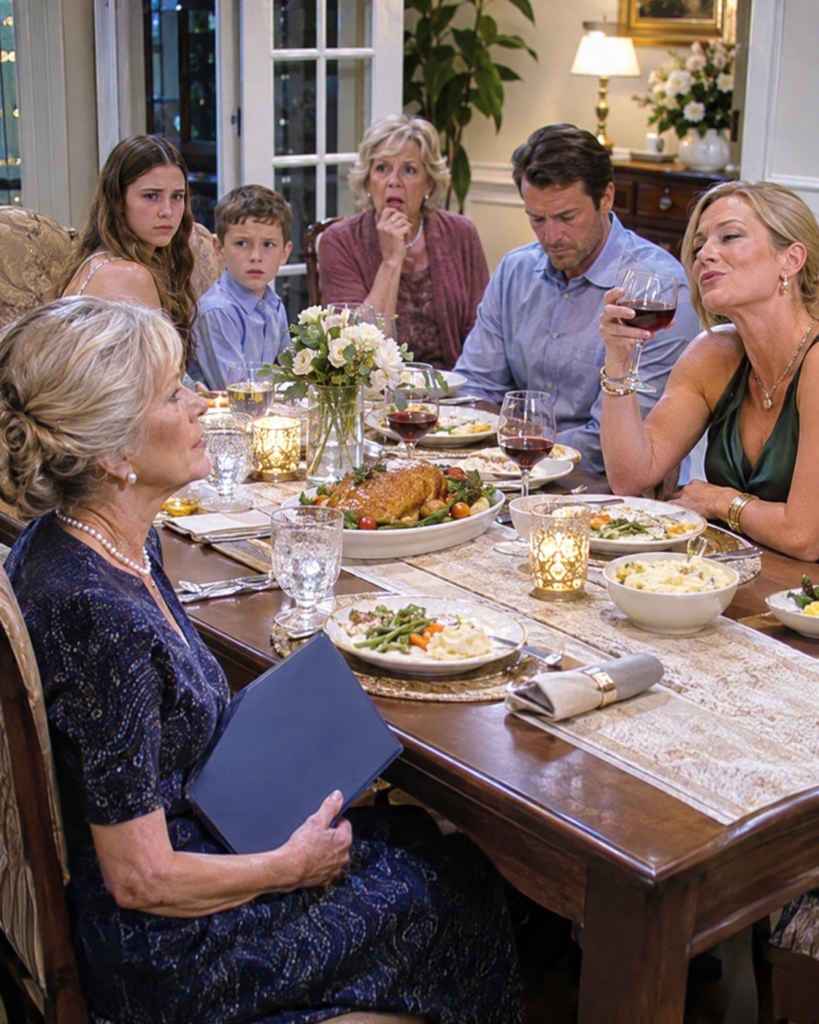
“ We finally bought our own house, Mom,” Melinda announced, holding up her wine glass with a wide smile.
Everyone seated around the table congratulated her and my son, Connor, while my grandchildren instantly began asking about their rooms, what colors they could choose, and whether the house came with a backyard.
I smiled as well, because I honestly was happy that they had finally purchased a home.
But Melinda continued watching me over the edge of her glass.
After sharing the same roof for twelve years, I knew that expression. It was the look she always had when there was something more she wanted to say, something she had been waiting to deliver at precisely the right moment.
The news about their new house had been for everyone. What came next was intended specifically for me.
She settled back into her chair and smiled.
“So now,” she said, “you can finally figure out how to live by yourself.”
Every bit of laughter stopped.
My sister Ruth froze with her fork halfway toward her mouth. My grandson Jackson stopped chewing, while twelve-year-old Lily suddenly seemed deeply interested in staring at her plate.
Connor, my only son, kept his eyes on his dinner as though something beside the mashed potatoes had suddenly become incredibly important.
I waited for him to speak up.
To say anything at all.
He said nothing.
His silence hurt worse than Melinda’s words because it was so familiar. For years, Connor had refused to confront his wife whenever she went too far with me.
His silence always seemed to communicate the same message:
Please, Mom. Don’t make this more complicated. Just let it go.
Melinda laughed softly, acting as though her comment had simply been a joke.
Then she made it even worse.
“And thanks for living here all these years without paying for anything,” she said. “But now that Connor and I have our own place, we honestly don’t need you living here anymore.”
For a moment, I wondered if I had misunderstood what she said.
Then I noticed Jackson watching me.
Children might not know anything about deeds, mortgages, inheritance, or property law, but they recognize humiliation.
He understood that his grandmother had just been dismissed in front of the entire family. Lily understood as well, and the expression on her face told me she wanted to vanish.
I looked slowly around my dining room.
The table was mine. The dinner had been purchased with my money and cooked inside my kitchen. The house itself had belonged to me years before Melinda ever walked through its front door, yet somehow she had rewritten twelve years of history until I was the one being treated like a dependent.
The truth was almost embarrassingly straightforward.
Twelve years earlier, Connor lost his job while Melinda was pregnant.
They showed up at my house with suitcases, money problems, and more fear than either of them wanted to admit. My husband, Thomas, had already passed away, and at the time, the house felt much too big and much too quiet for me anyway.
“I’ll only need a couple of months, Mom,” Connor had said.
“Stay as long as you need to,” I told him.
I meant it completely.
At first, I was thankful for the noise. Then Jackson arrived, followed by Lily, and the house began to feel alive again.
Connor found another job, Melinda eventually went back to work, and the two of them started talking about saving money for a home of their own.
But somehow there was always another reason to wait.
Daycare. Cars. School costs. Vacations. A promotion. One more year to save.
I never made them pay rent.
Eventually, they contributed to groceries and utilities, and Connor took care of repairs whenever anything broke.
I appreciated everything they contributed. But somewhere over those years, Melinda started confusing helping with owning.
First, she reorganized my kitchen.
Then she replaced the curtains without asking me first.
Then my husband’s old study was transformed into a playroom.
Our holiday traditions changed because Melinda preferred doing things “her way.”
Family decisions started being settled before anyone even considered asking for my opinion.
Each incident seemed too minor by itself to justify starting a war, so I kept quiet.
That was the mistake I made.
Every time I buried my anger for the sake of keeping peace, Melinda learned she could push me without facing consequences.
And Connor learned that he never needed to decide whether something was right or wrong because his mother would always eventually back down.
For years, I told myself that I was keeping our family together.
Six months before that dinner, I finally realized that somewhere along the way, I was disappearing inside it.
So when Melinda told me they no longer needed me, she was expecting tears.
I could see that clearly in her expression.
She expected panic, perhaps even embarrassment. She probably imagined I would ask how long I had before I needed to find somewhere else to stay.
Maybe she had already pictured herself telling her friends how difficult it had been to persuade her elderly mother-in-law that it was finally time to become independent.
Instead, what I felt was completely different.
Relief.
Because at last, she had said out loud what I had been feeling for years.
In Melinda’s eyes, I wasn’t the woman who had welcomed them into her home when they had nowhere else to go.
I wasn’t the grandmother who had helped raise her children or the mother who had provided Connor with stability when everything in his life fell apart.
I had become an inconvenience standing between her and something she had slowly begun to think belonged to her.
And she had made one enormous mistake.
She believed I still thought silence meant kindness.
I folded my napkin neatly and placed it next to my plate.
“That’s wonderful, Melinda,” I said calmly.
Her smile weakened slightly.
“I’m happy you’ve finally decided to start building a life of your own.”
Connor finally lifted his eyes.
His expression immediately shifted.
Neither of them had expected me to sound so pleased.
“Because,” I continued, “I have some news of my own.”
Melinda slowly brought her wine glass down.
Nobody at the table moved.
I reached beside my chair and picked up the blue folder I had left there before dinner.
Connor stared at the folder, then looked at me, as if some instinct had finally warned him that this conversation was no longer moving in the direction his wife had planned.
“Twelve years ago, when you came to live in this house after Connor lost his job, I made a decision,” I said. “And six months ago, I made another one.”
Melinda’s face grew tense.
I opened the folder.
“Ninety minutes before dinner,” I said, “my attorney filed the final documents.”
For the first time that night, all the confidence drained from her eyes.
Connor stared at the papers in my hands.
“Mom,” he whispered. “What did you do?”
PART 2: THE HOUSE THEY NEVER OWNED
“What I should have done years ago.”
My voice was quieter than I expected. Connor stared at me. Melinda leaned forward. Ruth slowly lowered her fork.
And my grandchildren watched as I removed the first document. It was a certified property record. My name appeared near the top. Below it was the name of the Eleanor Bennett Living Trust.
Melinda frowned.
“What is that supposed to be?”
I placed the document on the table.
“Something that protects this house.”
Connor reached for it. I let him take it. He studied the first page. Then the second.
His expression changed.
“Mom, you transferred the house?”
“Into a trust.”
“When?”
“Six months ago.”
He looked at me.
“Without telling us?”
I almost smiled.
“Did you tell me you were planning to remove me?”
He went silent. Melinda reached across the table.
“Give me that.”
Connor hesitated. Then passed her the papers. She skimmed the first page. Her expression shifted from confusion to something much less pleasant.
“What does this mean?”
I folded my hands.
“It means I remain the person controlling this home.”
“The trust holds the title.”
“I’m its current trustee.”
“And I retain my right to live here for my lifetime.”
Melinda stared.
“But Connor is your son.”
I nodded.
“I’m aware.”
She looked genuinely irritated.
“Then why would you do that?”
“Because I wanted my wishes documented.”
Connor swallowed.
“What wishes?”
I looked directly at him.
“That nobody gets to decide when I must leave my home.”
The room became completely silent. For twelve years, my son had been welcome here. His wife had been welcome. Their children had grown up beneath this roof.
But welcome wasn’t ownership. And generosity wasn’t permission to erase the person providing it. Melinda pushed the document away.
“That’s ridiculous.”
Ruth raised an eyebrow.
“Which part?”
Melinda turned sharply.
“Excuse me?”
“Which part is ridiculous?”
Ruth placed her fork down.
“That Eleanor owns her house?”
“Or that she intends to keep it?”
Melinda flushed.
“This is a private family matter.”
Ruth smiled without warmth.
“I’m her family too.”
I almost laughed. But Connor was still staring at the trust document.
“Mom, what happens to the house after you’re gone?”
There it was. Not whether I was comfortable. Not whether I was healthy. Not whether I needed anything.
He wanted to know what would happen after my death. I looked at him carefully.
“That information is also documented.”
He swallowed.
“And?”
“The trust includes provisions for the grandchildren.”
Jackson looked up.
“For us?”
I smiled gently.
“Yes, sweetheart.”
Melinda’s eyes widened.
“And Connor?”
I turned toward her.
“What about him?”
“He’s your only son.”
“I know.”
“Then surely he’ll inherit the house.”
I considered my answer.
“Not automatically.”
Her face changed. I continued.
“The trust has specific instructions.”
“Those instructions protect my grandchildren and provide for my own needs.”
“Connor doesn’t have the authority to sell or mortgage this property.”
“And neither do you.”
For several seconds, nobody spoke. Then Melinda laughed. It sounded forced.
“Well, that’s unnecessarily dramatic.”
I looked at her.
“Is it?”
“Of course.”
She gestured toward Connor.
“We have our own home now.”
“Why would we want yours?”
I held her gaze.
“That’s an excellent question.”
Then I opened the second folder.
***
Six months earlier, I’d discovered something that changed how I viewed the past twelve years. It happened on an ordinary Tuesday. I was cleaning Thomas’s old study.
Melinda had turned it into a playroom years earlier. At first, I hadn’t objected. Jackson needed somewhere for his toys. Then Lily was born.
And the room gradually filled with games, books, and art supplies. But over time, something else happened. Thomas’s photographs disappeared. His old drafting desk was removed.
The bookshelves were replaced. And the small brass plaque he’d received after thirty years at the engineering firm was placed inside a storage box. One afternoon, I found the plaque beneath a stack of broken toys.
I remember sitting on the floor with it in my hands. Thomas Bennett. Thirty Years of Dedicated Service. I traced his name.
My husband had died suddenly from a heart attack when Connor was twenty-six. We’d been married thirty-four years. We bought this house together when Connor was six. Thomas repaired nearly everything himself.
He built the deck. Installed the garden fence. And planted the maple tree outside the kitchen window. When he died, the house passed entirely to me.
No mortgage remained. No outstanding property loan. Just a home filled with memories. I had always planned to remain there as long as I was physically able.
But six months before dinner, I began realizing that everyone else’s plans were quietly replacing mine.
***
That Tuesday, I decided to reclaim the study. I moved the toys carefully. Sorted them into storage bins.
Then brought Thomas’s photographs downstairs. As I cleared the old filing cabinet, I discovered an envelope I’d never seen before.
It was addressed to Connor. The return address belonged to a real estate company. Inside was a property valuation. For my house.
The date was three weeks earlier. The estimated value was $875,000. I stared at the number. Not because it surprised me.
The neighborhood had become desirable. Several houses nearby had sold for substantial amounts. But I hadn’t requested an appraisal. And Connor hadn’t mentioned one.
There was another page. A preliminary marketing proposal. It included photographs of my living room, kitchen, bedrooms, and backyard. Some were taken recently.
I recognized Melinda’s new curtains. The framed family photograph above the fireplace. And the expensive dining chairs she’d convinced me to purchase. I sat very still.
Someone had arranged a valuation of my home without asking me. Then I found something worse. A handwritten note on the bottom of the proposal.
“Owner relocation expected before closing.”
I read it three times. Owner relocation. Those two words made my stomach turn. I was the owner.
And somebody was discussing my relocation as though it had already been decided. I placed the papers inside my own folder. Then I called Ruth.
***
My sister answered immediately.
“Eleanor?”
“Are you busy?”
“Not for you.”
I sat at Thomas’s old desk.
“Something strange is happening.”
Her voice changed.
“What kind of strange?”
I told her about the valuation. The photographs. The proposed listing. And the note about relocation.
Ruth remained silent. Then she asked,
“Did you authorize any of this?”
“No.”
“Did Connor?”
“I assume so.”
“That wasn’t my question.”
I sighed.
“I don’t know.”
Ruth took a breath.
“Eleanor, you need to speak with an attorney.”
I almost laughed.
“Over a real estate brochure?”
“Over someone making plans for property they don’t own.”
I looked at the papers. She continued.
“You’ve spent twelve years letting them make decisions.”
“Perhaps it’s time someone started asking what you actually want.”
I stared at Thomas’s photograph. Then whispered,
“I want my house back.”
Ruth was quiet. Finally, she said,
“Then that’s where we begin.”
***
The attorney’s name was Natalie Price. She was forty-eight, with short dark hair and a calm, direct manner. Her office overlooked a small downtown park. I brought the valuation papers.
My original deed. Thomas’s death certificate. Property tax statements. And copies of our household expenses.
Natalie reviewed everything. Then asked a question I hadn’t expected.
“Mrs. Bennett, what do you want?”
I looked at her.
“To keep my house.”
She smiled faintly.
“That’s an excellent starting point.”
I explained that Connor and Melinda had lived with me for twelve years. That they paid no rent. That they’d gradually assumed responsibility for some household decisions. And that I had never transferred ownership to anyone.
Natalie listened carefully. Then asked,
“Have you signed any documents authorizing them to sell or finance the property on your behalf?”
I shook my head.
“Not that I’m aware of.”
She looked up.
“That’s important.”
I hesitated.
“Why?”
“Because I want to verify the current recorded title.”
“And check for any unusual filings.”
She examined the valuation again.
“Someone is treating your relocation as part of a property transaction.”
“That deserves an explanation.”
I looked toward the window.
“Do you think Connor knows?”
Natalie considered the question.
“I can’t determine that yet.”
“But we can establish the records.”
She turned another page.
“There’s another matter.”
“What?”
“Have you prepared an estate plan?”
I shook my head.
“Thomas and I had wills.”
“But they’re old.”
She nodded.
“Then we should review those too.”
I looked down.
“Do I really need all this?”
Natalie leaned forward.
“Mrs. Bennett, you deserve clarity about your own property.”
I sat quietly. Then nodded.
“Let’s do it.”
***
The following week, Natalie obtained the property records. The house remained entirely mine. There were no recorded mortgages.
No valid transfer of ownership. And no evidence that Connor or Melinda held any legal title. I felt relieved. But Natalie had also found something concerning.
The real estate agent who prepared the valuation had received information identifying Connor and Melinda as the property’s future decision-makers. The agent believed I intended to move into a smaller residence. I stared at Natalie.
“Who told them that?”
She examined her notes.
“Your daughter-in-law.”
My chest tightened.
“Melinda?”
“Yes.”
“Did she say I’d agreed?”
“According to the agent’s account, she said it was a family decision.”
I looked away. That phrase was familiar. A family decision. Melinda used it whenever she’d made up her mind and expected everyone else to accept the outcome.
Where we’d spend Christmas. Which relatives could visit. What furniture belonged in each room. Whether I should keep
Thomas’s old desk. Even which groceries I ought to purchase. Family decisions.
Except I was rarely included. Natalie continued.
“The agent hadn’t been retained to sell the property.”
“At least not through a valid owner authorization.”
I nodded slowly.
“But the valuation exists.”
“Yes.”
“And someone requested it.”
“Yes.”
I looked down.
“What should I do?”
Natalie folded her hands.
“First, we protect your choices.”
“Then we address any unauthorized conduct.”
That was how the trust planning began. Not as revenge. Not as punishment. As protection.
***
I spent the next several months reviewing my finances. My savings. My retirement income. My investments.
The property taxes. Insurance. Maintenance costs. And every household expense
I had paid for years. The house was mortgage-free. But owning a large home wasn’t inexpensive. Utilities.
Roof repairs. Heating. Insurance. Landscaping.
Appliance replacement. And occasional emergency maintenance. Most months, I covered nearly everything.
Connor handled some repairs himself. Melinda contributed to groceries when it suited her. But they had never carried the financial responsibility of maintaining the property. And I had never asked them to.
I began keeping records. Not because I intended to demand twelve years of back rent. There had been no rental agreement. I’d invited them to stay.
I couldn’t rewrite that generosity into a debt after the fact. But I needed to understand how much I’d been providing. And why everyone had begun taking it for granted. The figures were revealing.
Over twelve years, I’d paid the property taxes. Insurance. Major repairs.
Most household utilities. And countless expenses related to raising my grandchildren. School supplies. Clothing.
Birthday parties. Summer activities. Medical copayments. Field trips.
And emergency expenses. I didn’t regret helping Jackson and Lily. Not for one moment. They were children.
They hadn’t created the complicated arrangement the adults had allowed to develop. But I began recognizing how thoroughly my own needs had disappeared beneath everyone else’s.
***
One evening, Ruth came over for dinner. Melinda was visiting friends. Connor had taken the children to a baseball game.
For once, the house was quiet. Ruth sat across from me with a bowl of vegetable soup. She looked around the kitchen.
“When did you last choose something for this house?”
I frowned.
“What do you mean?”
“The curtains.”
“Melinda chose them.”
“The paint?”
“Connor and Melinda.”
“The dining room furniture?”
“Melinda preferred the new set.”
Ruth nodded.
“What about the garden?”
I looked toward the window. Thomas’s rosebushes had been replaced with low-maintenance landscaping. Melinda said the flowers attracted too many insects. I had agreed.
Or rather, I had stopped objecting. Ruth watched my face.
“Eleanor.”
I looked at her.
“When did you last do something simply because you wanted to?”
I opened my mouth. Then closed it. She nodded sadly.
“That’s what I thought.”
I stared into my soup. Ruth continued.
“You’ve given those children a wonderful home.”
“You’ve helped Connor and Melinda through difficult years.”
“But you haven’t given yourself the same kindness.”
I felt my eyes sting.
“You’re making me sound foolish.”
She shook her head.
“No.”
“I’m saying you’ve been generous.”
“And people have learned to confuse your generosity with their entitlement.”
I looked away. Then whispered,
“I don’t know how to change it.”
Ruth reached across the table.
“Start by remembering that this is your home.”
***
That conversation changed something. Not all at once. I still hesitated. Still worried about arguments.
Still wondered whether I was being selfish. But I began making decisions without asking Melinda’s permission. I bought new gardening tools. I scheduled repairs to Thomas’s old study.
I reopened the storage boxes containing his books. And I asked Connor to move the children’s larger toys into the recreation room downstairs. He looked surprised.
“Mom, why?”
“I want the study back.”
He frowned.
“Melinda uses that room for some of the kids’ things.”
“I know.”
“But it’s my study.”
Connor sighed.
“Can we discuss it later?”
I smiled gently.
“We can discuss the schedule.”
“But the decision is made.”
He stared at me. For several seconds, he seemed unable to understand my answer. Then he nodded.
“Okay.”
It was a small victory. But it was mine.
***
Melinda reacted differently. When she discovered Thomas’s drafting desk had been returned to the study, she stood in the doorway with her arms folded.
“What happened in here?”
I continued arranging books.
“I’m restoring the room.”
“Why?”
“Because I want to.”
She frowned.
“But the children need space.”
“They have their bedrooms.”
“And the downstairs recreation room.”
She looked irritated.
“That room is too small.”
I placed another book on the shelf.
“Then we’ll organize it better.”
Melinda stared at me.
“Eleanor, we’ve been using this room for years.”
“I know.”
“So why suddenly change everything?”
I turned toward her.
“Because I’d like to use my own study.”
Her expression hardened.
“You’re being difficult.”
I felt the familiar guilt rise in my chest. Then I remembered Ruth’s words. This is your home. I took a slow breath.
“I’m not trying to be difficult.”
“I’m telling you what I’ve decided.”
Melinda looked stunned. Then she walked away without another word. I expected Connor to approach me later. To ask me to keep the peace.
To suggest compromise. But that night, he said nothing. For a brief moment, I wondered whether things might actually improve.
I was wrong.
***
Three weeks later, I discovered another envelope. This one arrived by mail. It was addressed to me.
The return address belonged to a financial institution I didn’t recognize. Inside was a notice concerning a recent inquiry about a home-equity product. My stomach tightened.
I had not applied for any loan. I called the institution immediately. The representative asked several identity-verification questions. Then explained that an inquiry had been initiated using my property address.
No loan had been approved. No funds had been released. But someone had supplied preliminary information about the house. I requested written confirmation.
Then contacted Natalie. Her response was immediate.
“Please send me that notice.”
I did. Within an hour, she called back.
“Eleanor, we’re expanding the review.”
My hands became cold.
“Do you think it’s connected to the real estate valuation?”
“Possibly.”
“But we need evidence.”
I looked toward the kitchen. Melinda was making dinner. Connor was helping Jackson with his homework. The scene looked ordinary.
Comfortable. Almost peaceful. And suddenly, I wondered what else had been happening without my knowledge.
***
Natalie recommended that I review my credit information and protect my financial accounts. She helped me understand how to request alerts and dispute any inaccurate applications. We also began preparing a comprehensive estate plan. The trust would hold title.
I would remain the current trustee. I could continue living there. I would retain control during my lifetime while legally capable. The document named Ruth as successor trustee, with professional oversight provisions if they became necessary.
I could amend the trust under its terms. No child or in-law received immediate ownership merely because they were family. And after my death, the remaining assets would be managed according to carefully considered instructions. I chose to provide for Jackson and Lily through separate future interests administered for their benefit.
I wanted their education supported. I wanted them protected. And I wanted to prevent an inheritance from becoming another weapon in an adult family argument. Natalie explained everything.
Every clause. Every responsibility. Every limitation. I read each page carefully.
Then signed the documents. For the first time since Thomas died, I felt I’d made a major financial decision entirely for myself.
***
But I wasn’t finished. The unexplained loan inquiry still bothered me. So did the valuation. And the strange insistence that I would soon relocate.
Natalie continued investigating. She obtained correspondence from the financial institution through the appropriate process. She contacted the real estate agent. And she reviewed the available title history.
Then one morning, she called with new information.
“Eleanor, have you signed a power of attorney for Connor or Melinda?”
I frowned.
“Years ago, I signed some emergency medical documents.”
“Anything concerning property or finances?”
I thought carefully.
“Not that I remember.”
Natalie was quiet. Then she said,
“There’s a document we need to examine.”
My stomach tightened.
“What document?”
“A purported authorization allowing someone to act on your behalf in certain financial matters.”
I stared at the wall.
“Who?”
She paused.
“Melinda.”
I almost dropped the phone.
“What?”
“The copy identifies her as your authorized representative.”
I sat down.
“That’s impossible.”
“Did you sign it?”
“No.”
“Are you certain?”
“Absolutely.”
Natalie took a breath.
“Then we need the original.”
“And we should preserve all available records.”
I closed my eyes.
“Why would she need that?”
“We don’t know yet.”
But I had a terrible suspicion. The valuation. The loan inquiry. The plans for my relocation.
All of it seemed connected. And the person who kept insisting that I was becoming inconvenient might have been preparing to make that inconvenience disappear.
***
I didn’t confront Melinda. Not then. Natalie advised me to gather evidence first. She arranged for formal requests concerning the purported authorization.
We reviewed my records. Checked old paperwork. And examined documents I’d signed over the years.
I remembered one particular day. Two years earlier, I’d undergone minor surgery. Nothing especially serious.
But I’d needed assistance with transportation and recovery. Melinda offered to help. She brought me home. Prepared soup.
And placed several forms on the kitchen table. She said they were routine paperwork for emergencies. I remembered feeling tired. My medication made me drowsy.
I’d signed a medical contact form. And possibly another document. But I’d never agreed to give Melinda control over my property. When I told Natalie, she became very serious.
“We need to establish exactly what was signed.”
I nodded.
“And whether anything was altered or later represented inaccurately.”
My hands trembled. I felt sick. The woman I’d welcomed into my home when she was pregnant might have used my trust in her to obtain financial authority I never intended to grant.
I looked at Thomas’s photograph. Then whispered,
“What happened to our family?”
***
That was the question I’d been asking myself for six months. How had we reached a point where my own home felt unfamiliar? Where my son couldn’t look me in the eye?
Where his wife spoke about my future as though I weren’t present? And where documents were being prepared in my name without my understanding? I spent many nights awake. Sometimes,
I sat in Thomas’s restored study. His old drafting lamp cast a warm circle across the desk. I read his journals. Looked at photographs.
And remembered the life we’d built together. Thomas wasn’t perfect. Neither was I. We argued about money.
Disagreed about parenting. Made mistakes. But one thing had always remained clear. The house was ours.
Our decisions were shared. And neither of us would have imagined telling the other they no longer belonged. I missed him terribly. Not just because he would have defended me.
But because I wanted someone to sit beside me and say,
“Eleanor, you’re not imagining this.”
Ruth said it often. Natalie said it through facts and documents. But sometimes, I still wanted to hear Thomas’s voice.
***
The trust deed was prepared for recording. Natalie coordinated the necessary filings. She also began a separate legal response to the questionable authorization. The goal was simple.
Establish my ownership. Clarify that no unauthorized person could act for me. Preserve the disputed documents. And prevent anyone from relying on them without proper verification.
Some matters required formal notice. Others required court review. I understood that filing documents didn’t automatically decide every disputed issue. But it created an official record that I was asserting my rights.
And that mattered.
***
Then came the dinner. The announcement about Connor and Melinda’s new house. The congratulations. The children’s excitement.
And Melinda’s extraordinary suggestion that I should start figuring out how to live alone. When she said they no longer needed me living in my own house, something finally became clear. The valuation hadn’t been harmless. The relocation note hadn’t been a misunderstanding.
And the financial authorization wasn’t the only concern. Someone had been preparing for a future in which I was no longer part of the decision-making process. I opened the second folder. And returned my attention to the people sitting around my dining table.
***
“Connor,” I said quietly.
He looked at me.
“Did you know someone requested an appraisal of this house?”
His face changed. Melinda stiffened. Ruth watched them carefully. Connor swallowed.
“What appraisal?”
I placed the valuation on the table.
“The one completed six months ago.”
He stared at the document. Melinda immediately spoke.
“That was just research.”
I looked at her.
“Research for what?”
She shrugged.
“We were exploring options.”
“Options involving my house?”
“Our family’s future.”
I held her gaze.
“Without discussing it with me?”
She sighed.
“Eleanor, you’re being unnecessarily suspicious.”
I turned toward Connor.
“Did you know about it?”
He hesitated.
“Melinda mentioned something.”
“What did she mention?”
“That the house had appreciated.”
I nodded.
“And?”
He looked toward his wife. She shook her head slightly. I noticed. So did Ruth.
I leaned forward.
“Connor.”
He looked back at me.
“Please answer without asking your wife for permission.”
His face reddened.
“Mom, that’s not fair.”
I took a breath.
“Neither is deciding what happens to my property without telling me.”
Jackson shifted uncomfortably. I noticed immediately. This wasn’t a conversation the children should have to sit through. I turned toward Ruth.
“Would you take them into the living room?”
Ruth nodded.
“Of course.”
Lily looked frightened.
“Grandma, are you okay?”
My heart tightened. I smiled gently.
“I’m okay, sweetheart.”
“This is an adult conversation.”
“You haven’t done anything wrong.”
She hesitated. Then followed Ruth. Jackson lingered. He looked at Connor.
Then at Melinda. Finally, he quietly left the room. I waited until their footsteps faded. Then I turned back to my son and daughter-in-law.
“Now.”
I folded my hands.
“Let’s tell the truth.”
***
Melinda laughed nervously.
“You’re turning nothing into a family crisis.”
I looked at her.
“Then answer a simple question.”
She crossed her arms.
“Fine.”
“Why did you tell the real estate agent that I was relocating?”
Her expression changed.
“What?”
I pointed to the proposal.
“Owner relocation expected before closing.”
Melinda stared at the page. Connor leaned forward.
“Before closing?”
He looked at his wife.
“Melinda, what is that?”
She quickly shook her head.
“It’s just standard language.”
I remained calm.
“Standard language describing someone else’s relocation?”
She looked irritated.
“Eleanor, we thought you might prefer a smaller place eventually.”
I nodded.
“Did you ask me?”
She went silent.
“Did I ever say”
“I wanted to move?”
“No.”
“Did I authorize you to list this property?”
She looked away.
“Not officially.”
I stared at her.
“Not officially?”
Connor turned toward her.
“What does that mean?”
She snapped,
“It means we were planning ahead.”
I looked at him.
“Planning ahead for whom?”
He didn’t answer. Then I asked the question I’d been waiting six months to ask.
“Melinda, did you apply for a loan using my house?”
Her face drained. Connor went completely still. For several seconds, nobody spoke. Then Melinda whispered,
“That wasn’t a loan.”
I felt my heartbeat quicken.
“What was it?”
“A preliminary inquiry.”
“Using whose information?”
She looked down. Connor stared at her.
“Melinda?”
She swallowed.
“Your mother’s.”
His face changed.
“What?”
I watched him carefully. He looked genuinely shocked. But I wasn’t ready to believe his ignorance without hearing everything. I placed another document beside the appraisal.
A copy of the disputed authorization. Melinda stared at it. Then looked at me.
“Where did you get that?”
I answered quietly.
“From my attorney.”
Her breathing changed. Connor reached for the paper.
“What is this?”
I looked at him.
“That’s what I’d like your wife to explain.”
***
Connor examined the document. His eyes moved from the heading to the signature. Then he looked at Melinda.
“You had power of attorney?”
She didn’t answer.
“Melinda?”
Her voice sharpened.
“It was for emergencies.”
I felt my stomach tighten.
“An emergency authorization to discuss selling my house?”
She shook her head.
“You’re twisting it.”
I looked at the signature.
“Did I sign this document?”
Melinda hesitated.
“Of course you did.”
“When?”
“After your surgery.”
I took a breath.
“Which surgery?”
“Two years ago.”
“And what did you tell me”
“I was signing?”
She looked away. Connor stared at her.
“Melinda, answer Mom.”
She glared at him.
“Don’t start taking her side.”
His face reddened.
“I’m asking a question.”
I looked between them. For twelve years, Connor had allowed Melinda to speak for everyone. Now, for perhaps the first time, he was demanding an answer from her.
Melinda stood abruptly.
“This is ridiculous.”
I remained seated.
“Please sit down.”
She looked stunned.
“What?”
“We’re having a conversation.”
“And I’d like you to finish answering.”
Her face flushed.
“You can’t interrogate me.”
I nodded.
“Then we’ll let the legal process determine what happened.”
She froze. Connor looked at me.
“Legal process?”
I opened the third document.
“Yes.”
I took a breath.
“Because ninety minutes before this dinner, my attorney filed a formal action concerning the disputed authorization and the attempted use of my property.”
Connor stared at me. Melinda’s eyes widened. I continued.
“The paperwork preserves my objections.”
“It requests appropriate relief and an examination of the documents.”
“Your wife will have the opportunity to respond.”
I looked directly at Melinda.
“But she won’t be able to decide my future without my participation.”
***
Connor pushed back his chair. He looked pale.
“Mom, why didn’t you tell me?”
I stared at him.
“Tell you what?”
“That you were doing this.”
I took a breath.
“Connor, you’ve lived here for twelve years.”
“You’ve watched your wife make decisions about this home.”
“You’ve watched me become less and less part of my own household.”
He looked down. I continued.
“How many times did I tell you that something needed to change?”
He swallowed.
“Several.”
“How many times did you ask me to keep the peace?”
He didn’t answer. I leaned forward.
“Why would I believe you’d protect my interests if I told you before protecting them myself?”
His eyes filled.
“Mom.”
I shook my head gently.
“I love you.”
“I always will.”
“But I can’t keep placing my future in the hands of people who won’t stand up for me.”
He looked away. For the first time, he seemed unable to hide behind silence.
***
Melinda grabbed her wineglass. Then set it down again.
“So what happens now?”
I looked at her.
“What do you mean?”
“Are you throwing us out?”
Her voice sounded angry. But beneath the anger, I heard something else. Fear.
I took a breath.
“You’ve purchased a house.”
“You’ve announced that you’re ready to live independently.”
“So yes.”
“I expect you to complete your move under an agreed schedule.”
Connor nodded slowly.
“That’s fair.”
Melinda spun toward him.
“Excuse me?”
He looked at her.
“We bought a house, Melinda.”
“We were already moving.”
She stared at him. Then looked back at me.
“But what about this property?”
I almost smiled.
“What about it?”
She hesitated.
“We had plans.”
I folded my hands.
“Plans that required me to surrender ownership?”
She shook her head.
“Not exactly.”
“Then explain them.”
She looked toward Connor. He stared at her.
“Melinda.”
Her voice became strained.
“We were going to manage the house.”
I waited.
“Manage it how?”
She swallowed.
“Rent it.”
Connor’s face changed.
“What?”
I stared at her.
“Rent my house?”
She nodded reluctantly.
“We thought it could generate extra income.”
“For whom?”
She didn’t answer. I leaned forward.
“For whom, Melinda?”
She looked at Connor. Then whispered,
“For us.”
The room became silent. I felt a strange calm. Not because I wasn’t angry. I was.
But because I’d finally heard the truth behind twelve years of assumptions. Melinda hadn’t simply wanted a new home. She wanted my old one to become a source of income for her. And she wanted me out of the way.
***
Connor stood. He looked at Melinda with an expression I’d never seen before.
“You told me”
“Mom wanted to downsize.”
Melinda stared at him.
“She should.”
He shook his head.
“That’s not what you said.”
She looked defensive.
“Connor, don’t do this.”
He stepped back.
“You said she agreed we could manage the property.”
I stared at him.
“Did she?”
He looked toward me. His eyes filled.
“Mom, I thought you’d already discussed it.”
I took a breath.
“No.”
“We hadn’t.”
He looked devastated. I wanted to comfort him. For one brief moment, the old instinct returned. My son was hurting.
I should make things easier. I should reassure him. Tell him everything would be fine. But I remained still.
Because he was forty years old. A husband. A father. And he needed to understand that avoiding uncomfortable conversations had consequences.
***
Melinda began speaking rapidly.
“We were only trying to make smart financial decisions.”
I looked at her.
“With money and property that don’t belong to you.”
She flushed.
“We’ve lived here twelve years.”
“Yes.”
“We raised children here.”
“Yes.”
“We contributed.”
“I’ve acknowledged that.”
Her voice rose.
“Then why are you acting like we’re strangers?”
I took a slow breath.
“Because you just told me”
“I shouldn’t live in my own house.”
She opened her mouth. I continued.
“You weren’t asking whether I needed help.”
“You weren’t asking what I’d like.”
“You were telling me my place in this family had expired.”
Her expression changed. For a moment, she looked almost ashamed. Then the anger returned.
“You’re being overly sensitive.”
I nodded slowly.
“That’s what you always say when I object.”
She looked away. I continued.
“But this time, my objection is documented.”
***
Ruth returned from the living room. She stood in the doorway.
“Eleanor, the children are watching television.”
I nodded.
“Thank you.”
She glanced at the documents. Then at Connor and Melinda. Her expression was serious.
“Everything all right?”
I considered the question.
“Not entirely.”
Ruth stepped closer. Then looked at Melinda.
“Have you explained why you arranged a property valuation without Eleanor’s permission?”
Melinda’s face tightened.
“Stay out of this, Ruth.”
Ruth smiled thinly.
“I’ve been involved since my sister found those documents.”
Connor looked at her.
“You knew?”
Ruth nodded.
“Yes.”
“And you didn’t tell me?”
She studied him.
“Would you have listened?”
Connor opened his mouth. Then closed it. Ruth continued.
“Your mother has spent twelve years making room for your family.”
“And when she finally needed someone to make room for her, you looked at your plate.”
Connor’s face crumpled. I looked away. Those words hurt. Because they were true.
***
The dinner ended quietly. No shouting. No dramatic departure. Just an uncomfortable silence that settled over the house.
Connor helped clear the table. Melinda went upstairs. Ruth gathered the children. Jackson asked whether Grandma was angry.
I smiled gently.
“I’m upset about some adult decisions.”
“But I’m not angry with you.”
He looked relieved. Lily hugged me.
“Are you okay, Grandma?”
I kissed her forehead.
“I’m going to be.”
She held me tighter. Then whispered,
“I don’t want you to leave.”
My heart broke. I held her close.
“Sweetheart, this is my home.”
“I’m not going anywhere.”
She looked up.
“Promise?”
I smiled through tears.
“Promise.”
***
Later that evening, Connor knocked on my study door. I was sitting at Thomas’s old desk. The blue folder lay open beside me.
“Mom?”
I looked up.
“Come in.”
He entered slowly. His eyes were red. He looked like the frightened young man who’d arrived twelve years earlier with a suitcase and a pregnant wife. For a moment,
I saw my little boy. The child who’d scraped his knees. The teenager who’d asked Thomas for driving lessons.
The young man who’d cried at his father’s funeral. Then I remembered the man at dinner. The one who’d remained silent while his wife told me to leave. He sat across from me.
“Mom, I’m sorry.”
I waited. He rubbed his face.
“I didn’t know about the valuation.”
I nodded.
“I believe you.”
He looked relieved. Then I continued.
“But you did know”
“Melinda was planning what would happen to this house.”
His expression changed. He looked down. I waited. Finally, he whispered,
“Yes.”
My throat tightened.
“How long?”
He swallowed.
“A few months.”
I closed my eyes. There it was. Not complete ignorance. Not an innocent misunderstanding.
He’d known enough to ask questions. And he’d chosen not to. I opened my eyes.
“Why didn’t you tell me?”
He stared at his hands.
“Because I thought you’d get upset.”
I almost laughed.
“Connor.”
He looked up.
“Your wife was planning to turn my home into a rental property.”
“And you worried”
“I might become upset?”
His eyes filled.
“I know how that sounds.”
I shook my head.
“Do you?”
He began crying.
“I thought if we found you a nice apartment, everything would work out.”
My heart seemed to stop. I stared at him.
“Found me an apartment?”
He looked down.
“Melinda had been looking.”
I couldn’t speak. For several seconds, I simply watched him. Then whispered,
“Connor, how far did these plans go?”
He wiped his face.
“Mom, please.”
“Tell me.”
He swallowed.
“She contacted a retirement community.”
I felt cold.
“What community?”
He hesitated.
“Willow Creek.”
I stared at him. Willow Creek. A senior living complex on the other side of town. I’d seen its advertisements.
Comfortable apartments. Organized activities. Assisted services if needed. There was nothing inherently wrong with living there.
But I had never asked to move into one. And I certainly hadn’t authorized my daughter-in-law to arrange it for me. I looked at Connor.
“Did you visit?”
He nodded. My chest tightened.
“Together?”
“Yes.”
I leaned back.
“And you never told me?”
His eyes filled.
“I thought we were helping.”
I shook my head.
“No, Connor.”
“You were deciding where your mother should live without asking her.”
He covered his face. I watched him quietly. Then asked another question.
“Did you sign anything?”
He froze. My stomach tightened.
“Connor.”
He looked up. His face was pale.
“Did you sign anything?”
He whispered,
“Just some preliminary forms.”
I closed my eyes. Then opened them again.
“What forms?”
He looked terrified.
“Mom, I didn’t understand what Melinda was doing.”
My voice became very quiet.
“Tell me what you signed.”
He swallowed.
“A statement.”
“What statement?”
He stared at the desk. Then whispered,
“About your ability to manage the house.”
For a moment, I couldn’t breathe. I looked at my son. The child I’d raised.
The man I’d sheltered. The father of my grandchildren. He’d apparently signed a statement questioning my ability to manage my own home. I felt something inside me break.
Not loudly. Not dramatically. Just a quiet, painful certainty. I could no longer protect my son from the truth of his own choices.
***
Connor began speaking quickly.
“Mom, I thought it was only for planning.”
“Melinda said the community needed information.”
I stared at him.
“What information?”
He looked down.
“About your age.”
“Your living situation.”
“Whether you needed help with financial decisions.”
I took a breath.
“And what did you tell them?”
He swallowed.
“That you sometimes seemed overwhelmed.”
I felt tears pressing behind my eyes.
“Overwhelmed by what?”
He hesitated.
“Household decisions.”
I stared at him.
“Connor, I’ve managed this property for decades.”
“I pay the taxes.”
“Insurance.”
“Repairs.”
“I maintain my finances.”
“I schedule my medical appointments.”
“I drive.”
“I volunteer.”
“I live independently.”
He nodded miserably.
“I know.”
“Then why did you sign something suggesting otherwise?”
His voice broke.
“Because Melinda said it would make things easier.”
I looked away. There it was again. Easier. Everything in my family had been arranged around making life easier for Connor and Melinda.
And now, apparently, even my independence was negotiable if it interfered with their plans. I took a slow breath.
“Connor, I want copies of every document you signed.”
He nodded.
“Okay.”
“And every message about Willow Creek.”
“Okay.”
“And from this moment forward, you do not make financial or housing decisions on my behalf.”
His eyes filled.
“I understand.”
I looked at him.
“I hope you do.”
***
After he left, I sat alone in Thomas’s study. The room was quiet. His old clock ticked on the shelf.
I looked at our wedding photograph. Then at the blue folder. I had believed the worst betrayal was Melinda’s attempt to take control of my property. Now I understood that the deeper wound was Connor’s willingness to help her.
He hadn’t forged documents. At least, I had no evidence that he’d done so. But he had allowed his mother to become a problem that needed solving.
He had signed statements. Visited retirement communities. And participated in plans for my future without asking me what I wanted. I thought about the young couple who’d arrived twelve years earlier.
Connor unemployed. Melinda pregnant. Both frightened. I remembered how grateful they’d been.
How relieved. How certain they were that my home was temporary shelter. Somewhere along the way, that gratitude had disappeared. And I had allowed it.
Not because I wanted anything in return. But because I’d mistaken their comfort for family happiness. I looked at Thomas’s photograph. Then whispered,
“I should have seen it sooner.”
The clock continued ticking. And I began crying.
***
The following morning, I called Natalie. I explained what Connor had admitted. The retirement community.
The signed statement. The plans to relocate me. Natalie listened carefully. Then asked,
“Do you have copies?”
“Not yet.”
“Request them in writing.”
“I will.”
She paused.
“Eleanor, there’s something we need to clarify.”
“What?”
“An ordinary retirement community inquiry isn’t the same as a legal finding of incapacity.”
I nodded.
“I understand.”
“Nor does your son’s statement automatically give anyone authority over your property.”
I took a breath.
“Good.”
“But we need to know whether that statement was used elsewhere.”
My stomach tightened.
“Where?”
Natalie hesitated.
“Potentially in financial applications or legal proceedings.”
I closed my eyes. She continued.
“I don’t want to speculate.”
“But let’s obtain the documents.”
I agreed. Then she added,
“There’s another development.”
“What?”
“The financial institution responded to our records request.”
I sat straighter.
“What did they say?”
“They confirmed that the preliminary loan inquiry wasn’t the only application.”
My heart began pounding.
“What else?”
Natalie took a breath.
“A separate financing package was submitted recently.”
I gripped the phone.
“Using my house?”
“Yes.”
I closed my eyes.
“How much?”
She paused.
“Four hundred twenty thousand dollars.”
For several seconds, I couldn’t breathe.
“Four hundred twenty thousand?”
“That’s the proposed credit amount.”
“Not necessarily money advanced.”
I swallowed.
“Who applied?”
Natalie answered carefully.
“The application identifies your daughter-in-law as an authorized representative.”
My hands became cold.
“And the authorization?”
“The same disputed document.”
I stared at the wall. Then Natalie continued.
“Eleanor, there’s something else.”
“What?”
“The lender’s records show a proposed use for the funds.”
My stomach tightened.
“Which use?”
She hesitated.
“Acquisition of another residential property.”
I closed my eyes. The new house. Connor and Melinda’s exciting announcement. The future they’d celebrated at my dining table.
I could barely speak.
“Natalie, are you saying their new house was supposed to be financed with equity from mine?”
She took a slow breath.
“That’s what the proposal suggests.”
I felt sick.
“But we need the complete transaction records.”
I stared toward the window. My maple tree moved gently in the wind. Thomas planted that tree. We raised our son beneath its branches.
And now, Connor and Melinda might have tried to use the house to finance their future while arranging for me to leave it. I closed my eyes.
“Please find out everything.”
Natalie answered firmly.
“I will.”
***
By noon, Connor had sent me the Willow Creek documents. He included several emails. A preliminary intake questionnaire.
A family contact form. And the statement he’d signed. I read them carefully. The retirement community had not agreed to accept me.
No legal process had declared me incapable. And the forms didn’t transfer any authority. But the language was deeply troubling. Connor had described occasional memory concerns.
Difficulty managing household finances. And increasing dependence on family assistance. I stared at the words. Memory concerns?
I balanced my accounts every month. I remembered my appointments. Managed investments. Paid property taxes.
Organized family holidays. And had recently completed every legal document necessary to protect my home. Yet my son had written that I struggled with routine financial decisions. I read the statement again.
Then a third time. Finally, I reached the last paragraph. It said that my family believed
I would benefit from a more supervised environment. My hands trembled. A more supervised environment. I looked around my kitchen.
The home I’d owned for decades. The house where my son had been raised. The home
I’d maintained long after Thomas died. And I realized that Connor and Melinda hadn’t simply planned to find somewhere for me to live. They had begun constructing a story in which I couldn’t be trusted to decide for myself.
***
I forwarded everything to Natalie. Then I called Ruth. She answered immediately.
“Eleanor?”
I tried to speak. Nothing came out. Her voice changed.
“What’s happened?”
I told her. The retirement community. The financial application. Connor’s statement.
The proposed credit amount. Ruth remained silent. Then she said,
“I’m coming over.”
I closed my eyes.
“Thank you.”
She arrived twenty minutes later. She found me sitting at the kitchen table with the documents spread around me. Ruth looked at the papers. Then at me.
“Oh, Eleanor.”
I began crying. She sat beside me. Wrapped her arms around my shoulders. And held me.
For a long time, neither of us spoke. Then I whispered,
“I gave them everything.”
Ruth stroked my hair.
“I know.”
“I never asked for rent.”
“I raised those children while their parents worked.”
“I paid for repairs.”
“School activities.”
“Vacations.”
“Birthdays.”
“I made room for every part of their lives.”
My voice broke.
“And now they think”
“I can’t take care of my own?”
Ruth held me tighter. Then said quietly,
“Eleanor, their accusations don’t make them true.”
I closed my eyes. She continued.
“You’re not powerless.”
“And you’re not alone.”
I looked at her. Ruth smiled through tears.
“We’re going to handle this.”
***
That evening, Connor returned home early. He looked exhausted. He stood in the kitchen doorway holding his briefcase.
“Mom?”
I looked up.
“Yes?”
“Did you read the documents?”
“Yes.”
He swallowed.
“I’m sorry.”
I remained quiet. He took a breath.
“Melinda told me the statements were routine.”
I looked at him.
“Connor, you signed them.”
His eyes filled.
“I know.”
“You described me as financially confused.”
He looked down.
“I shouldn’t have.”
“No.”
“You shouldn’t.”
He rubbed his face.
“Mom, I never wanted to take your house.”
I studied him carefully.
“Then why did you agree to these plans?”
He hesitated.
“Because Melinda said we needed a fresh start.”
I nodded slowly.
“And your fresh start required me to leave?”
His eyes filled.
“I didn’t think it would happen like this.”
I looked away.
“That’s the problem, Connor.”
“You didn’t think about what would happen to me.”
He began crying. I waited. Then asked,
“Did you know about the four-hundred-twenty-thousand-dollar application?”
His head lifted.
“What?”
I watched his face. He looked genuinely shocked.
“The what?”
I repeated the amount. His face drained.
“Mom, no.”
He shook his head.
“I didn’t know anything about that.”
I took a slow breath.
“Then you need to ask your wife some very serious questions.”
Connor stared at me. Then whispered,
“How far did she go?”
I couldn’t answer. Because I didn’t know yet.
***
Melinda returned home shortly after seven. Connor met her in the hallway. I remained in the study. Ruth sat beside me.
We could hear their voices downstairs. At first, the conversation was quiet. Then Connor’s voice rose.
“Four hundred twenty thousand dollars?”
Melinda answered sharply.
“Keep your voice down.”
“Did you apply for that loan?”
There was silence. Then she said,
“It wasn’t finalized.”
Connor sounded horrified.
“Using Mom’s house?”
Melinda snapped,
“It was supposed to help everyone.”
I closed my eyes. Then Connor shouted,
“How does putting Mom’s house at risk help her?”
Melinda’s reply made my stomach turn.
“Because she’ll be better off somewhere she can be supervised!”
Ruth looked at me. Her expression hardened. Downstairs, Connor went silent.
Then he asked,
“Who said she needs supervision?”
Melinda replied,
“We have documentation.”
My heartbeat accelerated. What documentation? Connor asked the same question.
“What documentation?”
There was a pause. Then Melinda said,
“You’re going to ruin everything.”
Connor’s voice became quiet.
“What have you done?”
I stood slowly. My knees felt weak. Ruth reached for my hand.
“Stay here.”
I shook my head.
“No.”
I walked toward the doorway. And listened. Then I heard Melinda say something that made every part of me go cold.
“The petition is already filed.”
Connor’s voice cracked.
“What petition?”
Melinda answered impatiently.
“The one asking the court to protect your mother’s assets.”
For several seconds, the house became silent. Then Connor whispered,
“Melinda, what did you do?”
She took a breath. And delivered the words that changed everything.
“I requested an emergency conservatorship.”
I gripped the stair railing. My heart hammered. Then she added,
“And I submitted your statement as evidence she can’t manage her own affairs.”
I closed my eyes. But the worst was still coming. Because Connor asked one final question.
“Who did you nominate to control Mom’s finances?”
Melinda answered without hesitation.
“Me.”
PART 3: THE PAPER THAT CALLED ME UNFIT
For a moment, nobody moved. Then Connor spoke. His voice was almost unrecognizable.
“You nominated yourself?”
Melinda didn’t answer. I stood at the top of the staircase with one hand on the railing. Ruth was beside me. My heart was pounding.
I had spent six months protecting my home. I had prepared legal documents. Reviewed my finances. Investigated suspicious applications.
And tried to understand why my daughter-in-law was planning my future without discussing it with me. But an emergency conservatorship? That was something I hadn’t imagined even Melinda would attempt.
Connor spoke again.
“Do you understand what you’re saying?”
Melinda sounded impatient.
“Of course I do.”
“Your mother needs help.”
“She needs protection.”
“From what?”
“From making terrible decisions.”
There was a pause. Then she added,
“Look at what she’s done.”
“She’s transferred the house into some ridiculous trust.”
“She’s hired attorneys.”
“She’s treating her own family like criminals.”
I closed my eyes. My independence had become evidence against me. Protecting my property was apparently proof that I couldn’t manage it. Connor answered quietly.
“Melinda, those aren’t signs that someone is incapable.”
She snapped,
“You don’t understand the legal process.”
“Apparently not.”
His voice rose.
“Because I didn’t know you were filing anything.”
I heard a drawer slam. Then footsteps. Melinda said,
“Your mother has been confused for months.”
I felt Ruth stiffen beside me. Connor answered immediately.
“No.”
“She hasn’t.”
Melinda’s voice became sharp.
“Then why did you sign the statement?”
There was silence. A terrible silence. Then Connor whispered,
“Because you told me it was for the retirement community.”
I slowly descended the stairs. Neither noticed me at first. Melinda stood beside the kitchen island. Connor faced her.
His hands were shaking. When I entered, both turned. Melinda’s expression changed. For the first time,
I saw fear replace her usual confidence. I looked directly at her.
“You filed a petition to take control of my finances?”
She swallowed.
“Eleanor, we were going to discuss this.”
I almost laughed.
“When?”
She didn’t answer.
“After the court appointed you?”
Her face reddened.
“You’re making it sound awful.”
I looked at her.
“It is awful.”
***
Ruth entered behind me. She stood quietly near the kitchen doorway. Melinda looked between us. Then she sighed dramatically.
“Everyone needs to calm down.”
I remained still.
“Show me the petition.”
Her eyes narrowed.
“What?”
“The documents you filed.”
“Show them to me.”
She folded her arms.
“You’ll receive everything through the normal process.”
I nodded.
“Then I will.”
I turned toward Connor.
“Did you know she was asking the court to give her control over my property?”
His eyes filled.
“No, Mom.”
“Not until tonight.”
I studied him carefully. Then looked back at Melinda.
“Did you tell the court”
“I couldn’t manage my finances?”
She hesitated.
“I expressed concerns.”
“What concerns?”
“Your judgment.”
I took a slow breath.
“My judgment?”
She nodded.
“You’re making impulsive decisions.”
I looked toward the blue folder.
“The trust took months to prepare.”
“You don’t understand what you’ve signed.”
I smiled sadly.
“That’s why I hired an attorney.”
Melinda looked furious.
“You’re impossible to reason with.”
I nodded slowly.
“Then let the court decide whether your allegations have any factual support.”
She stared at me. For several seconds, nobody spoke. Then Connor said something that surprised us both.
“Melinda, I want you to withdraw the petition.”
She turned sharply.
“Absolutely not.”
He stepped closer.
“That’s my mother.”
“I know who she is.”
“Then why are you doing this?”
Melinda’s voice cracked.
“Because someone has to think about our future!”
Connor stared at her.
“Our future?”
“Yes!”
She gestured toward the house.
“Do you have any idea what this property is worth?”
I watched Connor’s expression change. He looked toward me. Then back at his wife. Suddenly, the truth was becoming impossible for him to ignore.
***
I asked them both to sit down. Neither moved immediately. Then Connor pulled out a chair. Melinda remained standing.
I sat at the head of my dining table. For twelve years, that position had gradually become Melinda’s preferred seat. She used to call it the family organizer’s place.
Tonight, I reclaimed it. I looked at Connor.
“Your wife wants control over my finances.”
“Your new house may depend on money from my property.”
“And both of you have been planning to move me elsewhere.”
My voice remained steady.
“Before we discuss anything else,”
“I want one question answered.”
Connor nodded weakly. Melinda stared at me. I looked directly at her.
“Would you have told me about the conservatorship if I hadn’t found the documents?”
She looked away. I waited. Finally, she whispered,
“We were trying to avoid upsetting you.”
I felt a strange sadness. That was her answer. Not denial. Not an explanation.
Avoiding my reaction was apparently more important than obtaining my consent. I looked at Connor.
“Do you hear what she’s saying?”
He stared at the table.
“Yes.”
I took a breath.
“Then understand something.”
“I don’t need permission to remain independent.”
“And nobody gets to declare that I’m incapable because they dislike my decisions.”
Melinda shook her head.
“The court will decide that.”
I looked at her.
“Then the court will hear the complete truth.”
***
The children appeared at the dining room doorway. Jackson stood in front. Lily was beside him. Both looked frightened.
“Grandma?” Lily whispered.
I turned immediately.
“Sweetheart, what’s wrong?”
She glanced toward her parents.
“Are you going away?”
My heart nearly stopped. I pushed back my chair. Then walked toward her.
“Come here.”
She stepped into my arms. Jackson remained nearby. I held Lily gently.
“No, sweetheart.”
“I’m not going away.”
She looked up.
“But I heard Mom talking about a different home.”
I closed my eyes. Of course she’d heard. Children always heard more than adults imagined. I looked at Jackson.
He was staring at Melinda. His expression was hard in a way no teenager’s should have needed to be. I turned back to Lily.
“Sometimes adults disagree about important things.”
“But this is my house.”
“And I’m taking care of those decisions myself.”
She studied my face.
“Promise?”
I kissed her forehead.
“Promise.”
Connor approached slowly.
“Kids, why don’t you go upstairs for a while?”
Jackson didn’t move. He looked at his father.
“Are you making Grandma leave?”
Connor’s face crumpled.
“No.”
Jackson stared at him.
“Then why did Mom say”
“Grandma couldn’t stay here?”
Melinda stepped forward.
“Jackson, that’s enough.”
He looked toward her. For the first time, I saw anger in my grandson’s eyes. Not childish frustration.
Something deeper. He’d watched this family for years. He’d watched me make excuses. Watched Connor remain quiet.
Watched Melinda decide what everyone else should do. And tonight, he was finally asking a question nobody wanted answered. I placed my hand on his shoulder.
“Jackson, you don’t need to solve this.”
He looked at me.
“But it’s wrong.”
My throat tightened.
“I know.”
I smiled gently.
“And the adults will be responsible for making it right.”
Ruth stepped forward.
“Come on, you two.”
“Let’s make some hot chocolate.”
Lily nodded. Jackson hesitated. Then followed his great-aunt. I watched them leave.
And I knew that whatever happened next, the children would need more protection than any property document could provide.
***
I returned to the table. Melinda had finally sat down. Her face was pale. Connor looked exhausted.
I folded my hands.
“Tomorrow morning, you’ll both receive written communication from my attorney.”
Melinda scoffed.
“Of course.”
I ignored her.
“Until these matters are resolved, nobody is to use my name or property in any financial application.”
Connor nodded.
“Understood.”
I continued.
“You’ll also arrange an orderly move into your own home or another suitable residence.”
Melinda looked up sharply.
“You can’t throw us out.”
I remained calm.
“I’m not changing locks tonight.”
“I’m not removing your belongings.”
“And I’m not cutting off utilities.”
I looked directly at her.
“But your occupation of this house will be addressed through the proper legal process.”
Connor lowered his head. Melinda looked furious. I stood.
“The conversation is over.”
Then I walked toward Thomas’s study. For once, nobody followed me.
***
The next morning, Natalie answered my call before I finished explaining.
“Eleanor, I’ve seen the filing.”
My stomach tightened.
“You have?”
“Yes.”
“The petition was submitted yesterday.”
I sat down.
“Has a judge approved anything?”
“No.”
I closed my eyes. A wave of relief moved through me. Natalie continued.
“An emergency request is not the same as an appointment.”
“Nobody has been granted authority over your finances.”
I nodded.
“Good.”
“But we must respond promptly.”
Her voice was firm.
“We’ll obtain the complete petition.”
“Review every allegation.”
“And address the request through the court.”
I took a breath.
“What does Melinda claim?”
Natalie paused.
“The petition describes possible cognitive impairment.”
I stared at the wall.
“What?”
“It alleges difficulty with financial decisions.”
“Changes in behavior.”
“And dependence on family assistance.”
My hands became cold. I looked at the papers spread across my desk. The property trust. Tax statements.
Bank records. Investment summaries. Medical appointments. Volunteer schedules.
All the ordinary evidence of a woman who had been managing her own life for decades. I swallowed.
“Does she have medical evidence?”
“There’s a reference to a physician’s note.”
My heartbeat accelerated.
“What physician?”
Natalie read the name.
“Dr. Caroline Mercer.”
I frowned.
“That’s my primary care doctor.”
“Yes.”
I sat straighter.
“She has never told me”
“I have cognitive problems.”
Natalie remained calm.
“Then we need to establish what the note actually says.”
I nodded.
“I’ll contact her office.”
“Let me coordinate the records request.”
She paused.
“And Eleanor?”
“Yes?”
“Please don’t confront Melinda about the medical allegations.”
I took a breath.
“I won’t.”
“We’ll handle this carefully.”
***
That afternoon, I met with Natalie. Ruth came with me. The complete petition lay on the conference table.
It was seventeen pages long. Seventeen pages describing a woman I barely recognized. According to Melinda,
I had become forgetful. Emotionally unstable. Increasingly suspicious. Unable to manage major expenses.
And vulnerable to outside influence. The outside influence, apparently, was Ruth and Natalie. I stared at the page. Melinda had described my decision to establish a trust as evidence of impaired judgment.
She claimed I was isolating myself from family members. She said I’d recently begun making irrational accusations.
And she cited the disagreement at dinner as proof that my behavior had become unpredictable. I looked at Natalie.
“She filed this before the dinner.”
Natalie nodded.
“Yes.”
I stared at the date. The petition had been prepared well before Melinda announced the new house. She hadn’t reacted to my blue folder. She had planned to challenge my independence before I ever opened it.
Ruth leaned forward.
“What’s her actual evidence?”
Natalie turned to the attachments. Connor’s statement. A preliminary retirement community questionnaire. Selected photographs.
And a summary of an old medical visit. The photographs were ordinary. One showed me sitting on the back deck with my eyes closed. Another showed Ruth helping carry groceries.
A third showed a stack of unpaid-looking bills on my desk. I recognized them immediately. They were envelopes I had already processed.
I stared at the images.
“So resting on my deck means I’m incapable?”
Natalie smiled faintly.
“Not by itself.”
Ruth shook her head.
“And carrying groceries together is apparently a medical emergency.”
Despite everything, I almost laughed. Then Natalie opened the physician’s note. My stomach tightened.
***
Dr. Mercer’s note concerned a routine appointment from almost a year earlier. I’d complained of difficulty sleeping. Thomas’s birthday was approaching. I’d been feeling lonely.
The doctor asked about stress, memory, and daily functioning. I told her that I sometimes forgot why I’d entered a room. Who didn’t? She performed an ordinary clinical assessment.
Nothing in the note diagnosed dementia. Nothing said I couldn’t manage finances. Nothing suggested
I needed a conservator. The full record described me as alert, oriented, and independent. Melinda’s petition, however, quoted only a brief phrase.
“Patient reports occasional forgetfulness.”
I stared at the words. Then looked at Natalie.
“She took that sentence out of context.”
Natalie nodded.
“That’s what the documents suggest.”
Ruth exhaled sharply.
“Unbelievable.”
Natalie turned another page.
“The complete medical record will be important.”
I swallowed.
“Can Dr. Mercer clarify?”
“We can request an appropriate statement and consider medical testimony if necessary.”
I nodded. Then asked,
“Should I undergo an evaluation?”
Natalie looked at me.
“That may be useful.”
“But we’ll discuss what’s appropriate with qualified professionals.”
I took a breath.
“I want the truth established.”
She smiled.
“That’s exactly our goal.”
***
The next several days were filled with preparation. Natalie filed our response. She challenged the unsupported allegations. She disputed the need for emergency intervention.
She submitted evidence of my independent financial management. And she requested that the court examine the circumstances surrounding Melinda’s application. Ruth provided a statement. So did my longtime accountant,
Walter Greene. Walter had handled my tax returns for nearly twenty years. He was seventy-two, with silver hair and the patient manner of a former schoolteacher. When Natalie contacted him, he sounded genuinely offended.
“Eleanor can’t manage finances?”
He laughed incredulously.
“She reviews my calculations more carefully than some auditors.”
I smiled for the first time in several days. Walter continued.
“She asks questions.”
“She understands her investments.”
“She pays her bills.”
“And she knows exactly what she can afford.”
He paused.
“Who is saying otherwise?”
I took a breath.
“My daughter-in-law.”
Walter was silent. Then he said,
“Well, that explains the question.”
I laughed despite myself. He agreed to provide relevant records and testimony through proper channels. And for the first time, I began feeling that the accusations could be confronted with something stronger than my own frustration.
Evidence.
***
Connor moved into the guest room three nights after dinner. Melinda remained in their shared bedroom. They were arguing frequently. I could hear their voices through the hallway.
Sometimes Connor sounded angry. Sometimes devastated. Sometimes exhausted. Melinda insisted that everything she’d done was intended to protect the family.
Connor repeatedly asked why she hadn’t told him about the conservatorship petition. She refused to answer directly. I stayed out of their arguments. Not because I didn’t care.
But because their marriage wasn’t mine to manage. I had spent twelve years solving too many problems that belonged to them. I wasn’t going to start doing it again.
***
One evening, Connor knocked on my study door. I looked up.
“Come in.”
He entered holding a folder. His expression was exhausted.
“Mom, I found something.”
My stomach tightened.
“What?”
He placed the folder on Thomas’s desk. Inside were financial statements from Connor and Melinda’s accounts. He sat across from me.
“I need to tell you the truth about our new house.”
I folded my hands.
“I’m listening.”
He took a breath.
“We haven’t actually closed.”
I stared at him.
“What?”
“Our offer was accepted.”
“We paid the earnest-money deposit.”
“But the purchase hasn’t closed.”
I closed my eyes. At dinner, Melinda had announced they’d bought a house. The children had celebrated.
Everyone congratulated them. But the purchase wasn’t yet complete. I looked at Connor.
“Why did she say you’d bought it?”
He looked down.
“She thought the financing would be approved.”
My stomach tightened.
“Using my house?”
He nodded.
“Partly.”
I sat back.
“Connor.”
His eyes filled.
“I didn’t know she’d submitted that application.”
I studied him.
“But you knew the new house cost more than you could comfortably afford.”
He nodded. I waited. Finally, he whispered,
“Yes.”
I looked down.
“Then where did you think the extra money was coming from?”
He rubbed his forehead.
“Melinda said she had an investment arrangement.”
I stared at him.
“What investment?”
He looked ashamed.
“I didn’t ask enough questions.”
I closed my eyes. Again. The same pattern. The same convenient silence.
The same refusal to examine a situation when the answer might become uncomfortable. I opened my eyes.
“Connor, you cannot keep calling that an innocent mistake.”
He began crying.
“I know.”
I waited. He continued.
“I wanted the new house.”
“I wanted to give”
“Melinda and the kids something beautiful.”
I nodded.
“That’s understandable.”
“But I didn’t want to hear that we couldn’t afford it.”
His voice broke.
“So when she said she’d figured something out,”
“I believed her.”
I looked at my son. For the first time, he was beginning to name his own responsibility. Not simply Melinda’s. His.
That mattered. But it didn’t erase what he’d helped create.
***
Connor handed me another document. A preliminary financing summary. The new house had a purchase price of $640,000. Their initial loan approval covered part of the amount.
But the final financing depended on additional funds and verification of assets. The disputed home-equity application was apparently intended to supply that missing support. I looked at the figures. Then back at Connor.
“Did you know the down payment wasn’t fully funded?”
He nodded.
“Yes.”
“And you still announced the purchase was complete?”
His eyes filled.
“Melinda wanted to celebrate.”
I stared at him.
“Connor.”
He lowered his head.
“I know.”
I took a breath.
“Your children are excited about bedrooms in a house you may not be able to buy.”
He covered his face.
“I know.”
I felt a familiar ache. I wanted to rescue him. I wanted to open my savings account. Write a check.
Make the problem disappear. I had done that so many times before. But then I remembered what my rescue efforts had taught him. That difficult decisions could always be delayed.
That someone else would cover the difference. That his mother would absorb the consequences. I looked at him.
“What are you going to do?”
He slowly lowered his hands.
“I don’t know.”
I nodded.
“Then you need to start figuring it out.”
His face crumpled. But I didn’t take back the responsibility I’d given him.
***
The next morning, Melinda appeared in the kitchen. She looked furious.
“Connor tells me you’ve convinced him we can’t afford the new house.”
I continued making tea.
“I didn’t convince him.”
“We reviewed the numbers.”
She crossed her arms.
“You’ve poisoned him against me.”
I turned toward her.
“Melinda, please stop.”
She stared.
“What?”
“Stop treating every disagreement as a personal attack.”
Her face reddened.
“You’ve hired attorneys to come after me.”
I nodded.
“Because you filed papers asking to control my finances.”
She looked away.
“I was trying to help.”
“Then why didn’t you ask me?”
She didn’t answer. I continued.
“Why did you apply for financing using my property?”
Her expression hardened.
“Because this house has supported our family for years.”
I stared at her.
“Because I allowed it to.”
She laughed bitterly.
“You always throw that in our faces.”
I shook my head.
“No.”
“For twelve years,”
“I avoided mentioning it.”
“That’s why you began believing you owned it.”
She looked furious. I continued calmly.
“You are welcome to make choices about your own life.”
“But you cannot make choices about my property without my consent.”
Melinda stepped closer.
“You’ll regret this.”
I met her eyes.
“I already regret how long I stayed silent.”
Then I walked away.
***
Two days later, Natalie called with good news. The financial institution had suspended further processing of the disputed application. No home-equity loan had been funded.
And the bank had flagged the authorization for additional verification. I closed my eyes. Relief moved through me.
“Thank goodness.”
Natalie continued.
“The lender is preserving the application records.”
“And we’re pursuing the appropriate formal corrections.”
I nodded.
“What about the new house?”
“That is Connor and Melinda’s matter.”
She paused.
“Your property should not be used to support their financing without valid authorization.”
I took a breath.
“Good.”
Then she added,
“We also received the original authorization package.”
My stomach tightened.
“Did I sign it?”
“We’re arranging expert review.”
“But there are significant inconsistencies.”
I closed my eyes.
“What kind?”
“The document appears to combine information from different dates.”
“And the signature may have been reproduced from another source.”
I sat very still. Two years earlier, I’d signed paperwork after minor surgery. Now a document examiner would have to determine whether my signature had been improperly reused.
I felt sick. But I also felt something else. Determination. I wasn’t going to let fear make me retreat.
Not anymore.
***
The conservatorship hearing was scheduled for the following week. Natalie prepared carefully. She organized the financial records. Medical information.
Witness statements. The trust documents. And the chronology of Melinda’s actions. She also explained what the court would consider.
Whether a legal basis existed for appointing someone to manage my property. Whether there was evidence of actual incapacity. Whether less restrictive options were appropriate. And whether emergency intervention was genuinely necessary.
I listened. Then asked,
“What if Melinda cries?”
Natalie looked surprised.
“What?”
“What if she cries and says she’s worried about me?”
Natalie smiled gently.
“Then the court will hear her.”
“But concern alone isn’t enough to establish incapacity.”
I nodded.
“What if Connor supports her?”
She paused.
“Then we’ll address his testimony honestly.”
I closed my eyes. Natalie leaned forward.
“Eleanor, you don’t have to prove you’re perfect.”
I looked at her.
“Nobody has perfect memory.”
“Nobody manages every household task without occasional help.”
“And needing assistance doesn’t automatically mean someone should lose control over their property.”
My throat tightened.
“Thank you.”
She smiled.
“You’re welcome.”
***
The night before the hearing, Ruth stayed with me. We ate soup at the kitchen table. The children were upstairs.
Connor was working late. Melinda had gone out. For once, the house was quiet. Ruth looked at me.
“Are you nervous?”
I laughed softly.
“Terrified.”
She smiled.
“Good.”
I raised an eyebrow.
“Good?”
“It means you understand this matters.”
I looked down.
“I keep thinking about what Thomas would say.”
Ruth’s expression softened.
“What do you think?”
I stared at his photograph.
“He’d tell me to make sure”
“I’d read every document.”
Ruth laughed.
“That sounds right.”
I smiled sadly.
“Then he’d tell me to stop apologizing for protecting myself.”
Ruth reached across the table.
“He’d be proud of you.”
My eyes filled. I looked away. She continued.
“Not because you filed papers.”
“Not because you hired an attorney.”
“But because you finally stopped disappearing to keep everyone else comfortable.”
I swallowed.
“I wish it hadn’t come to this.”
She nodded.
“So do I.”
We sat quietly. Then Ruth asked,
“What happens after the hearing?”
I took a breath.
“They move out.”
“And you?”
I looked around the kitchen. The familiar cabinets. Thomas’s maple tree. The dining room where we’d celebrated birthdays.
The living room where our grandchildren had played.
“I stay.”
Ruth smiled.
“Good.”
I looked at her.
“And I think”
“I’m going to change some things.”
She laughed.
“Starting with the curtains?”
I smiled.
“Absolutely.”
***
The hearing began on a gray Thursday morning. I wore a navy-blue suit. My hair was neatly styled. Ruth sat beside me.
Natalie arranged her documents. Across the room, Melinda sat with her attorney. Connor was beside her.
He looked miserable. The judge was a woman in her late fifties. Her name was Judge Eleanor Whitcomb. I almost smiled at our shared first name.
She reviewed the petition. Then looked toward Melinda’s attorney. The proceeding began. The attorney described concerns about my financial judgment.
Recent changes to property arrangements. Family conflict. And alleged vulnerability to outside influence. I listened quietly.
Some statements were accurate only in the narrowest sense. I had changed my property arrangements. I had hired an attorney. I had become suspicious of certain family members.
But the reasons had been omitted. Natalie responded carefully. She explained that I owned the house. That I managed my finances.
That I’d established a professionally prepared trust. And that the emergency request followed suspicious financial and property activity involving the petitioner. The judge looked up.
“Are there disputed financial applications?”
Natalie nodded.
“Yes, Your Honor.”
“And have those matters been referred for appropriate review?”
“Yes.”
The judge made a note. Then turned toward Melinda.
“Mrs. Bennett, what specific emergency requires immediate appointment of a conservator?”
Melinda sat straighter.
“She’s making terrible decisions.”
The judge waited.
“Which decisions?”
Melinda gestured toward me.
“She transferred her house into a trust.”
The judge looked at Natalie.
“Was the trust prepared with legal counsel?”
“Yes, Your Honor.”
“And was the respondent acting as her own trustee?”
“Yes.”
The judge returned to Melinda.
“What evidence establishes that this was an incapacitated decision?”
Melinda hesitated.
“She did it secretly.”
The judge remained calm.
“Adults may make private estate-planning decisions.”
“Secrecy from family doesn’t establish incapacity.”
Melinda’s face reddened. For the first time, her usual explanations weren’t working.
***
The medical evidence was discussed next. Natalie presented the complete physician’s record. Dr. Mercer’s clarification confirmed that the old note did not diagnose a cognitive disorder or establish inability to manage finances. I had also undergone an independent evaluation through a qualified professional.
The assessment found no basis for the particular incapacity alleged in the petition. The judge reviewed the relevant findings. Then asked me several straightforward questions. I answered them.
My name. My age. My address. My financial arrangements.
The nature of the trust. And why I’d consulted an attorney. I didn’t attempt to sound impressive. I simply told the truth.
When the judge asked why I wanted to remain in the house, I looked directly at her.
“Because it’s my home.”
“I’ve owned it since my husband died.”
“I maintain it.”
“I can afford it.”
“And I have not chosen to move.”
The room became quiet. Then I added,
“My family is welcome to disagree with my decisions.”
“But disagreement doesn’t make me incapable.”
Judge Whitcomb nodded.
“Thank you, Mrs. Bennett.”
***
Then Connor was called. He looked terrified. I watched him walk forward. For years, he’d avoided difficult conversations.
Now he was being asked to answer questions under oath. Melinda’s attorney asked about the statement he’d signed. Connor acknowledged it. He confirmed that he’d described concerns about my memory and financial decisions.
Then Natalie began questioning him.
“Mr. Bennett, does your mother manage her own bank accounts?”
Connor swallowed.
“Yes.”
“Does she pay the property taxes?”
“Yes.”
“Does she schedule her own medical appointments?”
“Yes.”
“Does she make her own purchases?”
“Yes.”
“Does she drive independently?”
“Yes.”
Natalie paused.
“Have you personally observed her losing money because of cognitive impairment?”
Connor looked down.
“No.”
“Have you observed her becoming disoriented in familiar surroundings?”
“No.”
“Has she forgotten who family members are?”
“No.”
Natalie nodded.
“Then why did you sign a statement suggesting she couldn’t manage her own affairs?”
Connor’s voice cracked.
“Because I trusted what my wife told me.”
The courtroom became silent. I closed my eyes. Natalie continued.
“Did you independently verify the claims in that statement?”
He shook his head.
“No.”
“Did you tell your mother you were preparing it?”
“No.”
“Did you understand that it might be used to seek control over her finances?”
He hesitated. Then whispered,
“Not fully.”
Natalie waited. Finally, Connor added,
“I should have asked more questions.”
My throat tightened. It was the first time I’d heard him acknowledge that truth in front of anyone else.
***
Judge Whitcomb asked whether Melinda wished to provide further evidence. Her attorney consulted briefly with his client. Melinda looked furious. Then she spoke.
“Your Honor, we’ve lived with Eleanor for twelve years.”
“I know her better than almost anyone.”
The judge listened. Melinda continued.
“She used to be very accommodating.”
“Now she’s suspicious.”
“Secretive.”
“Unreasonable.”
I looked down. There it was. My refusal to surrender had become evidence of mental decline. The judge asked calmly,
“Are you saying that establishing boundaries demonstrates incapacity?”
Melinda’s face reddened.
“No.”
“But she’s changed.”
The judge nodded.
“People may change how they handle their personal affairs.”
“That alone isn’t evidence of incapacity.”
Melinda stared. Then she added,
“She’s trying to force her own family out.”
Judge Whitcomb looked at Natalie.
“Does the respondent own the property?”
“Yes, Your Honor.”
“Does the family have a lease?”
“No written rental lease has been identified.”
The judge nodded.
“Then occupancy questions must be handled through the appropriate legal process.”
“They don’t establish that the owner requires a conservator.”
Melinda’s face went pale.
***
After reviewing the evidence, Judge Whitcomb denied the emergency request. She found insufficient support for appointing Melinda to manage my affairs. She also declined to make any finding that I lacked capacity based on the evidence presented.
I closed my eyes. Ruth squeezed my hand. But the judge wasn’t finished. She addressed the disputed statements and the incomplete medical information.
She noted that serious legal proceedings required accurate representations. Any allegations of improper documents would need to be addressed through the appropriate procedures. Then she looked toward me.
“Mrs. Bennett, you remain entitled to manage your affairs subject to the law.”
My throat tightened.
“Thank you, Your Honor.”
The judge nodded. Then concluded the proceeding. For a moment, I couldn’t move.
I felt relief. Exhaustion. Sadness. And a terrible grief for the family
I thought I’d had. Ruth wrapped her arms around me.
“You did it.”
I shook my head.
“We told the truth.”
She smiled through tears.
“That’s enough.”
***
Outside the courtroom, Connor approached me. Melinda remained several feet away. Her face was hard.
Connor looked exhausted.
“Mom.”
I turned.
“Yes?”
He swallowed.
“I’m sorry.”
I waited. He continued.
“I should never have signed that statement.”
“No.”
“You shouldn’t have.”
He looked down.
“I was afraid of upsetting Melinda.”
I felt a familiar ache. For twelve years, that fear had shaped almost every family decision. I took a breath.
“Connor, your marriage is yours to manage.”
“But your fear cannot keep becoming my responsibility.”
He nodded.
“I know.”
I looked at him.
“Do you?”
His eyes filled.
“I’m beginning to.”
I wanted to hug him. I wanted to tell him everything would be fine. But I knew the next steps would be difficult. And I could no longer make those steps disappear.
***
Melinda approached suddenly. She looked furious.
“This isn’t over.”
I turned toward her.
“No.”
“It isn’t.”
She seemed surprised. I continued.
“The property and financial issues still require resolution.”
“And your legal rights will be respected.”
“But so will mine.”
She stared at me. Then looked at Connor.
“Are you coming?”
He hesitated. Melinda’s eyes narrowed.
“Connor.”
For a moment, I thought he’d follow as he always had. But he looked at her. Then quietly said,
“I need to speak with my mother.”
Melinda froze. The silence was extraordinary. Then she turned and walked away. Connor watched her leave.
For the first time in his adult life, he hadn’t immediately followed.
***
The next several weeks were painfully complicated. Connor and Melinda’s home purchase did not close. Their lender required verified legitimate funding. The disputed home-equity arrangement couldn’t provide that support.
And their existing finances were insufficient for the proposed purchase under the original terms. They lost part of the expenses associated with the transaction. The exact treatment of their earnest-money deposit depended on their contract. I didn’t intervene.
I didn’t write a check. I didn’t offer to mortgage my house. And I didn’t apologize for the consequences of decisions I hadn’t authorized.
Connor was disappointed. So was Melinda. The children were heartbroken. That part hurt.
Jackson had already imagined his new bedroom. Lily had chosen a pale green paint color. I hated seeing them disappointed. But I knew that rescuing their parents with my property would only reinforce the pattern that had brought us here.
So I helped in another way. I listened. I explained that adult financial decisions could change plans. And I reminded them that their worth had nothing to do with the size of their next house.
***
One Saturday afternoon, Lily sat beside me on the back deck. Thomas’s maple tree cast shadows across the grass. She was drawing in a little sketchbook.
After a while, she looked up.
“Grandma?”
“Yes, sweetheart?”
“Are Mom and Dad getting divorced?”
My heart tightened.
“I don’t know.”
She looked down.
“They argue all the time.”
I placed my hand over hers.
“I’m sorry you’re hearing that.”
She shrugged.
“Jackson says they’ve always argued.”
I swallowed. Children noticed more than we wanted them to. I took a breath.
“Your parents are responsible for their own relationship.”
“And whatever happens, you are loved.”
She nodded. Then asked,
“Do you still love Mom?”
The question surprised me. I looked toward the garden. I thought about Melinda. The young woman who’d arrived pregnant.
The mother who’d sat up nights with sick children. The woman who’d sometimes brought me flowers for Mother’s Day. And the person who’d tried to take control of my property. Love and trust weren’t the same thing.
I looked back at Lily.
“I care about your mother.”
“But I’m very upset about some of her decisions.”
Lily considered that.
“Can you be upset and still care?”
I smiled sadly.
“Absolutely.”
She nodded. Then returned to her drawing. I watched her for a moment. And prayed that she would grow up understanding that truth better than the adults around her had.
***
Natalie continued reviewing the financial documents. The lender had preserved the original application package. The questioned authorization underwent expert examination. The available records supported serious concerns about how my signature had been reproduced and how the document had been represented.
Natalie also reviewed communications between Melinda, the real estate agent, and the financing institution. The records showed that Melinda repeatedly claimed I had agreed to a future relocation. They showed that she expected the house to become an income-producing property.
And they showed that the proposed financing depended on an authority she could not adequately establish. I felt sick reading the messages. But I was grateful that the truth was becoming clearer.
***
Then Natalie called with something unexpected.
“Eleanor, are you sitting down?”
I smiled faintly.
“That’s never a comforting question.”
She didn’t laugh. My stomach tightened.
“What happened?”
“We received more records.”
“From the bank?”
“Partly.”
She paused.
“And from the retirement community.”
I sat straighter.
“Willow Creek?”
“Yes.”
I closed my eyes.
“What did they find?”
Natalie took a breath.
“An additional application.”
I frowned.
“For what?”
“A proposed financial management arrangement.”
My heart began pounding.
“Who submitted it?”
She hesitated.
“Your daughter-in-law.”
I felt cold.
“What arrangement?”
Natalie continued.
“It appears Melinda attempted to establish herself as the person authorized to coordinate payments from certain accounts if you moved into the community.”
I stared at the wall.
“Which accounts?”
She paused.
“Your primary investment account.”
My hands became cold. The account contained a substantial portion of my retirement savings. Money Thomas and I had accumulated through decades of work. Money I depended on for the rest of my life.
I swallowed.
“Did anything go through?”
“Not through that application.”
I closed my eyes. Relief. Then another question.
“Why are you calling me now?”
Natalie’s voice became serious.
“Because the application references a separate account we weren’t aware of.”
I frowned.
“What account?”
“An account at a different institution.”
My heartbeat accelerated. I had accounts with several institutions, but I knew where my money was held. At least, I thought I did.
Natalie continued.
“There’s a transfer we need to investigate.”
My stomach tightened.
“What transfer?”
She took a breath.
“One hundred eighty thousand dollars.”
For several seconds, I couldn’t speak.
“From where?”
“An investment account associated with your name.”
I stared at the wall.
“That’s impossible.”
Natalie remained calm.
“We’re obtaining the complete transaction records.”
I swallowed.
“Was the money transferred to Melinda?”
She hesitated.
“We don’t know yet.”
My heart hammered. Then Natalie added,
“There’s something else.”
I closed my eyes.
“What?”
“The transaction records include an authorization.”
I could barely speak.
“Signed by whom?”
She answered quietly.
“Connor.”
I stared at the phone. My son. Again. Then Natalie said,
“Eleanor, the authorization appears to have been submitted under a limited financial arrangement your husband established years ago.”
I froze.
“Thomas?”
“Yes.”
I gripped the phone.
“What arrangement?”
Natalie took a slow breath.
“A family education account.”
My mind raced. Thomas had established a small savings fund for Connor’s future children before he died. I’d contributed to it for years. But I hadn’t recently authorized any large withdrawals.
Natalie continued.
“The account was supposed to support the grandchildren.”
I sat very still.
“Jackson and Lily?”
“Yes.”
Then she delivered the words that made my heart stop.
“Eleanor, the money was transferred out three weeks ago.”
I stared at the wall.
“Where?”
Natalie paused.
“Into an account connected to the purchase of Connor and Melinda’s new house.”
My hands began shaking. The new house. The failed financing. The money
I’d believed was protected for my grandchildren. I closed my eyes. Then asked,
“Did Connor know?”
Natalie took a breath.
“That’s what we need to establish next.”
But before I could answer, a new message appeared on my phone. It was from Connor. I opened it. And the words made my stomach turn.
“Mom, I found the transfer.”
“I need to tell you what I signed.”
Then another message arrived.
“Melinda didn’t do this alone.”
I stared at the screen. A third message appeared.
“I’m coming over.”
“And this time,”
“I’m bringing every document.”
I sat completely still. Because for the first time, I realized the biggest betrayal might not have come from my daughter-in-law. It might have come from the son
I’d spent twelve years trying to save.
PART 4: THE HOME THAT FINALLY BELONGED TO ME
The doorbell rang twenty minutes later.
I was still sitting at Thomas’s old desk. The documents lay open before me. The house was unusually quiet. Jackson and Lily were at school.
Melinda had left earlier that morning. And Ruth was downstairs making tea. When the doorbell sounded again, I knew it was Connor.
For a moment, I couldn’t bring myself to move. My son had spent twelve years living under my roof. I’d helped raise his children.
Paid expenses he couldn’t afford. Supported him through unemployment. Celebrated his promotions. And listened patiently whenever life disappointed him.
I’d never imagined he might use money intended for his own children to purchase a house while helping his wife push me out of mine. I closed my eyes. Then stood. Whatever Connor had to say,
I needed to hear it.
***
Ruth reached the door before me. Connor stood outside holding a thick black folder. His face was pale. His shirt was wrinkled.
And his eyes looked as though he hadn’t slept.
“Where’s Mom?”
Ruth studied him.
“In the study.”
He nodded. Then looked down.
“Is she angry?”
Ruth’s expression changed.
“Connor, your mother has every right to be angry.”
He swallowed.
“I know.”
She stepped aside. Then said quietly,
“Don’t make her regret giving you another opportunity to tell the truth.”
Connor nodded.
“I won’t.”
I was standing near the bottom of the stairs when he entered. He stopped immediately.
“Mom.”
I looked at him.
“Come into the study.”
He followed me. Neither of us spoke until the door was closed. Then I sat down. Connor remained standing.
“Sit, please.”
He lowered himself into the chair across from me. The same chair where Thomas used to sit while helping him with homework. I looked at the black folder.
“Is everything in there?”
Connor swallowed.
“Everything I could find.”
I folded my hands.
“Then start at the beginning.”
***
He opened the folder. Inside were bank statements. Transfer confirmations. Emails.
And a handwritten note filled with calculations. Connor placed the first document on Thomas’s desk.
“The account was supposed to be for Jackson and Lily.”
“I know.”
He nodded miserably.
“Dad started it before he died.”
“Yes.”
I looked at him.
“Your father wanted his future grandchildren to have opportunities.”
Connor’s eyes filled. He remembered. Thomas had worked hard to build financial security. He believed education could change a person’s future.
Before his death, he established an investment arrangement intended to help the grandchildren he hoped we would one day have. At the time, Connor was still young. He wasn’t married.
There were no grandchildren yet. But Thomas planned ahead. He named me as the primary person responsible for administering the account. He also made provisions for Connor’s eventual involvement.
The details were important. I had contributed additional money after Jackson was born. And again after Lily arrived. Over the years, the account had grown.
It wasn’t an unlimited family fund. It existed for specific purposes. Education. Certain approved needs.
And the children’s long-term benefit. Connor had been given limited administrative authority under the account arrangements. I trusted him to respect those restrictions. Apparently, that trust had been misplaced.
***
Connor pointed toward a statement.
“Melinda told me we could use the money temporarily.”
I stared at him.
“Temporarily?”
He nodded.
“Just for the house purchase.”
“Then repay it.”
I took a slow breath.
“Repay it from where?”
He looked down.
“The rental income.”
I closed my eyes. There it was. The entire plan. The new house.
The proposed rental property. The disputed financial authorization. And the attempt to take control of my home. Everything depended on money that wasn’t theirs.
I looked at Connor.
“Rental income from my house?”
He nodded.
“Yes.”
I leaned back.
“So you planned to borrow from the children’s fund, buy your new house, rent out mine, and use that income to replace what you’d taken?”
He began crying.
“Yes.”
I stared at him. For several seconds, I couldn’t speak. Then I whispered,
“And where was I supposed to live during all this?”
His face crumpled.
“Willow Creek.”
I closed my eyes. The retirement community. The forms. The claim that I needed supervision.
All of it had been part of a financial plan that depended on removing me from my home.
***
I took a breath.
“Connor, look at me.”
He slowly raised his eyes.
“Did you know the money was restricted?”
He hesitated. Then whispered,
“Yes.”
My heart tightened.
“Did you know you weren’t entitled to use it for your house?”
Tears slipped down his face.
“Yes.”
I looked away. For months, I’d wanted to believe my son was simply too trusting. Too passive.
Too unwilling to confront his wife. But this was different. He’d known the account existed for his children. He’d known the money wasn’t his to use freely.
And he’d signed the transfer anyway. I looked back at him.
“Why?”
He began sobbing.
“Because I wanted to believe we could replace it.”
I watched him. He continued.
“Melinda said we’d never get another chance to buy the house.”
“She said the market was moving too quickly.”
“That the children deserved something better.”
I swallowed.
“Better than what?”
He looked down. I continued.
“Better than the home where they grew up?”
“Better than the house your father and I spent decades maintaining?”
“Better than living without a mortgage while you saved money?”
Connor covered his face. I waited. Then he whispered,
“I wanted to prove”
“I could provide for them.”
My throat tightened.
“By taking money that was already theirs?”
He began crying harder. And I felt something I hadn’t expected. Not just anger.
Grief. Because my son had become so desperate to appear successful that he’d forgotten what responsibility actually meant.
***
I looked at the documents.
“Where is the money now?”
Connor wiped his face.
“Most of it is in the settlement account.”
I frowned.
“What settlement account?”
“The one established for the house purchase.”
He explained that the funds had been transferred to an account used for the proposed transaction. But the closing had not been completed. The title company was still holding a substantial portion under its escrow arrangements. Some money had been applied toward deposits and expenses.
Other amounts remained untouched. I felt a small wave of relief.
“Can it be returned?”
Connor nodded.
“I think so.”
I looked at him.
“Think?”
He swallowed.
“I called the title company.”
“They said they needed formal instructions and verification.”
I nodded.
“Then Natalie will handle it.”
He looked relieved. I held up my hand.
“But Connor, understand something.”
His expression changed.
“This isn’t a misunderstanding.”
“You used restricted funds for a purpose they weren’t intended to support.”
He nodded.
“I know.”
“And you signed documents that allowed it.”
“Yes.”
“You’ll need independent legal advice.”
His eyes filled.
“I understand.”
I took a breath.
“And you’re responsible for making the account whole.”
He nodded again.
“I know.”
For once, he didn’t ask me to solve the problem.
***
Then I reached the last page inside the folder. It was an email from Melinda to Connor. The subject line read: FAMILY TRANSITION PLAN.
I opened it. The message was dated four months earlier. Melinda had described the proposed sequence. First, secure the new house.
Second, arrange my relocation. Third, obtain formal authority to manage the old property. Fourth, rent the old house. Fifth, use the income to repay the funds drawn from the children’s account.
I stared at the screen. Then scrolled down. There was one final instruction.
“Don’t tell Eleanor about the account until everything is settled.”
My hands became cold. I looked at Connor.
“You agreed to this?”
He nodded miserably.
“I thought we’d explain everything afterward.”
I stared at him.
“After taking my house?”
He closed his eyes. I continued.
“After using the children’s money?”
He nodded.
“After deciding where I would live?”
His voice broke.
“Yes.”
I leaned back. For a long moment, the room was completely silent. Then I said,
“Connor, you’ve spent years letting your wife make difficult decisions for you.”
“But this time, you made a decision yourself.”
He began crying.
“I know.”
I looked at him.
“And you chose to risk your children’s future.”
He lowered his head. I felt tears pressing behind my eyes.
“I love you, son.”
He looked up.
“But I cannot protect you from what you’ve done.”
He nodded slowly. For the first time, he seemed to understand.
***
Ruth joined us a few minutes later. She brought tea. Connor sat silently. His face was swollen from crying.
Ruth placed a cup beside him. Then looked at me.
“Everything all right?”
I considered the question.
“No.”
She nodded.
“Do you need anything?”
I looked at my sister. The woman who’d stood beside me through every difficult month. The woman who had never asked for control in exchange for help.
“Just stay.”
Ruth squeezed my shoulder.
“I’m not going anywhere.”
Then she sat beside me. Connor watched us. I wondered whether he was beginning to recognize the difference between supporting someone and controlling them.
***
The next morning, Natalie reviewed the documents. She remained composed. But her expression grew increasingly serious.
She examined the transfer instructions. The account agreements. The email chain. And the escrow records.
Then she looked at me.
“Eleanor, we need a complete accounting.”
I nodded.
“And independent verification of the account restrictions.”
“Yes.”
She turned toward Connor. He’d attended with his own attorney.
“Mr. Bennett, have you disclosed all related accounts and transactions?”
Connor swallowed.
“Yes.”
His attorney added that they would cooperate with appropriate requests. Natalie nodded.
“Good.”
She continued.
“We’ll seek return of the funds that remain in escrow.”
“And determine what amounts were already spent.”
I looked at her.
“Can the children lose their money?”
She answered carefully.
“Some funds may be recoverable immediately.”
“Others may require repayment.”
“But we will work to protect their interests.”
My throat tightened.
“That’s what matters.”
Natalie looked at Connor.
“Mr. Bennett, your children have interests separate from your own.”
He lowered his head.
“I understand.”
I watched him. And hoped he finally did.
***
The financial investigation moved forward over several weeks. The title company cooperated with lawful requests. The bank provided records. The account administrator reviewed the questioned withdrawal.
And the parties began tracing where the money had gone. The good news came first. Most of the $180,000 had remained in the transaction account. The attempted property purchase had not closed.
And the funds were not needed for any completed transfer of real estate. That made recovery possible. But several expenses had already been paid. Transaction fees.
Professional services. And portions of the purchase-related costs. Connor and Melinda were responsible for addressing those losses. Natalie worked with the relevant parties to recover the funds and secure repayment of any remaining shortfall.
I followed her advice. I didn’t interfere. I didn’t accept private promises instead of documentation. And I didn’t allow anyone to use the children’s disappointment as a reason to ignore the accounting.
***
One afternoon, Connor came into the kitchen. He looked tired.
“Mom?”
I turned.
“Yes?”
“I’ve made a decision.”
I set down my teacup.
“About what?”
“The account.”
I waited. He took a breath.
“I’m selling my boat.”
I stared at him.
“The boat?”
He nodded. He’d purchased a small recreational boat three years earlier. He used it a handful of weekends each summer. It had been one of the purchases he justified by saying he deserved something nice.
I looked at him.
“Why?”
“To repay part of what I owe.”
I remained quiet. He continued.
“And I’m selling the second car.”
My eyebrows rose.
“How will you manage?”
He swallowed.
“Melinda has a car.”
“I can take the bus.”
“Or carpool.”
I studied him. For years, Connor had expected every inconvenience to be solved by somebody else’s sacrifice. Now he was discussing real changes to his own lifestyle.
I took a breath.
“That’s your decision.”
He nodded.
“I know.”
Then he whispered,
“Mom, I want the kids’ money restored.”
My throat tightened.
“Good.”
He looked at me.
“I should never have touched it.”
I nodded.
“No.”
“You shouldn’t have.”
***
Melinda reacted badly. When she learned Connor planned to sell the boat and second vehicle, she accused him of betraying their marriage. They argued for hours.
I could hear their voices upstairs. But I refused to participate. Their financial obligations were theirs to resolve. And their marriage wasn’t something
I could repair for them. Eventually, Connor came downstairs. He looked exhausted.
“Mom, we need to talk about moving.”
I folded my hands.
“All right.”
He explained that the new house purchase was no longer possible. They were looking for a rental property. Something smaller. More affordable.
Closer to the children’s school. I nodded.
“That sounds sensible.”
He looked relieved. Then asked,
“Could we have another couple of months?”
I considered the request. Natalie had already helped establish a lawful move-out arrangement. The proposed schedule included enough time for the family to find housing. I didn’t want to disrupt the grandchildren unnecessarily.
But I also didn’t want the arrangement to become indefinite again. I took a breath.
“We’ll follow the written schedule.”
He nodded.
“Okay.”
“If there’s a genuine problem, we can discuss it with proper notice.”
He swallowed.
“Thank you.”
I looked at him.
“But Connor, this needs to be a real transition.”
“No more postponing because someone wants something more expensive.”
His eyes filled.
“I understand.”
***
The children’s reactions were harder to manage. Jackson was angry. Not at me. At the situation.
He’d been looking forward to moving into the new house. His parents had promised a larger bedroom. A basketball hoop. A backyard where he could invite friends.
Now those plans were gone. One evening, he came downstairs and found me reading in the living room.
“Grandma?”
I looked up.
“Yes, sweetheart?”
“Can I ask something?”
“Always.”
He sat beside me. Then stared at his hands.
“Did Dad do something wrong?”
My heart tightened. I considered my answer carefully.
“Your parents made some financial decisions they need to correct.”
He nodded.
“Is it about our house?”
“Partly.”
He looked toward me.
“Did they try to take yours?”
I swallowed.
“Some decisions were made about my home without my agreement.”
Jackson looked angry.
“That’s wrong.”
I nodded.
“Yes.”
He stared at the floor. Then asked,
“Are you going to stop loving Dad?”
My heart broke. I put my arm around him.
“No, sweetheart.”
“Absolutely not.”
He looked up.
“Even if he did something really bad?”
I took a breath.
“I can love your father and still expect him to take responsibility.”
Jackson considered that. Then whispered,
“That’s confusing.”
I smiled sadly.
“Sometimes grown-up relationships are.”
He leaned against me. I held him quietly. Then said,
“You don’t need to choose sides.”
“You don’t need to defend anyone.”
“And you don’t need to fix any of this.”
He nodded.
“Okay.”
I kissed his forehead.
“Your job is to be a kid.”
***
Lily responded differently. She became quiet. Stopped asking questions. And spent hours drawing in her bedroom.
I noticed immediately. One afternoon, I knocked on her door.
“Sweetheart?”
“Come in.”
She was sitting at her desk. Colored pencils covered the surface. I sat beside her.
“What are you drawing?”
She hesitated. Then showed me. It was a house. Our house.
Thomas’s maple tree. The back deck. The kitchen window. And several stick figures.
I smiled.
“That’s beautiful.”
Lily looked down. Then whispered,
“Are you going to miss us?”
My throat tightened. I wrapped my arms around her.
“Oh, sweetheart.”
“Of course I will.”
She began crying. I held her. Then she asked,
“Why can’t we all stay together?”
I took a slow breath.
“Because sometimes families need different homes to have healthier relationships.”
She looked confused. I continued gently.
“Your parents need to make decisions about their own household.”
“And I need to make decisions about mine.”
She nodded slowly.
“Does that mean we’re not family anymore?”
I smiled through tears.
“No.”
“We’re still family.”
“We just won’t live under the same roof.”
She looked relieved. Then asked,
“Can I still come over on Fridays?”
I laughed softly.
“Of course.”
She smiled.
“Good.”
Then she added,
“Because I like your pancakes better.”
I laughed through tears.
“Don’t tell your mother.”
Lily giggled. And for a moment, the heaviness lifted.
***
The financial settlement took several more months. Connor sold the boat. He sold the second car. He reduced discretionary spending.
And he began making documented repayment arrangements for the account losses that weren’t immediately recoverable. Melinda initially resisted contributing her own savings. But the financial records made her involvement clear. Through their attorneys,
Connor and Melinda agreed to address the remaining obligations under an enforceable arrangement. The substantial escrow balance was returned to the appropriate account. The remaining shortfall was secured through documented repayment terms and later satisfied. Walter verified the final accounting.
I reviewed it with Natalie. Then with the independent account administrator. Every transaction. Every adjustment.
Every repayment. Every fee. When the final report confirmed the account had been restored to the required amount, I closed my eyes.
For the first time in months, I felt genuine relief. The money Thomas intended for our grandchildren was protected again. I looked at Natalie.
“Thank you.”
She smiled.
“You’re welcome.”
Then I whispered,
“Thomas would have been devastated.”
Natalie’s expression softened.
“Perhaps.”
“But he’d also be grateful that you protected what mattered to him.”
My eyes filled. I nodded.
“I hope so.”
***
The disputed financial authorization was resolved separately. The lender’s records, document examination, and related communications established that Melinda could not demonstrate valid authority to pledge my home. The loan application was withdrawn from consideration. No funds had been advanced against my property.
The lender confirmed that no resulting lien would be enforced based on that disputed submission. Natalie also completed the necessary steps to protect the recorded title. The trust remained valid. I remained the current trustee.
And neither Connor nor Melinda had any automatic right to sell, mortgage, or manage the house. The questionable documents were preserved for the appropriate official review. Any further consequences would be determined through the proper legal processes. I didn’t need to control every outcome.
I needed to know my home was safe. And now, it was.
***
The conservatorship matter also reached its formal conclusion. The emergency request had already been denied. The remaining petition was withdrawn without any appointment of Melinda or another conservator. No court finding had declared me incapable.
I continued managing my own finances and legal affairs. Natalie provided written confirmation of the final case status. I read it twice. Then placed it inside my records cabinet.
Not because I wanted to relive the humiliation. But because I’d learned the value of keeping clear records. The woman Melinda had described as confused had carefully documented every step necessary to protect herself.
That irony wasn’t lost on me.
***
Then came moving day. It was a Saturday in early September. The morning was clear. Sunlight filled the hallway.
Two moving trucks pulled into the driveway. Connor had rented a modest three-bedroom townhouse about fifteen minutes away. It wasn’t glamorous. There was no enormous backyard.
No luxury kitchen. No separate guest suite. But it was affordable on the income he and Melinda actually earned. And for the first time in twelve years, they were going to manage their own household.
I stood on the porch watching the movers carry boxes outside. Jackson helped with smaller items. Lily carefully carried a box labeled ART SUPPLIES. Connor supervised the furniture.
Melinda remained mostly silent. Her usual confidence had disappeared. She looked tired. Angry.
And perhaps, for the first time, uncertain about the future. I didn’t take pleasure in her discomfort. But I didn’t feel guilty about the move either. They’d been planning to leave for months.
The difference was that I wasn’t leaving to accommodate them.
***
Around noon, Connor approached me. He stood beside the front steps.
“Mom?”
I turned.
“Yes?”
“Can I talk to you?”
I nodded. He looked toward the moving trucks. Then back at me.
“I know I keep saying sorry.”
I waited.
“But I want you to understand something.”
He swallowed.
“I thought living here meant I was taking care of my family.”
I looked at him.
“In some ways, you were.”
He nodded.
“But I stopped noticing how much you were doing.”
His eyes filled.
“I told myself that because you never complained, you didn’t mind.”
I took a breath.
“Sometimes I didn’t mind.”
He looked up.
“I loved having you here.”
“I loved helping raise the children.”
His face softened. I continued.
“But loving you didn’t mean”
“I wanted to disappear inside your lives.”
Connor began crying.
“I know that now.”
I studied him. He looked older. More tired. But also, somehow, more present.
For years, he’d avoided difficult conversations by looking away. Now he was looking directly at me. He took a breath.
“Mom, I don’t expect things to go back to how they were.”
I nodded.
“Good.”
He smiled sadly.
“That wasn’t healthy.”
“No.”
“It wasn’t.”
He wiped his face.
“But I hope we can build something better.”
My throat tightened. I considered his words. Then nodded slowly.
“So do I.”
***
Melinda approached while we were speaking. She stopped several feet away.
“Connor, the movers need you.”
He nodded.
“I’ll be there.”
She looked at me. For a moment, neither of us spoke. Then she said,
“Well, I suppose you finally got what you wanted.”
I took a breath.
“What’s that?”
“Your house back.”
I looked around. The porch. The maple tree. The windows.
The front garden. Then I looked at her.
“Melinda, I never lost ownership of this house.”
Her face tightened.
“What I lost was the feeling that I belonged in it.”
She went silent. I continued.
“And I’m getting that back.”
For a moment, her expression changed. I couldn’t tell whether she understood. Then she looked away.
“Goodbye, Eleanor.”
I nodded.
“Goodbye, Melinda.”
She walked toward the truck. I watched her go. No shouting. No dramatic confrontation.
No final insult. Just the end of an arrangement that should have changed long before it became destructive.
***
The hardest goodbye was with Lily. She ran toward me carrying her pink backpack.
“Grandma!”
I knelt carefully. She threw her arms around me.
“I don’t want to go.”
My eyes filled. I held her tightly.
“Sweetheart, remember our plan?”
She nodded against my shoulder.
“Friday pancakes.”
I smiled.
“Exactly.”
“And movie nights?”
“Whenever we arrange them.”
She pulled back.
“Can I still have my favorite blanket here?”
I laughed softly.
“Of course.”
Her eyes brightened.
“And my drawing supplies?”
“Absolutely.”
She smiled. Then whispered,
“Will you be lonely?”
My heart tightened. I thought about the twelve years I’d spent surrounded by family. The noise.
The laughter. The arguments. The constant activity. Then I thought about
Thomas’s study. The quiet garden. The friends I’d neglected.
The hobbies I’d stopped enjoying. I smiled gently.
“Sometimes, sweetheart.”
“But being alone isn’t always the same as being lonely.”
She considered that. Then nodded.
“Okay.”
I kissed her forehead.
“And I have people who love me.”
She grinned.
“Like me!”
I laughed.
“Especially you.”
***
Jackson hugged me next. He was taller than I remembered. Almost as tall as his father now. He looked embarrassed about becoming emotional.
But his eyes were wet.
“Thanks, Grandma.”
I smiled.
“For what?”
He shrugged.
“Everything.”
My throat tightened. I pulled him close.
“You’re welcome, sweetheart.”
He hesitated. Then whispered,
“I’m sorry Mom and Dad made things hard.”
I stepped back. Looked directly at him.
“Jackson, listen carefully.”
He nodded.
“You are not responsible for your parents’ decisions.”
“Do you understand?”
His eyes filled.
“Yes.”
I continued.
“You don’t owe me an apology for them.”
He nodded again. Then smiled faintly.
“Okay.”
I squeezed his hand.
“Now go help your sister.”
He laughed.
“She packed seventeen stuffed animals.”
I smiled.
“Only seventeen?”
He shook his head.
“Twenty-three.”
We both laughed. Then he ran toward the truck.
***
When the final vehicle pulled out of the driveway, I stood on the porch watching it disappear. The silence arrived gradually. First, the sound of the engines faded.
Then the driveway became still. Then the house seemed to exhale. For twelve years, I’d rarely experienced this kind of quiet.
No television upstairs. No footsteps in the hallway. No conversations about grocery lists or school schedules. No Melinda calling instructions from the kitchen.
No Connor asking me to keep the peace. Just silence. I stepped inside. Closed the door.
Then stood in the foyer. The house felt enormous. Almost unfamiliar. I looked toward the dining room.
The table was empty. Seven chairs stood around it. For a moment, I remembered that dinner.
Melinda raising her glass. Connor staring at his plate. Jackson and Lily watching in confusion. And me, opening the blue folder that had changed everything.
I took a slow breath. Then walked into the kitchen. I made myself a cup of tea. And sat down.
For the first time in twelve years, I didn’t need to ask anyone what they wanted for dinner. I could choose. And the relief was so overwhelming that I began crying.
***
Ruth arrived an hour later. She carried a small grocery bag. When I opened the door, she smiled.
“Well?”
I stepped aside.
“Come in.”
She looked around. The hallway was empty. The children’s shoes were gone. The coat rack held only my things.
Ruth smiled gently.
“How does it feel?”
I took a breath.
“Strange.”
She nodded.
“Understandable.”
“And wonderful.”
She laughed.
“That’s more like it.”
We walked into the kitchen. She placed the grocery bag on the counter. Inside were two sandwiches, a container of soup, and a small chocolate cake. I raised an eyebrow.
“What’s the cake for?”
Ruth grinned.
“A celebration.”
I laughed.
“Of what?”
She looked at me.
“Your first day living in your own house.”
I started laughing. Then crying. Then laughing again. Ruth wrapped her arms around me.
And for several moments, we stood together in the quiet kitchen. Two sisters. Both older. Both carrying years of memories.
And both finally understanding that a woman’s life didn’t stop belonging to her because her children had become adults.
***
The following weeks were filled with small discoveries. I could wake up without hearing someone else’s alarm. I could drink coffee in the garden without being interrupted. I could leave books on the living room table.
I could choose dinner without consulting five people. And I could rearrange furniture simply because I wanted to. At first, I felt guilty.
The feeling surprised me. I’d spent so many years taking care of everyone that doing something only for myself seemed almost improper. One afternoon, I bought fresh flowers for the dining room.
Yellow roses. Thomas’s favorite. When I placed them in a glass vase, I stood there smiling.
Then I realized I hadn’t purchased flowers simply because I liked them in almost ten years. Melinda preferred artificial arrangements. She said real flowers were wasteful.
I had stopped buying them. Now, I watched sunlight move across the yellow petals. And felt a small, unexpected happiness.
***
The biggest change was Thomas’s study. I spent an entire weekend restoring it. I moved the remaining toys into storage. Reorganized the bookshelves.
Cleaned his drafting desk. And rehung the photographs I’d taken down years earlier. There was one photograph from our twenty-fifth anniversary.
Thomas wore a charcoal-gray suit. I wore a blue dress. We were standing beneath the maple tree in the backyard. He had one arm around my waist.
And we were laughing. I remembered why. The photographer had asked Thomas to whisper something romantic. Instead, he told me that the neighbor’s dog had stolen a hamburger from the picnic table.
I laughed so hard the photograph became blurry. It was still one of my favorites. I placed it above the desk. Then sat in Thomas’s chair.
For a moment, I could almost hear him.
“Eleanor, don’t forget to enjoy the house.”
I smiled through tears.
“I won’t, sweetheart.”
“Not anymore.”
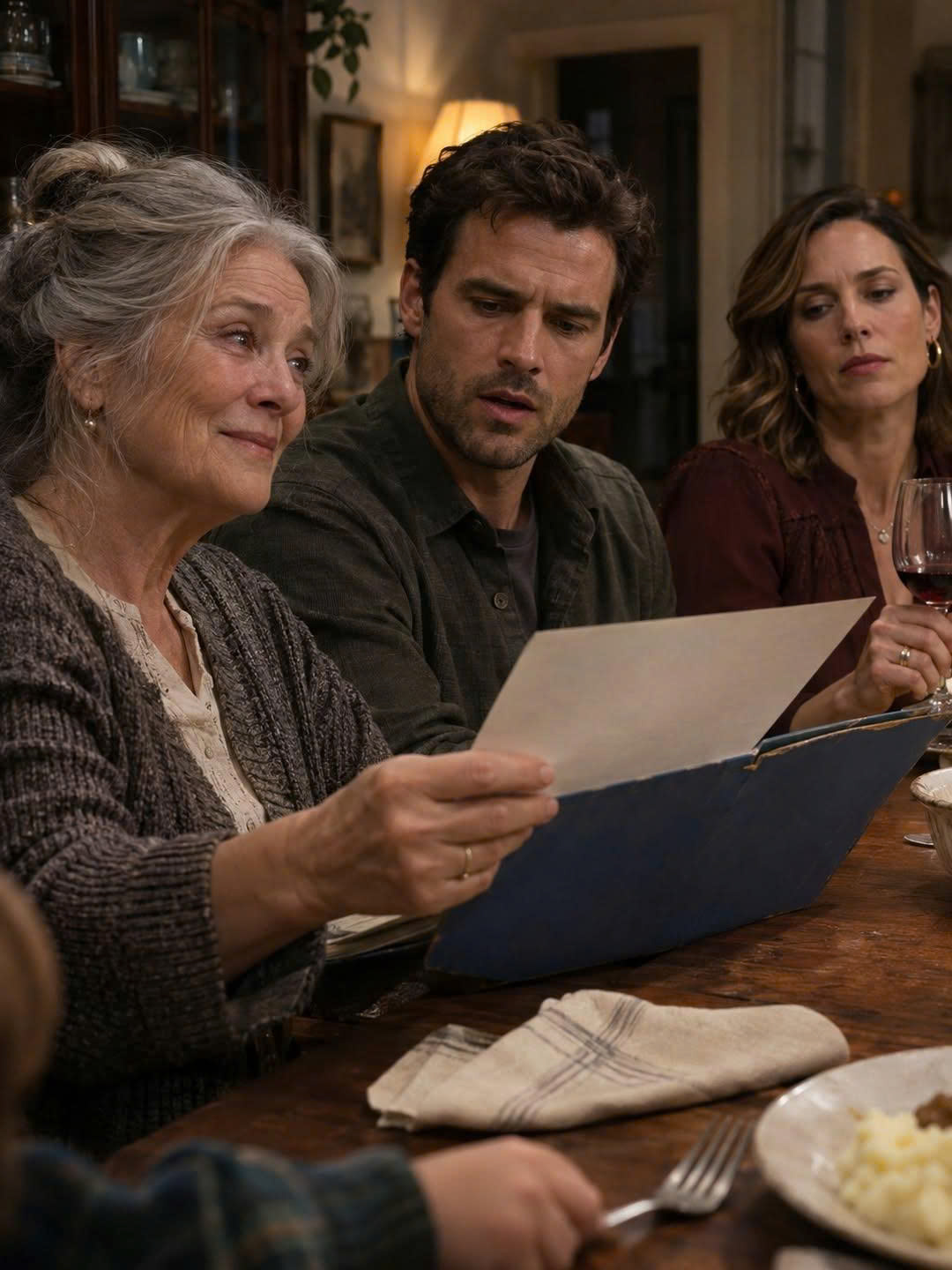
Several weeks later, Natalie called with the final property update. The recorded trust documents were complete. The disputed authorization had been addressed through the appropriate filings and institutional reviews.
The title records reflected my protected ownership arrangement. And the lender had confirmed in writing that no unauthorized home-equity loan remained pending against my property. I listened carefully. Then asked,
“Is there anything else”
“I need to do?”
Natalie smiled through the phone.
“Continue maintaining your records.”
“Review your estate plan periodically.”
“And enjoy your house.”
I laughed.
“That last part sounds like legal advice.”
She laughed too.
“Consider it a recommendation.”
I smiled.
“Thank you, Natalie.”
“You’re welcome, Eleanor.”
Then she added,
“Can I say something personal?”
“Of course.”
“I’m proud of how you handled this.”
My throat tightened. I looked toward Thomas’s photograph.
“Thank you.”
She continued.
“You didn’t retaliate impulsively.”
“You protected the children.”
“You respected the legal process.”
“And you stood up for yourself.”
I closed my eyes.
“For the first time in a very long time.”
Natalie was quiet. Then said,
“It’s never too late.”
***
Connor called every Sunday. At first, our conversations were awkward. He asked about the weather. My garden.
My health. The children’s school activities. I answered politely. But I didn’t pretend that everything was repaired.
Trust had been damaged. And trust required time. Gradually, the conversations became more honest. Connor told me about managing his own bills.
The unexpected cost of household repairs. The difficulty of keeping a budget. And the responsibility of raising two children without depending on my home. One Sunday, he admitted something.
“Mom, I didn’t realize how much you were doing.”
I smiled sadly.
“I know.”
He hesitated.
“Every month, something comes up.”
“A repair.”
“A school expense.”
“A utility bill.”
I nodded.
“That’s homeownership and parenting.”
He laughed weakly.
“I know that now.”
Then he grew quiet.
“Mom, I think”
“I spent twelve years pretending I was independent while depending on you for nearly everything.”
My throat tightened. I waited. He continued.
“And whenever you asked for something in return,”
“I treated it like an inconvenience.”
I closed my eyes.
“Yes, Connor.”
“You did.”
He swallowed.
“I’m sorry.”
I took a breath.
“Thank you.”
It wasn’t enough to erase the past. But it was honest. And honesty was the only place a healthier relationship could begin.
***
Connor and Melinda’s marriage remained difficult. The financial disputes had exposed problems they’d avoided for years. Melinda struggled with the loss of the lifestyle she’d come to expect. Connor struggled with the realization that he’d allowed his wife to make decisions he knew were wrong.
They began counseling. Not because I demanded it. Not because I promised to help financially. But because they finally understood that their marriage couldn’t continue without addressing what had happened.
I didn’t involve myself. Their relationship belonged to them. I cared about their well-being. But I no longer believed that caring required me to manage their marriage.
***
Melinda sent me a letter in November. I recognized her handwriting. For several days, I left the envelope on my desk.
I wasn’t ready to open it. Eventually, one quiet afternoon, I sat beside the window and read it. The first paragraph was exactly what I expected.
She wrote about how difficult the past year had been. How much stress the family had experienced. How disappointed the children were. And how painful the legal proceedings had become.
I almost stopped reading. Then the tone changed. She wrote that she had begun working with a counselor. That she was examining why she felt she needed to control everything.
And that she’d started to understand how much she had taken for granted. Then came the first sentence that sounded like a genuine apology.
“I was wrong to tell you to leave your own home.”
I stared at the words. Melinda continued. She acknowledged that I had welcomed her family into my house when they were struggling. That I’d helped raise
Jackson and Lily. That I’d paid expenses she barely noticed. And that she had gradually begun treating my generosity as though it were something she was entitled to demand. She wrote that the house had become a symbol of success she wanted to control.
And that she’d convinced herself I would be happier elsewhere. Then she admitted something important.
“I never actually asked you.”
My throat tightened. I continued reading. She apologized for the financial applications. For the conservatorship petition.
For using Connor’s fears to support her plans. And for placing the children in the middle of an adult dispute. She didn’t claim that everything had been an innocent misunderstanding. She didn’t demand forgiveness.
She simply wrote that she was ashamed. Then came the final paragraph.
“I understand if you never trust me again.”
“But I wanted you to know that I finally see what I did.”
I lowered the letter. For a long time, I sat quietly. I didn’t know whether Melinda would truly change.
I didn’t know whether her apology would survive the next disagreement. And I didn’t know what kind of relationship we might have in the future. But I appreciated that she’d finally acknowledged the truth. I placed the letter inside my desk drawer.
Then went outside to water the roses.
***
December arrived with cold mornings and early sunsets. For the first time in twelve years, I decorated the house exactly as I wanted. I used the old ornaments
Thomas and I had collected. The glass angels. The little wooden stars. The handmade decorations
Connor created when he was young. And the silver bells we purchased on our honeymoon. I placed a small Christmas tree in the living room. Not enormous.
Not professionally decorated. Just a beautiful, slightly uneven tree with lights that glowed warmly through the windows. Ruth came over to help. We listened to old Christmas music.
Drank hot chocolate. And laughed about childhood memories. At one point, Ruth held up a faded ornament.
“Remember this?”
I smiled. It was a little wooden house. Thomas had made it during our first Christmas together. The roof was crooked.
One window was slightly too large. And the paint had faded over the years. I held it carefully.
“He made that when we couldn’t afford proper decorations.”
Ruth laughed.
“I remember.”
“He was so proud.”
I smiled through tears.
“He was.”
Then I hung it near the center of the tree. For a moment, I felt Thomas closer than I had in years.
***
On Christmas Eve, Connor called.
“Mom?”
“Hello, sweetheart.”
He hesitated.
“I wanted to ask about tomorrow.”
I smiled faintly.
“What about it?”
“Would you like to come over for dinner?”
I considered the invitation. The new townhouse was modest. But Connor had told me they’d decorated it beautifully. Jackson and Lily were excited.
And Connor had begun taking real responsibility for the household. Still, I wasn’t ready for an elaborate family gathering that might become uncomfortable. I took a breath.
“How about we meet for brunch?”
He sounded relieved.
“Really?”
“Yes.”
“Somewhere neutral.”
“Just a few hours.”
He agreed immediately.
“That sounds wonderful.”
I smiled.
“Good.”
Then he hesitated.
“Mom?”
“Yes?”
“Would you like”
“Melinda to come?”
I thought carefully. I had read her letter. I appreciated the apology. But boundaries didn’t disappear because someone had begun acknowledging mistakes.
I took a breath.
“Yes.”
“But I want everyone to understand that we’re starting slowly.”
Connor nodded.
“I understand.”
“And if things become uncomfortable,”
“I’ll leave.”
“Of course.”
I smiled.
“Then I’ll see you tomorrow.”
His voice broke slightly.
“Thanks, Mom.”
***
Christmas morning was clear and bright. I woke early. Made coffee. And sat beside the tree.
The house was quiet. Sunlight streamed through the windows. Thomas’s little wooden ornament hung near the center. I looked around at the home we’d built together.
For twelve years, I’d allowed other people’s needs to determine almost everything that happened inside it. Now the house felt different. Not because the walls had changed.
Not because the furniture was expensive. But because I could finally breathe. I no longer woke wondering what Melinda would criticize.
I no longer felt the need to justify every personal decision. And I no longer confused keeping peace with surrendering my own happiness. I took a sip of coffee. Then whispered,
“Merry Christmas, Thomas.”
***
The brunch was held at a small restaurant near the town square. Ruth came with me. Connor and Melinda arrived with the children. Jackson hugged me immediately.
Lily nearly knocked me over.
“Grandma!”
I laughed.
“Careful, sweetheart.”
She grinned.
“I missed you.”
“I missed you too.”
Connor looked nervous. Melinda seemed uncertain. But both greeted me politely. We sat down.
Ordered breakfast. And began talking about ordinary things. Jackson’s basketball team. Lily’s art project.
Ruth’s gardening plans. Connor’s work. And the upcoming school holiday. For a while, the conversation was easy.
Then Melinda cleared her throat. I looked toward her.
“Eleanor?”
“Yes?”
She took a breath.
“I wanted to thank you for coming today.”
I nodded.
“You’re welcome.”
Her hands trembled slightly.
“I know things have been difficult.”
I waited. She continued.
“And I know”
“I caused much of that.”
Connor looked toward her. His expression softened. Melinda swallowed.
“I’m sorry.”
I took a slow breath.
“Thank you, Melinda.”
She looked relieved. Then I added gently,
“I appreciate you acknowledging that.”
“But rebuilding trust will take time.”
She nodded.
“I understand.”
For once, she didn’t argue. She didn’t explain why I should get over it. She simply accepted what I’d said. And that mattered.
***
After brunch, Lily asked whether she could come home with me for the afternoon. Connor looked at Melinda. Then at me.
I smiled.
“If your parents agree.”
Melinda hesitated. Then nodded.
“Of course.”
Lily cheered. Jackson asked if he could come too. I laughed.
“Absolutely.”
Ruth smiled.
“Well, Eleanor.”
“Looks like your quiet afternoon just became more interesting.”
I laughed.
“Apparently.”
But this time, the arrangement felt different. The children were visiting. They weren’t being used to negotiate where I lived. Their parents had asked.
I had agreed. And everyone understood that the decision belonged to me.
***
That afternoon, Jackson helped me carry firewood inside. Lily made cookies. Ruth prepared tea.
And the house filled with laughter. Not the frantic noise of a household where everyone expected me to manage their needs. But the warm, comfortable sound of people enjoying each other’s company. We played board games.
Watched an old Christmas movie. And ate too many cookies. Then Lily asked whether she could see Grandpa Thomas’s study. I smiled.
“Of course.”
She took my hand. We walked down the hallway. I opened the door. Sunlight filled the room.
Thomas’s drafting desk stood beneath the window. His books lined the shelves. The old brass plaque hung beside his photograph. Lily looked around.
“It’s beautiful.”
My throat tightened.
“Thank you.”
She examined the desk. Then asked,
“Did Grandpa make things here?”
I smiled.
“All the time.”
“What kind of things?”
I pointed toward the shelves.
“Furniture.”
“Little wooden toys.”
“Plans for repairs.”
“And sometimes very complicated drawings that only he understood.”
Lily laughed. Then she noticed a small wooden box on the desk.
“What’s that?”
I picked it up. Thomas had made it during the final year of his life. Inside were several old photographs. A pocket watch.
And a folded piece of paper. I had seen the photographs. But I’d never opened the folded paper. For some reason, that afternoon,
I decided to.
***
The paper contained Thomas’s handwriting. I recognized it immediately. It was a short note.
Written years earlier. Apparently intended for the family. I unfolded it carefully. At the top,
Thomas had written: OUR HOUSE. My throat tightened. Lily leaned closer.
“What’s it say?”
I smiled.
“Let’s find out.”
I began reading. Thomas wrote about how proud he was of the home we’d built together. How much he loved watching Connor grow up. How grateful he was for the years we’d spent there.
Then he wrote something that made me stop.
“I hope our son always remembers that this house was never simply walls and furniture.”
“It was the place his mother and I built together.”
My eyes filled. I continued. Thomas wrote that he wanted Connor to have a good life. A loving family.
A comfortable home. And the confidence to build something of his own. But then came the sentence that made me cry.
“I hope he never mistakes his mother’s generosity for something he owns.”
I covered my mouth. Lily looked worried.
“Grandma?”
I shook my head gently.
“I’m okay, sweetheart.”
I continued reading. Thomas wrote that he hoped I would always have the freedom to remain in our home. That I would enjoy the garden.
The maple tree. The study. And the little things we’d created together. Then he wrote:
“Eleanor has spent her life making room for everyone else.”
“I hope someone always makes room for her.”
I couldn’t speak. I sat down in Thomas’s chair. The note trembled in my hands. For years,
I’d wondered whether I was selfish for wanting my own home back. Whether I’d been unfair to Connor and Melinda. Whether a good mother was supposed to keep sacrificing until nothing remained. And now, from a folded paper
I’d nearly forgotten existed, my husband was reminding me of something I should have known all along. I mattered too.
***
Lily climbed onto the chair beside me. She wrapped her arms around my waist.
“Grandma?”
I looked at her.
“Yes, sweetheart?”
“Are those happy tears?”
I smiled through them.
“Mostly.”
She nodded. Then looked at the note.
“Grandpa loved you a lot.”
I laughed softly.
“Yes.”
“He did.”
She smiled.
“I love you too.”
I kissed her forehead.
“And I love you.”
Then she looked around the study.
“Can I draw here?”
I smiled.
“Of course.”
She grinned.
“But I won’t move Grandpa’s things.”
My heart tightened. I laughed through tears.
“Thank you, sweetheart.”
***
Later that evening, after Connor collected the children, Ruth and I sat at the dining table. The house was quiet again. The Christmas tree glowed in the living room.
A few cookie crumbs remained on the table. And Thomas’s note lay beside my teacup. Ruth read it carefully. Then looked at me.
Her eyes were wet.
“He always understood you.”
I smiled sadly.
“He did.”
She folded the paper. Then handed it back.
“Are you going to show Connor?”
I considered the question.
“Someday.”
Ruth nodded.
“When you’re ready.”
I looked toward the study.
“Yes.”
“Not as a punishment.”
“Not to make him feel guilty.”
“But because I think he needs to understand what his father valued.”
Ruth smiled.
“He will.”
We sat quietly. Then she looked around.
“Well, Eleanor.”
“What?”
“What’s next?”
I considered the question. For years, my life had revolved around everyone else’s plans. Connor’s job. Melinda’s needs.
The children’s schedules. Household expenses. Family obligations. Then the legal dispute.
The financial investigation. The conservatorship petition. And the painful work of rebuilding boundaries. Now, for the first time,
I could choose what came next. I smiled.
“I think I’m going to take a trip.”
Ruth raised an eyebrow.
“Where?”
I laughed.
“Anywhere I want.”
She grinned.
“That sounds wonderful.”
I looked at her.
“Would you like to come?”
She laughed.
“Eleanor Bennett.”
“What?”
“Are you inviting me on a vacation?”
I smiled.
“Yes.”
“No children.”
“No household schedules.”
“No relatives deciding what we should do.”
Ruth laughed harder.
“Then absolutely.”
***
The following spring, Ruth and I traveled to the coast. We rented a small cottage overlooking the ocean. Nothing luxurious.
Just two bedrooms, a bright kitchen, and a porch where we could watch the waves. We spent mornings drinking coffee. Walked along the beach. Visited bookstores.
Ate fresh seafood. And laughed about memories we hadn’t discussed in years. One evening, we sat outside watching the sunset. Ruth looked toward me.
“Are you happy?”
I thought carefully. Then smiled.
“Yes.”
She nodded.
“Really?”
I laughed.
“Really.”
Then I looked toward the water.
“I’m still sad sometimes.”
“About Connor.”
“About Melinda.”
“About how things happened.”
Ruth nodded.
“Of course.”
I continued.
“But I don’t feel like I’m disappearing anymore.”
Her expression softened. I smiled.
“I feel like myself.”
Ruth reached for my hand.
“Then that’s worth celebrating.”
We sat quietly. The waves moved across the sand. The evening air smelled of salt. And for once,
I didn’t feel that happiness needed to be earned through sacrifice.
***
By the next Christmas, our family relationships had become calmer. Not perfect. But healthier. Connor continued counseling.
He maintained his financial obligations. And he no longer asked me to solve every problem. Melinda worked to rebuild her own independence. She had begun recognizing that controlling others wasn’t the same as creating security.
Their marriage remained a work in progress. But that was theirs to manage. Jackson was doing well in school. Lily had won a small art competition.
And both children visited me regularly. Sometimes, Connor came alone. We drank coffee.
Talked about work. And gradually rebuilt a relationship that didn’t depend on my willingness to surrender everything. I still had boundaries. And he was learning to respect them.
***
That Christmas Eve, I hosted a small dinner. Ruth came early. Connor brought the children.
Melinda arrived with a homemade dessert. We had discussed the visit beforehand. Everyone understood that it was an invitation. Not an entitlement.
The table was beautiful. White linens. Fresh flowers. Warm candles.
And Thomas’s old Christmas dishes. But something was different. I had chosen everything. The menu.
The decorations. The seating. The guests. And most importantly,
I had chosen to welcome them. Not because I was afraid of disappointing anyone. But because I wanted to share the evening.
***
Before dinner, Connor approached me in the kitchen. He looked nervous.
“Mom?”
I smiled.
“Yes?”
“Can I say something?”
“Of course.”
He took a breath.
“I was thinking about that dinner two years ago.”
My chest tightened. The blue folder. Melinda’s announcement. His silence.
I nodded.
“I remember.”
Connor looked down.
“I wish I’d stood up for you that night.”
My throat tightened.
“So do I.”
He nodded. Then continued.
“I thought keeping quiet was keeping my marriage peaceful.”
I looked at him.
“And?”
He swallowed.
“It wasn’t.”
“It was making you carry the consequences of decisions”
“I was afraid to challenge.”
I smiled sadly.
“Yes.”
He took another breath.
“I’m learning that being a good husband doesn’t mean agreeing with everything.”
“And being a good son doesn’t mean depending on you forever.”
My eyes filled. I looked at him.
“That’s a good lesson.”
He smiled weakly.
“I wish I’d learned it sooner.”
I touched his hand.
“So do I.”
Then he whispered,
“Thank you for not giving up on me completely.”
I looked at my son. The little boy I’d once carried up these stairs. The teenager who’d asked for advice.
The young father who’d arrived with nowhere to go. And the grown man who was finally beginning to understand what responsibility required. I smiled through tears.
“I never stopped loving you.”
His eyes filled.
“But loving you doesn’t mean”
“I can live your life for you.”
He nodded.
“I know.”
Then he hugged me. And for the first time in years, the embrace didn’t feel like a request for another sacrifice. It felt like two people learning how to love each other with respect.
***
We sat down for Christmas dinner. Jackson told a joke. Lily laughed so hard she nearly spilled her water. Ruth complained playfully about Connor’s terrible carving skills.
Melinda passed the vegetables. And I sat at the head of my own table. Not because I needed to prove who owned the house.
But because I’d finally reclaimed my place in it. I looked around. Everyone had a plate.
Everyone had a chair. Everyone was welcome. And nobody was allowed to decide that someone else deserved to disappear.
***
After dinner, Lily brought me a small wrapped present.
“Grandma, open mine first!”
I laughed.
“All right, sweetheart.”
I carefully removed the paper. Inside was a wooden picture frame. She had painted it pale blue with little yellow flowers. In the center was a photograph of my house.
Thomas’s maple tree stood beside the driveway. The front porch was decorated with Christmas lights. And beneath the photograph, Lily had written five simple words.
GRANDMA’S HOME. ALWAYS HER HOME. My eyes filled immediately. I looked at Lily.
“Sweetheart.”
She smiled proudly.
“Do you like it?”
I pulled her close.
“I love it.”
She hugged me. Then whispered,
“Dad helped me spell it.”
I looked toward Connor. He was watching us. His eyes were wet. He smiled.
I smiled back. And in that moment, I understood that something important had finally changed. Not the house.
Not the money. Not the legal documents. The understanding of who belonged and why.
***
Later that evening, after everyone had gone, I carried Lily’s frame into Thomas’s study. I placed it beside our wedding photograph. Then I sat down in his old chair.
The room was peaceful. The bookshelves were organized. The desk was clean. And sunlight from the hallway fell across the photographs.
I looked at Thomas. Then at Lily’s gift. Then at the blue folder I’d kept inside the bottom drawer.
The folder that had once held the documents necessary to protect my home. I opened it one final time. The trust documents. The financial records.
The legal notices. The settlement confirmations. And the final accounting for the children’s fund. Every page represented something
I had fought to protect. Not through shouting. Not through cruelty. Not through revenge.
But through truth. Documentation. Boundaries. And the willingness to say no when no was necessary.
I closed the folder. Then placed it back inside the drawer. I didn’t need to look at it anymore.
***
Outside, snow began falling. Soft flakes drifted past the windows. The house was quiet. But it wasn’t lonely.
I had friends. A sister who loved me. Grandchildren who knew they were welcome. A son learning to stand on his own feet.
And a future that still belonged to me. I thought back to that terrible dinner. Melinda raising her glass. Announcing that I should begin figuring out how to live alone.
She had intended those words to frighten me. To make me feel unwanted. Unnecessary. Disposable.
But she hadn’t understood what they would eventually teach me. Living alone wasn’t the same as being abandoned. Having boundaries wasn’t the same as rejecting family. And protecting my property wasn’t the same as choosing money over love.
For twelve years, I’d made room for everyone else. Now I’d finally learned to make room for myself.
***
I stood slowly. Walked to the window. And looked out at Thomas’s maple tree. Its branches were covered with a light dusting of snow.
I remembered the day he planted it. Connor was six. Thomas had handed him a small shovel. And the two of them worked together while I watched from the porch.
When they finished, Thomas looked at me. Then smiled.
“This tree will grow long after we’re gone.”
I’d laughed.
“That’s a cheerful thought.”
He wrapped his arms around me. Then whispered,
“That’s why we build things.”
“So someone else has something worth protecting.”
I smiled through tears. All those years later, I finally understood what he meant. We hadn’t built this house so our son could take it whenever he wanted.
We’d built it as a home. A place of safety. A place of love. A place where the people we cared about could gather.
But love was never supposed to require one person to disappear so everyone else could remain comfortable. I looked toward Thomas’s photograph. Then whispered,
“I protected it, sweetheart.”
“And I protected myself too.”
***
The clock chimed nine. I turned away from the window. Walked into the kitchen. Made a cup of tea.
Then returned to the living room. The Christmas tree glowed warmly. Lily’s little frame stood beside the fireplace. And the house felt exactly as it should.
Mine. Not because I had forced anyone out. Not because
I had won some imaginary competition against my daughter-in-law. But because I had finally remembered that the woman who opened the door to help her family had never surrendered the right to close it when necessary. I sat down.
Took a sip of tea. And smiled. Two years earlier, Melinda had told me
I needed to figure out how to live alone. She thought she was giving me the worst news of my life. Instead, she had unknowingly pushed me toward the freedom I’d been missing for twelve long years.
Because the greatest thing I recovered wasn’t the house. It was my voice. My independence.
My peace. And the understanding that I could love my family without surrendering myself. The house was quiet. The future was open.
And for the first time in a very long time, I didn’t need anyone’s permission to be happy inside my own home.