
PART 2: THE ENVELOPE BETWEEN US
Sarah pulled the papers from the envelope. Her smile disappeared almost immediately. She unfolded the first page slowly. Then she stared at the heading. Greg leaned across the table.
“What is it?” he asked.
Sarah didn’t answer him. Her eyes moved down the page. Then back toward the top.
“Mom, what have you done?”
I took a small sip of water.
“Exactly what you asked me to do.”
“I haven’t asked you to do anything.”
“Actually, sweetheart, you just asked me to leave.”
Greg reached for the document. Sarah pulled it away from him.
“Wait.”
Her voice had changed. The cheerful daughter who had ordered dessert was suddenly nowhere to be found. She looked at me with narrowed eyes.
“Why does this say family trust?”
“Because that’s what it is.”
“And why is Thomas Weller’s name here?”
“Because Thomas is my attorney.”
Greg stopped moving. For the first time that evening, I saw genuine concern cross his face. Not anger.
Not annoyance. Concern. He knew the name. Thomas Weller had practiced property law
in our county for nearly thirty years. He was careful, respected, and thorough. More importantly, he knew exactly how to protect an elderly homeowner
from people who misunderstood generosity. Sarah continued reading. Her fingers tightened around the paper.
“Mom, this says the house belongs to the Margaret and Daniel Hayes Trust.”
“Yes.”
“But Dad died six years ago.”
“I remember.”
She looked almost offended.
“Then why is his name still there?”
“Because he helped build that home.”
“And because I wanted it there.”
Greg finally interrupted.
“Margaret, I think there’s been some confusion.”
I turned toward him.
“About what?”
He cleared his throat.
“About how property ownership actually works.”
I almost smiled. For three years, Greg had explained my own life to me. He explained which groceries were healthy.
Which television programs were worth watching. Which furniture was outdated. Which repairs were supposedly necessary. And now he intended to explain
the ownership of my own house.
“Please,” I said.
“Go ahead.”
Greg glanced at Sarah. Then he leaned forward.
“We’ve lived there for three years.”
“That’s correct.”
“We’ve maintained the property.”
“Occasionally.”
“And we’ve invested considerable time making improvements to the house.”
I nodded.
“You replaced my rosebushes with gravel.”
His jaw tightened.
“That was landscaping.”
“You painted my dining room gray.”
“An upgrade.”
“And you installed shelves in the garage.”
He spread his hands.
“Exactly.”
I looked directly into his eyes.
“None of those things made you owners.”
Sarah slapped the papers onto the table. The sound startled a nearby couple.
“Mom, you’re being ridiculous.”
I didn’t raise my voice.
“Read the second page.”
She looked down. Another document remained inside the envelope. Greg noticed it first.
“What else is there?”
“Something you should both understand.”
Sarah unfolded the second document. Her face grew steadily paler.
“Notice of termination of occupancy?”
She read the heading aloud. Then looked at me.
“What does that mean?”
“It means our living arrangement is ending.”
Greg reached across her. He snatched the paper from her hands. His eyes raced over the typed paragraphs.
“Sixty days?”
He looked up sharply.
“You’re giving us sixty days?”
“The notice begins with proper service.”
“And Thomas will handle that tomorrow.”
Sarah pushed her chair backward.
“You can’t evict your own daughter.”
I watched her carefully. Something in her voice disturbed me. It wasn’t fear of losing me. It wasn’t sadness about our relationship.
It was outrage at losing control.
“I’m not throwing anyone onto the street.”
“You have time to make arrangements.”
“And if the law requires additional time, Thomas will make sure you receive it.”
Greg gave a bitter laugh.
“You’ve planned this.”
“Yes.”
“For how long?”
“Long enough.”
Sarah’s eyes filled with angry tears.
“On your birthday?”
I looked at the candle beside my dessert. The flame had burned nearly to nothing.
“You chose tonight, Sarah.”
“You invited me here.”
“You ordered the wine.”
“And you told me I was a burden.”
She opened her mouth. Nothing came out. Greg pushed his chair away.
“This is unbelievable.”
I folded my napkin.
“Actually, I think it’s very clear.”
He pointed toward the papers.
“You can’t just change everything without discussing it with us.”
I held his gaze.
“That’s interesting.”
“What is?”
“You were perfectly comfortable changing my living arrangements without asking me.”
His face flushed. Sarah looked around the restaurant. Several people had begun watching us. She lowered her voice.
“Mom, you’re embarrassing us.”
That sentence struck something familiar. Three years of whispered corrections. Three years of being told not to speak too loudly.
Not to leave my knitting downstairs. Not to invite friends without permission. Not to use the kitchen when Greg was preparing protein shakes.
And now, even at my birthday dinner, I was apparently responsible for their embarrassment. I reached for my handbag.
“Then perhaps we should leave.”
Sarah caught my wrist.
“Not until you explain everything.”
Her grip was tighter than necessary. I looked down at her fingers. Then back at her face.
“Take your hand off me.”
For a moment, she didn’t move. Greg watched without speaking. Then Sarah released me. I stood slowly.
My knees were perfectly steady. For some reason, that seemed to surprise them most.
“I’ve already paid for my dinner.”
Sarah blinked.
“What?”
“I settled my portion with the waitress.”
“And I left her a generous tip.”
Greg glanced toward the service station.
“You did that when?”
“While you were discussing my future.”
Sarah looked stunned. I lifted my handbag.
“Happy birthday to me.”
Then I walked toward the restaurant entrance. Behind me, Greg called my name. I didn’t turn around. Outside, the evening air smelled of rain.
The restaurant’s windows glowed behind me. Cars passed on the wet street. Somewhere nearby, a church bell rang. I stood beneath the awning.
Then I took my phone from my purse. There was already a message waiting. It was from Thomas. Everything remains ready.
Call if you need assistance. I stared at those words. Three years earlier, I would have needed assistance
just to say no to my daughter. That night, I needed assistance with something different. Not finding my courage.
Keeping it. I pressed the call button. Thomas answered almost immediately.
“Margaret?”
“It’s done.”
There was a brief silence. Then he asked one simple question.
“Are you safe?”
“Yes.”
“Did they become aggressive?”
“Only with their words.”
“And Sarah grabbed my wrist briefly.”
His voice became firmer.
“Are you away from them now?”
“I’m outside the restaurant.”
“Good.”
“Your transportation is waiting?”
I looked toward the parking area. A familiar blue sedan stood beneath a lamp. Inside sat my oldest friend, Irene. She waved when she saw me.
“Yes,” I answered.
“Irene’s here.”
“Then go home with her.”
“We’ll discuss the next steps tomorrow.”
I looked back through the restaurant window. Sarah was standing beside the table. Greg was talking rapidly. His hands moved through the air.
The white papers lay between them. For once, neither seemed interested in telling me what to do.
“Thomas?”
“Yes?”
“Thank you.”
“You hired me to protect your interests.”
“That’s what we’re doing.”
I ended the call. Then I walked toward Irene’s car. She opened the passenger door.
“Well?” she asked.
I climbed inside.
“They read the envelope.”
Irene studied my face.
“And?”
“They weren’t pleased.”
She gave a dry little laugh.
“I imagine not.”
Then her expression softened.
“Are you all right?”
That question nearly undid me. Not the restaurant confrontation. Not Sarah’s accusations. Not Greg’s furious expression.
Just four ordinary words, spoken by someone who genuinely cared. I looked out through the windshield. Rain began tapping against the glass.
“I think so.”
Irene placed her hand over mine.
“You don’t have to pretend with me.”
My throat tightened.
“I know.”
We remained there for a moment. Then she started the engine. As we drove away, I caught one final glimpse of Sarah.
She stood near the restaurant entrance, holding her phone to her ear. I knew who she was calling. Me.
My phone began vibrating. I turned it face down. Irene glanced toward it.
“You going to answer?”
“Not tonight.”
She smiled faintly.
“Good.”
The drive to Irene’s house took fifteen minutes. I had known her for thirty-seven years. We met when Sarah was five. Our daughters attended the same kindergarten.
Irene’s husband had repaired our roof after a terrible storm one spring. Daniel had helped him build a garden shed. Over the years,
we had exchanged countless meals, celebrated weddings, buried people we loved, and endured the ordinary disappointments of life.
Irene knew my family. She knew Sarah. And she knew how deeply the last three years had hurt me.
Her house smelled of cinnamon and coffee. A small lamp glowed beside the sofa. There were fresh flowers on the table. And beside them stood
a homemade birthday cake. Chocolate. With strawberries. My favorite.
I stopped in the doorway.
“Irene.”
She took my coat.
“Don’t start crying yet.”
“I haven’t made the tea.”
But my eyes were already burning. On the cake, she had placed six small candles. One for each decade.
“Sixty isn’t the end of anything,” she said.
“Especially not for you.”
I looked at the little flames. Then at my friend’s kind face. And suddenly, I remembered my fortieth birthday.
Daniel had surprised me with a picnic beside the river. Sarah was eighteen. She had just started college.
She spent the afternoon laughing because her father couldn’t light the candles in the wind. Daniel finally sheltered them
inside an old coffee tin. When I blew them out, he kissed my forehead.
“Promise me something, Maggie.”
“What?”
“Don’t spend the next twenty years taking care of everyone except yourself.”
I laughed at him.
“That’s impossible.”
He shook his head.
“No, it isn’t.”
I hadn’t understood then. Perhaps he hadn’t fully understood either. But now, standing in Irene’s kitchen,
I realized how completely I had broken that promise. Irene touched my shoulder.
“Where did you go just now?”
I swallowed.
“I was thinking about Daniel.”
Her expression softened.
“He’d be proud of you.”
I shook my head.
“He’d be heartbroken about Sarah.”
“Yes,” Irene said quietly.
“He would.”
She didn’t try to soften the truth. That was one reason I trusted her. She led me toward the table.
“Sit.”
“I’ll cut the cake.”
We ate in comfortable silence. Then I told her everything. The restaurant. The speech.
The envelope. The way Greg had tried to explain property law to me. At that, Irene laughed so loudly
that she nearly spilled her tea.
“Greg?”
“Yes.”
“The man who thought a property tax bill was a monthly subscription?”
I laughed despite myself.
“He’s learned a few things since then.”
“Apparently not enough.”
Her laughter faded.
“Margaret, what happens tomorrow?”
I looked down at my cup.
“Thomas will arrange proper service.”
“And?”
“I’ll move the remaining things.”
“Your bedroom is nearly empty?”
“Everything important is already safe.”
She nodded.
“And the house?”
I hesitated. That was the difficult part. The envelope had revealed the trust. But it hadn’t revealed everything.
Not the most important decision. Not what Thomas and I had discussed during those quiet meetings. Not why I had visited
a small cottage twenty miles away. And certainly not why a woman named Rebecca Morgan had been walking through my garden
three weeks earlier.
“I haven’t told Sarah about that yet.”
Irene looked at me.
“Are you still certain?”
I stared at the candlelight.
“Yes.”
“Even if she apologizes?”
That question hurt. Because I knew the difference between an apology and a negotiation. And I suspected Sarah didn’t.
“If she apologizes,” I said,
“I’ll listen.”
“But the house is another matter.”
Irene nodded slowly.
“Fair enough.”
My phone vibrated again. Then again. And again. I finally turned it over.
Seventeen missed calls. Nine messages. The first came from Sarah. Mom, you’re overreacting.
The second arrived three minutes later. Greg says these papers aren’t valid. The third was more revealing. We need to discuss the equity.
I stared at that word. Equity. Not memories. Not family.
Not home. Equity. I showed Irene the message. She frowned.
“What equity?”
“Exactly.”
I put the phone aside. But something cold moved through my chest. For months, Greg had spoken strangely about the house.
He asked what comparable properties sold for. He wanted to know whether Daniel had taken out life insurance. He once suggested that I refinance.
“Just to free up some cash,”
he had said. I refused. He didn’t mention it again. At least not directly.
But Thomas had already uncovered something troubling. Something I hadn’t yet confronted them about. And Sarah’s message brought it back. Irene watched me carefully.
“What is it?”
I shook my head.
“Something Thomas is checking.”
“Is it serious?”
“It might be.”
She reached for my hand.
“Then let him handle it.”
“I intend to.”
That night, I slept in Irene’s guest room. For the first time in years, I didn’t hear Greg’s television downstairs. I didn’t hear Sarah arguing
about the temperature of the house. Nobody complained about my bedside lamp. Nobody told me I was wasting electricity.
I lay beneath a soft quilt, listening to the rain. And I cried. Not loudly.
Not dramatically. Just quietly, with my face turned toward the pillow. I cried for Daniel.
For the girl Sarah used to be. For the birthday dinner I had secretly hoped might be different. And for the years
I could never get back. Eventually, I fell asleep. The next morning, sunlight filled the guest room.
For several seconds, I forgot where I was. Then I remembered. And something unexpected happened.
I felt relief. Not happiness. Not yet. But relief.
A small, clean space inside my chest where fear had been living. Downstairs, Irene had made coffee. She pointed toward the table.
“Thomas called.”
I stopped.
“When?”
“Ten minutes ago.”
“He wanted you to call him before going anywhere near the house.”
I reached for my phone. Thomas answered on the second ring.
“Good morning, Margaret.”
“Good morning.”
“Did you sleep?”
“Better than I expected.”
“I’m glad.”
His tone changed.
“We need to discuss something.”
I sat down. Irene watched my expression.
“What happened?”
“Sarah contacted my office this morning.”
I closed my eyes briefly.
“Of course she did.”
“She asked whether the trust could be revoked.”
I gave a humorless laugh.
“She didn’t ask whether I was all right?”
“No.”
I stared at the kitchen wall. Thomas continued.
“She also asked whether Greg would be entitled to reimbursement for improvements made to the property.”
“I can guess which improvements.”
“We’ll address any documented claims appropriately.”
“But that’s not my main concern.”
“What is?”
He paused.
“Margaret, I received another inquiry yesterday.”
“From whom?”
“A representative of a lending institution.”
The kitchen seemed suddenly colder. Thomas spoke carefully.
“They were attempting to verify ownership information connected to your address.”
I gripped the phone.
“What kind of information?”
“Information related to a proposed home equity loan.”
For several seconds, I heard only Irene’s refrigerator humming. Then I asked the obvious question.
“Who applied?”
“We don’t have confirmed answers yet.”
“But your name appears in the inquiry.”
My stomach tightened.
“I never applied for a loan.”
“I know.”
“And I never authorized anyone else.”
“I know that too.”
Thomas waited. Then he said,
“That’s why we need to be careful.”
“What happens now?”
“I’ve contacted the lender’s fraud department.”
“We’ve requested written confirmation of what was submitted.”
“And I’m recommending that you secure your credit reports immediately.”
I looked toward Irene. She could see the alarm on my face.
“Thomas, could Greg have borrowed money against my house without telling me?”
“Not lawfully without proper authority.”
“But fraudulent applications do occur.”
I pressed my fingers against my forehead.
“Dear God.”
“Margaret, listen carefully.”
“No loan has been confirmed as funded.”
“We’re still establishing the facts.”
“Please don’t confront either of them about this until we know more.”
I nodded. Then remembered he couldn’t see me.
“All right.”
“I’ll meet you at eleven.”
“At your office?”
“Yes.”
“And Margaret?”
“Yes?”
“Bring your identification.”
“We may need to act quickly.”
After the call ended, I remained seated. Irene placed a mug beside me.
“What did he say?”
I told her. Her face darkened.
“Greg wouldn’t.”
I looked up. She hesitated. Then corrected herself.
“I mean, I hope he wouldn’t.”
“So do I.”
But I remembered something. A Tuesday afternoon, six months earlier. Greg had walked into my bedroom
carrying a folder. He said the county needed updated information for property records. He asked me to sign two forms.
I was reading a novel. My glasses were downstairs.
“Leave them here,” I said.
“I’ll look later.”
He became irritated.
“It’s just administrative nonsense, Margaret.”
I insisted on reading them. The first concerned homeowner insurance. The second was blank in several places. I refused to sign either.
Greg had snatched the folder away.
“Forget it,” he said.
“You make everything difficult.”
At the time, I thought he was simply rude. Now I wondered what those forms had actually been.
Irene touched my arm.
“Margaret?”
I looked at her.
“There’s something I need to remember.”
“What?”
“Every document Greg ever asked me to sign.”
She pulled out a chair.
“Then start talking.”
We spent the next hour writing down everything I could recall. The insurance paperwork. A request for my Social Security number.
An argument about refinancing. Greg’s strange interest in property values. Sarah’s insistence that I add her to my bank account.
A missing folder of old tax records. A conversation about medical power of attorney. One detail led to another. By ten-thirty,
we had filled four pages. Irene read the list. Then she looked at me.
“This isn’t ordinary family tension anymore.”
I knew she was right. At eleven, we arrived at Thomas’s office. It occupied the second floor
of an old redbrick building downtown. I had first visited that office with Daniel twenty-one years earlier. We needed help settling his mother’s estate.
Thomas was younger then. He had more hair. And he wore ties so colorful that Daniel used to tease him.
Now his hair was silver. His office was quiet. And he wore a plain navy tie. He greeted me at the door.
“Happy belated birthday, Margaret.”
I tried to smile.
“Thank you.”
He led us into his conference room. A neat stack of documents waited on the polished table. His assistant, Angela,
brought coffee and a box of tissues. I noticed the tissues immediately. Thomas noticed me noticing.
“Those are for everyone,” he said.
“Not just my clients.”
I managed a small laugh. Then he sat opposite us.
“Let’s start with the good news.”
I folded my hands.
“The trust documents are properly executed.”
“Your ownership records are consistent.”
“And the title search we obtained shows no completed transfer away from you.”
I exhaled.
“Good.”
“Now the more difficult part.”
He slid one sheet forward.
“This is an inquiry log.”
“An inquiry log?”
“A record of certain communications associated with your property.”
I scanned the dates. There had been three lender inquiries. The first occurred nine months earlier. The second happened in May.
The third had arrived last week.
“Why didn’t I know?”
“Some inquiries don’t create public filings.”
“Some are preliminary.”
“And the most recent inquiry raised enough questions that the lender contacted our office.”
He looked directly at me.
“Because your property is held in trust, their title review required clarification.”
I stared at the paper.
“So the trust protected me?”
“It created an additional verification point.”
“That’s more accurate.”
He continued.
“We haven’t established who submitted the application.”
“But something appears inconsistent.”
“Your personal information was used.”
“And an authorization document was referenced.”
I felt my pulse quicken.
“What authorization document?”
“A purported power of attorney.”
I shook my head immediately.
“I never gave Greg power of attorney.”
Thomas nodded.
“That’s what you’ve told me.”
“And I’ve found no legitimate document in your estate planning records giving him that authority.”
I looked at Irene. She was completely still. Thomas leaned forward.
“Margaret, we’re going to investigate.”
“But we must not jump ahead of the evidence.”
I swallowed.
“Could Sarah have been involved?”
He paused.
“I don’t know.”
That answer hurt more than an accusation. Because it left room for every terrible possibility. Thomas turned to another file.
“Now let’s discuss the occupancy notice.”
He explained the procedure carefully. The notice would be delivered formally. Their rights as occupants would be respected under applicable law.
If they refused to leave, we would seek a court order. Nobody would change locks improperly. Nobody would disconnect utilities.
Nobody would throw belongings outside. I listened to every word. I had told Thomas from the beginning that I wanted no revenge spectacle.
I wanted my life back. But I also wanted to remain the person I respected.
“Understood?” he asked.
“Yes.”
He looked relieved.
“Good.”
“Now, about your next home.”
He opened a separate folder. Inside was a photograph. A pale yellow cottage with blue shutters
and a narrow porch. Three maple trees shaded the yard. A stone path led toward the front steps. I touched the picture.
Even after seeing it several times, I felt the same quiet excitement. Irene smiled.
“It’s lovely.”
Thomas nodded.
“The inspection is complete.”
“The purchase is progressing.”
“Assuming the remaining conditions are satisfied, you’ll have a place that belongs entirely to you.”
I studied the photograph. For three years, I had lived in a guest room inside the house I owned.
Now I was purchasing a smaller home where nobody could tell me which room I was permitted to use. The thought nearly overwhelmed me.
“There’s one more thing,” Thomas said.
I looked up.
“The potential buyer of your current property has confirmed continued interest.”
Irene turned toward me.
“So you’re really selling?”
I nodded.
“Yes.”
Thomas folded his hands.
“Nothing is final yet.”
“We’ll proceed only after resolving the occupancy and title concerns.”
“But the buyer understands the situation.”
I looked down at the photograph. The yellow cottage. The blue shutters. The little patch of garden.
I imagined Daniel standing there. He would have complained that the porch needed repairing. Then he would have fixed it himself.
The ache came unexpectedly. I pressed my hand against my chest. Thomas waited respectfully.
“Margaret?”
“I’m all right.”
I looked up.
“I just wish Daniel could see it.”
Irene squeezed my hand.
“He’d probably bring his toolbox.”
I laughed softly.
“He would.”
We finished reviewing the documents. Thomas explained that Angela would coordinate delivery of the notice. He also recommended additional account security.
By noon, I had made several calls. I froze my credit. I changed important passwords.
I requested account activity records. And I authorized Thomas to communicate directly with the lender’s fraud department.
Every step felt strangely ordinary. A telephone call. A signature. A confirmation email.
Yet each one returned a small piece of my independence. Outside the office, Irene stopped beside her car.
“Where now?”
I looked at my watch.
“I need to collect a few things.”
“From the house?”
“Yes.”
She frowned.
“Thomas said not to go alone.”
“I know.”
“Then I’m coming.”
I didn’t argue. We arrived shortly after one. Greg’s car was in the driveway. Sarah’s wasn’t.
I had expected both to be working. But as we approached the front door, I heard Greg’s voice through an open window. He was speaking on the phone.
“I don’t care what the attorney says.”
A pause.
“She doesn’t understand the situation.”
Another pause.
“Find out what options we have.”
Irene looked at me. I took out my key. For a moment, I simply stared at it.
The brass was worn smooth. Daniel had attached a tiny blue house-shaped keychain the year we paid off the mortgage.
I turned the key. The front door opened. Greg stood in the living room. His phone was still against his ear.
He looked startled. Then angry.
“I’ll call you back.”
He ended the conversation.
“What are you doing here?”
I stepped inside. Irene followed.
“Collecting my belongings.”
Greg looked past me.
“Why is she here?”
Irene raised an eyebrow.
“Good afternoon to you too, Greg.”
He ignored her.
“Margaret, we need to talk.”
“Not right now.”
“You can’t just serve legal papers and then pretend nothing happened.”
“I haven’t pretended anything.”
He crossed his arms.
“Sarah was crying all night.”
The statement struck me. My daughter had cried. Part of me wanted to rush upstairs, find her,
hold her, and tell her everything could be fixed. That instinct was almost automatic. Then I remembered her words.
We only let you live with us because of your pension. I drew a slow breath.
“I’m sorry she’s upset.”
Greg looked satisfied.
“Then you should reconsider.”
“No.”
His expression hardened.
“Excuse me?”
“I said no.”
He stared at me. I walked toward the hallway. Greg moved into my path. Irene immediately stepped closer.
“Move aside, Greg.”
He glanced at her.
“This is a family matter.”
Irene’s voice remained calm.
“Then behave like family.”
For a moment, he looked as though he might start shouting. Instead, he stepped away.
I continued toward my bedroom. The door was open. Inside, almost nothing remained. A small suitcase stood beside the bed.
A framed photograph of Daniel rested on the dresser. And my mother’s old sewing basket sat beneath the window.
I picked up the photograph. Daniel was laughing in it. His hair was windblown. He held a fishing rod
with a ridiculous bright orange lure. Sarah had taken the picture during a family vacation. She was twelve.
I remembered that day vividly. We had spent the morning by the lake. Sarah insisted on fishing. Daniel showed her how to cast.
She tangled the line around his hat three times. He never lost his patience. By afternoon,
she had caught a small bluegill. She was so proud that she refused to release it until Daniel photographed her.
Later, she sat beside him on the dock.
“Daddy?”
“Yes, pumpkin?”
“Will this always be our house?”
She meant our real home, miles away from the lake. Daniel smiled.
“As long as we take care of it.”
Sarah leaned against him.
“And each other?”
“Especially each other.”
I closed my eyes. For one painful second, I could almost hear their voices. Then Greg shouted from downstairs.
“Margaret!”
The memory vanished. I placed the photograph in my handbag. Irene appeared at the doorway.
“Ready?”
“Almost.”
I looked around one last time. The curtains were still mine. The wallpaper was still mine. But the room no longer felt familiar.
I picked up the sewing basket. Then we went downstairs. Greg stood beside the kitchen island. Several papers lay spread before him.
He had apparently been reading copies of the notice.
“Sarah says you’re selling the house.”
I stopped.
“Sarah doesn’t know my plans.”
“She thinks you are.”
“I haven’t finalized any sale.”
Greg gave a short, bitter laugh.
“You can’t sell it with us here.”
“I know there are procedures.”
“Thomas is handling them.”
He stared at me.
“Do you understand what this means?”
“Yes.”
“It means we could lose everything.”
I looked at the expensive appliances. The oversized television. The new leather furniture. His exercise equipment in the garage.
Everything he was referring to had been purchased while he lived without paying rent.
“You have jobs,” I said.
“You have time to find housing.”
“You have your own savings.”
His eyes flickered. That tiny movement caught my attention.
“What savings?” he asked.
I frowned.
“Your emergency fund.”
He looked away.
“That’s none of your business.”
“Then my property isn’t yours.”
Irene made a quiet sound that might have been approval. Greg slammed his hand against the counter.
“You’ve become impossible.”
I looked at him.
“Perhaps.”
He pointed toward the front door.
“You’re destroying Sarah’s marriage.”
That stopped me.
“Her marriage?”
“Yes.”
“Do you have any idea how much pressure this puts on us?”
I studied him carefully.
“Are you saying your marriage depends on living in my house?”
His face darkened.
“Don’t twist my words.”
“Then explain them.”
He said nothing. The silence stretched. Finally, he looked at Irene.
“Get out.”
Irene didn’t move. She turned toward me.
“Margaret, do you have everything?”
“Yes.”
“Then let’s go.”
As we reached the doorway, Greg spoke again.
“You’ll regret this.”
I stopped. I turned around slowly. His face was red. His fists were clenched.
For a moment, I saw something in him I had refused to recognize before. Not merely entitlement.
Fear. He wasn’t frightened of losing me. He was frightened of losing something else.
“What exactly will I regret, Greg?”
He swallowed. Then forced a smile.
“Turning your daughter against you.”
I looked at him for a long moment.
“Greg, Sarah already made her choice.”
I stepped outside. And I closed the door quietly. By the time we reached Irene’s car, my hands were shaking.
She noticed.
“Do you want to sit awhile?”
I nodded. We sat in silence. Then I began to cry again. I hated that part.
I hated how courage could coexist with heartbreak. I hated that standing up for myself didn’t make me feel instantly powerful.
Sometimes it simply made me tired. Irene handed me a tissue.
“You handled him well.”
I wiped my eyes.
“I shouldn’t have had to.”
“No,” she said.
“You shouldn’t.”
That afternoon, we drove to my future cottage. I wanted to see it again. The owner, Rebecca Morgan,
was waiting outside. She was in her late forties, with warm brown eyes and an easy smile.
Her husband had died two years earlier. Their children were grown. She planned to move closer to her sister. When we first met,
we discovered something unexpected. Both our husbands had loved gardening. Both had planted apple trees. Both had insisted
that homemade repairs were superior to anything money could buy. Rebecca opened the gate.
“Come in.”
I walked up the stone path. The house smelled faintly of fresh paint. Sunlight spilled across the wooden floors. There were two bedrooms.
A small study. A cheerful kitchen. And a living room with windows overlooking the garden.
No grand staircase. No formal dining room. No oversized master suite. Just enough room for one woman
to begin living again. Rebecca stood beside me.
“Are you still happy with it?”
I turned toward her.
“More than you know.”
She smiled.
“Good.”
We walked into the garden. Behind the house stood an apple tree. Its branches were heavy with fruit. I touched the rough bark.
Daniel had planted an apple tree behind our old home. It never produced very much. He blamed the soil.
I blamed his pruning. We argued about it every spring. Rebecca watched me.
“Your husband liked apple trees?”
I nodded.
“How did you know?”
“Thomas mentioned the garden mattered to you.”
I smiled through sudden tears.
“He did.”
She hesitated.
“Margaret, may I ask you something?”
“Of course.”
“Are you certain you’re ready to leave the home where you raised your daughter?”
I looked toward the little cottage. Then back at the tree.
“I don’t think I’ll ever be ready to leave all those memories.”
She nodded sympathetically.
“But I’m ready to stop living where those memories are used against me.”
Rebecca said nothing for a moment. Then she squeezed my arm.
“I understand.”
We stood there together. Two widows. Two different histories. Both learning that life
could begin again after loss. When Irene and I left, I felt lighter than before. Then my phone rang.
Sarah. I stared at her name. Irene glanced at me.
“Your choice.”
I answered.
“Hello, Sarah.”
Her voice was tight.
“Where are you?”
“Out.”
“That’s not an answer.”
“It’s the one I’m giving you.”
She exhaled sharply.
“Mom, Greg says you came to the house and humiliated him in front of Irene.”
I looked out at the passing trees.
“I collected my belongings.”
“And Irene accompanied me.”
“Why?”
“Because I wanted someone with me.”
Sarah was silent. Then she said something that made my chest tighten.
“You’re acting like we’re dangerous.”
I closed my eyes.
“I hope you’re not.”
“That’s a horrible thing to say.”
“Sarah, your husband threatened me today.”
“He was upset.”
“He said I’d regret this.”
“He didn’t mean anything by it.”
I watched a school bus turn into a quiet neighborhood. Children waved through the windows.
“Sarah, listen to yourself.”
“What?”
“You’re excusing his behavior before you’ve even asked what happened.”
She sighed.
“Mom, you’re making everything dramatic.”
I remained silent. Then she asked,
“Are you really selling the house?”
“That’s a possibility.”
“You can’t.”
“Why not?”
“Because it’s our home.”
I felt the familiar ache.
“It was my home first.”
“That’s not fair.”
“What isn’t fair?”
“We’ve built our lives there.”
“So did your father and I.”
“But we’re younger.”
I frowned.
“What does that have to do with anything?”
She hesitated. Then spoke more quietly.
“You don’t need a four-bedroom house.”
I looked at Irene. She could hear enough to understand what was happening.
“And you do?” I asked.
Sarah’s voice sharpened.
“We might have children someday.”
For a moment, I couldn’t speak. I had wanted grandchildren. Not because I believed Sarah owed me any,
but because I loved the thought of another child learning to ride a bicycle on our street. I imagined little feet
running across the kitchen floor. Daniel would have adored them. But that possibility didn’t give my daughter ownership
of my remaining years.
“Then you’ll need to plan accordingly,”
I said quietly. Sarah gasped.
“You’re unbelievable.”
“Perhaps.”
“You’ve changed.”
I looked toward the blue sky.
“Yes.”
“And I should have changed sooner.”
She ended the call. I held the phone for several seconds. Then placed it in my lap. Irene didn’t ask what happened.
She simply drove. That evening, Thomas sent confirmation that the occupancy notice had been served.
Sarah accepted the documents. Greg refused to sign anything. Thomas explained that his refusal didn’t automatically invalidate proper service.
Everything would proceed through lawful channels. I read his email twice. Then I made tea. For the first time,
I didn’t feel the urge to call Sarah and apologize. That surprised me. In the past,
every argument ended the same way. She became angry. I became worried. Then I paid,
conceded, or surrendered something to restore the peace. But peace bought through surrender
never lasted very long. By Thursday morning, Greg had changed his approach. He sent a long message.
Margaret, I think emotions ran high. We should discuss a reasonable compromise. Sarah is devastated. We all want what’s best for you.
I read it slowly. Then another message arrived. Perhaps we could arrange a formal rental agreement.
You could continue contributing financially, and we’d handle household management. I stared at the screen. Even now,
he was proposing that I pay rent to occupy my own house. I forwarded both messages to Thomas. His reply was brief.
Do not negotiate directly. We’ll address any proposals in writing. I smiled. Then I put my phone away.
Later that morning, I visited the community library. I had volunteered there for years before Sarah and Greg moved in.
I used to help children with the summer reading program. I organized donated books. I repaired torn pages.
Sometimes I simply sat with elderly patrons who needed company. But gradually, my volunteering had stopped.
Sarah complained about scheduling. Greg said the house needed attention. And I began staying home because it seemed easier.
The librarian, Helen, looked up from her desk.
“Margaret?”
Her face lit up.
“Good heavens!”
She hurried around the counter.
“Where have you been?”
I laughed.
“Apparently I’ve been very busy.”
She embraced me.
“Too busy for us?”
“Never again.”
Helen stepped back.
“You look different.”
I touched my hair.
“Do I?”
“Yes.”
She studied me.
“You look like you’ve made a decision.”
I smiled.
“Several.”
We talked for nearly an hour. The library needed volunteers. Especially for the afternoon reading group. Helen asked whether I was interested.
I thought about my new cottage. My garden. My freedom. Then I said yes.
“Wonderful,” she replied.
“Can you start next month?”
I laughed.
“I can start next week.”
She clapped her hands.
“Then welcome home.”
Those words stayed with me. Welcome home. Not because the library belonged to me. But because belonging
had never been about ownership alone. It was about being wanted. Respected. Seen.
That afternoon, I returned to Irene’s house carrying a library schedule and a small bouquet of flowers.
Irene was in the kitchen. She looked at the flowers.
“What’s the occasion?”
“I got my old volunteer position back.”
She smiled.
“Then we should celebrate.”
We were arranging the flowers when the doorbell rang. Irene looked toward the hallway.
“Expecting anyone?”
“No.”
She wiped her hands. Then walked toward the front door. I heard her greet someone. Her voice became cautious.
“Sarah.”
My stomach dropped. I set down the vase. A moment later, my daughter entered the kitchen.
She looked exhausted. Her hair was pulled into a messy knot. There were dark circles beneath her eyes. She carried her handbag tightly.
For one foolish moment, I thought she had come to apologize.
“Mom.”
“Hello, Sarah.”
She glanced at Irene.
“Could we talk privately?”
Irene looked at me. I nodded.
“Of course.”
She left us in the kitchen. Sarah remained standing. I gestured toward a chair.
“Would you like some tea?”
“No.”
She sat anyway. For several seconds, neither of us spoke. Then she looked around the room.
“I can’t believe you’re staying here.”
“It’s temporary.”
“It’s embarrassing.”
I felt something inside me settle. Not anger. Recognition. There it was again.
Her embarrassment. Not my pain. Not my well-being. Only what other people might think.
“Why is it embarrassing?”
She looked startled.
“Because you’re my mother.”
“Yes.”
“And you’re sleeping in someone else’s guest room.”
I studied her carefully.
“That’s what I was doing in my own house.”
Sarah looked away.
“That’s different.”
“How?”
She didn’t answer. Then she opened her handbag. She removed a folded paper.
“I made a list.”
“A list?”
“Of what Greg and I have contributed.”
She pushed it toward me. I glanced down. Paint. Garden supplies.
Garage shelves. A new refrigerator. A television wall mount. Decorative lighting.
Even restaurant meals. At the bottom, she had written a total. Forty-two thousand dollars.
I looked up.
“Sarah.”
“That’s what we’ve invested.”
I examined the page again. The list included items they had purchased for themselves. It included groceries
I had reimbursed them for. It even included a vacation deposit.
“Why is your anniversary trip listed?”
She flushed.
“Because we had to cancel when Greg lost his job.”
“And that was my responsibility?”
“No, but—”
I handed back the paper.
“I’m not discussing imaginary debts.”
Her eyes widened.
“Imaginary?”
“Your attorney may present any legitimate claim to Thomas.”
“Mom, please.”
I watched her. For the first time, her voice softened.
“Greg is under tremendous pressure.”
“What kind of pressure?”
She looked at her hands.
“Work.”
“Money.”
“Everything.”
I waited. Sarah swallowed.
“He took some financial risks.”
A cold feeling spread through me.
“What risks?”
She shook her head.
“Nothing you need to worry about.”
“Sarah.”
“Mom, please don’t start.”
I leaned forward.
“Did Greg try to borrow money using my house?”
Her head snapped up. The color vanished from her face. For several seconds, she didn’t blink.
Then she whispered,
“Where did you hear that?”
I felt my heart sink. So she knew. Maybe not everything. But something.
“Answer me.”
Sarah looked toward the doorway. As though checking whether Irene might be listening. Then she stood abruptly.
“I shouldn’t have come.”
I stood too.
“Sarah, sit down.”
“No.”
“Did Greg submit loan documents using my personal information?”
She grabbed her handbag.
“You don’t understand.”
“Then explain.”
She shook her head.
“He said it was temporary.”
My breath caught.
“What was temporary?”
Her eyes filled with tears.
“He said everything would be fixed before you found out.”
The kitchen became very quiet. I stared at my daughter. She looked like a frightened child. But she was thirty-four years old.
Old enough to know the difference between borrowing and stealing. Between asking and taking.
“Sarah,” I said slowly,
“what did he do?”
She pressed her lips together. Then she whispered,
“I can’t tell you.”
“Why?”
“Because you’ll hate me.”
I felt tears rising.
“Sweetheart, tell me the truth.”
For a moment, she seemed about to speak. Then her phone rang. She looked down.
Greg. Her expression changed instantly. Fear replaced hesitation. She silenced the call.
Then gathered her things.
“I have to go.”
“Sarah.”
She hurried toward the hallway. I followed her. At the front door, she stopped without turning around.
“Mom?”
“Yes?”
Her voice trembled.
“Whatever happens, please remember I never wanted things to get this bad.”
Then she walked outside. I stood watching her car disappear. Irene came into the hallway. She had heard enough.
“Margaret?”
I could barely speak.
“She knows.”
Irene touched my shoulder.
“What?”
“Something about the loan.”
My hands had started shaking.
“And she’s afraid to tell me.”
That evening, Thomas called with an update. The lending institution had opened a formal fraud review.
They were preserving application records. A questionable authorization document existed. And Greg’s name appeared in communications connected with the application.
Thomas was careful.
“Those facts don’t establish every element of what occurred.”
“But they warrant investigation.”
I sat at Irene’s kitchen table.
“What about Sarah?”
He paused.
“We don’t yet know her involvement.”
I looked toward the dark window. I could see my reflection. A sixty-year-old woman who had spent decades
believing love would protect her family. Now I was learning that love without honesty could become a very dangerous thing.
“Thomas?”
“Yes?”
“I don’t want to destroy my daughter.”
His answer was gentle.
“Protecting yourself isn’t destroying her.”
“But she may have done something wrong.”
“Then she needs to take responsibility.”
I closed my eyes.
“And if Greg pressured her?”
“That matters.”
“But it doesn’t make the truth optional.”
We spoke for another twenty minutes. Then he promised to call when he received additional records. I ended the conversation.
And I sat alone. I remembered Sarah at seven. She had broken Daniel’s favorite watch. She hid it beneath her pillow.
For two days, she refused to tell anyone. When Daniel finally found it, she burst into tears.
“I thought you’d stop loving me.”
He knelt beside her.
“Nothing could make that happen.”
Then he added,
“But loving you doesn’t mean pretending the watch isn’t broken.”
He helped her repair it. They spent Saturday afternoon at a little watch shop downtown. When they returned,
Sarah proudly handed him the receipt. She had promised to repay the repair cost from her allowance.
Daniel kept that receipt for years. I wondered whether Sarah remembered. I wondered when she had learned to hide mistakes
instead of repairing them. And I wondered whether Greg had taught her that lesson. Or whether I had helped teach it
by rescuing her too often. The next morning, I received an email from Thomas. He wanted to meet urgently.
Irene drove me downtown. Thomas greeted us without smiling. Angela closed the conference room door. On the table lay a thick packet.
I noticed a court seal. My stomach tightened.
“What’s happened?”
Thomas sat opposite me.
“Sarah and Greg retained an attorney.”
I nodded slowly.
“I expected that.”
“They’ve filed a petition.”
I looked down at the documents.
“About the house?”
“Not exactly.”
He slid the packet toward me. I read the first line. Then I stopped breathing. Petition for Appointment of Guardian.
I looked up.
“Guardian?”
Thomas’s expression was grave.
“They’re asking the court to appoint someone to manage your personal and financial affairs.”
My hands turned cold.
“But I’m perfectly capable.”
“I know.”
“They’re alleging otherwise.”
I stared at the paper. The room seemed to tilt. I forced myself to keep reading. There were claims about confusion.
Financial irresponsibility. Memory loss. Emotional instability. Every sentence described
a woman I didn’t recognize. Then I reached the next page. And there, beneath a paragraph of accusations,
was the signature of my own daughter. Sarah Hayes. I read the statement above her signature. Then I read it again.
According to Sarah, I had threatened to destroy the house rather than allow her family to remain. She claimed I had become irrational.
She claimed I couldn’t manage my money. And then I reached the final allegation. My daughter had sworn that I was showing signs of dementia.
I looked up at Thomas. My voice was barely audible.
“She’s trying to take away my freedom.”
Thomas nodded once.
“That’s what this petition could threaten if the court accepted their allegations.”
I stared at Sarah’s signature. And then Angela entered the room. She held another envelope.
“Thomas,” she said quietly,
“the lender just sent the authorization copy.”
Thomas opened it. He studied the document. Then his expression changed. He looked at me.
“Margaret, I need you to examine this.”
He turned the page around. There was my name. My address. My birth date.
And a signature that looked almost perfect. Almost. Because beneath it, in the section identifying the witness,
was a second name. A name I recognized immediately. Sarah Hayes. My daughter hadn’t merely remained silent.
She had signed beside the forgery.
PART 3: THE WITNESS WHO LIED
For a moment, I couldn’t move.
I stared at the two signatures.
Mine.
And Sarah’s.
One appeared to be a forgery.
The other belonged to my daughter.
At least, that was what the document claimed.
Thomas watched me carefully.
“Margaret, don’t touch anything yet.”
I withdrew my hand.
He placed the paper inside a clear sleeve.
Then he turned toward Angela.
“Please preserve the original electronic transmission.”
She nodded.
“I already have.”
I looked at Thomas.
“What am I looking at?”
He spoke slowly.
“A document purporting to authorize Greg to act on your behalf in certain financial transactions.”
I shook my head.
“I never signed it.”
“I understand.”
“And Sarah witnessed it?”
“Her name appears as a witness.”
He leaned forward.
“That doesn’t establish who signed or submitted every part of it. We need the lender’s complete records.”
I stared at my daughter’s name.
My chest felt hollow.
“Could she have forged mine?”
Thomas hesitated.
“That’s possible.”
“Could Greg have forged both?”
“That’s also possible.”
I swallowed.
“But someone wanted the lender to believe you had authorized this.”
I looked toward the window.
Outside, people walked along the sidewalk. A delivery driver carried boxes. Two women laughed beside a parked car.
The ordinary world continued.
And mine seemed to be splitting open.
Thomas allowed me several minutes.
Then he asked a question.
“Margaret, are you willing to provide a formal statement?”
I turned toward him.
“Yes.”
“Even if the investigation implicates Sarah?”
That was the question I had been trying to avoid.
I looked at the two signatures.
Then I remembered Daniel’s old watch. His patient voice. His insistence that love required honesty.
“Yes,” I whispered.
“Even then.”
Thomas nodded.
“Good.”
He reached for a legal pad.
“Let’s begin with what you know.”
For the next hour, I described every relevant conversation.
Greg asking for my identification.
Sarah requesting account access.
The blank forms.
The questions about refinancing.
The strange lender inquiries.
Thomas asked precise questions.
Dates. Locations. Witnesses. Whether anything had been signed. Whether I remembered authorizing anyone.
I answered carefully.
When I couldn’t remember a date, I said so.
When I wasn’t sure about a detail, I refused to guess.
Thomas seemed pleased by that.
“Accuracy matters more than certainty,” he said. “Especially when certainty isn’t justified.”
By the time we finished, my throat was dry.
Angela brought water.
I drank half the glass.
Then I asked about the guardianship petition.
“What happens next?”
Thomas folded his hands.
“First, we respond. We’ll challenge the allegations. We’ll present records of your financial management. And we’ll make sure the court has accurate information about your condition.”
I stared at him.
“Will someone examine me?”
“An independent professional assessment may be appropriate. And the court may appoint someone to review the circumstances.”
He paused.
“But remember something important. A petition is not a finding. No judge has declared you incapable.”
I nodded.
“Sarah’s accusations don’t automatically become true because she put them on paper.”
I looked down at my hands.
“Will I have to see her in court?”
“Possibly.”
The thought made my stomach turn.
I had watched Sarah graduate. I had helped her choose a wedding dress. I had held her hand when she lost her first pregnancy.
And now I might have to sit opposite her in a courtroom while she argued that I shouldn’t control my own life.
Thomas seemed to understand.
“This will be difficult.”
I looked at him.
“Then tell me how to survive it.”
He answered without hesitation.
“Keep telling the truth. Document everything. Do not retaliate. And do not allow guilt to make decisions for you.”
I took a long breath.
Then nodded.
“All right.”
When we left the office, Irene drove toward the river.
She didn’t ask where I wanted to go.
She knew.
There was a small park where Daniel and I used to walk. We went there every Sunday morning.
In summer, the river smelled of wet stone.
In winter, ice collected beneath the bridge.
And in autumn, the trees turned bright gold.
Irene parked beside the walking path.
“Come on,” she said. “We need some air.”
We walked slowly toward the water.
The afternoon was cool.
A few ducks floated near the bank.
I stopped beside an old wooden bench.
Daniel had carved our initials beneath the right armrest.
I knew it was childish.
He had been fifty-two when he did it.
But he’d insisted that married people deserved a little harmless foolishness.
I sat down.
Irene remained beside me.
For several minutes, we listened to the river.
Then I asked, “Did I ruin her?”
Irene looked at me.
“Who?”
“Sarah.”
She frowned.
“Margaret.”
“Tell me the truth. Did I make her this way?”
Irene sat beside me.
She considered her answer.
“You loved her.”
“That isn’t what I asked.”
“No.”
She sighed.
“I think you rescued her too often.”
I looked down.
She continued gently.
“When Sarah forgot school projects, you stayed up finishing them. When she overspent her allowance, you covered the difference. When she was twenty-three and lost that apartment deposit, you gave her money.”
I closed my eyes.
“I know.”
“But Greg is responsible for Greg. And Sarah is responsible for Sarah.”
I looked at her.
“So I’m not innocent?”
“None of us are perfect parents.”
She touched my hand.
“But making mistakes raising someone doesn’t give them permission to abuse your trust.”
I watched the river.
A leaf floated past.
Then disappeared beneath the bridge.
“I kept hoping she’d change.”
“I know.”
“Every time she was kind, I thought the old Sarah was back.”
Irene nodded.
“Maybe parts of her still are.”
I looked at her hopefully.
She didn’t smile.
“But those parts have to choose what kind of woman she’ll become.”
I sat with that thought.
It hurt.
But it felt true.
When we returned to the car, my phone showed another message.
This one came from Greg.
You need to stop talking to lawyers.
You’re upsetting Sarah.
We can make this much worse if you insist on fighting.
I showed Irene.
Her face hardened.
“Send that to Thomas.”
I did.
Then another message arrived.
Think carefully about your reputation.
People will believe your daughter.
I stared at the screen.
For years, I had been frightened of what other people might think.
The neighbors. The church ladies. Old family friends.
Sarah understood that weakness.
Greg apparently understood it too.
But now, for the first time, I found myself wondering something different.
Why had I spent so much energy protecting the appearance of family when the reality was hurting me?
I saved the message.
Then I turned off notifications.
The next several days passed in a blur of appointments.
My doctor evaluated me.
She reviewed my medical history. She performed appropriate cognitive screening. She asked about my mood, my sleep, and my daily functioning.
I told her the truth.
I was grieving. I was stressed. I had difficulty sleeping.
But I managed my affairs.
I understood my finances.
And I knew exactly why my daughter wanted control.
My doctor listened carefully.
She didn’t promise that a single appointment would settle every legal question.
But she documented her findings.
And she expressed serious concern about the allegations being made.
When I left, she walked me to the door.
“Margaret?”
I turned.
“Don’t let anyone convince you that being sixty means becoming invisible.”
I smiled sadly.
“I’ve been working on that.”
She squeezed my shoulder.
“Keep working.”
Meanwhile, Thomas assembled financial records.
Bank statements. Tax receipts. Insurance policies. Trust documents. Proof of pension deposits.
He also requested information about the attempted loan.
The lender was cooperating with an investigation.
The application was on hold.
No disbursement had been confirmed.
That news allowed me to breathe.
But only slightly.
Because the more records Thomas reviewed, the more troubling the picture became.
Greg had repeatedly contacted the lender.
He had provided my address.
He had described himself as a family financial representative.
And someone had submitted an authorization document bearing my disputed signature.
The proposed loan amount was one hundred eighty-five thousand dollars.
I stared at that number.
It was nearly six years of my pension income.
Enough to erase the careful security Daniel and I had spent decades building.
Thomas showed me the application summary.
I recognized my personal information.
But the listed purpose was strange.
Residential improvements and debt consolidation.
I looked up.
“What improvements?”
“We don’t know.”
“And whose debts?”
“That’s one question we’re investigating.”
I sat back.
A memory surfaced.
Greg standing in the kitchen. Complaining about interest rates. Talking about business opportunities.
He had recently invested in a small technology company.
He told Sarah that the investment would change their lives.
Six months later, he stopped mentioning it.
When I asked about it, he said I wouldn’t understand.
Now I wondered how much money he had lost.
And whose money he had intended to use to cover the damage.
One afternoon, Angela called unexpectedly.
“Margaret, do you remember a woman named Denise Carter?”
I frowned.
“The name sounds familiar.”
“She worked at the bank near your old neighborhood.”
I thought for a moment.
Then I remembered.
Denise had helped Daniel and me open our first joint savings account.
She later moved to a different financial institution.
I hadn’t seen her in years.
“Why?”
“She contacted Thomas.”
My pulse quickened.
“About Greg?”
“She’s asked to speak with you.”
Angela paused.
“She believes she may have information relevant to the financial inquiry.”
That evening, Thomas arranged a meeting.
Denise arrived wearing a gray coat.
She looked older than I remembered.
Her hair was shorter.
Her face was thinner.
But her voice was the same.
“Margaret Hayes.”
She smiled sadly.
“I wish we were meeting under happier circumstances.”
I stood and embraced her.
“So do I.”
We sat around the conference table.
Thomas explained that Denise had worked in compliance at the lending institution that received the questionable application.
She had not personally approved anything.
But she recognized my name when an internal review began.
Denise folded her hands.
“I remembered you and Daniel.”
I felt my throat tighten.
“He was a good man.”
She nodded.
“He always brought you flowers when you came into the bank.”
I laughed softly.
“He claimed it improved the interest rates.”
Denise smiled.
Then her expression became serious.
“Margaret, I can’t share confidential material outside proper procedures.”
“Of course.”
“But I wanted to tell you why I encouraged an internal review.”
She looked at Thomas.
He nodded.
Denise continued.
“A discrepancy came to my attention. The person identified as the property owner was supposedly unable to attend meetings or communicate reliably.”
I stared at her.
“What?”
“The application materials contained a representation that you were experiencing cognitive difficulties.”
My hands turned cold.
“That isn’t true.”
“I understand.”
She continued.
“And the proposed representative was requesting expedited processing.”
Thomas leaned forward.
“Were there concerns about the authorization?”
Denise nodded carefully.
“Enough to refer the matter for further verification.”
I looked between them.
“Who said I was incapable?”
Denise hesitated.
“The materials attributed that claim to members of your household.”
My eyes burned.
Members of my household.
The people sleeping in the bedroom where Daniel died.
The people eating groceries purchased with my pension.
The daughter I had taught to tie her shoes and tell the truth.
I swallowed.
“Thank you for speaking with us.”
Denise looked at me.
“Margaret, there’s something else.”
I sat very still.
“What?”
“Please don’t assume that every person involved understood exactly what was being submitted.”
Thomas glanced toward her.
She continued cautiously.
“Sometimes one person controls the information. Others sign documents without understanding the consequences.”
I stared at her.
“Are you talking about Sarah?”
Denise shook her head.
“I can’t speculate about individuals. But I wanted you to consider all possibilities before drawing conclusions.”
I nodded.
Then she took my hand.
“And protect yourself.”
After she left, I remained in Thomas’s office.
I felt trapped between two fears.
That Sarah had knowingly betrayed me.
And that she had allowed Greg to convince her that betrayal was necessary.
Thomas sat beside me.
“Margaret, we will establish the facts.”
I looked at him.
“I want to believe she was manipulated.”
“I know.”
“But what if she wasn’t?”
He didn’t answer immediately.
Then he said, “Your daughter’s responsibility doesn’t disappear because you understand how she got here.”
Those words stayed with me.
The following Friday, I went to the library for my first volunteer shift.
Helen greeted me warmly.
A dozen children sat on colorful cushions.
They were waiting for the afternoon story.
The book was about a little fox who became lost in a forest.
I began reading.
At first, my voice trembled slightly.
Then the children settled.
One boy raised his hand.
“Why doesn’t the fox just go home?”
I smiled.
“Because he doesn’t know the way yet.”
The boy frowned.
“Can’t his mother find him?”
“She’s looking.”
He seemed satisfied.
I continued.
Later, the fox discovered that the safest path home wasn’t the shortest one.
He had to cross a stream. Ask for help. And admit he was lost.
When I reached the final page, the children applauded.
Helen smiled at me from the doorway.
For the first time in weeks, I felt genuinely useful.
Not financially useful.
Not convenient.
Not obligated.
Useful in the simplest, kindest sense of the word.
Afterward, a little girl approached me.
She had dark braids and a pink sweater.
“Are you coming back?”
I knelt beside her.
“Yes.”
She smiled.
“Good.”
Then she hurried toward her mother.
I watched them leave.
Something inside me softened.
For so long, my life had revolved around trying to earn a place in my daughter’s home.
Now a child I’d just met wanted me to return simply because she enjoyed my company.
I walked outside feeling lighter.
Then I saw Sarah.
She stood beside my car.
Her arms were folded.
Her expression was strained.
I stopped.
“Sarah.”
“Mom.”
She glanced toward the library.
“So you’re working now?”
“Volunteering.”
She gave a small laugh.
“Must be nice to have time for things like that.”
I ignored the insult.
“What do you want?”
She looked surprised.
“Can’t I see my mother?”
“Of course. But I’d prefer an honest conversation.”
Her face tightened.
“Everything has to be a confrontation.”
“No.”
“Only things that matter.”
She looked away.
Then stepped closer.
“Greg says the court papers were only meant to protect you.”
I stared at her.
“Protect me from what?”
“From making impulsive decisions.”
“Like moving into my own home?”
She frowned.
“Like selling the family house.”
I drew a slow breath.
“Sarah, you signed a statement saying I have dementia.”
She looked at the pavement.
“Greg prepared the paperwork.”
“That wasn’t my question.”
She swallowed.
“He said the attorney needed it.”
“Did you read it?”
She hesitated.
“Some of it.”
“Did you understand what you signed?”
Her eyes filled with tears.
“Mom, I was scared.”
“Of what?”
“Losing everything.”
I felt my heart ache.
“Sarah, you’re not losing everything.”
“You’re losing free housing.”
She flinched.
“That’s cruel.”
“It’s accurate.”
She wiped her eyes angrily.
“Greg says we could lose the business.”
I froze.
“What business?”
She stared at me.
Then looked away.
“Nothing.”
“Sarah.”
She shook her head.
“I’ve already said too much.”
I stepped closer.
“Is Greg in debt?”
She didn’t answer.
“Did he lose money investing?”
Her shoulders stiffened.
“Mom, please.”
“How much?”
Her voice cracked.
“I don’t know anymore.”
That answer terrified me.
I stared at her.
She looked exhausted.
Frightened.
And deeply ashamed.
“Sarah, come with me to Thomas.”
She stepped backward immediately.
“No.”
“He can help you understand your rights.”
“Greg would be furious.”
The words escaped before she seemed to realize what she’d admitted.
We both went silent.
I studied her face.
“Are you afraid of your husband?”
She shook her head too quickly.
“No.”
“Sarah.”
“Stop.”
I waited.
Then she whispered, “He gets angry when people interfere.”
Something inside me tightened.
I remembered Greg blocking my hallway. His clenched fists. His threats. His insistence that everyone else was responsible for his failures.
I softened my voice.
“Has he hurt you?”
She looked genuinely startled.
“No.”
Then she hesitated.
“Not like that.”
I felt the ground shift beneath me.
“What does that mean?”
She shook her head.
“Forget it.”
“Sarah, please.”
She began crying.
“I don’t know what to do anymore.”
I reached toward her.
She allowed me to touch her shoulder.
For one brief moment, she leaned against me.
And I held her.
Just as I had when she was a little girl.
Then her phone rang.
She pulled away immediately.
Greg.
I saw the name.
Her face changed.
“I have to go.”
“You don’t have to answer.”
She stared at me.
“You don’t understand.”
Then she hurried toward her car.
I watched her leave.
My heart was pounding.
I called Thomas.
I told him everything.
He listened without interrupting.
Then he said, “Margaret, we need to distinguish between helping Sarah and surrendering your legal protections.”
“I know.”
“If she’s being pressured, there are ways to help her. But she must decide whether she’s willing to tell the truth.”
I looked toward the library entrance.
“I think she’s frightened.”
“Then offer her a safe conversation. But don’t meet Greg alone.”
I promised I wouldn’t.
That night, I sent Sarah one message.
You can speak to me privately.
I will listen without Greg present.
I won’t discuss changing the house arrangements.
But I will help you find support if you’re frightened or in trouble.
I stared at the message for several minutes.
Then I pressed send.
She didn’t respond.
Saturday passed quietly.
Irene and I visited the farmers market.
We bought apples, fresh bread, and a small bundle of lavender.
At home, we baked a pie.
I used my mother’s old recipe.
The crust was imperfect.
One edge browned too quickly.
Irene claimed that made it authentic.
We laughed.
For a few precious hours, I almost forgot the court documents.
Then Sunday morning arrived.
And my phone rang.
It was an unfamiliar number.
I answered cautiously.
“Hello?”
A woman’s voice responded.
“Mrs. Hayes?”
“Yes.”
“My name is Natalie Price. I work with a local legal assistance organization.”
I frowned.
“How can I help you?”
“Your daughter contacted us.”
I sat up straighter.
“Sarah?”
“Yes.”
“She asked about confidential support and financial coercion.”
My heart began pounding.
“Is she safe?”
“I can’t discuss private information without her permission.”
“Of course.”
“But she authorized me to let you know that she may wish to contact you.”
I closed my eyes.
“Thank you.”
Natalie continued.
“She asked whether you would be willing to speak somewhere neutral.”
“Yes.”
“Whenever she’s ready.”
I heard the woman’s gentle breath.
“That’s what I’ll tell her.”
After the call, I sat on the edge of the bed.
I didn’t know what Sarah had revealed.
I didn’t know whether she would come.
But for the first time, I believed she might be questioning Greg.
I tried not to build hope too quickly.
Hope had disappointed me before.
Still, I made another pot of coffee.
And waited for the day to unfold.
Two days later, Sarah called.
Her voice was quiet.
“Mom?”
“Hello, sweetheart.”
“Can we meet?”
“Yes.”
“Without Greg?”
“Of course.”
There was a pause.
“Could Irene come?”
I glanced toward the kitchen.
“Why?”
“Because I don’t trust myself not to back out.”
My chest tightened.
“Yes.”
We arranged to meet at a small café downtown.
I arrived early.
Irene sat beside me.
Thomas knew where we were meeting, although he wasn’t attending.
He had advised me to avoid discussing disputed legal documents without counsel.
But he understood that Sarah and I needed a human conversation too.
The café smelled of fresh bread.
A jazz song played softly.
Rain tapped against the windows.
Sarah arrived fifteen minutes late.
She wore a plain sweater and dark jeans.
She looked much younger without her usual polished appearance.
I stood.
She approached hesitantly.
Then hugged me.
I held her carefully.
For several seconds, neither of us spoke.
When we sat, Sarah stared at her hands.
Irene greeted her gently.
“Hello, sweetheart.”
Sarah nodded.
“Hi, Aunt Irene.”
She had called Irene that since childhood.
The familiarity almost made me cry.
A waitress brought water.
Sarah waited until she left.
Then she took a folded paper from her handbag.
“Mom, I need to tell you something.”
I held my breath.
She looked at Irene.
Then back at me.
“Greg lost more money than you know.”
I said nothing.
“He invested in a company that promised huge returns. At first, it looked legitimate. He showed me statements. He said we’d be wealthy within eighteen months.”
She wiped her palms against her jeans.
“Then the company collapsed.”
“How much did he lose?” I asked.
She swallowed.
“Almost ninety thousand dollars.”
I stared at her.
“Sarah.”
“That was our savings. And money from his retirement account.”
She continued before I could respond.
“Then he borrowed from friends. He used credit cards. He took another personal loan.”
Her voice shook.
“By the time I found out, we owed more than two hundred thousand.”
Irene covered her mouth.
I remained still.
Sarah looked at me.
“He said we could fix it with one big loan.”
I already knew what came next.
“The house,” I whispered.
She nodded.
“He said the equity was sitting there. That you didn’t need it. That we’d pay everything back.”
I felt sick.
“Did he ask you to forge my signature?”
She began crying.
“No.”
“Then what happened?”
“He told me you’d agreed.”
I stared at her.
“He said you were helping us because you didn’t want anyone to know how badly things had gone.”
I shook my head.
“I never agreed.”
“I know that now.”
“When did you find out?”
She looked away.
“After the lender asked questions.”
My chest tightened.
“So you knew before my birthday.”
Sarah nodded.
I felt tears gathering.
“And you still told me I wasn’t welcome in my home?”
She covered her face.
“I thought if you left, Greg could convince you to sign the paperwork afterward.”
The words struck me like a blow.
I leaned back.
Irene looked horrified.
“Sarah.”
My daughter began sobbing.
“I know. I know how awful that sounds.”
I struggled to speak.
“You wanted me gone so Greg could use my house?”
She shook her head.
“I told myself it was temporary. That you’d be happier somewhere smaller. That we’d repay the loan. That nobody would get hurt.”
I stared at her.
“Sarah, you were asking me to risk my entire financial security.”
She wiped her cheeks.
“I know.”
“And you called me a burden.”
She began crying harder.
“I didn’t mean it.”
I closed my eyes.
“Then why did you say it?”
“Because Greg told me you’d never leave unless I hurt you.”
Silence settled around our table.
The waitress passed nearby.
I could hear cups clinking.
A man laughed near the entrance.
And I sat facing my daughter, trying to understand how our relationship had become a financial strategy.
Sarah reached toward me.
I moved my hand away.
She flinched.
I hated seeing that.
But I couldn’t pretend her confession had erased the harm.
“I need to ask you something,” I said.
She nodded miserably.
“Did you sign the guardianship petition?”
“Yes.”
“Did you know what it alleged?”
She lowered her eyes.
“Greg told me what to say.”
“That isn’t what I asked.”
She began trembling.
“Yes.”
The word was barely audible.
I felt tears slide down my face.
“Sarah.”
“I know.”
“You knew I wasn’t confused.”
“Yes.”
“You knew I could manage my affairs.”
“Yes.”
“And you still signed it.”
She nodded.
I looked away.
For several seconds, I couldn’t bear to see her.
When I finally turned back, she looked devastated.
“Mom, I’m sorry.”
I believed she was sorry.
But I couldn’t yet tell whether she was sorry for what she had done or for what had happened afterward.
“Why are you telling me now?”
She wiped her face.
“Because Greg wants me to lie again.”
I stared at her.
“What?”
“At the hearing. He says I need to testify that you’ve been confused for years.”
Irene leaned forward.
“Sarah, that’s extremely serious.”
“I know.”
Sarah took a breath.
“And he wants me to say you attacked him.”
My stomach dropped.
“Attacked him?”
She nodded.
“He says we can use the argument in the kitchen. He wants me to say you threatened him with a knife.”
I stared at her.
“I wasn’t even holding a knife.”
“I know.”
Irene’s face hardened.
“She was with me that day.”
Sarah nodded miserably.
“I know.”
I took a long breath.
“Have you agreed?”
“No.”
She looked directly at me.
“That’s why I’m here.”
For the first time, I saw something in her eyes that had been missing for years.
Not innocence.
Not certainty.
Responsibility beginning to awaken.
It was fragile.
But it was there.
Sarah pulled another paper from her bag.
“I wrote down everything I remember.”
She pushed it across the table.
I didn’t touch it.
“Give it to Thomas,” I said.
She nodded.
“I will.”
I studied her carefully.
“Sarah, if you tell the truth, Greg may be investigated.”
“I know.”
“You might be investigated too.”
She closed her eyes.
“I know that.”
“Are you prepared for that?”
She looked down.
Then whispered, “I don’t think I’ll ever be prepared. But I can’t keep lying.”
I wanted to embrace her.
I wanted to tell her everything would be all right.
But I didn’t know that.
And she needed honesty more than comfort disguised as certainty.
So I said, “Then tell Thomas everything.”
She nodded.
“Will you forgive me?”
The question came so suddenly that my chest tightened.
I studied her face.
The girl I had raised.
The woman who had betrayed me.
Both were sitting before me.
“I love you, Sarah.”
She began crying again.
“But forgiveness isn’t something I can promise on command.”
She nodded.
“I understand.”
“And whatever happens, you won’t be moving back into my home.”
She looked hurt.
Then slowly nodded again.
“I understand that too.”
I reached across the table.
This time, I took her hand.
“Tell the truth. That’s where we start.”
She squeezed my fingers.
And for one quiet moment, we were simply mother and daughter.
Not enemies.
Not adversaries.
Two people facing the damage between them.
Then Sarah’s phone vibrated.
She looked down.
Her face drained of color.
Greg.
Again.
She ignored the call.
A message appeared.
Where are you?
Then another.
I know you’re with your mother.
Sarah’s breathing quickened.
Irene leaned toward her.
“Are you safe going home?”
Sarah shook her head.
“I don’t know.”
The answer terrified me.
We didn’t allow her to leave alone.
Irene contacted Natalie, the woman from the assistance organization.
With Sarah’s agreement, they arranged a safe place where she could stay temporarily.
Thomas later spoke with Sarah separately, with independent legal advice recommended because her interests could conflict with mine.
He was careful about boundaries.
He told her plainly that he represented me, not her.
Sarah listened.
Then agreed to seek her own attorney.
By evening, she had moved out of the house.
Greg began calling everyone.
He told relatives that I had manipulated Sarah. That Irene was interfering. That Thomas wanted my money.
He called my cousin Martha.
He called Sarah’s former college roommate.
He even contacted our pastor.
The rumors spread quickly.
One morning, my neighbor June called.
“Margaret, can I ask you something?”
“Of course.”
“Is it true you’re being forced into assisted living?”
I closed my eyes.
“No, June.”
“Good.”
She hesitated.
“Because Greg told my husband that your family was arranging care.”
I gripped the telephone.
“When?”
“Yesterday.”
I felt a wave of anger.
Not loud anger.
Something deeper.
Colder.
Greg was preparing the neighborhood to believe I had lost my mind.
He wasn’t merely trying to win a legal argument.
He was trying to rewrite my identity.
I thanked June.
Then called Thomas.
He advised me not to launch a public campaign.
Instead, we would preserve the messages, identify witnesses, and present evidence where it actually mattered.
I agreed.
But that afternoon, I went to church.
Not to defend myself.
Not to confront Greg.
I went because I needed somewhere quiet to remember who I was.
Our church was nearly empty.
The sanctuary smelled of polished wood.
A few candles burned near the front.
I sat in the third pew.
Daniel’s favorite.
He always claimed the third pew provided the best view of the choir.
I folded my hands.
I didn’t know what to pray.
For Sarah?
For myself?
For justice?
For mercy?
All those things seemed tangled together.
Eventually, I whispered one sentence.
“Please help me stay kind without becoming weak again.”
The words surprised me.
But they felt right.
I stayed there for an hour.
When I finally stood, Pastor Michael approached.
He had known Daniel.
He had officiated at his funeral.
“Margaret.”
I smiled.
“Hello, Pastor.”
He gestured toward the pew.
“May I?”
We sat together.
For a moment, neither spoke.
Then he said, “Greg called me.”
I looked down.
“I expected he might.”
“He expressed concern about your well-being.”
I nodded.
“What did you tell him?”
The pastor smiled gently.
“That I couldn’t discuss another person’s private affairs. And that genuine concern doesn’t require spreading accusations.”
My eyes filled.
“Thank you.”
He touched my shoulder.
“Margaret, I don’t know everything that’s happening in your family. But I know this. You’ve spent years serving other people. That doesn’t mean you were created only to serve.”
I began crying.
He handed me a tissue.
“Daniel would want you safe.”
I nodded.
“I know.”
“And so do I.”
By the time I left, the afternoon sun had returned.
The air smelled of wet grass.
I drove toward Irene’s house with the windows slightly open.
For the first time, I wasn’t frightened of what people might hear.
Let them hear the truth.
Let them ask questions.
I had nothing to hide.
Greg apparently did.
The hearing was scheduled for the following week.
Thomas prepared me carefully.
He explained the process. The likely questions. The importance of listening before answering.
He reminded me that the judge was evaluating evidence, not deciding who deserved sympathy.
I appreciated that.
Because sympathy had become a dangerous currency in my family.
Sarah used tears to obtain forgiveness.
Greg used pressure to obtain obedience.
And I had spent decades confusing emotional distress with moral authority.
Now I needed to remain steady.
On the morning of the hearing, I wore a navy dress.
Daniel had bought it for me on our twenty-fifth anniversary.
It was simple.
Elegant.
Comfortable.
I pinned a small silver brooch near the collar.
It had belonged to my mother.
Then I looked in the mirror.
The woman looking back had gray hair at her temples. Fine lines around her eyes. And a sadness that hadn’t been there three years earlier.
But she also looked determined.
I touched the brooch.
“Let’s go,” I whispered.
Irene drove.
Thomas met us outside the courthouse.
He carried a leather briefcase.
His expression was calm.
“Ready?”
I nodded.
“As ready as I’ll ever be.”
Inside, the courthouse smelled of old paper and freshly cleaned floors.
People moved through the hallways holding folders and coffee cups.
Some looked angry.
Others looked frightened.
Everyone seemed to be waiting for something important.
We entered a small hearing room.
Greg was already there.
He wore a dark suit.
His hair was neatly combed.
He looked confident.
Beside him sat his attorney.
Sarah was on the opposite side with her own lawyer.
She looked pale.
When she saw me, her eyes filled with tears.
I gave her a small nod.
She nodded back.
Greg noticed.
His expression changed immediately.
Then he whispered something to his attorney.
Thomas leaned toward me.
“Remember. Answer only what’s asked. And tell the truth.”
I nodded.
The judge entered.
Everyone stood.
The hearing began.
Greg’s attorney presented the petition.
He spoke about family concern. Financial instability. Confusion. Impulsive decisions. A vulnerable older woman allegedly influenced by outsiders.
I listened.
Some of the accusations were so distorted that I barely recognized the events they described.
My visit to Thomas became evidence of paranoia.
My new bank account became financial confusion.
My decision to leave the house became reckless abandonment.
Even my library volunteering was described as a sudden unexplained behavioral change.
I sat perfectly still.
Then Thomas stood.
He introduced my financial records. My medical evaluation. My legal documents. The trust. The property history.
He explained that I had independently consulted professionals before making decisions.
He also described the disputed lending application and the investigation underway.
The judge asked several questions.
Thomas answered carefully.
Greg shifted in his seat.
Then the judge turned toward me.
“Mrs. Hayes.”
I stood.
“Yes, Your Honor.”
“Do you understand why this petition has been filed?”
“Yes.”
“Tell me in your own words.”
I looked at the judge.
“My daughter and son-in-law say I cannot manage my affairs.”
“And what is your response?”
I took a breath.
“I disagree.”
“Why?”
“Because I’ve managed my household and finances for decades. Because I understand my assets. Because I made these decisions after consulting qualified professionals. And because disagreement is not the same as incapacity.”
The room became quiet.
The judge studied me.
“Why did you leave your home?”
I swallowed.
Then answered honestly.
“Because my daughter told me I was no longer welcome there.”
Greg looked down.
The judge continued.
“Did you believe she had authority to exclude you?”
“No.”
“Then why leave?”
I felt my throat tighten.
“Because I no longer felt respected. And because I wanted to avoid a confrontation while addressing the matter legally.”
The judge nodded slowly.
“Thank you.”
I sat down.
Thomas continued presenting evidence.
Then Sarah was called.
She stood slowly.
Her lawyer accompanied her.
I watched her take the oath.
My heart felt unbearably heavy.
The judge asked whether Sarah wished to maintain the allegations in her signed statement.
Sarah looked toward Greg.
He stared at her.
For a long moment, she said nothing.
Then she looked at me.
Her eyes were wet.
“No,” she whispered.
Greg’s head snapped up.
His attorney leaned forward.
The judge asked her to speak clearly.
Sarah drew a trembling breath.
“No, Your Honor. I no longer stand behind those allegations.”
A murmur moved through the room.
The judge raised a hand.
Sarah continued.
“My mother is not confused. She has been managing her affairs. And I signed statements that I knew were misleading.”
I covered my mouth.
Greg stood abruptly.
“Sarah!”
The judge ordered him to sit.
He obeyed reluctantly.
Sarah began crying.
“My husband and I were in debt. We wanted access to the value of her house. And I allowed myself to believe that meant we could control her.”
The judge listened without interruption.
Sarah wiped her face.
“I was wrong. I knew she was capable. And I knew she hadn’t agreed to the loan.”
Greg shook his head furiously.
Then Sarah said something that made the room go silent.
“I also helped him gather my mother’s personal information.”
My stomach tightened.
She looked directly at me.
“I gave Greg copies of her identification and tax documents.”
A tear slid down my cheek.
Sarah’s voice broke.
“I told myself we were helping the family. But I knew we were using her.”
Greg’s attorney asked for a pause.
The judge permitted consultation.
Thomas leaned toward me.
“Are you all right?”
I nodded.
But I wasn’t.
Not really.
The hearing continued.
Sarah’s attorney clarified that she had obtained separate advice. That she understood the seriousness of her statements. And that any possible criminal exposure would need to be addressed separately.
The judge asked Sarah whether she had been pressured.
She looked toward Greg.
Then answered carefully.
“Yes. But that doesn’t excuse my choices.”
I closed my eyes.
For the first time, my daughter had said something I desperately needed to hear.
Not an excuse.
Not a request for rescue.
An acknowledgment.
I loved her in that moment.
And I was furious with her.
Both feelings were true.
The judge turned back to the lawyers.
More documents were examined.
Questions were asked.
The medical evidence was reviewed.
Thomas argued that the petition lacked reliable support.
Greg’s attorney attempted to explain the contradictions.
But the case was unraveling.
Finally, the judge announced that the emergency relief sought would not be granted.
The broader petition would be addressed through formal disposition.
But nothing presented that day justified immediately stripping me of control over my affairs.
I felt my shoulders relax.
Irene squeezed my hand.
Thomas nodded.
It wasn’t over.
But something important had changed.
Greg knew it too.
His face was pale.
His jaw was rigid.
He stared at Sarah as though she were a stranger.
When the hearing concluded, I remained seated.
I needed a moment.
Sarah approached cautiously.
“Mom?”
I looked up.
Her face crumpled.
“I’m sorry.”
I stood.
I wanted to embrace her.
But Thomas gently touched my arm.
“Not here.”
I understood.
The hallway was crowded.
Greg was furious.
Reporters weren’t present, but plenty of curious people were.
We needed privacy.
I looked at Sarah.
“We’ll talk.”
She nodded.
Then stepped back.
As we moved toward the exit, Greg suddenly appeared beside us.
His expression was terrifyingly controlled.
“Margaret.”
Thomas stepped forward.
“Mr. Hayes, please communicate through counsel.”
Greg ignored him.
He looked directly at me.
“You think you’ve won?”
I felt Irene move closer.
I remained calm.
“I think the judge listened to the evidence.”
Greg laughed bitterly.
“Evidence?”
He looked at Sarah.
“You have no idea what she’s done.”
Sarah went pale.
“Greg, stop.”
He smiled.
“Why? Afraid your mother might hear the rest of the story?”
Thomas’s voice hardened.
“This conversation is inappropriate.”
Greg reached into his briefcase.
He pulled out a folder.
Sarah made a frightened sound.
“Don’t.”
Greg looked at me.
“You think I’m the only one who wanted that money?”
My stomach tightened.
He opened the folder.
Then held up a printed document.
At the top was the name of a company I had never heard of.
Hayes Residential Holdings.
Below it appeared a proposed ownership arrangement.
Greg pointed toward the document.
“Ask your daughter who was supposed to receive the house after the court declared you incapable.”
I looked at Sarah.
Her face had turned white.
Then Greg smiled.
“Go ahead, sweetheart. Tell your mother whose idea the company was.”
Sarah began shaking her head.
But the truth was already there.
Her name appeared on the first line.
Not Greg’s.
Sarah Hayes.
Founder.
Managing Member.
And beneath it, a proposed transfer of my home into a company she controlled.
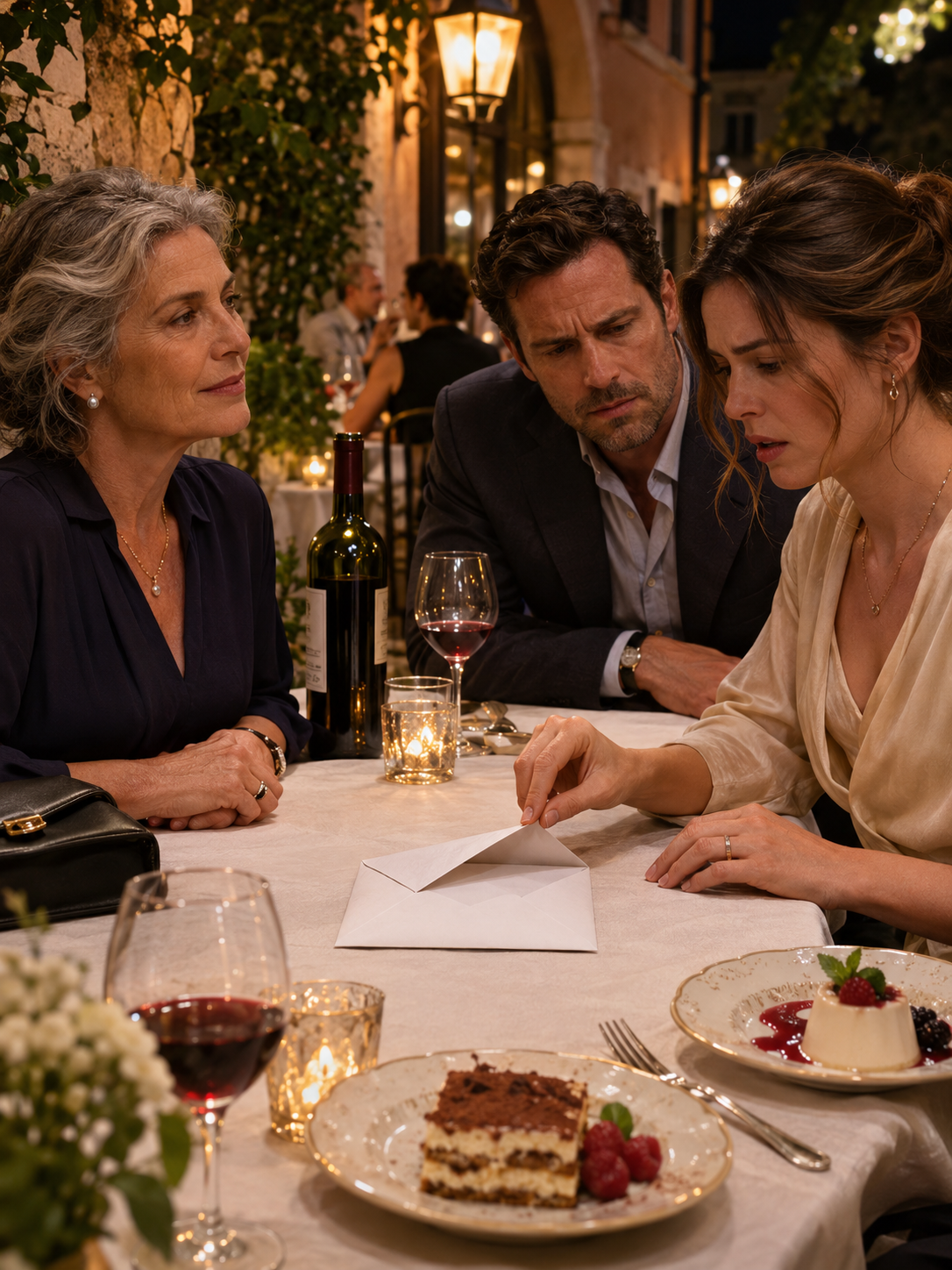
PART 4: THE HOME I CHOSE
I stared at the document.
Then at my daughter.
For a moment, the courthouse hallway seemed completely silent.
People were still walking around us.
Doors were opening.
Telephones were ringing.
But I heard none of it.
Only the terrible sound of my own heartbeat.
“Sarah?”
My daughter couldn’t meet my eyes.
Greg looked almost pleased.
He had finally found something that might hurt me more than anything he’d done.
Thomas stepped between us.
“Mr. Hayes, put the documents away.”
Greg laughed.
“Why?”
“Because this is not the appropriate place for a confrontation.”
Greg looked past him.
“Margaret, your daughter wanted the house in her name.”
I turned toward Sarah.
“Is that true?”
She closed her eyes.
“Mom.”
“Please answer me.”
Her lips trembled.
“Yes.”
The word was barely audible.
I felt something inside me break.
Not loudly.
Not all at once.
It was a quiet fracture.
Like ice giving way beneath too much weight.
Greg continued.
“She was going to manage everything.”
“The house.”
“Your pension.”
“Your care.”
Sarah looked at him.
“Stop.”
He smiled cruelly.
“Why?”
“You told the judge you wanted to tell the truth.”
“Now tell all of it.”
Thomas raised his voice.
“That’s enough.”
A courthouse security officer approached.
“Is there a problem?”
Thomas turned toward him.
“We need some assistance separating the parties.”
The officer looked at Greg.
“Sir, step back.”
Greg opened his mouth.
Then apparently thought better of it.
He shoved the folder into his briefcase.
But before leaving, he leaned toward Sarah.
“You’ll regret this.”
She flinched.
The officer moved closer.
“Sir.”
Greg stepped away.
His attorney followed him toward the courthouse exit.
For several seconds, none of us spoke.
Then I looked at Sarah.
“Was that company your idea?”
She began crying.
“Yes.”
I felt tears filling my eyes.
“Why?”
She covered her mouth.
“I thought I could protect the house.”
“From what?”
“From being sold.”
I stared at her.
She looked desperately ashamed.
“Greg said you were getting older.”
“He said one day you might need expensive care.”
“And that if the house stayed in your name, you could lose everything.”
I swallowed.
“So you decided to take it first?”
She began sobbing.
“I convinced myself I was preserving Dad’s legacy.”
I looked at her.
“Your father left a home.”
“He didn’t leave permission to control another person’s life.”
She nodded.
“I know.”
“No.”
My voice trembled.
“I don’t think you do.”
I stepped closer.
“Sarah, you didn’t ask what I wanted.”
“You didn’t ask whether I was happy.”
“You didn’t ask whether I was frightened.”
“You decided my future because you wanted my house.”
She covered her face.
I continued.
“Then you sat across from me on my sixtieth birthday and told me I was a burden.”
A sob escaped her.
“You made me feel unwanted in the home where I raised you.”
“Mom, I’m so sorry.”
I shook my head.
“I believe you’re sorry.”
“But I need more than that.”
She looked up.
“What?”
“I need you to understand what you actually did.”
She nodded through her tears.
“I will.”
I looked toward Thomas.
He stood quietly nearby.
Irene had tears in her eyes.
I took a slow breath.
“Sarah, you need your own attorney.”
“I have one.”
“Then tell that attorney everything.”
“Every document.”
“Every conversation.”
“Every agreement with Greg.”
She nodded.
“And don’t ask me to hide anything.”
Her expression crumpled.
“I won’t.”
I studied her face.
Then said the hardest words I’d ever spoken to my child.
“I love you.”
“But I cannot trust you right now.”
Sarah began crying again.
I wanted to hold her.
Instead, I stepped back.
Because love could remain even when trust had been destroyed.
And for the first time, I understood that I didn’t have to sacrifice one truth to acknowledge the other.
Thomas guided us toward the exit.
Outside, the sky was bright.
The courthouse steps were warm.
Irene helped me into the car.
I sat quietly.
Then I began shaking.
She waited.
Finally, I whispered,
“I don’t know who my daughter is anymore.”
Irene started the engine.
“Maybe she doesn’t either.”
I looked at her.
She continued gently.
“But now she has to find out.”
We drove home in silence.
That evening, Thomas called to explain the next legal steps.
The questionable company documents would be reviewed.
The lender’s investigation would continue.
The guardianship petition would need formal resolution.
And the property occupancy issue remained separate.
I listened carefully.
Then asked the question I’d been avoiding.
“Could Sarah go to prison?”
Thomas paused.
“Margaret, I can’t predict that.”
“Potential criminal consequences depend on facts, evidence, charging decisions, and the applicable law.”
I closed my eyes.
“She admitted helping.”
“Yes.”
“But admitting wrongdoing doesn’t automatically determine the outcome.”
He continued.
“She needs independent counsel.”
“And you need to remain truthful.”
I swallowed.
“I understand.”
After we ended the call, I stood by Irene’s kitchen window.
The garden was dark.
A small porch light illuminated the lavender we had planted.
I remembered Sarah’s first day of school.
She wore a yellow dress.
Her hair was tied with two white ribbons.
She was terrified.
She clung to my hand outside the classroom.
“I don’t want you to leave.”
I knelt beside her.
“You’ll be all right.”
“What if I make a mistake?”
I smiled.
“Then you’ll learn from it.”
She looked unconvinced.
“What if it’s a big mistake?”
I kissed her forehead.
“Then we’ll figure out how to make things right.”
I stood in Irene’s kitchen, remembering those words.
For decades, I had believed making things right meant protecting Sarah from consequences.
Now I understood that sometimes consequences were the only path toward change.
The following weeks were difficult.
Greg refused to cooperate with the occupancy arrangements.
He sent angry messages.
He complained about the notice.
He threatened to sue me for the value of improvements.
He told relatives that I had destroyed the family.
Thomas handled the communications.
When necessary, we documented the threats.
When Greg’s continued occupancy required court intervention, Thomas pursued the proper process.
I didn’t attend every meeting.
I didn’t answer every accusation.
I learned that peace sometimes required refusing to participate in chaos.
Meanwhile, the lender completed additional review.
The disputed loan was stopped.
No funds were released.
Investigators requested information from several people involved.
Greg’s communications were preserved.
The questionable authorization became part of a broader inquiry.
Sarah cooperated through her attorney.
She acknowledged providing my personal identification records.
She also acknowledged participating in the proposed company arrangement.
Her attorney advised her to correct inaccurate statements and provide relevant information.
There were difficult interviews.
There were formal consequences.
There were financial claims that had to be addressed.
Greg’s employer eventually learned of the allegations through appropriate investigative channels.
He was placed on leave while separate concerns were reviewed.
I didn’t celebrate.
I had never wanted to ruin anyone’s livelihood.
But I also refused to accept responsibility for choices I hadn’t made.
Sarah moved into a small apartment.
It was nothing like my house.
One bedroom.
A narrow kitchen.
An aging bathroom.
A little balcony overlooking a busy street.
She worked full-time.
She began reviewing her debts with professional assistance.
She stopped using credit to maintain a lifestyle she couldn’t afford.
She also began counseling.
Not because counseling would erase what she’d done.
But because she needed to understand why she had done it.
One afternoon, she called me.
“Mom?”
“Hello, Sarah.”
“Can I ask you something?”
“Yes.”
“Were you ever disappointed in Dad?”
The question surprised me.
“Of course.”
She sounded startled.
“Really?”
I smiled sadly.
“Your father was a wonderful man.”
“But he wasn’t perfect.”
“Neither was I.”
She remained silent.
Then asked,
“How did you get through disagreements?”
I considered the question.
“We talked.”
“Sometimes we argued.”
“Sometimes we needed time apart.”
“But we tried not to use each other’s weaknesses as weapons.”
Sarah began crying softly.
“Greg always said people only respect strength.”
I looked toward my garden.
“Your father believed strength meant keeping your word.”
She was quiet.
Then whispered,
“I think I forgot that.”
I closed my eyes.
“So did I, for a while.”
We spoke for twenty minutes.
I didn’t invite her to stay with me.
I didn’t offer to pay her debts.
I didn’t promise that everything would return to normal.
But I listened.
And she listened too.
That was new.
A month later, the guardianship petition was formally dismissed.
The decision confirmed that the requested intervention was unsupported by the evidence presented.
I received the notice on a quiet Tuesday morning.
Thomas called shortly afterward.
“Margaret, it’s resolved.”
I sat down.
“Completely?”
“The guardianship matter is concluded.”
“You retain full control of your personal and financial decisions.”
I closed my eyes.
For months, I’d lived with the possibility of my independence being questioned by the people closest to me.
Now that threat had ended.
“Thank you, Thomas.”
He paused.
“You did the difficult part.”
I laughed softly.
“I don’t feel very brave.”
“Most people don’t while they’re being brave.”
After the call, I placed the court notice inside a folder.
Not with my family photographs.
Not with Daniel’s letters.
In a separate drawer.
I didn’t want those pages to define my life.
They were evidence of something I had survived.
Not a story I intended to keep living.
Meanwhile, the sale of my old house became possible again.
The title issues were being addressed.
The occupancy dispute was moving toward resolution.
And the prospective buyer, a woman named Emily Carter, remained interested.
Emily was a schoolteacher.
Her husband, Paul, worked as an electrician.
They had two children.
A boy of nine.
A girl of six.
They had been saving for years to purchase their first family home.
When Thomas first mentioned them, I felt an unexpected sadness.
Another family.
In my house.
Another child sleeping in Sarah’s old bedroom.
Another Christmas tree standing beside the living room window.
For several days, I couldn’t decide whether I was ready.
Then Thomas arranged a meeting with Emily and Paul.
We met at his office.
Emily wore a simple green dress.
Paul had rough hands and a quiet smile.
They brought their children.
The little girl, Sophie, held a stuffed rabbit.
Their son, Noah, carried a notebook filled with drawings of houses.
I smiled when I saw it.
“Are you an architect?”
He looked startled.
Then grinned.
“Maybe.”
Paul laughed.
“He’s already planning renovations.”
I looked at the drawings.
Noah had designed a treehouse in the backyard.
It had a ladder, a rope bridge, and something labeled SECRET ROOM.
I laughed.
“My husband would have loved this.”
Noah looked up.
“Did he build things?”
“All the time.”
I thought of Daniel’s workshop.
His careful measurements.
His endless collection of screws.
His tendency to whistle when concentrating.
“He wasn’t always very good at following instructions,” I added.
Paul smiled.
“Sounds familiar.”
Emily touched my arm.
“Mrs. Hayes, we understand this house means a lot to you.”
I nodded.
“It does.”
“We don’t want you to feel we’re taking something away.”
Her sincerity surprised me.
I looked at the children.
Sophie was gently rocking her rabbit.
Noah was adding another window to his imaginary treehouse.
And suddenly, I could picture them in the yard.
Running through sprinklers.
Building snowmen.
Learning to ride bicycles.
I could imagine the house becoming joyful again.
Not because my memories disappeared.
But because new memories could grow beside them.
I turned toward Emily.
“Would you plant flowers along the front walkway?”
She smiled.
“I’d love to.”
“Daniel always liked yellow roses.”
Emily’s expression softened.
“Then we’ll plant yellow roses.”
I felt tears gather.
And for the first time, the idea of selling didn’t feel entirely like loss.
It felt like passing something forward.
The legal process continued.
Eventually, Greg vacated the property after the required proceedings and arrangements were completed.
There was no dramatic midnight confrontation.
No furniture thrown onto the lawn.
No police sirens.
No shouting neighbors.
Just a moving truck on a gray Thursday morning.
Thomas’s office coordinated the final documentation.
I wasn’t present when Greg carried out his belongings.
I didn’t need to be.
Later, I walked through the house with Irene.
The rooms were nearly empty.
The gray dining room walls remained.
The garage shelves remained.
The gravel where my roses had grown still covered the front garden.
But the house was quiet.
I stood in the kitchen.
For three years, I had dreaded entering that room.
Now there was no one to tell me where I belonged.
I opened a cabinet.
Inside was a single chipped mug.
White porcelain.
Blue flowers.
I recognized it immediately.
Daniel had bought it during our honeymoon.
He claimed it was lucky.
I had used it every Sunday morning for nearly forty years.
Then Sarah had hidden it away because it didn’t match her dishes.
I picked it up.
A small chip marked the handle.
I ran my thumb along it.
And suddenly, I began to cry.
Irene stood beside me.
“What’s wrong?”
I held up the mug.
“I thought she’d thrown it away.”
Irene smiled sadly.
“Looks like it survived.”
I looked around the kitchen.
Then down at the old mug.
“Yes.”
I laughed through my tears.
“It did.”
We walked through every room.
The living room.
The dining room.
The upstairs bedrooms.
The little study where Daniel used to read.
I opened the door to what had been Sarah’s childhood bedroom.
For a moment, I saw it as it once was.
Pink curtains.
A bookshelf.
A wooden dollhouse.
A poster of horses.
A little girl sitting cross-legged on the carpet.
“Mommy?”
I could almost hear her.
“Will you read one more story?”
I stepped inside.
The room was empty now.
White walls.
Bare floor.
Afternoon sunlight.
I stood there for several minutes.
Then I whispered,
“I did love you, sweetheart.”
I had to say it aloud.
Not because Sarah doubted it.
But because I needed to remember that the love had been real.
Her choices didn’t erase the years when she was kind.
And those good years didn’t erase the choices that brought us here.
Both truths could exist.
I closed the door gently.
Downstairs, Irene was waiting.
“Ready?”
I looked around.
Then nodded.
“Almost.”
I walked toward the back porch.
The apple tree Daniel planted stood near the fence.
Its branches had grown thick.
The old wooden bench was weathered and cracked.
I sat down.
The afternoon breeze moved through the leaves.
Somewhere nearby, a lawn mower started.
A dog barked.
A child laughed.
Life was continuing.
Just as it always had.
I looked toward the house.
“Thank you,” I whispered.
It felt strange to thank a building.
But I wasn’t really thanking bricks.
I was thanking the life that had unfolded inside them.
The marriage.
The laughter.
The ordinary mornings.
The Christmas dinners.
The years before everything became complicated.
I stood.
Then walked back inside.
I picked up my handbag.
And I left.
The sale closed several weeks later.
Every required document was completed.
The proceeds were deposited securely.
Thomas reviewed the final statements.
I understood every major figure.
And I signed with a steady hand.
When he handed me the closing packet, I looked at him.
“Is that really it?”
He smiled.
“That’s really it.”
I laughed softly.
“After all these months?”
“Yes.”
“You’re officially finished with that property transaction.”
I looked down at the papers.
For decades, the house had represented security.
Then it became a burden.
Then a battlefield.
Now it was simply a chapter of my life that had reached its conclusion.
Thomas stood.
He offered his hand.
“Congratulations, Margaret.”
I shook it.
“Thank you.”
Then he surprised me.
“Daniel would be proud.”
My eyes filled.
“You think so?”
Thomas smiled.
“I remember when he came here to settle the mortgage paperwork.”
“He told me the house was your shared achievement.”
I looked at him.
Thomas continued.
“He said you deserved to feel secure in it.”
“And that he’d never forgive himself if you had to worry about money after he was gone.”
A tear slid down my cheek.
Thomas handed me a tissue.
“I think he’d be relieved to know you’re protecting that security.”
I laughed through my tears.
“He was always worrying.”
Thomas smiled.
“Only about the people he loved.”
When I returned home, I drove to my yellow cottage.
My cottage.
The words still sounded wonderful.
The blue shutters had been repainted.
The porch railing was repaired.
A little wooden bench sat beneath the front window.
I had planted lavender beside the path.
And a row of roses along the garden fence.
Yellow roses.
For Daniel.
Inside, my furniture fit perfectly.
Not because the rooms were large.
But because everything had a place.
The dining table stood near the window.
My books filled the shelves.
My mother’s sewing basket rested beside an armchair.
Daniel’s photograph stood on the mantel.
And my honeymoon mug sat proudly in the kitchen cupboard.
Nobody complained that it didn’t match anything.
That evening, I made myself dinner.
Roasted chicken.
Potatoes.
Green beans.
Nothing elaborate.
I set one place at the table.
Then I lit a candle.
I looked around the little kitchen.
No one was coming downstairs to criticize the meal.
No one expected me to clean up after them.
No one had forbidden me from inviting friends.
For a moment, the quiet felt unfamiliar.
Then I smiled.
It was mine.
The following months brought a different kind of work.
Not legal work.
Not financial work.
Emotional work.
Sarah and I began meeting once every two weeks.
Always somewhere neutral.
A café.
A park.
Occasionally the library.
At first, our conversations were awkward.
She wanted reassurance.
I wanted honesty.
Sometimes she cried.
Sometimes I became angry.
Sometimes we sat quietly because neither knew what to say.
But we kept trying.
One afternoon, we met beside the river.
Autumn had arrived.
The trees were turning gold.
Sarah wore an old blue coat.
I recognized it.
I had bought it for her when she started her first job.
She noticed me looking.
“I found it in storage.”
I smiled faintly.
“It still fits.”
“Barely.”
We laughed.
It felt strange.
But good.
We walked along the path.
Then Sarah stopped beside a bench.
“Mom, can I tell you something?”
“Of course.”
“I used to think you would always rescue me.”
I looked at her.
She continued.
“When I failed a class, you found a tutor.”
“When I couldn’t pay rent, you sent money.”
“When Greg and I needed somewhere, you opened your home.”
I nodded.
“I did.”
She looked down.
“And I started thinking that meant I never had to handle things myself.”
I remained silent.
Sarah wiped her eyes.
“I didn’t understand how much I was asking of you.”
I took a breath.
“I didn’t understand how much I was giving away.”
She looked up.
I continued.
“I thought being a good mother meant never letting you struggle.”
I smiled sadly.
“But I was wrong.”
“Sometimes struggling teaches us what rescuing never can.”
Sarah nodded.
“I think I’m learning that.”
We sat together.
The river moved quietly below us.
Then she said,
“I filed for divorce.”
I turned toward her.
“Are you certain?”
She nodded.
“Yes.”
“Greg has his own attorney.”
“We’re sorting out the debts and everything else.”
I looked at her.
“Are you safe?”
“Yes.”
She took a slow breath.
“And I’m finally sleeping again.”
I touched her hand.
“I’m glad.”
She looked toward the river.
“I kept thinking I could make him happy if I solved enough problems.”
I understood that feeling too well.
“And?”
She smiled sadly.
“There was always another problem.”
I squeezed her hand.
“Sarah, you deserve a peaceful life.”
She began crying.
“So do you, Mom.”
For a moment, I couldn’t speak.
Then I nodded.
“Yes.”
“I do.”
We sat together until sunset.
Neither of us mentioned the house.
Neither asked for money.
Neither tried to rewrite the past.
And when we said goodbye, Sarah hugged me gently.
I hugged her back.
Not because everything was repaired.
But because we had finally stopped pretending nothing was broken.
The financial investigation continued separately.
Greg faced consequences for the actions supported by the evidence.
The disputed lending application remained part of that process.
Sarah’s own conduct was examined.
She cooperated through her attorney and worked to address her responsibilities.
I didn’t try to influence the outcome for either of them.
I answered questions truthfully.
I provided records when requested.
And I allowed the appropriate professionals to do their jobs.
The process wasn’t simple.
It wasn’t quick.
And it didn’t give me the effortless satisfaction that revenge stories promise.
But it gave me something better.
I no longer had to lie to protect someone else’s reputation.
There were financial losses that Sarah had to confront.
There were agreements that needed to be unwound.
There were obligations she could no longer ignore.
She took additional work to stabilize her finances.
She attended counseling consistently.
And she learned to ask for help without demanding rescue.
Sometimes she called me simply to tell me about her ordinary day.
A difficult customer.
A successful presentation.
A recipe she’d tried.
A book she enjoyed.
At first, those conversations felt unfamiliar.
There was no emergency.
No request for money.
No criticism.
Just my daughter wanting to speak with me.
I began looking forward to them.
But I kept my boundaries.
Sarah never received a key to my cottage.
She never gained access to my bank accounts.
She never managed my finances.
And she never asked me to reconsider those decisions.
That mattered.
Because rebuilding trust wasn’t about giving her everything again.
It was about seeing whether she could respect what wasn’t hers.
Winter arrived.
The first snowfall covered my garden.
I stood at the kitchen window watching white flakes settle along the blue shutters.
A kettle whistled behind me.
The house smelled of cinnamon.
I had joined a local book club.
I volunteered at the library three afternoons each week.
Irene came over every Friday for dinner and a movie.
Sometimes we invited Rebecca.
Sometimes Helen joined us.
We laughed.
We cooked.
We argued over books.
And occasionally, we talked about the people we’d lost.
I discovered something I hadn’t expected at sixty.
I wasn’t starting over with nothing.
I was starting again with everything I’d learned.
One afternoon, a letter arrived.
The return address belonged to Emily Carter.
The woman who bought my house.
I carried it into the kitchen.
Inside was a Christmas card.
A photograph slipped out.
I picked it up.
And began smiling.
There was the old brick house.
Snow covered the roof.
Yellow lights glowed in the windows.
A Christmas wreath hung on the door.
Emily and Paul stood on the porch.
Noah held a sled.
Sophie wore a red hat.
And behind them, just visible through the window, stood a Christmas tree.
In the very spot where Daniel and I had placed ours for decades.
I pressed the photograph against my chest.
Then I read the note.
Dear Margaret,
We wanted you to know how much we love this home.
The children have already made a hundred wonderful memories here.
Noah is planning his treehouse.
Sophie loves the backyard.
And the yellow roses will be planted in spring.
Thank you for trusting us with a place that meant so much.
We promise to take good care of it.
With gratitude,
Emily, Paul, Noah, and Sophie.
I sat at the kitchen table.
And I cried.
But these were different tears.
Not humiliation.
Not fear.
Not betrayal.
Gratitude.
My old house was filled with laughter again.
That was what Daniel would have wanted.
Not a monument.
Not a prize.
A home.
I placed the photograph beside his picture.
Then I smiled.
“Look, Daniel.”
“The children are happy.”
Outside, snow continued falling.
And for the first time, I felt completely at peace with the decision to sell.
Spring arrived slowly.
The garden woke beneath the rain.
Tiny green shoots appeared along the fence.
The apple tree behind my cottage began forming delicate white blossoms.
I spent mornings outside with my gardening gloves.
Sometimes Irene helped.
Mostly she offered advice while drinking coffee.
One Saturday, Sarah called.
“Mom?”
“Hello, sweetheart.”
“Are you busy?”
I looked at my muddy hands.
“I’m arguing with a rosebush.”
She laughed.
“Is it winning?”
“Decisively.”
There was a pause.
Then she said,
“I have something I’d like to bring you.”
I hesitated.
“What is it?”
“Something from Dad.”
My heart tightened.
“Where did you find it?”
“In a box Greg never unpacked.”
“I found it while sorting my things.”
She hesitated.
“Would you mind if I visited?”
I looked around my garden.
The cottage was quiet.
The afternoon was warm.
And for the first time, the idea of Sarah visiting didn’t fill me with dread.
“You may come for tea,” I said.
Her voice softened.
“Thank you, Mom.”
She arrived an hour later.
She carried a small wooden box.
Her eyes were red.
I led her onto the porch.
We sat beneath the blue shutters.
I poured tea.
Sarah placed the box between us.
“Dad made this.”
I recognized it immediately.
Daniel’s handwriting was carved into the lid.
For Maggie.
My breath caught.
I touched the letters.
“Where was this?”
“Behind some old files.”
“I think Greg moved it when he cleared out the study.”
I slowly opened the lid.
Inside lay several things.
A small silver necklace.
An old photograph.
A folded piece of paper.
And a little velvet pouch.
I picked up the photograph first.
Daniel and I stood outside our first apartment.
We were twenty-three.
Poor.
Exhausted.
Ridiculously happy.
Our furniture had come from yard sales.
Our car barely started.
But we were smiling as though we owned the world.
I laughed through my tears.
“Look at us.”
Sarah leaned closer.
“You were beautiful.”
I smiled.
“I was young.”
“You’re still beautiful, Mom.”
I looked at her.
She seemed embarrassed.
Then she smiled.
For once, I believed the compliment had no hidden purpose.
I opened the folded paper.
It was a letter.
Daniel’s handwriting filled the page.
My dear Maggie,
If you’re reading this, I’m probably not there to argue about the garden or remind you where you left your glasses.
I smiled through tears.
That sounded exactly like him.
I continued reading.
You’ve spent your life taking care of everyone.
You made our little house into the best place I’ve ever known.
But I want you to promise me something.
When I’m gone, don’t spend the rest of your beautiful life living only for memories.
Find new places.
Make new friends.
Plant something.
Laugh loudly.
And never confuse being needed with being loved.
I stopped.
My hand covered my mouth.
Sarah began crying beside me.
I forced myself to continue.
If our girl ever forgets how to love you properly, remember that you taught her by showing her what love looks like.
But love also needs truth.
And boundaries.
I hope she’ll remember that.
I hope you’ll remember it too.
You deserve peace, Maggie.
You always did.
All my love,
Daniel.
I lowered the letter.
For several minutes, I couldn’t speak.
Sarah was crying openly.
I looked at her.
“Did you read this?”
She nodded.
“Yes.”
“When?”
“Last night.”
She wiped her cheeks.
“I read it three times.”
I looked back at the page.
Daniel’s handwriting blurred.
Sarah whispered,
“I think Dad knew you gave too much.”
I laughed softly through my tears.
“He told me that constantly.”
She looked down.
“And I took too much.”
I didn’t argue.
She continued.
“I kept telling myself that because you were my mother, everything you had belonged to me.”
She took a trembling breath.
“But it didn’t.”
I looked at her.
“No.”
“It didn’t.”
She nodded.
“I know that now.”
I folded the letter carefully.
Then placed it in my lap.
Sarah looked toward the garden.
“Mom, I don’t expect you to forget what happened.”
“I don’t expect you to trust me the old way.”
She swallowed.
“But I want to become someone you can trust again.”
My eyes filled.
I reached for her hand.
“Then keep doing what you’re doing.”
“Tell the truth.”
“Take responsibility.”
“Build a life you can manage.”
She nodded.
“And remember something.”
She looked at me.
“You don’t have to become perfect to be worthy of love.”
Her face crumpled.
I squeezed her hand.
“But you do have to be honest if you want to rebuild trust.”
She whispered,
“I will.”
We sat together beneath the blue shutters.
The apple blossoms moved in the warm spring breeze.
For the first time in years, I didn’t feel compelled to solve my daughter’s problems.
And she didn’t ask me to.
Instead, she helped me plant roses.
We spent two hours working in the garden.
Sarah dug the holes.
I positioned the plants.
We argued about spacing.
We laughed when she spilled soil all over her shoes.
And when we finished, six small yellow rosebushes stood beside the fence.
Sarah stepped back.
“Dad would love these.”
I smiled.
“He would complain that they’re too close together.”
She laughed.
Then wiped her forehead.
“Probably.”
I looked at her.
She was tired.
Sweaty.
Covered in dirt.
Nothing like the polished woman who had sat across from me at my birthday dinner.
And yet, for the first time in years, she looked like my daughter again.
Not because she was asking forgiveness.
But because she was learning to give something without expecting payment.
When it was time to leave, Sarah hugged me.
I held her gently.
Then she stepped back.
“Can I call you tomorrow?”
I smiled.
“Of course.”
She looked relieved.
“Okay.”
She walked toward her car.
Then stopped.
“Mom?”
“Yes?”
“I’m glad you didn’t let us take your house.”
I stared at her.
She continued softly.
“Because I don’t think I would have understood what I was becoming if you’d surrendered again.”
My throat tightened.
“Sarah.”
She wiped her eyes.
“I know that sounds terrible.”
“No,” I whispered.
“It sounds honest.”
She smiled sadly.
Then climbed into her car.
I watched her drive away.
The afternoon sunlight fell across my garden.
The yellow rosebushes stood in their fresh soil.
And the apple tree was covered in blossoms.
I returned to the porch.
Daniel’s letter lay on the table.
I picked it up.
Then looked toward the little cottage.
The house wasn’t grand.
It didn’t have four bedrooms.
It didn’t have a marble fireplace.
It didn’t have a three-car garage.
But every room belonged to me.
Every choice belonged to me.
And every person who entered my home would enter because I wanted them there.
I thought about my sixtieth birthday.
The Italian restaurant.
The expensive wine.
The white envelope.
Sarah’s cruel words.
Greg’s smug smile.
For years, I had believed the worst thing my daughter could do was tell me to leave.
But I had been wrong.
The worst thing would have been believing her when she said I no longer deserved a home.
I looked down at Daniel’s letter.
Then toward my garden.
I had lost the house where we raised Sarah.
But I hadn’t lost what made that house meaningful.
Love.
Memory.
Dignity.
And the freedom to choose my own future.
That evening, I made myself a simple dinner.
I opened the kitchen window.
The breeze carried the sweet scent of apple blossoms.
I poured tea into my chipped honeymoon mug.
Then I sat at the table.
Outside, the sky slowly turned gold.
My phone buzzed.
A message from Sarah.
Thank you for today, Mom.
I love you.
I smiled.
Then typed a reply.
I love you too.
Keep taking care of yourself.
I placed the phone down.
For the first time, I didn’t feel the need to add a promise.
No money.
No rescue.
No offer to fix everything.
Just love.
And the space for both of us to grow.
I took a sip of tea.
The house was quiet.
The garden was beautiful.
And somewhere in the next room, Daniel’s photograph caught the last light of evening.
I smiled toward it.
“You were right, darling.”
Then I looked around at the peaceful little home I had chosen for myself.
Sixty years old.
A new beginning.
A daughter slowly finding her way.
Friends who loved me.
A garden waiting to bloom.
And a future that no longer belonged to anyone else.
I had finally learned the difference between having a house and having a home.
A house can be claimed.
A house can be sold.
A house can become the center of an argument.
But a true home is where your dignity remains intact.
Where your voice matters.
Where love is given freely, not demanded as payment.
And where nobody has to make themselves smaller just to be allowed to stay.
I looked toward the open window.
A soft breeze moved the curtains.
For the first time in years, I was exactly where I wanted to be.
And I wasn’t leaving.