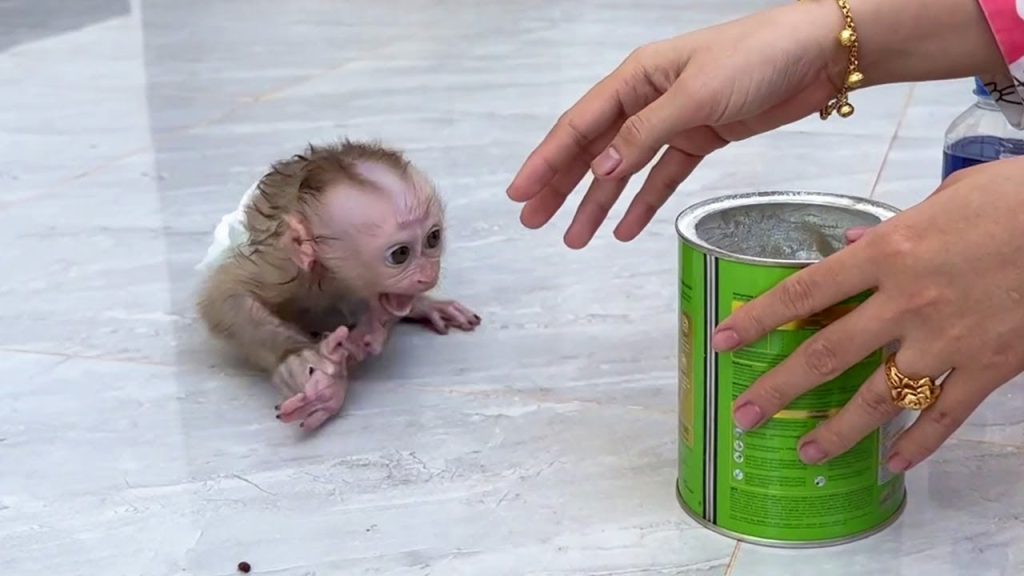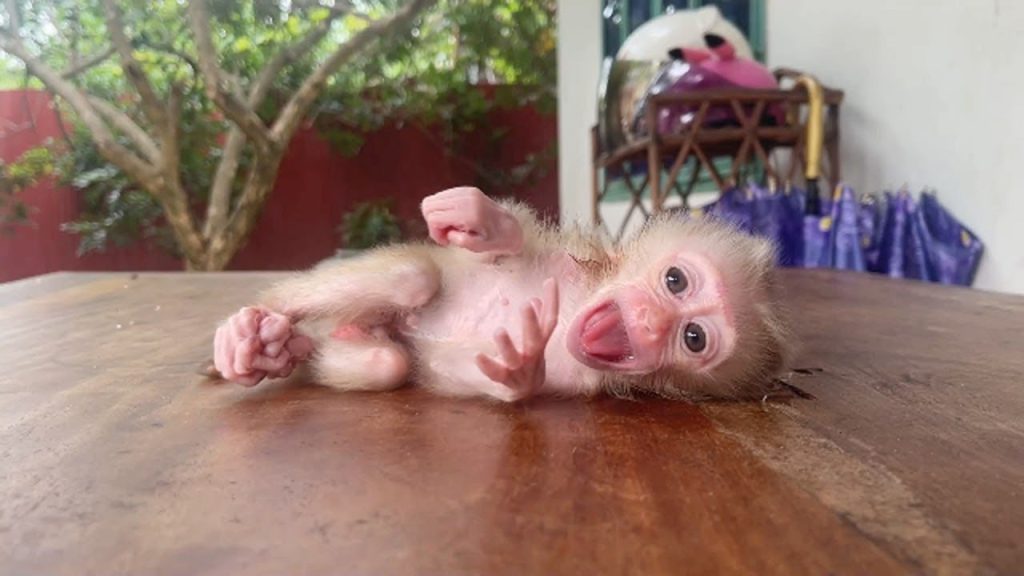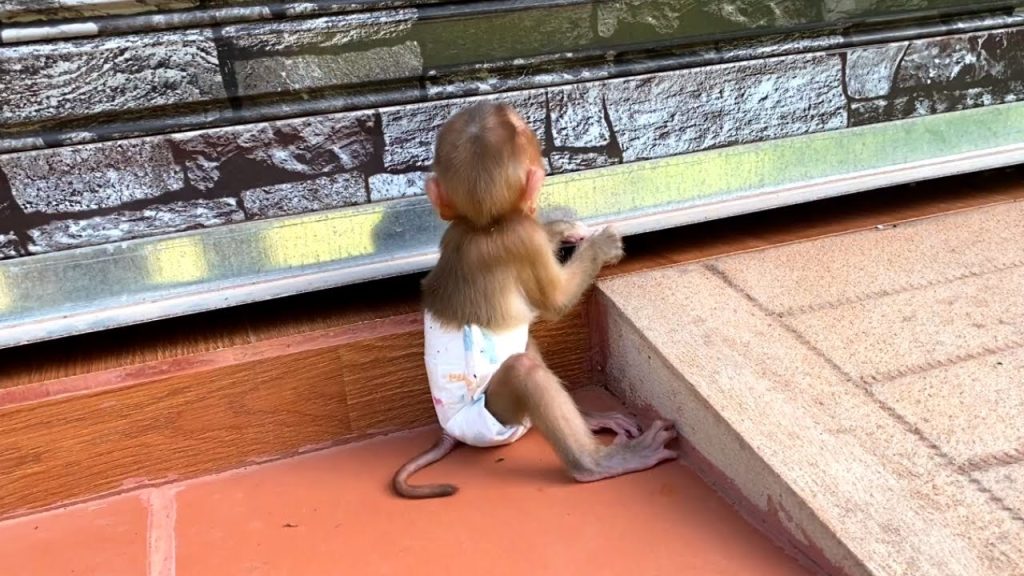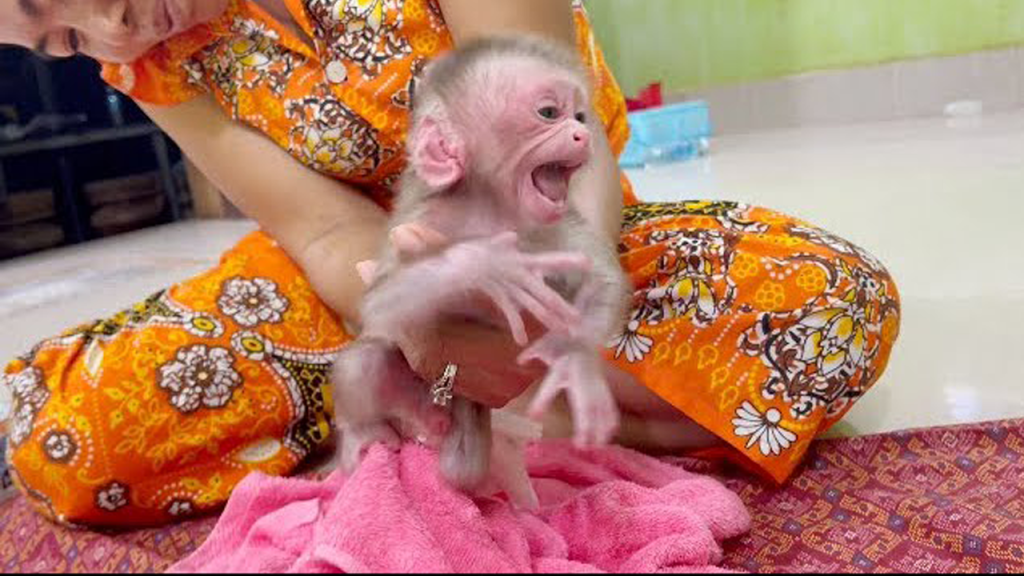
Little Modo was only a newborn, but he already had a very strong personality. He loved staying close to Mommy, feeling her gentle touch, and listening to her familiar voice. Whenever she walked away, even for a moment, he would make tiny noises as if calling her back. Mommy always tried to comfort him, keeping him warm and checking that he was safe and comfortable.
One morning, Mommy noticed that Modo’s little bottom was dirty. She knew he needed to be cleaned carefully, so she prepared a soft towel and some warm water. She wanted to finish quickly because Modo was still very young and easily became upset whenever someone disturbed his peaceful rest.
As Mommy gently lifted him, Modo immediately began crying. His little face tightened, his hands moved around, and he made several loud sounds. Mommy paused and spoke softly to him, hoping her familiar voice would help him feel safe. But Modo continued crying.
“What’s happening, sweetheart? Mommy is just trying to make you clean and comfortable,” she seemed to say.
Mommy tried to adjust the towel, but suddenly something frightened her. Modo’s tiny body began making unusual jerking movements. His arms and legs moved strangely, and he seemed unable to control them. His cries sounded different from his usual complaints.
Mommy immediately stopped cleaning.
At first, she looked confused. She had expected a little newborn to protest when being handled, but these movements were not something she wanted to ignore. She carefully placed Modo on a safe, flat, padded surface, moved nearby objects away, and watched his breathing. She did not shake him, hold his limbs down, or put anything in his mouth.
The caregiver noticed Mommy’s sudden change in behavior and came over to check on the baby. When the caregiver saw Modo’s unusual movements, they understood that this could be a medical emergency.
“Please call the veterinarian now,” the caregiver said.
Mommy stayed nearby while the caregiver contacted a veterinarian experienced in treating primates. Nobody tried to force Modo to drink milk or continue the cleaning. His safety was the only priority.
The minutes felt incredibly long. Mommy watched her little baby carefully, looking for signs that he was breathing normally. The caregiver recorded how long the episode lasted and explained exactly what had happened to the veterinarian.
Eventually, the unusual movements stopped. Modo looked exhausted and remained unusually quiet. Mommy wanted to pick him up immediately and cuddle him, but the caregiver followed the veterinarian’s instructions and avoided unnecessary handling until he could be examined.
Soon, they arranged urgent veterinary care.
At the clinic, the veterinarian examined Modo carefully. They asked questions about his feeding, sleeping, temperature, behavior, and the strange movements. They explained that seizure-like episodes in newborn monkeys can have several possible causes, and it would be unsafe to assume that Modo was simply angry because Mommy was cleaning him.
Mommy stayed close while the veterinarian worked. Every little sound from Modo made her look toward him. She wanted to know why her baby had suddenly become so distressed.
After the examination, the veterinarian explained that Modo needed close monitoring and further assessment. The caregiver listened carefully to every instruction, including how to keep him warm, how to monitor his condition, and when feeding could safely resume.
Later, when the veterinarian confirmed that Modo was alert enough and able to swallow safely, the caregiver followed the recommended feeding plan. Mommy watched as he received his carefully prepared, primate-appropriate formula. He took a little at a time, with breaks, and gradually became calmer.
For the rest of the day, everyone kept the environment peaceful. Nobody rushed to bathe him or handle him unnecessarily. His cleaning routine could wait until he was stable and the veterinarian confirmed it was safe.
Mommy seemed to understand that something important had happened. Whenever Modo made a small sound, she looked toward him. She stayed close, but allowed the caregiver to follow the medical instructions.
That evening, Modo rested in a warm, secure place. His little face looked peaceful, although everyone continued watching him carefully. The caregiver knew that one quiet moment did not necessarily mean the danger had passed. Any further unusual movements, weakness, breathing problems, or difficulty feeding would require immediate veterinary attention.
Mommy gently settled beside him, and Modo made a tiny sound.
It was a small moment, but it meant so much after such a frightening morning. Everyone hoped that the little newborn would recover and grow stronger day by day.
Sometimes, what looks like an ordinary newborn tantrum can be a warning sign. Modo’s story reminds us that a baby’s unusual movements or sudden distress should always be taken seriously.