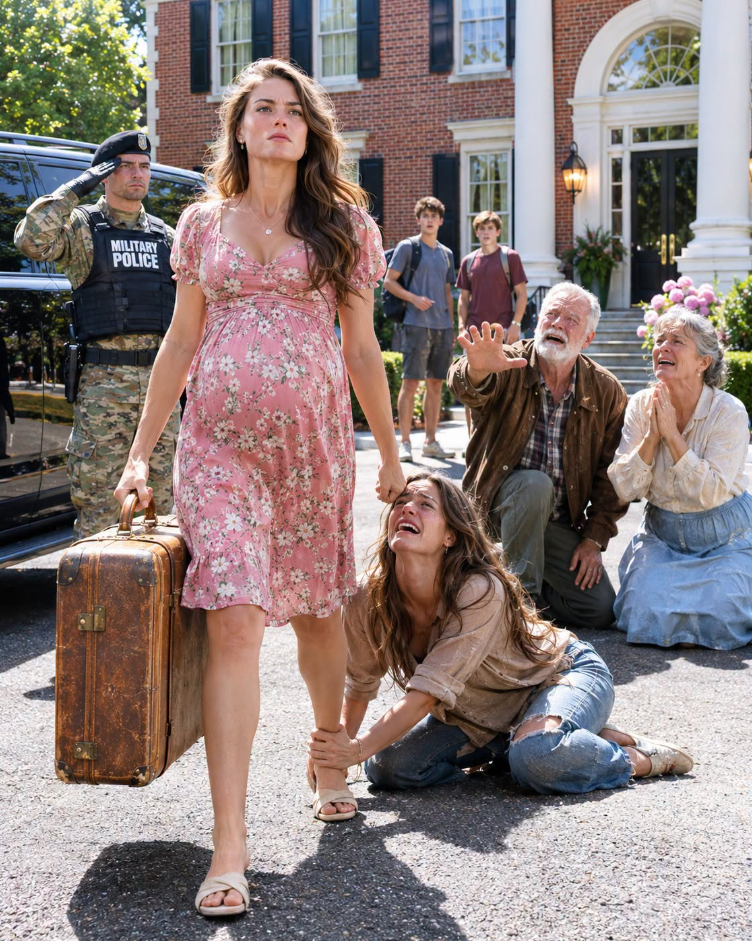
For nine years, I’d been the person my family called whenever something went wrong.
But the night they told me to leave, not one of them mentioned what I’d done for them.
My name is Claire. I’m thirty-four, and I spent most of my life believing that if I worked hard enough, helped enough, and caused little enough trouble, my family might finally appreciate me.
My younger sister, Vanessa, never had to work for that approval.
Growing up, she received designer clothes, a new car, and a college education paid for by our parents.
When her plans failed, there was always another chance.
I was expected to be responsible.
Look after Vanessa.
Don’t embarrass the family.
And above all, fix problems quietly.
When Dad’s travel business nearly collapsed, I arranged emergency funding.
When Vanessa’s three business ventures failed, I paid the losses.
When Mom wanted an elaborate anniversary celebration, I covered the expenses.
I didn’t expect constant gratitude.
But I never imagined they’d eventually tell me I wasn’t part of the family at all.
The argument began over our grandmother’s old beachfront estate in North Carolina.
It was a beautiful six-bedroom property that had fallen into disrepair.
After Grandma died, I purchased the remaining ownership interests from her estate, paid for the restoration, and transferred the property into my company, Harborstone Holdings.
Vanessa still called it our family vacation home.
I didn’t mind the nickname.
But I did mind what she wanted to do with it.
She’d been trying to impress wealthy investors for another business venture.
And she’d prepared documents allowing her company to market the estate as though it owned the property.
She wanted my signature.
I refused.
“I’m asking you not to misrepresent ownership,” I explained.
Vanessa looked offended.
“You’re being selfish.”
I tried to explain that there was a difference between letting family enjoy a property and allowing a business to claim ownership it didn’t have.
But she didn’t want to discuss the distinction.
She turned toward our parents.
“See? This is why nobody wants her around. Everything becomes a legal lecture.”
Then she set down her wineglass.
“You don’t belong in our family, Claire.”
I looked at Mom.
Surely she’d tell Vanessa that was going too far.
Instead, she crossed her arms.
“She’s right.”
I turned toward Dad.
He wouldn’t meet my eyes.
“Maybe it’s better this way.”
For a moment, I felt like a little girl again, standing outside my parents’ bedroom and waiting for someone to remember my birthday.
I was thirty-four years old.
I’d helped support these people for nearly a decade.
Yet there I was, sitting at their table, being told I didn’t belong.
Vanessa smiled.
She looked pleased with herself.
I could have reminded them about the loans, the bills, and all the times I’d stepped in when they needed money.
But I was suddenly exhausted by the thought of explaining my worth to people who had already decided it didn’t matter.
So I stood.
Picked up my jacket.
And headed toward the door.
“You’ll come crawling back,” Vanessa called after me.
I paused.
“Check your email tomorrow.”
She laughed.
“Is that supposed to scare me?”
“No,” I said. “It’s supposed to inform you.”
Outside, cold rain soaked my hair before I reached my car.
I managed to drive for a while before pulling off the road.
Then I cried.
Not because I wanted to go back.
But because I’d spent nine years giving my family whatever I could, and they had still made me feel unwanted.
By midnight, I’d stopped crying.
I opened my laptop.
Contacted my attorney.
And found the folder containing the documents Vanessa had never bothered to examine.
There were signed agreements.
Financial statements.
Property records.
And a financing proposal connected to the business plans she’d been discussing.
As I reviewed them, I began to understand something.
My family had grown so accustomed to my financial support that they’d stopped thinking about what would happen if it ended.
Vanessa had also been treating my estate as an asset she could use to attract investors.
But the ownership documents didn’t support the claims she wanted to make.
And the financing proposal raised questions she would eventually have to answer.
I thought about the dinner table.
Mom telling me Vanessa was right.
Dad refusing to look at me.
And my sister confidently predicting I’d come crawling back.
They believed they’d pushed away someone who would always need their approval.
They hadn’t considered how much their businesses depended on my continued cooperation.
I didn’t know exactly how they’d react when they read the information I was preparing.
But I was no longer willing to let them make decisions involving my money and property while treating me as though I had no say.
Two weeks later, they were away on a family vacation.
And my phone showed 34 missed calls from Vanessa.
The same sister who’d told me I didn’t belong was suddenly desperate to speak with me.
I looked at her name on the screen and remembered her laughter as I walked out.
She’d wanted me gone.
Now she wanted my help.
What had gone wrong during their vacation—and what was in that financing proposal that made Vanessa’s use of my beachfront estate such a serious problem?
I stared at the missed calls.
For nine years, I’d been the person who rescued my family from the consequences of their decisions.
But this time, they’d told me exactly where I stood.
And I wasn’t going to forget it simply because Vanessa needed something.
The full story continues in the first comment, including what caused Vanessa’s frantic calls and what Claire discovered in the financial documents.