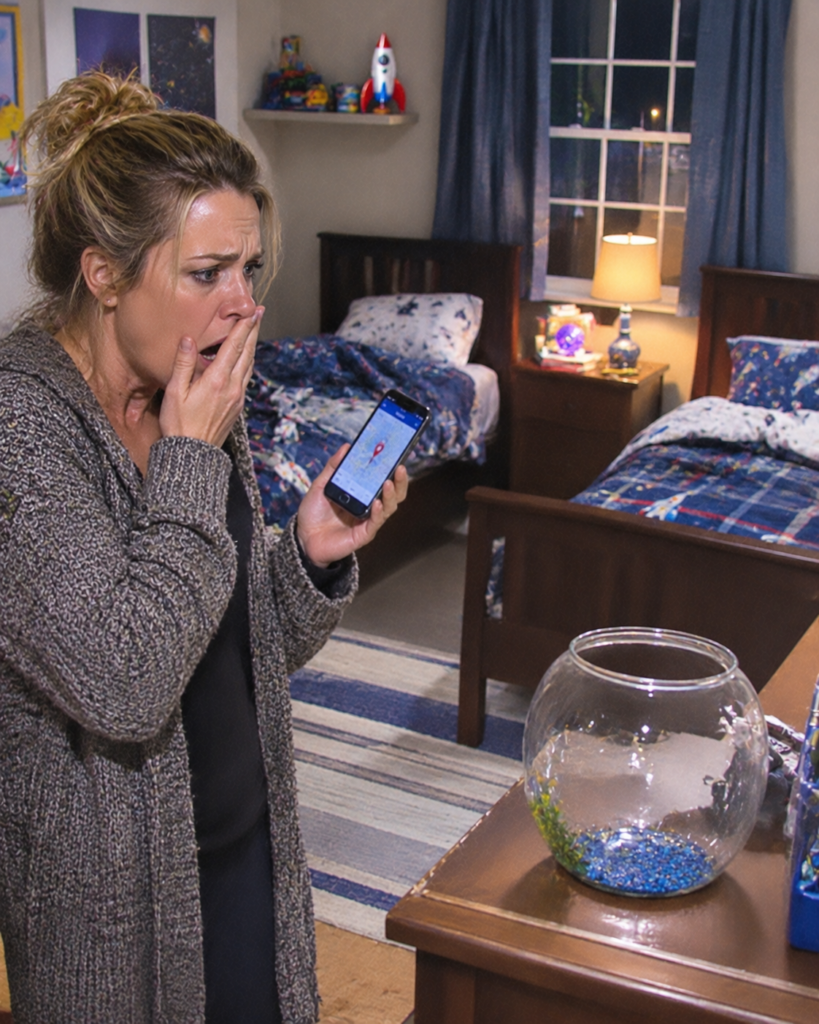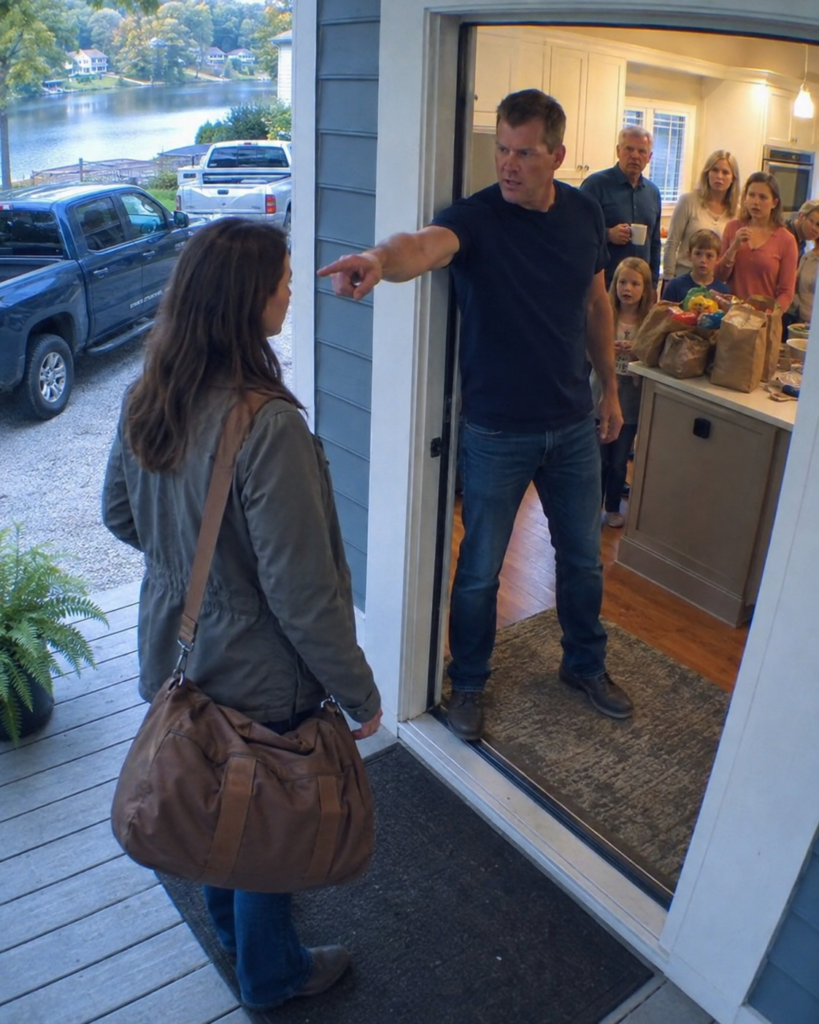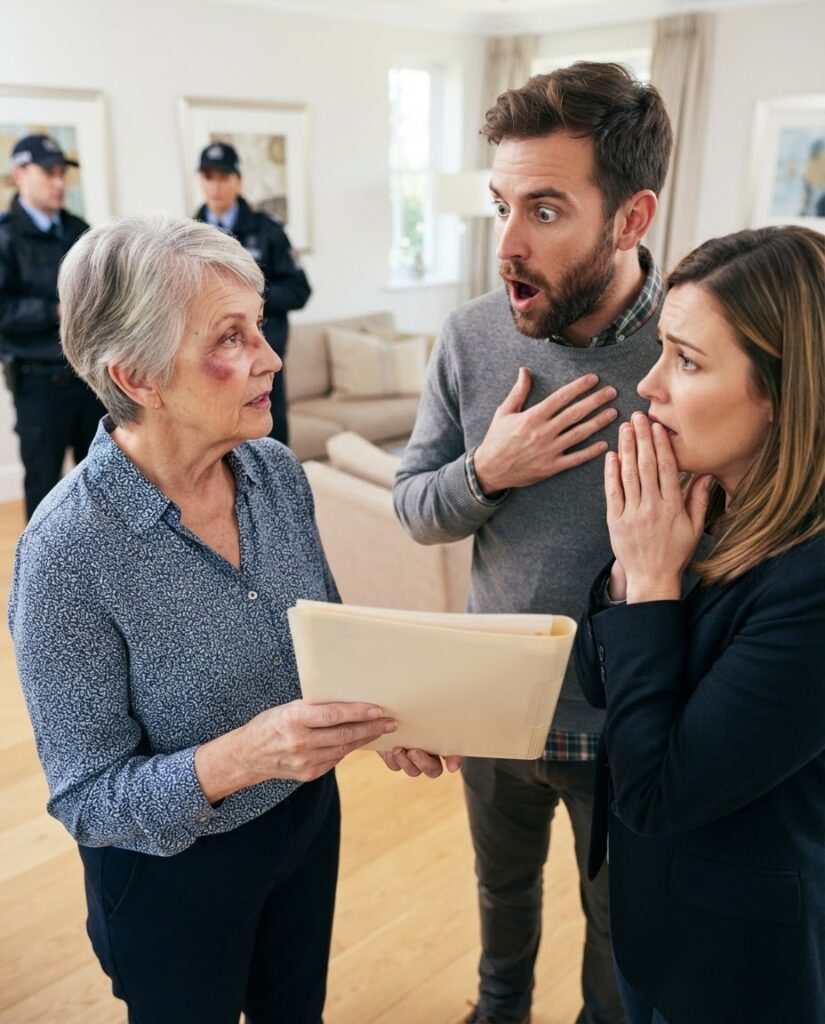
At nine o’clock the next morning, my son was more interested in the doorbell than the bruise on my face.
He looked up from his phone.
“Are you expecting someone?”
I put down my coffee.
“Yes.”
For a moment, he waited for an explanation. I had spent six months explaining small things: why I needed the window open, why I couldn’t carry the laundry basket upstairs, why smoke made my breathing worse.
That morning, I let him answer the door.
My name is Loretta. I’m seventy-three, and until the previous evening, I had believed that staying quiet was the price of keeping a family.
My son, Daniel, had taught me that lesson gradually.
There had been no single announcement when I moved into his beautiful house outside Columbus. At first, he carried my suitcase upstairs and told me to make myself comfortable.
Sloan had bought new towels for the guest room.
I thanked her three times.
I had sold my small condominium after the stairs became difficult and the maintenance fees rose beyond what I could comfortably manage. Daniel suggested that I stay with them while we found somewhere suitable.
“You shouldn’t have to figure everything out alone, Mom.”
I wanted to believe him.
After raising him by myself in a cramped apartment, I was proud that he had built a life with space to spare.
For years, I had worked whatever jobs would fit together. Factory shifts. Evening cleaning. Weekend stocking.
The factory work left damage in my lungs.
My doctor explained why I became breathless and why smoke was particularly difficult for me. Daniel knew. He had driven me to one of the appointments.
Still, Sloan smoked in the house.
At first, she opened a patio door. Later, she stopped bothering.
When I asked, she sighed.
Daniel told me not to make everything into a complaint.
Other things changed too.
I cleaned because I wanted to contribute. Then unfinished chores began waiting for me.
I offered money toward groceries and utilities. Soon there was an expected amount every month, along with requests for extras.
I tried not to keep score.
That was what I told myself whenever I photographed a receipt.
The guest room remained immaculate. It looked comfortable in photographs, with matching lamps and a neatly folded throw.
But the window latch was broken, the bathroom arrangements were awkward for me, and I had begun spending most of my time there because I never knew when my presence downstairs would irritate someone.
None of that, by itself, told the whole story.
The whole story was how carefully I listened for their car before leaving my room.
The evening Daniel hit me, I was standing beside the kitchen counter.
Sloan lit a cigarette.
“Sloan, could you please not smoke in the kitchen? My lungs can’t handle it.”
Daniel struck me.
I remember the sound more clearly than the movement.
My cheek burned. I reached for the counter.
“Maybe now you’ll stop talking,” he said.
He did not look frightened by what he had done.
He turned toward his wife, kissed her forehead, and asked whether she wanted dinner out.
She put the cigarette out in a dish.
Fifteen minutes later, they were gone.
I went upstairs.
Beside the bed stood a photograph from Daniel’s graduation. I had worn a blue dress bought on clearance. He had insisted on taking the picture again because, in the first one, I was looking at him instead of the camera.
I stared at that photograph for a long time.
Then I picked up my phone.
Aaron answered immediately.
Years earlier, he had stayed on my couch during a terrible period in his own family. I fed him, made him go to school, and told him he could sleep without listening for footsteps.
Now he was an attorney.
“Loretta? Are you all right?”
“No,” I said. “I need help.”
He stopped asking casual questions.
First, he wanted to know whether Daniel was still in the house and whether I needed urgent assistance.
I told him where they had gone.
He helped arrange an assessment of my injury that evening. A friend drove me and brought me back while we organized somewhere else for me to stay.
The clinician asked what had happened.
I said my son hit me.
Saying it aloud was harder than looking at the bruise.
Afterward, I called Maya.
I had cared for her mother while she finished school. She was a journalist now, but that wasn’t why I called.
I remembered how carefully she listened.
She asked whether I wanted her to come.
“Tomorrow,” I said. “I need to leave tomorrow.”
My third call was to Ben.
He used to arrive at my kitchen table with textbooks and no supper. Now he investigated financial records for a living.
I told him about the money I paid every month.
Then I told him about another transfer.
He asked me to save my statements and messages.
“Only your own records, Loretta,” he said. “We’ll start with what you already have.”
When Daniel and Sloan returned, I was in my room.
They did not knock.
I looked through the photographs on my phone and separated them into folders.
The room photographs showed my living conditions. The receipts showed payments. Neither proved things they did not show.
The picture of my cheek, the medical record, my account of what happened, and the messages were different kinds of evidence.
Aaron helped me understand that I didn’t need to turn every unpleasant moment into a legal argument.
I needed to tell the truth accurately.
Before dawn, I packed medication, identification, clothing, and the folder containing my financial records.
I left most of my possessions where they were.
At breakfast, Daniel and Sloan acted as if nothing had happened.
Then the doorbell rang.
Daniel opened it.
Aaron stood on the porch with a woman carrying a plain canvas bag.
“This is Denise,” he said. “She helps older adults leave unsafe situations. We’re here for Loretta.”
My son glanced at my bruised cheek, then stepped outside.
“This is a family matter.”
Aaron looked past him. “Loretta, do you want us to come in?”
“Yes.”
Denise stayed beside me while I collected my medication and documents. Nobody announced an arrest. Nobody threatened him. For the first time, I was being asked what I wanted.
Then my son saw the folder under my arm.
“You can leave,” he said. “But don’t start asking for that money back. You gave it to us.”
I held the folder against my chest.
Inside was the message he had sent before I transferred forty-eight thousand dollars.
Sloan set down her spoon.
“Daniel,” she said quietly.
He ignored her.
Aaron did not demand my money in the kitchen.
He asked whether I had everything I needed for the next few days.
I nodded.
Daniel moved toward the stairs.
“So now you’re going to tell everyone I’m some kind of monster?”
“I’m going to tell people what happened.”
“You’re making one bad moment into—”
“You hit me.”
The room went quiet.
I had never interrupted him so calmly.
Denise lifted my bag.
We left.
Maya had prepared a room in her apartment. She did not photograph my face for a story or ask me to repeat what happened into a recorder.
She showed me the bathroom, the clean towels, and a shelf she had cleared.
“You can close this door,” she said. “Or leave it open.”
I cried after she left the room.
By afternoon, Daniel had called eleven times.
His messages changed as the day went on.
First, he said I was embarrassing him.
Then he said he had barely touched me.
Finally, he wrote, “I shouldn’t have lost my temper, but you know how you get with Sloan.”
I saved each message.
With support, I made a report about the assault.
There were interviews and follow-up questions. I had to describe what happened more than once. It was exhausting, and I hated hearing my son’s name in those conversations.
But I did not withdraw what I had said because he was uncomfortable.
The money took longer.
When I sold my condominium, Daniel had offered to help hold part of the proceeds while I searched for an accessible apartment.
He said keeping the housing reserve separate would prevent me from spending it accidentally.
I had managed household money for decades. There was no reason I could not have opened another account myself.
But he was my son, speaking confidently about something he said would make my life easier.
I transferred forty-eight thousand dollars.
His message was still on my phone.
“This stays yours, Mom. We’ll keep it untouched until you decide where you want to live.”
He sent another message weeks later, mentioning the same reserve.
Those were the records I had forgotten to examine while telling myself I had no options.
Ben helped organize my statements, with my permission. Aaron arranged for another attorney with the appropriate experience to review the financial dispute.
Nobody secretly opened Daniel’s accounts.
Nobody produced a magical report showing every purchase he had ever made.
We had my transfer, his messages, my later requests for information, and his replies.
We also had the monthly payments I had willingly made toward living expenses.
Those were kept separate.
I was not going to call every grocery contribution theft because I was angry.
Daniel’s first formal response claimed the forty-eight thousand dollars had been a gift.
When asked about his written promise, he said I had misunderstood the arrangement.
Then he said the money had been used for improvements that benefited me.
A downstairs room he had discussed adapting had never been completed.
The photographs and dates helped establish that.
Sloan called me one afternoon.
She said Daniel was under enormous stress.
“I’m sure he is.”
“You know what legal fees will do to us.”
“I know what losing my savings has done to me.”
She paused.
Then she said the family should settle this quietly.
I told her future communication about the money could go through the attorneys.
After the call, I shook so badly that Maya made tea and sat beside me until I could hold the cup.
Leaving had not made me fearless.
It had given me somewhere to be afraid without also being threatened.
I paid for professional advice. I kept appointments. I looked at apartments and discovered how expensive a safe, accessible place could be.
For the first time, I had to consider that I might not recover all the money.
I made a budget based on what I actually had.
It meant a smaller apartment than I hoped for and waiting on some purchases.
One morning, Aaron found me apologizing for taking up too much of Maya’s space.
He asked whether she had complained.
“No.”
“Then believe her when she says you can stay while you work this out.”
That was harder than it should have been.
For years, I had offered help without keeping a ledger. Receiving it made me feel indebted in a way giving never had.
Maya finally said, “You don’t owe me a happier ending by Friday.”
I laughed.
Then I slept through an entire night.
The financial dispute moved through several difficult months.
When Daniel’s position changed, it did not come with a confession.
It came through his attorney.
He offered to repay part of the reserve if I abandoned everything else.
The proposal mixed the money with the assault.
My attorney kept those matters separate.
I refused to promise silence about what had happened.
Negotiations continued.

Eventually, Daniel agreed in writing to repay the full reserve. Most would come as an initial payment, with the remainder under a documented schedule.
It was not as good as having kept control of my own money from the beginning.
I had lost time, paid expenses, and spent months wondering whether I could afford a home.
But it gave me a practical way forward without another prolonged fight over the transfer.
I did not consider a promised payment the same as money received.
I waited for the funds to clear.
The initial payment arrived after Daniel sold his second vehicle.
The later payments came more reluctantly.
I kept records and used the agreed process when one was late.
By then, the assault case had also moved forward. Daniel eventually entered a plea, and the court imposed requirements he had to follow.
I gave a statement about the effect of what he had done.
I did not ask the court to punish him for every disappointment in our relationship.
I described the kitchen, the smoke, the strike, and the way I had begun measuring my life around his moods.
I said I wanted safety.
Afterward, he asked through the appropriate channel whether I would meet him.
I was not ready.
That answer stood.
I found a small apartment with an elevator, a working window, and a grocery store nearby.
The landlord asked where I wanted the keys sent.
“To me,” I said.
Then I smiled at how quickly I had answered.
Moving day was ordinary.
Ben assembled a table. Aaron carried boxes despite my warning about his back. Maya labeled the kitchen shelves until I told her I could remember where three plates were.
We ate sandwiches on folding chairs.
Nobody made a speech about repayment or gratitude.
Before they left, Maya asked whether I wanted company that evening.
I looked around.
“I think I’d like to be alone for a little while.”
She kissed my cheek—the uninjured one, gently—and left.
I stood in the kitchen listening.
A refrigerator. Traffic. Someone walking in the apartment above.
No smoke.
No waiting to hear whether a door would slam.
I opened the window.
Months later, Daniel sent a letter.
This one did not say I had provoked him.
It said he hit me. It said he had used money he had promised to protect. It said he understood that calling me his mother did not entitle him to forgiveness.
I read it several times.
Then I put it in a drawer.
A better letter was not yet a changed relationship.
I agreed eventually to a short conversation with support and clear arrangements. I chose the place and could leave whenever I wished.
Daniel looked older.
He started to cry.
I let him.
For once, I did not rush to make him feel better.
“I keep thinking about everything you did for me,” he said.
“I needed you not to hurt me even if I had never done any of it.”
He looked down.
That was the part I most wanted him to understand.
The jobs, the meals, the years of sacrifice were part of our history. They were not the reason I deserved safety.
We spoke for less than an hour.
I did not agree to move back.
I did not promise Sunday dinners.
We left with the possibility of another conversation, depending on what happened next.
My life became fuller in smaller ways.
I joined a library group. I kept my medical appointments. I bought a chair that supported my back and placed it where I could see the afternoon light.
Maya asked once whether I might want to tell my story publicly.
I said perhaps someday, on my own terms.
She never asked again.
Ben stopped checking on my statements when I told him I was comfortable managing the new arrangement myself.
Aaron still called on Sundays, though usually to complain about the way I insisted he needed a better coat.
I kept the graduation photograph.
Not beside my bed.
I placed it in an album with the other pictures of Daniel growing up.
I could remember loving him without using that memory to excuse what he had done.
The cardigan he gave me still hangs near my door.
Some mornings I wear it.
One afternoon, as I buttoned it before meeting friends at the library, my phone rang.
Daniel’s name appeared.
I looked at the time.
Then I let the call go to voicemail, locked my door, and went downstairs.
I could listen later.
I had somewhere to be.