Chapter 1: THE DAUGHTER THEY DECIDED WASN’T WORTH SAVING
My parents abandoned me when I was thirteen because they believed paying for my cancer treatment would jeopardize my older sister’s future. Fifteen years later, they appeared at my military graduation, posing for pictures, smiling at strangers, and proudly talking about the daughter they supposedly had raised.
In their minds, I was still the unremarkable little girl they had once dismissed as a disappointment.
They had absolutely no idea that I was about to finish at the top of my class in one of the most prestigious military officer-training programs in the United States.
And nothing could have prepared them for the moment the commanding general announced my name.
Because the surname he spoke was not Barrett.
It was Morgan.
The surname belonging to the woman who had welcomed me into her life when my biological parents had chosen to walk away.
But that revelation was far from the only surprise they would face that afternoon.
There was much more they didn’t know.
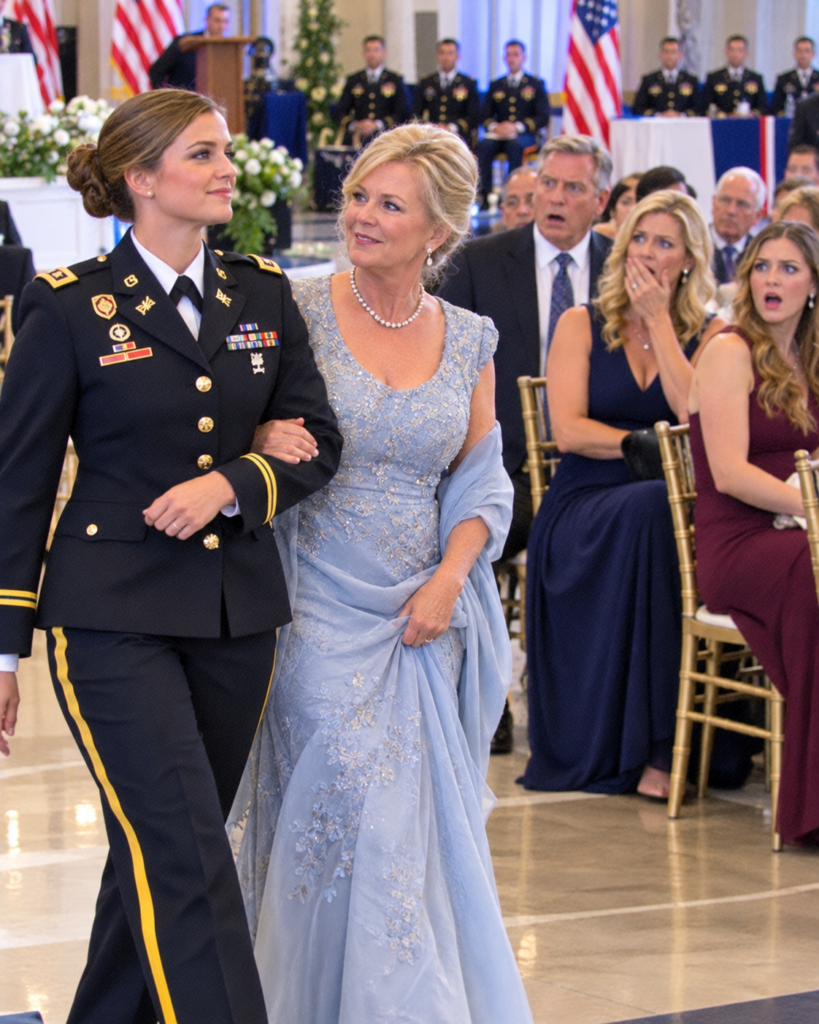
The graduation auditorium at Fort Benning, Georgia, seemed almost breathtaking in the afternoon light.
American flags lined the walls. Gleaming brass fixtures caught the glow from above, while ceremonial banners suspended over the stage honored the generations of military officers who had passed through the institution before us.
Hundreds of officer candidates occupied neatly organized rows.
Every uniform was immaculate. Every pair of shoes had been carefully polished. Every candidate sat with squared shoulders.
Although excitement filled the auditorium, we maintained the composure and discipline that months of demanding training had taught us.
My commission folder lay across my knees.
I slowly traced its edge with my thumb, noticing the feel of the cover beneath my fingers.
I had pictured this day countless times.
On grueling runs before sunrise.
Through seemingly endless evenings spent studying.
During training exercises that demanded more from me than I had believed I could possibly give.
And in those quiet, private moments when I wondered whether the terrified thirteen-year-old I had once been would even recognize the person I had grown into.
I was twenty-eight years old now.
I was healthy.
I was strong.
And I stood on the verge of receiving my commission as an officer in the United States Army.
I had become everything my younger self had been made to believe she could never be.
Sitting three rows behind me were three people who had contributed almost nothing to that transformation.
Linda Barrett.
Richard Barrett.
And Allison, their eldest daughter.
The family I had been born into.
I hadn’t invited any of them.
They had discovered the graduation through a public announcement and appeared that morning behaving as though fifteen years of separation could simply be erased.
I spotted them as we entered the auditorium.
Linda was wearing a cream-colored dress with a pearl necklace I remembered from my childhood.
Richard had dressed in a navy suit with a striped necktie.
Allison, thirty-one now, sat beside them in a fitted blue dress. She held her phone ready, apparently intending to record what she considered an important celebration for the family.
Linda leaned toward the woman sitting next to her.
“That’s our Hannah,” she announced with pride.
I knew that voice the instant I heard it.
Certain sounds remain embedded in your memory no matter how many years pass.
The squealing wheels of a hospital cart.
The regular beeping of a cardiac monitor.
And the voice of a mother who once decided that keeping you alive was not worth the trouble.
The woman beside Linda smiled warmly.
“You must be so proud of her.”
“Oh, absolutely,” Linda replied. “She’s always been determined.”
I nearly laughed aloud.
Determined.
Hearing that particular word from my mother felt almost absurd.
When I was thirteen, her description of me had been average.
Now that I was twenty-eight, she had apparently decided I was determined.
Apparently, fifteen years and an Army uniform were enough to transform her opinion.
Then she leaned closer and spoke more quietly.
“After everything, she owes us this moment.”
My hands tightened around the commission folder.
Of course.
There it was again.
That familiar attitude I had lived with throughout my childhood.
Everything had a price.
Every act of generosity carried expectations.
Every accomplishment was something my parents believed they could take credit for.
Even when they had done absolutely nothing to help make it happen.
I continued looking toward the stage.
I had made a promise to myself that I would not allow anyone to spoil this occasion.
Not Linda.
Not Richard.
Not even the painful memories that had begun crowding my thoughts the moment I recognized their faces.
But as I listened to my biological mother lay claim to a life I had created entirely without her, my mind returned to another occasion when she had spoken with exactly that kind of confidence.
I had been thirteen years old.
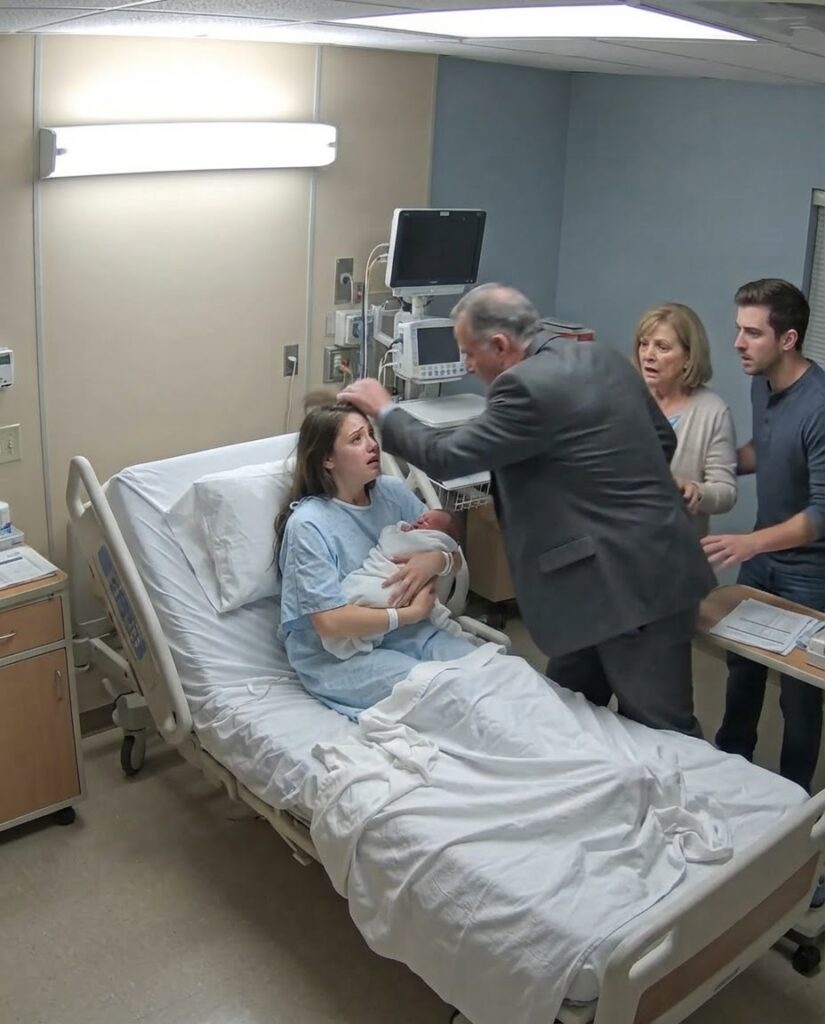
I was lying in Room 314 at St. Anne’s Medical Center.
And a physician was telling my family that I had cancer.
Of all the memories from that year, the details of that hospital room remain among the clearest.
Its pale blue walls.
The small window facing the parking area.
The television fixed high in one corner.
The untouched paper cup of water beside my hospital bed.
Rain had been falling that morning.
I remember following the droplets as they collected on the window while Dr. Michael Grant explained my condition to my parents.
He was a compassionate physician who wore glasses with silver frames and had a talent for making complicated medical information understandable.
He had spent many years caring for children.
He understood when a gentle approach was necessary.
He also understood when honesty mattered most.
“Hannah has acute lymphoblastic leukemia,” he explained.
I couldn’t understand every part of what he was saying.
But I understood enough to be afraid.
The word leukemia wasn’t entirely unfamiliar to me.
I knew it described a serious disease.
Something frightening.
The kind of illness that caused adults to speak in hushed voices.
Dr. Grant brought his chair closer to us.
“The positive news is that children Hannah’s age often respond very well to treatment for this disease.”
He talked us through chemotherapy.
He described the hospital visits, medications, blood tests, and constant medical supervision that would become part of my daily existence.
He told us that the treatment process might last several years.
And then he said the words I desperately wanted to believe.
“With proper treatment, Hannah has a strong chance of recovering.”
I turned toward my mother.
All I wanted was for her to reach for my hand.
I wanted her to reassure me that we would face this together.
I wanted my father to wrap an arm around me, the way he used to whenever thunderstorms frightened me as a small child.
But Richard had something else on his mind.
“How much is all of this going to cost?”
Dr. Grant hesitated briefly.
“The total depends on her specific treatment and a number of other considerations. Our financial counselors can help you understand your insurance, available assistance, and any costs your family might be responsible for.”
Richard settled farther back into his chair.
“And how long will it take?”
“Treatment could continue for several years.”
My father slowly exhaled.
“Several years.”
Linda lowered her gaze toward her handbag.
Neither of them even glanced at me.
Dr. Grant continued explaining our options.
He described financial support programs and other assistance available to families dealing with serious childhood illnesses.
Richard cut him off.
“So we’re supposed to risk everything we’ve spent our lives building just because Hannah got sick?”
An awful silence settled over the room.
I stared at my father.
Part of me expected him to laugh.
I waited for him to clarify that his words had come out wrong.
That he hadn’t meant what he seemed to be saying.
But no explanation followed.
For years, my parents had been accumulating money for Allison’s college education.
One hundred and eighty thousand dollars.
I knew the exact amount because it was discussed so frequently at home.
It came up during dinners.
During conversations about universities.
Whenever Allison earned another outstanding grade or brought home another award.
My sister was sixteen at the time.
She was attractive, bright, socially successful, and determined to gain admission to an elite university.
Her bedroom walls were covered with academic honors.
Our parents already spoke excitedly about the internships she would pursue, the prestigious employers who would want to hire her, and the extraordinary career they were convinced she would enjoy.
To them, Allison’s future was a valuable investment that needed protection.
My own future had never seemed important enough for them to consider.
“We are not going to destroy Allison’s future because of this,” Richard declared.
Dr. Grant sat straighter.
“Mr. Barrett, this conversation concerns the medical care of your younger daughter.”
“I know perfectly well what we’re discussing.”
“Then you also need to recognize that Hannah has a genuine chance to survive and recover.”
Richard shifted his attention directly to me.
He didn’t look furious.
Perhaps anger would have been easier for me to comprehend.
Instead, his expression was almost businesslike.
As though he were considering whether an investment was worth making.
“Allison has potential,” he told me. “She’s going places. You’ve always been average, Hannah.”
Everything inside me seemed to stop moving.
Average wasn’t a new word in our family.
I had heard it when Allison won the science fair while I brought home an ordinary report card.
I heard it when she earned a position on the debate team and I failed to make the volleyball team.
I heard it when she received an invitation to a summer leadership program while I spent my summer sitting at the kitchen table doing puzzles.
Average was a word that had followed me for years.
But I had never understood just how much importance my father attached to it.
“We’re not sacrificing a future with real promise for an average one,” he continued.
My mother gave a slight nod.
Somehow, that tiny gesture hurt even more than his words.
I looked directly at her.
“But I’m your daughter too,” I whispered.
Linda shut her eyes.
“Hannah, please don’t make this any more difficult.”
I had no answer.
What could a thirteen-year-old possibly say in that moment?
Should I promise to work harder?
Should I tell them I would improve my grades?
Should I swear that I would become successful and important someday, if only they would let me live long enough to try?
I was just thirteen.
I was terrified of what was happening to my body.
And now I felt as though I had to demonstrate that my life was valuable enough to deserve saving.
Dr. Grant rose from his chair.
He remained controlled, but his voice had taken on a different edge.
“Mr. and Mrs. Barrett, I need you both to step outside.”
Richard’s brow furrowed.
“We’re her parents.”
“Then I strongly suggest you remember what being parents requires.”
My father sprang to his feet, scraping his chair harshly against the floor.
Linda picked up her handbag.
For the briefest instant, she looked in my direction.
Without thinking, I reached one hand toward her.
She turned her face away.
Neither of them came to embrace me.
Neither offered any reassurance that they would return.
They simply walked out.
When the door shut, the hospital room suddenly seemed impossibly large.
Dr. Grant stayed.
He contacted a hospital social worker.
He explained that people would help coordinate my medical treatment and ensure I didn’t have to endure my illness without support.
I nodded because I couldn’t think of anything else to do.
But very little of what he said registered.
My eyes remained fixed on the door.
I waited.
Even after everything that had happened, a part of me still believed my mother would come back.
Perhaps she would remember that I was scared.
Perhaps my father would realize what he had done and apologize.
Perhaps they would return and tell me that the entire conversation had been a horrible misunderstanding.
But one hour passed after another.
Eventually, evening arrived.
Neither parent came back.
I was frightened of the cancer growing inside me.
Yet cancer wasn’t what shattered my heart that day.
The unbearable realization was that my parents had calculated what my survival might cost them and concluded that my life wasn’t worth paying for.
I was still watching the doorway when I heard a soft knock.
A woman stood there with a folded blanket in her arms.
Dark curls were loosely gathered into a ponytail. Her brown eyes looked tired, and beneath her blue nursing scrubs she wore an old, well-used pair of sneakers.
Her name was Rachel Morgan.
She was thirty-four.
And although I couldn’t have known it then, she was about to change the course of my entire life.
Chapter 2: THE WOMAN WHO CHOSE TO STAY
Rachel didn’t enter my room wearing the exaggerated smile that adults sometimes use when they’re trying to comfort a frightened child.
She didn’t pretend that everything was wonderful.
She didn’t promise me that I had nothing to worry about.
Instead, she approached my bedside, placed the folded blanket nearby, and spoke quietly.
“I heard about what happened,” she said. “I’m so sorry.”
Those simple words broke through the fragile control I had been struggling to maintain.
I began to cry.
Not the quiet kind of crying that allows you to pretend you’re still holding yourself together.
I cried because I was terrified.
Because I was sick.
Because my parents had abandoned me.
Because, for the first time in my life, I understood that the two people who were supposed to protect me had decided I wasn’t worth protecting.
Rachel didn’t walk away.
She stayed with me.
She remained through chemotherapy and the waves of nausea that followed.
She was there when my hair began falling out.
She helped me endure sleepless nights.
She brought clean blankets, crackers, and medicine.
She told terrible jokes, the kind that were so ridiculous I sometimes laughed despite myself.
And she played game after game with me using an old deck of cards.
She never treated my fear as an inconvenience.
She never made me feel that my illness had somehow become my fault.
Most importantly, she never made me believe that I had to accomplish something extraordinary to deserve her attention.
Twenty-eight days after my diagnosis, a social worker came to explain that arrangements were being made for me to enter foster care.
I listened quietly, uncertain what kind of home I would be sent to or who might be willing to take responsibility for a thirteen-year-old girl undergoing cancer treatment.
Rachel was standing beside my hospital bed.
Then she spoke.
“I want to take her in.”
The social worker stared at her.
Rachel was already approved by the state to provide foster care.
She was a registered nurse.
And because she had been caring for me, she understood exactly what my medical treatment involved.
She knew about the medications.
The appointments.
The side effects.
The exhaustion.
She understood the responsibilities she would be accepting far better than almost anyone else could have.
But Rachel didn’t make the decision without considering me.
Instead, she turned toward my bed.
“Only if Hannah wants to come home with me.”
I looked up at her.
For weeks, adults had been making decisions about my life.
My doctors had discussed treatment.
Social workers had discussed placements.
My biological parents had discussed money and whether my survival justified the expense.
But almost no one had asked what I wanted.
Rachel did.
“Yes,” I whispered. “Please.”
Eventually, Rachel became my legal mother.
She gave me a real home.
She gave me a family where I no longer had to wonder whether I belonged.
And she gave me her last name.
Morgan.
It wasn’t simply a change on official documents.
To me, that name represented the woman who had looked at a frightened, sick thirteen-year-old girl and decided she was worth choosing.
Years passed.
And when I eventually told Rachel that I wanted to pursue a career as a military officer, she gave me something my biological parents had never offered.
She believed in me.
She believed that I was capable of becoming more than anyone had ever expected.
She didn’t measure my potential against Allison’s accomplishments.
She didn’t describe my ambitions as unrealistic.
She didn’t treat my dreams like an investment that needed to produce an impressive return.
She believed that I could become the person I wanted to be.
That belief stayed with me as I worked toward my future.
It stayed with me through every difficult stage of my training.
And fifteen years after my diagnosis, it had brought me to the graduation auditorium at Fort Benning.
Rachel was there that afternoon.
But she wasn’t sitting beside Linda, Richard, and Allison.
She occupied the seat I had personally reserved for her.
The seat that belonged to the woman who had actually raised me.
The woman who had stayed.
As the ceremony continued, the commanding general approached the microphone.
The auditorium settled into attentive silence.
“We will now recognize the graduate who achieved the highest overall standing in this year’s class.”
Three rows behind me, Linda stopped talking.
The general continued.
“This officer candidate has demonstrated exceptional achievement in academics, leadership, physical performance, and service.”
I kept my breathing even.
My heartbeat remained surprisingly steady.
“Graduating first in her class and receiving the academy’s highest honors this year…”
The general paused and smiled.
“Officer Candidate Hannah Morgan.”
Morgan.
Not Barrett.
Morgan.
Rachel’s surname.
My mother’s surname.
Thunderous applause erupted throughout the auditorium.
I stood.
For the first time since the ceremony had begun, I turned to look behind me.
Linda was no longer smiling.
Richard’s complexion had gone pale.
Allison slowly lowered the phone she had been holding.
They had entered the auditorium expecting to be recognized as the proud parents responsible for raising the woman who had finished first in her class.
Instead, hundreds of people were watching me stand beneath the name of the woman who had taken me in after they decided my life wasn’t worth saving.
As I looked at their stunned expressions, Linda’s earlier words returned to me.
“After everything, she owes us this moment.”
They still had no idea what else would happen before the ceremony ended.
Chapter 3: THE RECOGNITION NO ONE EXPECTED
I faced the stage again, although I could still feel my biological parents watching me from behind.
Their attention seemed fixed on me as I walked forward to receive my honors.
On my way toward the stage, I caught sight of Rachel sitting in the front row.
Her eyes glistened with emotion.
But something about her expression caught my attention.
She was no longer looking directly at me.
Her gaze had moved beyond me.
Toward Linda and Richard.
For a brief moment, something changed in Rachel’s face.
I couldn’t tell exactly what she was thinking.
Then the commanding general looked down at the documents arranged before him.
He paused.
“There is one more recognition we need to make.”
The applause gradually died away.
From somewhere behind me, I heard Richard speaking quietly to Linda.
“Why didn’t she tell us about this?”
I didn’t look back.
Because something else had captured my attention.
The general had placed my award folder to one side.
He reached for another document.
Across the top of that paper was a printed name.
A name I had never expected to hear announced inside that auditorium.
In the front row, Rachel suddenly sat straighter.
The general raised his eyes from the document.
He looked directly at me.
And the next words he spoke sent a sudden chill through my fingers.
“Before Lieutenant Morgan takes her place,” he announced, “the United States Army would like to recognize an individual whose extraordinary courage and sacrifice made this officer’s journey possible.”
A quiet murmur swept through the auditorium.
I stood motionless.
The general continued.
“Fifteen years ago, when Hannah Morgan was thirteen years old, she was diagnosed with acute lymphoblastic leukemia. During one of the most difficult periods of her young life, she faced circumstances no child should ever have to endure.”
My throat tightened.
I hadn’t known the Army had included that part of my story in the ceremony.
I turned slightly toward Rachel.
She was already wiping tears from her cheeks.
“At a time when many people might have walked away from such an enormous responsibility,” the general continued, “one woman made a different choice. She chose to become a mother to a child who desperately needed one.”
The auditorium grew completely silent.
“Rachel Morgan.”
For a moment, nobody moved.
Then the general gestured toward the front row.
“Would you please stand?”
Rachel rose slowly.
The applause began almost immediately.
It started with a few people near the stage, then spread throughout the auditorium until hundreds of officers, families, and distinguished guests were standing.
Rachel covered her mouth with one hand.
I had seen her cry before.
I had seen her cry when my hair first began growing back.
I had seen her cry when I graduated from high school.
I had even seen her cry when I received my acceptance letter to officer candidate school.
But I had never seen her look quite like that.
She seemed almost overwhelmed by the realization that the little girl she had once carried home from a hospital was now standing in front of an entire auditorium wearing an Army uniform.
The general waited for the applause to settle.
“Mrs. Morgan did more than provide a home. She ensured Hannah received the medical care she needed, supported her education, and encouraged her to pursue a life of service. She demonstrated something every officer should understand: leadership begins with responsibility, and character is measured by what we do when nobody is watching.”
My eyes filled with tears.
Then he said something I would remember for the rest of my life.
“Today, we recognize not only an outstanding graduate, but also the woman who taught her what it means to never abandon someone who depends on you.”
The general stepped away from the podium.
A uniformed officer approached Rachel carrying a small presentation box.
Inside was a commemorative Army medal and a certificate recognizing her extraordinary contribution to the life of an Army officer.
Rachel accepted it with trembling hands.
Then she looked at me.
I couldn’t hold back my tears anymore.
I walked toward her.
The general smiled and stepped aside.
When I reached her, Rachel opened her arms.
I hugged her.
Not as a commissioned officer.
Not as the top graduate in my class.
But as the frightened thirteen-year-old girl who had once believed nobody wanted her.
“Thank you, Mom,” I whispered.
Rachel held me tightly.
“You don’t have to thank me, sweetheart.”
She pulled back just enough to look at my face.
“I was the lucky one. I got to watch you become this wonderful woman.”
I laughed through my tears.
Behind us, the applause continued.
But three rows back, there was a different kind of silence.
My biological parents had finally understood that the woman being honored was not them.
It was the person who had replaced them in every way that mattered.
Linda stood abruptly.
“Excuse me,” she whispered to the people beside her.
Richard grabbed her arm.
“Sit down.”
“That’s our daughter!”
His voice was low and furious.
“Not now, Linda.”
Allison was still holding her phone.
She had stopped recording.
For the first time that afternoon, she seemed uncertain about what she should do with it.
Then the general returned to the microphone.
“There is one additional matter that makes today’s recognition particularly meaningful.”
Rachel’s expression changed.
I noticed it immediately.
She looked at the general, then at the officer standing beside the stage.
The general opened another folder.
“During our review of Lieutenant Morgan’s personal history and the extraordinary circumstances surrounding her upbringing, we received a request from a distinguished member of the military community who wished to contribute to this occasion.”
I frowned slightly.
I had no idea what he was talking about.
“That individual is a retired United States Army colonel who served for more than thirty years. He also happens to be the person who first encouraged Mrs. Morgan to become a foster parent.”
Rachel lowered her head.
A familiar voice came from the side entrance.
“That would be me.”
An elderly man in a decorated Army uniform walked into the auditorium.
I recognized him immediately.
Colonel James Whitaker.
He had been Rachel’s commanding officer years earlier, before she left military nursing and began working at St. Anne’s Medical Center.
He was the man who had helped Rachel navigate the complicated process of becoming my legal guardian.
He had attended my high school graduation.
He had sent me letters during my college years.
And when I first considered joining the Army, he had spent an entire afternoon explaining what military service would demand of me.
I hadn’t seen him in nearly two years.
He walked toward the stage.
“Congratulations, Lieutenant Morgan.”
“Thank you, sir.”
He shook my hand.
Then he turned toward the audience.
“I’ve known Rachel Morgan for almost twenty years. I’ve watched her sacrifice her own comfort for people who needed help. But the day she decided to take responsibility for Hannah was something I’ll never forget.”
He paused.
“She didn’t ask whether the girl would become successful. She didn’t ask whether the decision would improve her reputation. She simply asked what the child needed.”
He looked at Rachel.
“That’s the kind of person this Army needs more of.”
Another wave of applause filled the room.
Then Colonel Whitaker looked toward Linda and Richard.
His expression became serious.
“Unfortunately, there is another part of this story that should be acknowledged.”
My stomach tightened.
“Years ago, when Hannah was abandoned during her cancer treatment, there were people who believed her survival was less important than protecting an education fund.”
The auditorium became painfully quiet.
I felt Rachel’s hand close around mine.
The colonel continued.
“I was present when the hospital social worker contacted Rachel. I also reviewed the circumstances that led to Hannah entering foster care. I remember the questions people asked about the financial burden of caring for a sick child.”
He turned slightly.
“And I remember the woman who never once asked whether that child was worth the expense.”
His eyes moved toward my biological parents.
Linda’s face had gone white.
Richard looked down at his hands.
Allison slowly placed her phone in her lap.
For fifteen years, I had wondered what it would feel like if my parents ever had to face the truth about what they had done.
I had imagined arguments.
Tears.
Apologies.
But I had never imagined standing in a room full of people while someone else calmly explained the difference between abandoning a child and choosing to love one.
The general extended his hand toward me.
“Lieutenant Morgan, congratulations. Your service begins today.”
I saluted.
“Thank you, sir.”
The ceremony continued.
My classmates received their commissions.
Families took photographs.
Parents embraced their children.
And Rachel stood beside me for every official photograph.
My biological family remained in their seats.
Until the ceremony ended.
Then Linda came toward me.
“Hannah!”
I turned.
She hurried across the aisle, with Richard and Allison following behind her.
Her eyes were already wet.
“Sweetheart, that was beautiful.”
I said nothing.
She reached for my arm.
“We’re so proud of you.”
I gently moved my arm away.
“Thank you.”
Her smile faltered.
“Can we talk somewhere privately?”
I glanced toward Rachel.
She didn’t interfere.
She simply stood beside me.
I looked back at Linda.
“What is it you want to talk about?”
My mother swallowed.
“Everything. All these years. We know things weren’t perfect when you were younger, but we’re still your parents.”
Richard stepped forward.
“Let’s not make a scene. We came here because we wanted to celebrate your achievement.”
I looked at him.
“Did you?”
He frowned.
“Of course.”
“Then why did you introduce yourselves to strangers as the people who raised me?”
Neither answered.
Allison finally spoke.
“Hannah, Mom and Dad made mistakes. We were all under a lot of pressure back then.”
I looked at my sister.
“You were sixteen. You weren’t responsible for my treatment. I understand that.”
She seemed relieved.
But I continued.
“You were also old enough to understand that I was sick and frightened. Yet you never came to the hospital to see me.”
Her expression changed.
“I was a teenager.”
“So was I.”
The words were quiet.
But they seemed to land harder than anything else I could have said.
Linda began crying.
“We didn’t know how things would turn out.”
I looked directly at her.
“Neither did I. I was thirteen. I was the one with cancer.”
She lowered her eyes.
For several seconds, nobody spoke.
Then Richard cleared his throat.
“Your mother and I would like to rebuild our relationship with you.”
I studied his face.
Fifteen years earlier, he had sat in a hospital room and calculated whether my life was worth the financial sacrifice.
Now he was standing in front of me, looking at my uniform, my medal, and the people applauding me.
I wondered whether he would have wanted this relationship if I had never recovered.
If I had never become successful.
If I had never become someone worth boasting about.
I already knew the answer.
“I hope you understand,” I said, “that becoming successful doesn’t change what happened.”
Richard’s jaw tightened.
“We’re your family.”
I shook my head.
“Family isn’t a title you claim when someone accomplishes something. It’s a responsibility you accept when that person needs you.”
Linda began sobbing.
I didn’t raise my voice.
I didn’t insult them.
I simply turned toward Rachel.
“Mom, are you ready to go?”
Rachel nodded.
And together, we walked away.
But as we reached the exit, I heard Linda call my name one more time.
“Hannah, please! We gave you life!”
I stopped.
For a moment, I considered ignoring her.
Then I turned around.
“Yes, you did.”
I looked at Rachel.
“But she gave me a reason to keep living.”
And I left.
Chapter 4: THE NAME I CHOSE, THE FAMILY I KEPT
Three weeks after graduation, I received a letter.
It arrived at my apartment in a plain white envelope with no return address.
I recognized my mother’s handwriting immediately.
For several minutes, I left it on the kitchen counter.
I had spent fifteen years learning how to live without hearing from Linda and Richard Barrett.
I had built a life.
I had survived cancer.
I had graduated from college.
I had completed military training.
I had become an Army officer.
And I had done all of it without their involvement.
Still, seeing my mother’s handwriting brought back memories I thought I had buried.
Eventually, I opened the envelope.
The letter was four pages long.
Linda wrote about the graduation.
She described how proud she had felt when the general announced my name.
She mentioned that several people had approached her afterward, congratulating her on having such an accomplished daughter.
Then she wrote something that made me stop reading.
I know we made decisions that hurt you, Hannah. But you need to understand that we were frightened too.
I continued.
Your father believed we were protecting Allison’s future. We thought we were making the best decision for the family. We never imagined you would completely disappear from our lives.
I read that paragraph twice.
Never imagined.
As though I had simply moved away.
As though I had chosen to stop answering their calls.
As though I had abandoned them.
Then came the final paragraph.
We would like to meet with you. Allison is considering having a baby, and it would mean so much to us if you could become part of the family again. We want our future grandchildren to know their aunt.
I slowly folded the letter.
There it was.
Even now, the request was about Allison.
Her future.
Her children.
Her family.
I was being invited back into their lives because there was another occasion on which they wanted to present themselves as a complete family.
I placed the letter inside a drawer.
I didn’t answer.
Two days later, Richard called.
I let it go to voicemail.
He called again that evening.
Then again the following morning.
Eventually, I listened to his message.
“Hannah, this is your father. I don’t understand why you’re making everything so difficult. Your mother is heartbroken. We made mistakes, but you can’t keep punishing us forever. We’re getting older. We won’t be around forever.”
I deleted the message.
Not because I wanted to punish him.
But because I finally understood that I didn’t have to spend the rest of my life explaining why their decisions had consequences.
I had already given them fifteen years of silence.
They had chosen it.
I wasn’t obligated to surrender the peace I had built just because they had finally become uncomfortable with it.
A week later, Rachel invited me to dinner.
She was making chicken pot pie, one of the meals she had prepared during my first months living with her.
When I arrived, the kitchen smelled exactly as it had when I was thirteen.
Fresh bread.
Butter.
Rosemary.
And the comforting scent of a home where nobody had to earn the right to sit at the table.
Rachel noticed the envelope sticking out of my handbag.
“Did they write to you?”
I nodded.
She didn’t ask to read it.
She didn’t tell me what to do.
She simply placed a plate in front of me.
“Do you want to talk about it?”
I sat down.
“They want to come back into my life.”
Rachel nodded slowly.
“And what do you want?”
I stared at the food for a moment.
“I don’t know if I want them back.”
“Then you don’t have to decide tonight.”
I looked at her.
“Doesn’t it bother you? That they might suddenly want to be my parents again?”
Rachel considered the question.
“Of course it hurts, sweetheart. I’m human.”
She reached across the table and squeezed my hand.
“But I didn’t become your mother because I wanted to replace somebody. I became your mother because you needed one.”
Her voice softened.
“If you ever decide you want a relationship with them, I won’t stand in your way.”
I felt tears gathering in my eyes.
“And if I don’t?”
Rachel smiled gently.
“Then we’ll still have dinner on Sundays.”
I laughed.
She laughed too.
And somehow, that simple answer gave me more comfort than any elaborate speech could have.
A month later, I received my first official assignment.
I was being transferred to Fort Liberty, North Carolina.
Rachel helped me pack.
She folded my uniforms carefully, organized my documents, and placed an old photograph inside the top drawer of my suitcase.
It was a picture of us taken outside St. Anne’s Medical Center.
I was fourteen.
My hair was still short from chemotherapy.
Rachel had one arm around my shoulders.
Both of us were smiling.
On the back, she had written:
You were never a burden. You were always worth fighting for.
I held the photograph for a long time.
Then I placed it inside the small frame I kept beside my bed.
The morning I left, Rachel drove me to the airport.
We stood beside my luggage for several minutes.
She straightened the collar of my uniform.
“You look like an officer.”
I smiled.
“I am an officer.”
“I know. I’m still getting used to it.”
Then she hugged me.
“Call me when you land.”
“I will.”
“And eat something besides cafeteria food.”
“Yes, ma’am.”
“And don’t forget your laundry.”
I laughed.
“Mom!”
She smiled, but her eyes were wet.
Then she whispered something I would carry with me for the rest of my career.
“You don’t have to be the strongest person in every room, Hannah. Just remember that you never have to face everything alone.”
I hugged her one last time.
And then I walked toward the departure gate.
Six months later, I received another message from Allison.
It was much shorter than my mother’s letter.
Hannah, I know you probably don’t want to hear from me. But I have been thinking about what happened at the hospital. I was young, but I remember everything. I remember Dad saying that the college fund couldn’t be touched. I remember Mom agreeing. And I remember doing nothing.
I am sorry.
I don’t expect you to forgive me. I just wanted you to know that I finally understand how alone you must have felt.
I read it several times.
Unlike my parents, Allison didn’t ask me to come home.
She didn’t mention her future children.
She didn’t talk about how my absence made the family look.
She simply acknowledged what she had done.
For the first time, I wondered whether there might eventually be room for a different kind of relationship with her.
I sent a short reply.
Thank you for acknowledging it. I need time, but I appreciate your honesty.
That was all.
There was no dramatic reconciliation.
No sudden family reunion.
No promise that everything would be forgotten.
Some wounds take longer than an apology to heal.
And some relationships have to be rebuilt from the beginning, if they can be rebuilt at all.
I understood that now.
One year after my graduation, I returned to St. Anne’s Medical Center.
I was visiting a group of pediatric cancer patients as part of a military community outreach program.
The hospital had changed.
The walls had been repainted.
The waiting area had new furniture.
And Room 314 had been renovated.
But the window was still there.
The same window where I had once watched raindrops slide down the glass while my father discussed whether my treatment was worth the expense.
A little girl was sitting in the room.
She couldn’t have been older than ten.
Her name was Sophie.
She had a pink blanket across her legs and a knitted hat covering her head.
Her mother sat beside her, looking exhausted.
I introduced myself.
Sophie glanced at my uniform.
“Are you a real Army officer?”
I smiled.
“Yes, I am.”
“Do you have to be brave all the time?”
I pulled a chair closer.
“No.”
She looked surprised.
“Then how can you be a soldier?”
I laughed softly.
“Being brave doesn’t mean you’re never scared. It means you keep going, even when you’re scared.”
She considered that answer.
Then she looked down at her blanket.
“Sometimes I think everybody would be happier if I wasn’t sick.”
My smile faded.
I knew those words.
I knew the loneliness behind them.
I leaned forward and took her small hand.
“Listen to me, Sophie. You are not a burden. You don’t have to get perfect grades, win awards, or become anything special to deserve love.”
Her eyes filled with tears.
“You just have to be you.”
Her mother covered her mouth.
I stayed with them for nearly an hour.
Before leaving, I gave Sophie a small American flag pin.
“Keep this somewhere safe,” I told her. “And whenever you feel frightened, remember that there are people who believe in you.”
She smiled.
It was a small smile.
But it was enough.
As I walked down the hospital corridor, I stopped outside Room 314.
For years, I had thought about the day my biological parents left me there.
I had wondered why I hadn’t been enough.
Why Allison’s future had mattered more.
Why my father had looked at me as though my life were an expense he couldn’t justify.
But standing in that corridor, I finally understood something.
Their decision had never been a measurement of my worth.
It had been a reflection of their character.
I had spent years believing I needed to become extraordinary to prove them wrong.
But I didn’t.
I had been worthy of saving when I was thirteen.
I had been worthy of love when I was lying in that hospital bed.
And I would have been worthy even if I had never become an Army officer.
My medals didn’t make me valuable.
My rank didn’t make me valuable.
My achievements didn’t make me valuable.
I had always been valuable.
Rachel had simply been the first person who made sure I knew it.
That evening, I called her.
“Hey, Mom.”
“Hello, Lieutenant Morgan.”
I laughed.
“Stop calling me that.”
“Why? I’m very proud of my daughter.”
I looked out through the hospital windows at the fading sunlight.
“Thank you for choosing me.”
There was a pause.
Then Rachel answered.
“Sweetheart, I didn’t choose you because you were going to become somebody important.”
Her voice trembled slightly.
“I chose you because you were already somebody important.”
I closed my eyes.
For fifteen years, I had carried the memory of a hospital door closing behind two people who were supposed to love me.
But that was no longer the most important memory of my childhood.
The most important memory was a different door opening.
A woman standing in the doorway with a folded blanket.
A woman who stayed.
A woman who never asked whether I was worth the trouble.
And a woman who taught me that family isn’t always determined by the people who give you your name.
Sometimes, family is determined by the people who refuse to let you face the world alone.
My biological parents gave me the surname Barrett.
But Rachel Morgan gave me something far more important.
She gave me a home.
She gave me a future.
And she gave me a reason to believe that I deserved both.
I didn’t become Hannah Morgan because I wanted to erase where I came from.
I became Hannah Morgan because I finally had someone worth carrying with me.
And if there was one thing I wanted every frightened child in that hospital to understand, it was this:
You do not have to become extraordinary to deserve someone who stays.
You were worth saving from the beginning.