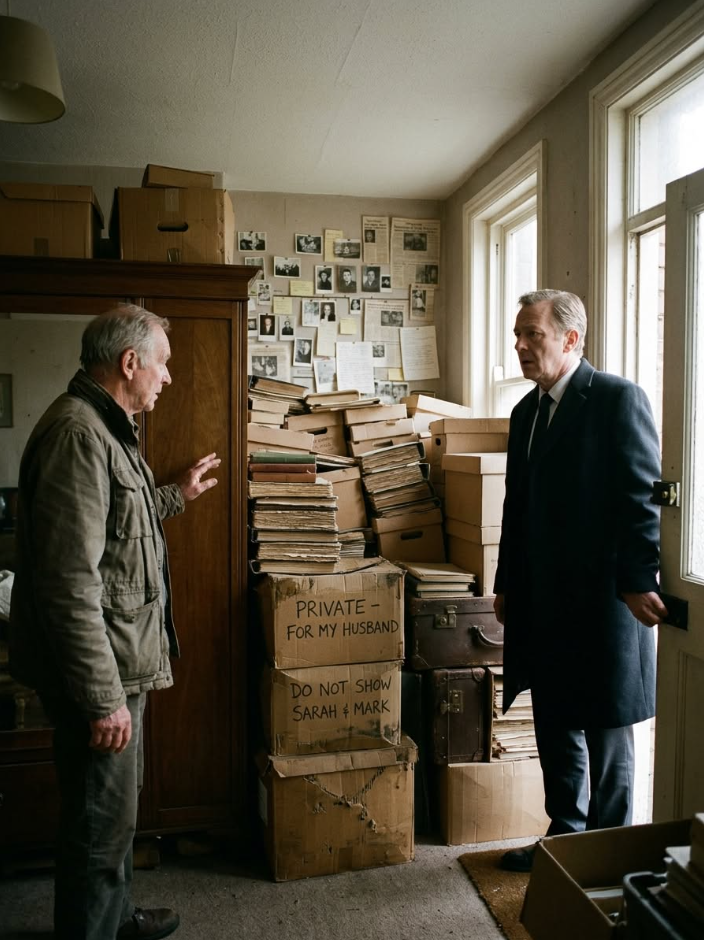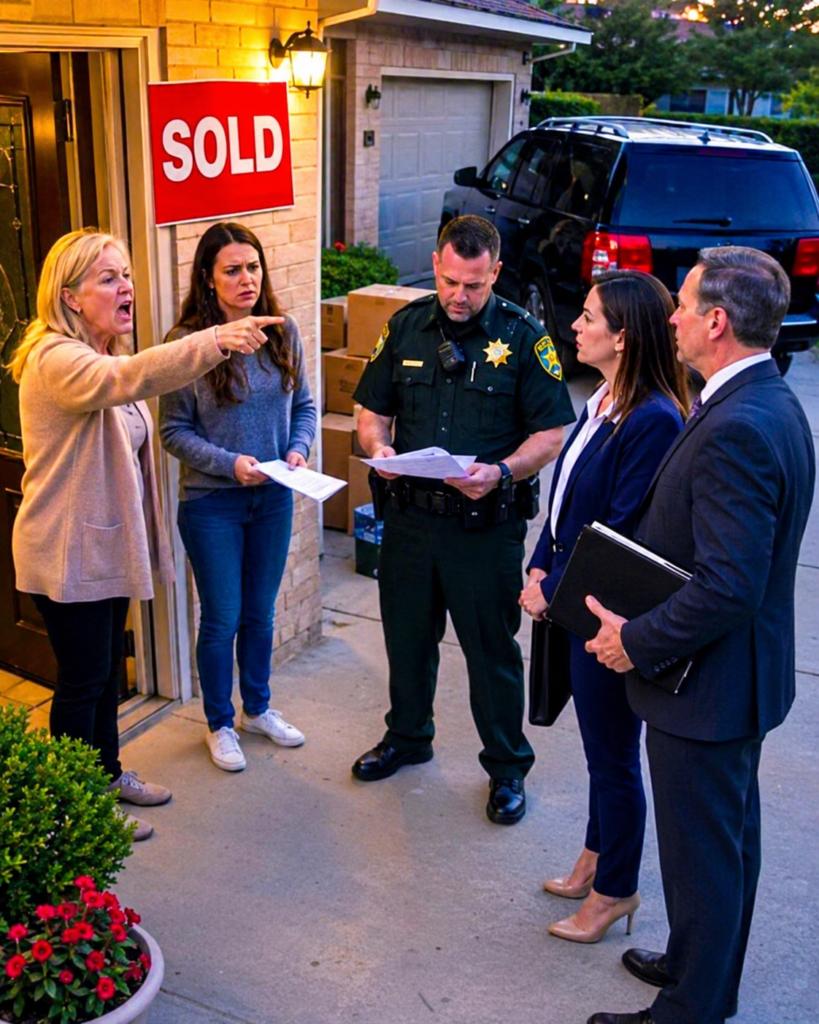
The deputy read my name twice before looking up from the recorded deed.
“This property belonged solely to her,” he said, pointing toward me.
“The sale was legally recorded Friday morning.”
My mother’s mouth remained open, but no sound came out.
Melanie stood beside her with both fists clenched, staring at the house as if she could force the locks to recognize her.
Behind them, the red SOLD sign moved slightly in the evening wind.
Mom recovered first.
“That cannot be right,” she said.
“This is our family home.
Her father bought it for all of us.”
That was the story she had repeated so often that she had started treating it like a legal document.
The truth was less convenient.
My father had left me a modest life-insurance payment when he died.
I combined it with six years of savings and bought the house after it went into foreclosure.
The mortgage, taxes, repairs, insurance, and deed had always been in my name.
Mom had never paid toward the property.
Melanie had never paid rent.
The buyer’s attorney, Daniel Price, removed another document from his black folder.
“Your clients also signed this temporary occupancy agreement eight months ago,” he told the deputy.
“Their permission to remain in the house expired Friday at ten a.m.
The agreement includes a storage provision for property left behind.
Every item was inventoried by licensed movers, and sixty days of storage has been prepaid.”
“Clients?” Melanie snapped.
“We’re not his clients.”
“That is correct,” Daniel said.
“You are the people threatening to break into my clients’ new home.”
The buyers were standing near their car across the street, visibly uncomfortable.
They were a nurse and a firefighter with a nine-year-old son.
Their previous purchase had collapsed during financing, which was why they had been ready to move quickly when I accepted their cash offer.
They had done nothing wrong, yet Mom was glaring at them as though they had personally removed her name from the deed.
“She cannot throw her own mother into the street,” Mom said.
Daniel glanced at the storage envelope taped inside the storm door.
“She did not.
In addition to storage, she paid for seven nights at the Oakway Inn.
The confirmation is in that envelope.”
I had done that after signing the deed, not because Mom and Melanie deserved another rescue, but because I needed to know I had left without becoming cruel.
Mom looked at me then.
“You planned this.”
“I considered selling after Melanie told the neighbors that the two of you ran my house,” I said.
“Your message helped me make the decision.”
“It was one trip.”
“It was my trip.”
“Melanie needed me.”
“Then you should have paid for it.”
Melanie took a step toward me.
“You canceled everything while we were driving.
My phone stopped working.
Mom’s card was declined.
We had to sleep beside a highway because of you.”
“Your phone stopped working because I stopped paying for it.
Mom’s card was declined because it was her card.
The cabin was canceled because it was my reservation.”
Each sentence felt strange in my mouth.
Not because it was harsh, but because it was simple.
For years, every conversation with them had been wrapped in explanations.
I worked to prove that my needs were reasonable while theirs were treated as emergencies.
Standing in that driveway, I realized facts did not need permission to be true.
Melanie hurried to the car and returned holding a folded sheet of paper.
“She promised us part of the house,” she said, thrusting it toward the deputy.
“This proves it.”
The page was titled Family Equity Agreement.
Beneath several paragraphs of awkward legal language was a copy of my signature.
I felt my stomach tighten.
Daniel took the paper before I could reach for it.
He studied the bottom of the page, then the typeface, then the signature.
“Where did you get this?” he asked.
“She signed it months ago,” Melanie said.
“No, I didn’t.”
“You sign things without reading them all the time.”
That was another story she needed to be true.
Daniel opened a second envelope and removed a county rejection notice.
During the title search, his office had discovered that someone had attempted to electronically record the same document two days before the sale.
The clerk rejected it because the notary identification number belonged to a woman who had retired four years earlier.
The document also lacked the required property description.
Mom turned slowly toward Melanie.
“What did you do?”
Melanie’s confidence cracked for half a second.
Then she pointed at me.
“She was going to abandon us.
I was protecting the family.”
Daniel pulled out his phone.
The kitchen had a small security camera near the ceiling.
I installed it after Mom fell one afternoon and refused to wear the emergency pendant I bought her.
The camera captured only the kitchen and back entrance.
Everyone knew it was there.
Apparently, Melanie had forgotten.
Daniel opened the clip I had sent him Friday afternoon.
The timestamp showed 11:38 p.m.
Wednesday.