I came home from my husband’s funeral expecting to grieve in peace. Instead, my daughter-in-law looked me in the eye, pointed toward the tiny room beside the garage where the family dog slept, and said, “That’s your room now.” She thought I was a helpless widow with nothing left. She had no idea I quietly owned seventeen million dollars, a beachfront estate in Florida, and documents that could destroy every lie she had built her life on. My name is Evelyn Brooks, and after forty-two years of marriage, I buried the love of my life.
Less than two hours after we returned from the cemetery, the house that Robert and I had built together no longer felt like my home.
The scent of funeral lilies still lingered on my black dress.
Rain tapped softly against the windows.
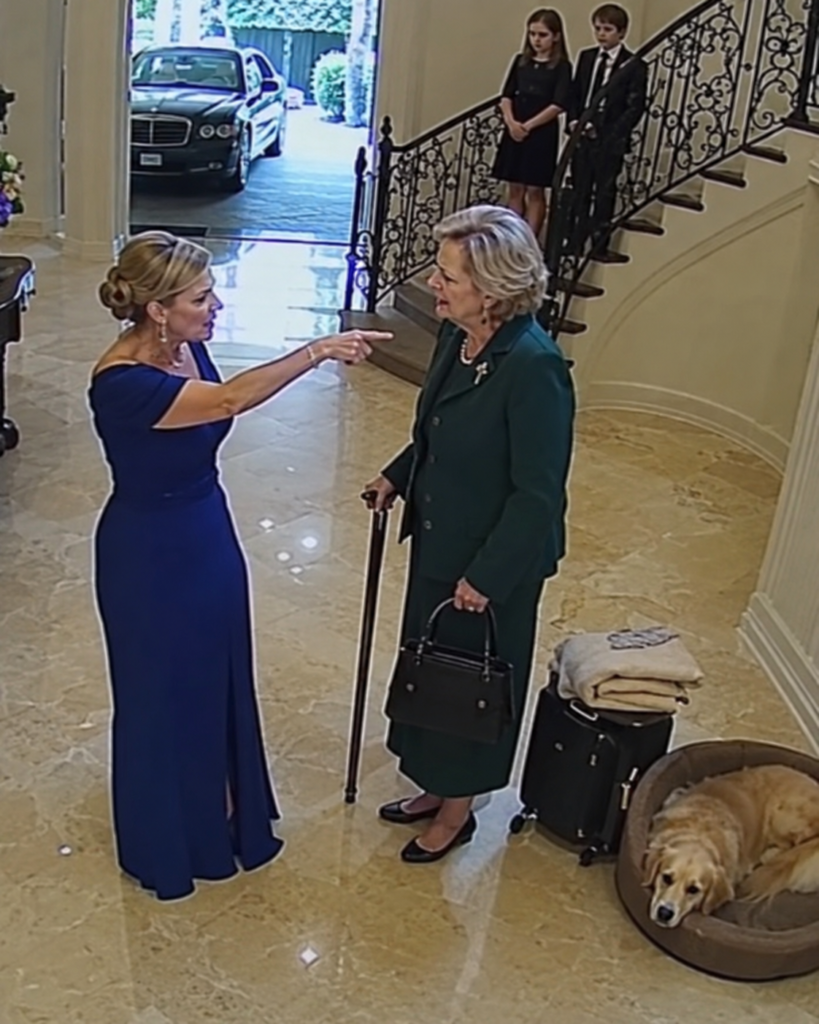
My suitcases sat by the garage door as though someone had already decided I didn’t belong inside.
My daughter-in-law, Jennifer, folded her arms and smiled.
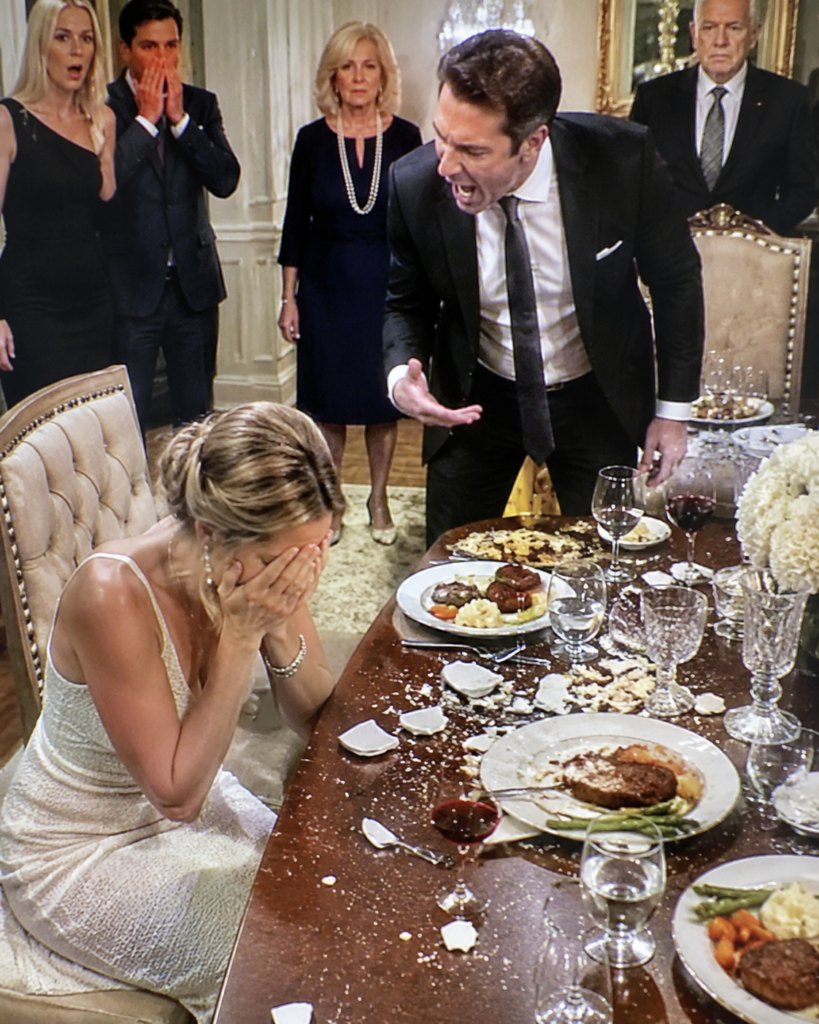
“Your good life is over, Evelyn,” she said coldly. “Starting tonight, you’ll sleep where the dog sleeps.”
I stared at her, certain I had misheard.
Beside her stood my only son, Matthew.
The little boy whose fevers I stayed awake through.
The young man Robert and I helped put through college.
The husband whose first home we helped furnish.
He looked down at the floor.
Not one word.
Not one protest.
Not even, “Mom, this isn’t right.”
My grandchildren, Olivia and Jack, watched silently from the living room, too confused to understand what was happening.
“Jennifer,” I asked quietly, “why are you doing this?”
She shrugged.
“Robert’s gone. The will leaves everything to Matthew. This house isn’t yours anymore. We’re letting you stay out of kindness, but we’re not supporting someone who has no income.”
For a moment, I heard nothing except the pounding of my own heartbeat.
Because I knew something she didn’t.
That wasn’t what Robert’s estate plan actually said.
And I knew she was lying.
“Mom…” Matthew finally mumbled.
“Just… give it some time.”
Jennifer laughed.
“Don’t confuse her. We’ll put a small bed in the service room by the garage. If Max doesn’t need the space.”
Max was the Labrador.
Anger rose inside me.
Every curtain in that house had been chosen by me.
Every family dinner had been cooked in that kitchen.
Every holiday memory lived within those walls.
Yet suddenly, I was being treated like an unwanted guest.
“Your luggage is already outside,” Jennifer continued. “And if you’re staying here, you’ll help around the house. You’ll earn your place.”
Olivia stepped forward.
“Mom… don’t talk to Grandma like that.”
“Go upstairs,” Jennifer snapped.
The room fell silent.
In that silence, I understood something terrifying.
This wasn’t grief.
This wasn’t stress.
This had been planned.
They had simply waited until Robert was buried.
I picked up one of my suitcases.
No one offered to help.
Instead of arguing…
I smiled.
“All right,” I said calmly. “I’ll do what you think is best.”
Jennifer looked pleased.
Matthew sighed with relief.
That night, I lay awake in the damp little room beside the garage, staring at the cracked ceiling while clutching the envelope hidden deep inside my suitcase.
Inside it were copies of Robert’s trust documents.
The key to our safe-deposit box.
Proof of investment accounts worth seventeen million dollars.
And the deed to a beachfront estate we had quietly purchased years earlier.
I cried until there were no tears left.
Then something inside me changed.
I decided to let them believe I was powerless.
I would let Jennifer reveal exactly who she really was.
I would let Matthew show me how easily he could betray his own mother.
Because when the truth finally came out…
I wouldn’t just reclaim what belonged to me.
I would expose everything they thought they had stolen.
The next morning, after weeks of enduring humiliation in silence, I walked into Robert’s attorney’s office…
…and what he placed on the conference table changed everything.
The conference room at Whitman & Cole smelled faintly of leather, old paper, and the lemon polish their receptionist had probably used on the long mahogany table that morning.
For forty-two years, Robert had handled the complicated things.
Taxes. Insurance. The language of trusts and deeds and signatures witnessed by people in gray suits.
The conference room at Whitman & Cole smelled faintly of leather, old paper, and the lemon polish their receptionist had probably used on the long mahogany table that morning.
For forty-two years, Robert had handled the complicated things.
Taxes.
Insurance.
The language of trusts and deeds and signatures witnessed by people in gray suits.
Whenever I asked him what something meant, he would smile, kiss my forehead, and say, “That’s why you married an accountant.”
I always laughed.
Now he was gone.
And for the first time in my life, I was sitting alone across from the man who had helped my husband protect everything we had built.
Daniel Whitman closed the conference-room door behind me.
He was in his late sixties, silver-haired, impeccably dressed, and usually impossible to rattle.
But that morning, he didn’t look like the calm attorney I remembered.
He looked worried.
“Evelyn,” he said softly.
I nodded.
“Daniel.”
He gestured toward the chair opposite him.
“Please sit.”
I did.
My hands were folded tightly in my lap.
I had spent the entire drive rehearsing what I would say.
I had expected questions about the will.
I had expected condolences.
I had expected paperwork.
What I had not expected was the expression on Daniel’s face.
It told me something was terribly wrong.
He sat across from me.
For several seconds, neither of us spoke.
Then he reached toward a leather folder lying in front of him.
“This is Robert’s final estate plan.”
I looked at the folder.
My heart began beating faster.
“Jennifer told me the will leaves everything to Matthew.”
Daniel’s jaw tightened.
“Jennifer was wrong.”
I exhaled slowly.
“I thought so.”
“You were right to doubt her.”
He opened the folder.
The first page was a copy of Robert’s last will and testament.
I recognized the signature.
Robert’s handwriting had always been slightly slanted.
I had watched those hands sign birthday cards, mortgage papers, our first business loan, and countless grocery lists.
Now that signature looked like a message from the dead.
Daniel turned the page.
“Robert made several changes to his estate plan before his death.”
“When?”
“Eight months ago.”
I looked up.
“Eight months?”
“Yes.”
“Why didn’t he tell me?”
Daniel hesitated.
“Because he intended to explain everything to you himself.”
A painful lump formed in my throat.
“But he never got the chance.”
“No.”
Daniel’s voice softened.
“He didn’t.”
I looked back down.
The first major provision stated that the marital residence would remain under my control.
The investment portfolio would pass into a trust established in my name.
The Florida property was already held separately.
And Matthew’s inheritance was not what Jennifer had claimed.
My eyes moved down the page.
Then stopped.
“Daniel.”
“Yes?”
“What does this mean?”
I pointed to a paragraph.
He leaned forward.
“It means Matthew does not receive unrestricted access to the family assets.”
“Why?”
“Because Robert was concerned about his financial judgment.”
I stared at the page.
My heart hurt.
Not because Robert had been wrong.
Because I suddenly remembered all the little things I had ignored.
Matthew asking his father about investments.
Matthew asking what the Florida property was worth.
Jennifer suddenly becoming interested in our retirement plans.
The questions I had once dismissed as ordinary curiosity.
I looked at Daniel.
“Did Robert know something?”
Daniel didn’t answer immediately.
Instead, he reached into the folder and removed another envelope.
“This was left with me.”
I recognized the handwriting immediately.
Robert.
My fingers trembled as I took it.
The envelope had my name on it.
Evelyn.
I opened it.
There were only four pages.
I read the first line.
My darling Evie,
I stopped.
My vision blurred.
I wiped my eyes and continued.
If you are reading this, then I failed to keep my promise to grow old beside you.
I pressed my lips together.
Daniel looked away.
Robert’s words continued.
I know you will blame yourself.
Please don’t.
I know you will wonder why I didn’t tell you everything.
I need you to understand that I was trying to protect our family from something I hoped would never happen.
I looked up.
“Something?”
Daniel nodded.
“Keep reading.”
I did.
Robert wrote that he had become increasingly concerned about Jennifer’s influence over Matthew.
He described conversations I had never heard.
Arguments I had never witnessed.
Requests for money.
Questions about our assets.
Pressure on Matthew to convince him that he was entitled to control the family’s wealth.
Then came the sentence that made my hands go numb.
I believe Jennifer has been planning for the day when you would be alone.
I stopped breathing.
Daniel watched me carefully.
“Keep going.”
I read the next paragraph.
If she tells you that I promised everything to Matthew, she is lying.
If she tells you the house belongs to him, she is lying.
If she tells you that you cannot afford to remain there, she is lying.
And if she treats you as though you are an inconvenience after my death, then you will know that my fears were justified.
Tears rolled down my cheeks.
I whispered, “He knew.”
Daniel nodded.
“He suspected.”
I looked at the final page.
Robert had written one last sentence.
Do not fight them because you are angry, Evie.
Fight only because the truth deserves to be known.
I folded the letter against my chest.
For a moment, I couldn’t speak.
Then I asked the question I had been afraid to ask.
“Does Matthew know?”
Daniel’s expression changed.
“I don’t know.”
I stared at him.
“What do you mean?”
“Matthew has signed several financial documents over the last year.”
My stomach tightened.
“What kind?”
“Loan applications. Investment transfers. Authorization requests.”
“Did he have permission?”
“Some did. Some did not.”
I closed my eyes.
My son.
My little boy.
The child I had once carried to the emergency room at two in the morning because he couldn’t breathe.
The teenager who had cried in my arms after his first heartbreak.
The young man Robert and I had paid thousands of dollars to help through college.
The father of my grandchildren.
Could he really have done this?
I opened my eyes.
“Daniel, tell me the truth.”
“I will.”
“Did Matthew steal from Robert?”
Daniel leaned back.
“Not exactly.”
The relief was immediate.
Then he continued.
“But someone attempted to.”
My heart sank.
“Who?”
“We don’t know yet.”
He pushed another folder across the table.
Inside were copies of bank records.
There were several attempted transfers.
Some had been rejected.
Others had gone through.
The amounts weren’t enormous compared with the size of Robert’s estate.
Twenty-five thousand.
Forty thousand.
Seventy-five thousand.
One hundred thousand.
My fingers tightened around the paper.
“Where did this money go?”
Daniel pointed to the receiving accounts.
“All of them are connected to companies controlled by Jennifer’s family.”
I stared at the names.
Suddenly, everything made sense.
The expensive renovations Jennifer had talked about.
The new SUV.
The vacation she had insisted Matthew couldn’t afford to miss.
The jewelry.
The dinners.
The constant pressure on Matthew to “take control” of his father’s affairs.
It wasn’t about grief.
It was about money.
And it had begun long before the funeral.
I looked at Daniel.
“What do you need from me?”
“Your cooperation.”
“You have it.”
“There is something else.”
“What?”
He lowered his voice.
“I need you to go home and act as though you don’t know.”
I stared at him.
“Why?”
“Because if Jennifer believes you know about the trust, she’ll stop talking.”
“And if she doesn’t?”
“We may be able to document everything.”
I understood.
For the first time since Robert’s funeral, I felt something other than grief.
Strategy.
I stood.
“Then let her think she won.”
Daniel nodded.
“And Evelyn?”
I turned.
“Don’t sign anything.”
“I won’t.”
“Don’t give anyone access to your accounts.”
“I won’t.”
“And if Jennifer asks you to leave the house?”
I looked at him.
“What should I do?”
He smiled faintly.
“Let her ask.”
I smiled back.
“All right.”
When I returned home that afternoon, Jennifer was waiting in the kitchen.
She was wearing a cream-colored sweater and holding a glass of wine.
She looked entirely too comfortable.
“How did it go?” she asked.
I put my purse on the counter.
“Fine.”
“What did the attorney say?”
I shrugged.
“Mostly paperwork.”
Her eyes narrowed.
“Did he discuss the will?”
“Yes.”
“And?”
I looked directly at her.
“He said everything would take some time.”
That was true.
It simply wasn’t the whole truth.
Jennifer smiled.
“Of course.”
She took a sip of wine.
“Matthew and I have already started making plans.”
“For what?”
“The house.”
I pretended confusion.
“What about it?”
“We’re thinking about remodeling the kitchen.”
I smiled.
“That sounds expensive.”
“It will be.”
“Can you afford it?”
She laughed.
“Eventually.”
I looked at her.
She looked back.
There was something in her eyes.
Confidence.
She thought she had won.
I walked away.
That night, I heard voices downstairs.
Jennifer and Matthew.
I couldn’t make out every word.
But I heard enough.
“She knows something.”
“She doesn’t know anything.”
“She went to Whitman.”
“She said it was paperwork.”
“You’re being naive, Matthew.”
“She’s my mother.”
“Exactly. And she’s old and grieving. She doesn’t understand what’s happening.”
I stood silently at the top of the stairs.
Then Jennifer said something that froze me.
“We need to get her to sign before she talks to anyone else.”
My hand tightened around the railing.
Sign what?
I didn’t know.
But I knew one thing.
Daniel had been right.
They were not finished.
The next morning, Jennifer appeared at breakfast carrying a stack of papers.
“Evelyn.”
I looked up.
“Yes?”
“These are just temporary documents.”
“What kind?”
“Household financial arrangements.”
I smiled.
“I don’t understand.”
She sat across from me.
“Since Robert is gone, Matthew needs to take over certain responsibilities.”
“I see.”
“It will make everything easier.”
“For whom?”
She paused.
“For everyone.”
I picked up the first page.
There was legal language.
I recognized enough to know it wasn’t harmless.
“Daniel should review this.”
Jennifer’s smile disappeared.
“Why?”
“Because Robert trusted him.”
“He’s not your husband anymore.”
The words hit harder than she probably intended.
I looked at her.
“No.”
I put the papers down.
“He isn’t.”
Then I stood.
“I’ll have Daniel review them.”
Jennifer grabbed the papers.
“That’s unnecessary.”
“Perhaps.”
I walked away.
Behind me, I heard the papers being slapped onto the table.
“You’re making this difficult.”
I stopped.
Then slowly turned around.
“No, Jennifer.”
My voice was calm.
“You are.”
She stared at me.
Neither of us spoke.
Then Matthew entered the kitchen.
“What’s going on?”
Jennifer immediately changed her expression.
“Nothing.”
She smiled at him.
“Your mother is just being difficult.”
Matthew looked at me.
I said nothing.
He looked at Jennifer.
Then at the papers.
“What are those?”
“Nothing.”
“Jennifer.”
She hesitated.
“They’re just documents to make things easier.”
Matthew picked them up.
His eyes moved across the page.
His face changed.
“Where did you get this?”
“I told you. They’re temporary.”
“Jennifer.”
His voice was different.
Stronger.
She looked at him.
“What?”
“Did you ask Mom to sign over control of the house?”
Silence.
I watched my son read.
Then he looked at me.
“Mom, don’t sign anything.”
Jennifer’s face hardened.
“You’re taking her side now?”
Matthew looked exhausted.
“There’s no side.”
“There is always a side.”
“No.”
He shook his head.
“This is my mother.”
Jennifer laughed bitterly.
“And I’m your wife.”
Matthew didn’t answer.
She stormed out.
I watched him sit at the table.
He put his hands over his face.
“Mom.”
“Yes?”
“I think I made a terrible mistake.”
I sat across from him.
“What kind of mistake?”
He looked up.
“I trusted her.”
I didn’t say I told you so.
I never would.
Instead, I asked:
“What have you done?”
His eyes filled with tears.
“I’m not sure.”
That answer frightened me more than anything else.
Over the next three days, Matthew began telling me the truth.
Not all at once.
Piece by piece.
He told me Jennifer had convinced him that Robert intended to leave him the house.
She had told him I had no savings.
She had told him that if he didn’t take control quickly, everything would disappear into taxes and lawyers.
She had told him that I would eventually move to a nursing facility because I couldn’t afford to live alone.
I listened.
Every sentence hurt.
But one question kept returning.
“Why did you believe her?”
Matthew looked down.
“Because I wanted to.”
I stared at him.
He nodded.
“I wanted to believe Dad would leave everything to me.”
That honesty hurt more than an excuse would have.
“You wanted the money.”
“Yes.”
“Even if it meant pushing me out?”
He began crying.
“I didn’t think she’d do that.”
“But you stood there.”
“I know.”
“You watched.”
“I know.”
“And you said nothing.”
He covered his face.
“I know.”
The room became silent.
Then he whispered:
“I’m sorry, Mom.”
I wanted to forgive him.
A part of me already had.
But forgiveness doesn’t erase consequences.
So I said the only thing I could.
“You’re going to have to prove it.”
He nodded.
“How?”
“Tell the truth.”
“To who?”
“Everyone.”
He looked terrified.
“Jennifer will destroy me.”
“No.”
I looked at him.
“Your lies might.”
That evening, Matthew called Daniel.
He agreed to cooperate.
And that was when the entire story began to unravel.
Daniel discovered that Jennifer had been contacting Robert’s business associates for months.
She had told them Robert was “too ill to manage things.”
She had asked questions about company valuations.
She had even contacted a broker about selling certain assets.
Without permission.
Without authorization.
Without telling me.
But the most shocking discovery came from an email.
Jennifer had written to a financial consultant:
Once Robert is gone, Evelyn will be easy to handle. Matthew will sign whatever I put in front of him.
I read that sentence three times.
Then I closed my eyes.
There it was.
The truth.
Not suspicion.
Not instinct.
Proof.
I had been right.
She had planned this.
And she had underestimated me.
Daniel advised us to proceed carefully.
We gathered every email.
Every bank record.
Every document.
Every text message.
Every unauthorized transfer.
The evidence became a mountain.
And then Daniel found something else.
A recording.
A conversation between Jennifer and Matthew.
It had been accidentally saved on Matthew’s phone.
I didn’t want to listen.
But I did.
Jennifer’s voice came first.
“You have to get her out.”
Matthew answered, “She’s my mother.”
“She won’t live forever.”
My stomach twisted.
Then Jennifer said:
“That’s exactly why we need to act now.”
I stopped the recording.
I couldn’t hear another word.
I looked at Matthew.
He was crying.
“I didn’t know she said that.”
“But you were there.”
“I know.”
“And you didn’t stop her.”
“I know.”
He looked at me.
“I’ll spend the rest of my life regretting it.”
I believed him.
But regret isn’t the same as redemption.
Redemption takes action.
So I told him:
“Then start.”
The confrontation happened two weeks later.
Daniel arranged a formal meeting at Whitman & Cole.
Jennifer arrived expecting a simple estate discussion.
She wore a navy suit.
Her hair was perfect.
Her makeup was flawless.
She carried a leather handbag that probably cost more than the first car Robert and I had ever owned.
She smiled when she saw me.
“Evelyn.”
I smiled back.
“Jennifer.”
Matthew was already sitting at the table.
He looked pale.
Daniel stood beside a stack of folders.
Jennifer sat.
“So,” she said, “let’s get this over with.”
Daniel closed the door.
“I agree.”
He sat.
“Jennifer, before we begin, I want to clarify that this meeting is being documented.”
Her smile disappeared.
“Why?”
“Because of the nature of the documents we will be discussing.”
She looked at Matthew.
“What did you do?”
Matthew said nothing.
She turned to me.
“You’ve been poisoning him against me.”
I shook my head.
“No.”
“You have.”
“No, Jennifer.”
I looked directly into her eyes.
“You did that yourself.”
Daniel opened the first folder.
“The Brooks estate is not being distributed as you previously represented.”
Jennifer’s face changed.
“What does that mean?”
“It means Evelyn Brooks remains the primary beneficiary of Robert Brooks’s estate.”
Jennifer laughed.
“You’re lying.”
Daniel slid the trust across the table.
“Read it.”
She grabbed it.
Her eyes moved rapidly.
“No.”
She looked at Matthew.
“Tell him.”
Matthew didn’t move.
“Matthew.”
He finally spoke.
“She’s telling the truth.”
Jennifer stared at him.
“You knew?”
“Yes.”
“When?”
“Several days ago.”
Her face went white.
“You betrayed me.”
Matthew’s voice cracked.
“I should have betrayed the lies.”
Jennifer stood.
“You think you’re better than me?”
“No.”
He looked at her.
“I think I was wrong.”
She turned toward me.
“This is what you wanted.”
“No.”
“What?”
“I wanted the truth.”
She laughed.
“You’re sitting there acting like some innocent old woman.”
I felt something inside me harden.
“I never said I was innocent.”
Jennifer stared.
“I made mistakes.”
I continued.
“I trusted my son too much.”
“I trusted you too long.”
“And I ignored signs because I wanted to believe my family was better than this.”
I leaned forward.
“But I will not apologize for protecting what my husband left me.”
Jennifer slammed her hand onto the table.
“He promised Matthew!”
Daniel interrupted.
“No, he didn’t.”
“He did!”
“No.”
Daniel placed Robert’s handwritten letter on the table.
“Robert explicitly stated that if anyone attempted to pressure Evelyn into surrendering control of the estate, the trust would remain protected.”
Jennifer stared at the letter.
“That’s fake.”
Daniel’s expression hardened.
“I witnessed the signature.”
She looked at me.
“You knew.”
“Yes.”
“You let me humiliate you.”
“Yes.”
“You slept in that disgusting room.”
“Yes.”
“You let me think you had nothing.”
I nodded.
“Yes.”
Her voice broke.
“Why?”
I looked at her.
“Because you showed me who you were.”
Silence.
Then Daniel opened another folder.
“And now we need to discuss the unauthorized transfers.”
Jennifer froze.
“What transfers?”
“The funds transferred from accounts connected to the Brooks family business.”
She looked at Matthew.
“Matthew.”
He didn’t answer.
Daniel continued.
“Some were authorized by you.”
“That’s impossible.”
“We have the bank records.”
“I didn’t steal anything.”
“We also have emails.”
Jennifer’s breathing changed.
Daniel placed printed copies on the table.
Then the recording.
Then the forged documents.
Her face collapsed.
“You can’t do this.”
Daniel looked at her.
“We already have.”
Jennifer turned to Matthew.
“Please.”
It was the first time I had seen her afraid.
“Please, Matthew.”
He looked at her.
“I loved you.”
She started crying.
“I love you.”
“No.”
He shook his head.
“You loved what you thought my family could give you.”
She stared at him.
Then at me.
Then at the documents.
Her shoulders dropped.
The woman who had once stood in my kitchen and told me my good life was over suddenly looked very small.
Daniel explained the legal consequences.
Jennifer could face serious charges.
She could be required to repay the money.
The forged documents could become evidence.
The financial transfers would be investigated.
She begged.
She pleaded.
She blamed Matthew.
She blamed me.
She blamed Robert.
She blamed everyone except herself.
Eventually, I raised my hand.
Everyone became quiet.
“I don’t want revenge.”
Jennifer looked at me.
“But I want accountability.”
I continued.
“I won’t ask the authorities to ignore what happened.”
Jennifer’s face fell.
“But I won’t destroy you beyond what the law requires.”
She stared at me.
“Why?”
I thought about it.
“Because I don’t want to become you.”
That was the last conversation we ever had.
Jennifer left the house three days later.
She took her clothes.
Her jewelry.
Her personal belongings.
But she left everything else.
The renovation plans.
The furniture she had ordered.
The ridiculous color samples for a kitchen that had never belonged to her.
The house remained mine.
Not because I had fought for it.
Because it had always been mine.
The legal proceedings took months.
They were exhausting.
There were meetings.
Statements.
Bank reviews.
Lawyers.
There were moments when I wanted to give up.
But every time I did, I remembered Robert’s letter.
Fight only because the truth deserves to be known.
So I kept going.
Eventually, the truth was established.
The unauthorized transfers were recovered.
The forged documents were invalidated.
Jennifer faced legal consequences and was ordered to repay what she had taken.
She moved away.
Matthew’s marriage ended.
And my son had to face the hardest consequence of all.
He had to live with the person he had become.
But he also had the opportunity to become someone else.
He took it.
He started therapy.
He sold the expensive car Jennifer had convinced him to buy.
He repaid every dollar he could.
He began working with Daniel to rebuild his finances.
Most importantly, he stopped asking me to forgive him.
Instead, he started showing me that he deserved another chance.
That mattered.
One afternoon, about six months after the confrontation, Matthew came to my house.
He was carrying a cardboard box.
“What is that?” I asked.
He put it on the table.
“Dad’s things.”
I opened it.
Inside were old photographs.
A baseball glove.
A college graduation program.
A faded photograph of Matthew at age eight.
And one photograph of Robert holding him on his shoulders.
Matthew smiled sadly.
“I found these in the attic.”
I picked up the photograph.
Robert was laughing.
Matthew was laughing.
I could almost hear them.
“He loved you,” I said.
“I know.”
“He was disappointed in you.”
Matthew nodded.
“I know.”
“But he never stopped loving you.”
Matthew wiped his eyes.
“Do you?”
I looked at him.
“Do I what?”
“Love me.”
My heart broke.
“Yes.”
He started crying.
“But loving you doesn’t mean pretending nothing happened.”
“I know.”
“It means giving you the chance to become better.”
He nodded.
“I want to.”
“I know.”
We hugged.
It wasn’t like before.
It was different.
More honest.
Less innocent.
But perhaps stronger.
Then Matthew asked:
“Mom, what are you going to do now?”
I smiled.
“I’ve been thinking about Florida.”
He looked surprised.
“The beach house?”
“Yes.”
“Are you really going?”
“I think so.”
“When?”
“Soon.”
He smiled.
“I’ll help you pack.”
I laughed.
“You’re not getting out of that.”
He hugged me again.
And for the first time since Robert died, I felt something I hadn’t expected.
Hope.
Two months later, I stood in the Florida house with the front doors open.
The ocean was visible from the living room.
Sunlight spilled across the floor.
The house was quiet.
Peaceful.
Mine.
Robert and I had bought it years earlier because he had always said that when we retired, we would live somewhere warm.
We had planned everything.
The porch.
The garden.
The chairs facing the water.
Even the kitchen cabinets.
We had talked about growing old there.
We just never imagined I would arrive alone.
I walked onto the balcony.
I touched the railing.
Then I cried.
Not because I was unhappy.
Because I was finally allowing myself to feel everything.
The love.
The loss.
The betrayal.
The relief.
The future.
That evening, I unpacked Robert’s things.
His watch.
His baseball cap.
His favorite book.
I put them on the dresser.
Then I opened the final box.
Inside was a photograph of us on our wedding day.
I was twenty-four.
Robert was twenty-six.
We looked impossibly young.
I laughed.
“Oh, Robert.”
I touched the photograph.
“We had no idea.”
No idea how many years we would have.
No idea how many arguments.
How many Christmas mornings.
How many sick children.
How many bills.
How many victories.
How many losses.
No idea that forty-two years later, I would be standing alone in Florida holding the photograph.
But perhaps life isn’t supposed to give us those answers in advance.
Perhaps we are simply supposed to live.
The first summer in Florida, Olivia and Jack came to stay.
They ran through the house screaming.
“Grandma!”
I laughed.
“Slow down!”
Jack ran straight through the open doors toward the beach.
Olivia followed.
Matthew came behind them carrying suitcases.
He stopped beside me.
“Mom.”
“Yes?”
“This place is beautiful.”
“Your father loved it.”
“I wish I had seen it with him.”
I looked at my son.
“So do I.”
He looked toward the ocean.
“I think he’d be proud of you.”
I smiled.
“I think he’d be proud of you too.”
Matthew looked surprised.
“Really?”
“Yes.”
“Even after everything?”
I nodded.
“He’d want you to learn from it.”
Matthew smiled.
“I am.”
That evening, we had dinner outside.
The grandchildren were barefoot.
The sunset was orange and gold.
Matthew was telling a ridiculous story about his childhood.
I laughed so hard that tears came to my eyes.
For a moment, I looked around the table.
And I realized something.
This was the family I had been afraid of losing.
But I hadn’t lost it.
It had changed.
It had been broken.
And then, slowly, honestly, painfully…
it had been rebuilt.
A year later, I started something I had never planned.
I created a small foundation in Robert’s name.
The Robert Brooks Women’s Independence Fund.
It helped women over fifty who suddenly found themselves financially vulnerable after divorce, widowhood, or family betrayal.
I knew exactly what those women needed.
Not pity.
Information.
Legal advice.
Financial education.
A safe place to ask questions.
A reminder that being older doesn’t make you powerless.
The first woman we helped was a sixty-two-year-old widow whose adult children had convinced her to sign documents she didn’t understand.
When she left our office, she hugged me.
“Thank you,” she whispered.
I smiled.
“Don’t thank me.”
She looked confused.
“Thank yourself for asking questions.”
She smiled through her tears.
And that was when I understood what Robert had really left me.
Not seventeen million dollars.
Not the Florida estate.
Not the trust.
He had left me the freedom to help women who had once felt the way I had felt.
Invisible.
Old.
Unimportant.
Easy to manipulate.
I could change that.
One woman at a time.
Years passed.
Matthew became a different man.
He never remarried.
He focused on his children.
He visited me every few months.
Olivia went to college.
Jack became obsessed with marine biology.
They both kept a room at the Florida house.
They called it “Grandma’s beach room.”
Every Christmas, the house filled with laughter.
Every Thanksgiving, we cooked too much food.
Every birthday, I received flowers.
And every year, on the anniversary of Robert’s death, I walked to the beach alone.
I carried his photograph.
I sat beside the water.
And I talked to him.
Not because I expected an answer.
Because love doesn’t stop needing somewhere to go.
One year, Matthew joined me.
He sat beside me.
“You okay?”
“Yes.”
“You sure?”
I smiled.
“Yes.”
He looked at the ocean.
“I still miss him.”
“So do I.”
“I wish I could apologize to him.”
I looked at my son.
“Then live in a way that makes the apology unnecessary.”
He looked at me.
I smiled.
“That is the best apology you can give.”
He nodded.
Then we sat together.
No words.
Just the sound of the waves.
Later that evening, Olivia came into the kitchen.
“Grandma?”
“Yes?”
“Can I ask you something?”
“Of course.”
“Why didn’t you tell Mom you had all that money?”
I smiled.
“Because I didn’t want money to determine how people treated me.”
She thought about that.
“But she treated you badly.”
“Yes.”
“Even though you were rich.”
“Yes.”
“Then money didn’t matter.”
“Exactly.”
She smiled.
“I think I understand.”
I hugged her.
“Good.”
She looked at me.
“Grandma?”
“Yes?”
“I’m glad you didn’t let her win.”
I smiled.
“Jennifer didn’t lose because I won.”
“What do you mean?”
“She lost because she chose the wrong things.”
Olivia nodded slowly.
“And you?”
I looked toward the window.
“I chose peace.”
That night, I went upstairs.
I opened the drawer beside my bed.
Inside was Robert’s letter.
The paper had become soft from years of handling.
I read it again.
My darling Evie,
If you are reading this, then I failed to keep my promise to grow old beside you.
I paused.
Tears filled my eyes.
Then I smiled.
“You didn’t fail,” I whispered.
“You just got there first.”
I folded the letter.
I put it back.
Then I walked onto the balcony.
The ocean was silver under the moonlight.
The same ocean Robert and I had dreamed about.
I thought about that little room beside the garage.
The cracked ceiling.
The damp mattress.
The suitcase sitting outside the door.
Jennifer’s voice.
Your good life is over.
For years, I had wondered why those words had hurt so deeply.
Now I understood.
They hadn’t hurt because Jennifer had power.
They had hurt because, for one terrible moment, I believed her.
I believed that because I was a widow, my life had become smaller.
Because my husband was gone, my place in the world had disappeared.
Because I was older, I was somehow less valuable.
She was wrong.
Completely wrong.
My life had not ended when Robert died.
It changed.
And sometimes change feels exactly like destruction before it begins to feel like freedom.
I learned that the hardest way.
I learned that family can betray you.
I learned that silence can be a form of betrayal.
I learned that money can reveal character.
I learned that forgiveness should never be confused with permission.
And I learned that a woman doesn’t become weak simply because she has spent her life being kind.
Sometimes kindness is strength.
Sometimes patience is strategy.
Sometimes walking away is victory.
And sometimes the woman sleeping in the room beside the garage is the woman who owns the entire house.
I never told Jennifer how much money I really had.
She found out eventually.
Everyone did.
But by then, it didn’t matter.
Because seventeen million dollars could not buy back the years she had wasted.
It couldn’t restore the trust she had destroyed.
It couldn’t undo the way she had spoken to me.
And it certainly couldn’t buy her place at my table.
Matthew once asked me if I regretted letting Jennifer believe I was powerless.
I told him no.
He asked why.
I said:
“Because sometimes you don’t learn who people are by giving them power.”
“You learn by letting them believe they already have it.”
He thought about that for a long time.
Then he smiled.
“Dad would have loved that.”
I laughed.
“He probably would.”
I kept the old house too.
Not because I needed it.
Not because I wanted to live there again.
I kept it because it was where Robert and I had raised our family.
Where Matthew took his first steps.
Where Olivia was born.
Where Jack once spilled an entire bowl of cereal on the kitchen floor.
Where Robert proposed to me.
Where we celebrated forty-two anniversaries.
Where we fought.
Where we forgave.
Where we became a family.
Eventually, I renovated the little room beside the garage.
I had the cracked ceiling repaired.
I replaced the tiny window.
I painted the walls.
I put in a comfortable bed.
And I made one small addition.
A brass plaque beside the door.
It read:
“Never mistake kindness for weakness.”
When Matthew saw it, he laughed.
“Mom.”
“Yes?”
“That’s brutal.”
I smiled.
“It’s accurate.”
He nodded.
“It is.”
I turned the room into a guest room.
Sometimes Olivia stayed there when she visited the old house.
Sometimes Jack slept there.
And once, years later, Matthew slept there when a hurricane forced everyone to evacuate Florida.
He sent me a photograph.
He was lying on the bed.
Max’s old dog blanket was folded beside him.
Under the picture he wrote:
“Guess I got the good room after all.”
I laughed until I cried.
Max had passed away years earlier, peacefully, surrounded by family.
I still kept his old photograph.
That dog had never done anything wrong.
He had simply been used as an insult against me.
In the end, he became part of the family story.
And perhaps that was fitting.
Because life has a strange way of taking the things that were meant to humiliate us and turning them into reminders of how far we’ve come.
Today, when I look back, I don’t remember Jennifer’s face first.
I remember Robert.
I remember his hand in mine.
I remember Matthew as a little boy.
I remember Olivia and Jack running through the Florida house.
I remember the first morning I woke up without fear.
I remember standing on the beach and realizing I was still alive.
Still capable of loving.
Still capable of building.
Still capable of choosing.
That is the part I want women to remember.
If someone tells you that your best years are behind you because you’re fifty, sixty, seventy, or older…
don’t believe them.
If someone tells you that because your husband is gone, your life has no value…
don’t believe them.
If someone tells you that your children are entitled to everything you worked for simply because they are your children…
don’t believe them.
And if someone treats your kindness like weakness…
let them.
But never let them mistake your silence for surrender.
Sometimes the strongest thing a woman can do is quietly step back.
Watch.
Listen.
Document.
And wait for the truth to catch up with the people who thought she couldn’t see it coming.
I am Evelyn Brooks.
I was married to Robert for forty-two years.
I lost my husband.
I lost the family I thought I knew.
I lost my sense of security.
For a while, I even lost myself.
But I found something better.
I found courage.
I found independence.
I found forgiveness without forgetting.
I found a new purpose.
And, unexpectedly, I found my family again.
Not the family I had before.
A better one.
An honest one.
One built on choice instead of obligation.
On love instead of money.
On truth instead of fear.
The last time I stood in the old house, I walked through every room.
I touched the kitchen counter.
The staircase.
The dining-room table.
The wall where Matthew’s height had been marked year after year.
Then I walked to the garage.
I opened the little room.
Sunlight came through the window.
Everything was clean.
Peaceful.
No cracked ceiling.
No damp mattress.
No suitcase waiting outside the door.
I stood there for a moment.
Then I smiled.
I didn’t feel anger.
I didn’t feel humiliation.
I felt gratitude.
Because that room had taught me something I could never have learned any other way.
My worth was never determined by where someone else allowed me to sleep.
I closed the door.
Then I walked outside.
Matthew was waiting by the car.
Olivia and Jack were arguing about music.
I laughed.
“Ready?” Matthew asked.
I looked back at the house one final time.
“Yes.”
“Where are we going?”
I smiled.
“Home.”
We drove toward Florida.
Toward the ocean.
Toward the life I had once thought I had lost forever.
As the sun disappeared behind us, I rested my hand against the window.
For the first time, I wasn’t looking backward.
I was looking ahead.
And somewhere in that moment, I could almost hear Robert’s voice.
You finally made it, Evie.
I smiled.
“Yes,” I whispered.
“I finally did.”
And I understood something I wish every woman could understand before she needs to learn it the hard way:
Your life does not end when someone leaves you.
It doesn’t end when your children disappoint you.
It doesn’t end when your marriage ends.
It doesn’t end when you become a widow.
It doesn’t end when someone tells you that you are too old, too dependent, too weak, or too late.
Sometimes…
that’s when your real life begins.
And mine began in a tiny room beside a garage.
The very room where my daughter-in-law thought I would disappear.
She thought she had given me the smallest place in the house.
She had no idea she was giving me the first room in the next chapter of my life.
And that chapter turned out to be the best one yet.